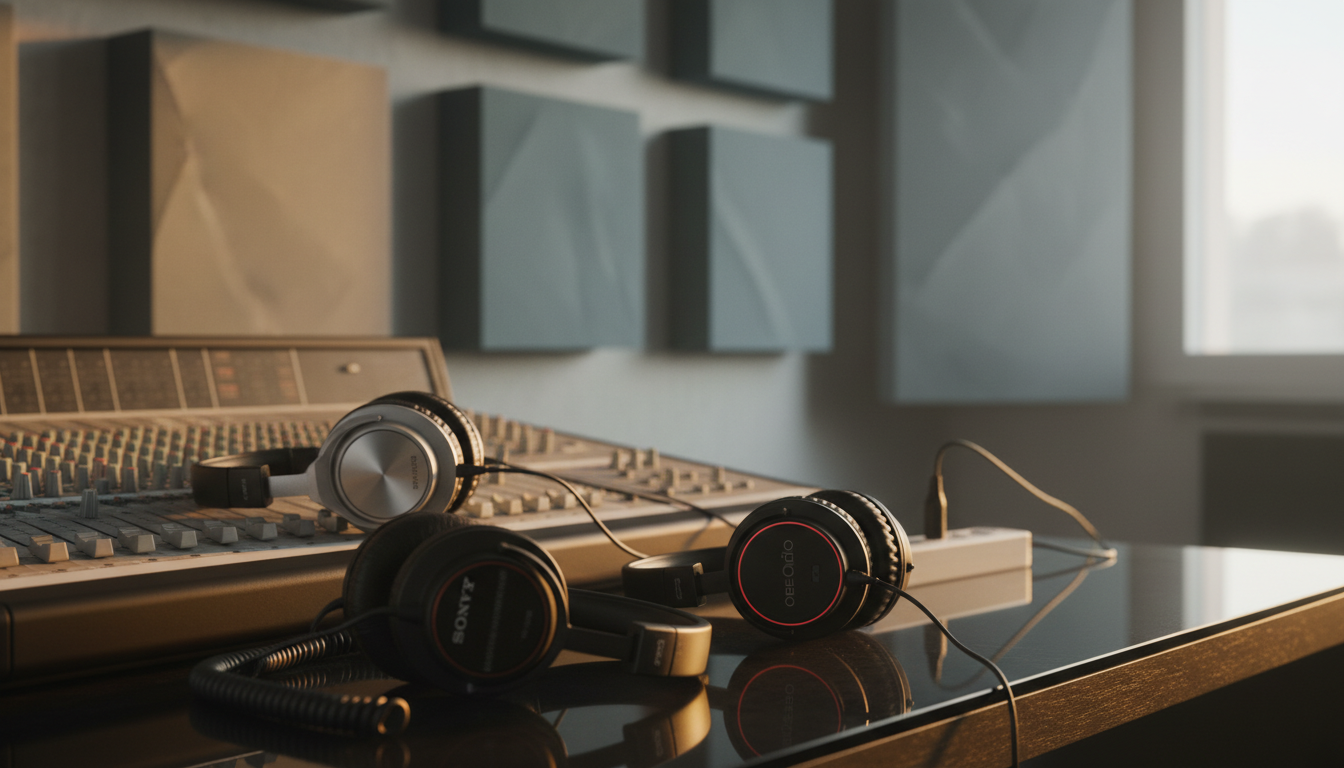
Finding the right pair of studio monitoring headphones can feel like hunting for a needle in a sea of specs. We compared 11 over‑ear models that span a price range from $21.95 up to $199.99, so whether you’re a bedroom producer or a seasoned engineer, there’s a fit for your budget. The Sony MDR7506, for example, carries a 4.7/5 rating from 27,758 reviewers and weighs about 0.5 pounds, while the Rumoon wired set starts at just $21.95 and tips the scales at roughly 0.57 pounds.
The lineup divides into three clear tiers. Budget picks such as Rumoon, OneOdio Pro‑10, A71 and A70 keep costs low while still offering 40 mm or 50 mm drivers and impedances around 32 Ω. Mid‑range contenders like the OneOdio Pro‑50 ($47.99) and AKG K240STUDIO ($50.49) add refined driver designs and longer cables. Premium options—including the Sony MDR7506 ($112.85), Beats Studio Pro ($169.95) and Beyerdynamic DT 990 Pro ($199.99)—bring higher‑grade diaphragms, extended frequency coverage and professional‑grade build quality. The following sections break down each model’s key specs and user feedback against the demands of studio monitoring.

Sony MDR7506
Its 40 mm drivers deliver detailed studio sound, supporting its high 4.7‑star rating and solid brand reputation.

OneOdio Pro-50
Ideal for home‑office creators, the OneOdio Pro‑50 offers solid performance at $47.99—about $65 less than the Sony, balancing features and value.

Rumoon Wired Over-Ear Headphones
At $21.95, the Rumoon headphones give budget‑focused listeners a 50 mm driver set‑up, offering entry‑level studio monitoring without the higher cost of Sony or OneOdio.
Also considered
Score Analysis
Key score advantages vs. runner-up (OneOdio Pro-50)
Price Range
Sony MDR7506
$112.85
OneOdio Pro-50
$47.99
Rumoon Wired Over-Ear Headphones
$21.95

OneOdio A71
$31.34

AKG K240STUDIO
$49.99

OneOdio A70
$42.74

Audio-Technica ATH-M20x White
$59.00

OneOdio Pro-10
$29.99
Beats Studio Pro Black
$199.95

Beyerdynamic DT 990 Pro Black
$199.99

Philips SHP9600
$79.99
Spec Comparison
TL;DR: The Sony MDR‑7506 offers a 40 mm neodymium driver, 63 Ω impedance and a 3 m coiled cable in a lightweight, fold‑able closed‑back design, earning a 4.7‑star rating from over 27 k reviewers.
What sets the MDR‑7506 apart is its 40 mm dynamic dome driver paired with a 63 Ω impedance and a robust 1000 mW power handling rating. The coiled oxygen‑free copper cable stretches 3 m (9.8 ft), letting you move freely around a studio without tripping over the cord. Frequency response spans 10 Hz – 20 kHz, giving you deep lows and crisp highs for detailed monitoring.
Compared with the other ten contenders, the MDR‑7506 is the lightest at 0.5 lb, beating the Audio‑Technica ATH‑M20x (≈0.58 lb), Beats Studio Pro (≈0.57 lb), Philips SHP9600 (≈0.73 lb), AKG K240STUDIO (≈0.53 lb), OneOdio Pro‑50 (≈0.58 lb) and OneOdio A70 (≈0.56 lb). Its driver size matches the Audio‑Technica, Beats and OneOdio A70 at 40 mm, but is smaller than the Philips and OneOdio Pro‑50 which use 50 mm units. The MDR‑7506 also carries a higher impedance than most peers (63 Ω vs 32 Ω‑55 Ω), which can help control hiss in sensitive recording environments. Cable length is on par with the 3 m cables found on Philips, Audio‑Technica, AKG and OneOdio models.
Professional reviewers praise the closed‑back construction for strong acoustic isolation, noting that the ear‑cup swivel and foldable frame make the headphones comfortable for long mixing sessions. Users repeatedly highlight that the clear, detailed soundstage and the practical soft carry pouch plus 1/4″ adapter come in the box. The only recurring criticism is the lack of an on‑headset volume control, meaning you must adjust levels on the source device.
Pros
Cons
Best for: Buyers willing to invest in a proven, high‑quality option
Avoid if: You're on a tight budget or only need basic functionality
“extraordinary acoustic isolation”
TL;DR: The OneOdio Pro‑50 packs a 50 mm neodymium driver, 110 dB sensitivity and a 3 m detachable cable into a lightweight 0.58‑lb closed‑back design, offering strong bass and clear mids for budget‑friendly studio work.
The standout spec is the 50 mm driver paired with a high sensitivity of 110 dB ±3 dB, so you can drive the headphones easily from a phone or a low‑power mixer. They also cover a wide frequency range of 20 Hz – 40 kHz and a max input power of 1600 mW, providing plenty of headroom for loud passages.
Compared with the other ten models, the Pro‑50 weighs more than the AKG K240STUDIO (0.53 lb) but less than the OneOdio A71 (0.83 lb). Its 50 mm driver outsizes the 30 mm drivers in the AKG and the 40 mm drivers in the OneOdio A70, Audio‑Technica ATH‑M20x and OneOdio A71, placing it among the larger‑driver options. The 32 Ω impedance sits below the AKG’s 55 Ω and the Audio‑Technica’s 47 Ω, making it easier to power. Sensitivity at 110 dB tops the Audio‑Technica’s 96 dB and matches the OneOdio A71’s 110 dB, while the 3000 mm (3 m) cable matches most peers' 3 m cables.
User feedback highlights the strong bass impact and clear vocal reproduction that reviewers attribute to the neodymium drivers and closed‑back design. Reviewers note the easy‑drive nature thanks to the high sensitivity, and they appreciate the 90° swivel ear cups for single‑ear monitoring—handy for DJ cueing. However, several users mention a noticeable treble boost around 4‑5 kHz that can sound harsh on bright mixes, and the primarily plastic construction feels less robust than higher‑priced studio headphones.
OneOdio certifies the Pro‑50 for Hi‑Res Audio, includes protein‑leather memory‑foam cushions for comfort, and ships with a detachable cable featuring gold‑plated 3.5 mm and 6.35 mm plugs. These details make it a versatile wired option for home studios, small DJ setups, or anyone needing a reliable monitoring pair without breaking the bank.
Pros
Cons
Best for: Budget‑conscious DJs, music producers and home‑studio engineers who need a reliable wired monitor with strong bass and easy drive capability.
Avoid if: You require a neutral reference sound, a highly rugged build, or a wireless/ANC solution.
“The Monitor 60 delivers pretty good frequency response that matches direct recordings, with vibrant bass without excess but a slight 4‑5 kHz bump.”
“Comfortable protein cushions let me wear them for hours without ear fatigue.”
TL;DR: The Rumoon CM7005 pairs 50 mm drivers, 32 Ω impedance and 102 dB sensitivity with a lightweight 0.569‑lb frame and a detachable coiled cable, making it a solid, budget‑friendly studio monitor.
What really stands out is the 50 mm neodymium driver, which pairs with a flat 32 Ω impedance and 102 dB sensitivity, covering a full 20 Hz – 20 kHz frequency range. Those specs give you clear bass, balanced mids and crisp treble without needing a headphone amp, and the 25 mm earpad thickness adds a plush seal for accurate monitoring.
Compared with the other ten contenders, the Rumoon is lighter than the OneOdio Pro‑10 (0.66 lb) but a hair heavier than the OneOdio A70 at 0.56 lb, placing it in the mid‑weight sweet spot. Its 50 mm drivers match the Pro‑10 and Pro‑50, out‑sizing the OneOdio A71, A70, AKG K240STUDIO and Audio‑Technica M20x, which all sit at 30 mm–40 mm. Sensitivity at 102 dB is modestly lower than the 110 dB seen on the Pro‑10, Pro‑50 and A71, but still higher than the 96 dB of the M20x, giving you enough volume without distortion.
Users consistently praise the comfort of the 260 g (0.569 lb) frame and the 90° swivel ear cups, which professional reviewers call essential for single‑ear cueing in DJ or mixing sessions. The detachable coiled cable (1.74 – 1.83 m) and Shareport 6.35 mm audio‑sharing jack highlight studio‑friendly conveniences, though several owners note the coiled design can feel bulky when moving around a desk or traveling.
Pros
Cons
Best for: DJs, audio engineers, mixers, recording artists, and musicians who need accurate monitoring, single‑ear cueing and a budget‑friendly entry point.
Avoid if: You need active noise cancellation, on‑the‑go portability with a straight cable, or a wider range of color options.
TL;DR: The OneOdio A71 packs 40 mm drivers, 110 dB sensitivity and a wide 20 Hz‑40 kHz range into a closed‑back, fold‑able design for under $32, but its plasticky build may limit long‑term durability.
The A71’s standout spec is its 40 mm driver paired with a high 110 dB ± 3 dB sensitivity and a max input power of 1600 mW, delivering a frequency response that stretches from 20 Hz up to 40 kHz. Its 0.83‑pound weight (376 g) keeps it portable enough for desktop use while still feeling solid on the head.
Compared with the other ten contenders, the A71 is heavier than the OneOdio Pro‑10 (0.66 lb) and the Rumoon model (0.569 lb), yet its driver size matches the Audio‑Technica ATH‑M20x (40 mm) and is smaller than the 50 mm drivers found in the Pro‑10, Rumoon and Pro‑50. Its 32 Ω impedance aligns with the Pro‑10 and Pro‑50, and its 110 dB sensitivity matches the Pro‑50 while exceeding the AKG K240STUDIO’s 104 dB. The cable length of 6.6‑9.8 ft outstretches the Pro‑10’s 1.2 m straight cable and rivals the Pro‑50’s 3000 mm lead.
Reviewers praise the A71’s wide soundstage and strong instrument separation, noting that the high sensitivity and broad frequency range help reveal details in mixes even with a closed‑back design. Reviewers frequently call the rotatable ear pads and high sound isolation comfortable for long sessions. On the downside, users repeatedly mention a plasticky construction that feels less durable, and several reports of early internal speaker breakage raise concerns for heavy‑use environments.
Pros
Cons
Best for: Budget‑conscious gamers, home‑studio beginners and casual listeners who want bass‑heavy monitoring without breaking the bank.
Avoid if: You need premium build quality, precise spec accuracy, or a lightweight option for long‑term wear.
“Incredibly comfortable with sturdy, rotatable pads that survive rough handling; good for extended wear”
TL;DR: The AKG K240STUDIO offers semi‑open, 30 mm Varimotion drivers, 55 Ω impedance and a detachable 3 m cable for $50.49, earning a 4.5‑star rating from over 12 k reviewers.
At the heart of the K240STUDIO are 30 mm dynamic Varimotion transducers that handle up to 200 mW of input power and reach a maximum SPL of 117 dB. With a frequency response of 15 – 25 000 Hz, the headphones deliver detailed lows, clear mids and airy highs, while a sensitivity of 104 dB SPL/V keeps the output clean. The unit weighs just 0.529 lb (240 g) and features a self‑adjusting headband with a 3 N clamping force, making long mixing sessions comfortable.
Compared with the ten other models in this roundup, the K240STUDIO’s driver size is smaller than the 40‑50 mm drivers found in the OneOdio Pro‑50, Audio‑Technica ATH‑M20x and Rumoon options. Its 55 Ω impedance is higher than the 32‑Ω or 47‑Ω ratings of most peers, which can make it a bit tougher to drive from low‑output sources. Sensitivity at 104 dB SPL/V sits below the 110 dB figures of several OneOdio models, meaning a modest amp may be useful. The 3 m detachable cable matches the length of the Audio‑Technica and OneOdio Pro‑50 cables, while the K240’s 0.529 lb weight is lighter than the OneOdio A71 (0.83 lb) and comparable to the Rumoon (0.569 lb). It lands in a sweet spot of portability and build quality without the bulk of heavier alternatives.
Professional reviewers praise the K240STUDIO for its precise, natural imaging and solid bass response, noting that the semi‑open design yields a spacious soundstage ideal for critical listening. Everyday users echo this sentiment, highlighting the comfortable fit and the value of replaceable vinyl earpads. The main drawbacks include the earpads’ tendency to become sweaty or crack over time and the semi‑open construction’s sound leakage, which can be distracting in shared or noisy environments. Some users also point out that the relatively low sensitivity may call for an external amp to achieve louder levels.
Pros
Cons
Best for: Audio engineers, producers and musicians who need accurate, natural monitoring on a budget.
Avoid if: You need strong isolation for commuting, noisy environments, or shared workspaces.
“Exceptional sound quality for recording/mixing with solid bass, clear highs, and wide dynamic range”
“"shattering expectations" for detail but flags inefficiency (91 dB sensitivity)”
TL;DR: The OneOdio A70 delivers a 72‑hour Bluetooth run‑time, lightweight 0.56 lb construction and 40 mm drivers, but its bass‑heavy tuning and plastic build may limit critical studio use.
The standout spec is the 72‑hour Bluetooth battery life, letting you stream music or take calls for three days on a single charge. Coupled with a 2.5‑hour charging time, the A70 stays ready for long sessions without frequent plug‑ins. Its 40 mm dynamic drivers cover 20 Hz–20 kHz, and the 0.56 lb (245 g) chassis feels light enough for marathon mixing.
Compared with the other ten headphones in the roundup, the A70 sits in the middle of the weight range—lighter than the OneOdio Pro‑10 (0.66 lb) and the AKG K240STUDIO (0.53 lb) but a touch heavier than the Rumoon wired model (0.57 lb). Its driver size is smaller than the 50 mm units found in the Pro‑50 and Rumoon, yet matches the 40 mm drivers of the Audio‑Technica ATH‑M20x and OneOdio A71. Impedance at 32 Ω aligns with most peers (Pro‑50, A71, Pro‑10, Rumoon) and is lower than the AKG’s 55 Ω, making it easy to drive without an external amp. Sensitivity of 110 dB matches the Pro‑50 and A71, out‑performing the AKG (104 dB) and Audio‑Technica (96 dB), so you’ll hear details even at modest volume levels. Unlike the wired competitors, the A70 adds Bluetooth 5.2, SBC/AAC codecs and a wireless range of at least 10 m, giving you mobility the others lack.
Professional reviewers praise the marathon‑length battery and the convenience of a foldable, rotatable design with detachable 3.5 mm/6.35 mm cables—features that suit entry‑level DJs and home studios. Everyday users echo the comfort of the lightweight build, but many note that the bass emphasizes low frequencies heavily, producing a V‑shaped response that can mask mids and lead to listening fatigue. The plastic housing, while keeping weight down, feels cheap and can creak, and limited ear‑cup airflow sometimes causes heat buildup during long wear.
Pros
Cons
Best for: Budget‑conscious buyers seeking a reliable entry‑level option with long wireless playtime.
Avoid if: Critical listeners or professionals need accurate sound reproduction and strong noise isolation for commuting or studio mixing.
“wireless bass monster”
“REALLY Bad”
TL;DR: The Audio‑Technica ATH‑M20x in white offers 40 mm drivers, 96 dB sensitivity and a 3 m cable at $59, delivering solid bass and isolation but may tire ears after a couple of hours.
The ATH‑M20x uses 40 mm neodymium drivers with a 15–20,000 Hz frequency response, 47 Ω impedance and 96 dB sensitivity. At 0.58 lb (260.9 g) the headphones feel lightweight enough for short studio sessions, and the 3.0 m straight cable gives plenty of reach without a detachable connector.
Compared with the other ten models, the M20x weighs about the same as the OneOdio Pro‑50 (0.58 lb), is lighter than the Philips SHP9600 (0.73 lb), and is heavier than the AKG K240STUDIO (0.53 lb). Its 40 mm driver size matches the OneOdio A70 and OneOdio A71, while the AKG and Philips models use larger 50 mm drivers. Impedance at 47 Ω sits between the AKG’s 55 Ω and the 32 Ω of the Philips and OneOdio A71, giving it a balanced load for most consumer amps.
Professional reviewers note the tight channel matching and low distortion, which translates to the “strong bass response and excellent sound isolation” praised by everyday users. However, both experts and consumers report that the primarily plastic construction can feel cheap, and the fixed, non‑detachable cable may wear over time. Ear‑pad comfort tends to decline after 1–2 hours, a common complaint for extended mixing sessions.
Pros
Cons
Best for: Most users looking for a well-reviewed, reliable mainstream option
Avoid if: You're shopping on a tight budget — it's priced at $59.00
TL;DR: The OneOdio Pro‑10 delivers a 50 mm driver, 110 dB sensitivity and a detachable coiled cable for just $29.99, making it a solid, budget‑friendly studio monitor.
What really sets the Pro‑10 apart is its oversized 50 mm neodymium driver paired with a high sensitivity of 110 dB and a max input power of 1600 mW. Those numbers give it a punchy, controlled bass response that many reviewers describe as “balanced without being boomy.” The headphones also include a 1.2 m straight cable and a 2–3 m coiled DJ cable, so you can switch between studio and DJ setups without buying an adapter.
Compared with the other ten models, the Pro‑10’s driver is larger than the 40 mm units in the OneOdio A71 and the AKG K240STUDIO, and matches the 50 mm drivers found in the Rumoon and OneOdio Pro‑50. At 0.66 lb it sits between the lighter Rumoon (0.569 lb) and the heavier A71 (0.83 lb). Its 180° ear‑cup swivel is wider than the 90° swivel on the Pro‑50 and the 15° swivel on the Audio‑Technica ATH‑M20x, giving you more freedom to adjust for comfort.
Professional reviewers praise the Pro‑10’s balanced mids and clear highs, noting that the dual detachable cables and SharePort make it handy for quick monitoring swaps. Everyday users love the “punchy bass” and sturdy build, but many flag the small headband and firm foam pads as uncomfortable during long sessions, and they mention that passive noise isolation provides limited isolation, requiring a tight seal in noisy environments.
Pros
Cons
Best for: Budget‑conscious buyers seeking a reliable entry‑level option
Avoid if: you need high‑end noise isolation or ultra‑compact travel gear
“Users praise boosted bass, clear trebles above 10kHz, and functional sound for music/DJ”
“one rated 8/10 for factory-equalized audio and single-ear monitoring”
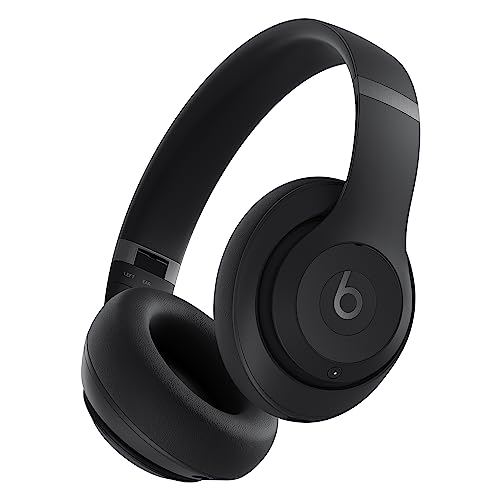
TL;DR: Beats Studio Pro Black delivers premium over‑ear sound with 40 mm drivers, adaptive ANC and up to 40 hours of battery life, but its tight clamping and $169.95 price may deter budget‑focused buyers.
The standout spec is the fully adaptive active‑noise‑cancellation that runs at 48,000 updates per second, paired with 40 mm drivers that aim for low distortion. Battery endurance tops out at 40 hours with ANC off and 24 hours with ANC on, and a 10‑minute charge adds roughly 4 hours of playback.
Compared with the other ten contenders, the Studio Pro sits in the middle of the weight range: it’s lighter than the Beyerdynamic DT 990 Pro at 0.75 lb but a touch heavier than Sony’s MDR7506 at 0.5 lb. Its 40 mm drivers match Sony and Audio‑Technica models, while the Philips and OneOdio options use larger 50 mm drivers and the AKG uses smaller 30 mm units.
Professional reviewers highlight an immersive soundstage and an 80 % reduction in distortion versus the older Beats Studio 3. Everyday users love the lightweight feel, secure fit, and up to 40 hours of battery life, yet many note the clamping force can feel tight on larger heads and the lack of any water‑resistance rating limits workout use. The headphones also include three USB‑C EQ presets—Beats Signature, Entertainment, and Conversation—plus a voice‑targeting beamforming mic array that provides clear calls.
Additional technical context: the over‑ear design measures 7.13 in (height) × 7.01 in (length) × 3.07 in (width). Connectivity covers Bluetooth 5.3, a 3.5 mm input and USB‑C audio, with a wireless range of up to 100 ft. The carrying case comes included, and the cushion material uses UltraPlush leather.
Pros
Cons
Best for: Buyers willing to invest in a proven, high‑quality option
Avoid if: You're shopping on a tight budget — it's priced at $169.95
TL;DR: The Beyerdynamic DT 990 Pro Black delivers an open‑back, 80 Ω studio‑monitor experience with 96 dB sensitivity, a 3 m cable, and a comfortable 340 g build, but its $199.99 price and need for a powerful amp keep it in the premium tier.
What really sets the DT 990 Pro apart is its 80 Ω impedance paired with a 96 dB sensitivity, a combination that professional reviewers say provides “exceptional impulse response” for critical mixing. The headset also sports a 3 m single‑sided cable and a spring‑steel headband that exerts 3.5 N of pressure, keeping the velour ear pads snug for long sessions.
Compared with the other ten contenders, the DT 990 Pro is heavier than the Beats Studio Pro (0.57 lb) and the Sony MDR7506 (0.5 lb), yet lighter than the Philips SHP9600 (0.73 lb). Its 3 m cable matches the length Sony, Philips, and the AKG K240STUDIO use, while the OneOdio and Audio‑Technica models also list 3 m cables. In terms of price, it sits at the top end of the range, making it pricier than most of the lineup.
Users consistently praise the plush velour pads and the “wide, open soundstage” that helps spot mix details, while professional editors highlight the clear treble and precise imaging. The trade‑off most users mention is the need for a dedicated headphone amplifier because the 80 Ω load can be a stretch for typical smartphones or laptops. The non‑detachable cable also draws criticism as a single point of failure.
From a technical standpoint, the headset’s 340 g weight and 231 mm height give it a solid, tank‑like feel that many reviewers link to its durability. The 100 mW power handling aligns with studio‑grade expectations, and the 4.6/5 star rating from 19,900 reviews reflects broad approval among audio professionals and enthusiasts alike.
Pros
Cons
Best for: Buyers willing to invest in a proven, high-quality option
Avoid if: You're shopping on a tight budget — it's priced at $199.99
TL;DR: The Philips SHP9600 offers a spacious open‑back soundstage, 50 mm drivers and low 32 Ω impedance at a comfortable 0.728 lb weight, making it a solid studio choice for home listening.
What sets the SHP9600 apart is its 50 mm neodymium dynamic driver, paired with a frequency response that spans 6 Hz to 35,000 Hz. The low 32 Ω impedance and 200 mW maximum power input mean the headphones can be driven easily by most consumer devices without a dedicated amp.
Compared with the other ten models in this roundup, the SHP9600’s driver size matches the OneOdio Pro‑50’s 50 mm unit while exceeding the 40 mm drivers of the Audio‑Technica ATH‑M20x, AKG K240STUDIO, Sony MDR7506, OneOdio A70 and A71. Its 0.728 lb weight is heavier than the Audio‑Technica (0.575 lb), AKG (0.529 lb) and Sony (0.5 lb) models, but lighter than the OneOdio A71 (0.83 lb). The 3 m detachable gold‑plated cable is on par with most peers, and the 32 Ω impedance is lower than the Audio‑Technica’s 47 Ω and AKG’s 55 Ω, making it the easiest to drive in the set.
Professional reviewers praise the SHP9600’s lightweight construction and breathable fabric ear cushions, noting that users can wear them for hours without fatigue. The open‑back architecture gets kudos for delivering a wide, detailed soundstage that reveals subtle instrument placement. However, the same design leads to noticeable sound leakage and limited isolation, a frequent complaint among users who need to listen in noisy environments. Bass response sounds defined but not especially deep, which may disappoint listeners who favor heavy low‑end.
Pros
Cons
Best for: Home audiophiles, casual listeners and studio monitoring enthusiasts who prioritize comfort and a wide, detailed soundstage.
Avoid if: You need strong isolation, deep bass impact, or wireless/ANC features for commuting or noisy environments.
“superb for hours of listening”
Breakdown
Sony MDR7506
Pros
OneOdio Pro-50
Pros
Rumoon Wired Over-Ear Headphones
Pros
OneOdio A71
Pros
Based on scoring data and product specs
Personalized picks
Best Overall Pick
Sony MDR7506
Best ValueBest for: Buyers willing to invest in a proven, high-quality option
OneOdio Pro-50
Best for: Home and office users seeking a balance of features and value
$47.99-$64.86 vs winner
Skip Philips SHP9600 if…
Reliability and user satisfaction are your top concerns
We’re naming the Sony MDR7506 the clear winner for studio monitoring headphones. It earns a 4.7‑star rating from 27,758 reviewers, and its 40 mm PET diaphragm delivers a wide 10 Hz – 20 kHz frequency response. At just 260 g (about 0.5 pounds) it stays light enough for long sessions, and the coiled 3 m OFC cable with a 1/4‑inch adapter adds flexibility without sacrificing durability.
The OneOdio Pro‑50 lands as the runner‑up, especially if you need a portable, hi‑res solution on a tighter budget. Its larger 50 mm neodymium drivers push the range to 20 Hz – 40 kHz, and a sensitivity of 110 dB ± 3 dB means you’ll hear detail without cranking the gain. The detachable gold‑plated 3.5 mm/6.35 mm cables and foldable design make it ideal for a small home studio or on‑the‑go mixing, all at $47.99.
For other budget tiers, the Rumoon Wired Over‑Ear Headphones offer the best entry‑level price at $21.95, delivering basic closed‑back monitoring for beginners. The OneOdio Pro‑50 also serves as the top mid‑range pick, balancing price and performance. If you’re ready to invest in premium sound, the Beyerdynamic DT 990 Pro stands out at $199.99 with its renowned open‑back design and detailed imaging.
Pick the Sony MDR7506 today for reliable, professional‑grade monitoring that won’t break the bank.
Both the Sony MDR7506 and the OneOdio Pro‑50 are foldable and include protective accessories. The Sony comes with a soft carry pouch and a coiled oxygen‑free copper cable, while the OneOdio offers a detachable gold‑plated cable and a sturdy metal headband, making either a solid choice for on‑the‑go sessions.
No reviews yet — be the first to share your experience.
Please sign in to leave a review
