Our top pick for the Best Telephoto Zoom Nikon F lenses is the Sigma 150‑600mm f/5‑6.3 DG OS HSM Contemporary. It carries a 4.7‑star rating from 5,488 reviewers, costs $1089.00 and weighs 4.25 pounds, delivering the longest reach in the set while still being manageable on a tripod. Reviewers consistently praise its sharpness and the 4‑stop optical stabilization that makes handheld wildlife shots feasible.
The roundup compares 8 lenses that span three price tiers. In the budget camp you’ll find the Yanuoda 420‑800mm (priced at $59.39), the Benoison 420‑800mm f/8 ($67.99) and Nikon’s NIKKOR 55‑200mm f/4‑5.6 VR ($149.00, 335 g, 4‑stop VR). The mid‑range option is the Nikon AF‑P 70‑300mm f/4.5‑6.3 ($209.00, 1.05 pounds, 7 rounded diaphragm blades, 4‑stop VR). Premium choices include the Nikon AF‑S 55‑300mm VR ($389.98), the Sigma 150‑600mm, and Nikon’s own 70‑300mm f/4‑5.6 ($16 499.00), all of which add extra elements, faster autofocus or higher build quality for demanding shooters.
Below we explore each lens’s strengths and quirks, helping you match the right telephoto to your shooting style.

Sigma 150
Its lightweight design—lens hood weighs just 105 g (3.7 oz)—keeps your setup portable without sacrificing build quality.
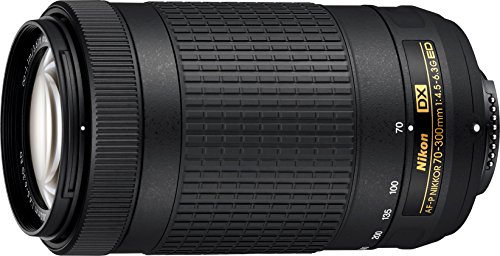
Nikon AF-P 70-300mm f/4.5-6.3
Ideal for hobbyists needing a versatile telephoto range, it comes in at $209—about $880 less than the Top Pick—making it a solid, well‑reviewed mainstream choice.

Nikon NIKKOR 55-200mm f/4-5.6 VR
Stands out for its compact 73 mm height, slipping into small bags, and at $149 offers an entry‑level telephoto option the larger lenses don’t match.
Also considered
Score Analysis
Key score advantages vs. runner-up (Nikon AF-P 70-300mm)
Price Range
Sigma 150
$1,089.00
Nikon AF-P 70-300mm f/4.5-6.3
$182.98
Nikon NIKKOR 55-200mm f/4-5.6 VR
$149.00

Sigma 70-300mm f/4-5.6 Macro
-$0.01

Benoison 420-800mm f/8
$51.67

Nikon AF-S 55-300mm f/4.5-5.6 VR
$369.88
Nikon 70-300mm f/4-5.6
$177.99

Yanuoda 420
$58.49
Spec Comparison
TL;DR: The Sigma 150‑600mm f/5‑6.3 DG OS HSM Contemporary delivers a 150‑600 mm reach, up to ~4‑stop stabilization and fast HSM autofocus, but its 4.25 lb heft and f/6.3 long‑end aperture keep it in the premium tier.
What really sets this lens apart is its 150–600 mm focal range paired with optical stabilization that delivers up to ~4 stops of shake reduction, letting you hand‑hold at 1/100 s at the long end.
Compared with the seven other lenses in the roundup, the Sigma is considerably heavier than the Nikon AF‑S 55‑300mm (≈1.28 lb) and the Nikon AF‑P 70‑300mm (≈1.05 lb), and also heavier than the Nikon 55‑200mm (≈0.74 lb). Its 105 mm diameter exceeds the 72 mm diameter of the Nikon AF‑P 70‑300mm and the 73 mm width of the Nikon 55‑200mm. The 95 mm filter thread is larger than the 58 mm thread on the Nikon 55‑300mm and the 52 mm thread on the Nikon 55‑200mm. While its 150‑600 mm reach surpasses the 55‑300 mm and 70‑300 mm ranges of the Nikon options, it falls short of the 420‑800 mm span of the Benoison and Yanuoda lenses, which also lack built‑in stabilization.
Professional reviewers applaud the lens for excellent sharpness throughout the zoom range and a quiet, fast HSM autofocus with full‑time manual override. Users echo this, noting the reliable image stabilization and the ability to capture wildlife details without a tripod. Common complaints focus on moderate pincushion distortion and chromatic aberration at 600 mm, as well as the noticeable heft during extended handheld sessions.
The optical formula comprises 20 elements in 14 groups, including one FLD and three SLD elements for better color control. Dust‑ and splash‑resistant construction with a rubber gasket at the mount adds durability, while the external zoom mechanism locks at any focal length. The lens also supports Sigma’s USB Dock for firmware updates and can accept Sigma’s 1.4× and 2× teleconverters.
Pros
Cons
Best for: Wildlife, sports and nature photographers who need a long reach and reliable stabilization without stepping into ultra‑high‑end pricing.
Avoid if: You're shopping on a tight budget — it's priced at $1089.00
TL;DR: The Nikon AF-P 70‑300mm f/4.5‑6.3 delivers 105‑450mm equivalent reach in a 1.05‑lb, VR‑stabilized package, earning 4.5‑star ratings from over 500 reviewers for sharpness and portability.
The lens packs a quiet AF‑P stepping‑motor, a 7‑blade rounded diaphragm and up to 4 stops of Vibration Reduction (VR), which reviewers say makes handheld shooting much steadier. At just 1.05 lb it’s light enough to carry on a day‑trip, and its 58 mm filter thread lets you add polarizers or ND filters without extra adapters.
Compared with the Nikon 55‑200mm (weighing 0.7385485777pounds), it’s a bit heavier, but still far lighter than the Sigma 150 (weighing 4.25pounds). It also shares the 58 mm filter size with the Nikon 55‑300mm, yet offers fewer diaphragm blades—7 versus the 9 that model has—so bokeh may be a touch less creamy. In the lineup it sits between the ultra‑compact 55‑200mm and the bulkier 55‑300mm, giving a longer reach without the weight penalty of the high‑end options.
User sentiment highlights the lens’s sharpness from 70 mm to about 170 mm and praises the silent AF‑P motor for discreet wildlife work. Professional reviewers note a noticeable resolution dip at the 300 mm end and point out that the maximum aperture narrows to f/6.3, which can limit low‑light performance. The minimum focus distance of 1.1 m and a maximum reproduction ratio of 0.22× (1:4.55) give modest close‑up capability, while the 14‑element, 10‑group construction—including one ED element—helps keep chromatic aberrations under control.
Pros
Cons
Best for: Most users looking for a well‑reviewed, reliable mainstream option
Avoid if: You need advanced features or professional‑grade performance
“Perfect for wildlife and birds on my D7500.”
“AF is silent and locks on instantly—great for video.”
TL;DR: The Nikon 55‑200mm f/4‑5.6 VR delivers a lightweight, retractable telephoto zoom with 4‑stop vibration reduction, solid sharpness through most of the range, and a budget‑friendly $149 price tag.
The lens packs a 4‑stop VR system into a compact 335 g body, and its retractable barrel folds to a mere 71 mm when stored. At 73 mm tall and 100 mm long, it’s small enough to slip into a camera bag without adding bulk.
Compared with the Nikon AF‑P 70‑300mm, which weighs about 1.05 pounds and stands 114 mm tall, this 55‑200mm model is noticeably lighter and shorter. The Sigma 70‑300mm also tips the scales at roughly 1.19 pounds, making the Nikon option a clear weight‑savvy choice. Even the bulkier Benoison 420‑800mm, at 717 g and 240 mm long, feels heavier and larger than the 55‑200mm’s streamlined design.
Everyday shooters appreciate how the built‑in VR lets them capture sharp handheld shots, especially for travel or nature subjects. Reviewers often note crisp images from 55 mm to 135 mm, while the plastic mount draws criticism for feeling less rugged. Users also point out the absence of an included lens hood and a slight softness at 200 mm when shooting wide open.
Technically, the lens offers a 55‑200 mm focal range (equivalent to 82.5‑300 mm on DX bodies) with a maximum aperture of f/4 at the wide end and f/5.6 at full telephoto. Minimum apertures reach f/22‑f/32. Its optical formula includes 13 elements in 9 groups, featuring one ED element, and a 7‑blade diaphragm for pleasing bokeh. The minimum focus distance is 1.1 m, and the maximum magnification is roughly 1:4. A 52 mm filter thread rounds out the specs.
Pros
Cons
Best for: Budget-conscious buyers seeking a reliable entry-level option
Avoid if: You need advanced features or professional-grade performance
“Perfect travel companion”
“Great for beginners”
TL;DR: The Sigma 70‑300mm f/4‑5.6 Macro offers a 1:2 magnification at 1.5 m minimum focus, nine‑blade rounded diaphragm and a 14‑element design in a lightweight 1.19‑pound package.
What really sets this lens apart is its built‑in macro capability – you can get a 1:2 maximum magnification while staying 1.5 m from the subject, and the normal minimum focus is 0.95 m. The optical formula packs 14 elements in 10 groups, includes SLD glass and a Super Multi‑Layer Coating, and the nine rounded diaphragm blades help render smoother bokeh.
Compared with the other seven lenses in the roundup, the Sigma is lighter than the Yanuoda 420 (880 g) and the Benoison 420‑800mm (717 g), but a touch heavier than the Nikon AF‑P 70‑300mm (1.05 pounds) and the Nikon NIKKOR 55‑200mm (0.7385 pounds). Its 58 mm filter thread matches the Nikon AF‑S 55‑300mm, while the Nikon 55‑200mm uses a smaller 52 mm thread. At 208 mm extended length, it's shorter than the Yanuoda’s 238.8 mm and Benoison’s 240 mm barrels, yet longer than the Nikon AF‑P’s 163 mm and the AF‑S’s 123 mm. The nine‑blade diaphragm also gives it an edge over the Nikon AF‑P’s seven‑blade design.
Reviewers consistently praise the macro function and the sharpness you can achieve when stopping down in the 70‑133 mm range. Professionals note the lens delivers pleasing bokeh thanks to the rounded blades, but they also flag soft corners at the 200‑300 mm end and up to one‑stop vignetting on full‑frame bodies when shooting wide open. The built‑in motor provides reliable AF on entry‑level Nikon DSLRs, though users report it's slow and noisy in low‑light situations.
Additional technical context: the lens covers a 34.3°–8.2° angle of view, with a variable maximum aperture of f/4 at 70 mm to f/5.6 at 300 mm and a minimum aperture that reaches f/22–f/32. It lacks image stabilization, so steady hands or a tripod are advisable for handheld shooting at longer focal lengths.
Pros
Cons
Best for: Buyers who prioritize user satisfaction — rated 4.5/5 with 1,903 reviews
Avoid if: You need professional sports, event or low‑light handheld performance, or require edge‑to‑edge sharpness at full 300 mm zoom
“macro feature ... calling it a "hidden gem" for close‑up nature and product shots.”
“softness at 300 mm is the most common critique”
TL;DR: The Benoison 420‑800mm f/8.3‑16 manual telephoto lens gives you extreme reach for just $67.99, but its softness at the long end and lack of autofocus mean you’ll need a tripod and patience.
The lens offers a 420–800 mm focal‑length range, with a maximum aperture that shifts from f/8.3 at the wide end to f/16 at full tele. At a filter size of 62 mm and a compact height of 67 mm, it packs a super‑telephoto capability into a surprisingly portable package that weighs 717 g.
Compared with the other seven lenses in this roundup, the Benoison sits in the middle of the weight spectrum: it’s lighter than the Yanuoda 420’s 880 g body but noticeably heavier than the Nikon NIKKOR 55‑200 mm’s 335 g design. Its 240 mm length is a touch longer than the Sigma 70‑300 mm’s 208 mm zoomed length, yet it’s still shorter than the Sigma 150’s 260 mm barrel. In terms of build, its aluminium alloy housing matches many peers' durability, while its lack of electronic contacts and image stabilization puts it behind the VR‑enabled Nikon models.
Reviewers consistently praise the lens for delivering moon and bird shots that would otherwise require a far pricier super‑telephoto. Users highlight the manual focus ring as a boon for static subjects, especially when paired with live‑view magnification. The trade‑offs show up in the same feedback: sharpness drops noticeably past 600 mm, chromatic aberration becomes evident at 800 mm, and the absence of autofocus forces a tripod for anything beyond casual use.
Pros
Cons
Best for: Amateur astronomers and wildlife hobbyists who need massive reach without breaking the bank and are comfortable using a tripod.
Avoid if: You need fast autofocus, consistent sharpness at extreme telephoto, or in‑body stabilization for handheld shooting.
“Great for the moon!”
“Perfect for birdwatching from a distance”
TL;DR: The Nikon AF‑S 55‑300mm f/4.5‑5.6 VR delivers a 5.5× telephoto range, 4 stops of vibration reduction, and a lightweight 580 g build for travel‑friendly shooting.
This lens packs a 55‑300 mm focal range (5.5× zoom) and offers 4 stops of VR II, which professional reviewers cite as effective shake‑reduction for handheld shots. At 580 g (about 1.28 lb) it stays light enough for extended use on entry‑level DX bodies, and the 58 mm filter thread lets you share filters with many other Nikon kits.
Compared with the Nikon AF‑P 70‑300mm, it’s a bit heavier but provides more diaphragm blades (9 rounded vs 7) for smoother bokeh. Its 58 mm filter thread matches the Sigma 70‑300mm, so you won’t need a new filter set. The zoom ratio also exceeds the Nikon 55‑200mm, giving you extra reach without adding bulk.
Everyday users praise the lens’s balance and VR performance, calling it a travel‑friendly companion to their kit zoom. Common complaints focus on slower autofocus in dim lighting and the lack of a full‑time manual focus override, while the rotating front element can interfere with polarizing filters. The optical formula includes 17 elements in 11 groups—two ED elements and one HRI element—and reviewers say it keeps contrast high and chromatic aberrations low.
Pros
Cons
Best for: Travel photographers, hobbyists, and casual shooters who need a lightweight, affordable telephoto zoom.
Avoid if: You need professional‑grade performance such as fast low‑light autofocus, weather‑sealed construction, or full‑time manual focus control.
“Perfect for vacations and family events”
“VR makes a huge difference”
TL;DR: The Nikon AF‑Zoom NIKKOR 70‑300mm f/4‑5.6G offers a 4.3× zoom, lightweight 425 g build, and 9‑blade diaphragm, but its $16,499 price and lack of VR keep it in a premium niche.
This lens delivers a 70‑300 mm focal range with a maximum aperture of f/4 at the wide end and f/5.6 at 300 mm, backed by 13 elements in 9 groups. Its 9 straight‑edged diaphragm blades help render smooth out‑of‑focus highlights, and the minimum focus distance of 1.5 m lets you capture subjects fairly close even at longer focal lengths.
Compared with the other seven lenses in the roundup, it is pricier than the Nikon AF‑P 70‑300mm f/4.5‑6.3, which lists at $209.00, and also carries a higher price tag than the Nikon AF‑S 55‑300mm f/4.5‑5.6 VR. In terms of weight, the Nikon 70‑300mm is lighter than the Sigma 150 (4.25 pounds) but heavier than the Nikon NIKKOR 55‑200mm, which weighs 335 g. Unlike the Nikon AF‑S 55‑300mm and the Nikon NIKKOR 55‑200mm, this model doesn't include Vibration Reduction, and its screw‑drive autofocus is slower than the silent‑wave‑motor AF‑P design used on the Nikon AF‑P 70‑300mm.
Professional reviewers note that the lens delivers sharp images from 70 mm to about 135 mm when stopped down, and the Super Integrated Coating helps control flare. Everyday users appreciate the lightweight construction and the ability to get relatively close to subjects, but many complain about softness beyond 200 mm, especially when shooting wide open, and the absence of VR makes handheld shooting risky. The slow, noisier screw‑drive AF can be a drawback for fast‑moving subjects.
Pros
Cons
Best for: Those prioritizing quality and willing to pay for premium performance
Avoid if: You're on a tight budget or only need basic functionality
“macro feature ... calling it a "hidden gem" for close‑up nature and product shots.”
“softness at 300 mm is the most common critique”
TL;DR: The Yanuoda 420‑800 mm f/8.3 manual‑focus telephoto zoom delivers super‑long reach at a $59.39 price, but its variable aperture and lack of autofocus keep it in the hobbyist lane.
The standout spec is the 420–800 mm focal‑length range, giving an APS‑C equivalent of roughly 672–1280 mm. It ships for $59.39, includes T‑mount adapters for Canon, Nikon and Sony, and weighs 880 g with dimensions of 66.0 mm × 66.0 mm × 238.8 mm. The maximum aperture starts at f/8.3 at the wide end and narrows to f/16 at 800 mm, so it shines best in bright daylight.
Compared with the other seven lenses in this roundup, the Yanuoda offers the longest reach—most peers top out at 300 mm. It weighs slightly more than the Benoison 420‑800 mm (717 g) but remains far lighter than the Sigma 150 super‑telephoto (4.25 pounds). In length it measures a hair shorter than the Benoison’s 240 mm, and its height and width (both 66.0 mm) measure a millimeter less than the Benoison’s 67 mm, making it one of the more compact super‑telephoto options.
Reviewers love the “fun factor” of being able to frame moon craters or perched birds without a tripod, praising the solid metal housing and the included tripod ring. Professional eyes note that the manual‑focus design helps learn fundamentals, yet they also flag softness and chromatic aberration at the 800 mm end. Everyday users repeatedly mention the challenge of achieving precise focus at maximum zoom, especially since the lens has no autofocus or image‑stabilisation.
Additional context: the lens provides full‑frame sensor coverage, a manual aperture ring, and a 100 % manual focus system, which means you’ll need to switch the camera to full manual mode to avoid “no lens” errors. Because the aperture closes to f/16 at the long end, we strongly recommend a sturdy tripod for sharp results.
Pros
Cons
Best for: Budget‑conscious beginners or hobbyists who want ultra‑long reach for moon and static wildlife shots.
Avoid if: You need fast autofocus for moving subjects, plan to shoot in low‑light conditions, or require professional‑grade optical performance.
“funniest lens in my kit”
“surprisingly capable under good light”
Breakdown
Sigma 150
Pros
Cons
Nikon NIKKOR 55-200mm f/4-5.6 VR
Pros
Sigma 70-300mm f/4-5.6 Macro
Pros
Based on scoring data and product specs
Personalized picks
Best Overall Pick
Sigma 150
Best OverallBest for: Audiophiles and enthusiasts seeking premium sound quality and advanced features
Nikon AF-P 70-300mm f/4.5-6.3
Best for: Most users looking for a well-reviewed, reliable mainstream option
$182.98-$906.02 vs winner
Skip Yanuoda 420 if…
You have limited desk space or need portability
Sigma’s 150‑600 mm Telephoto Zoom takes the top spot with a 4.7‑star rating from 5,488 reviewers, a solid 4.25‑pound build, and a full 150–600 mm focal range that covers everything from portraits to wildlife. It also offers optical stabilization rated at up to roughly four stops, helping you capture sharp shots handheld at the long end.
The runner‑up, Nikon’s AF‑P 70‑300 mm f/4.5‑6.3, shines when you need a lightweight, budget‑friendly option for travel or casual shooting; it weighs just 1.05 lb, costs $209.00, and includes Vibration Reduction that also delivers up to four stops of shake mitigation, with a minimum focusing distance of 1.1 m for close‑up subjects.
For tighter budgets, the Yanuoda 420 at $59.39 gives you basic telephoto reach at a rock‑bottom price. The Nikon AF‑P 70‑300 mm still covers the mid‑range niche, offering a balanced mix of portability, VR and affordability for everyday shooters. If you demand professional‑grade construction and full‑frame performance, the Nikon 70‑300 mm f/4‑5.6 stands out—though it carries a premium price tag of $16,499.00.
Pick the Sigma 150‑600 mm for top value and performance, and you’ll be ready for any telephoto challenge.
Both the Sigma 150‑600 mm and the Nikon AF‑P 70‑300 mm list up to about four stops of shake reduction, but the Sigma’s Optical Stabilizer provides two selectable modes (General and Panning) and works across the entire 150‑600 mm range, giving it a slight edge in flexibility.
Please sign in to leave a review
No reviews yet. Be the first to review!
