⚡ Quick Answer
Tenkeyless keyboards give you the same gaming performance as full‑size boards while freeing up mouse space and desk real‑estate. In this roundup we looked at 11 tenkeyless models, from ultra‑budget choices under $30 to premium rigs topping out at $179.99. Ratings run from a solid 4.3/5 for the Keychron K8 up to a standout 4.9/5 for the Razer Ornata V3 TKL, and key specs vary widely – the Logitech G413 TKL SE, for example, uses tactile switches with a 50 g actuation force and a 1.9 mm travel distance. Whether you prefer a metal‑top case, detachable USB‑C cable, or wireless Bluetooth, the list covers every price tier.
Because a tenkeyless layout changes how you position your mouse, we also flagged keyboards with features that help fast‑paced shooters – low latency, high polling rates, and optional hot‑swap switches. The SteelSeries Apex 9 TKL offers a 0.2 ms response time, while the HyperX Alloy Origins Core adds a full‑aluminum chassis for extra rigidity. On the budget side, the Redragon K552P offers full NKRO and RGB lighting for $37.99. Keep reading to see how each model stacks up on build quality, ergonomics, and the specs that matter most for your gaming style.
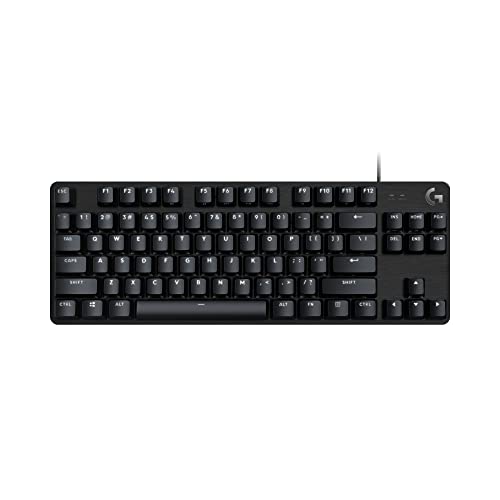
Logitech G413 TKL SE
Its 1.9 mm actuation distance delivers fast, responsive key presses, earning strong value and rating among mainstream users.

Redragon K552P
Ideal for budget‑conscious gamers, the Redragon K552P comes in at $37.99—about $22 less than the Logitech mid‑range pick—while still offering a solid 50 gf actuation force.

Corsair K70 PRO TKL
Stands out with 8 MB onboard memory, letting you store complex macros and lighting profiles locally—features the other two keyboards lack, catering to enthusiasts seeking premium customization.
Also considered
Score Analysis
Key score advantages vs. runner-up (Redragon K552P)
Price Range
Logitech G413 TKL SE
$59.99
Redragon K552P
$37.99
Corsair K70 PRO TKL
$139.99

HyperX Alloy Origins Core
$90.71

SteelSeries Apex 9 TKL with HotSwap Optical
$139.99

SteelSeries Apex 3 TKL
$31.99

Razer Ornata V3 TKL
$99.99

Keychron K8 Tenkeyless
$63.99

MageGee 75% Mechanical Gaming Keyboard
$27.89

Attack Shark X68 HE
$39.99

Corsair K70 CORE TKL
$89.99
Spec Comparison
TL;DR: The Logitech G413 TKL SE delivers a solid aluminum build, durable PBT keycaps and tactile 1.9 mm/50 g switches in a lightweight 1.43 lb tenkeyless form, though its 6‑key rollover limits ultra‑fast combos.
The standout spec is the 1.9 mm actuation distance paired with a 50 g actuation force, giving each keystroke a crisp, tactile feel that competitive FPS players appreciate. Its brushed‑aluminum top case and heat‑ and wear‑resistant PBT keycaps add a premium look while keeping the keyboard at a modest 650 g (1.43 lb).
Compared with the other ten keyboards in this roundup, the G413 TKL SE is lighter than the HyperX Alloy Origins Core (≈1.98 lb) and the Redragon K552P (≈1.98 lb), but a bit heavier than the SteelSeries Apex 3 TKL (≈1.4 lb). Its 1800 mm (1.8 m) cable length matches the typical wired length of peers like the Corsair K70 CORE TKL and the HyperX model, while offering a sturdier metal chassis than the plastic‑based Apex 3.
User reviews repeatedly praise the keyboard’s durability – professional reviewers highlight the tactile switches for split‑second decisions and editors note the PBT keycaps as some of the most resilient on the market. The 6‑key rollover with anti‑ghosting’s reliable for most gaming scenarios, yet several users mention it can feel restrictive in games that demand many simultaneous inputs. Adjustable tilt is missing and programmable macro keys are absent, which many cite as common trade‑offs.
The board measures 355 mm in length, 127 mm in width and 36.3 mm in height, fitting comfortably on a standard desk without sacrificing key spacing. It connects via a USB 2.0 wired interface and includes twelve function keys for media control. Compatibility spans Windows 10+ and macOS 10.14+ and the unit includes a 1‑year limited hardware warranty.
Pros
Cons
Best for: Competitive gamers, especially FPS players, who need a compact, durable TKL keyboard with tactile switches.
Avoid if: You need extensive RGB lighting, macro programming, or a highly ergonomic tilt‑adjustable board.
TL;DR: The Redragon K552P offers a clicky Outemu Blue switch, full 100% NKRO and 18‑mode RGB lighting at a budget‑friendly price, though its fixed cable and loud clicks may limit quiet or portable setups.
The K552P packs a 1000 Hz (1 ms) polling rate and 50 gf actuation force with a short 2.0 mm key travel, delivering crisp keystrokes that gamers appreciate. Its metal‑ABS frame, splash‑proof design and double‑shot PBT keycaps add durability, while 12 multimedia keys and full‑NKRO across all 87 keys prevent missed inputs.
Compared with its peers, the K552P weighs more than the SteelSeries Apex 3 TKL (639 g) and Logitech G413 TKL SE (650 g), but matches the HyperX Alloy Origins Core at 900 g and is only slightly heavier than the Attack Shark X68 HE (855 g). Its 1000 Hz polling rate falls below the Attack Shark’s 8000 Hz, yet remains fast enough for most games. The 50 gf actuation force sits between the SteelSeries’ 60 g and HyperX’s 45 g, offering a balanced feel.
Professional reviewers note the keyboard’s strong performance‑to‑price ratio and praise the vivid RGB with 18 modes. Users love the satisfying click and reliable NKRO, but many note the loud clicky sound can be disruptive in quiet rooms and the non‑detachable USB cable reduces portability. Mac users also report limited native support.
Pros
Cons
Best for: Budget‑conscious gamers and typists who want reliable mechanical performance and RGB flair.
Avoid if: You need a silent keyboard, a detachable cable for portability, or full macOS compatibility.
“budget-friendly powerhouse”
“crisp, accurate keystrokes”
TL;DR: The Corsair K70 PRO TKL delivers ultra‑low 3.2 ms latency, an 8,000 Hz polling rate and fully adjustable 0.1‑4.0 mm actuation, but its premium price and heavyweight design may limit portability.
The standout spec is the magnetic MGX Hyperdrive switch that lets you dial actuation anywhere between 0.1 mm and 4.0 mm in 0.1 mm steps, paired with a measured wired latency of just 3.2 ms and a polling rate of up to 8,000 Hz. Those numbers place the keyboard in the fastest tier for competitive play, and the 8 MB onboard memory lets you store five profiles without needing software.
Compared with the other ten keyboards in this roundup, the K70 PRO TKL is heavier than the Logitech G413 TKL SE (1.433 lb) and the HyperX Alloy Origins Core (1.984 lb), yet lighter than the SteelSeries Apex 9 TKL (2.3 lb). Its polling rate dwarfs the 1,000 Hz that the Razer Ornata V3 TKL and the Corsair K70 CORE TKL use, while its adjustable actuation starts at 30 g—well below the fixed 45 g of the HyperX and K70 CORE models.
Reviewers consistently praise the sub‑4 ms latency and the rapid‑trigger button for FPS titles, noting the magnetic wrist rest adds comfort for the 3.9‑cm tall profile. However, users also flag the standard ABS double‑shot keycaps for developing a shiny finish over time, and the near‑1 kg weight can feel cumbersome when moving the rig between rooms.
Beyond the low latency, the keyboard offers per‑key RGB, a multi‑function rotary dial for media control, SOCD technology that prevents ghost inputs, and N‑KRO rollover so every key press registers. The detachable USB‑C to USB‑A cable and 2‑year warranty round out a feature‑rich package that aims at serious gamers.
Pros
Cons
Best for: Competitive gamers and esports enthusiasts who need sub‑4 ms latency, adjustable actuation and robust on‑board profile storage.
Avoid if: You prioritize a lightweight, low‑profile or wireless keyboard, as the premium price and solid build may not suit portable or budget‑focused setups.
TL;DR: The HyperX Alloy Origins Core is a solid TKL mechanical keyboard with an aluminum chassis, 45 g linear switches, per‑key RGB and a detachable USB‑C cable, priced at $79.99.
This tenkeyless board packs a full‑metal chassis that weighs about 1.98 lb (900 g) and measures 35.6 mm in height, 358.1 mm in length and 129.5 mm in width. The HyperX Aqua linear switches register at 45 g actuation force with a 1.8 mm actuation point and a 3.8 mm travel distance, giving a crisp response for fast‑paced games.
Compared with the other ten keyboards in the roundup, the Alloy Origins Core is heavier than the Logitech G413 TKL SE (≈1.43 lb) and the Corsair K70 CORE TKL (≈1.64 lb), but it matches the Redragon K552P’s 1.98 lb weight. It’s lighter than the Keychron K8 (≈2.20 lb). Cable length sits at 1.8 m, the same as both the Corsair and Logitech models, giving you plenty of reach without excess slack.
Reviewers consistently praise the ultra‑sturdy aluminum frame for eliminating flex during intense sessions, and they note the per‑key RGB (16,777,216 colors, five brightness levels) as a visual highlight. The detachable braided USB‑C cable and HyperX NGENUITY software earn marks for convenience and easy lighting customization. On the downside, the lack of hot‑swappable switches limits future personalization, and some users feel the 1.8 mm actuation point offers only a marginal speed edge over standard switches.
Pros
Cons
Best for: Competitive FPS and esports gamers who prioritize a compact desk footprint, sturdy build and per‑key RGB customization.
Avoid if: You need a full‑size keyboard with a numeric keypad or want hot‑swappable switches for easy future upgrades.
TL;DR: The SteelSeries Apex 9 TKL offers ultra‑fast 0.2 ms optical response, 35 g adjustable actuation and a premium aluminum‑steel build, but its $139.99 price and lack of wireless may limit budget‑focused buyers.
The standout spec is the 0.2 ms response time paired with SteelSeries Linear OptiPoint optical switches that let you toggle between 1.0 mm and 1.5 mm actuation points, all with a light 35 g force. SteelSeries markets this combination as a competitive edge for fast‑paced esports.
At 1043 g (2.3 Pounds) the Apex 9 TKL is heavier than the HyperX Alloy Origins Core (900 g) and the Corsair K70 CORE TKL (743 g), yet lighter than some full‑size steel‑frame boards. Its $139.99 price tag sits above entry‑level options like the Logitech G413 TKL SE, making it a premium‑tier choice within the roundup.
Everyday users consistently praise the keyboard’s speed, the ability to fine‑tune actuation, and the solid, space‑saving tenkeyless design. Professional reviewers highlight the 0.2 ms latency as a clear advantage in esports, while noting the 33 % faster actuation claim over traditional mechanical switches.
Beyond speed, the Apex 9 TKL packs a detachable USB‑C cable, per‑key RGB illumination, hotswappable switches, and a reinforced zero‑flex steel frame that features aircraft‑grade aluminum. It stores five custom on‑board profiles and promises a 100 million‑keypress switch lifespan.
Pros
Cons
Best for: Buyers willing to invest in a proven, high-quality option
Avoid if: You're shopping on a tight budget — it's priced at $139.99
TL;DR: The SteelSeries Apex 3 TKL offers ultra‑quiet 60 g Whisper Quiet membrane switches, full n‑key rollover and 8‑zone RGB in a lightweight 1.4‑lb, budget‑friendly package.
The Apex 3 TKL’s standout spec is its 60 g actuation force on Whisper Quiet membrane switches, which keep keystrokes silent enough for late‑night sessions. The keyboard also carries an IP32 rating for dust and water resistance, a full‑n‑key rollover, and a detachable (optional) USB‑C cable that reaches 1.8 m.
At 1.4 pounds, it’s lighter than the MageGee 75% Mechanical (1.918 lb) and the Redragon K552P (1.984 lb), making it easy to move around a shared desk. Its 1.8 m cable is longer than the MageGee’s 1.6 m lead and matches the Logitech G413 TKL SE’s 1800 mm cable, giving you plenty of reach without excess slack.
Users consistently praise the silent switches and spill‑resistant design, noting that the keyboard stays quiet even during marathon gaming nights. Reviewers, however, point out noticeable input latency that can hinder competitive play, and the zone‑based RGB lighting offers only zone‑based effects rather than per‑key customization. The missing integrated wrist rest also draws ergonomic complaints.
Beyond the basics, the Apex 3 TKL includes dedicated media controls with a volume roller, three tilt‑position legs for angle adjustment, and SteelSeries GG software that lets you program macros and customize the 8‑zone lighting.
Pros
Cons
Best for: Budget-conscious buyers seeking a reliable entry-level option
Avoid if: You are a competitive esports professional, need mechanical‑switch feel, or require per‑key RGB lighting
TL;DR: The Razer Ornata V3 TKL packs a 2000 mm braided cable, 1000 Hz polling, and a magnetic wrist rest into a compact 87‑key layout, but its higher price may give pause.
One of the most distinctive specs is the 2000 mm braided fiber cable, giving you a bit more reach than the HyperX Alloy Origins Core's 1.8 m cable. Coupled with a 1000 Hz polling rate, the keyboard promises responsive input that matches many wired competitors.
Compared with the other ten keyboards in this roundup, the Ornata V3 TKL sits at the premium end of the price spectrum. Manufacturers list its weight as 454 g, while several rivals such as the HyperX and Corsair models report weight in pounds, making a direct gram‑to‑pound comparison less clear. The keyboard’s tenkeyless form factor (276.61 mm width × 144.27 mm depth) shares a footprint similar to the Logitech G413 TKL SE, yet the Ornata adds eight RGB zones and 16.8 million‑color lighting that many peers lack.
Professional reviewers praise the low‑profile mecha‑membrane switches for a clicky yet cushioned feel and note the magnetic soft‑touch wrist rest as a comfort win for long sessions. Everyday users echo the wrist‑rest convenience and vibrant lighting, but several mention the long pre‑travel distance of the switches making fast‑paced games feel a bit sluggish. Experts note higher‑than‑average input latency, suggesting the keyboard suits casual gaming and typing better than competitive esports.
Pros
Cons
Best for: Casual gamers, typists, and hybrid work‑gaming users who want ergonomic comfort and rich RGB customization.
Avoid if: You're shopping on a tight budget — it's priced at $105.32.
“Easy wrist rest removal via magnets”
“Comfortable low‑profile typing for hours”
TL;DR: The Keychron K8 Tenkeyless packs 87 keys, Bluetooth 5.1 with three‑device pairing, a 4000 mAh battery lasting up to 200 hours (backlight off), and a solid 2.2‑lb build for a well‑rounded mid‑range wireless keyboard.
What really sets the K8 apart is its wireless freedom: Bluetooth 5.1 lets you connect up to three devices at once, and the 4000 mAh battery holds out for 200 hours when the backlight is off. Pair that with Gateron G Pro Brown switches rated for 50 million keystrokes, and you’ve got a tactile typing experience that’s both durable and responsive. The board measures 25.2 in in depth and width and 7.6 in in height, and it weighs 2.20462262 pounds, giving it a sturdy feel on the desk.
Compared with the other ten keyboards in this roundup, the K8 is noticeably heavier than the Logitech G413 TKL SE (1.433 lb) and the HyperX Alloy Origins Core (1.984 lb), and it also has a larger footprint than the ultra‑compact Attack Shark X68 HE, which measures just 32.5 × 11.8 × 4 cm. It isn’t the lightest option—Redragon K552P and SteelSeries Apex 3 TKL sit around 1.4 lb—but its weight contributes to a stable, non‑wobbling typing platform that many wired competitors lack.
Users consistently praise the long battery life and the smooth Bluetooth multi‑device switching, calling it “great for office work” and “ideal for a tidy desk.” Professional reviewers note the solid plastic chassis and the reliable feel of the Brown switches. The most common complaints revolve around the lack of dedicated customization software and the absence of a wrist rest, which some users say makes extended sessions less comfortable.
On the technical side, the K8 offers 6KRO wireless key rollover and full N‑key rollover when wired, ensuring no missed keystrokes during fast typing or light gaming. It includes two adjustable feet levels for a modest tilt, and a single‑color white backlight that stays subtle. The USB‑C charging port means you can power it up quickly, and the included Windows and macOS keycaps make switching OSes hassle‑free.
Pros
Cons
Best for: Most users looking for a well‑reviewed, reliable mainstream option
Avoid if: You have limited desk space or need portability
TL;DR: At $27.89 the MageGee 75% Mechanical Gaming Keyboard offers a compact metal‑built layout, linear yellow switches, hot‑swap capability, and 100% anti‑ghosting, making it a solid budget pick for gamers and typists.
This keyboard packs a 75% layout with 87 keys into a 14.02‑in (356 mm) length, 1.50‑in (38 mm) height and 5.04‑in (128 mm) width, while staying at a manageable 1.92 lb. It features hot‑swappable linear yellow switches, 12 multimedia keys, a volume‑and‑lighting knob, and 100% anti‑ghosting, and a 50 million‑stroke lifespan backs them.
At 1.92 lb it’s heavier than the SteelSeries Apex 3 TKL’s 1.40 lb frame and the Logitech G413 TKL SE’s 1.43 lb build, yet lighter than the Redragon K552P’s 1.98 lb and HyperX Alloy Origins Core’s 1.98 lb chassis. Its 1.6 m cable is a bit shorter than the 1.8 m cables found on SteelSeries, Logitech and HyperX, giving a slightly tighter desk setup. Compared with the Attack Shark X68 HE, which tips the scales at 855 g, the MageGee feels solid but not overly bulky.
Reviewers appreciate the smooth, low‑friction feel of the linear yellow switches and the sturdy alloy metal panel, noting that the keyboard feels premium for its price. However, users frequently mention a hollow, reverberant typing sound and a blue‑only lighting scheme that limits color customization. The wired‑only USB‑A connection and right‑side USB port placement also draw criticism from those who prefer more flexible setups.
Pros
Cons
Best for: Shoppers on a tight budget who want the most for their money
Avoid if: You need wireless connectivity, full RGB lighting, or a quieter acoustic profile
TL;DR: The Attack Shark X68 HE packs magnetic Hall‑Effect switches, 0.13 ms latency and an 8000 Hz polling rate into a compact 60% layout for $39.99, making it a fast, tunable choice for competitive gamers.
Its magnetic Hall‑Effect switch system stands out, offering a rapid‑trigger accuracy of 0.01 mm and an adjustable actuation range of 0.1‑3.4 mm. Combined with a measured latency of 0.13 ms and an 8000 Hz polling rate, the keyboard delivers near‑instantaneous key response.
Weighing in at 855 g, the X68 HE is lighter than the Redragon K552P (900 g) and the HyperX Alloy Origins Core (≈1.98 lb) but heavier than the SteelSeries Apex 3 TKL (≈1.40 lb). Priced at $39.99, it's in the budget tier without being the cheapest option, and its 60% ANSI layout with 66 keys keeps it as compact as the other mid‑size keyboards in the roundup.
Reviewers consistently praise the ultra‑low latency for FPS and MOBA titles, noting the Hall‑Effect switches feel smooth and reliable. The wired‑only USB‑C connection, however, limits portability for gamers who prefer a cable‑free setup. The keyboard also includes South‑facing RGB lighting with 16.8 million colors and a web‑based configurator for Snap Tap, Mod‑Tap and other custom functions.
Pros
Cons
Best for: Competitive FPS and MOBA gamers who need sub‑millisecond response and highly tunable rapid‑trigger settings.
Avoid if: You require wireless freedom, a premium metal build, or the absolute lowest price in the TKL segment.
TL;DR: The Corsair K70 CORE TKL offers pre‑lubricated MLX Red v2 linear switches with a 45 g actuation force, 1000 Hz polling, and a sturdy aluminum frame in a compact tenkeyless layout.
The keyboard’s standout feature is its Corsair MLX Red v2 linear switches, which come pre‑lubricated and register a 45 g actuation force with a 1.9 mm travel distance. Combined with a 1000 Hz polling rate, 8 MB of onboard memory, and full NKRO across 87 keys, the K70 CORE TKL provides fast, reliable input. Its aluminum top plate, EVA‑foam sound‑dampening layers, and adjustable height add a premium feel while keeping the overall weight at 1.64 lb (743 g).
Compared with the other tenkeyless options in this roundup, the K70 CORE TKL sits in the middle of the weight range—lighter than the HyperX Alloy Origins Core (≈1.98 lb) and the Keychron K8 (≈2.20 lb), but a touch heavier than the Logitech G413 TKL SE (≈1.43 lb). Cable length matches the HyperX and Logitech models at 1.8 m, while its 45 g actuation force aligns with HyperX and undercuts Logitech’s 50 g force. The 1000 Hz polling ties with the Razer Ornata V3 TKL, though the Attack Shark X68 HE pushes a faster 8000 Hz rate.
Users consistently praise the keyboard’s smooth, quiet linear switches and the highly customizable per‑key RGB lighting integrated with iCUE. Professional reviewers note the aluminum frame and dual‑layer sound dampening that deliver a “pleasant typing and gaming experience.” The most common complaints focus on the fixed USB‑A cable, which limits cable‑management options, and the lack of wireless connectivity that some competitors provide.
Additional technical highlights include a 4 mm total travel distance, a 70 million‑keystroke lifespan, and a rotary dial for brightness control. The keyboard also supports Windows lock via an FN shortcut and offers five onboard lighting profiles, makes it adaptable for both competitive play and everyday use.
Pros
Cons
Best for: Those prioritizing quality and willing to pay for premium performance
Avoid if: Reliability and user satisfaction are your top concerns
Breakdown
Logitech G413 TKL SE
Pros
Redragon K552P
Pros
Corsair K70 PRO TKL
Pros
Cons
HyperX Alloy Origins Core
Pros
Based on scoring data and product specs
Personalized picks
Best Overall Pick
Logitech G413 TKL SE
Best Mid-Range PickBest for: Most users looking for a well-reviewed, reliable mainstream option
Redragon K552P
Best for: Budget-conscious buyers seeking a reliable entry-level option
$37.99-$22.00 vs winner
Skip Corsair K70 CORE TKL if…
Reliability and user satisfaction are your top concerns
The Logitech G413 TKL SE takes the top spot thanks to its solid 4.6/5 rating from 2,447 reviewers, a tactile mechanical switch with a 1.9 mm actuation distance, and reliable 6‑key rollover with anti‑ghosting. Its brushed‑aluminum case feels sturdy, while the per‑key white LED backlighting adds a clean look without extra software. At about 1.43 lb (650 g) it’s lightweight enough for desk moves yet still feels substantial.
The Redragon K552P lands as the runner‑up, ideal if you need a clicky, Outemu Blue switch experience on a tight budget. It offers full 100 % anti‑ghosting across all 87 keys, 12 multimedia shortcuts, and a bright RGB backlight with 18 modes—all for $37.99 and a strong 4.5/5 rating from over 54,000 users.
MageGee’s 75 % Mechanical Gaming Keyboard offers the best budget pick at $27.89, delivering a compact layout for the lowest price. If you’re after a premium experience, the Corsair K70 PRO TKL stands out at $179.99 with high‑end features that justify its premium tag.
Pick the Logitech G413 TKL SE now for a well‑rounded, mid‑range gaming keyboard that won’t disappoint.
The Logitech G413 TKL SE at $59.99 offers a solid aluminum build, tactile mechanical switches and a white per‑key LED while staying under $60, making it a strong value proposition. It undercuts higher‑priced premium models and still provides a reliable 6‑key rollover with anti‑ghosting.
No reviews yet — be the first to share your experience.
Please sign in to leave a review