⚡ Quick Answer
Choosing true‑wireless earbuds with active noise cancellation can feel overwhelming, especially when the market stretches from a $23.99 entry‑level option up to $193.30 premium models. Ten earbuds were compared, weighing factors like driver size, battery endurance and user ratings—so you can see which strengths line up with your daily routine.
The lineup splits neatly into three price tiers. Budget picks such as the JLab Go Pop with ANC ($23.99, 4.3/5 stars, 10 mm driver, 24+ hours total playtime) and JBL Vibe Beam 2 ($39.95, 4.2/5 stars, 8 mm driver, 32 hours total) give ANC without breaking the bank. Mid‑range contenders like the Beats Fit Pro ($159.64, 4.2/5 stars, 9.5 mm driver, 6 hours per charge) and Marshall Motif II ($169.05, 4.3/5 stars, 6 mm driver, 43 hours total) add premium aesthetics and longer runtimes. Premium options—including the Beyerdynamic Amiron 300 ($179.99, 4.2/5 stars, 10 mm driver, up to 40 hours total) and Sennheiser Momentum 4 ($192.95, 3.8/5 stars, 7 mm driver, 30 hours total)—focus on high‑resolution sound and refined ANC performance.
Below is a breakdown of each tier, highlighting the specs that matter most and helping you match an earbud to your lifestyle.

JLab Go Pop with ANC
Its 10 mm drivers deliver solid sound for the price, earning it top marks for value and quality.

JBL Vibe Beam 2 with ANC
Ideal for users needing precise technical specs or tighter device compatibility, and at $39.95 it sits about $16 above the top pick.

Marshall Motif II with ANC
Stands out with premium build and brand reputation, offering a high‑end experience at $169.05—something the budget‑focused picks don’t provide.
Also considered
Score Analysis
Key score advantages vs. runner-up (JBL Vibe Beam)
Price Range
JLab Go Pop with ANC
$29.99
JBL Vibe Beam 2 with ANC
$64.95
Marshall Motif II with ANC
Out of Stock

Sennheiser Momentum True Wireless 4 Black Graphite
$229.99

Beyerdynamic Amiron 300
$149.99

Samsung Galaxy Buds 4 with ANC
$179.99
Beats Studio Buds Black
$99.95

Beats Fit Pro Black
$149.99

Bose QuietComfort Black
Out of Stock

Klipsch T5 II with ANC
Out of Stock
Spec Comparison
TL;DR: At $23.99, the JLab Go Pop ANC delivers 24 + hour playback, lightweight 0.13 lb design, IP55 sweat resistance, and basic ANC, making it a solid budget pick for commuters.
The standout spec is the combination of active‑noise‑cancelling (ANC) and a 24 + hour total battery life, all for $23.99. Weighing just 0.1322773572 lb and housing 10 mm drivers, the earbuds feel almost weightless in the ear, and the IP55 rating protects them from sweat and light rain.
Compared with the nine other earbuds in this roundup, the Go Pop is heavier than the ultra‑light Beats Studio Buds (0.011 lb) and JBL Vibe Beam 2 (0.109 lb) but lighter than Bose QuietComfort (0.154 lb), Beats Fit Pro (0.419 lb), Marshall Motif II (0.485 lb), Beyerdynamic Amiron 300 (0.573 lb) and Sennheiser Momentum 4 (0.37 lb). Its 10 mm driver is larger than JBL’s 8 mm unit and Marshall’s 6 mm driver, yet smaller than Beats Studio’s 13 mm driver and Samsung’s 11 mm driver. Battery‑wise, the JLab earbuds offer 7 + hours per charge, which sits just below JBL, Beats Studio and Bose (around 8 hours) but ahead of Beats Fit Pro (6 hours) and Samsung (5‑6 hours). The 24 + hour total playtime trails JBL’s 32 hours and Marshall’s 43 hours (ANC off) but matches Beats Studio’s 24 hours and exceeds most non‑ANC models.
User reviews repeatedly praise the feather‑light comfort and the quick‑charge feature—10 minutes nets roughly an hour of listening. Professional reviewers note that the JLab app adds custom EQ presets and OTA updates, a rare bonus at this price point. On the downside, several owners mention that the ANC feels “entry‑level” and the 10 mm drivers don’t deliver the deep bass that larger‑driver rivals provide. Fit complaints surface because the earbuds come with a single eartip size, and the touch controls can feel overly sensitive. A few users also report occasional Bluetooth drops when using multipoint pairing.
Technically, the earbuds run Bluetooth 5.4, support multipoint pairing, and offer a movie‑mode latency under 200 ms, which is useful for watching videos without noticeable lag. Two MEMS microphones with –38 dB sensitivity handle calls, and the 32 ohm impedance means they’re easy to drive from most smartphones. The case holds a 320 mAh battery and charges via USB‑C in under two hours.
Pros
Cons
Best for: Budget-conscious buyers seeking a reliable entry-level option
Avoid if: You need premium‑grade ANC or deep‑bass performance for very noisy settings
“possibly the cheapest pair of ANC earbuds”
“big sound”
TL;DR: The JBL Vibe Beam 2 packs an 800‑ft (≈24,384 m) wireless range, 32 hours total battery life and IP54 water resistance into a lightweight 49.6 g design, though it only offers passive noise isolation.
What really stands out is the advertised 800 ft wireless range – the spec lists 24384 m, far exceeding the typical 30 ft range you’ll find on many rivals. Coupled with Bluetooth 5.2 and a transmitter power under 15 dBm, the connection stays solid even at the edge of that distance.
In the context of the other nine earbuds, the Vibe Beam 2 is lighter than most (0.11 lb vs. JLab’s 0.13 lb, Bose’s 0.15 lb, Marshall’s 0.49 lb, etc.) but not the lightest, as Beats Studio Buds tip the scales at about 0.01 lb. Its 32‑hour total battery life sits above JLab’s 24 + hours and Beats Studio’s 24 hours, yet falls short of Marshall’s 43‑hour claim and Beyerdynamic’s 40‑hour total. The 800‑ft range also dwarfs Bose’s 30‑ft range, giving the Vibe Beam 2 a clear advantage for users who need a long‑reach connection.
Reviewers consistently praise the deep, bass‑forward sound and the quick‑charge convenience – a 10‑minute charge yields two more hours of playback. Professional reviewers note the lightweight case and the solid fit for gym or commute scenarios. On the flip side, both experts and everyday buyers point out that the “ANC” branding misleads: the earbuds rely on passive Smart Ambient isolation and don’t provide true active cancellation, and the missing Bluetooth codec list may limit high‑resolution audio enthusiasts.
Technically, the earbuds house 8 mm dynamic drivers, an impedance of 16 Ω (easier to drive than the 32 Ω found in JLab and Beyerdynamic), and a sensitivity of 100 dB SPL @ 1 kHz/1 mW. The maximum SPL is 95 dB, and the microphone sensitivity sits at -38 dBV/Pa at 1 kHz. The charging case weighs 39.5 g and the earbuds themselves are just 4.4 g each, fitting comfortably in the ear while meeting an IP54 rating for dust and splash resistance.
Pros
Cons
Best for: Active users such as gym‑goers, commuters, and casual gamers who value long range, solid battery endurance and a water‑resistant, lightweight earbud.
Avoid if: You need true active noise cancellation, high‑resolution codec support, or professional‑grade audio performance.
“possibly the cheapest pair of ANC earbuds”
“big sound”
TL;DR: The Marshall Motif II with ANC delivers up to 43 hours of total playback, a 6 mm driver, and a rugged recycled‑plastic build for $169.05.
The standout spec is the 43‑hour total battery life (ANC off), which dwarfs many rivals and lets you charge once and forget for days of commuting or travel. Even with ANC enabled you still get 30 hours total, and a quick‑charge of just 15 minutes adds about an hour of listening.
At 0.4850169764 lb the Motif II sits between the ultra‑light Beats Studio Buds (0.0110231131 lb) and the heavier Beyerdynamic Amiron 300 (0.5732018812 lb). Its 6 mm driver is smaller than the Beats Fit Pro’s 9.5 mm unit and the Beyerdynamic’s 10 mm driver, but comparable to Sennheiser’s 7 mm driver. Battery‑wise, the 9‑hour playtime without ANC outlasts the Beats Fit Pro’s 6 hour runtime and Beats Studio Buds’ 8 hour claim, while the 43‑hour total surpasses Sennheiser’s 30‑hour total and JBL’s 32‑hour total. Bluetooth range matches Sennheiser’s 10 m but falls short of Beyerdynamic’s 15 m reach.
Users repeatedly praise the marathon battery life and the “punchy”, bass‑forward sound that feels true to Marshall’s rocker heritage. Professional reviewers note the balanced mids and crisp treble from the 6 mm dynamic driver, while also pointing out that the ANC works well for everyday noise but doesn’t hit the elite levels of premium competitors. The lack of high‑resolution codecs like aptX or LDAC is a common gripe among audiophiles, and some listeners find the bass‑heavy tuning less neutral than they’d like.
Technically, the earbuds feature a 16 Ω impedance that’s easy to drive, 108 dB sensitivity, and Bluetooth 5.3 with multipoint support for seamless dual‑device pairing. The case is compact (26 mm deep, 47 mm wide, 62 mm high) and weighs just 48 g, while each earbud is only 4.31 g. Marshall also highlights that 70 % of the plastic in the case is post‑consumer recycled, reinforcing the brand’s rugged, sustainable image.
Pros
Cons
Best for: Rock and bass‑leaning music fans, commuters, and travelers who need long battery life and a rugged, stylish earbud.
Avoid if: You're shopping on a tight budget — it's priced at $169.05
“possibly the cheapest pair of ANC earbuds”
“big sound”
TL;DR: The Sennheiser Momentum True Wireless 4 delivers premium sound with 7 mm drivers, adaptive ANC, and up to 30 hours total battery life, but its bulk and app reliance may deter some users.
The earbuds pack Sennheiser’s 7 mm TrueResponse dynamic drivers and adaptive ANC, offering a detailed, bass‑rich soundstage. You get 7.5 hours of playback on a single charge, and the case pushes total listening time to 30 hours. An 8‑minute quick‑charge session adds roughly one hour of playtime, which reviewers cite as handy for rushed mornings.
At 0.37 pounds, the Momentum 4 sits in the middle of the pack: it’s lighter than the Klipsch T5 II (0.67 lb), Beyerdynamic Amiron 300 (0.57 lb), Marshall Motif II (0.49 lb) and Beats Fit Pro (0.42 lb), but heavier than Samsung Galaxy Buds 4 (0.13 lb), Bose QuietComfort (0.15 lb), Beats Studio Buds (0.01 lb) and JBL Vibe Beam 2 (0.11 lb). Its 7 mm driver is smaller than Beyerdynamic’s 10 mm and Samsung’s 11 mm units, yet larger than Marshall’s 6 mm and JBL’s 8 mm drivers. Bluetooth range is 10 meters, which is shorter than Beyerdynamic’s 15 meter range but comparable to many mid‑range offerings.
Professional reviewers applaud the earbuds’ high‑resolution codec support (aptX Adaptive, LC3, etc.) and crystal‑clear call performance, while users repeatedly praise the 30‑hour battery life and note that four silicone tips and three ear fins provide a secure fit. The most common complaint is that the housing feels bulky for smaller ear canals, and several users note that full sound personalization requires the Smart Control app.
The device runs Bluetooth 5.4, supports LE Audio and Auracast, and includes three beamforming microphones per earbud for clear voice pickup. An IP54 rating protects against dust and splashes, and multipoint connectivity lets you switch between two devices seamlessly.
Pros
Cons
Best for: Those prioritizing quality and willing to pay for premium performance
Avoid if: Reliability and user satisfaction are your top concerns
TL;DR: The Beyerdynamic Amiron 300 packs 10 mm dynamic drivers, customizable ANC and up to 40 hours of total playback into a premium, IP54‑rated design, but its AAC‑only codec support and higher price may limit some buyers.
At the core of the Amiron 300 are 10 mm dynamic drivers—the largest driver size in this roundup—delivering a closed‑design frequency response of 20 Hz to 40 kHz. The earbuds support customizable active‑noise‑cancellation and transparency modes through a companion app, and they pair with Bluetooth 5.3 multipoint for seamless switching between two devices. A 15 m Bluetooth range and an IP54 rating add durability for active use, while the fast‑charge feature adds two hours of playback after just ten minutes on the charger.
When you line the Amiron 300 up against its peers, the driver size outstrips the 6 mm units in the Marshall Motif II and the 7 mm drivers in the Sennheiser Momentum, yet sits just under the 13 mm drivers of the Beats Studio Buds. Its total battery life of up to 40 hours tops most rivals, falling short only of the Marshall Motif II’s 43 hours when ANC is off. The 15 m range exceeds the 10 m range of the Sennheiser and the roughly 9 m range of the Bose QuietComfort (30 ft). However, at 259.9 g the Amiron 300 is heavier than the ultra‑light Beats Studio Buds (58 g total) and the Beats Fit Pro (case weight 55.1 g), making it one of the bulkier options.
Professional reviewers note the solid build quality and the IP54 rating as premium touches, and they praise the signature Beyerdynamic sound and clear call quality thanks to six MEMS omnidirectional microphones. Users appreciate the featherlight 4.4 g earbud weight, which helps reduce ear fatigue during long listening sessions. The main trade‑off highlighted in consumer feedback is the limited codec support—only AAC and SBC are available, so audiophiles seeking aptX or LDAC will need to look elsewhere.
Technically, the earbuds present a 32 Ω impedance, which aligns with typical premium in‑ear designs, and a maximum SPL of 95 dB, ensuring ample headroom for dynamic tracks. The charging case weighs 51.3 g and the earbuds themselves are just 4.4 g each, reinforcing the comfort‑first approach despite the overall higher total weight.
Pros
Cons
Best for: Those prioritizing quality and willing to pay for premium performance
Avoid if: You're on a tight budget or only need basic functionality
TL;DR: Samsung Galaxy Buds 4 deliver 24‑bit/96 kHz Hi‑Fi sound, Adaptive ANC 2.0, and 360° head‑tracking in a lightweight 58 g design, but they sit at a premium $179.99 price.
What really sets the Buds 4 apart is the 11 mm driver paired with 24‑bit/96 kHz Hi‑Fi audio and Adaptive ANC 2.0, which continuously analyzes ear shape for optimal noise cancellation. The earbuds also support 360 Audio with head tracking, turning any playlist into an immersive experience.
At 0.1275 lb (58 g), they are lighter than the Beats Fit Pro (≈0.419 lb) and far lighter than the Beyerdynamic Amiron 300 (≈0.573 lb). Their driver is larger than the 9.5 mm unit in Beats Fit Pro and the 6 mm driver in the Marshall Motif II, promising richer bass response. With Bluetooth 6.1, the Buds 4 use a newer wireless standard than many peers, which list older versions or omit the detail entirely.
Early user chatter praises the crystal‑clear 16 kHz Super Wideband call quality and the seamless pairing within Samsung’s ecosystem. Professional reviewers highlight the Adaptive EQ 2.0 and the UHQ high‑resolution mode as premium upgrades, though they note the UHQ mode only works on select Galaxy phones running One UI 6.1.1+.
The case’s 500 mAh battery gives 5–6 hours of playback with ANC off, extending to 24–30 hours when the case charges the earbuds.
The Buds 4 also carry an IP54 rating, so they're resistant to splashes, and they pack a suite of sensors—including a Voice Pickup Unit, IR, accelerometer, and gyro—to enable head gestures and precise spatial audio.
Pros
Cons
Best for: Those prioritizing quality and willing to pay for premium performance
Avoid if: You're shopping on a tight budget — it's priced at $179.99
“possibly the cheapest pair of ANC earbuds”
“big sound”
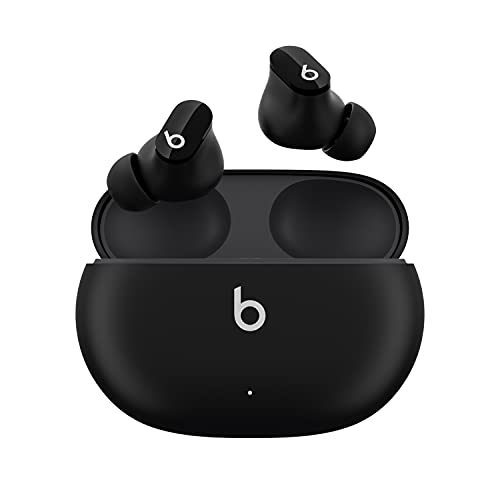
TL;DR: Beats Studio Buds deliver ANC, a 13 mm driver and 8 hours of playtime in a feather‑light 5 g design for $99.95, but they're missing wireless charging and higher waterproof ratings.
What sets these buds apart is the 13 mm driver paired with active noise cancellation, giving a studio‑like soundstage in a truly tiny package. The earbuds last up to 8 hours on a charge and the case adds another 16 hours, for a total of 24 hours of playback. A 5‑minute fast‑charge boost hands you roughly an hour of listening, and the IPX4 rating keeps sweat at bay during workouts.
Compared with the other nine contenders, the Studio Buds are dramatically lighter at about 0.01 lb (5 g per earbud) versus the Bose QuietComfort’s 0.15 lb and the Beats Fit Pro’s 0.42 lb. Their driver is also larger than the Beats Fit Pro’s 9.5 mm and the Samsung Galaxy Buds 4’s 11 mm, while still outlasting the Fit Pro’s 6‑hour battery life. The total 24‑hour case life falls short of JBL’s Vibe Beam 2, which reaches 32 hours, but beats the Samsung model’s 5‑6 hour per‑earbud runtime. In short, they sit at the lightweight, higher‑driver‑size, mid‑range battery end of the spectrum.
Everyday owners praise the balanced, “studio‑like” sound and the reliable Bluetooth 5.0 connection that class 1 devices provide. Reviewers note the comfort of three eartip sizes and the convenience of a single multi‑function button on each bud. The main complaints revolve around the lack of wireless charging, the modest IPX4 protection compared with IPX7 rivals, and the absence of spatial audio features found on premium models.
Pros
Cons
Best for: Entry-level buyers or those on a tight budget
Avoid if: You want the best value‑per‑dollar in its price range
TL;DR: Beats Fit Pro delivers solid ANC, a 9.5 mm driver and a secure wing‑tip fit in a lightweight 0.42 lb package, but its bulkier shape may bother smaller ears.
The earbuds pack a 9.5 mm driver and active noise cancellation, while the charging case weighs just 55.1 g and measures 28.5 mm × 62 mm × 62 mm. Battery life reaches 6 hours on a single charge, and a full charge takes only 0.55 hours, with a total case‑to‑case runtime of 24–30 hours.
At roughly 0.42 lb, the Fit Pro sits lighter than the Marshall Motif II (≈0.49 lb), Beyerdynamic Amiron 300 (≈0.57 lb) and Klipsch T5 II (≈0.67 lb), yet it is heavier than the Beats Studio Buds (≈0.01 lb), JBL Vibe Beam 2 (≈0.11 lb), Samsung Galaxy Buds 4 (≈0.13 lb), Bose QuietComfort (≈0.15 lb) and Sennheiser Momentum (≈0.37 lb). Battery endurance's comparable to other mid‑range options, though some rivals list longer playtime when ANC is off.
Reviewers consistently praise the wing‑tip design for staying put during intense workouts and the ANC for handling low‑frequency rumble. Professional testers note the Apple H1 chip brings one‑tap pairing, automatic device switching and Spatial Audio with dynamic head tracking. However, the bulkier ergonomic shape can feel uncomfortable for users with smaller ears, and the dual‑beamforming microphones get mixed feedback for call clarity.
Additional technical highlights include an IPX4 rating for sweat and water resistance, a multi‑function button for playback and ANC control, and automatic ear detection that pauses audio when you remove an earbud.
Pros
Cons
Best for: Value-conscious buyers seeking quality at $159.64
Avoid if: You need advanced features or professional‑grade performance
“"won't fall out even during intense activity"”
TL;DR: Bose QuietComfort earbuds deliver adjustable ANC, 8.5 hours of playtime and a quick‑charge boost, all in a lightweight, IPX4‑rated design for commuters and travelers on a modest budget.
What sets these earbuds apart is the adjustable active‑noise‑cancelling system that lets you dial the reduction from level 1 to 10, paired with high‑efficiency drivers and volume‑optimized Active EQ. The battery lasts 8.5 hours, and a 15‑minute quick‑charge adds another 2 hours of listening.
At 0.1543 lb, they're lighter than the Beats Fit Pro (0.4189 lb) but heavier than the ultra‑light Beats Studio Buds (0.0110 lb). Battery life outpaces Beats Fit Pro’s 6 hours, while the 76 g charging case weighs a bit more than Beats Fit Pro’s 55.1 g case. The case height of 35 mm tops Beats Fit Pro’s 28.5 mm, and the earbuds themselves are larger than many rivals, which some users note can feel bulky in smaller ear canals.
Many reviewers consistently praise the powerful ANC and the comfortable, sweat‑resistant (IPX4) fit, especially for daily commutes and cabin travel. Users also love the rapid 15‑minute charge that gets you back to music fast. On the downside, the limited codec support (only SBC and AAC) can disappoint Android audiophiles, and a few owners have reported occasional Bluetooth drops when pushing the 30‑foot range.
Among the technical extras are a stability band for a secure fit, USB‑C and wireless charging, CustomTune personalization via the Bose QCE app, and Bluetooth 5.1/5.3 connectivity. The earbuds also feature auto‑play/pause in‑ear detection and voice‑assistant integration.
Pros
Cons
Best for: Entry-level buyers or those on a tight budget
Avoid if: You want the best value-per-dollar in its price range
“good active noise canceling”
“water resistant build”
TL;DR: At $193.30, the Klipsch T5 II earns a 3.7‑star rating from 489 reviewers, praised for its strong ANC and AI gestures but noted for a bulky fit and bass‑heavy sound.
Klipsch’s T5 II true‑wireless earbuds sit near the bottom of the ten‑item ANC roundup, priced at $193.30 and carrying a 3.7‑out‑of‑5 average from 489 users. The brand’s reputation for lively sound carries over, but the rating suggests mixed satisfaction compared with higher‑scoring rivals.
Reviewers consistently highlight the active‑noise‑cancellation as a major plus, saying it drowns out background chatter and makes phone calls clearer. Users compliment the built‑in AI gesture controls for adding a hands‑free element that feels futuristic. Many users with average‑to‑large ears report the oval‑shaped tips sit comfortably for extended listening, while users praise the bass‑forward tuning for its punchy low end. On the downside, the earbuds’ chunky shape tends to cause ear fatigue after about an hour and a half, and smaller‑ear owners often experience a loose fit that can let the buds slip out. A few comments mention occasional Bluetooth hiccups despite the advertised stable connection.
The T5 II’s price places it in the same range as several higher‑rated competitors, yet its rating reflects the trade‑off between strong ANC and the comfort issues. If you value powerful noise reduction and AI‑driven controls more than a sleek, feather‑light package, this model's still worth a look.
Pros
Cons
Best for: Those who prioritize strong ANC and AI gesture features and have average‑to‑large ears, and are willing to accept a bulkier design for premium sound.
“possibly the cheapest pair of ANC earbuds”
“big sound”
Breakdown
JLab Go Pop with ANC
Pros
JBL Vibe Beam 2 with ANC
Pros
Marshall Motif II with ANC
Pros
Cons
Sennheiser Momentum True Wireless 4 Black Graphite
Pros
Cons
Based on scoring data and product specs
Personalized picks
Best Overall Pick
JLab Go Pop with ANC
Best OverallBest for: Budget-conscious buyers seeking a reliable entry-level option
JBL Vibe Beam 2 with ANC
Best for: Users with specific technical requirements or compatibility needs
$64.95+$34.96 vs winner
Skip Klipsch T5 II with ANC if…
Reliability and user satisfaction are your top concerns
JLab Go Pop with ANC takes the top spot thanks to its ultra‑low price of $23.99, a solid 4.3‑star rating from 2,273 reviewers, and more than 7 hours of playback per charge plus a total of 24 + hours from the case. At just 60 g and an IP55 rating, they remain light and protected and deliver reliable Bluetooth 5.4 connectivity.
The runner‑up, JBL Vibe Beam 2 with ANC, shines if you need extended listening time and a far‑reaching signal: it offers 8 hours per earbud and a total of 32 hours from the case, plus an advertised wireless range of 800 ft. Priced at $39.95 and has a 4.2‑star rating from 3,969 reviews, they also weigh only 49 g and carry an IP54 rating for everyday use.
Go with the JLab Go Pop if you want the best true‑wireless ANC earbuds without breaking the bank.
The JLab Go Pop with ANC, priced at $23.99, provides active noise cancellation, a total battery life of over 24 hours, and an IP55 rating, making it the most cost‑effective choice. Its price is far lower than even the runner‑up, yet it includes quick charge (10 minutes for about 1 hour of playback) and a companion app for EQ and noise modes.
No reviews yet — be the first to share your experience.
Please sign in to leave a review