⚡ Quick Answer
We’ve lined up 11 true‑wireless earbuds that span the whole price spectrum—from the $19.99 Soundcore P20i to the $240.43 Samsung Galaxy Buds 3 Pro. The collection breaks cleanly into three tiers: budget picks like the JLab Go Air Pop+ ($24.88) and Sony WF‑C510, mid‑range options such as the Soundcore Sport X20 and Samsung Galaxy Buds FE, and premium contenders including the Beats Studio Buds and Marshall Motif II. Ratings hover between 4.2 and 4.4 stars, with the JLab and Soundcore P20i both earning 4.4/5.
If you commute daily, you’ll appreciate long playback—JLab’s earbuds deliver 540 minutes per charge and a total of 2 100 minutes with the case, while Sony pushes 11 hours on a single charge and 22 hours in total. Gym‑goers might lean toward the IP‑rated Samsung Galaxy Buds FE, which offers 8.5 hours of audio with ANC off and a 30‑hour total lifespan. For anyone hunting a balanced mix of sound quality and battery life without breaking the bank, the budget tier’s 9‑hour playtime from the Soundcore P20i (9 hours per earbud, 30 hours total) is hard to ignore.
Below, we’ll dive into each tier’s top candidates and match them to the scenarios where they shine most.

JLab Go Air Pop+
It delivers 540 minutes (9‑hour) battery life, keeping your music going all day without frequent recharges.

Soundcore P20i
Ideal for runners who need a light, 10 mm driver fit, it comes at $19.99—about $5 less than the top choice, saving you while still delivering solid sound.

Sony WF-C510
Offers up to 11 hours of playback with active sound management off, giving you extra endurance beyond the other picks.
Also considered
Score Analysis
Key score advantages vs. runner-up (Soundcore P20i)
Price Range
JLab Go Air Pop+
$24.88
Soundcore P20i
$19.99
Sony WF-C510
$64.95

Samsung Galaxy Buds FE
$96.47

Samsung Galaxy Buds 3 Pro Silver
$197.62

Soundcore Sport X20
$79.99
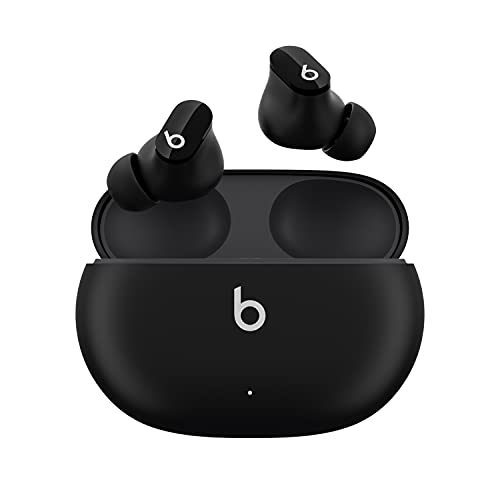
Beats Studio Buds Black
$99.95

Beats Fit Pro Black
$144.99

Marshall Motif II with ANC
$169.99

JBL Vibe Beam 2 with ANC
$39.95
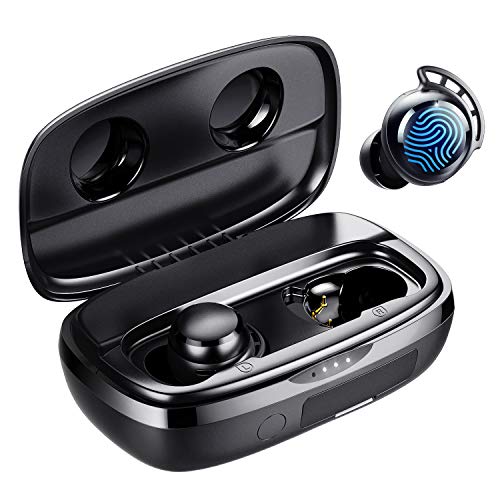
Tribit Wireless Earbuds
$31.99
Spec Comparison
TL;DR: The JLab Go Air Pop+ delivers 540 minutes of playback, IPX4 splash resistance and three EQ presets in an ultra‑light package for just under $25.
What really stands out is the 540 minutes of on‑ear listening per charge, backed by a total of 2 100 minutes when you factor in the charging case. The earbuds cap the maximum output at 95 dB, and JLab’s Safe Hearing feature protects your ears during long sessions.
Compared with the other ten models, the Go Air Pop+ is dramatically lighter – its weight of roughly 0.00066 lb is a fraction of the 0.001 lb of the Soundcore P20i and far below the 0.02125 lb of the Tribit FlyBuds 3, as well as the heavier JBL, Sony and Samsung options. Battery‑wise, its 540 minutes matches the Soundcore P20i’s 9‑hour claim and tops the Tribit’s 5‑7 hour range, while still beating the JBL’s 8‑hour figure. None of the listed competitors mention an IP rating, so the Pop+’s IPX4 water‑resistance gives it an edge for sweaty workouts or rainy commutes.
Everyday users love how the case slides onto a keyring and the buds stay snug thanks to the ergonomic design, while the three built‑in EQ presets (Signature, Balanced, Bass Boost) let you tweak the sound without an app. Reviewers from TechGearLab and SoundGuys note the “performance‑to‑price ratio” and “feature‑heavy” nature as major wins. Critics repeatedly point out the lack of active noise cancellation and a microphone that struggles in noisy environments, and some listeners say the treble becomes harsh at higher volumes.
Pros
Cons
Best for: Budget‑conscious buyers seeking a reliable entry‑level option
Avoid if: You need active noise cancellation, premium sound fidelity, or a microphone that excels in noisy surroundings
“feel like they are worth more than their lower price indicates”
“wildly sophisticated”
TL;DR: The Soundcore P20i offers 10 mm drivers, IPX5 sweat resistance, 9 hours of playback per charge and a total of 30 hours with its case, all for $19.99, making it a solid budget true‑wireless choice.
At the core of the P20i are 10 mm dynamic drivers that Soundcore markets as delivering a heavy, punchy mid‑bass and smooth mids. The earbuds weigh just 0.45 g (0.001 lb) and carry an IPX5 rating, so they're shrugging off sweat and light rain. Bluetooth 5.3 ensures a stable link, while the companion app adds 22 EQ presets and a low‑latency Game Mode for gaming or video syncing. Battery life tops out at 9 hours per earbud charge, extending to 30 hours total when you include the charging case, and a 10‑minute quick charge nets you 2 hours of playback.
When you line the P20i up against the other ten earbuds in this roundup, it lands near the light end—heavier than JLab’s Go Air Pop+ (0.3 g) but far lighter than Sony’s WF‑C510 (78.5 g). Its 10 mm driver is larger than the 8 mm unit in JBL’s Vibe Beam 2 and the 6 mm drivers in Sony and Samsung models, yet smaller than the 11 mm driver found in Soundcore’s own Sport X20. Battery‑wise, the P20i’s 9‑hour earbud runtime matches JLab’s 540‑minute claim and exceeds JBL’s 8‑hour limit, while its 30‑hour total outlasts most peers except JLab’s 2100‑minute total.
Reviewers consistently praise the bass‑forward sound signature, noting the “heavy, punchy mid‑bass with strong extension and texture.” The 22 EQ presets and Game Mode earn extra points for versatility and low‑latency performance. Users also like the IPX5 rating for workouts and the reliable Bluetooth 5.3 connection in crowded spaces. On the flip side, professionals point out the lack of active noise cancellation and a fast roll‑off in the treble, which can leave the high end feeling a bit dull. Some consumers describe the plastic housing as “plasticky,” suggesting the build quality feels less premium than higher‑priced rivals.
Pros
Cons
Best for: Budget‑conscious buyers seeking a reliable entry‑level option
Avoid if: You need advanced features or professional‑grade performance
TL;DR: Sony WF‑C510 offers ultra‑light 4.6 g earbuds, 11 hours of playback, quick‑charge in 5 minutes, IPX4 resistance, and solid Bluetooth 5.3 connectivity for $45.95.
The standout spec is the earbud weight: each bud is only 4.6 g, bringing the total package weight to 78.5 g (0.173 lb). Coupled with a 6 mm driver unit, the WF‑C510 manages a frequency response of 20 Hz–20 kHz while staying comfortably feather‑light for marathon commutes.
Compared with the other ten entries, the Sony pair sits near the lightest end of the spectrum—heavier than Tribit FlyBuds 3 (0.021 lb) but notably lighter than JBL Vibe Beam 2 (0.109 lb) and Soundcore Sport X20 (0.13 lb). Battery life also stacks up well: 11 hours of continuous music (22 hours with the case) outpaces JBL’s 8‑hour earbud runtime and Tribit’s 5‑7 hour range, and matches the roughly 9‑hour figure of JLab Go Air Pop+. Quick‑charge performance competes too; a 5‑minute burst grants an hour of playback, whereas JBL needs 10 minutes for two hours and Samsung Galaxy Buds FE offers a 5‑minute boost for 55 minutes.
Reviewers consistently highlight the comfort of the 4.6 g buds and the convenience of multipoint pairing, noting that switching between phone and laptop feels smooth. The IPX4 rating earns praise for surviving sweaty workouts and light rain. On the downside, users say the high‑frequency range feels recessed, often requiring an EQ tweak for a balanced sound, and they notice the lack of active noise cancellation in noisy cafés. Professional reviewers echo the comfort and battery strengths while pointing out the limited codec support (SBC, AAC only).
Additional technical details reinforce its everyday appeal: Bluetooth 5.3 ensures a stable 10 m (32 ft) link, the case weighs just 31 g, and the earbuds support ambient sound mode, hands‑free calling, and voice assistants like Google and Siri. The charging case refills in 3 hours, and the earbuds themselves top out at 1.5 hours for a full charge, fitting neatly into a pocket‑sized charging routine.
Pros
Cons
Best for: Most users looking for a well‑reviewed, reliable mainstream option
Avoid if: You need advanced features or professional‑grade performance
TL;DR: The Samsung Galaxy Buds FE deliver 99% ANC, 8.5 hours of playback, and a 5‑minute quick charge, all in a lightweight 5.6 g earbud design for $95.72.
The standout feature is the active‑noise‑cancellation that Samsung claims can cut background sound by up to 99%, paired with a 6.5 mm driver that aims for clear mids and punchy bass. Battery life reaches 8.5 hours when ANC is off (6 hours with ANC on), and a 5‑minute charge adds about 55 minutes of listening time. Each earbud weighs just 5.6 g, while the charging case is 40 g, making the whole set easy to carry.
Compared with the other ten earbuds in this roundup, the Buds FE are heavier than most: Beats Studio Buds tip the scales at 0.0110231131 pounds and Sony’s WF‑C510 at 0.17306287567 pounds, while JBL’s Vibe Beam 2 and Tribit FlyBuds 3 sit around 0.109349281952 pounds and 0.02125 pounds respectively. The Beats Fit Pro is the only rival that outweighs the Buds FE at 0.4188782978 pounds. In terms of battery life, the Buds FE match Beats Studio Buds’ 8‑hour claim and JBL’s 8‑hour spec, but fall short of Soundcore Sport X20’s 12‑hour single‑charge runtime. Quick‑charge performance lines up with Beats Studio Buds and Soundcore, both offering a 5‑minute boost.
User feedback repeatedly praises the comfortable, wing‑stabilised fit and the ANC’s effectiveness on low‑frequency noise like engine hum. Reviewers note the six‑microphone array delivers clear call quality, and the earbuds’ bass‑forward sound profile feels natural for daily commutes. The glossy charging case, however, frequently slips out of hands, and the lack of physical volume buttons or a dedicated volume slider on the touch surface draws criticism.
Beyond the headline specs, the Buds FE support Samsung’s SSC codec alongside AAC and SBC, run on Bluetooth 5.2, and include a suite of sensors—accelerometer, proximity, hall, magnetic, and touch—to enable auto‑switching between Samsung devices. The case dimensions are 50.0 × 50.0 × 27.7 mm, and the earbuds come with three pairs of ear tips and stability fins for a secure fit.
Pros
Cons
Best for: Most users looking for a well‑reviewed, reliable mainstream option
Avoid if: You're shopping on a tight budget — it's priced at $95.72
TL;DR: Samsung Galaxy Buds 3 Pro deliver premium 2‑way sound, up to 99% ANC, IPX7 resistance, and 28 hours total playback, but their $240.43 price places them at the high end of true‑wireless options.
The standout hardware is the 2‑way driver configuration – an 11 mm woofer paired with a 6.5 mm tweeter – plus adaptive ANC that cuts external noise by up to 99% and ambient‑sound amplification of up to 20 dB. These specs give the buds a balanced, dynamic soundstage that professional reviewers call Samsung’s best audio yet.
At 0.011875 lb (about 5.38 g), the earbuds are among the lightest in this roundup, only a shade heavier than Beats Studio Buds and far lighter than the Marshall Motif II, Beats Fit Pro, Soundcore Sport X20 and Sony WF‑C510. The charging case (27.8 mm × 50.2 mm × 50.0 mm) is also more compact than the Beats Fit Pro case and the Soundcore Sport X20 case. Battery‑wise, the Buds 3 Pro offer 28 hours total playback with ANC off and 18 hours with ANC on, beating Beats Fit Pro and Beats Studio Buds but trailing the Marshall and Soundcore models. The 5‑minute quick‑charge that grants one hour of listening outpaces the 15‑minute charge needed for a similar boost on Beats Fit Pro.
Everyday users love the deep bass, clear call quality and the integrated Samsung ecosystem features like auto‑switching and Bixby integration. However, several reviewers note that the fit can slip during intense workouts and that the ANC, while solid, isn’t class‑leading compared with top rivals. A handful of owners also mention occasional Bluetooth hiccups and a slight hiss in ambient mode.
Beyond sound, the buds pack an accelerometer, gyro, proximity sensor, Hall sensor and a Voice Pickup Unit, enabling advanced functions such as voice‑detect and adaptive EQ. They support Samsung Scalable, AAC and SBC codecs, and charge via USB‑C, Qi wireless or device‑to‑device fast charging, giving you flexible power options.
Pros
Cons
Best for: Those prioritizing quality and willing to pay for premium performance
Avoid if: You're shopping on a tight budget — it's priced at $240.43
TL;DR: The Soundcore Sport X20 offers 11 mm drivers, 30° rotatable ear‑hooks with a 4 mm extension, IP68 resistance and up to 12 hours of playtime per charge for $79.99.
What really sets the Sport X20 apart is its adjustable ear‑hook system – the hooks rotate up to 30° and extend an additional 4 mm, letting you lock the earbuds in place during intense workouts. Inside, an 11 mm dynamic driver paired with BassUp technology promises richer bass, while six microphones with AI noise reduction feed the adaptive ANC you can toggle via the app. The case’s tiny (65 × 61 × 29 mm) and weighs just 73 g, and the earbuds themselves tip the scales at 0.13 lb.
Compared with the ten other earbuds in this roundup, the X20 is lighter than the Samsung Galaxy Buds FE (0.22 lb) and Sony WF‑C510 (0.17 lb) but heavier than the ultra‑light Beats Studio Buds (0.01 lb) and JLab Go Air Pop+ (0.00 lb). Its 11 mm driver out‑sizes Samsung’s 6.5 mm, Sony’s 6 mm and JBL’s 8 mm, though it’s still a notch smaller than Beats’ 13 mm unit. Battery life also leads the pack: 12 hours on a single charge and a total of 48 hours with the case beats Samsung’s 8.5 hours (ANC off) and JBL’s 8‑hour earbud runtime, while the fast‑charge window of 5 minutes matches Beats and Samsung.
Users consistently praise the comfort and stability that the rotatable hooks provide, noting that the silicone coating stays secure even when sweating. The IP68 rating and 1500 mm submersion depth (30 min) give confidence for rain‑soaked runs or poolside sessions. Reviewers also highlight the six‑mic array and adaptive ANC as strong points for calls and city commutes. On the flip side, the product lacks extensive professional reviewer coverage, so buyers are mostly relying on user feedback.
Beyond the basics, the X20 incorporates SweatGuard’s cavity design to shield internal components from moisture, and Bluetooth multipoint lets you stay linked to two devices at once – handy for switching between a phone and a laptop without re‑pairing.
Pros
Cons
Best for: Gym‑goers and fitness enthusiasts who need a secure, sweat‑proof fit with active noise cancellation.
Avoid if: You prioritize a lower price or require extensive professional review validation before buying.
TL;DR: Beats Studio Buds deliver 13 mm drivers, active noise cancellation and 8 hours of playback with a quick 5‑minute charge, all housed in a compact, IPX4‑rated design for $99.95.
The standout spec is the 13 mm driver paired with active noise cancelling (ANC), giving a balanced, studio‑like sound signature that many users praise. With an IPX4 rating, the buds can handle sweat and light rain, while the battery provides up to 8 hours of listening and a total of 24 hours when the case is included.
In this eleven‑item roundup, the Studio Buds sit in the premium price tier but are lighter than several bulkier competitors such as the Samsung and Sony models, yet heavier than the ultra‑light Tribit option. Their total weight of 58 g and case weight of 48 g place them toward the mid‑range of the group, offering a comfortable fit without feeling overly bulky.
Reviewers consistently highlight the reliable Bluetooth 5.0 connection (Class 1) and the single multi‑function button on each earbud. Professional reviewers note the “rich, immersive sound via reengineered acoustics” and appreciate the Fast Fuel feature— a 5‑minute charge that adds roughly an hour of playback. Users love the secure fit for workouts, though some report occasional eartip‑size mismatches and the inconvenience of needing a separate USB‑C charger because wireless charging isn’t included.
Pros
Cons
Best for: Music lovers, commuters and fitness enthusiasts who want balanced sound, ANC and solid battery life in a stylish, compact package.
Avoid if: You need IPX7 waterproofing, wireless charging, or spatial audio support.
TL;DR: The Beats Fit Pro delivers 9.5 mm drivers, 6 hours of ANC‑on playback and a secure wing‑tip fit for $159.64, but its bulkier shape and premium price may deter some users.
Beats Fit Pro’s standout hardware includes 9.5 mm drivers paired with Apple’s H1 chip, giving you Spatial Audio with dynamic head tracking and active noise cancellation. The earbuds hold a 6‑hour battery life on a single charge, and a quick 5‑minute boost adds roughly an hour of listening. The charging case is compact at 28.5 mm × 62 mm × 62 mm and weighs just 55.1 g, while each earbud tips the scales at 5.6 g, bringing the total package weight to about 0.42 lb.
Compared with the other ten contenders, Beats Fit Pro sits in the middle of the driver‑size spectrum: larger than the 6 mm drivers in Marshall Motif II, Samsung Galaxy Buds FE and Sony WF‑C510, but smaller than the 13 mm drivers in Beats Studio Buds and the 11 mm unit in Soundcore Sport X20. Its 6‑hour ANC runtime matches the Marshall Motif II and trails the Samsung Galaxy Buds FE’s 8‑hour ANC playback. At 0.42 lb, it’s lighter than Marshall Motif II (≈0.49 lb) yet noticeably heavier than the ultra‑light Beats Studio Buds (≈0.01 lb), Samsung Galaxy Buds FE (≈0.22 lb), Soundcore Sport X20 (≈0.13 lb) and Sony WF‑C510 (≈0.17 lb).
Users consistently praise the secure wing‑tip design for staying put during intense workouts and the IPX4 sweat resistance for gym sessions. Professional reviewers note the ANC’s strength at blocking low‑frequency rumble and the smooth iOS integration via the H1 chip. However, the bulkier ergonomic shape can feel uncomfortable for smaller ears, and reviewers criticize the dual‑beamforming microphones for average call clarity. The price tag of $159.64 also places it above many budget‑friendly alternatives.
Beyond the core specs, the case offers a total battery life of 24‑30 hours, and a full charge takes about 0.55 hours. A multi‑function button handles controls with automatic ear detection, and the earbuds support both iOS and Android devices through Bluetooth Class 1 connectivity.
Pros
Cons
Best for: Those prioritizing quality and willing to pay for premium performance
Avoid if: You need advanced features or professional‑grade performance
“"won't fall out even during intense activity"”
TL;DR: The Marshall Motif II with ANC packs 6 mm drivers, up to 9 hours of playback per charge and a total of 43 hours with its case, all for $169.05, but its ANC isn’t class‑leading.
What really stands out is the marathon battery life: the earbuds deliver 9 hours of listening without ANC and still manage a total of 43 hours when you factor in the charging case. A 15‑minute quick‑charge boost gives you roughly an hour of play, and both the case and earbuds refill in just 1.5 hours.
Compared with the other ten contenders, the Motif II is heavier than the Beats Fit Pro (0.49 lb vs 0.42 lb) and Beats Studio Buds (0.49 lb vs 0.01 lb), but it also outlasts them on a single charge—9 hours versus the Fit Pro’s 6 hours and the Studio Buds’ 8 hours. Its total 43‑hour runtime exceeds the 30‑hour total of the Samsung Galaxy Buds FE and the 22‑hour total of the Sony WF‑C510, though it falls short of the Soundcore Sport X20’s 48‑hour case‑powered life. Driver‑size‑wise, the Motif II’s 6 mm unit is smaller than the 9.5 mm drivers in the Beats Fit Pro and the 13 mm drivers in the Beats Studio Buds, placing it in the mid‑range of the lineup.
Reviewers consistently praise the sturdy, rock‑inspired design and the battery that lasts up to 9 hours per charge, noting that the earbuds feel comfortable for commuting and workouts. Professional reviewers highlight a balanced sound signature—tight bass, natural mids, and crisp treble—delivered by the 6 mm drivers, while also pointing out that the ANC performs well in everyday settings but struggles in very loud environments. The lack of high‑resolution codecs like aptX or LDAC is a frequent critique from audiophile‑leaning users.
The Motif II includes Bluetooth 5.3 with multipoint pairing, a USB‑C cable, and Qi‑compatible wireless charging. It uses 70 % post‑consumer recycled plastic, features a closed design, three ear‑tip sizes, and a transparency mode for situational awareness.
Pros
Cons
Best for: Rock‑and‑bass fans, commuters, and travelers who value long battery life and a rugged, stylish design.
Avoid if: You need elite ANC performance, high‑resolution wireless codecs, or a neutral sound signature for critical listening.
TL;DR: The JBL Vibe Beam 2 offers an 8 mm driver, 32 hours total battery life and a 800‑ft wireless range, but only passive noise isolation and a modest price‑per‑value trade‑off.
One of the most eye‑catching specs is the 800 ft wireless range, which tops the 10 m range of the Tribit FlyBuds 3 and the 10 m range of Sony’s WF‑C510, and far exceeds the typical indoor range of many budget earbuds.
Compared with its peers, the Vibe Beam 2 sits around 0.11 lb, making it heavier than the ultra‑light Tribit FlyBuds 3 (≈0.02 lb) and JLab Go Air Pop+ (≈0.00 lb), but lighter than Sony WF‑C510 (≈0.17 lb) and Samsung Galaxy Buds FE (≈0.22 lb). Its 32 hours of total playback outlasts Tribit’s 5‑7 hours, Soundcore P20i’s 30 hours and Samsung’s 30 hours, though it trails the Sport X20’s 48 hours. The quick‑charge 10‑minute boost gives two hours of listening, outpacing Samsung’s 5‑minute charge that adds only 55 minutes of playback.
Everyday buyers rave about the deep, bass‑forward sound that the 8 mm dynamic driver delivers, and they appreciate the IP54 rating that guards against sweat and splashes during workouts. Professional reviewers, however, note that the “noise‑cancelling” remains purely passive, so the earbuds don’t block loud environments like true ANC models, and they point out the lack of high‑resolution Bluetooth codecs, which could limit audiophile‑level fidelity.
Technical details include a 16‑ohm impedance, 100 dB SPL sensitivity at 1 kHz/1 mW, and a maximum SPL of 95 dB. The built‑in microphones have a sensitivity of –38 dBV/Pa at 1 kHz, and the Bluetooth 5.2 radio operates in the 2.4 GHz band with a transmitter power under 15 dBm.
Pros
Cons
Best for: Entry‑level buyers or those on a tight budget
Avoid if: You want the best value‑per‑dollar in its price range or need active noise cancellation
TL;DR: The Tribit FlyBuds 3 deliver up to 110 hours of total playback, IPX8 waterproofing, and Bluetooth 5.3 in a lightweight 0.02‑lb package, making them a solid budget pick for active listeners.
What really stands out is the massive 100‑110 hour total playtime you get from the charging case, while each earbud provides 5‑7 hours of on‑device listening. The earbuds weigh just 0.02 lb and carry an IPX8 rating, so they’ll survive submersion and heavy sweat. Bluetooth 5.3 ensures a stable connection, and the case charges via USB‑C in about 2 hours.
Compared with the other ten entries, the FlyBuds 3 are lighter than JBL’s Vibe Beam 2 (0.11 lb) but heavier than the ultra‑light JLab Go Air Pop+ that tips the scales at well under 0.01 lb. Their per‑charge battery life of 5‑7 hours sits below JBL’s 8 hours, JLab’s roughly 9 hours, Sony’s 11‑hour claim, Soundcore’s 9 hours, Soundcore Sport’s 12 hours, and Samsung’s 8.5 hours, but the total 100‑110 hour reservoir dwarfs the 32‑hour total of JBL, the 35‑hour total of JLab, Sony’s 22 hours, Soundcore’s 30 hours, Soundcore Sport’s 48 hours, and Samsung’s 30 hours. In short, you’ll charge far less often than with most rivals.
Reviewers consistently note the snug, secure fit that stays put during intense workouts, and the IPX8 rating lets users run in rain without worry. Professional reviewers highlighted the “powerful vocal reproduction and well‑balanced treble,” placing the sound quality between higher‑priced models. The case also doubles as a power bank, letting you top up a smartphone in an emergency, while touch controls respond quickly and automatic pairing kicks in as soon as you open the case.
Pros
Cons
Best for: Entry-level buyers or those on a tight budget
Avoid if: You need advanced features or professional‑grade performance
Breakdown
JLab Go Air Pop+
Pros
Soundcore P20i
Pros
Sony WF-C510
Pros
Samsung Galaxy Buds FE
Pros
Cons
Based on scoring data and product specs
Personalized picks
Best Overall Pick
JLab Go Air Pop+
Best OverallBest for: Budget-conscious buyers seeking a reliable entry-level option
Soundcore P20i
Best for: Budget-conscious buyers seeking a reliable entry-level option
$19.99-$4.89 vs winner
Skip Tribit Wireless Earbuds if…
You need advanced features or professional-grade performance
The JLab Go Air Pop+ takes the top spot as the best true‑wireless earbuds. It carries a solid 4.4‑star rating from 18,103 reviews, offers a 540‑minute earbud battery life, and has an IPX4 splash‑resistant rating—it's just $24.88.
The Soundcore P20i lands as the runner‑up and shines if you need a gaming‑friendly pair with quick power‑ups. It delivers 9 hours of playback per charge, a 10‑minute fast‑charge boost that adds 2 hours of listening, and includes a dedicated Game Mode and 22 EQ presets, all at $19.99.
For specific budgets, the Soundcore P20i remains the best budget pick thanks to its long battery life and fast charging. The Sony WF‑C510 is the strongest mid‑range choice, balancing price at $45.95 with reliable performance. The Samsung Galaxy Buds 3 Pro stands out as the premium option, offering top‑tier features for $240.43.
Pick the JLab Go Air Pop+ now and you'll enjoy reliable sound without breaking the bank.
The JLab Go Air Pop+ lists a total battery life of 2,100 minutes (about 35 hours) on a single charge, while the Soundcore P20i offers up to 30 hours total. Both provide roughly 9 hours of playback from the earbuds alone, but the JLab’s larger case capacity gives a few extra hours of use.
No reviews yet — be the first to share your experience.
Please sign in to leave a review