⚡ Quick Answer
Finding true‑wireless earbuds that can juggle a phone and a laptop without missing a beat is hard, so we scoped out 11 models that support multipoint connectivity. The lineup spans from budget‑friendly options under $30 to premium sets that top $200, giving you a clear view of what each price tier delivers.
On the budget side you’ll see the Soundcore V20i at $29.99, with a 4.4‑star rating from over 13 000 reviewers and a total 36‑hour battery life, while the ultra‑light SoundPEATS POP Clip weighs just 4.73 g per earbud. Mid‑range picks like the Sony WF‑C510 offer 11 hours of playback and true multipoint pairing, and the Truefree HD‑100 pushes latency down to 70 ms for gaming. Premium contenders such as the EarFun Air Pro 3 deliver up to 43 dB of ANC reduction and the Nothing Ear (a) adds a fast‑charge boost of 9.5 hours after 10 minutes.
Next we break down each model’s strengths, compromises, and ideal use cases so you can match the right earbuds to your daily workflow.

Soundcore V20i
Its 16 mm drivers provide spacious sound, setting it apart as the most feature‑rich entry‑level option.

EarFun Air Pro 3
Tailored for active runners who need ANC, the EarFun Air Pro 3 runs about $36 higher than the V20i, reflecting its premium noise‑cancelling.

Soundcore P20i
At $20.99, its 10 mm drivers and 16 Ω impedance keep costs low, making it the cheapest and most reviewed true‑wireless choice.
Also considered
Score Analysis
Key score advantages vs. runner-up (EarFun Air Pro)
Price Range
Soundcore V20i
$29.99
EarFun Air Pro 3
Out of Stock
Soundcore P20i
$20.99

Sony WF-C510
Out of Stock
Truefree HD-100
$35.99

Nothing Ear (a) Black
$78.95

SoundPEATS C30 with ANC
$29.95

Philips TAA5508
$99.99

SoundPEATS POP Clip
$39.99

Technics EAH-AZ100
$297.99

Truefree B1
$18.99
Spec Comparison
TL;DR: The Soundcore V20i packs 16 mm drivers, IP55 protection and multipoint Bluetooth into a lightweight open‑ear design with 8 hours of playtime and a total of 36 hours on a single charge.
What really stands out is the 16 mm titanium‑coated driver paired with BassUp technology, delivering a punchy low end that many budget earbuds lack. The earbuds weigh about 0.17 lb in total (9.3 g each) and feature an IP55 rating, so they can handle sweat and light rain during workouts.
Compared with the other ten contenders, the V20i is heavier than the SoundPEATS C30 (≈0.10 lb) but still lighter than Sony’s WF‑C510 (≈0.17 lb). Its driver size outclasses the 12 mm units in the C30 and the 6 mm drivers in the Sony model, while offering a longer overall battery life than the Truefree B1’s 25 hours total. The total 36 hour playback also exceeds the 30 hour total of the SoundPEATS POP Clip.
User feedback highlights the secure, rotatable ear‑hook design as ideal for running or gym sessions, and reviewers note the clear call quality from the four AI‑enhanced microphones. Professional testers appreciate the directional acoustics that keep you aware of surroundings, though they also point out a “hollow” sound signature and the absence of active noise cancellation for noisy environments. Owners occasionally mention minor app glitches with EQ and lighting, but most enjoy the music‑synced LED effects.
Pros
Cons
Best for: Active listeners who need situational awareness—runners, cyclists, gym‑goers, and commuters who value a secure fit, long battery life and decent bass on a budget.
Avoid if: You prioritize immersive, high‑fidelity music or require active noise cancellation for noisy environments.
TL;TD: The EarFun Air Pro 3 offers hybrid ANC up to 43 dB, 45 hours total playtime and multipoint Bluetooth in a lightweight 5 g earbud, making it a solid mid‑range choice for commuters.
What really stands out is the hybrid Adaptive QuietSmart 2.0 ANC that can cut ambient noise by up to 43 dB, paired with 11 mm wool‑composite dynamic drivers. The earbuds also support aptX Adaptive and a Qualcomm QCC3071 chipset, giving you low‑latency 55 ms performance and a stable 15‑meter Bluetooth range.
At 0.11464037624 pounds, the Air Pro 3 is lighter than Sony’s WF‑C510 (0.17306287567 pounds) but a touch heavier than the SoundPEATS C30 (0.096121546232 pounds). Its charging case holds 520 mAh, a modest edge over the 500 mAh cases of Nothing Ear (a) and SoundPEATS, though Philips tops them with 600 mAh. The earbuds themselves weigh just 5 g and the case is 52 g, keeping the overall package very portable.
Users praise the reliable 15 m range, intuitive touch volume controls, and the EarFun app’s fit‑test that helps lock in a good seal. Reviewers note that the ANC effectively reduces noise during daily commutes and gym sessions, and the 45‑hour total playtime (9 hours with ANC off) keeps you going between charges. Common complaints include a tinny high‑frequency response at maximum volume and occasional Bluetooth drops in crowded environments, as well as inconsistent wireless case charging.
Professional reviewers also point out that the 6‑mic array with Qualcomm cVc 8.0 processing delivers clear calls, while the IPX5 rating protects the buds from sweat and light rain, making them suitable for active use.
Pros
Cons
Best for: Budget‑conscious commuters, gym enthusiasts and casual listeners who want solid ANC and multipoint connectivity.
Avoid if: You need flagship‑level ANC, premium‑grade sound fidelity at high volumes, or a completely flawless wireless charging experience.
TL;DR: The Soundcore P20i packs 10 mm drivers, IPX5 resistance and up to 30 hours total playtime at a $20.99 price, making it a solid budget choice with multipoint Bluetooth.
The P20i houses 10 mm dynamic drivers that deliver a bold, bass‑forward sound signature. It carries an IPX5 rating, so sweat and light rain won’t be a problem, and its 16 Ω impedance keeps the power draw modest. A single charge gives you 10 hours of listening, while the charging case extends total runtime to 30 hours. Even better, a 10‑minute fast‑charge session adds roughly two hours of playback.
Compared with other contenders, the P20i’s drivers sit a touch smaller than the 10.8 mm units in the SoundPEATS POP Clip and are noticeably smaller than the 16 mm drivers in the Soundcore V20i. Its 10‑hour earbud life outstrips the POP Clip’s 8‑hour claim and the Truefree B1’s 5.5‑hour runtime, though the V20i stretches to 8 hours per charge. Total battery capacity matches the POP Clip’s 30‑hour figure, while the Truefree B1 tops out at 25 hours.
Reviewers consistently praise the energetic bass and the reliable Bluetooth 5.3 link, noting that the connection stays solid even in crowded spots. The fast‑charging case and the 22 EQ presets earn extra points for convenience. On the flip side, the bass‑heavy tuning can mask mids and treble, prompting many users to tweak the EQ. Commuters note the lack of active noise cancellation, and a few mention that the fit can loosen during intense workouts.
Beyond the sound, the P20i supports dual‑device connectivity, letting you jump between a phone and a laptop without re‑pairing. A low‑latency gaming mode cuts lag for casual play, while AI‑enhanced calls and voice‑assistant integration add everyday utility. The touch controls are customizable through the Soundcore app, and the Find My Earbuds feature helps locate a misplaced bud.
Pros
Cons
Best for: Budget‑conscious buyers seeking a reliable entry‑level option
Avoid if: You need advanced features or professional‑grade performance
“robust audio with enhanced bass”
“impressed with sound quality... perfect for workout and outdoor activities”
TL;DR: Sony WF‑C510 offers ultra‑light 4.6 g earbuds, 6 mm drivers, up to 11 hours of playback and multipoint Bluetooth 5.3 for $45.95, earning a solid 4.3‑star rating from over 3 k reviewers.
What really sets the WF‑C510 apart is its featherweight design—each earbud weighs just 4.6 g—combined with a 6 mm driver that Sony claims helps deliver clear mids and highs. The case adds only 31 g, bringing the total package weight to 78.5 g, so you’ll barely notice them on your ears during a long commute.
Compared with the other ten models in this roundup, Sony’s battery life of up to 11 hours (ASM off) sits below the 20‑hour runtime of the Truefree HD‑100 but comfortably exceeds the 5.5‑hour playtime of the Truefree B1. It also outlasts the 10‑hour earbud life of the Soundcore P20i while being lighter than the 11 g earbuds of the SoundPEATS C30 and the 9.3 g buds of the Soundcore V20i. Notably, the WF‑C510 is the only earbud in this list that explicitly supports multipoint pairing, letting you switch between two devices without re‑connecting.
Everyday users rave about the comfort of the 4.6 g buds and the convenience of the quick‑charge feature—5 minutes of charging gives you an extra hour of music. Reviewers also appreciate the IPX4 water‑resistance for workouts and the 10 m Bluetooth range for reliable connectivity. Professional reviewers, however, point out that the high‑frequency response feels a bit recessed, and the lack of active noise cancellation means you’ll still hear background chatter in noisy environments. The codec lineup limits you to SBC and AAC, which may disappoint listeners who crave higher‑resolution audio.
Pros
Cons
Best for: Most users looking for a well‑reviewed, reliable mainstream option
Avoid if: You need advanced features or professional‑grade performance
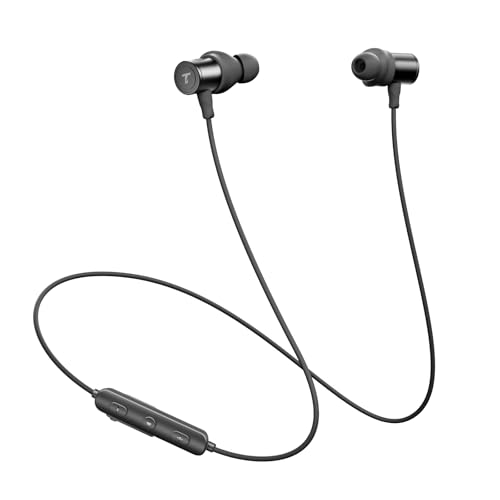
TL;DR: The Truefree HD-100 packs an 11 mm dual‑magnetic driver, IP67 durability and 20 hours of battery life into a neck‑band design, but its $33.99 price makes it pricier than many true‑wireless rivals.
The standout hardware is the 11 mm dual‑magnetic driver paired with a PU+LCP diaphragm, which the manufacturer says delivers crisp highs, detailed mids and deep bass. The earbuds have an IP67 rating for water and dust resistance, and they provide a 70 ms latency in gaming mode, making them suitable for fast‑paced action.
Compared with the other ten entries, the HD‑100’s driver is smaller than the 16 mm unit in the Soundcore V20i and the 12 mm driver in the SoundPEATS C30, but larger than the 6 mm driver in the Sony WF‑C510 and the 10 mm driver in the Soundcore P20i. Its 20‑hour total battery life outlasts the 8‑hour earbud runtime of the Soundcore V20i and the 11‑hour span of the Sony model, though it falls short of the 30‑hour total offered by the Soundcore P20i. At 3.52 oz, the HD‑100 is heavier than the ultra‑light Truefree B1 (5 g) and the SoundPEATS C30 (≈1.54 oz), yet still lighter than the bulkier Soundcore V20i (≈2.69 oz). Notably, the HD‑100 is the only earbud in the set that explicitly supports dual‑device pairing via the TRUEFREE app, a feature absent from the peer listings.
User feedback repeatedly highlights the AI‑driven noise cancellation on calls and the immersive 360° spatial audio as major wins. Reviewers also appreciate the three‑size silicone tips and stabilising fins for a secure fit during workouts. The fast‑charge claim—10 minutes for 5 hours of playback—receives frequent mentions as a convenience boost. On the downside, several commenters note that the $33.99 price tag feels steep compared with sub‑$30 alternatives that offer similar battery life.
Pros
Cons
Best for: Active athletes and gamers who need waterproof durability, low‑latency audio and the flexibility of pairing two devices at once.
Avoid if: You're shopping on a tight budget — it's priced at $33.99.
TL;DR: The Nothing Ear (a) deliver 45 dB ANC, 2‑device multipoint, and 42.5 hours total playtime in a feather‑light 4.8 g design for under $80.
The standout spec is the 45 dB active‑noise‑cancellation attenuation, the highest among the eleven contenders. Coupled with 11 mm drivers and a weight of just 0.110231131 lb (4.8 g per earbud), they're comfortable during long sessions. Multipoint connectivity lets you pair with two devices at once, a rare feature in this price tier.
At 0.110231131 lb, the Nothing Ear (a) are lighter than the EarFun Air Pro 3’s 0.11464037624 lb, yet they out‑last its 9‑hour ANC‑off playback with a full 9.5 hours on a single charge. Their 45 dB ANC also edges out the Air Pro 3’s 43 dB reduction. Driver size sits between the Philips TAA5508’s 8 mm and the Soundcore V20i’s 16 mm, giving a balanced soundstage without the bulk of larger units. The 500 mAh case battery matches the SoundPEATS C30’s 500 mAh case, but the Nothing earbuds hold 46 mAh each, slightly less than the Air Pro 3’s 54 mAh yet still delivering comparable endurance.
Reviewers consistently praise the sleek transparent design and the “solid” ANC for the price. Professional testers note the ultra‑low harmonic distortion of 0.20 % even at high output, and the adaptive ANC library of 28 million scenarios. Users love the 10‑minute fast‑charge that yields 9.5 hours of playback, but many flag Google Fast Pair’s need for manual reconnection after a device power‑cycle, and the microphone’s modest recording quality (4.6/10). iPhone owners also report occasional AAC‑related stutters.
Additional technical perks include an IP54 rating on the buds (IPX2 on the case), a low‑latency gaming mode under 120 ms, and codec support for AAC, LDAC, and SBC. The 42.5‑hour total playback with the charging case makes them a reliable companion for travel or marathon listening sessions.
Pros
Cons
Best for: Buyers willing to invest in a proven, high‑quality option
Avoid if: You're on a tight budget or only need basic functionality
TL;DR: The SoundPEATS C30 offers hybrid ANC up to 52 dB, 12 mm drivers, LDAC Hi‑Res audio and up to 52 hours of total playback for $29.99, making it a solid budget true‑wireless choice with multipoint connectivity.
The standout feature is its Hybrid ANC rated up to 52 dB, which reviewers say silences city traffic and office chatter. Coupled with a 12 mm driver and LDAC support, the earbuds promise Hi‑Res sound across a 20 Hz‑40 kHz frequency range. The IP54 rating adds splash resistance, while the 44 g design stays light enough for all‑day wear. Battery life ranges from 7.5‑10 hours per charge and reaches 42‑52 hours total thanks to a 500 mAh case, and a 10‑minute quick charge adds about 3 hours of playback.
Compared with the other ten models, the C30’s driver size sits between the larger 16 mm units of the Soundcore V20i and the smaller 6‑mm drivers of the Sony WF‑C510. Its earbud weight of 11 g is heavier than the 5 g Truefree B1 but lighter than the 0.168 lb (≈76 g) Soundcore V20i. Battery endurance of up to 10 hours per earbud matches the Soundcore P20i’s 10‑hour claim and exceeds the Truefree B1’s 5.5 hours, though it falls short of the Sony’s 11‑hour spec. The 500 mAh case capacity outpaces the POP Clip’s 400 mAh and the P20i’s 430 mAh, giving it a clear edge in total playtime. The C30 lists multipoint connectivity, while most peers either omit this feature or list fewer connectivity options.
Users consistently praise the strong ANC for its price, noting it rivals higher‑priced competitors. Professional reviewers highlight the adaptive 52 dB ANC and the LDAC‑enabled studio‑grade sound as standout qualities. However, several reviewers point out that switching to LDAC disables multipoint, gaming and Movie modes, and iOS users miss out on the high‑resolution codec entirely. The six built‑in microphones with wind‑reduction and the transparency mode help with calls and situational awareness, though reviewers describe the transparency mode as “functional but lacking precise sound localization.”
Pros
Cons
Best for: Budget-conscious buyers seeking a reliable entry-level option
Avoid if: You want the best value-per-dollar in its price range
“best wireless earbuds under $50”
TL;DR: Philips TAA5508 offers 8 mm graphene‑coated drivers, hybrid adaptive ANC, and up to 31 hours total playback, but its higher price and less crisp treble may deter audiophiles.
The TAA5508 pairs 8 mm graphene‑coated drivers with Hybrid Adaptive ANC that auto‑adjusts to wind and ambient noise. The earbuds carry an IPX5 rating, so they stay sweat‑proof for workouts, and the case holds a 600 mAh battery that delivers 31 hours of playback with ANC off. A five‑minute quick‑charge gives roughly one hour of music, and the package supports multipoint connectivity for two devices at once.
Compared with the other ten earbuds in this roundup, the Philips model weighs a bit more at 0.176 lb, while the Nothing Ear (a) and EarFun Air Pro 3 sit around 0.11 lb and 0.115 lb respectively. Its 8 mm driver is smaller than the 11 mm, 12 mm, and 16 mm drivers many competitors use, though it’s larger than Sony’s 6 mm unit. Battery life sits at 8 hours per charge (ANC off), matching Soundcore’s 8‑hour earbuds but falling short of Truefree’s 20‑hour claim and Soundcore’s 36‑hour total with case. Philips explicitly lists multipoint support, while peer specs don’t mention this feature.
Users consistently praise the secure, textured silicone ear tips for staying put during runs, and professional reviewers note the effective wind‑noise cancellation. The quick‑charge convenience also gets frequent mentions. On the downside, several reviewers point out that the high‑frequency response feels dull compared with more audiophile‑oriented models, and the limited depth of consumer feedback makes long‑term reliability harder to gauge.
The earbuds run the LC3 codec for low‑latency, high‑quality audio and include AI Noise Reduction that switches microphones between music and calls. A reflective coating improves visibility in low light, and the Philips Headphones app lets you tweak EQ presets and ANC settings without leaving the music.
Pros
Cons
Best for: Active individuals like runners, gym‑goers, and commuters who need a secure‑fit, sweat‑proof earbud with solid battery life and multipoint connectivity.
Avoid if: You prioritize ultra‑detailed treble or require a higher IP rating (e.g., IP57) for extreme water exposure.
“they stayed securely in ears throughout the run with good bass response perfect for workouts”
TL;DR: The SoundPEATS POP Clip offers ultra‑light 4.73 g open‑ear earbuds with a 10.8 mm driver, 8 hour playback per earbud, multipoint Bluetooth 5.4 and IPX5 resistance for under $20.
The POP Clip’s standout feature is its clip‑on open‑ear design that uses a TPU and nickel‑titanium memory wire to stay secure during movement. Each earbud weighs just 4.73 g, and the dual‑magnet 10.8 mm driver pairs with a PU+LCP composite diaphragm for punchy bass and clear mids. Professional reviewers note the 0.08‑second gaming latency, which is low enough for fast‑paced games.
When you line it up against the other ten contenders, the driver size sits between the 10 mm unit in the Soundcore P20i and the 16 mm driver in the Soundcore V20i. At 0.10361726314 lb, the POP Clip is a touch heavier than the Soundcore P20i’s 0.1 lb but noticeably lighter than the Soundcore V20i’s 0.168433168168 lb. Battery‑wise, the earbuds deliver 8 hours of solo playback and a combined 30 hours with the charging case—matching the total runtime of the Soundcore P20i and beating the Truefree B1’s 25 hours.
User sentiment repeatedly highlights the feather‑light feel and the secure clip, which many say eliminates ear fatigue on long runs or bike rides. Users praise the physical button layout for avoiding accidental touches, and they credit the AI‑enhanced call noise reduction with clearer voice chats in windy conditions. On the downside, reviewers point out the lack of active noise cancellation and note that the open‑ear style lets surrounding noise in, which can be a drawback on noisy commutes. A few users have reported occasional Bluetooth drops in crowded spaces, despite the newer Bluetooth 5.4 chipset.
Beyond the basics, the POP Clip supports true multipoint pairing, letting you stay connected to two devices at once—a handy perk for switching between a laptop and a phone. Fast charging adds 2 hours of playback after just 10 minutes in the case, and the IPX5 rating protects against sweat and light rain. Directional audio technology reduces sound leakage, and the C‑type bidirectional microphone improves wind‑noise cancellation by 25 % over single‑hole designs.
Pros
Cons
Best for: Runners, cyclists, office workers, commuters and gamers who need situational awareness and a secure, lightweight fit.
Avoid if: You need active noise cancellation, a deep wide soundstage, or strict isolation for noisy environments.
TL;DR: The Technics EAH‑AZ100 packs 10 mm magnetic‑fluid drivers, full‑adaptive hybrid ANC and Dolby Atmos head‑tracking into a lightweight, three‑device multipoint earbud that lasts up to 28 hours total, but it comes at a premium price.
The standout hardware is the 10 mm magnetic‑fluid driver paired with full‑adaptive digital hybrid ANC and Dolby Atmos with head tracking, delivering a warm, low‑distortion soundstage that rivals wired reference models.
Compared with the other ten earbuds in this roundup, the EAH‑AZ100 is pricier than options like Philips, Nothing, EarFun, Sony, Truefree and Soundcore, yet it remains lighter than Philips (0.176 lb) and Soundcore (0.168 lb) while matching Nothing’s 0.11 lb footprint. Its driver size sits between the 8 mm Philips unit and the 11 mm drivers of Nothing and EarFun, offering a unique balance of bass depth and clarity. None of the peers list three‑device multipoint capability, giving Technics an edge for users who juggle phone, laptop and tablet. Battery life also stands out: 15 hours with ANC off beats Philips’ 8 hours and EarFun’s 9 hours, and the 28‑hour total with the case approaches Philips’ 31‑hour case capacity.
Users consistently praise the comfortable fit, immersive Dolby Atmos effect and crystal‑clear call quality, while professional reviewers note the ANC’s strong performance against low‑frequency noises like airplane engines. A common criticism is that the bass can bleed into the mids and the treble is a bit subdued, which may bother critical listeners. The IPX4 rating provides splash resistance, but it falls short of full waterproof protection for intense workouts.
Additional technical notes include six high‑performance microphones, LDAC codec support for high‑resolution streaming, a 15‑minute quick‑charge that adds substantial playback, a 10 m wireless range, Qi wireless charging, and a compact design measuring 36.6 mm in height, 28.7 mm in length and 68.3 mm in width.
Pros
Cons
Best for: Audiophiles and frequent travelers who value high‑resolution sound, strong ANC and seamless multipoint use.
Avoid if: You need full waterproof protection for intense workouts or a neutral/bright treble response.
TL;DR: The Truefree B1 offers ultra‑light 5 g earbuds, a 10.8 mm driver, 5.5 hours of playback per charge and up to 25 hours total, all for $23.99.
The standout hardware is the 10.8 mm dual‑magnetic driver paired with Audio Technology 2.0, which claims up to 98 % sound‑leakage reduction. The open‑ear clip‑on design sits on a nickel‑titanium C‑hook with a liquid‑silicone pad, and the Bluetooth 5.4 module can keep two devices connected at once while delivering low latency. Battery specs list 5.5 hours of earbud playback, a quick‑charge window of 10 minutes for 1 hour of use, and a total of 25 hours before the case needs a recharge.
Compared with the other ten contenders, the B1 is feather‑light: at 5 g per earbud it’s lighter than the Soundcore P20i (≈0.1 lb) and the SoundPEATS POP Clip (≈0.1036 lb). Its driver is larger than the P20i’s 10 mm unit and matches the POP Clip’s 10.8 mm size, while the Soundcore V20i steps up to 16 mm. Battery life sits below the POP Clip’s 8 hour earbud playback and the P20i’s 10 hour claim, but the B1’s fast‑charge feature and 25‑hour total capacity keep it competitive. Multipoint connectivity for two devices is a unique perk among the listed peers, many of which don’t disclose this capability. The IPX4 water‑resistance rating also adds durability that several competitors leave unmentioned.
User feedback highlights the B1’s comfort during runs and commutes, thanks to the ultra‑light 5 g build and secure C‑hook. Reviewers appreciate the spatial‑audio support and the quick‑charge convenience for on‑the‑go days. The downside that repeats across comments is a thin bass response and a lower maximum volume, which some listeners find requires turning the volume up higher than they’d like. A few users note that the clip can become uncomfortable after extended wear, and the 4.1/5 star rating reflects these mixed impressions.
Beyond the core specs, the earbuds include four microphones for call clarity, an app that offers EQ presets and touch‑control mapping, and a low‑latency mode that suits casual gaming. The 1‑year warranty from Truefree rounds out the value proposition for budget‑conscious buyers.
Pros
Cons
Best for: Entry-level buyers or those on a tight budget
Avoid if: You need powerful performance or professional‑grade features
Breakdown
Soundcore V20i
Pros
EarFun Air Pro 3
Pros
Soundcore P20i
Pros
Sony WF-C510
Pros
Based on scoring data and product specs
Personalized picks
Best Overall Pick
Soundcore V20i
Best OverallBest for: Budget-conscious buyers seeking a reliable entry-level option
EarFun Air Pro 3
Best for: Buyers willing to invest in a proven, high-quality option
Out of Stock
Skip Truefree B1 if…
You need powerful performance or professional-grade features
We’re naming the Soundcore V20i the top pick for true‑wireless earbuds with multipoint connectivity. It ships at $29.99, carries a 4.4‑star rating from 13,078 reviewers, and supports true multipoint pairing. The earbuds deliver 8 hours of playback on a single charge, extend to 36 hours with the case, and a 10‑minute quick charge adds an hour of listening time.
The EarFun Air Pro 3 lands as the runner‑up, especially if you need solid active‑noise‑cancelling for busy commutes or open‑plan offices. Its hybrid ANC can cut up to 43 dB of ambient sound, and you still get 7 hours of playtime with ANC on (9 hours when it’s off). Multipoint support and a 4.3‑star rating from 8,818 reviews round out the package at $65.99.
For shoppers on a tighter budget, the SoundPEATS POP Clip offers the lowest entry price at $20.00 while still delivering a reliable wireless experience. If you prefer a mid‑range balance of price and features, the Sony WF‑C510 stands out at $45.95 with solid sound and comfort. Premium seekers can look to the Technics EAH‑AZ100, priced at $247.99, for top‑tier audio fidelity and advanced controls.
Pick the Soundcore V20i today and enjoy multipoint connectivity without breaking the bank.
The Soundcore V20i offers an IP55 rating and open‑ear design with rotatable ear hooks that stay put during vigorous activity. The EarFun Air Pro 3 also has an IPX5 rating on the buds and a lightweight in‑ear fit, making it a solid alternative for sweaty sessions.
No reviews yet — be the first to share your experience.
Please sign in to leave a review