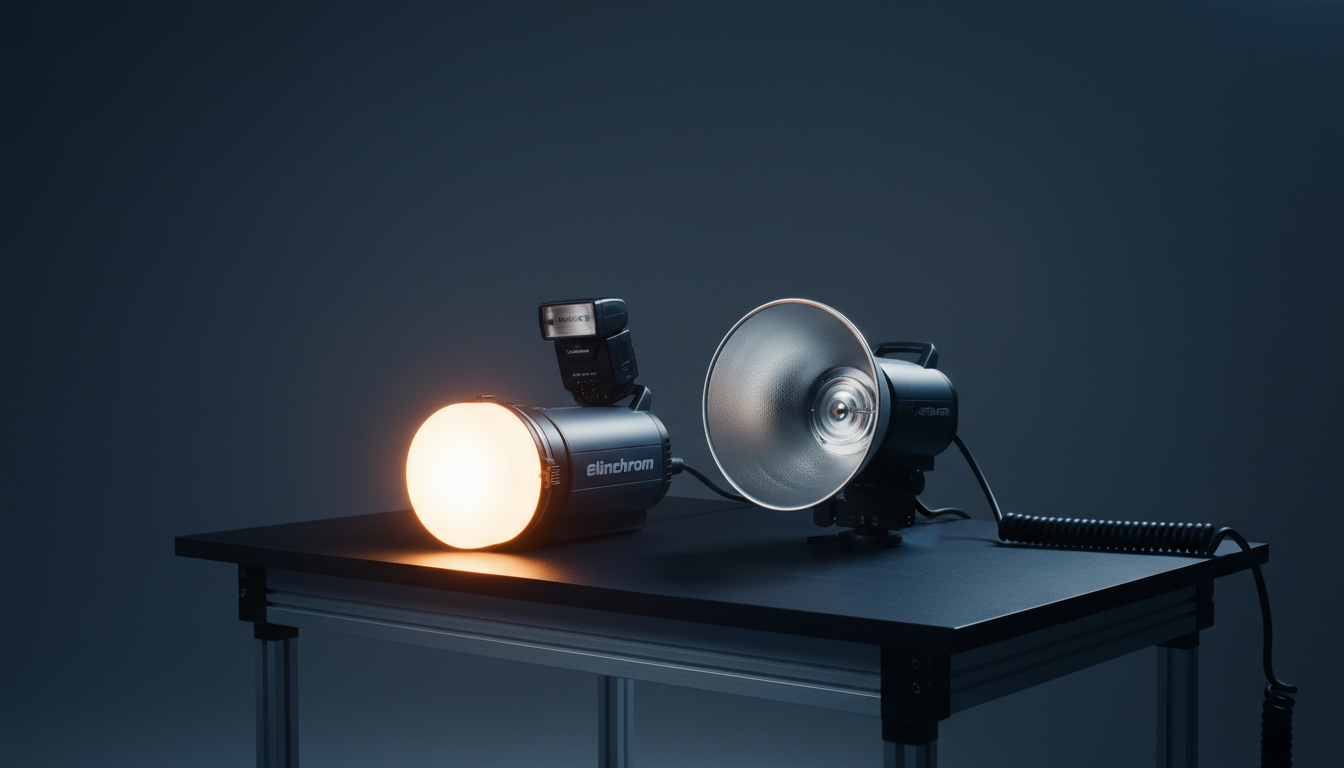
⚡ Quick Answer
Finding a universal flash that packs serious punch without sacrificing portability can feel like hunting for a needle in a haystack. We compared 11 models, ranging from the $48.60 Godox GN33 on the budget end to the $1,096.95 Elinchrom ONE in the premium tier, so you'll see how power output, wireless range and user ratings stack up across price classes.
Budget shooters get solid basics: the GN33 offers a 33 m guide number and 16‑channel 433 MHz triggering, while the Meike MK430C weighs just 275 g and provides up to 1,500 flashes per charge. Mid‑range options like the $129.95 Sigma EF‑610 DG (GN 61) and the $249.99 Neewer Q300 (300 Ws, 4.6/5 rating) add higher output and longer 30 m wireless range. Premium choices such as the $641.95 Elinchrom D‑Lite RX 4 (400 Ws, 120 m range) and the $895.00 Profoto A2 (100 Ws, 100 m range) bring fan‑cooled recycling and built‑in AirX control for demanding studio or location work.
Below we break down each tier, spotlighting key specs and user feedback, so you'll match the flash that fits your shooting style and budget.
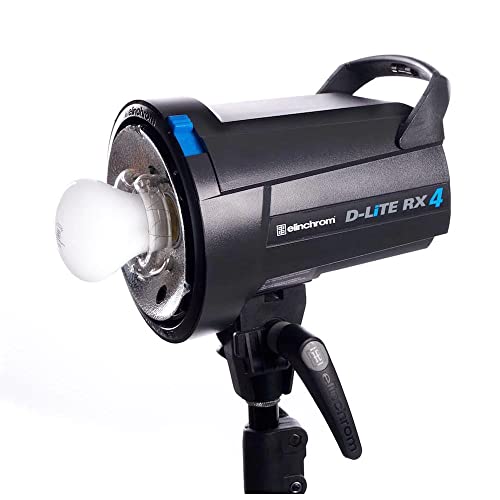
Elinchrom D-Lite RX 4
Its wireless range reaches up to 120 m, giving you flexible positioning and reliable high‑power output on set.

Neewer Q300
Ideal for most users who want a balanced, mainstream flash, and it’s about $392 cheaper than the Top Pick model.
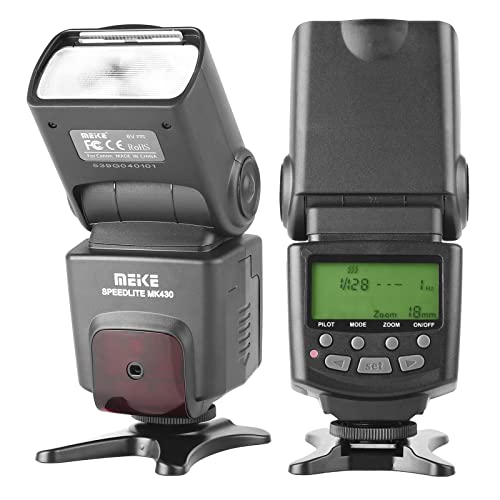
Meike MK430C
Weighing just 275 g, this flash stays light enough for on‑the‑go shooting, a portability edge the larger, pricier models lack.
Also considered
Score Analysis
Key score advantages vs. runner-up (Neewer Q300)
Price Range
Elinchrom D-Lite RX 4
$641.95
Neewer Q300
$249.99
Meike MK430C
$59.99

Godox TT600
$65.00

Westcott FJ80 II M
$369.90

Sigma EF-610 DG
$129.95

Profoto A2
$895.00

Godox GN33
$54.00
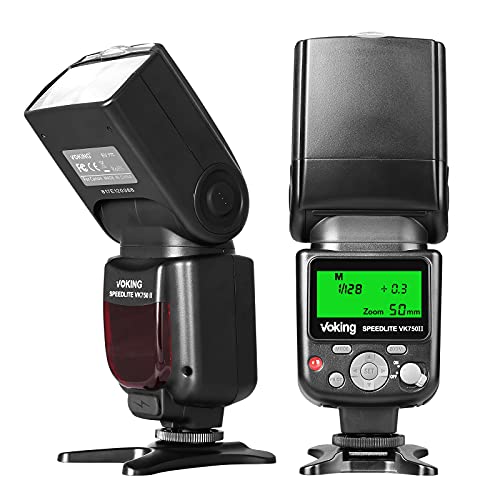
Voking VK750II
$59.94
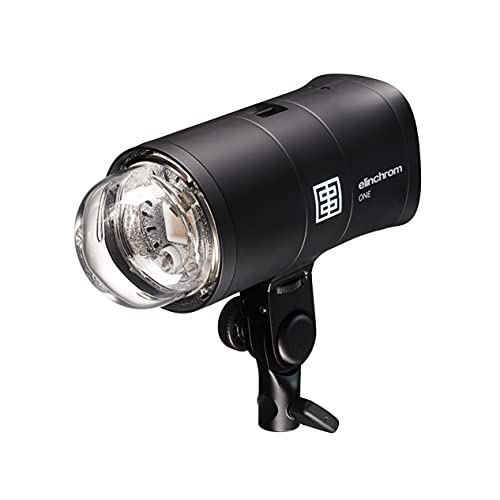
Elinchrom ONE
$1,096.95

OM SYSTEM FL-900R Black
$599.99
Spec Comparison
TL;DR: The Elinchrom D‑Lite RX 4 delivers 400 Ws of power, a 120 m wireless range, and rapid 0.35–1.6 s recycle in a compact 3.3‑lb body, but its fan can be noisy in quiet settings.
What really sets this monolight apart is its 400 Ws power output paired with a flash duration of 1/800 s at full power. The built‑in Skyport radio receiver gives you up to 120 m of wireless control, and the OLED screen lets you dial power in 5 f‑stops with 0.1‑stop increments. A fan‑cooled design runs only when the unit heats up, and the modelling lamp scales proportionally to flash power, giving you visual feedback before you fire.
Compared with the other ten entries, the D‑Lite RX 4 sits in the middle of the weight spectrum: at 3.3 pounds it’s heavier than the feather‑light OM SYSTEM FL‑900R (0.8 lb) and the Profoto A2 (2.95 lb), yet noticeably lighter than the Elinchrom ONE, which tops out at over 6 lb. Its 400 Ws output dwarfs the Profoto A2’s 100 Ws and far exceeds the power levels listed for the rest of the lineup. Wireless reach also outstrips the Neewer Q300’s 30 m range and matches the 100 m range of the Profoto A2 and Westcott FJ80 II M, while still falling short of the Elinchrom ONE’s 656‑ft receiver range. Recycling speed is another advantage: 0.35–1.6 s beats the OM SYSTEM’s 2.5 s recycle, making it well‑suited for fast‑paced shoots.
Users consistently note how easy the D‑Lite RX 4 is to pack and set up, especially with the included carrying case. Professional reviewers applaud the precise 1/10‑stop power steps and the fast low‑power recycle, calling it a “portable powerhouse.” The trade‑off shows up in the fan: several reviewers describe it as relatively loud during extended use, and some mention a persistent recycle beep that can’t be fully muted. Build quality also draws comments about a plasticky feel that may not survive heavy‑duty rental abuse. Finally, Elinchrom sells the Skyport transmitter separately, so first‑time buyers often need to purchase that accessory.
Pros
Cons
Best for: Beginner to intermediate photographers, educators, hobbyists, and location shooters who need a portable high‑output monolight.
Avoid if: You require ultra‑quiet operation, heavy‑duty durability for professional rentals, or a fully integrated wireless transmitter out of the box.
TL;DR: The Neewer Q300 delivers 300 Ws of power with a GN 60 guide number, a 7800 mAh lithium‑ion battery and 30 m wireless range, making it a strong portable strobe for outdoor shoots.
The standout spec is its 300 Ws maximum output paired with a GN 60 (ISO 100), which puts it in the same league as studio‑grade strobes while still being battery‑operated. Its 7800 mAh lithium‑ion pack supplies up to 1000 full‑power flashes per charge, and a 5‑hour charge time restores the battery for the next session.
At 2.2 kg, the Q300 is significantly heavier than the Westcott FJ80 II M (602 g) and the Godox TT600 (500 g), but its battery capacity dwarfs Westcott’s 1600 mAh pack. The flash’s wireless range of 30 m falls short of Westcott’s 100 m and the roughly 100 m transmission range quoted for the Godox TT600, while its GN 60 matches the TT600’s guide number and exceeds the Godox GN33’s GN 33.
User feedback repeatedly praises the flash’s stable 5600 K color temperature (±200 K) and the fast recycle time of 0.4–2.5 s, which lets photographers keep up with fast‑paced outdoor shoots. Professional reviewers also note the reliable 20 Hz stroboscopic mode and the 180° handle rotation that eases positioning on location.
The Q300 also includes a 13 W modeling lamp that puts out 5010 lux at 0.5 m, and its flash duration can reach 1/10,000 s, giving you precise control over motion freeze. Battery protection against overheating and overvoltage adds confidence for long days in the field.
Pros
Cons
Best for: Professional outdoor photographers, portrait shooters, product photographers working on location
Avoid if: Studio photographers who rely on continuous power sources and larger modifiers, as the Q300's optimized for outdoor use
TL;DR: The Meike MK430C delivers a 36‑42 m guide number, 3‑4 s recycle, and wireless range up to 25 m indoor, all in a 275 g, budget‑friendly package.
The flash’s most eye‑catching spec is its guide number of 36–42 m (ISO 100, 105 mm) paired with a compact 165 × 74.6 × 59.2 mm body that weighs just 275 g. Its IGBT circuit design, 0–270° horizontal and 0–90° vertical rotation, and LCD display give you precise control, while the built‑in wireless trigger works up to 25 m indoors and 15 m outdoors.
Compared with the other ten units, the MK430C is lighter than the Godox TT600 (500 g) and the Sigma EF‑610 DG (328 g), though weight isn’t listed for the Voking VK750II. Its indoor wireless range matches the Voking VK750II’s 20‑25 m, but falls short of the Neewer Q300’s 30 m and Westcott FJ80 II M’s 100 m range. The guide number sits below the Godox TT600’s 60 m and the Sigma’s 61 m, while its recycle time of 3‑4 s aligns with the Voking’s ≈3 s but is slower than the Godox GN33’s 1.8 s recycle.
Reviewers appreciate the flash’s portability and the full TTL, manual and multi‑flash modes that cover most hobbyist needs. Professional editors note that it’s reaching mainstream hot‑shoe performance at a budget price. However, users often point out the 3‑4 s recycle as a bottleneck for fast‑action shooting, and the reliance on four AA batteries can introduce output variability and extra bulk.
Technical context: The flash delivers a duration from 1/200 s to 1/20,000 s, supports autofocus illumination, flash exposure bracketing and compensation, and includes an optical slave (S1/S2) and PC sync port. Overheating protection and an external charging port round out its feature set.
Pros
Cons
Best for: Entry-level buyers or those on a tight budget
Avoid if: You want the best value‑per‑dollar in its price range
TL;DR: The Godox TT600 delivers a GN 60 flash, 100 m wireless range, and high‑speed sync for $65, making it a solid, budget‑friendly manual speedlite for off‑camera lighting.
The standout spec is its 60 m guide number at ISO 100, which puts it well above entry‑level units and gives you enough punch for indoor portraits or outdoor fill. Coupled with a built‑in 2.4 GHz Godox X wireless system that reaches roughly 100 m, you can trigger the flash from a distance without extra transmitters.
Compared with the other ten flashes in this roundup, the TT600 is deeper than the Voking VK750II (57 mm vs 76 mm) but narrower (64 mm vs 75 mm). It’s heavier than the Meike MK430C’s 275 g, yet its guide number of 60 m outshines the GN33’s 33 m and rivals the Sigma EF‑610’s 61 m. Its recycle time of 0.1‑2.6 s is quicker than the Voking’s roughly 3 seconds, and its wireless range far exceeds the Meike’s 20‑25 m indoor limit.
Reviewers consistently praise the flash’s portability and the convenience of built‑in wireless control, noting that the 4 AA battery pack yields about 230 full‑power flashes before you need to change them. The manual‑only operation is a common point of criticism; users looking for TTL auto‑exposure report having to switch to a different unit. The reliance on AA cells also means you’ll carry spares for longer shoots.
Technical details round out the picture: the unit measures 64 × 76 × 190 mm and weighs 500 g (1.1 pounds) with batteries installed. It supports high‑speed sync, offers a zoom range of 24‑200 mm (14 mm with the wide panel), and can flash as fast as 1/8000 s when TTL‑compatible gear triggers it.
Pros
Cons
Best for: Budget-conscious buyers seeking a reliable entry‑level option
Avoid if: You need TTL auto‑exposure, Sony camera compatibility, or a built‑in rechargeable battery
TL;DR: The Westcott FJ80 II M delivers 80 Ws of power, a 2.8‑inch touchscreen, and a 100‑meter wireless range, but its $369.90 price makes it a premium choice for multi‑brand shooters.
What really stands out is the 80 Ws flash output combined with a 1%–100% dimming range and high‑speed sync up to 1/8000 s, giving you full control even in bright daylight. The 2.8‑inch LCD color touchscreen lets you tweak TTL settings on‑the‑fly, and the removable 11.1 V lithium‑ion polymer battery promises 500+ full‑power flashes per charge.
At $369.90 it’s pricier than the Neewer Q300 at $249.99 and the Meike MK430C at $59.99, but cheaper than the OM SYSTEM FL‑900R at $599.99 and the Elinchrom D‑Lite RX 4 at $641.95. Weighing 602 g, it sits between the lighter OM SYSTEM at 363 g and the heavier Elinchrom at 1497 g, while still being heavier than the Meike at 275 g and the Godox TT600 at 500 g. Its 100‑meter wireless range outstrips the Neewer’s 30 m and the Meike’s 20‑25 m indoor range, matches the Godox TT600’s roughly 100 m transmission distance, and falls just short of the Elinchrom’s up‑to‑120 m reach. With 80 Ws it delivers less punch than the Elinchrom’s 400 Ws, but more than the Godox TT600, which doesn’t list a Ws figure.
Reviewers consistently praise the 100‑meter (328‑foot) wireless range for weddings and events, noting how the 500+ full‑power flashes per charge keep the unit running through long shoots. The fast recycle time of 0.05 to 1.5 seconds and a flash repetition rate of 20 fps also get frequent mentions for keeping up with action. The battery charges in just 2 hours, and the 1600 mAh capacity, paired with a “20% longer battery life” claim, means you can shoot for extended periods without swapping cells.
Pros
Cons
Best for: Most users seeking a balanced, mainstream option
Avoid if: You're shopping on a tight budget — it's priced at $369.90
TL;DR: The Sigma EF‑610 DG Super delivers a 61 m guide number, 270° swivel and 8‑stop manual control in a lightweight 0.73 lb body, offering solid power for Sony A‑mount shooters on a modest budget.
The flash’s headline spec is its 61 m guide number (ISO 100), which outshines many entry‑level units in this lineup. It also offers an eight‑stop manual power range from 1/1 to 1/128, a 270° swivel head and a bounce angle from –7° to +90°, giving you plenty of creative lighting options without extra accessories.
Compared with the other ten flashes, the Sigma is lighter than the Godox TT600’s 1.1 lb body and noticeably shorter than that model’s 190 mm height, though it’s wider at 140 mm. Its guide number of 61 m edges out the Godox TT600’s 60 m, placing it near the top of the power spectrum. However, its recycle time of 0.08 minutes is slower than the Voking VK750II’s roughly 3‑second recycle and the Godox GN33’s 1.8‑second cycle, which may matter for burst shooting. Wireless range isn’t listed, and the built‑in TTL master function offers limited capability, unlike the Godox TT600’s full 2.4 GHz master/slave system and the Meike MK430C’s 20‑25 m indoor range.
Reviewers appreciate the flash’s strong GN 61 as a budget‑friendly alternative to OEM units and praise the full suite of features—modeling flash, multi‑pulse mode, FP high‑speed sync and rear‑curtain sync—for creative control. Everyday users note reliable TTL performance and the handy ready‑light indicator, but they also flag the slower recycle and the fact that the model is discontinued, which can make service and parts harder to find.
Pros
Cons
Best for: Budget‑conscious Sony A‑mount DSLR owners who need a powerful, feature‑rich on‑camera flash for portraits and general shooting.
Avoid if: You require ultra‑fast recycle for high‑burst action or a premium‑build flash with extensive wireless master capabilities.
“The "ready" light and battery life are dependable.”
“Some report availability issues post‑discontinuation.”
TL;DR: The Profoto A2 packs 100 Ws of flash power into a soda‑can sized body (12.6 × 7.9 × 7.9 cm) with a 100 m wireless range, but its premium $895.00 price may limit budget‑conscious buyers.
The standout spec is that the unit delivers 100 Ws flash output while weighing only 2.95 pounds and fitting in a pocket‑sized envelope (12.6 cm × 7.9 cm × 7.9 cm). Its high‑resolution display and built‑in AirX wireless system give you TTL and HSS control at up to 100 m distance, while the flash can freeze motion with a t0.01 duration of 1/350 s.
Compared with the other ten flashes in this roundup, the A2 sits in the middle of the weight spectrum: it’s lighter than the Elinchrom ONE (about 6.26 pounds) and the Elinchrom D‑Lite RX 4 (3.3 pounds), but heavier than the OM SYSTEM FL‑900R (0.8 pounds) and the Sigma EF‑610 DG (0.73 pounds). Its wireless range matches the Westcott FJ80 II at 100 m and exceeds the Neewer Q300’s 30 m, though it falls short of the D‑Lite’s 120 m range. In terms of power, the A2’s 100 Ws is modest next to the D‑Lite’s 400 Ws, yet higher than the 65 W charging power listed for the Elinchrom ONE.
User sentiment highlights the A2’s “little big light” reputation: photographers love the rubber‑like exterior for a secure grip, the ability to fire up to 400 full‑power flashes on a single charge, and the sub‑second recycle time of 0.1–1.6 s. Professional reviewers note the 1/350 s flash duration for motion freeze, while mentioning that the fixed 3500 K modeling light temperature can be limiting in mixed‑lighting scenarios.
Additional technical context includes a 200‑lumens modeling lamp with CRI > 80, full TTL and HSS integration, and Bluetooth app control that lets you adjust settings without touching the unit. The battery recharges in less than 2 hours, keeping the unit ready for long shoots.
Pros
Cons
Best for: Wedding and photojournalism professionals who need a lightweight, fast‑recycling flash for on‑the‑go shooting.
Avoid if: You need higher than 100 Ws output or a lower‑cost solution — it’s priced at $895.00.
TL;DR: The Godox GN33 packs a 33 m guide‑number, 433 MHz wireless triggering on 16 channels and a 1.8‑second recycle into a 7.5‑in body for under $50.
The standout spec is its 433 MHz wireless receiver with 16 selectable channels, giving you reliable sync up to 20 m indoors and 30 m outdoors. At a compact 7.5 in height, 2.15 in length and 2.95 in width, it fits easily on‑camera, and the RT‑16 transmitter weighs just 31 g.
Compared with the other ten flashes in this roundup, the GN33 is noticeably lighter than the Meike MK430C (275 g) and the Godox TT600 (500 g). Its indoor wireless range matches the Voking VK750II’s 20‑25 m but exceeds that model’s outdoor reach of 10‑15 m. The recycle time of 1.8 seconds beats Voking’s ≈3‑second cycle and is faster than the Sigma EF‑610 DG’s 0.08‑minute (≈4.8 seconds) recycle. However, its guide number of 33 m is lower than the TT600’s 60 m and Sigma’s 61 m, so it won’t light a large studio as powerfully.
Reviewers repeatedly praise the GN33’s 1.8‑second recycle and dependable 433 MHz trigger, noting that the 400 full‑power flashes per charge let you shoot long sessions without swapping batteries. Users also like the eight power‑level steps (1/128 to full) and the three flash modes (M, S1, S2) for basic lighting control. The only frequent complaint is that the unit lacks an LCD screen like the Meike MK430C’s and a larger display like the Westcott FJ80 II’s, which some photographers rely on for on‑the‑fly adjustments.
Pros
Cons
Best for: Budget‑conscious buyers seeking a reliable entry‑level option
Avoid if: You need advanced features or professional‑grade performance
TL;DR: The Voking VK750II offers a solid 58 GN, TTL control and a swiveling head for under $60, making it a reliable entry‑level flash for indoor shooting.
The standout spec is its guide number of 58 (ISO 100, 105 mm) paired with a fast recycle time of ≈3 seconds, which lets you keep up with typical portrait bursts. A 5600 K color temperature gives daylight‑balanced light, and the built‑in LCD screen displays mode, zoom and power settings at a glance. The head rotates 0‑270° horizontally and 0‑90° vertically, and the included bounce card/diffuser adds flexibility for soft lighting.
Compared with the other ten flashes, the VK750II shares the same 20‑25 m indoor and 10‑15 m outdoor optical range as the Meike MK430C, but its guide number sits just below the 60 GN of the Godox TT600 and the 61 GN of the Sigma EF‑610 DG, while comfortably beating the 33 GN of the Godox GN33. Its 200 mm height's a touch taller than the Godox TT600's 190 mm, yet it stays more budget‑friendly than the Westcott FJ80 II M and the Neewer Q300, which target professional users.
Users frequently praise the flash’s dependable TTL performance that mirrors the camera’s ISO, aperture and zoom, and they note the sturdy metal hot shoe and dust‑ and water‑resistant housing as reassuring for studio or outdoor work. Professional reviewers highlight the strong bounce capability, especially under low ceilings at ISO 400 f/5.6. The most common complaints revolve around the twist‑lock hot shoe’s low friction, the lack of high‑speed sync (HSS) and the absence of a Nikon Commander remote mode, which can limit advanced flash techniques.
Additional technical details include auto and manual zoom covering 18 mm to 188 mm, front and rear curtain sync, and flash modes ranging from TTL to Multi, S1 and S2. Power comes from four AA cells (alkaline or Ni‑MH), and the unit features FEC/AEB, a memory function, overheating protection and a sound indicator for silent shooting environments.
Pros
Cons
Best for: Entry-level buyers or those on a tight budget
Avoid if: You need high‑speed sync, advanced radio wireless control, or extensive wide‑angle coverage on full‑frame cameras
TL;DR: The Elinchrom ONE packs 131 Ws of power, up to 725 full‑power flashes per charge, and 1/8000 s HSS in a 1.5 kg, lens‑sized body, but its premium price limits budget‑focused shooters.
The flash’s headline spec is its 131 Ws maximum output, paired with a flash duration as short as 1/7000 s and recycle times ranging from 0.06 s to 0.9 s. High‑Speed Sync reaches 1/8000 s, and the built‑in bicolor LED modeling lamp delivers 3000 lumens at 20 W for up to 90 minutes of continuous light.
At 6.26 lb the ONE weighs noticeably more than the Profoto A2 (2.95 lb) and the Elinchrom D‑Lite RX 4 (3.3 lb), and far exceeds the 0.8‑lb OM SYSTEM FL‑900R. Its 656‑ft receiver range outstretches the 100‑m range of the A2 and the up‑to‑120‑m range of the D‑Lite, giving it the longest wireless reach in this group.
Reviewers praise the compact, lens‑sized shape and the ability to squeeze 725 full‑power flashes from a single charge, which makes all‑day location work feasible. The fan‑cooled design occasionally draws criticism for audible noise, and the 131 Ws ceiling appears as a limitation for large‑group studio setups. Professionals also note that the OCF adapter’s 1 kg weight cap restricts the use of bigger modifiers.
Pros
Cons
Best for: Location photographers, event shooters, and travel/portrait professionals who need a compact, battery‑powered flash with high‑speed sync.
Avoid if: You need high‑output studio power or a silent operation, or if you’re shopping on a tight budget — it’s priced at $1096.95
TL;DR: The OM SYSTEM FL‑900R delivers a 58 m guide‑number, weather‑sealed build and 10 fps burst speed, but its premium price and 2.5 s recycle time may deter budget‑focused shooters.
The standout spec is the 58 m guide number (ISO 100), which places the FL‑900R among the most powerful flashes in this lineup. Its dust‑proof, splash‑proof and freeze‑proof construction lets you shoot down to –10 °C, so you won’t be surprised by sudden weather changes. The unit also packs a 1.5 W LED that outputs 100 lux for video or continuous illumination.
Compared with its peers, the FL‑900R is notably lighter than the Elinchrom D‑Lite RX 4 (which weighs about 3.3 pounds) yet a bit heavier than the Sigma EF‑610 DG at 0.725 pounds. Its advanced wireless controls give it more flexibility than the Westcott FJ80 II, which lists a basic 2.4 GHz radio. While the Profoto A2 and Elinchrom ONE offer higher watt‑second outputs, the FL‑900R’s compact dimensions—121.92 mm height, 81.28 mm length, 124.46 mm width—keep it portable for on‑camera or off‑camera use.
Professional reviewers praise its reliable TTL exposure and note that you keep settings locked when you switch between on‑camera and off‑camera positions, a boon for fast “run‑and‑gun” shooting. Everyday users echo this sentiment, noting the flash’s power and weather sealing make it a solid upgrade over smaller Olympus units, especially for macro and event work. The main complaints focus on the premium price tag and the 2.5‑second recycle time when shooting bursts, which can feel limiting in fast‑action scenarios.
The flash also offers electronic zoom from 12 mm to 100 mm (35 mm equivalent ~24‑200 mm) and a wide‑panel range of 7‑10 mm, letting you match focal length quickly. Sequential shooting can reach 10 fps, supporting high‑speed capture without missing a beat, while the built‑in LED adds versatility for video creators who need a modest continuous light source.
Pros
Cons
Best for: Professionals and serious enthusiasts who need high output, weather resistance and fast burst capability.
Avoid if: You're on a tight budget, need ultra‑compact gear, or require a high‑output continuous LED for video.
“a real step up from any of the smaller flash units that ship with Olympus cameras”
“it does the job and does it well”
Breakdown
Elinchrom D-Lite RX 4
Pros
Neewer Q300
Pros
Meike MK430C
Pros
Cons
Godox TT600
Pros
Based on scoring data and product specs
Personalized picks
Best Overall Pick
Elinchrom D-Lite RX 4
Best OverallBest for: Audiophiles and enthusiasts seeking premium sound quality and advanced features
Neewer Q300
Best for: Most users seeking a balanced, mainstream option
$249.99-$391.96 vs winner
Skip OM SYSTEM FL-900R Black if…
You're on a tight budget or only need basic functionality
The Elinchrom D‑Lite RX 4 earns the top spot thanks to its 400 Ws power output, rapid 0.35–1.6 s recycling, and a built‑in Skyport radio that reaches up to 120 m. Its OLED display makes setting power easy, and users have given it a solid 4.4 / 5 rating across 119 reviews. It comes with a 2‑year warranty.
The Neewer Q300 comes in second, perfect if you need a battery‑powered flash for on‑location shoots. It delivers 300 Ws, can fire up to 1 000 full‑power flashes on a single charge, and offers 30 m wireless control. Photographers appreciate its 4.6 / 5 rating from 223 reviews and its ultra‑fast flash duration of up to 1/10 000 s.
If you’re watching the price ladder, the Godox GN33 is the best budget pick at $48.60, offering compact power for casual shoots. The Neewer Q300 remains a solid mid‑range choice at $249.99, balancing power and portability. For a premium alternative, the Elinchrom ONE sits at $1,096.95 and delivers top‑tier output for studio pros.
Pick the Elinchrom D‑Lite RX 4 for the most capable universal flash you can buy today.
The Elinchrom D‑Lite RX 4 offers a wireless range of up to 120 m and a maximum output of 400 Ws, making it ideal for large outdoor shoots. It is heavier and pricier than the Neewer Q300, which provides a 30 m range and 300 Ws, but the extra reach and power can be worth it for demanding lighting situations.
No reviews yet — be the first to share your experience.
Please sign in to leave a review