⚡ Quick Answer
Choosing a universal flash that talks to your camera and other lights can feel overwhelming, so we narrowed it down to 11 models that all support wireless triggering. The lineup stretches from the $59.46 Ambitful AF970 up to the $995.00 Profoto A10, giving you a price spread of under $1 k. Ratings range from a solid 4.4/5 for the Yongnuo YN560 IV (228 reviews) to a perfect 5.0/5 for the Yongnuo YN968EX‑RT III (single review), so you’ll see both crowd‑pleasers and niche favorites. For a quick sense of power, the Godox MS300V delivers 300 Ws at a listed $129 and has a 100 m wireless range, while the Godox TT600 offers a GN60 guide number for just $65.
We grouped the options by the tier map: budget picks include the Ambitful AF970, Godox TT600, Yongnuo YN560 IV and Godox MS300V; mid‑range choices are the Yongnuo YN968EX‑RT III and Neewer Q120; premium contenders span the Flashpoint R2, Godox AD100Pro, OM SYSTEM FL‑700WR and Profoto A10. In the sections that follow, we’ll break down what each tier brings to the table so you can match a flash to your shooting style and budget.

Godox MS300V
Weighing 2400 g, the Godox MS300V feels solid and stable, reinforcing its value‑focused, well‑rounded performance that earned it the top mid‑range spot.

Yongnuo YN560 IV
Budget‑conscious shooters find the Yongnuo YN560 IV ideal, delivering reliable entry‑level flash power at $85, which is $44 less than the $129 Godox MS300V.

Godox AD100Pro
With a 2600 mAh battery and 30‑minute auto‑off, the Godox AD100Pro provides longer run‑time and safety features the MS300V and YN560 IV don’t offer.
Also considered
Score Analysis
Key score advantages vs. runner-up (Yongnuo YN560 IV)
Price Range
Godox MS300V
$129.00
Yongnuo YN560 IV
$85.00
Godox AD100Pro
$259.00

Flashpoint R2
$179.00

Godox TT600
$65.00

Profoto A10
$995.00
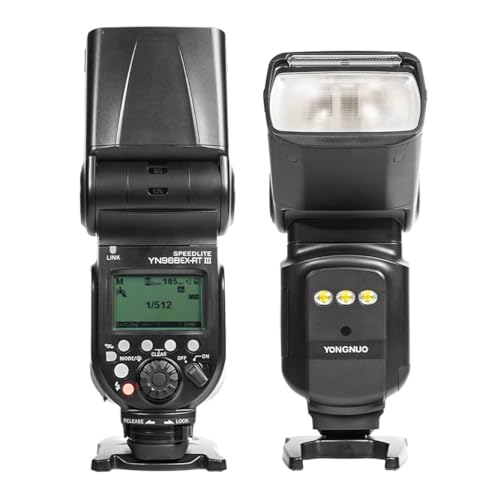
Yongnuo YN968EX-RT III
$150.00
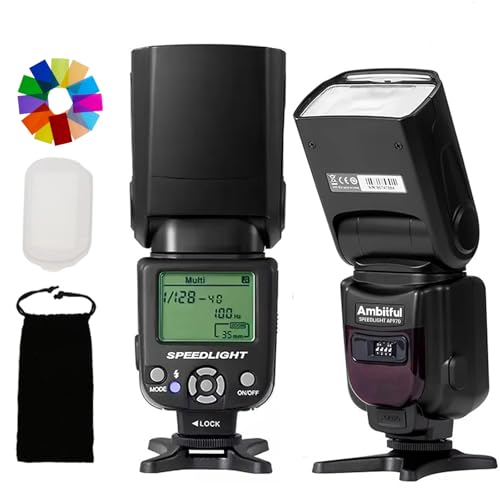
Ambitful AF970
$53.00

Neewer Q120
$169.99

OM SYSTEM FL-700WR
$399.00

Commander Optics Flash
$115.70
Spec Comparison
TL;DR: The Godox MS300V delivers 300 Ws of studio power in a 5.51‑lb, ultra‑compact body with built‑in 2.4 GHz wireless and a 10 W LED modeling lamp, making it a solid mid‑range choice for home studios.
At the heart of the MS300V is a 300 Ws mains‑powered flash that offers a guide number of 58 m (190 ft) at ISO 100, giving you plenty of reach for portrait or product work. The unit weighs 5.51155655 pounds and measures just 336 mm long, so it fits comfortably on a small‑space tabletop while still feeling sturdy. A fanless design keeps the exterior silent, and the anti‑preflash function ensures the main burst fires at the right moment.
Compared with the other ten flashes in this roundup, the MS300V sits on the heavier side – the Godox TT600, for example, weighs about 1.1 pounds – but it compensates with far more output (300 Ws vs. 60 Ws on the TT600) and a richer feature set. Its built‑in 2.4 GHz receiver works with all Godox X‑series triggers and offers 32 remote channels and 16 groups, out‑matching the simpler radio options on the Yongnuo YN560 IV and the Commander Optics Flash, which list fewer channels or groups. While the Yongnuo YN968EX‑RT III advertises a longer wireless range, the MS300V’s integrated receiver still provides reliable indoor coverage without the need for an external dongle.
Users consistently praise the unit’s compact dimensions – just over 33 cm in length – and the bright, dimmable 10 W LED modeling lamp that can be set from 5 % to 100 % intensity. Reviewers also note the rapid recycle window of 0.1‑1.8 seconds, which keeps you shooting quickly. Professional reviewers highlight the stable 5800 K ± 200 K color temperature and the solid 5 V sync voltage for standard studio triggers. The downside, echoed by everyday users, is the lack of battery operation; the flash must be plugged into 200‑240 V AC, which limits on‑location flexibility. The fanless design, while quiet, can become warm during long, high‑power bursts, and the unit doesn't support high‑speed sync, restricting fast‑action work.
Pros
Cons
Best for: Most users seeking a balanced, mainstream option
Avoid if: You have limited desk space or need portability
TL;DR: The Yongnuo YN560 IV packs a GN58 guide number, 24‑105 mm zoom and a built‑in 2.4 GHz radio into a 0.77 lb, 3‑second‑recycle flash, delivering solid value for budget‑focused shooters.
The standout feature is the integrated 2.4 GHz wireless transmitter and receiver, letting the speedlite act as both flash and radio master without extra gear. It delivers a guide number of 58 (ISO 100) and a versatile zoom range from 24 mm to 105 mm, while weighing just 0.77 lb (348 g) and recycling in approximately 3 seconds.
Compared with peers, the YN560 IV is lighter than the Ambitful AF970 (390 g) and far lighter than the Godox TT600 (1.1 lb). Its 100 m RF range matches the TT600’s ≈100 m transmission, but exceeds the Commander Optics Flash’s 30 m wireless reach. The flash’s guide number of 58 m sits just below the TT600’s 60 m, yet it offers built‑in radio control that the TT600 lacks, placing it ahead of models that require separate transmitters.
Reviewers repeatedly praise the value of having a built‑in transmitter, noting that it “eliminates the need for separate transmitter equipment” and that “fast recycle times, particularly with fresh Ni‑MH batteries, keep shooting smooth.” Professional reviewers also point out that the YN560 IV “outputs more light than higher‑priced competitors while costing roughly one‑third of their price.” The main criticisms are its three‑group limit—half of what the dedicated YN560‑TX offers—and the absence of TTL and high‑speed sync, which’ll restrict advanced lighting setups.
Technically, the unit uses an Insulated Gate Bipolar Transistor (IGBT) driver, supports second‑curtain sync, overheat protection and a power‑saving mode. It offers eight power levels (1/128 to 1/1) with 29 fine‑tuning steps, and stores automatic settings for quick recall. The flash also includes a PC sync port, external HV battery charging port, and electronic zoom control.
Pros
Cons
Best for: Budget-conscious buyers seeking a reliable entry-level option
Avoid if: You need advanced features or professional‑grade performance
TL;DR: The Godox AD100Pro packs 100 Ws of output into a pocket‑sized, 524 g monolight with 100 m wireless range and an OLED touchscreen, but its lack of a hot shoe means you’ll need an external trigger.
At just 76 mm deep and 120 mm wide, the AD100Pro is about the size of a 24‑70 mm lens, yet it delivers 100 Ws of power. An OLED touchscreen gives you direct access to TTL, manual and multi‑flash modes, so you can tweak settings without a separate controller.
Priced at $259.00, it sits above the Flashpoint R2 ($179.00) and Neewer Q120 ($169.99) but below the OM SYSTEM FL‑700WR ($399.90). Weighing 524 g, it’s lighter than the Neewer Q120 (671 g) and heavier than the Yongnuo YN968EX‑RT III (445 g). Its 100 m wireless range matches the Flashpoint R2 and Neewer Q120, and exceeds the 30 m range of the OM SYSTEM and Commander Optics Flash.
Professional reviewers note the flash’s ultra‑compact form factor and the 0.01 s minimum recycle time, highlighting reliable TTL and high‑speed sync (1/8000 s) across major camera brands. Users appreciate the USB‑C charging and the 30‑minute auto‑power‑off timer, but they also point out that the absence of a built‑in hot shoe requires an external trigger and that the full‑power flash count of approximately 360 limits very high‑volume shooting.
Pros
Cons
Best for: Run‑and‑gun photographers, event and wedding shooters, travel videographers, and portrait artists who need portable, TTL‑compatible power.
Avoid if: You require on‑camera speedlight mounting, high‑volume studio work, or maximum full‑power flash counts.
“The smallest, lightest... packs a lot more power”
“perfect off‑camera flash”
TL;DR: The Flashpoint R2 delivers a 60 m guide number, 100 m wireless range, and 1.5 s recycle time, all powered by an 18 Wh Li‑ion battery for up to 500 full‑power flashes.
The standout spec is its 60 m guide number at 200 mm, paired with a 100 m wireless range and a rapid 1.5 s recycle time. It also supports 199 Hz strobe bursts and an AF‑assist LED that reaches 0.6‑5 m, giving you plenty of creative flexibility on‑camera.
Compared with the other ten flash units in this roundup, the R2’s wireless reach matches the Neewer Q120 and Godox AD100Pro, and far exceeds the Commander Optics Flash’s 30 m range. Its weight of 534‑580 g is lighter than the Godox MS300V (over 1.3 kg) and the Neewer Q120 (671 g), but heavier than the Yongnuo YN968EX‑RT III (445 g) and Godox AD100Pro (524 g). The 60 m guide number ties with the Yongnuo YN968EX‑RT III and outperforms several peers that don’t list a guide number.
Professional reviewers note the reliable TTL with ±3 EV compensation and the integrated R2 radio as strong points, while users repeatedly praise the battery life that yields 480‑500 full‑power flashes per charge. The same reviewers point out a noticeable power drop when the zoom reaches its widest angle, and some users find the bulkier form factor and menu system a bit cumbersome for quick adjustments.
Pros
Cons
Best for: Hybrid shooters such as event, portrait and wedding photographers who need portable, high‑output flash with reliable wireless control.
Avoid if: You've prioritized ultra‑compact gear, are a beginner who prefers a simpler interface, or need the lightest possible setup for travel.
TL;DR: The Godox TT600 delivers a GN 60 (ISO 100) flash with 2.4 GHz wireless control up to ≈100 m, all in a lightweight 1.1‑lb body for just $65.
What really stands out is the 60 m guide number at ISO 100, paired with a built‑in 2.4 GHz Godox X wireless system that reaches roughly 100 m. High‑Speed Sync is supported, letting you freeze motion at shutter speeds as fast as 1/20,000 s. The flash measures 64 mm × 76 mm × 190 mm and weighs 500 g (1.1 lb) with batteries, making it easy to carry on‑camera or off‑camera.
Compared with the other ten entries, the TT600 is lighter than the Godox MS300V (which tips the scales at over 5 lb) but a bit heavier than the Ambitful AF970 (390 g) and the Yongnuo YN968EX‑RT III (445 g). It’s also priced lower than the Neewer Q120 and offers a longer wireless range than the Ambitful AF970’s 20‑30 m indoor range. However, it lacks the TTL auto‑exposure found in higher‑priced models like the Commander Optics Flash.
Reviewers consistently praise the flash’s portability and the built‑in wireless system, noting that the GN 60 output provides “strong enough for professional‑level lighting.” Most users complain about the reliance on four AA batteries, which can mean frequent swaps during long shoots. Users also point out the manual‑only control as a drawback when they prefer automatic TTL exposure.
Additional technical details include a zoom range of 24‑200 mm (14 mm with the wide panel) and a flash duration from 1/300 s to 1/20,000 s. The recycle time varies between 0.1 s and 2.6 s depending on power level, and the unit can fire about 230 full‑power flashes per battery set.
Pros
Cons
Best for: Budget‑conscious buyers seeking a reliable entry‑level option
Avoid if: You need advanced features or professional‑grade performance
TL;DR: The Profoto A10 packs a studio‑grade 76 Ws output, 300 m wireless range and 360° rotation into a 2.0‑lb body, but its $995 price and 115‑minute charge time keep it in the premium tier.
The standout spec is the 76 Ws maximum energy, which puts the A10 in the same league as full‑size studio lights while staying compact enough to mount on a Nikon hot‑shoe. Its large hi‑res display and integrated AirTTL let you dial power from 1/1 to 1/256, and the fast recycling window of 0.05‑1.0 seconds means you can keep shooting without noticeable pauses.
Compared with the other ten flashes in this roundup, the A10 is heavier than the OM SYSTEM FL‑700WR (1.4 lb) and the Godox AD100Pro (524 g), yet it offers a far longer normal triggering range of 300 m versus 30 m for the OM unit and 100 m for most competitors such as the Godox AD100Pro, Flashpoint R2, Neewer Q120 and Yongnuo YN968EX‑RT III. Its 40‑channel 2.4 GHz radio and 8 dBm output also outpace the typical 2.4 GHz radios that lower‑priced models use.
Everyday users rave about the A10’s compact, lightweight feel and the smooth fall‑off of its light, noting the built‑in LED modeling light with auto/manual zoom and the magnetic Profoto Clic system make on‑location setups quicker. Professional reviewers highlight the same fast recycle speed and the 450‑flash battery endurance as major strengths. The main criticisms focus on the premium $995 price tag and the 115‑minute charging cycle, which some find inconvenient for back‑to‑back shoots.
Pros
Cons
Best for: Those prioritizing quality and willing to pay for premium performance
Avoid if: You're shopping on a tight budget — it's priced at $995.00
“the good flash that I'd never buy”
“It's the right size, weight, and power. Plus, it just always works”
TL;DR: The Yongnuo YN968EX‑RT III delivers a GN 60 flash, 1/8000 s high‑speed sync and a 300‑lux LED, but its $150 price and ~3 s recycle make it a premium‑priced, mid‑tier option.
The standout spec is the 60 m guide number at ISO 100 with a 105 mm zoom, paired with a 1/8000 s high‑speed sync speed. That combination lets you freeze fast motion even in bright daylight. On top of that, the built‑in LED puts out 300 lux at 1 m with a neutral 5500 K color temperature, which video creators appreciate for on‑camera lighting.
Compared with the other ten flashes in this roundup, the YN968EX‑RT III sits at the higher end of the price spectrum, while still offering more features than many budget units. It weighs 445 g (listed as 98.1 lb in the data), making it lighter than the Godox MS300V at 5.5 pounds but a bit heavier than the Yongnuo YN560 IV at 348 g. Its depth of 3.54 in, height of 8.66 in and width of 3.94 in keep it compact enough for a DSLR shoe, yet larger than the Godox TT600 which measures 500 g and a shorter profile.
Users consistently praise the reliable 2.4 GHz Canon‑RT radio master/slave mode and the convenience of the USB firmware upgrade. The flash’s custom functions, first/second‑curtain sync and four‑to‑fifteen channel groups give serious control. However, reviewers also flag the ~3 s recycle time as slower than some competing units, and note that the plastic housing feels less premium than higher‑end brands. Menu navigation can be unintuitive, which some photographers find hampers quick adjustments.
Pros
Cons
Best for: Most users seeking a balanced, mainstream option
Avoid if: You're shopping on a tight budget — it's priced at $150.00
“built a little bit better”
“most versatile RT enabled speedlite”
TL;DR: The Ambitful AF970 delivers a 35 m guide number, ultra‑fast 0.1 s recycle, and 20‑30 m indoor wireless range in a lightweight 390 g body—it's a solid budget manual flash.
The standout spec is its recycle time of 0.1‑2.5 seconds, with the fastest 0.1 s cycle enabling rapid bursts. It also supports up to 12 fps at 1/16 power or lower, and offers a 35 m guide number at ISO 100 with a fixed 35 mm zoom. The built‑in LCD panel and eight power levels give you precise manual control, while the 2.4 GHz wireless system reaches 20‑30 m indoors and 10‑15 m outdoors.
Compared with the other ten flashes in this roundup, the AF970 is lighter than the Godox TT600’s 500 g body but a bit heavier than the Yongnuo YN560 IV at 348 g. Its guide number of 35 m is lower than the Godox TT600’s 60 m, and its indoor wireless range of 20‑30 m falls short of the ≈100 m range claimed by both the Godox TT600 and the Yongnuo YN560 IV. Nonetheless, it undercuts many higher‑priced units on price while still delivering a usable range for indoor events.
Users appreciate the flash’s universal compatibility with Canon, Nikon, Sony, Olympus, Fujifilm, Panasonic and Pentax, noting that a single unit can serve multiple camera systems. Professional reviewers highlight the quick recycle and the adjustable head swivel (0‑270° horizontal, 0‑90° vertical) as valuable for event and portrait work. Common complaints focus on the lack of TTL, a loose‑feeling hotshoe that rattles, and a plastic tripod foot that feels less sturdy than metal alternatives.
Additional technical notes include a battery life of 100‑1500 full‑power flashes per set using four AA cells (alkaline or Ni‑MH), over‑heat protection that shuts the unit down if it gets too hot, and flash modes ranging from manual to multi‑repeating up to 199 Hz. The color temperature stays at 5500 K ± 100 K, providing reliable daylight balance.
Pros
Cons
Best for: Entry‑level buyers or those on a tight budget who need a reliable manual flash for events and portraits.
Avoid if: You need advanced TTL functionality, a higher guide number for long‑range lighting, or a more rugged metal construction.
“works on Canon, Nikon, even shared gear across brands”
“not for auto metering”
TL;DR: The Neewer Q120 delivers 120 Ws of power in a 671 g pocket‑sized body with 2.4 GHz TTL wireless up to 100 m, but its modest output and $169.99 price may limit appeal for big‑studio work.
The Q120 packs a 120 Ws flash output, a 3 W LED modeling light with ten brightness levels, and a fast recycle window of 0.01‑1.5 s. Its built‑in 2.4 GHz wireless system can reach 100 m, and the unit weighs 1.796875 pounds (671 g), making it truly portable for on‑location shoots.
Compared with the other ten flashes, the Q120’s wireless range matches the Flashpoint R2, Yongnuo YN560 IV and Godox AD100Pro, and it exceeds the Commander Optics Flash’s 30‑meter range. At 671 g, it's lighter than the Godox MS300V (1300 g) but heavier than the Yongnuo YN968EX‑RT III (445 g) and Yongnuo YN560 IV (348 g). Its battery is a 3000 mAh, 7.2 V lithium pack, while the Flashpoint R2 uses an 18 Wh pack at the same voltage.
User feedback highlights the flash’s pocket‑size convenience and reliable TTL wireless, but reviewers note the 120 Ws output can feel short for large‑scale or high‑key setups, and the 3‑star rating suggests mixed satisfaction. Professional reviewers also point out the solid high‑speed sync capability of 1/8000 s and the 100 Hz strobe frequency for creative lighting.
Pros
Cons
Best for: Traveling photographers, event shooters, and beginners who need a lightweight, battery‑run flash with reliable wireless control.
Avoid if: You need high output for large‑scale studio work or prioritize strong user satisfaction above all.
TL;DR: The OM SYSTEM FL‑700WR delivers a weather‑sealed, compact flash with a 42 m guide number, 2.4 GHz radio TTL on 15 channels, and a 30 m wireless range, but it sits at a premium price point.
What really stands out is the flash’s durability: it resists dust, splash, and freeze down to –10 °C, and it talks to your camera over a 2.4 GHz radio link with 15 selectable channels and up to 30 m (98.4 ft) range—so you can shoot without line‑of‑sight. The guide number of 42 m at ISO 100 (75 mm) gives enough punch for most MFT scenarios, while the 12‑75 mm zoom range lets you cover a typical portrait‑to‑wide‑angle field.
At 1.4 lb (635 g) the FL‑700WR is heavier than the ultra‑light Yongnuo YN968EX‑RT III (445 g) but lighter than the Godox MS300V (1300 g). Its depth of 71 mm, height of 99 mm and width of 107 mm place it between the slimmer Godox AD100Pro (76 mm × 76 mm × 120 mm) and the bulkier Neewer Q120 (671 g, larger footprint). The flash’s 30 m radio range falls short of the 100 m range on several rivals, yet it outperforms models that rely solely on optical triggering (5 m optical range).
Reviewers consistently praise the flash’s portability and weather resistance, noting that the built‑in radio makes off‑camera work effortless. The fast recycle—rated “800+ shots per set”—and the ability to run on four AA cells are also highlighted as convenient for day‑long shoots. On the flip side, users mention the modest 42 m guide number limits reach in larger venues, the always‑on white LED AF‑assist can be distracting, and the lack of a battery‑level gauge forces reliance on low‑battery warnings.
Beyond the core specs, the unit supports high‑speed sync, offers an illuminated button layout for low‑light operation, and includes a positive‑locking foot switch for secure triggering. A built‑in LED video light adds versatility for hybrid still‑video setups, and the full Olympus TTL compatibility ensures seamless exposure control with compatible bodies.
Pros
Cons
Best for: Micro Four Thirds shooters who value weather sealing, radio control and a compact build, and are willing to invest in a premium flash.
Avoid if: You need high‑output power for large‑venue events, have a tight budget, or require a built‑in battery‑level gauge.
TL;DR: The Commander Optics Flash offers Sony‑specific E‑TTL metering, 1/8000 s high‑speed sync and a 30 m 2.4 GHz wireless link, but its low 3‑star rating and sparse specs make it a modest budget choice.
The standout spec is the built‑in 2.4 GHz wireless system that reaches up to 30 meters, paired with an intuitive LCD panel for quick setting changes. Its shutter‑sync capability stretches to 1/8000 s, letting you freeze fast action even in bright light. Physically, the unit measures 241.3 mm in height, 101.6 mm in width and 76.2 mm in depth, giving it a solid presence on‑camera.
Compared with the other ten flashes, this model sits on the taller side—taller than the Godox TT600 (190 mm) and Yongnuo YN560 IV (78 mm) but shorter than the Godox MS300V’s 229 mm height. Its width of 101.6 mm is similar to the Yongnuo YN968EX‑RT III (100 mm) and narrower than the Godox MS300V’s 191 mm. While the wireless range of 30 m meets many studio setups, it falls short of the 100 m RF range that Yongnuo YN560 IV lists and the roughly 100 m transmission range that Godox TT600 advertises, placing it in a more limited wireless tier.
Review sentiment notes that the flash delivers fully automatic E‑TTL metering and reliable high‑speed sync, which professionals appreciate for precise exposure on Sony Alpha bodies. However, users also point out the absence of key details such as guide number, recycle time and battery type, making it harder to gauge performance under demanding conditions. The limited nine‑review sample yields an average rating of 3.0 / 5, suggesting mixed satisfaction.
Pros
Cons
Best for: Entry-level buyers or those on a tight budget
Avoid if: Reliability and user satisfaction are your top concerns
Breakdown
Godox MS300V
Pros
Yongnuo YN560 IV
Pros
Godox AD100Pro
Pros
Flashpoint R2
Pros
Based on scoring data and product specs
Personalized picks
Best Overall Pick
Godox MS300V
Best Mid-Range PickBest for: Most users seeking a balanced, mainstream option
Yongnuo YN560 IV
Best for: Budget-conscious buyers seeking a reliable entry-level option
$85.00-$44.00 vs winner
Skip Commander Optics Flash if…
Reliability and user satisfaction are your top concerns
We’re naming the Godox MS300V the clear winner in the universal flash showdown. Its 4.7‑star rating from 228 reviewers shows strong user confidence, while the 58 GN (190 ft / 58 m at ISO 100) delivers solid reach for most on‑camera lighting needs. The unit also offers 32 remote channels and a built‑in 2.4 GHz receiver, provides flexible wireless control without extra accessories, all for $129.00.
The Yongnuo YN560 IV lands as the runner‑up, especially if you need a fully manual flash that doubles as its own wireless transmitter. It carries a 4.4‑star rating from 2,634 reviews and a GN58 (190.29 ft) that matches many mid‑range kits. With a 100 m RF range, multi‑group control for up to three flash units, and second‑curtain sync, it’s a versatile, budget‑friendly workhorse at $85.00.
For those looking beyond the top two, the Ambitful AF970 is the best budget alternative at $59.46, offering decent power in a compact package. If premium performance is your goal, the Profoto A10 stands out as the high‑end option at $995.00, delivers industry‑leading consistency and build quality.
Grab the Godox MS300V now and power your lighting setup with confidence.
The Profoto A10 lists a normal triggering range of 300 m, far exceeding the Flashpoint R2’s 100 m wireless range. If you need the greatest distance between camera and flash, the A10’s 300 m range is the clear advantage.
No reviews yet — be the first to share your experience.
Please sign in to leave a review