⚡ Quick Answer
If you need desktop sound that runs off a single USB‑C connection, you’ve come to the right place. Our roundup pits 11 USB‑C powered speaker sets against each other, spanning a price range from $9.99 for the Uakinat speakers up to $64.99 for the Creative Pebble Pro. All models pull power and audio through one cable, but they differ wildly in driver size, output power and extra features like Bluetooth or RGB lighting.
We’ve grouped the picks into three price tiers so you can zero in on what matters most. The budget tier includes the $9.99 Uakinat ($4.2‑star rating, 766 reviews), the $15.29 XKX USB‑C speakers (4.3 stars), the $19.49 Lenrue G11 (4.3 stars) and the $23.93 Cirqon (4.6 stars). Mid‑range options are the $23.99 XKX Computer speakers (4.4 stars) and the $26.59 Creative Pebble SE (4.5 stars). Premium choices feature the $39.99 Creative Pebble V3 with 2.25‑inch drivers and a 4.4‑star rating, the $44.99 Monster S330, the $53.99 Bluedee set, and the $64.99 Creative Pebble Pro (4.2 stars).
Below we break down each model’s specs, connectivity quirks and user feedback, so you can match a speaker to your desk size, listening habits and budget.

Creative Pebble V3
Its 2.25‑inch drivers deliver richer audio, supporting its top‑value rating.

XKX Computer Speakers
Ideal for budget‑conscious gamers or dorm rooms, the XKX speakers cost $16 less than the Creative Pebble V3 while still offering solid performance.

Creative Pebble SE
Stands out with an 8.8 W peak output, giving louder sound than the Pebble V3’s smaller drivers while staying compact for desktop setups.
Also considered
Score Analysis
Key score advantages vs. runner-up (XKX Computer Speakers)
Price Range
Creative Pebble V3
$42.74
XKX Computer Speakers
$23.99
Creative Pebble SE
$26.59

Uakinat Computer Speakers
$9.99
Bluedee Computer Speakers
$56.99

Lenrue G11
$23.51

Creative Pebble Pro
$64.99

XKX USB-C Computer Speakers
$15.29

Cirqon Computer Speakers
$23.93

Monster S330
$44.99
Inwa Computer Speakers
$26.91
Spec Comparison
TL;DR: The Creative Pebble V3 offers 8 W RMS output, a 2.25‑inch driver, and USB‑C power in a compact 4.7 × 4.6 × 4.8‑inch ABS chassis for $39.99.
What really sets the Pebble V3 apart is its single USB‑C cable that handles both power and audio, eliminating extra cords on a small desk. The speakers deliver 8 W RMS across two 2.25‑inch drivers and provide a 75 dB signal‑to‑noise ratio, while Bluetooth 5.0 and a 3.5 mm AUX jack give you three connection options. With a driver angle of 45°, the sound is aimed directly at your ears, and the ABS plastic housing keeps the unit lightweight at 1.5873 pounds.
Compared with the other ten entries, the V3 is heavier than the Inwa speakers (0.84 lb) but lighter than the Monster S330 (1.90 lb). Its 8 W RMS output exceeds the Creative Pebble SE’s 4.4 W RMS and the Cirqon’s 10 W maximum output, while still staying below the Monster’s 12 W RMS. The 2.25‑inch drivers are larger than the Pebble SE’s 2‑inch units and far larger than the ultra‑magnetic drivers in the XKX, which are not sized in the data. The inter‑speaker cable (1.35 m) and USB‑C cable (1.2 m) are longer than the 1.2 m AUX cable listed for the Pebble SE, giving you a bit more reach on a typical desk.
Users love the minimalist look and the “crazy easy” switching between USB‑C, Bluetooth, and AUX, calling the setup “plug‑and‑play.” Professional reviewers note the speakers are about 50 % louder than the previous Pebble generation, but they also point out that you need a 10 W USB‑C source (or a 5 V 2 A adapter) to hit full volume. The 100 Hz low‑end limit and lack of an EQ or bass‑boost feature mean deep bass lovers may feel the sound is thin.
Additional technical context includes an operating temperature range of 0 – 45 °C and a driver tilt of 45°, which helps direct audio toward the listener. The clear‑dialog processing works out of the box, and a built‑in gain switch lets you fine‑tune volume without reaching for software controls.
Pros
Cons
Best for: Buyers willing to invest in a proven, high-quality option
Avoid if: You're on a tight budget or only need basic functionality
“crazy easy USB‑C/Bluetooth/AUX switching”
“surprisingly loud and clear audio (50% louder than prior models)”
TL;DR: At $23.99, the XKX115A delivers solid 2.0 USB‑C audio with dual ultra‑magnetic drivers, a compact 41.9 mm depth and 270 g weight, earning 4.4‑star praise from 987 reviewers.
The XKX115A packs dual ultra‑magnetic drivers plus dual passive radiators, and a built‑in USB‑C‑to‑USB adapter so you can plug straight into modern laptops or desktops. Its cabinet measures 41.9 mm deep, 71.9 mm high and 233.0 mm wide, while the whole set weighs 270 g.
Compared with the other ten speakers, the XKX sits a bit deeper (Cirqon is 35 mm) and taller (Cirqon is 60 mm) and is wider than the Cirqon’s 210 mm chassis. At 270 g it’s heavier than Cirqon’s 222 g but lighter than Creative Pebble SE’s 350 g and Inwa’s 381 g. The XKX USB‑C sibling is 249.5 g, so the current model is a tad heavier than that variant.
Users consistently note that the speakers are a plug‑and‑play solution for office work, web browsing and light media, appreciating the three‑touch‑button layout for mute and volume. Reviewers also point out that audiophiles and gamers looking for immersive bass or advanced EQ will find the sound “basic” and the feature set modest.
The package includes adaptive channel switching powered by a G‑sensor, which keeps left/right channels correctly aligned when you clamp the speakers to a monitor. USB compatibility spans Windows, macOS, ChromeOS and Linux, and a 24‑month worry‑free warranty backs the set.
Pros
Cons
Best for: Most users looking for a well-reviewed, reliable mainstream option
Avoid if: You have limited desk space or need portability
TL;DR: The Creative Pebble SE packs 2‑inch drivers, 4.4 W RMS output and 7‑color RGB lighting into a 116 mm tall, USB‑C powered desktop pair that sounds balanced for its size.
The Pebble SE’s most eye‑catching spec is its 2 in full‑range drivers paired with passive radiators, delivering a measured 4.4 W RMS power and a peak SPL of 85 dB. A front‑facing rotary knob lets you dial volume without reaching for the PC, and the unit sports seven selectable RGB lighting patterns for a bit of flair on a white chassis.
Compared with the other ten speakers in the roundup, the Pebble SE’s drivers are larger than the 1.6 in drivers found in the XKX USB‑C speakers, while its overall weight of 1.9 pounds exceeds Inwa’s 0.84‑pound model and the 270 g XKX speakers. Its RMS output of 4.4 W sits below the 8 W maximum of the XKX USB‑C and the 10 W power listed for Inwa, Cirqon and Lenrue, meaning it won’t push as loudly as those higher‑output options.
Professional reviewers praise the angled drivers for directing sound toward the listener and note a balanced soundstage with decent depth for a compact set. Users echo this, love the clear mids and the vibrant RGB lighting, but many point out the inconvenience of needing both a USB‑C power cable and a 3.5 mm AUX cable. The glossy front panel also tends to collect fingerprints, and the modest 4.4 W RMS rating can leave bass‑heavy tracks feeling a bit thin in larger rooms.
The speakers run off a USB‑C power source that delivers 5 V at 1 A, with a 1.2 m USB‑C cable and a matching 1.2 m AUX cable for audio input. An inter‑speaker cable of 1.5 m lets you place each driver where it fits best on your desk. With a signal‑to‑noise ratio of 85 dB and a 45° driver angle, the design aims for clear, direct sound without excessive background hiss.
Pros
Cons
Best for: Most users seeking a balanced, mainstream option
Avoid if: You need deep bass, high volume, a single‑cable solution, or plan to fill a large room
“crazy easy USB‑C/Bluetooth/AUX switching”
“surprisingly loud and clear audio (50% louder than prior models)”
TL;DR: The Uakinat USB‑C powered speakers deliver 6 W of clear, loud audio in a compact 0.76‑lb package with RGB lighting, making them a solid budget pick for laptops and small desks.
At the heart of the Uakinat pair is a 6 W RMS power output, driven by two 3 W drivers, and the speakers weigh just 0.76 pounds. Their column‑shaped design measures 70 mm deep, 78 mm wide and 65 mm high, while a 1.2 m cable (about 47.24 in) keeps your desk tidy. A USB‑C to USB adapter handles plug‑and‑play operation, and an in‑line volume knob lets you dial the level without reaching for software.
In practice, the Uakinat’s 6 W rating matches the rated output of the XKX USB‑C speakers, though the XKX model can reach an 8 W maximum. The Uakinat unit is a bit heavier than the 249.5 g XKX USB‑C pair and sits deeper than its 45.7 mm chassis, while the Cirqon speakers are lighter at 222 g and push 10 W of power. Compared with the Lenrue G11’s 10 W RMS and the Creative Pebble SE’s 4.4 W RMS, the Uakinat lands in the middle of the power range but remains the most affordable option in the set.
Reviewers consistently note that the speakers sound noticeably clearer and louder than built‑in laptop drivers, and the integrated RGB lighting adds a fun visual cue for gaming or media sessions. However, many point out that the bass response is modest and can become distorted when cranked to the top of the volume range, and the build feels basic, with some describing the plastic housing as “cheap.” These observations line up with the product’s focus on value rather than premium construction.
The 3.5 mm AUX jack offers a fallback for devices without USB‑C, and the 1.2 m cable length provides enough reach for most desk setups without excess slack. With a 4.2/5 star rating from 766 reviews and a one‑year manufacturer warranty, the speakers balance performance and price for entry‑level users.
Pros
Cons
Best for: Entry-level buyers or those on a tight budget
Avoid if: You need powerful performance or professional‑grade features
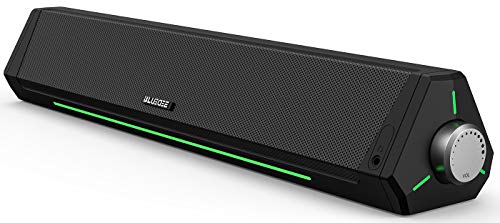
TL;DR: The Bluedee BD‑SK010 delivers 15 W RMS power in a 2.67 in × 2.67 in × 16.45 in, USB‑C‑powered soundbar with dual diaphragms, anti‑magnetic tech and RGB lighting for $53.99.
The Bluedee BD‑SK010 packs a 15 W RMS power output into a compact 2.67 in × 2.67 in × 16.45 in soundbar that weighs 2.0 lb, and it adds dual drivers with separate diaphragms plus anti‑magnetic technology to keep static interference at bay.
Compared with the other ten entries, the Bluedee is heavier than the Inwa speakers (0.84 lb) and the Creative Pebble V3 (1.59 lb), but its 2.0 lb mass is similar to the Monster S330 (1.90 lb). Its 15 W RMS output also tops the 12 W RMS of the Monster S330 and the 10 W of Inwa, while comfortably out‑powering the 4.4 W RMS of the Creative Pebble SE.
User reviews repeatedly mention the clear, room‑filling sound and the eye‑catching RGB lighting, while praising the anti‑magnetic tech for eliminating buzz. Some reviewers note the $53.99 price tag is higher than entry‑level USB‑C speakers, but many feel the extra power and visual flair justify the cost.
The unit runs entirely from a USB‑C power source, and the included nylon‑braided Y‑cable carries both power and audio, reducing desk clutter. Bluetooth 5.0 gives wireless flexibility, and the speakers can be wall‑mounted or used as a tabletop soundbar, fitting neatly on a 2.67 in high desk.
Pros
Cons
Best for: Buyers willing to invest in a proven, high-quality option
Avoid if: You're on a tight budget or only need basic functionality
TL;DR: The Lenrue G11 delivers clear, distortion‑free stereo sound from a slim under‑monitor bar, packs a 10 W RMS output and USB‑C power in a budget‑friendly package.
The standout spec is its 10 W RMS power rating, which draws power from a 5 V USB source, topping the 8 W maximum of the XKX USB‑C speakers and matching the 10 W output of the Inwa model. Its 1194 mm cable gives you plenty of reach for most desk setups, and the top‑mounted volume knob adds tactile control without clutter.
Compared with the other ten speakers, the G11 weighs more than the XKX USB‑C (249.5 g) and the Uakinat (340 g) but less than the Creative Pebble SE (862 g). At 65 mm tall, it sits a bit taller than the XKX USB‑C’s 55.9 mm height, while its 380 mm width makes it noticeably wider than the 182.9 mm width of the same model. Its cable runs slightly shorter than the Cirqon’s 1295 mm length, yet still longer than many rivals that list no cable length at all. Power‑wise, it outpaces the XKX USB‑C’s 8 W maximum and matches the Inwa’s 10 W output, giving it a solid position in the budget tier.
User feedback highlights the G11’s “surge stereo” clarity and the tidy look of its glued‑together cables. Reviewers appreciate the touch‑activated LED strip and the convenience of the included USB‑C to USB‑A adapter, noting that the speakers sit neatly under a monitor. The most common criticism is the low maximum volume, which can fall short in larger rooms or during intense gaming sessions. The automatic LED cycling also draws attention for some users, and the reliance on a USB power source limits placement flexibility.
Pros
Cons
Best for: Budget-conscious buyers seeking a reliable entry-level option
Avoid if: You have limited desk space or need portability
TL;DR: The Creative Pebble Pro packs 2.25‑inch drivers, 10 W RMS USB‑C power and Bluetooth 5.3 into a 1.72‑lb, RGB‑lit desktop pair for $64.99, but needs an extra PD adapter for its full 60 W peak claim.
What really sets the Pebble Pro apart is its single USB‑C cable that delivers both power and audio while providing up to 10 W RMS (20 W peak) output. The speakers also sport Bluetooth 5.3 with a 10 m (≈33 ft) range, customizable RGB lighting, and Creative’s BassFlex technology for richer low‑end response.
At 1.72 lb (780 g) each unit is lighter than the Bluedee (2.0 lb) and Monster S330 (1.90 lb) but a touch heavier than the Creative Pebble V3 (1.59 lb). Its 10 W RMS output falls below the 15 W of Bluedee and the 12 W RMS of Monster S330, yet it outpaces the 4.4 W RMS of the Creative Pebble SE. Driver size matches the Pebble V3 at 2.25 in, while the Monster S330 lists a 50 mm driver, placing the Pro solidly in the mid‑range of desktop drivers.
Users love the tiny 123 × 123 × 118 mm footprint and the single‑cable setup, noting the RGB accents add a fun visual touch to a workstation. Professional reviewers highlight the “astounding power” achievable with a 30 W USB‑PD adapter, though they also point out that without this optional adapter the speakers can feel modest at low volumes and bass depth may dip.
Technical details include a frequency response of 80 – 20 000 Hz, a signal‑to‑noise ratio of ≥75 dB, and a 45° driver angle that directs sound toward the listener. Clear Dialog processing improves vocal clarity during movies or calls.
Pros
Cons
Best for: Those prioritizing quality and willing to pay for premium performance
Avoid if: You're shopping on a tight budget — it's priced at $64.99
“crazy easy USB‑C/Bluetooth/AUX switching”
“surprisingly loud and clear audio (50% louder than prior models)”
TL;DR: The XKX USB‑C Computer Speakers pack a 1.6‑in (41 mm) driver, passive radiator and 8 W max power into a 45.7 mm‑deep, 249.5 g unit that plugs straight into a USB‑C port for instant stereo sound.
These speakers feature dual 1.6‑in (41 mm) ultra‑magnetic drivers with a passive radiator, delivering a frequency response of 100 Hz – 20 kHz. They draw power directly from a USB‑C port, offering 8 W maximum and 6 W rated output, and include three touch buttons for mute and volume control.
At 249.5 g, the XKX speakers are lighter than the Lenrve G11’s 1.433 lb (650 g) build and considerably shallower than the Uakinat’s 70 mm depth, making them one of the most space‑saving options in the roundup. However, rivals such as the Lenrue G11 and Creative Pebble SE list higher maximum output powers of 10 W and 8.8 W respectively, so the XKX’s 8 W ceiling places it on the quieter end of the spectrum.
Users consistently praise the plug‑and‑play USB‑C connection and the sleek black‑upgraded design that clings neatly to a monitor. Professional reviewers note the bass sounds virtually absent and the volume can feel low on larger screens or Chromebooks. The integrated USB cable also gets called flimsy, which aligns with consumer complaints about durability.
Pros
Cons
Best for: Budget‑friendly users who need a compact USB‑C speaker for quiet desktop tasks.
Avoid if: You require louder output, strong bass, or a rugged build for heavy‑duty use.
TL;DR: The Cirqon C1 offers 10 W USB‑powered sound in a compact, 222 g clamp‑mounted design with a 1295 mm cable, delivering clear but bass‑light audio for basic desktop use.
The standout spec is the 10 W maximum output power, which pushes a surprisingly loud signal for a speaker that weighs only 222 g and measures just 35 mm deep, 60 mm high and 210 mm wide. Its 1295 mm cable gives you plenty of reach to position the unit wherever your monitor’s clamps can hold.
Compared with the other ten speakers in this roundup, the Cirqon is slimmer than the XKX model (35 mm vs 41.9 mm depth) and lighter than the Creative Pebble SE (222 g vs 350 g) and Inwa speakers (222 g vs 381 g). It’s narrower than the Lenrue G11’s 380 mm width, yet its cable is longer than Lenrue’s 1194 mm. The XKX USB‑C speakers sit a bit higher at 55.9 mm, but the Cirqon’s 60 mm height is still lower than the XKX’s 71.9 mm. The Uakinat pair is deeper (70 mm) and heavier (340 g), making the Cirqon a more space‑saving choice.
Reviewers consistently praise the clear, distortion‑free sound even at full volume, noting the simple knob control feels intuitive. The downside most users mention is the lack of bass, which makes music and movies feel thin. Several users also point out that the speakers won’t work with TVs or USB hubs, and there are no microphone or headphone ports, limiting their versatility.
The C1’s frequency response spans 80 Hz to 20 kHz, which aligns with its “basic, no bass” audio description. Power comes from a 5 V USB source via a USB‑C to USB adapter, so you won’t need an external wall wart. The sturdy plastic clamps hold securely to monitors, and the volume knob provides quick adjustments without needing software.
Pros
Cons
Best for: Entry-level buyers or those on a tight budget
Avoid if: You want the best value‑per‑dollar in its price range
TL;DR: The Monster S330 packs a 50 mm driver, 12 W RMS output and 7.5‑hour USB‑C battery life into a compact, RGB‑lit bar that’s geared toward gamers and portable setups.
The standout spec is its 12 W RMS power combined with a 50 mm driver, which gives the S330 more headroom than the 4 W RMS per satellite listed for the Creative Pebble V3. Bluetooth 6.0 keeps the connection fresh, and the built‑in 7.5‑hour battery means you can take the speaker away from a desk without hunting for a power outlet.
Compared with the other ten speakers, the S330 is heavier than the Creative Pebble V3 (1.90 lb vs 1.59 lb) but lighter than the Bluedee pair (2.0 lb). It measures its driver size in millimeters while most peers list inches, making direct size comparisons tricky, but the RMS output of 12 W tops the 8.8 W peak and 4.4 W RMS figures of the Creative Pebble SE and exceeds the 15 W total output of the Bluedee speakers. None of the other models list a built‑in battery, so the S330’s portability is a clear differentiator. Bluetooth 6.0 also outpaces the 5.0 and 5.3 versions that Bluedee and Creative Pebble Pro use.
Reviewers consistently praise the speaker’s loud, clear sound and the eye‑catching dynamic RGB lighting; you can customize or turn off the lighting. Professional reviewers note the secure bike‑mount and touch controls as handy extras for on‑the‑go use. On the flip side, the Monster brand draws criticism for perceived low quality and pricing that feels steep for the feature set, which is reflected in its 4.0‑star rating from 33 reviewers.
Pros
Cons
Best for: Casual gamers and anyone who wants a portable, USB‑C powered speaker with RGB lighting and decent volume for desktop or on‑the‑go use.
Avoid if: You prioritize brand reputation, audiophile‑grade fidelity, or the lowest possible price.
“Please do not buy any of their crap. Let them fail as a company”
“Really nice little convenient speaker that gets really loud and good”
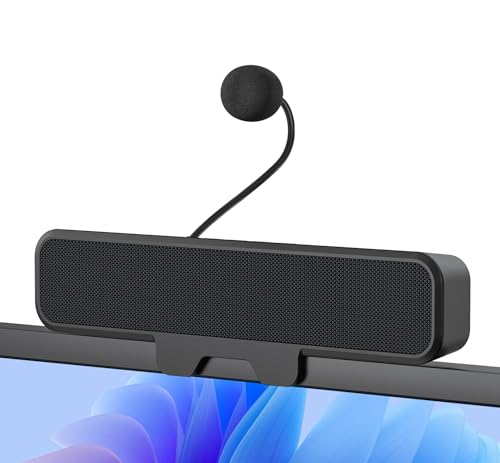
TL;DR: The Inwa MZ‑631M delivers 10 W USB‑C powered stereo sound in a 381 g clip‑on bar with a detachable mic, but thin bass and no Bluetooth keep it in the mid‑range.
The speaker bar packs a 199 mm dynamic driver and a 40 Hz frequency response, and a passive radiator backs it for extra low‑end lift. With a 10 W RMS power output and a 5 V USB power source, it can fill a small desk space without needing an external power brick. The included USB‑C to USB‑A adapter lets you connect directly to laptops, desktops, tablets or smartphones.
At 381 g, the Inwa unit is lighter than the Creative Pebble SE’s total weight of 862 g, yet it offers a higher RMS output than Pebble SE’s 4.4 W. Its 199 mm driver dwarfs the 2‑in (≈50.8 mm) drivers of the Pebble SE and the 41 mm driver of the XKX USB‑C speakers, giving it a clear advantage in potential loudness. Compared with the Cirqon speakers, which also output 10 W, the Inwa bar is heavier (381 g vs. 222 g) and adds a detachable microphone, a feature the Cirqon lacks.
Professional reviewers highlight the ultra‑compact footprint and the truly plug‑and‑play USB setup—no extra software or batteries required. Users love the easy spring‑clip mounting that fits monitors up to 30 mm thick (about 1.18 in) and the clear, forward‑projected stereo sound for video calls. However, many note the bass feels thin and the volume ceiling is modest, making the speakers less suited for bass‑heavy music or immersive gaming. Many also complain about the lack of Bluetooth or other wireless options.
Pros
Cons
Best for: Remote workers and office professionals needing clear audio for video conferencing, as well as students who want a tidy desk setup.
Avoid if: You need deep bass, high volume for large spaces, or wireless/Bluetooth connectivity for modern multi‑device use.
Breakdown
Creative Pebble V3
Pros
XKX Computer Speakers
Pros
Creative Pebble SE
Pros
Uakinat Computer Speakers
Pros
Based on scoring data and product specs
Personalized picks
Best Overall Pick
Creative Pebble V3
Best ValueBest for: Buyers willing to invest in a proven, high-quality option
XKX Computer Speakers
Best for: Most users looking for a well-reviewed, reliable mainstream option
$23.99-$18.75 vs winner
Skip Inwa Computer Speakers if…
You need advanced features or professional-grade performance
Creative’s Pebble V3 takes the top spot as the best USB‑C powered computer speakers. It pulls a solid 4.4‑star rating from 5,492 reviewers, delivers 8 W RMS power across its 2.25‑inch drivers, and even ships with a USB‑C‑to‑USB‑A adapter so you can plug it into any laptop without hunting for a dongle.
The XKX Computer Speakers land the runner‑up title and shine when you need touch‑controlled volume plus adaptive channel switching that keeps left‑right audio aligned while the speakers clamp to a monitor – a handy feature for cramped desk setups.
If you’re watching the price tags, the Uakinat speakers at $9.99 give you a functional entry‑level pair for tight budgets, the XKX speakers at $23.99 offer the best mid‑range value with their touch interface, and Creative’s Pebble Pro at $64.99 rounds out the premium tier with higher power output for audiophiles who want a little extra punch.
Pick the Creative Pebble V3 today and enjoy reliable USB‑C power with clear sound right out of the box.
The Creative Pebble V3 is a strong choice for tight desks; its 2.25‑inch drivers sit in a 4.6‑inch‑high, 4.8‑inch‑wide enclosure and the USB‑C cable is only 1.2 m long. Its small footprint and built‑in USB‑C power make it easy to keep the workspace tidy.
No reviews yet — be the first to share your experience.
Please sign in to leave a review