⚡ Quick Answer
Choosing a reliable water purification system can feel overwhelming, especially with everything from compact countertop units to full‑size under‑sink rigs. We lined up 10 reverse‑osmosis models that span three price tiers—budget, mid‑range and premium—so you can see how features and cost line up. Prices run from $206.99 for the Express Water system up to $429.00 for the Waterdrop G3P600, and most models sit comfortably above a 4‑star rating, with the iSpring RCC7AK Black pulling a 4.6/5 from 19,836 reviews.
The Waterdrop G3P600 commands attention with its tankless, under‑sink design and an 8‑stage filtration train that tackles lead, chlorine and a host of other contaminants. Its flow rate of 0.42 GPM and a 2 : 1 pure‑to‑drain ratio keep waste low, while a compact 5.68‑inch width fits tight cabinet spaces. Certified to NSF/ANSI 42, 53, 58 and 372, it offers a six‑month filter lifespan and a one‑year warranty, positioning it as a premium choice for larger households that value efficiency.
Below we’ll walk through the budget, mid‑range and premium selections, highlighting capacity, installation quirks and the trade‑offs you’ll face. By the end you’ll know which system aligns with your kitchen layout, family size and water‑quality goals.

Waterdrop G3P600
Its 60‑inch pipe length provides strong water pressure and consistent flow, supporting the system’s 8‑stage reverse‑osmosis filtration.

Home Master Artesian TMAFC-ERP
Ideal for homeowners seeking proven performance; at $315.74 it’s about $113 cheaper than the Best Overall.

Express Water Reverse Osmosis
Stands out with built‑in remineralization and a higher 0.8 GPM flow rate, delivering mineral‑rich water faster than the higher‑priced models.
Also considered
TL;DR: The iSpring RCC7AK Black delivers 6‑stage RO filtration, removing 98.9% of lead and reducing TDS by 97.9%, but its $249.99 price and pressure requirements make it a premium, installation‑heavy choice.
What really sets this system apart is its sixth‑stage alkaline filter, which restores minerals while the reverse‑osmosis membrane strips contaminants down to 0.0001 microns. NSF/ANSI 58 certification backs the claim that it removes 98.9% of lead and cuts total dissolved solids by 97.9%, putting it among the most thorough under‑sink units on the market.
At 25.00 lb, the RCC7AK Black is heavier than the 18.0‑pound SimPure Y7P but about the same as the 25.0‑pound APEC Ultimate RO‑90. Its 19.00‑inch height matches the APEC Essence ROES‑50 and exceeds the 16.1‑inch height of the SimPure model, while the 16.0‑inch width is broader than SimPure’s 7.49‑inch profile. Compared with the 5‑stage rivals, iSpring offers an extra remineralization stage and a transparent first‑stage housing that many users find helpful for visual filter checks.
Reviewers consistently praise the crisp, bottled‑water taste and the peace of mind that comes from the certified contaminant removal. Professional reviewers highlight the alkaline remineralization as a differentiator from standard RO systems. The main pain point is the 40‑80 PSI operating pressure range; several owners note that low‑pressure homes often need a booster pump, adding to the overall cost and complexity of installation.
With a production capacity of 75 GPD and a maximum feed‑water temperature of 100 °F, the system can keep up with a typical family’s daily drinking‑water needs. The filters are rated for a 12‑month lifespan, so you’ll swap them roughly once a year, and the six‑stage design tackles over 1,000 listed contaminants, from asbestos to PFAS.
Pros
Cons
Best for: Most users looking for a well‑reviewed, reliable mainstream option — the iSpring RCC7AK Black offers TDS Reduction: 97.9%
Avoid if: You're shopping on a tight budget — it's priced at $249.99
TL;DR: The APEC Essence ROES-50 delivers 99.99% contaminant removal, 50 GPD output, and a 4‑gallon tank, but its 3:1 waste ratio and 40 psi pressure minimum keep it from being the most efficient choice.
What really stands out is the system’s 5‑stage reverse‑osmosis design that eliminates up to 99.99% of over 1,000 contaminants, including 100% of lead and chlorine and about 80% of arsenic. Its 4‑gallon (15.1 L) pre‑pressurized storage tank lets you fill a glass or two without waiting for the next batch, and the daily production capacity of 50 GPD (at 60 psi, 77 °F) is ample for a typical family.
Compared with the other nine units in this roundup, the ROES‑50 is on the heavier side at 24.91 lb, edging out the SimPure Y7P and Home Master Artesian, which are notably lighter. Its required under‑sink width of 18‑20 inches is similar to the APEC Ultimate RO‑90, but the overall height of 19 inches makes it taller than the compact Home Master model. While many peers list power consumption, this system’s specifications focus on water‑related performance rather than electricity use.
Users consistently praise the crisp, clean taste and the noticeable reduction of city‑water odors, calling the water “better than bottled.” Professional reviewers highlight the system’s “near‑perfect” lab results for critical contaminants and the durability of its canister housings. On the downside, owners mention the 3:1 wastewater ratio as a waste‑ful trade‑off, and several note that low feed‑water pressure below 40 psi can cause sluggish flow or require a booster pump. The manual filter‑change process also draws comments about occasional spills if the fittings aren’t tightened carefully.
Pros
Cons
Best for: Most users looking for a well‑reviewed, reliable mainstream option — the APEC Essence ROES-50 offers Storage Tank Capacity: 4 gallons (15.1 L).
Avoid if: You have low water pressure below 40 psi, need a zero‑waste solution, or prefer a lightweight, quick‑swap filter system.
“Great-tasting water, easy install, reliable for years.”
“Removes bad taste/odor from city water; better than bottled.”
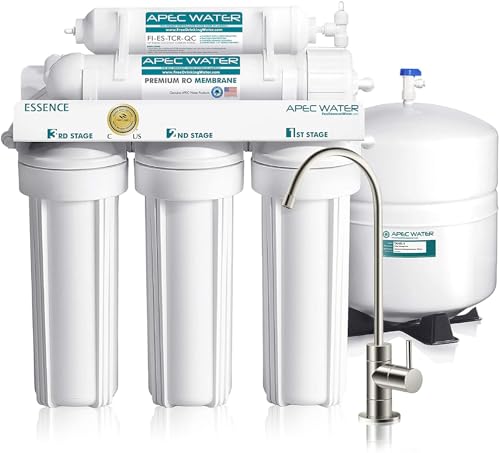
TL;DR: The Express Water Reverse Osmosis system removes up to 99.99% of contaminants, delivers 100 GPD, and fits under most sinks for a solid entry‑level filtration solution at $206.99.
This unit’s standout spec is its 99.99% contaminant reduction claim, backed by NSF/ANSI 58 certification and true lead and chlorine removal. With five filtration stages and alkaline remineralization, it promises both purity and a healthier taste profile.
Compared with the other nine systems, the Express Water model is heavier at 27 pounds, while the Home Master Artesian and SimPure Y7P sit under 20 pounds. Its daily output of 100 GPD exceeds the iSpring RCC7’s 75 GPD and the APEC Ultimate RO‑90’s 90 GPD. Flow‑rate wise, it pushes 0.8 GPM, far above the APEC RO‑90’s 0.0625 GPM, though it’s slower than tank‑less designs that rely on higher pressure. The 17 × 15 × 5‑inch footprint is narrower than the iSpring RCC7’s 8‑inch width, making it a better fit for tighter cabinet spaces.
Reviewers consistently praise the pre‑assembled design that simplifies DIY installation, noting the “crisp, fresh‑tasting water” that comes from the five‑stage process. Professional reviewers also highlight the automatic tank refill feature, which keeps water ready without manual intervention. However, users point out that the built‑in storage tank occupies moderate under‑sink space and that the 0.8 GPM flow may feel sluggish during peak usage.
Pros
Cons
Best for: Budget‑conscious buyers seeking a reliable entry‑level option — the Express Water Reverse Osmosis offers Flow Rate: 0.8 GPM.
Avoid if: You need immediate high‑flow water without a storage tank or have water pressure consistently below 40 PSI.
TL;DR: The iSpring RCC7 delivers 75 GPD of ultra‑low‑waste filtered water, removing contaminants down to 0.0001 microns, and packs a solid 4.7‑star rating for a $219.96 price.
What really stands out is the 0.0001 micron contaminant removal size, which lets the system strip out heavy metals, fluoride and even asbestos at rates above 97%. Certified to NSF/ANSI 58, it promises up to 99 % reduction of more than 1,000 contaminants, including lead removal up to 98 %.
At 25.0 lb, the RCC7 is heavier than the SimPure Y7P (18.0 lb) but lighter than the Express Water Reverse Osmosis unit (27.0 lb). Its 18.0‑inch height makes it a touch taller than the APEC Ultimate RO‑90 (17.5 in) while matching the APEC’s 5‑stage design. Compared with the other eight models, it offers a solid flow rate of 75 GPD, which sits comfortably between the lower‑capacity Bluevua RO100ROPOT and the higher‑output APEC Essence ROES‑50.
Customers repeatedly praise the clean, crisp taste that rivals bottled water, noting the system’s reliability for large families or office break rooms. Reviewers also highlight the transparent first‑stage housing, which makes filter changes straightforward. Professional reviewers point out the NSF/ANSI 58 certification as a key confidence booster, and the five‑stage architecture as a comprehensive solution for everyday drinking water needs.
Beyond the headline specs, the RCC7 operates without any power requirement, relying on passive water pressure, and it tolerates feed water temperatures from 40 °F to 100 °F. The included check valve helps maintain consistent pressure, and the certified food‑grade tubing ensures safe water contact throughout the system.
Pros
Cons
Best for: Large families or office workers needing high water capacity — the iSpring RCC7 offers Flow Rate: 75 GPD.
TL;DR: The Home Master Artesian TMAFC-ERP delivers 99% contaminant removal, 7‑stage filtration and alkaline remineralization in a compact 12‑inch unit, though its waste water ratio climbs without the optional pump.
What really sets this system apart is its patented 2‑pass Full Contact remineralization, which adds 30‑60 mg/L of calcium and magnesium to the purified water, leaving it slightly alkaline. Combined with a 7‑stage process that removes up to 99% of contaminants and a 50 GPD production rate, the unit promises both purity and taste.
In the context of the ten‑product roundup, the Home Master is lighter than the Bluevua RO100ROPOT (23.15 lb) and the iSpring RCC7P‑AK (20 lb), and its 12.0‑inch height is shorter than the iSpring RCC7P‑AK’s 18‑inch profile. While many competitors list five filtration stages, this model offers seven, giving it a richer filtration train. Its waste‑water ratio drops to 1:1 when the non‑electric permeate pump is installed, a clear advantage over units that stay at a 4:1 ratio without a pump.
Consumers repeatedly praise the “great‑tasting alkaline water” and the tool‑free, modular filter housing that makes swaps quick and clean. Reviewers also highlight the Fast Flo RO Kit’s 4.5‑second fill time, which feels noticeably faster than standard systems. The main trade‑off mentioned is the higher waste‑water volume when the pump isn’t used, and the need for annual filter replacements to maintain performance.
The system carries NSF certification, is 100% BPA‑free and lead‑free, and operates without electricity thanks to its permeate pump. It handles feed water pressures from 40‑95 PSI and temperatures between 40 °F and 100 °F, while tolerating up to 10 gpg hardness, 0.2 ppm iron, 5 NTU sediment and 1500‑2000 ppm TDS.
Pros
Cons
Best for: Buyers willing to invest in a proven, high-quality option — the Home Master Artesian TMAFC-ERP offers Height: 12.0 inches
Avoid if: Your water exceeds 10 gpg hardness or 2000 ppm TDS, or you cannot tolerate the higher waste‑water ratio without a pump.
TL;DR: The Bluevua RO100ROPOT delivers 99.99% contaminant removal, 91% TDS reduction and a 0.45‑gallon glass carafe in a plug‑and‑play countertop package for $299.
This unit’s standout spec is its 5‑stage reverse‑osmosis system with a 0.0001 μm membrane, achieving a contaminant removal rate of 99.99% and a real‑time TDS display that tracks the 91% reduction you see in lab tests. The glass carafe holds 0.45 gallons, so you can pour a full pitcher without refilling.
Compared with the nine other systems in our roundup, the Bluevua sits in the mid‑weight range at 23.15 pounds—heavier than the Home Master Artesian’s 14.5 pounds but lighter than the Express Water model’s 27 pounds. Its depth of 10.9 inches makes it shallower than the SimPure Y7P’s 17.3‑inch depth, which can be a plus for tight countertop spaces. While its 2:1 pure‑to‑waste ratio isn’t as efficient as some premium countertop rivals that push 3:1 or higher, it still beats many under‑sink units that waste more water per gallon of product.
User reviews repeatedly praise the hassle‑free setup: the plug‑and‑play design means no plumbing or tools, and the filter‑life indicator removes guesswork. Professional reviewers also note that the high‑borosilicate glass carafe sidesteps the plastic aftertaste common in other countertop RO units. On the downside, several owners mention that the base model strips beneficial minerals, so you’ll likely need the optional remineralization filter. The internal plastic tank can also introduce a faint taste, and the 2:1 waste ratio means you’ll see more runoff than models that achieve a higher efficiency.
Pros
Cons
Best for: Buyers willing to invest in a proven, high‑quality option — the Bluevua RO100ROPOT offers TDS Reduction: 91%
Avoid if: You have limited desk space or need portability
“Solid countertop RO system with almost perfect lab results”
“Best for no-install pure RO”
TL;DR: The Waterdrop G3P600 delivers 8‑stage RO filtration, a tankless design that saves 70% of cabinet space, and a smart faucet with real‑time TDS monitoring, all for $429.00.
The standout feature is its tankless architecture, which the manufacturer says frees up roughly 70% of under‑sink space. Coupled with an 8‑stage reverse‑osmosis train and a membrane rated at 0.0001 microns, the system promises removal of lead, chlorine, fluoride, and even microplastics. Its flow capacity of 600 GPD (0.42 GPM) means you can fill an 8‑oz cup in about eight seconds, and the pure‑to‑drain ratio of 2 : 1 keeps waste water manageable.
At 32.0 pounds, the G3P600 is heavier than the iSpring RCC7P‑AK (20.0 pounds) and the Home Master Artesian (14.5 pounds), but its footprint is slimmer—5.68 inches wide versus iSpring’s 8.0 inches. Heightwise it sits at 17.76 inches, just a shade shorter than iSpring’s 18.0 inches, and its depth of 18.06 inches is comparable to many under‑sink units. While it carries more weight, the extra bulk brings a richer feature set, including UV sterilization and a smart leakage protector that many peers lack.
Professional reviewers praise the system’s “exceptional efficiency” at stripping out nitrates, chlorine, and a long list of heavy metals, noting the convenience of a three‑second filter‑change mechanism. Everyday users echo the space‑saving benefit, especially in smaller kitchens, but several point out that fluoride reduction tops out at 85‑98%, which may not satisfy those needing full fluoride removal. Installation notes mention the need for drilling and a nearby electrical outlet, a step up in effort compared with tank‑based models.
Beyond the core filtration, the G3P600 offers a smart display faucet that shows real‑time TDS levels, a 6‑month filter lifespan for the CF cartridge, and a pure‑to‑drain ratio of 2 : 1 to keep waste water low. The system also includes UV sterilization and a built‑in leakage protector, adding layers of safety for households of five to seven people.
Pros
Cons
Best for: Audiophiles and enthusiasts seeking premium sound quality and advanced features — the Waterdrop G3P600 offers Pipe Length: 60 inches
Avoid if: You're shopping on a tight budget — it's priced at $429.00
TL;DR: The APEC Ultimate RO‑90 delivers 90 GPD of ultra‑pure water with a 5‑stage RO process, 99% contaminant removal and a 12‑month filter life, but its 25 lb weight and 17.5‑inch height demand ample under‑sink space.
This system’s standout spec is its 90 GPD output capacity paired with a 5‑stage reverse‑osmosis train that removes up to 99 % of contaminants, including lead and chlorine. The 4‑gallon storage tank and flow rate of 0.0625 GPM mean you’ll have a ready supply of crisp water without frequent refills. At 25.0 pounds, the unit sits 17.5 inches tall, 5.25 inches wide and 16.0 inches deep, anchored by a premium metal frame.
Compared with the nine other systems in this roundup, the RO‑90 is heavier than the SimPure Y7P (which weighs 18.0 pounds) and about the same as the iSpring RCC7 (25.0 pounds). It is lighter than the Express Water model (27.0 pounds) but bulkier than the Home Master Artesian, which tips the scales at just 14.5 pounds. Price‑wise it sits in the same bracket as the SimPure Y7P, while offering a higher output capacity than several peers that cap around 50‑100 GPD.
Reviewers consistently applaud the water’s taste and the system’s WQA Gold Seal certification, noting that the “ultra‑pure” result is evident straight from the faucet. Installation is described as straightforward, thanks to the included wrenches and color‑coded tubing. However, users flag the need for a minimum of 50 psi feed pressure; lower pressure can slow the 0.0625 GPM flow and reduce daily output. The physical footprint also draws criticism from those with cramped under‑sink spaces.
Professional reviewers highlight the low‑waste design, which minimizes water loss during filtration, and the 12‑month filter lifespan that cuts down on maintenance. The system’s automatic shut‑off and check valve add safety, while the lead‑free chrome faucet ensures the final water stays pure.
Pros
Cons
Best for: Households of four or more people who need a high‑volume, ultra‑pure water source and can accommodate the unit’s size — the APEC Ultimate RO‑90 offers Flow Rate: 0.0625 GPM.
TL;DR: For $229.98, the SimPure Y7P delivers a fast 418 GPD flow, a water‑saving 4:1 pure‑to‑drain ratio, and UV‑level microbe kill, all in a compact 17.3‑inch countertop unit.
The standout spec is the 418 GPD flow rate, which dwarfs the 90 GPD output of the APEC Ultimate and the 75 GPD of the iSpring RCC7. That speed translates to a full glass in roughly 15 seconds, matching the listed dispense time. Combined with a 4:1 pure‑to‑drain ratio, the Y7P uses up to 1,500 % less water than many traditional reverse‑osmosis systems, a point professional reviewers highlight as the highest efficiency in its class.
Compared with the nine other units in this roundup, the Y7P sits in the middle of the price band—roughly on par with the APEC models but a bit higher than the Express Water system. It is lighter at 18.0 pounds, whereas most under‑sink competitors tip the scales at around 25 pounds. Its depth of 17.3 inches is slightly shorter than the iSpring RCC7’s 18‑inch height, making it a better fit for cramped countertops.
Users repeatedly praise the touch‑panel interface and the tool‑free twist‑and‑lock filter swaps, noting that setup feels “plug‑and‑play” even for renters without plumbing modifications. The UV sterilization, which kills 99.99 % of microbes, and the >98.64 % TDS removal rate also earn frequent compliments for improving taste and safety. On the downside, reviewers flag the rear‑tank access as awkward and point out that the system only accepts feed water under 500 ppm TDS, limiting use in high‑mineral locales. The lack of broader independent NSF/ANSI certifications beyond SGS testing is another recurring concern.
Pros
Cons
Best for: Budget‑conscious buyers seeking a reliable entry‑level option — the SimPure Y7P offers Depth: 17.3 inches
Avoid if: You need a system that handles high‑TDS water or demand comprehensive NSF/ANSI certifications for a wide range of contaminants
TL;DR: The iSpring RCC7P‑AK delivers 6‑stage RO filtration, a built‑in booster pump and alkaline remineralization, removing over 1,000 contaminants while restoring minerals, but it carries a premium price tag.
This under‑sink system packs six filtration stages, including a dedicated alkaline remineralization filter that adds calcium, magnesium, sodium and potassium back into the water. It can produce up to 75 GPD and is rated to remove more than 1,000 contaminants, with certified reductions such as >99.7% asbestos, 98.8% cadmium and 97.9% TDS. The built‑in electric booster pump activates below 40‑45 PSI, making the unit suitable for homes with low incoming water pressure.
At 20.0 pounds, the iSpring is heavier than the Home Master Artesian (14.5 pounds) but lighter than the Bluevua RO100ROPOT (23.15 pounds). Its 18.0‑inch height is taller than Home Master’s 12.0 inch profile and only slightly taller than the Waterdrop G3P600 (17.76 inches). Production-wise, it outpaces Home Master’s 50 GPD rate, though the APEC Ultimate RO‑90 can push 90 GPD. These size and output differences position the iSpring as a robust, mid‑sized option for households that need higher flow without sacrificing space.
Reviewers consistently praise the noticeable taste improvement after a few months, describing the water as smooth and slightly sweet. Professional reviewers highlight the NSF/ANSI 58 certification and the combination of a booster pump with alkaline remineralization as a strong answer to common RO complaints like low flow and acidic water. Users also note that the 360‑degree faucet swivel and locking lever handle add convenience during daily use.
Pros
Cons
Best for: Buyers willing to invest in a proven, high‑quality option — the iSpring RCC7P‑AK offers Height: 18.0 inches
Avoid if: You're on a tight budget or only need basic functionality, or you have standard water pressure and don’t need a booster pump.
“removes impurities flawlessly, leaving water that is crystal-clear with a crisp, refreshing taste”
“smooth, slightly sweet profile and more natural taste compared to standard RO water”
Breakdown
Waterdrop G3P600
Pros
Cons
Home Master Artesian TMAFC-ERP
Pros
Express Water Reverse Osmosis
Pros

iSpring RCC7AK Black
Pros
Cons
Based on scoring data and product specs
Personalized picks
Best Overall Pick
Waterdrop G3P600
Best OverallBest for: Audiophiles and enthusiasts seeking premium sound quality and advanced features — the Waterdrop G3P600 offers Pipe Length: 60 inches
Home Master Artesian TMAFC-ERP
Best for: Buyers willing to invest in a proven, high-quality option — the Home Master Artesian TMAFC-ERP offers Height: 12.0 inches
$315.74-$113.25 vs winner
Skip SimPure Y7P if…
Reliability and user satisfaction are your top concerns
We’ve crowned the Waterdrop G3P600 as the overall winner. Its 8‑stage reverse‑osmosis cascade delivers a solid 0.42 GPM flow while keeping waste low with a 2 : 1 pure‑to‑drain ratio. The system’s filters last about six months, and real‑time TDS monitoring plus smart leakage protection give you confidence that lead, chlorine and other contaminants are being knocked down effectively.
The Home Master Artesian TMAFC‑ERP takes the runner‑up spot, especially if you need a non‑electric unit that handles hard water and adds a touch of remineralization. It packs seven filtration stages, a 1 : 1 waste ratio when the pump is engaged, and a patented two‑pass calcium/magnesium boost, all backed by a five‑year limited warranty.
Looking at tighter budgets, the Express Water Reverse Osmosis system is the best value at $206.99, giving you basic RO filtration without the premium price tag. For a mid‑range pick, the iSpring RCC7AK Black at $249.99 stands out as the most popular choice, offering solid performance and an added alkaline filter. If you’re willing to stretch a bit for premium features, the Bluevua RO100ROPOT at $299.00 delivers a higher‑end experience without reaching the top‑tier price.
Choose the Waterdrop G3P600 today for the most efficient, smart‑monitored purification you can get.
It uses a pure‑to‑drain ratio of 2, eight filtration stages, and a flow rate of 0.42 GPM. Real‑time TDS monitoring and a filter‑change indicator add smart control while it fits under the sink.
No reviews yet — be the first to share your experience.
Please sign in to leave a review