⚡ Quick Answer
We’ve lined up 12 waterproof wearable heart‑rate monitors and sliced them into three price buckets so you can spot the right fit for your wallet. The budget tier brings options like the Aeac Smart Watch at $41.99 with a 4.4‑star rating from 1,581 reviewers, and the Akumaka HD Smart Watch that promises up to 30 days standby. In the mid‑range camp you’ll find the Amazfit Band 7 at $44.99 and the Amzhero Fitness Tracker, both balancing solid screens and decent battery lives. The premium corner houses the Xiaomi Mi Smart Band 10 ($49.59, 4.5‑star rating from 6,923 reviews) with a 1.72‑inch AMOLED display, the Garmin Forerunner 165, the Amazfit Bip 6, and the Fitbit Sense 2, which commands a $220.41 price tag and 50‑meter water resistance.
Across the board, you’ll see battery lives ranging from a few days to three weeks, screen sizes from 1.32 inches up to 1.97 inches, and refresh rates set at 60 Hz. Whether you need a lightweight band for pool laps or a full‑featured smartwatch for outdoor runs, the specs we’ve gathered give you a clear sense of what each tier can deliver. Keep reading for a deeper dive into each model’s strengths and quirks.

Aeac Smart Watch
Its 10‑day battery life gives you nearly two weeks between charges, a standout for a mainstream smartwatch.

Xiaomi Mi Smart Band 10
Ideal for fitness enthusiasts who want a proven, high‑quality band, and at $49.59 it’s about $7.60 pricier than the Aeac Smart Watch.

Fitbit Sense 2
Stands out with a built‑in speaker at 75 dB SPL, letting you hear alerts and guided sessions—something the Aeac and Xiaomi bands don’t provide.
Also considered
Score Analysis
Key score advantages vs. runner-up (Xiaomi Mi Smart)
Price Range
Aeac Smart Watch
$49.99
Xiaomi Mi Smart Band 10
$49.59
Fitbit Sense 2
$224.99

Akumaka HD Smart Watch
$37.99

Garmin Forerunner 165
$199.99

Choiknbo Smart Watch
$18.99
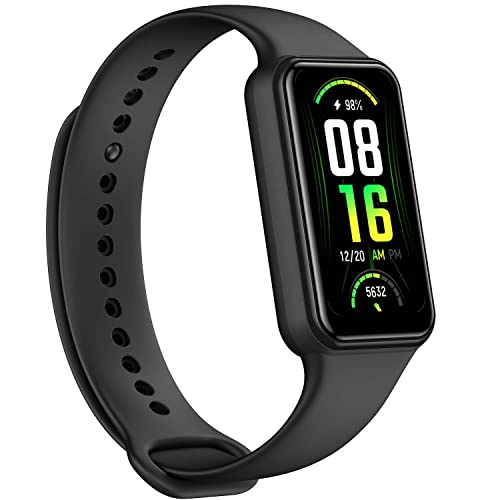
Amazfit Band 7
$49.99

Amazfit Bip 6
$76.99

Livikey Fitness Tracker
$19.99

Amzhero Fitness Tracker
$49.99

Torjalph Smart Watch
$23.99
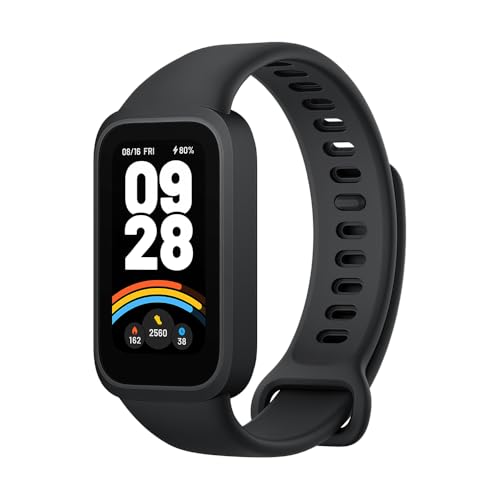
Xiaomi Smart Band 9 Active
$29.99
Spec Comparison
TL;DR: The Aeac Smart Watch offers a 1.32‑inch AMOLED display, 10‑day battery life, and 110+ sport modes for $41.99, making it a solid budget choice for women seeking basic health tracking.
The watch’s 350 mAh battery delivers up to 10 days of use on a single charge, and a full charge takes about 120 minutes. Combined with an IP68 rating and a 3 ATM water‑resistance level, it’s ready for daily wear and splash‑prone activities. Its 1.32‑inch AMOLED touchscreen runs at 60 Hz, and the device ships with 256 MB of internal storage for apps and music.
Compared with the other eleven entries, Aeac’s battery capacity outpaces the Amazfit Band 7’s 232 mAh and the Torjalph’s 230 mAh cells, while sitting just below the Akumaka HD’s 300 mAh. The screen is smaller than the Akumaka HD’s 1.83‑inch panel and the Xiaomi Mi Band 10’s 1.72‑inch display, but it matches the 60 Hz refresh rate of those same Xiaomi models. Its 256 MB storage doubles the Akumaka’s 128 MB and exceeds the Amzhero’s 100 MB, giving it a clear edge in onboard memory.
Users repeatedly praise the easy Bluetooth pairing, accurate heart‑rate and SpO2 readings, and the comfortable swappable band. The long‑lasting battery and the built‑in AI voice assistant also get positive mentions. On the downside, reviewers note that the default 5‑second screen timeout feels too brief, raise‑to‑wake can be hit‑or‑miss, and the companion app lacks deep analytics. The watch also relies on a phone‑tethered GPS rather than a standalone module.
Pros
Cons
Best for: Budget‑conscious women who want an entry‑level fitness tracker with solid health basics, waterproof durability, and a reliable battery without breaking the bank.
“"feature‑packed and affordable"”
“"everything you'd expect in a smartwatch today"”
TL;DR: The Xiaomi Mi Smart Band 10 offers a 1.72‑inch AMOLED display at 1500 nits, up to 21 days of battery life, and solid health tracking for $49.59, making it a standout budget wearable.
The standout spec is its 1.72‑inch AMOLED screen, which features a 2.0 mm bezel and can reach 1500 nits peak brightness, while the 60 Hz refresh rate keeps animations smooth. Combined with fast charging that refills the battery in about 60 minutes, the band feels premium despite its modest price.
Compared with the other eleven entries, the Band 10’s display is larger than the 1.47‑inch panels on the Amzhero Fitness Tracker, Amazfit Band 7, and Xiaomi Smart Band 9 Active, and also bigger than the 1.32‑inch screen on the Aeac Smart Watch. Only the Akumaka HD Smart Watch (1.83 in) and Amazfit Bip 6 (1.97 in) sport bigger displays. Battery life also outpaces most rivals, with a typical 21‑day runtime versus the two‑week range many competitors claim.
Reviewers consistently praise the ultra‑bright screen for outdoor readability and the long‑lasting 21‑day battery that eliminates daily charging. Professional reviewers note the heart‑rate sensor matches chest‑strap accuracy and appreciate the added linear‑motor haptic feedback and electronic compass. On the downside, the lack of built‑in GPS forces reliance on a phone for outdoor routes, some owners describe the standard clasp as flimsy, and the auto‑detect workout feature can be hit‑or‑miss.
Pros
Cons
Best for: Buyers willing to invest in a proven, high-quality option
Avoid if: You're on a tight budget or only need basic functionality
TL;DR: Fitbit Sense 2 delivers a full‑suite health tracker with skin‑temperature, ECG, SpO2 and stress sensors, 6+ day battery, and 50 m water resistance, but its $220.41 price is higher than many rivals.
The standout hardware is its 40.1 mm AMOLED display paired with a full sensor array: optical heart‑rate, ECG, cEDA stress, SpO2, skin‑temperature, altimeter and more. At 190.5 g (0.42 lb) it feels solid, and the 50‑meter water resistance lets you swim without worry.
Compared with the other eleven entries, the Sense 2 is heavier than the Garmin Forerunner 165 and the Amazfit Bip 6, and it sits at a premium price point relative to budget‑focused options like the Xiaomi Mi Smart Band 10 or the Amazfit Band 7. However, its 4 GB storage (including 2.5 GB for music) eclipses the 100 MB found in the Amzhero Fitness Tracker and the 256 MB in the Aeac Smart Watch.
Users have praised the on‑wrist skin‑temperature sensor and the cEDA stress‑management score, noting that these metrics add real depth to daily health insights. The 4.1/5 rating from 9,677 reviewers reflects solid general satisfaction, though several reviewers call out the region‑locked ECG app and the fact that Wi‑Fi remains deactivated, limiting direct internet sync. The 6+ day battery life, fast‑charge time of 12 minutes, 75 dB SPL speaker, built‑in GPS + GLONASS, Bluetooth LE, NFC, Alexa and Fitbit Pay round out a feature‑rich package.
Pros
Cons
Best for: Those prioritizing quality and willing to pay for premium performance
Avoid if: You're shopping on a tight budget — it's priced at $220.41
TL;DR: The Akumaka HD Smart Watch offers a bright 1.83‑inch HD IPS screen, IP68 water resistance and up to 30 days standby battery for just $36.08, making it a solid budget choice.
The standout spec is its 1.83‑inch IPS HD display with a 368 × 448 pixel resolution, delivering a clear and vivid view for notifications and fitness data. Coupled with an IP68 rating, the watch can handle submersion in water, which is rare at this price point.
At $36.08, it sits between the cheaper Xiaomi Smart Band 9 Active and the pricier Aeac Smart Watch. Compared with the Aeac, the Akumaka has a larger screen (1.83 in vs 1.32 in) but a smaller flash memory (128 MB vs 256 MB) and a slightly lower battery capacity (300 mAh vs 350 mAh). Its battery life of up to 30 days standby and 14 days typical use outpaces the Torjalph’s 5‑7 day range, though it is heavier than the Torjalph’s 0.09‑lb unit.
Users praise the long standby time and the convenience of Bluetooth calling directly from the wrist. Professional reviewers note the “strong value” and the “snappy, bright HD screen.” However, real‑world heavy usage often reduces battery life to around four days, and the built‑in flashlight appears dim. The integrated blood‑pressure sensor also draws skepticism about its medical accuracy.
Under the hood, the watch runs a BLE MCU RTL8763EW with Bluetooth 5.2, and it packs 110 sports modes, heart‑rate, SpO₂ and blood‑pressure sensors, plus a 128 MB flash memory for data storage. Charging takes roughly 120 minutes at 5 V with a minimum 500 mA current, and the zinc‑alloy frame with PC+ABS shell adds durability without a premium feel.
Pros
Cons
Best for: Value-conscious buyers seeking quality at $36.08
Avoid if: You need medical‑grade sensor accuracy, a brighter flashlight, or a GPS‑enabled device for intense athletic tracking
“"feature‑packed and affordable"”
“"everything you'd expect in a smartwatch today"”
TL;DR: The Garmin Forerunner 165 offers a bright 30.4 mm AMOLED screen, 5 ATM water resistance, and up to 20 days of battery saver life for $199, making it a solid choice for runners who value comfort and long‑lasting tracking.
The watch’s standout feature is its 1.2‑inch (30.4 mm) AMOLED display with a crisp 390 × 390 pixel resolution, paired with a lightweight 0.08625 lb (39 g) construction and 5 ATM water resistance—ideal for pool workouts and rain‑soaked runs.
Compared with the other eleven entries, the Forerunner 165 costs more than the $74.99 Amazfit Bip 6 and the $49.59 Xiaomi Mi Smart Band 10, but stays below the $220.41 Fitbit Sense 2. It weighs more than the 0.0595 lb (27 g) Xiaomi band yet is considerably lighter than the 0.42 lb (190.5 g) Fitbit Sense 2. Its 4 GB internal storage dwarfs the 100 MB that the Amzhero Fitness Tracker provides and the 256 MB that the Aeac Smart Watch provides, giving you plenty of room for music and training data.
User feedback repeatedly highlights the watch’s feather‑light feel on the wrist, reliable GPS lock, and the “up to 20 days” battery‑saver runtime that lets you train for weeks without hunting for a charger. Professional reviewers also note the vibrant AMOLED screen and the daily Garmin Coach workouts as strong points, while pointing out the lack of a dedicated triathlon mode and that music storage is optional rather than built‑in.
Beyond the screen, the Forerunner 165 packs a fiber‑reinforced polymer bezel, chemically strengthened glass, and a silicone strap with a 20 mm quick‑release system. Health sensors include wrist‑based heart‑rate monitoring, Pulse Ox, HRV status, altitude, and cadence, and the device supports Garmin Pay via NFC for contactless transactions.
Pros
Cons
Best for: Buyers willing to invest in a proven, high-quality option
Avoid if: You're shopping on a tight budget — it's priced at $199.00
TL;DR: For $18.99, the Choiknbo Smart Watch delivers a 1.83‑inch HD display, 290 mAh battery lasting 3‑6 days, IP68 water resistance, and 24‑hour heart‑rate monitoring, making it a solid budget fitness tracker.
The watch packs a 290 mAh battery that typically runs 3‑6 days before needing a recharge, and the charging cable restores power in about 120 minutes. Weighing just 46 g and featuring an IP68 waterproof rating, it stays comfortable on the wrist even during sweaty workouts or a swim.
Compared with peers, its battery capacity sits between the lower‑capacity Livikey (210 mAh) and the higher‑capacity Aeac (350 mAh). At roughly 0.101 lb, it’s lighter than the Livikey’s 0.1808 lb but a touch heavier than the Torjalph’s 0.088 lb. The 64 MB internal storage offers modest space next to the Akumaka’s 128 MB, yet remains sufficient for basic activity logs.
Reviewers consistently praise the crystal‑clear TFT‑LCD screen and the comfort of the thin, lightweight design. Users also love the breadth of over 100 sport modes and the continuous 24 h heart‑rate monitoring. The most common complaint is the need to recharge every 3‑6 days when heart‑rate and SpO₂ tracking stay active.
Pros
Cons
Best for: Shoppers on a tight budget who want the most for their money
Avoid if: You need advanced smartwatch features such as built‑in GPS or a large app ecosystem
“"feature‑packed and affordable"”
“"everything you'd expect in a smartwatch today"”
TL;DR: The Amazfit Band 7 offers a 1.47‑inch AMOLED screen, up to 18 days of typical battery life (28 days in saver mode), and 5 ATM water resistance for under $45.
The standout spec is its battery endurance: a 232 mAh cell powers a typical 18‑day runtime, and the saver mode stretches that to 28 days, while a magnetic cable tops out at about 120 minutes to full charge. Coupled with a 1.47‑inch AMOLED panel that delivers 282 ppi, the tracker feels crisp and lasts weeks between charges.
Compared with other entries in this roundup, the Band 7’s 232 mAh battery is smaller than the Aeac Smart Watch’s 350 mAh pack, yet it outperforms Aeac’s listed 10‑day life. Its 1.47‑inch display is larger than Aeac’s 1.32‑inch screen and matches the Amzhero Fitness Tracker, while the Xiaomi Mi Smart Band 10 pushes a bigger 1.72‑inch panel. Charging time aligns with Aeac and Amzhero (both around 2 hours) and is a bit longer than the Mi Band 10’s roughly 1‑hour fast charge. At 0.06 pounds (28 g), the Band 7 is lighter than the Torjalph Smart Watch’s 0.088 pounds, making it comfortable for all‑day wear.
Users consistently praise the 18‑day battery life and vivid screen, noting the band stays comfortable even during sleep tracking. Professional reviewers call the 18‑day endurance “surprising” for the price tier and highlight the bright AMOLED view. Common complaints focus on the lack of built‑in GPS, which forces reliance on a phone for outdoor distance data, and occasional hiccups in the companion app’s sync process. The strap’s 166 mm minimum wrist size can feel generous on very small wrists, a point echoed in several consumer comments.
The device also carries an IP 5 ATM rating (50 m water resistance), Alexa voice integration, Bluetooth camera control, and 120 sport modes. Health sensors include continuous heart‑rate monitoring, SpO₂, stress, sleep, and a 45‑second PAI health assessment, all wrapped in a tempered‑glass face with an anti‑fingerprint coating.
Pros
Cons
Best for: Most users seeking a balanced, mainstream option
Avoid if: Reliability and user satisfaction are your top concerns
“Fitbit aesthetics for under $50”
“nice 1.47-inch HD AMOLED”
TL;DR: The Amazfit Bip 6 offers a 1.97‑inch 2,000‑nit AMOLED screen, 14‑day typical battery life and 5 ATM water resistance for $74.99, making it a bright, long‑lasting entry‑level smartwatch.
The standout spec is the display: a 1.97‑inch AMOLED panel that can reach up to 2,000 nits, which far outshines many band‑style competitors. Combined with a pixel density of 302 PPI, the screen stays clear even in bright sunlight. Under the hood, the watch houses a 340 mAh battery that delivers up to 14 days of typical use, so you won’t be reaching for the charger every night.
When you line it up with the other eleven options, the Bip 6 lands at a higher price tier than the Xiaomi Mi Smart Band 10 and the Aeac Smart Watch, yet it weighs more than the Mi Band 10’s 0.0595 lb frame. Its brightness of 2,000 nits also exceeds the Mi Band 10’s 1,500 nits, and the Bip 6’s 14‑day battery life is shorter than the Mi Band 10’s 21‑day typical endurance but still competitive against the Aeac’s 10‑day claim.
Reviewers consistently praise the ultra‑long battery and the sunlight‑readable screen, noting that the lightweight aluminum alloy body (0.09 lb) feels comfortable for all‑day wear. Professional reviewers highlight the precise heart‑rate and sleep tracking, while some users mention occasional Bluetooth drops that can interrupt calls. The strap’s 22 mm width and liquid‑silicone material keep the watch snug, though a few larger‑wrist owners report a less than perfect fit.
Pros
Cons
Best for: Budget‑conscious fitness enthusiasts, beginners in wearables, and style‑focused users who want a bright, waterproof watch with solid battery life.
Avoid if: You need a premium‑grade feel, NFC payments, or a watch that comfortably fits very large wrists.
TL;DR: For $19.99 the Livikey Fitness Tracker gives you a 1.3‑inch display, IP67/5ATM water resistance and up to 7 days of battery life, but sensor accuracy and a modest rating keep it in the budget lane.
The standout spec is its battery endurance – a 210 mAh cell that lasts up to 7 days of continuous use and can sit idle for 30 days, meaning you’ll only need to charge it about once a week. Charging is magnetic and takes roughly 120 minutes, which is quick enough for a daily routine. The tracker also carries an IP67/5ATM rating, so you can swim or shower without worrying about water damage.
Compared with the other eleven watches in this roundup, the Livikey is heavier than the Choiknbo Smart Watch (0.101 lb) and the Torjalph Smart Watch (0.088 lb), and considerably heavier than the Xiaomi Smart Band 9 Active (0.066 lb). Its 210 mAh battery is smaller than the 290 mAh cell in the Choiknbo and the 230 mAh cell in the Torjalph, though the charging time matches the 2‑hour magnetic charge of those models. None of the peers list an IP rating, so Livikey’s waterproof claim stands out.
Consumers repeatedly praise the long‑lasting battery and the comfort of the band, noting that the 1.3‑inch screen is bright enough for outdoor use thanks to five adjustable brightness levels. Professional reviewers echo the battery praise and the waterproof rating, but they also note that the heart‑rate and SpO₂ sensors perform less reliably during high‑intensity workouts, and the device lacks built‑in call or text functionality. The 9‑14 sport modes cover most casual activities, from walking and yoga to badminton and strength training.
Technical details include Bluetooth 4.0+ compatibility, a magnetic charging method, and a suite of smart features such as alarm scheduling (up to 10 alarms), breath training, calendar alerts, gesture control, and remote camera control. Sleep monitoring tracks deep, light and awake phases, while the SpO₂ sensor is present on some models.
Pros
Cons
Best for: Shoppers on a tight budget who want the most for their money
Avoid if: You need medical‑grade sensor accuracy, built‑in GPS for precise tracking, or robust durability for serious athletic training
“Well worth the money”
“Battery lasts longer than 7 days”
TL;DR: The Amzhero D26 offers a 1.47‑inch bright touchscreen, 5 ATM water resistance and a 15‑day battery life for $48.96, making it a solid entry‑level tracker for casual fitness fans.
The D26’s standout spec is its 15‑day battery life powered by a 2 Ah lithium‑polymer cell, and a 1.47‑inch HD bright color touchscreen that stays readable under the 5 ATM water‑resistance rating. At about 82 g, the watch feels light on the wrist while still packing blood‑oxygen, blood‑pressure and heart‑rate sensors plus auto sport‑mode detection for 14 activity types.
Compared with the other eleven wearables, the Amzhero is heavier than the Xiaomi Mi Smart Band 10 (27 g) and Amazfit Band 7 (28 g), but lighter than the Akumaka HD Smart Watch (141 g). Its 15‑day battery sits between the Mi’s typical 21‑day endurance and the Mi’s heavy‑load 8‑day figure, and it exceeds the Akumaka’s 14‑day typical life while falling short of the Mi’s best‑case 21 days. The 1.47‑inch screen is smaller than the Mi’s 1.72 in and Akumaka’s 1.83 in displays, yet matches the Xiaomi Smart Band 9 Active’s 1.47 in size.
Users repeatedly praise the D26’s comfortable flat‑back design and the quick QR‑code setup, noting that the basic activity tracking feels reliable day‑to‑day. Professional reviewers highlighted the easy‑to‑read screen and the convenience of pin‑charging. On the downside, many mention that accurate data syncing hinges on the GloryFit app, and occasional synchronization hiccups appear in user comments. Compatibility is limited to iOS 9+ and Android 6+, and the watch relies on phone GPS rather than a built‑in module.
Pros
Cons
Best for: Most users seeking a balanced, mainstream option
Avoid if: Reliability and user satisfaction are your top concerns
“Well worth the money”
“Battery lasts longer than 7 days”
TL;DR: At $23.99, the Torjalph Smart Watch offers a 1.69‑inch full‑HD display, IP68 waterproof rating, and 5‑7‑day battery life, earning a 4.3‑star rating from over 4,000 users.
The watch’s standout spec is its 1.69‑inch color TFT screen with a 240 × 280 pixel resolution, and the metal‑alloy frame houses the display while weighing only 0.09 lb (40 g) on your wrist. It carries a 230 mAh battery that the manufacturer says lasts 5‑7 days, and the IP68 rating means it can survive swimming or heavy rain without a hiccup.
Compared with the other eleven entries, Torjalph is lighter than the Livikey Fitness Tracker (0.18 lb) and far lighter than the Akumaka HD Smart Watch (0.31 lb), while sitting just under the Choiknbo’s 0.10 lb. Its 230 mAh battery sits between Livikey’s 210 mAh and Choiknbo’s 290 mAh, giving it respectable endurance without the larger capacity of the Xiaomi or Aeac models. The 1.69‑inch screen is bigger than Livikey’s 1.3‑inch and Choiknbo’s 1.32‑inch displays, yet a touch smaller than Akumaka’s 1.83‑inch panel.
Reviewers consistently praise the long‑lasting battery and the waterproof confidence for daily swims. However, many note that the heart‑rate and blood‑pressure readings haven’t been medically verified, so the data should be treated as a general wellness guide rather than a clinical measurement. The device feels comfortable thanks to a breathable silicone strap, and the magnetic charging connector lets you top up quickly and hassle‑free.
Pros
Cons
Best for: Budget-conscious buyers seeking a reliable entry-level option
Avoid if: You need advanced features or professional‑grade performance
“"feature‑packed and affordable"”
“"everything you'd expect in a smartwatch today"”
TL;DR: The Xiaomi Smart Band 9 Active offers a 1.47‑inch, 60 Hz TFT display, 5 ATM water resistance, and up to 18 days of battery life for just $29.99.
The band’s standout spec is its battery: a 300 mAh cell that delivers up to 18 days of typical use, meaning you’ll rarely need to charge it. A 5 ATM (50 m) rating lets you wear it while swimming or in the shower, and the 1.47‑inch TFT LCD screen refreshes at 60 Hz for smooth scrolling.
Compared with other options in this waterproof‑wearable roundup, the Smart Band 9 Active is lighter than the Torjalph Smart Watch (0.088 lb vs 0.066 lb) and slimmer than the Akumaka HD Smart Watch’s 1.83‑inch screen. Its charging time of under 120 minutes is quicker than the roughly 2‑hour charge cycles listed for Akumaka, Choiknbo, and Aeac models. While the Amazfit Band 7 matches its weight (0.06 lb) and also hits an 18‑day battery claim, the Xiaomi band’s 450‑nit brightness and 247 PPI density give a clearer view than many budget TFT panels.
Users consistently praise the ultra‑light 30 g body and the long battery stretch, noting that the band feels “almost weightless” during workouts and sleep. Reviewers also like the smooth 60 Hz scroll and the variety of over 100 watch faces. The most common complaints revolve around the TFT screen’s muted colors and the need to adjust brightness manually, as the device lacks auto‑brightness. Professional reviewers also point out the absence of GPS or ECG, which limits its appeal for serious athletes.
Additional technical details include a 450‑nit peak brightness, 247 PPI pixel density, and a 50‑mode fitness suite that covers basic cardio, sleep, stress, and women’s health tracking. The band supports music controls directly from the wrist and offers SpO₂ monitoring via its PPG sensor. The TPU strap is adjustable from 135 mm to 215 mm and comes in black, beige‑white, or pink.
Pros
Cons
Best for: Entry-level buyers or those on a tight budget
Avoid if: You need advanced features or professional‑grade performance
Breakdown
Aeac Smart Watch
Pros
Xiaomi Mi Smart Band 10
Pros
Fitbit Sense 2
Pros
Cons
Akumaka HD Smart Watch
Pros
Based on scoring data and product specs
Personalized picks
Best Overall Pick
Aeac Smart Watch
Best OverallBest for: Most users looking for a well-reviewed, reliable mainstream option
Xiaomi Mi Smart Band 10
Best for: Buyers willing to invest in a proven, high-quality option
$49.59-$0.40 vs winner
Skip Xiaomi Smart Band 9 Active if…
You need advanced features or professional-grade performance
The Aeac Smart Watch takes the top spot thanks to its solid IP68 rating, a 10‑day battery life from a 350 mAh cell, and more than 110 sport modes—all for $41.99 and a 4.4‑star rating from 1,581 reviewers.
The Xiaomi Mi Smart Band 10 lands as the runner‑up, perfect if you need a swim‑focused tracker: it offers a 5ATM water rating, AI‑driven 96 % lap accuracy, 150+ sport modes and a typical 21‑day battery life, all wrapped in a bright 1.72‑in AMOLED display.
For tighter budgets, the Choiknbo Smart Watch delivers basic heart‑rate monitoring at $18.99, while the Fitbit Sense 2 provides a comprehensive health suite for power users at $220.41.
Choose the Aeac Smart Watch now and enjoy reliable waterproof performance wherever you train.
Both the Aeac Smart Watch (IP68 with a 3 ATM rating) and the Xiaomi Mi Smart Band 10 (IP rating 5 ATM) are rated for swimming; 5 ATM means protection down to about 50 meters, while 3 ATM covers roughly 30 meters. If you need deeper water resistance, the Xiaomi band is the safer choice, but for typical pool use the Aeac watch works well.
No reviews yet — be the first to share your experience.
Please sign in to leave a review