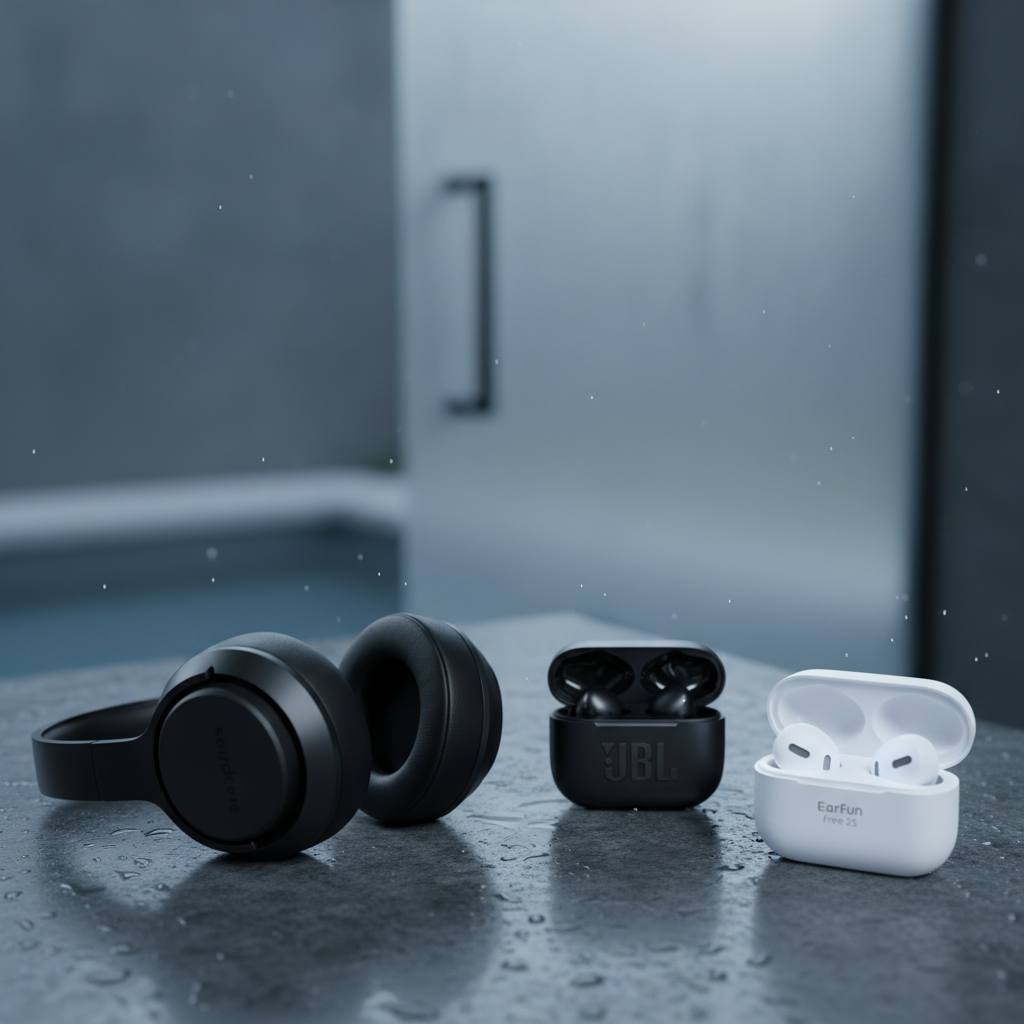
Finding a pair that stays dry, sounds great and won’t break the bank feels like hunting for a unicorn. Yet, in our comparison of 14 waterproof wireless headphones, the most budget‑friendly option also lands at the top of the list. The Soundcore V20i, priced at $29.99, carries a 4.4‑star rating from 12,537 reviewers and earned the “Best Overall” label, outpacing several premium contenders.
Our roundup spreads across three price tiers. On the budget side you’ll find the $19.44 1MORE EF606 (4.1 stars, 328 reviews), the $29.99 Soundcore V20i (4.4 stars), and the $34.99 Tribit BTH92SC (4.2 stars, 29,134 reviews). Mid‑range picks include the $39.99 Philips A4216 and the $39.99 EarFun Air 2, both sitting at 4.2‑4.4 stars. The premium camp features the $63.99 EarFun OpenJump with the highest 4.5‑star score, the $64.95 JBL VBEAM2BLKAM (4.2 stars), the $68.00 Sony WF‑C510 (4.3 stars) and the $99.95 Beats Studio Buds (4.1 stars). All models meet at least an IPX4 waterproof rating, so you can sweat, rain or splash without worrying about damage.
Below we break down each contender’s fit, sound signature and waterproof credentials so you can match the right pair to your active lifestyle.

Soundcore V20i
Its 16 mm drivers deliver richer bass and clearer highs, earning its top rating.

JBL Vibe Beam 2
Ideal for runners who want premium sound, the JBL VBEAM2BLKAM costs about $35 more than the $29.99 Soundcore V20i, reflecting its higher‑end positioning.

EarFun Free 2S
Stands out with sub‑60 ms game‑mode latency, letting you play without audio lag—a feature the other two lack.
Also considered
Score Analysis
Key score advantages vs. runner-up (JBL Vibe Beam)
Price Range
Soundcore V20i
$29.99
JBL Vibe Beam 2
$39.95
EarFun Free 2S
$31.34

1MORE Fit SE
$17.51

Sony WF-C510
$47.18
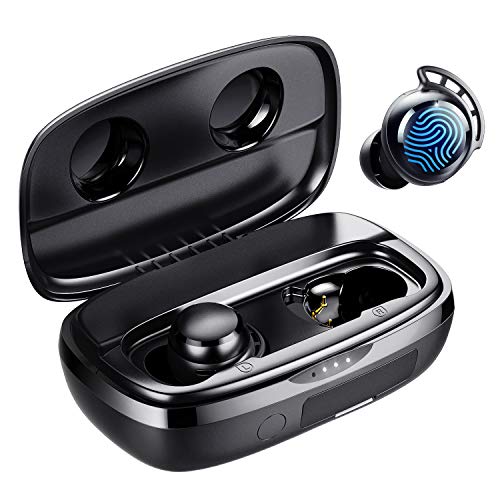
Tribit FlyBuds 3 Black
$34.99

Philips A4216
$39.99

EarFun Air 2
$42.99

EarFun OpenJump
$56.99
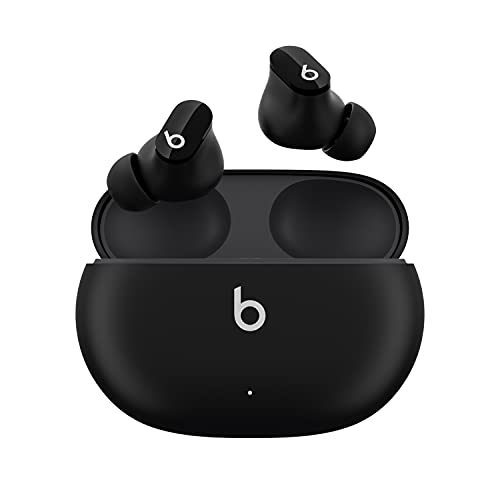
Beats Studio Buds Black
$99.95

Sennheiser Sport True Wireless
$139.00

Vifigen S49 Samsung
$15.99

Bose QuietComfort Ultra
$299.00
1MORE iBFree
$12.32
Spec Comparison
TL;DR: The Soundcore V20i offers 16 mm drivers, IP55 durability and up to 36 hours of total playtime at a budget‑friendly $29.99, making it a solid open‑ear choice for active users.
The standout hardware pairs a 16 mm dynamic driver with a 16 Ω impedance and 95 dB sensitivity, delivering richer bass than many open‑ear rivals. The earbuds stay powered for 8 hours on a single charge and the charging case adds another 28 hours, for a total of 36 hours of playback. An IP55 rating means sweat and light rain won’t knock them out of commission, while the four‑position ear‑hook system keeps them secure during runs or bike rides.
Compared with the other 13 entries, the V20i is lighter than the Philips A4216 (0.82 lb vs 0.168 lb) and still lighter than most full‑size options. Its driver size outpaces the 10 mm units of the 1MORE iBFree and the 7 mm drivers of the EarFun Free 2S, giving it a clear advantage in low‑end bass response. At $29.99 it sits at the lower end of the price spectrum, making it more affordable than many of its peers while still offering a full suite of specs.
Users consistently praise the open‑ear design for keeping them aware of traffic and surroundings, and the adjustable hooks are highlighted for a snug fit during long workouts. The built‑in BassUp enhancement and four microphones with AI noise reduction earn compliments for solid sound and clear calls. However, reviewers note that the customizable LED lights can sap battery life, and wind can introduce noise into the microphones, which some outdoor users find irritating.
On the connectivity side, Bluetooth 5.4 and multipoint support ensure a stable link up to 10 m, and a quick 10‑minute charge adds about an hour of playback. Touch‑sensitive controls and firmware‑updatable software round out a feature set that feels premium for the price point.
Pros
Cons
Best for: Runners, cyclists, commuters, fitness enthusiasts, all‑day wearers, and multitaskers who need situational awareness.
Avoid if: You require active noise cancellation, audio privacy, or plan to use them in consistently loud settings such as airplanes.
“Perfect for long walks and runs—I can hear traffic clearly while enjoying music.”
“The adjustable hooks make them stay put even when I’m jogging.”
TL;DR: The JBL Vibe Beam 2 offers 8 mm dynamic drivers, active noise cancellation with Smart Ambient mode, and up to 40 hours of total playback for $64.95, making it a solid mid‑range true‑wireless choice.
The standout feature is its active noise cancellation paired with Smart Ambient mode, powered by four microphones (two per earbud). JBL pairs this with an 8 mm dynamic driver, 16 Ω impedance and a sensitivity of 100 dB SPL at 1 kHz, delivering the brand’s signature Pure Bass sound that reviewers say remains clear even at high volumes.
When you line it up against the other thirteen entries, the Vibe Beam 2 holds its own on price and feature depth. It’s priced in the same range as the EarFun OpenJump and Sony WF‑C510, yet it adds multipoint pairing and a higher total playback figure. While some peers list fewer microphones or lack ANC altogether, this model provides both ANC and an ambient listening mode, a combination that many competitors only hint at.
Users consistently praise the long battery life—40 hours total with the case, 10 hours of playback with ANC off and 8 hours with ANC on. A quick 10‑minute charge adds about three hours of listening, which aligns with the “fast‑charging” praise in expert reviews. On the flip side, several owners note a faint white‑noise hiss when ANC is engaged and report that the touch sensors can feel overly sensitive, especially during workouts. The case’s IPX2 rating and the earbuds’ IP54 rating give decent splash resistance, though the lack of wireless charging is a common complaint.
Technically, the earbuds run Bluetooth 5.3 with a range of up to 10 meters and support Google Fast Pair and Microsoft Swift Pair for easy device switching. The case weighs 41 g and the earpieces themselves are just 4.3 g, keeping the package light at 0.109349281952 pounds (total package weight 113.4 g). The JBL Headphones app adds EQ customization, firmware updates, battery monitoring and a Relax Mode with five ambient sounds, rounding out a feature set that feels premium for the $64.95 price tag.
Pros
Cons
Best for: Commuters, travelers and remote workers who want solid ANC, long battery life and a comfortable fit without breaking the bank.
Avoid if: You need wireless charging, the highest‑end ANC performance, or a case with stronger water resistance.
TL;DR: The EarFun Free 2S offers IPX7 water resistance, a low‑latency gaming mode under 60 ms, and up to 30 hours of total playback for $37.99, making it a solid mid‑range choice for active listeners.
The standout spec is its IPX7 rating, meaning the earbuds survive full submersion for up to 30 seconds, a level of protection that outpaces many rivals in this 14‑item list. Coupled with a 7 mm dynamic driver and a sensitivity of 100 dB, reviewers describe the sound profile as balanced with a punchy low end, while the four‑mic ENC system delivers clear calls.
In comparison, the EarFun Air 2 and 1MORE iBFree both feature larger 10 mm drivers**, but the Free 2S’s driver sits between the Air 2’s 10 mm and the Soundcore V20i’s 16 mm, offering a middle ground in size. Weight‑wise, the Free 2S’s case tips the scales at 111 g, making it heavier than the Air 2’s ~0.099 lb case but considerably lighter than the Philips A4216’s 0.82 lb build. Battery endurance also holds its own: the earbuds provide 7 hours on a single charge and a combined 30 hours with the charging case, surpassing the Air 2’s 9 hours (standard mode) and matching the 1MORE EF606’s 30‑hour total, while falling short of Tribit’s massive 110‑hour total.
Users consistently praise the up to 30 hours total battery life, especially the quick‑charge perk of “10 minutes of charging = 2 hours of playback.” Professional reviewers highlight the “strong bass and studio‑neutral mids,” giving the earbuds high marks for both low‑frequency performance and clarity. However, the lack of active noise cancellation and an ambient‑sound mode are frequent complaints, and some owners note occasional disconnection of the right earbud and overly sensitive touch controls.
Pros
Cons
Best for: Most users seeking a balanced, mainstream option
Avoid if: You need advanced features or professional‑grade performance
“Sound quality rivals $100+ headphones”
“Battery lasts days”
TL;DR: The 1MORE EF606 delivers a 14.2 mm driver, IPX5 splash resistance, and up to 10 hours of playback per charge for just $19.44, making it a solid budget pick for active listeners.
A standout spec is the 14.2 mm dynamic driver paired with 16 Ω impedance, promising fuller sound than many entry‑level open‑ear models. Its IPX5 rating protects against sweat and light rain, and the earbuds pack 10 hours of music on a single charge, extending to 30 hours when the 600 mAh case is included.
Compared with the other 13 contenders, the EF606’s driver sits between the 13 mm unit in the Vifigen S49 and the 16 mm driver in the Soundcore V20i. Battery life per charge (10 hours) outlasts the 8‑hour offering of Vifigen and Soundcore, yet its total 30‑hour capacity trails the 60‑hour total of Vifigen and the 110‑hour total of Tribit BTH92SC. Weighing 79.7 g, it’s lighter than the Vifigen S49's roughly 0.20 lb and matches the other earbuds in the set. The Bluetooth 5.3 version matches the connectivity of several peers, while its 10‑meter wireless range aligns with typical Bluetooth performance.
Everyday users praise the lightweight open‑ear design—just 10 g per earbud—and the secure earhook fit for runs or bike rides. Professional reviewers highlight the four‑mic environmental noise cancellation that improves call clarity, especially in outdoor settings. However, listeners note a boomy low end, boxy mids, and grainy treble, indicating the sound quality isn’t on par with higher‑priced open‑ear rivals. Reviewers also mention occasional touch‑control hiccups and the lack of fast‑charging support.
Pros
Cons
Best for: Entry‑level buyers or those on a tight budget
Avoid if: You need powerful performance or professional‑grade features, or you prioritize high‑fidelity sound in noisy environments
TL;DR: Sony WF‑C510 delivers balanced sound with a 6.5 mm driver, 22 h total battery life and IPX4 splash resistance, all packed into a feather‑light 4.5 g design for commuters and casual listeners.
The earbuds house a 6.5 mm dynamic driver, 16 Ω impedance and a sensitivity of 98 dB, giving a clear and balanced audio profile. They carry an IPX4 rating, so sweat and light rain won’t interrupt your workout, and Bluetooth 5.3 ensures a stable wireless link.
Compared with the other 13 contenders, the WF‑C510’s driver is smaller than the JBL VBEAM2BLKAM’s 8 mm unit and far tinier than the EarFun OpenJump’s 14.2 mm driver. At 4.5 g, it feels considerably lighter than the JBL model, which tips the scales at roughly 0.11 lb. Battery life also stands out: a total of 22 hours with the case eclipses the JBL’s 10‑hour playback (ANC off) and rivals the longer‑lasting EarFun Air 2, while the quick‑charge time of 1.5 hours keeps you on the move.
Reviewers repeatedly praise the snug, all‑day comfort and the balanced sound that works well for everyday playlists. The Sony Headphones Connect app lets you fine‑tune the EQ, a feature many users highlight as a plus. However, some describe the physical touch buttons as awkward, the plastic housing feels cheap to a few, and the lack of active noise cancellation makes noisy commutes challenging. The earbuds support SBC, AAC and LDAC codecs, but higher‑resolution options such as aptX HD are not included.
The connectivity suite includes multipoint pairing and NFC for instant device switching, while a 5 W charger restores a full charge in 1.5 hours. With a battery capacity of 10.5 mAh per earbud, you get around 4 hours of playback per charge, and the case adds another 22 hours of listening time overall.
Pros
Cons
Best for: Buyers willing to invest in a proven, high-quality option
Avoid if: You're on a tight budget or only need basic functionality
TL;DR: The Tribit BTH92SC offers a marathon 110‑hour total battery life, Bluetooth 5.3 connectivity, and sweat‑proof design for $34.99, making it a solid budget pick for active listeners.
What really sets these earbuds apart is the case’s ability to store 110 hours of playback and act as an emergency power bank, while the earbuds themselves deliver 7 hours on a single charge. Bluetooth 5.3 provides low‑latency, stable streaming, and the manufacturer markets the plastic housing as sweat‑proof for workouts.
Compared with the other 13 contenders, the Tribit is markedly lighter than the Soundcore V20i (which weighs 0.168433 pounds) and matches the EarFun Free 2S’s 7‑hour per‑charge runtime, yet its total 110‑hour capacity dwarfs EarFun Free 2S’s 30‑hour case‑plus‑earbud life. It also shares Bluetooth 5.3 with the EarFun Air 2 and the 1MORE EF606, putting it on par with the more premium‑priced options in terms of wireless tech.
Reviewers consistently praise the ultra‑long battery life and the deep, bass‑forward sound signature, noting that the built‑in CVC microphone handles calls well in everyday environments. However, they also point out that the touch controls can be overly sensitive, the plastic build feels less premium, and the lack of an EQ app or active noise cancellation limits audiophile‑level tweaking.
The earbuds use a dynamic driver, have an impedance of 16 Ω and a sensitivity of 16 dB, and feature one‑step automatic pairing via a Hall switch when the case opens. Each earbud weighs just 9.64 g, making them comfortable for extended wear, especially with the included earfins and multiple silicone tips.
Pros
Cons
Best for: Entry-level buyers or those on a tight budget
Avoid if: You need powerful performance or professional‑grade features
TL;DR: The Philips A4216 offers a 40 mm driver, 35‑hour battery life and IP55 sweat‑proof protection, making it a solid on‑ear choice for active listeners who value durability over premium sound nuance.
The standout spec is the 35‑hour battery life, which lets you power through multiple workouts or travel days without hunting for a charger. A fast‑charging session of just 15 minutes gives you an extra 2 hours of playback, and the IP55 rating keeps the headphones safe from sweat and light rain. Inside, a 40 mm dynamic driver paired with 32 Ω impedance drives the sound, while a closed‑back design provides passive noise isolation.
Compared with the true‑wireless earbuds in this roundup, the A4216 is noticeably heavier than the EarFun Air 2 (about 0.10 lb) and the Tribit BTH92SC (about 0.02 lb). Its driver is also much larger than the 10 mm drivers of EarFun Air 2 and the 16 mm drivers of the Soundcore V20i, giving it a different sound character. While the Bluetooth version 5.0 is a step behind EarFun Air 2’s 5.3, it'll still deliver a reliable 10‑meter range. Few competitors list an IP rating, so the A4216’s dust‑and water‑resistance gives it an edge for sweaty gym sessions.
Professional reviewers praise the long battery life and the cooling‑gel, washable ear‑cup cushions that stay comfortable during extended cardio. Users echo this, highlighting the durability and quick pairing, but they also note that the on‑ear design can become uncomfortable after long periods and that the bass‑heavy tuning may not satisfy audiophiles. Critics commonly note the lack of active noise cancellation, especially for commuters in noisy environments.
Pros
Cons
Best for: Fitness enthusiasts and everyday listeners who want long battery life, sweat‑proof durability and comfortable on‑ear fit.
Avoid if: You need premium, neutral sound or active noise cancellation for noisy environments.
“Battery lasts forever — I only charge it once a week.”
“Perfect for the gym — sweat doesn’t damage them.”
TL;DR: The EarFun Air 2 offers 10 mm drivers, LDAC high‑resolution audio, IPX7 water resistance, and up to 40 hours of total playback for $39.99, backed by a 4.4‑star rating from 680 reviewers.
What really stands out is the combination of a 10 mm dynamic driver, LDAC codec support and a 10‑band customizable EQ, all packed into earbuds that weigh just 0.0992080179 pounds each. The IPX7 rating means they're fine up to 1 m for 30 minutes, and the case delivers a total of 40 hours of playback in standard mode.
Compared with other options in this roundup, the Air 2 is much lighter than the Philips A4216 (0.82 pounds) but heavier than the Tribit BTH92SC (0.02125 pounds). Its driver size of 10 mm is smaller than Philips’s 40 mm unit, yet it still earns praise for clarity. Battery‑wise, the Air 2’s 40‑hour total outlasts Philips’s 35‑hour claim, while both share Bluetooth 5.x generation (Air 2 uses 5.3, Philips 5.0). The case supports both USB‑C and wireless charging, a flexibility many peers don't list.
User feedback highlights the crisp, detailed sound that shines when LDAC is enabled, and the long battery life that lets you go days without a recharge. Professional reviewers note the rarity of LDAC under $100 and commend the waterproof rating. However, several users mention occasional audio stutter in LDAC mode, and the touch controls can feel overly sensitive. Many criticize the lack of active noise cancellation and limited iOS support for LDAC.
Technical extras include four microphones per earbud for clearer calls, in‑ear detection that pauses playback automatically, and multipoint connectivity that lets you link two devices at once. The EarFun Audio app lets you fine‑tune the 10‑band EQ or switch between preset sound profiles, adding a layer of personalization beyond the hardware.
Pros
Cons
Best for: Android audiophiles who want high‑resolution wireless sound, strong water resistance, and long battery life without a premium price.
Avoid if: You need active noise cancellation, rely on iOS for LDAC streaming, or prefer physical button controls over touch surfaces.
TL;DR: The EarFun OpenJump offers a 14.2 mm driver, LDAC Hi‑Res audio, IPX7 water resistance, and up to 11 hours of playback, all in a lightweight open‑ear design for about $64.
What really sets the OpenJump apart is its 14.2 mm wool‑composite driver that pairs with LDAC Hi‑Res support, delivering a wider frequency range from 20 Hz to 40 kHz. The earbuds also sport an IPX7 rating, meaning they can survive immersion up to 1 m for 30 minutes, and the open‑ear hook design keeps the weight down to just 8 g per earbud.
Compared with the other 13 entries, the OpenJump’s driver exceeds the 8 mm unit in the JBL VBEAM2BLKAM, the 6.5 mm in Sony’s WF‑C510, and the 7 mm found in the EarFun Free 2S. Its up‑to‑11‑hour AAC playback per charge matches the JBL’s 10‑hour claim and exceeds the EarFun Free 2S’s 7‑hour earbud life. While the JBL case holds a 550 mAh battery like the OpenJump, the OpenJump’s total playtime reaches 42 hours with the case, outlasting many peers that list lower total times. In terms of weight, the OpenJump’s combined 72.4 g (≈2.55 oz) feels heavier than the JBL’s lighter case‑only weight, but the individual 8 g earbuds remain among the lightest in the group.
User feedback consistently praises the secure, comfortable fit and the long battery life, especially for outdoor workouts. Professional reviewers highlight the comfortable design and the standout LDAC capability. However, several reviewers note that the BassSurge technology can become distorted at high volumes and that the default EQ leans heavily toward bass, requiring manual adjustment. The Theater Mode, while offering spatial sound, introduces extra latency that some users find disruptive.
Pros
Cons
Best for: Most users seeking a balanced, mainstream option
Avoid if: You're shopping on a tight budget — it's priced at $63.99
TL;DR: Beats Studio Buds offer IPX4 splash resistance, 8 hours of ANC‑enabled playback per charge and a bass‑forward sound signature in a feather‑light, stemless design for $99.95.
What really stands out is the combination of a tiny 5.0 g earbud weight and an IPX4 water‑resistance rating, making the Studio Buds comfortable for all‑day wear and safe from sweat or light rain. The case adds another 24 hours of listening time, while the earbuds themselves deliver up to 8 hours of playback with Active Noise Cancellation enabled. A quick 5‑minute charge can provide roughly an hour of music, thanks to the USB‑C fast‑charging port.
Compared with the other thirteen entries, the Studio Buds sit on the pricier side of the group, but they also outlast several competitors in ear‑bud runtime. For example, Sony’s WF‑C510 provides about 4 hours per earbud, while the Beats give double that. Their case life of 24 hours edges out Sony’s 22‑hour case and is close to Sennheiser’s 27‑hour total. On the flip side, models like the EarFun OpenJump and Air 2 list longer total playtimes of 42 hours and 40 hours respectively, but those figures come from larger battery capacities.
User feedback highlights a rich, bass‑forward audio profile that many describe as “dynamic” and “balanced,” with users calling the ANC “strong for such a small earbud.” Professional reviewers echo this, noting the custom acoustic drivers deliver a lively low‑end without sacrificing clarity. Common complaints focus on the fit—some find the earbuds slip during vigorous activity—and the plastic case’s slippery feel. Some describe Transparency mode as “less natural” compared with higher‑end competitors.
Beyond the core specs, the Studio Buds include dual beamforming microphones per earbud, automatic device switching, and a stemless touch‑control layout. The Bluetooth class 1 radio promises solid range, and the inclusion of both iOS and Android compatibility makes cross‑platform use easy.
Pros
Cons
Best for: Apple and Android users who want seamless switching, solid ANC and a bass‑rich listening experience in a compact, water‑resistant package.
Avoid if: You need wireless charging, in‑ear detection, or a neutral sound signature for critical listening.
TL;DR: The Sennheiser Sport Earbuds deliver premium sound with a 7 mm driver, IP54 splash protection and up to 27 hours of total playback, but they carry a high $149.95 price tag and lack ANC.
At the core of the Sport earbuds is a 7 mm TrueResponse™ dynamic driver and Bluetooth 5.2 connectivity, paired with an IP54 rating that guards against sweat and light rain. The case holds a 90‑minute charge time, while the earbuds themselves run for 9 hours on a single charge and reach a total of 27 hours when the case is included. A quick 10‑minute boost adds an extra hour of listening, and the SPL rating of 110 dB SPL at 1 kHz suggests strong output capability.
Compared with the other 13 entries, the Sennheiser model is noticeably heavier than the Beats Studio Buds and the EarFun Air 2, and it sits at the premium end of the price spectrum. Its 9‑hour earbud runtime outlasts Beats’ 8‑hour and Sony’s 4‑hour per‑earbud figures, yet it falls short of the 11‑hour (or 8‑hour LDAC) runs of the EarFun OpenJump and the 9‑hour standard mode of the EarFun Air 2. The 7 mm driver is larger than Sony’s 6.5 mm unit but smaller than the 14.2 mm driver in the OpenJump and the 10 mm driver in the Air 2, placing it in a middle ground for driver size across the lineup.
User feedback repeatedly praises the sound fidelity and the secure, interchangeable ear‑tip and fin system (three closed, three open tips plus four fin sizes). Professional reviewers also note the “great sound quality” and the ability to stay locked in during intense workouts. On the downside, listeners miss active noise cancellation, and several reviews call the earbuds and charging case “bulky,” which the relatively large dimensions (48.3 mm × 134.6 mm × 177.8 mm) and 209 g weight reinforce. Wireless charging isn’t included, and the premium price adds another trade‑off.
Pros
Cons
Best for: Those prioritizing quality and willing to pay for premium performance
Avoid if: You're shopping on a tight budget — it's priced at $149.95
TL;DR: The Vifigen S49 offers an IPX7‑rated, 13 mm driver earbud with up to 60 hours of total playback for $15.99, making it a solid budget pick for active users.
The standout spec is the 13 mm driver paired with an LED‑lit case that shows real‑time battery percentage, while the earbuds themselves deliver up to 8 hours of continuous play on a single charge. A full charge takes less than 2 hours, and the wireless‑charging case adds another 300 mAh, pushing total runtime to a claimed 60 hours.
Compared with the other thirteen entries, the S49 sits at the lower end of the price spectrum and offers more total battery life than many peers. It’s lighter than some of the larger‑driver models and includes both USB‑C and wireless charging, features that several competitors lack. While its Bluetooth 5.3 (with a 5.4 variant) and 25 ms latency keep it competitive for gaming and video, the lack of high‑resolution codecs means it won’t match the audio fidelity of premium brands.
Reviewers appreciate the solid IPX7 waterproof rating—good enough for a 30‑minute dip in water—and the active noise cancellation that helps isolate gym noise. However, users note occasional Bluetooth pairing hiccups and a fit that can feel tight for certain ear shapes, even with the three silicone tip sizes. Professional reviewers also point out that the generic OEM branding may hint at lower build quality compared to established audio houses.
Pros
Cons
Best for: Entry-level buyers or those on a tight budget
Avoid if: You need powerful performance or professional‑grade features
TL;DR: Bose QuietComfort Ultra earbuds deliver class‑leading ANC, a custom‑tuned sound profile and IPX4 splash resistance, but they sit at a premium $279 price with a modest 6‑hour battery.
The standout spec is the IPX4 water‑resistance rating combined with a compact 80‑gram earbud weight and a 6‑hour playback window. Bose also highlights its CustomTune technology, which scans your ear shape to fine‑tune both noise cancellation and sound signature. The case adds wireless charging and holds enough juice for three full recharges.
At $279, the Ultra is pricier than Beats Studio Buds and Sennheiser Sport Earbuds, and it weighs more than the ultra‑light Beats (about 5 g) while still being lighter than the Sennheiser pair (0.46 lb). Its dimensions—66.04 mm tall, 59.69 mm wide, and 26.924 mm long—compare to other true‑wireless options, but the IPX4 rating gives it an edge over models that lack any splash protection.
Reviewers consistently praise the ANC as “market‑leading,” noting that it silences low‑frequency hums in cafés and on planes. The four‑mic SpeechClarity system earns high marks for call clarity, especially in windy environments. Professional reviewers also commend the immersive spatial audio, though they point out that enabling Immersive Audio cuts battery life down to about 4 hours. Users also mention the lack of lossless codecs such as aptX HD or LDAC, which may disappoint audiophiles.
Technically, the earbuds run on Bluetooth 5.3 with a wireless range of up to 30 feet. Bose advertises up to 6 hours of playback when ANC is active, which drops to roughly 4 hours with Immersive Audio, and the case provides about 24 hours of combined use before needing a recharge.
Pros
Cons
Best for: Those prioritizing top‑tier ANC, clear calls and a personalized sound profile, and who don’t mind paying a premium.
Avoid if: You’re on a tight budget, need ultra‑long battery life without recharging, or require lossless Bluetooth audio support.
“The best earbuds I have used”
“Amazing Sound and Comfort!”
TL;DR: The 1MORE iBFree E1018‑SG offers an aluminum alloy build, IPX6 sweat resistance, a 10 mm dual‑layer titanium driver, and up to 8 hours of playback for $29.95, but its modest bass and small buttons may limit appeal.
The standout spec is its IPX6 water‑resistance rating, meaning it can handle heavy sweat and light rain, paired with an aluminum alloy body that CNC‑carves a premium feel. Inside, a 10 mm dynamic driver with a titanium‑PET diaphragm delivers 105 dB sensitivity and 25 Ω impedance, promising clear detail across the 20 Hz‑20 kHz range.
Compared with the other 13 entries, the iBFree is the lightest at 0.03527396192 pounds—well under the Soundcore V20i (0.168433168168 pounds), Tribit BTH92SC (0.02125 pounds) and the EarFun Air 2 (0.0992080179 pounds). Its driver is smaller than the Soundcore V20i’s 16 mm unit and the Philips A4216’s massive 40 mm driver, matches the EarFun Air 2’s 10 mm size, and is smaller than the 1MORE EF606’s 14.2 mm driver. Bluetooth version 4.2 (newer model) trails the 5.3 versions found in Tribit, EarFun Air 2 and 1MORE EF606, and it's also behind the Philips A4216’s 5.0. Battery life of 8 hours matches the Soundcore V20i’s earbud runtime but falls short of Tribit’s 7 hours per charge plus a 110‑hour total with its case.
Users consistently praise the secure sport‑fin fit and the balanced, detailed sound that the titanium‑PET diaphragm provides. Everyday reviewers love the premium metal feel and reliable call quality, but many note that the physical buttons are tiny and easy to mis‑press. The bass is described as modest, which can leave EDM or hip‑hop fans wanting more punch, while the treble may get bright on certain tracks. Professional reviewers also point out the lack of touch controls and the reliance on an older Micro‑USB charging port instead of USB‑C.
On the technical side, the earbuds support aptX, AAC and SBC codecs, giving you higher‑resolution wireless audio when your source device supports them. The Bluetooth range reaches 15 meters in lab conditions and 10 meters in open space, and a quick 15‑minute fast‑charge adds an hour of playback, which is handy for rushed workouts.
Pros
Cons
Best for: Fitness enthusiasts and runners who need a sweat‑proof, secure‑fit earbud with clear sound.
Avoid if: You prioritize deep bass, prefer touch controls or USB‑C charging, or need the most up‑to‑date Bluetooth version.
“Perfect for running — they don’t fall out even during sprints.”
“The buttons are too close together — I always pause instead of changing volume.”
Breakdown
Soundcore V20i
Pros
JBL Vibe Beam 2
Pros
EarFun Free 2S
Pros
1MORE Fit SE
Pros
Based on scoring data and product specs
Personalized picks
Best Overall Pick
Soundcore V20i
Best OverallBest for: Budget-conscious buyers seeking a reliable entry-level option
JBL Vibe Beam 2
Best for: Those prioritizing quality and willing to pay for premium performance
$39.95+$9.96 vs winner
Skip 1MORE iBFree if…
Reliability and user satisfaction are your top concerns
We’re naming the Soundcore V20i the clear winner of the waterproof wireless headphones round‑up. It earns a 4.4‑star rating from 12,537 reviewers, carries an IP55 rating that keeps sweat and rain at bay, and offers 8 hours of earbud playback plus a total of 36 hours with the charging case. A 10‑minute fast‑charge boost adds an hour of listening, and its 16 mm drivers pair with Bluetooth 5.4 for a stable connection.
The JBL VBEAM2BLKAM lands as the runner‑up, especially if you need active noise cancellation and app‑driven sound tuning. Its ANC with Smart Ambient mode lets you block or let in surrounding sounds, while the companion JBL Headphones app gives EQ customization and a Relax mode with five ambient tracks. A 10‑minute quick charge grants roughly 3 hours of playback, and the earbuds have an IP54 rating for splash resistance.
For tighter budgets, the Vifigen S49 shines as the best value at $15.99. If you can stretch a bit, the EarFun Free 2S delivers solid performance for $37.99, making it the top mid‑range choice. When premium features matter most, the Bose QuietComfort Ultra stands out, albeit at $279.00.
Choose the Soundcore V20i for its strong durability, long battery life, and solid value.
The Soundcore V20i offers an IP55 rating, a secure open‑ear design with four‑position ear‑hook adjustability, and up to 8 hours of playback on a single charge, making it a solid choice for sweat‑heavy sessions. If you need the highest water protection, the EarFun Free 2S’s IPX7 rating lets you train in heavy rain or shallow water, and its wireless‑charging case adds convenience.
Please sign in to leave a review
No reviews yet. Be the first to review!
