⚡ Quick Answer
Among the seven heart‑rate monitors we compared, the $34.99 Magene H603 is the cheapest option, yet it still carries a solid 3.9 / 5 rating from 761 reviewers. That’s surprisingly close to the 4.2 / 5 score earned by the $35.99 Moofit armband, showing that a modest price doesn’t automatically mean a compromise in user satisfaction. The lineup stretches from that budget entry up to the $104.95 Polar Verity Sense, giving you a clear view of what each price tier delivers.
We’ve grouped the models into three tiers: budget (Magene H603, Moofit armband, Fitcent Heart Rate Monitor), mid‑range (Fitcent Chest Strap) and premium (Mo‑Fit Trio, Polar H9, Polar Verity Sense). Across the board, dual Bluetooth and ANT+ connectivity is common, but battery life ranges from 20 hours on the Moofit armband to a claimed 1 000 hours on the Magene strap. Other specs such as weight, waterproof ratings and transmission ranges also vary, so you can match a sensor to your sport and budget.
Below we break down each monitor’s connectivity options, battery performance and fit, so you can pinpoint the right device for your workouts.
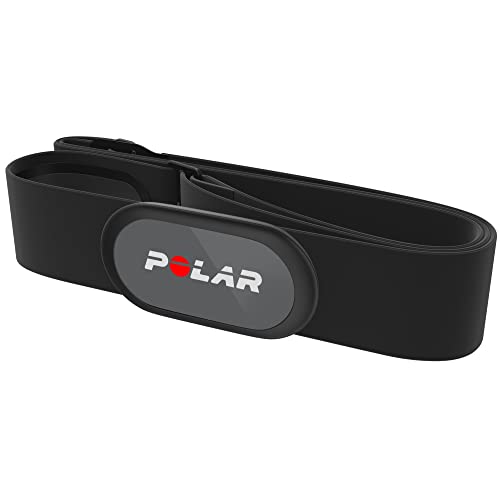
Polar H9
Its 35‑meter broadcast range keeps the signal strong even when you’re far from your phone, delivering reliable dual‑Bluetooth and ANT+ connectivity.

Magene H603
Ideal for entry‑level runners on a tight budget, it costs $34.99—about $35 less than the Polar H9—while still offering solid features.

Moofit Heart Rate Monitor Armband
At just 41 g, this armband feels lighter than chest straps, making it a comfortable choice for users who prefer minimal bulk.
Also considered
Score Analysis
Key score advantages vs. runner-up (Magene H603)
Price Range
Polar H9
$69.90
Magene H603
$34.99
Moofit Heart Rate Monitor Armband
$35.99
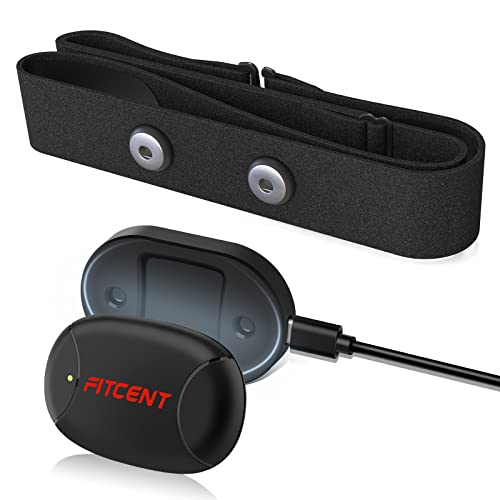
Fitcent Chest Strap
$42.99

Polar Verity Sense
$104.95
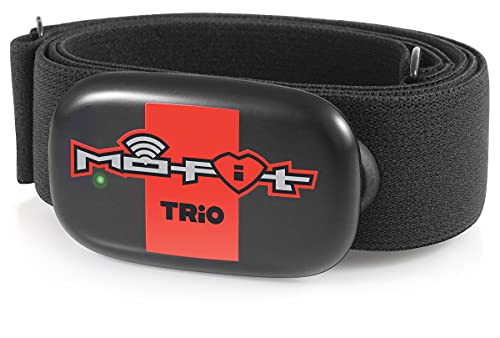
Mo-Fit Trio
$44.99

Fitcent Heart Rate Monitor
$37.99
Spec Comparison
TL;DR: The Polar H9 delivers ECG‑grade heart‑rate data, a 400‑hour battery and dual Bluetooth‑LE/ANT+ connectivity in a lightweight 60 g chest strap, making it a solid premium choice.
The standout spec is its 400‑hour battery life, which lets you train for weeks without swapping cells. It measures heart rate electrically (ECG) and broadcasts up to 35 meters, while weighing just 0.13 lb (60 g) and sitting 34 mm tall with a 10 mm thickness.
Compared with the six other straps in this roundup, the H9 is lighter than the Mo‑Fit Trio (0.23 lb) and the Fitcent Chest Strap (0.22 lb), but heavier than the Magene H603 (0.04 lb) and Polar Verity Sense (0.04 lb). Its 34 mm height is a touch shorter than the Mo‑Fit Trio’s 38 mm height. Like the Mo‑Fit Trio, Fitcent Heart Rate Monitor, Moofit armband and Magene H603, the H9 supports both Bluetooth and ANT+, giving it broader app compatibility than models that list only one protocol.
Reviewers praise the ECG sensor for fast, accurate readings that work regardless of temperature, sweat or skin tone. Professional reviewers highlight the dual‑band transmission as a unique advantage for swimmers and multi‑sport athletes. Users note the strap’s soft material can wear after frequent machine washes, and the lack of onboard memory means the sensor must stay paired with a phone or compatible device to log workouts.
Under the hood, the H9 runs a 63 MHz CPU and operates from –10 °C to 50 °C. The strap combines 38 % polyamide, 29 % polyurethane, 20 % elastane and 13 % polyester, offering a snug fit across the XS‑S (51‑73 cm) and M‑XXL (65‑107 cm) ranges.
Pros
Cons
Best for: CrossFit, high‑intensity training and multi‑sport athletes who need rapid ECG‑grade heart‑rate data.
Avoid if: You’re on a tight budget, need standalone tracking without a paired device, or prefer a strap with built‑in memory.
TL;DR: The Magene H603 offers ultra‑light 46 g total weight, ±1 BPM ECG accuracy and a remarkable up‑to‑1000‑hour battery, all for $34.99, making it a solid budget chest‑strap for runners and cyclists.
The standout spec is the battery life – the manufacturer lists up to 1000 hours on a single CR2032 cell, dwarfing the 20‑hour life of the Moofit armband and the 60‑hour life of the Fitcent monitor. At just 0.04 lb (0.03527396192 lb) overall, it’s also lighter than Moofit’s 0.09 lb and far lighter than the Fitcent chest strap at 0.22 lb, which can matter when you’re juggling gear for a long ride.
In the seven‑product set, the H603 sits near the bottom of the price range at $34.99, while still beating heavier rivals like the Mo‑Fit Trio (0.23 lb) and Polar H9 (0.13 lb) on weight. Its Bluetooth 4.2 and ANT+ support match most peers, though the Mo‑Fit Trio pushes a newer Bluetooth 5.0. Battery longevity trails only the Polar H9’s 400‑hour claim, but the H603’s 1000‑hour figure still outpaces most budget options.
Professional reviewers at Power Meter City call it “an affordable and accurate heart‑rate solution for cyclists,” and reviewers frequently praise the ±1 BPM accuracy backed by an ECG‑based noise‑reduction algorithm. User sentiment is thin – the product holds a 3.9/5 rating from 761 reviews, indicating a below‑average perception, and some users note the strap’s maximum length of 86 cm may be short for larger waists.
Additional technical notes include an IP67 rating for water and dust resistance, a red LED that signals readiness, and a detachable split strap that simplifies cleaning. The pod itself measures 62.3 × 35.1 × 11.5 mm and comes in green, blue, red or white, letting you match it to your gear.
Pros
Cons
Best for: Entry-level buyers or those on a tight budget
Avoid if: Reliability and user satisfaction are your top concerns
TL;DR: The Moofit HW401 offers Bluetooth 4.0 and ANT+ heart‑rate tracking in a 41 g, IP67‑rated armband with 20 hours of rechargeable battery life, all for $35.99.
The standout spec is its ultra‑light weight of just 41 g (about 0.09 lb), making the sensor feel almost invisible on the arm, while the built‑in IP67 rating protects it from sweat and rain during intense workouts.
Compared with the other six monitors in this roundup, the Moofit sits between the feather‑light Magene H603 (around 0.04 lb) and the heavier Fitcent strap (about 0.15 lb). Its 20‑hour battery life is shorter; the Magene claims up to 1000 hours and the Fitcent monitor reaches 60 hours, so you’ll recharge more often than with those models.
Reviewers consistently note the barely‑noticeable feel and appreciate the dual Bluetooth 4.0/ANT+ connectivity that works with apps like Strava and Wahoo Fitness. The main complaints focus on the lack of a swimming certification despite the IP67 rating and the one‑size‑fits‑most band, which can feel loose for larger arms.
The armband charges via a magnetic cable, and a blue LED flashes when it’s detecting your pulse, while a red flash signals shutdown. The device lists heart‑rate accuracy as ±1 bpm, and it comes with a one‑year manufacturer warranty.
Pros
Cons
Best for: Entry-level buyers or those on a tight budget
Avoid if: You need powerful performance or professional‑grade features
TL;DR: The Fitcent CL820W chest strap offers ECG‑grade accuracy, a 30‑day (720‑hour) battery, wireless charging and dual Bluetooth 5.0/ANT+ connectivity for about $43, making it a solid mid‑range choice for multisport athletes.
The standout feature is its ECG‑based sensor, which the manufacturer says delivers “high heart‑rate accuracy” by measuring the heart’s electrical signal directly. Combined with a 5.3 kHz treadmill‑specific transmission, the strap can relay data reliably to both bike computers and treadmill apps. Its wireless charging dock powers the strap in just 1.5 hours and supports a 30‑day (720‑hour) battery life, far exceeding many coin‑cell models.
Compared with the six other monitors in this roundup, the Fitcent sits near the middle of the weight spectrum at 0.220462262 pounds. It’s lighter than the Mo‑Fit Trio (which tips the scales at about 0.2293 lb) but noticeably heavier than the ultra‑light Magene H603 (around 0.0353 lb) and the Polar H9 (about 0.1323 lb). Battery‑life wise, Fitcent’s 30‑day endurance outlasts the Moofit armband’s 20‑hour claim and the Fitcent Heart Rate Monitor’s 60‑hour limit, yet it falls short of the Magene H603’s up‑to‑1000‑hour claim and the Polar H9’s 400‑hour run time.
Reviewers appreciate the ECG sensor for cutting through the light‑interference problems that plague optical bands, and they like the convenience of a dock that eliminates the need to replace batteries. However, professional reviewers note that the lack of third‑party testing makes the accuracy claims harder to verify, and the dock adds extra bulk to the charging setup. The strap’s IP68 rating and 10‑meter water‑resistance depth mean you can wear it in the rain or during pool‑side workouts without worry.
Pros
Cons
Best for: Multi‑sport athletes who need accurate ECG heart‑rate data across platforms—cyclists using ANT+ bike computers, treadmill runners, and swimmers.
Avoid if: You rely on on‑device heart‑rate alerts, advanced training metrics, or prefer a minimalist coin‑cell battery without a charging dock.
TL;DR: The Polar Verity Sense offers a lightweight 19 g optical heart‑rate sensor with 30 hours of battery, 150 m Bluetooth range, and 50 m water resistance for $104.95.
The standout spec is its dual‑connectivity design: it supports unlimited ANT+ devices while maintaining a 150 m Bluetooth range when held, far beyond the 35 m range listed for the Polar H9. At just 0.04 lb (19 g), it’s markedly lighter than the Polar H9 and the Mo‑Fit Trio, yet only a touch heavier than the ultra‑light Magene H603.
Battery life sits at 30 hours, placing it between the 20‑hour Moofit armband and the 60‑hour Fitcent Heart Rate Monitor. While the Fitcent Chest Strap advertises a 30‑day runtime, the Verity Sense’s rechargeable 45 mAh cell still outlasts many chest‑strap models that rely on coin cells.
Reviewers consistently praise its comfort and the freedom to wear it on the arm, temple, or directly on the skin, plus the 50 m water resistance that makes it swim‑ready. Professional reviewers note the 80 MHz CPU and 16 MB internal storage, which together handle extensive training logs. The Verity Sense’s optical PPG sensor lags slightly during rapid spikes, a known limitation compared with ECG chest straps.
Pros
Cons
Best for: Those prioritizing quality and willing to pay for premium performance
Avoid if: You're on a tight budget or only need basic functionality
TL;DR: The Mo‑Fit Trio chest strap delivers triple‑band Bluetooth 5.0, ANT+ and 5.3 kHz transmission in a lightweight 0.2293‑lb housing, but its IP67 rating stops short of full swim‑proofing.
The standout feature is its three‑band data transmission: Bluetooth 5.0, ANT+ and a dedicated 5.3 kHz band. At just 0.2293 lb (104 g) and measuring 2.4 in long by 0.45 in wide, the strap feels almost weightless on the torso while still housing an ultrasonic‑welded, corrosion‑resistant shell.
Compared with the six peers, the Trio sits in the mid‑price tier—costlier than the Magene H603 and Fitcent Heart Rate Monitor, yet similar to the Fitcent Chest Strap. Its weight is a touch heavier than the Fitcent Chest Strap (0.220 lb) but lighter than many bulkier options. No other competitor lists three simultaneous transmission methods; most offer only Bluetooth and ANT+, so the Trio’s protocol variety gives it broader device compatibility. The IP67 rating matches the Moofit armband but falls short of the Fitcent Chest Strap’s 10‑meter water resistance, meaning it isn’t suited for swimming.
User feedback highlights the convenience of the triple‑band connectivity, noting that athletes can pair the strap with phones, tablets, Garmin devices and even gym equipment without swapping hardware. Reviewers also praise the elastic strap’s adjustable range of 26–39 in and its maximum stretch to 61 in, accommodating larger frames comfortably. However, several users call out the IP67 rating as a limitation for pool workouts, and the price point adds a premium bump compared with basic models.
Pros
Cons
Best for: Multi‑platform athletes who need a chest‑strap that talks to phones, watches and gym machines all at once.
Avoid if: You plan to train in a pool or need the cheapest basic heart‑rate monitor.
TL;DR: The Fitcent Heart Rate Monitor offers dual Bluetooth and ANT+ connectivity, a 60‑hour battery and solid accuracy for $37.99, though its 3.8‑star rating and heavier build may give budget‑focused buyers pause.
The standout spec is its long‑lasting battery: the monitor delivers up to 60 hours of operation before needing a recharge, and a full charge takes just 1.5 hours. Weighing 70 g (about 0.1543 lb), it sits comfortably on the arm without feeling too bulky, and the optical sensor markets itself to rival chest‑strap accuracy in outdoor conditions.
Compared with the six other heart‑rate straps in this roundup, Fitcent sits in the middle of the pack on battery life—far longer than the Moofit armband’s 20 hour run‑time, yet shorter than the Magene H603’s multi‑year claim. It weighs more than the ultra‑light Moofit (which is lighter) but less than the Polar Verity Sense. In terms of connectivity, Fitcent matches the Mo‑Fit Trio and Polar H9 by supporting both Bluetooth and ANT+, giving it broader app compatibility than single‑protocol options.
Professional reviewers note that Fitcent’s micro‑voltage signal amplification helps it stay accurate despite skin tone or ambient light, a point highlighted by BikeRadar. Users appreciate the claim of “chest‑strap‑level” accuracy during high‑intensity rides, though several comments mention the lack of detailed dimensions and sensor type specifics, which makes assessing comfort a bit tricky.
Pros
Cons
Best for: Budget‑conscious athletes who need reliable dual‑protocol connectivity and don’t mind a slightly heavier strap.
Avoid if: You require a lightweight optical armband with fully documented dimensions or professional‑grade feature sets.
Breakdown
Polar H9
Pros
Magene H603
Pros
Cons
Moofit Heart Rate Monitor Armband
Pros
Fitcent Chest Strap
Pros
Based on scoring data and product specs
Personalized picks
Best Overall Pick
Polar H9
Best OverallBest for: Those prioritizing quality and willing to pay for premium performance
Magene H603
Best for: Entry-level buyers or those on a tight budget
$34.99-$34.91 vs winner
Skip Fitcent Heart Rate Monitor if…
You need powerful performance or professional-grade features
The Polar H9 takes the top spot as the best overall wearable heart‑rate monitor. It pairs dual‑band Bluetooth LE with ANT+ 2.1, giving you a solid 35‑meter broadcast range, and its 400‑hour CR 2025 battery means you won’t be swapping cells often. Weighing just 0.13 lb (60 g) it stays light on the chest, and the 4.0‑star rating from 9,627 reviewers backs up its reliability, all for $69.90.
The Magene H603 lands as the runner‑up, perfect if you need marathon‑length sessions and rugged protection. Its battery lasts up to 1,000 hours, and an IP67 rating means it can survive sweat and rain. At only 0.04 lb (46 g) it’s barely noticeable, and the ±1 BPM accuracy gives confidence during intense workouts, all for $34.99.
Looking beyond the top two, the best budget option remains the Magene H603 at $34.99, offering long battery life and waterproofing. For a solid mid‑range pick, the Fitcent Chest Strap sits at $42.99, giving you a middle‑ground price point. If you’re ready to splurge on premium features, the Polar Verity Sense tops out at $104.95, placing it at the high end of the market.
Pick the Polar H9 today for a reliable, feature‑rich heart‑rate monitoring experience.
The Magene H603 lists a battery life of up to 1,000 hours, far exceeding the Polar H9’s 400 hours and the Fitcent Chest Strap’s 30‑day rating. If you prefer a chest strap and need the most endurance, the H603 is the clear choice.
No reviews yet — be the first to share your experience.
Please sign in to leave a review