⚡ Quick Answer
Even though Xiaomi priced the Mi Smart Band 10 at $49.59, it delivers a typical battery life of 21 days – longer than any premium‑priced watch in the field. That’s a striking contrast when you consider the roundup covers 10 different heart‑rate monitors, ranging from the $29.99 Xiaomi Smart Band 9 Active up to the $199.00 Garmin Forerunner 165.
The selection spans three clear tiers. Budget options include the Xiaomi Smart Band 9 Active, Aeac Smart Watch, Amazfit Band 7 and Amzhero Fitness Tracker. Mid‑range picks are the Xiaomi Mi Smart Band 10 and Amazfit Bip 6, while the premium camp features the Amazfit Helio Strap, Amazfit Active 2, Garmin Forerunner 165 and Coros PACE 3. Ratings run from 3.8 to 4.7 stars, with the Garmin leading at 4.7/5 and the budget‑focused Amazfit Band 7 at 3.9/5.
Below you’ll find a closer look at each model’s specs, strengths and who they’re best suited for, so you can match the right long‑lasting monitor to your lifestyle.

Aeac Smart Watch
Its 10‑day battery life from a 350 mAh cell keeps you monitoring heart rate without frequent charging, delivering reliable entry‑level performance for budget‑conscious buyers.

Xiaomi Mi Smart Band 10
Ideal for most users who want a well‑reviewed mainstream band, it costs $49.59—about $7.60 more than the Aeac Smart Watch—while still offering solid 8‑9 day battery endurance.

Amazfit Active 2
With a 365 mAh battery and dedicated GPS + Music mode lasting 10 hours, it offers capabilities the other two lack, justifying its $104.99 price for users ready to invest in premium features.
Also considered
Score Analysis
Key score advantages vs. runner-up (Xiaomi Mi Smart)
Price Range
Aeac Smart Watch
$39.84
Xiaomi Mi Smart Band 10
$49.59
Amazfit Active 2
$129.99

Amazfit Helio Strap
$99.99

Garmin Forerunner 165
$199.99

Amazfit Bip 6
$76.99
Amazfit Band 7
$49.99

Amzhero Fitness Tracker
$49.89
Xiaomi Smart Band 9 Active
$29.99

Coros PACE 3
$199.00
Spec Comparison
TL;DR: The Aeac Smart Watch offers a 1.32‑inch AMOLED screen, 350 mAh battery that lasts about 10 days, and 110+ sport modes for $41.99, making it a solid entry‑level option for health‑focused users.
The standout spec is its 350 mAh battery paired with a claimed 10‑day life and a quick 2‑hour charge, which is faster than many budget rivals. Its round 1.32‑inch AMOLED touchscreen runs at 60 Hz, delivering smooth navigation while staying compact with a 22 mm swappable band.
Compared with the other nine watches, the Aeac’s battery life sits between the Amazfit Band 7’s 18‑day typical endurance (232 mAh) and the Amazfit Bip 6’s up to 14‑day claim (340 mAh). The Xiaomi Smart Band 9 Active pushes up to 18 days on a 300 mAh cell, while the Garmin Forerunner 165 reaches 11 days in smartwatch mode. In price terms, the Aeac's cheaper than the Amazfit Bip 6 and the Garmin Forerunner 165, but sits above the Xiaomi Smart Band 9 Active’s $29.99 price point.
Users praise the easy Bluetooth calling and the clear AMOLED display, but several note that the default 5‑second screen timeout feels too brief and that raise‑to‑wake can be inconsistent. Users describe the companion app as basic, lacking deep health insights, and there's no built‑in GPS, which some power users miss. Nevertheless, reviewers highlight the comfortable band and the reliable heart‑rate, SpO₂, and sleep tracking for everyday wear.
Pros
Cons
Best for: Budget‑conscious buyers seeking a reliable entry‑level option
Avoid if: You want the best value‑per‑dollar in its price range
“"feature‑packed and affordable"”
“"everything you'd expect in a smartwatch today"”
TL;DR: The Xiaomi Mi Smart Band 10 offers a 1.72‑inch AMOLED screen at 1500 nits, up to 21 days of typical battery life, and fast ≈1‑hour charging for $49.59.
What really stands out is the 1.72‑inch AMOLED display framed by a 2.0 mm bezel, delivering 1500 nits of peak brightness. Combined with a 60 Hz refresh rate, the screen feels bright and smooth even in bright sunlight. The band also packs a typical battery life of 21 days, with 9 days in always‑on mode and 8 days under heavy load, and it tops up in roughly ≈1 hour thanks to fast charging.
Compared with the nine other trackers in this roundup, the Mi Smart Band 10 is lighter than the Amzhero Fitness Tracker (82 g) and the Xiaomi Smart Band 9 Active (≈30 g), while matching the weight of the Amazfit Band 7 (0.06 pounds). Its 1.72‑inch screen is larger than the Amzhero’s 1.47‑inch panel and the Aeac Smart Watch’s 1.32‑inch display, making it one of the bigger screens aside from the Amazfit Bip 6’s 1.97‑inch screen. Battery‑wise, its 21‑day typical life outlasts the Amzhero’s 15 days and the Amazfit Band 7’s 18 days, and it charges faster than the typical 2‑hour charge times listed for most peers.
Professional reviewers praise the bright, large screen and the 21‑day endurance, noting that the heart‑rate sensor holds up well against chest straps. Everyday users echo the long battery life and bright display, while also mentioning the band’s clasp may feel flimsy and the auto‑detect workout feature sometimes misses, reducing convenience. Swimmers appreciate the 96 % lap‑count accuracy and the 5ATM water rating.
Pros
Cons
Best for: Budget‑conscious fitness enthusiasts who want a well‑reviewed, long‑lasting tracker with a bright, large display.
Avoid if: You need standalone GPS or a rugged clasp for intensive activities.
TL;DR: The Amazfit Active 2 packs a 1.32‑inch sapphire‑glass AMOLED screen, 3000‑nit brightness and a 365 mAh battery that lasts about 10‑12 days, all in a premium stainless‑steel round case.
The watch’s standout spec is its ultra‑bright 3000‑nit AMOLED display protected by sapphire glass, which makes outdoor readability easy even in direct sunlight. It’s powered by a 365 mAh battery, which the manufacturer rates at a typical 10‑12‑day runtime before needing a charge.
At 31.65 g, the Active 2 is heavier than the 18 g Amazfit Helio Strap but lighter than the Garmin Forerunner 165’s 39 g case. Its 10‑12‑day typical runtime matches the Helio’s 10‑day claim and exceeds the Xiaomi Mi Smart Band 10’s 9‑day AOD rating. The 1.32‑inch screen is smaller than the Amazfit Bip 6’s 1.97‑inch display, so it offers less real‑estate than some larger‑face competitors.
Professional reviewers praise the premium stainless‑steel frame, the inclusion of offline maps and Zepp Flow AI voice control, and the 5 ATM water resistance for swimming. Everyday users highlight the comfortable fit, the bright display and the long‑lasting battery, while noting the occasional Bluetooth drop and the lack of a USB‑C charging cable in the box.
Pros
Cons
Best for: Buyers willing to invest in a proven, high‑quality option
Avoid if: You're on a tight budget or only need basic functionality
“premium features without the premium price”
TL;DR: The Amazfit Helio Strap delivers continuous heart‑rate monitoring, a 10‑day battery and a feather‑light 0.04 lb build for $99, but its single‑size strap and lack of a screen may limit some users.
The standout spec is its ultra‑light weight of just 0.04 pounds (18 g) combined with a 10‑day battery life and a charging time of under 2 hours, making it comfortable for round‑the‑clock wear without frequent recharging.
Compared with the other nine trackers, the Helio Strap is lighter than the Amazfit Active 2 (0.065 lb) and the Amazfit Bip 6 (0.09 lb). Its 10‑day battery falls short of the Xiaomi Mi Smart Band 10’s 21‑day typical life, yet it outlasts many GPS‑focused models that only list hours of use. The 22 mm strap width matches the Amazfit Bip 6, while the band size of 205 mm sits near the upper end of the wrist‑size range, though it offers only a single continuous loop.
Users consistently praise the comfort of the nylon strap and note that you don’t need a subscription for health tracking. Professional reviewers note the solid heart‑rate accuracy and the convenience of continuous, per‑second sampling that stores data for up to 21 days. However, several users mention difficulty adjusting the single‑size loop on very small or very large wrists, and the plastic‑filled body feels less premium than metal‑cased rivals. The absence of any display means you can’t glance at stats on‑device, which some find inconvenient.
Technical highlights include 50+ sports modes, 25 strength‑training movements, HYROX Race Mode, VO₂ Max estimation and continuous SpO₂ monitoring, all running on Zepp OS with easy integration to Strava, Google Fit and Apple Health.
Pros
Cons
Best for: Endurance athletes and privacy‑focused users who want a lightweight, screen‑free tracker with long battery life.
Avoid if: You need a visible screen, have very small or very large wrists, or prefer a more premium metal feel.
“by far the lightest band out there”
“extremely light – set and forget”
TL;DR: The Garmin Forerunner 165 packs a vivid 1.2‑inch AMOLED screen, wrist‑based health sensors and up to 20 days of battery‑saver life in a feather‑light 0.086 lb package, but it carries a $199 price tag.
At the heart of the Forerunner 165 is a 1.2‑inch (30.4 mm) AMOLED touchscreen delivering a crisp 390 × 390‑pixel view, all protected by chemically strengthened glass. The watch weighs just 0.08625 pounds (39 g), making it one of the lightest GPS watches in this segment, and its fiber‑reinforced polymer bezel adds durability without bulk.
When you line it up against the nine other contenders, the Forerunner 165 feels notably lighter than the Coros PACE 3 (0.33 lb) yet a touch heavier than the Amazfit Active 2 (0.065 lb) and the Amazfit Helio Strap (0.04 lb). Battery‑saver mode stretches to 20 days, outlasting the Coros’s 15‑day claim and the Helio’s 10‑day figure, while matching the Xiaomi Mi Smart Band 10’s 21‑day typical endurance. Its 1.2‑inch screen matches the Coros but is smaller than the Active 2’s 1.32‑inch display, giving it a balanced footprint for runners who prefer a compact face.
Reviewers consistently applaud the watch’s lightweight comfort and reliable GPS, noting that the vibrant AMOLED makes on‑the‑go stats easy to read even in bright sunlight. Professional reviewers highlight the built‑in Garmin Coach plans and recovery insights like HRV status as strong motivators for beginners. On the flip side, users point out the lack of a dedicated triathlon mode and the optional‑only music storage as drawbacks for more advanced athletes.
The Forerunner 165 also bundles a suite of health sensors: wrist‑based heart‑rate monitoring, Pulse Ox spot‑check, HRV status and sleep scoring, plus altitude and cadence tracking for runners who want deeper data without extra accessories. With a 4.7‑star rating from 4,895 reviewers, it demonstrates solid user confidence despite its premium $199 price.
Pros
Cons
Best for: Buyers willing to invest in a proven, high-quality option
Avoid if: You're on a tight budget or only need basic functionality
TL;DR: The Amazfit Bip 6 delivers a 1.97‑inch, 2,000‑nit AMOLED display and up to 14 days of battery life in a feather‑light 0.09‑lb aluminum case, but it sits at a higher price than many band‑style competitors.
The standout feature is its peak brightness of up to 2,000 nits on a 1.97‑inch AMOLED screen, which makes outdoor readability easy even in bright sunlight. Combined with a pixel density of 302 PPI, the display feels crisp for a device in this price range.
Compared with the other nine options, the Bip 6 offers a longer typical battery life than the Amazfit Helio Strap’s 10‑day claim, though the Xiaomi Mi Smart Band 10 can stretch to 21 days in its typical mode. At 0.09 pounds (40.8 g) the Bip 6 is heavier than the Helio Strap’s 0.04 pounds and the Mi Band 10’s roughly 0.06 pounds, but still lighter than many full‑size smartwatches.
Professional reviewers praise the ultra‑bright screen and the “precise heart‑rate and sleep tracking” that the device offers, while everyday users frequently mention the convenience of not charging every day. The most common complaint is occasional Bluetooth drops, which can affect call reliability. The watch’s aluminum alloy frame with a fiber‑reinforced polymer case, 5 ATM water resistance, Zepp OS, AI coaching and 140+ workout modes provides a feature set that includes 140+ workout modes, AI coaching, and 5 ATM water resistance.
Pros
Cons
Best for: Budget‑conscious fitness enthusiasts who want a bright, water‑resistant smartwatch with long battery life and extensive workout tracking.
Avoid if: You need a premium‑grade feel, NFC payments, or a device that never experiences Bluetooth hiccups.
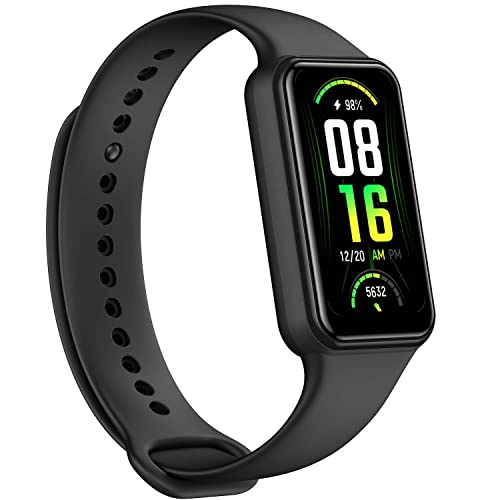
TL;DR: The Amazfit Band 7 offers a 1.47‑inch AMOLED screen, 18‑day typical battery life (28‑day saver mode), and 28 g lightweight design for under $45, making it a solid budget fitness tracker.
The Band 7 packs a 232 mAh battery that powers up to 18 days of typical use and stretches to 28 days in saver mode, while a magnetic cable tops out at about 2 hours to full charge. Its 1.47‑inch AMOLED panel delivers 282 ppi on a tempered‑glass surface with an anti‑fingerprint coating, and the whole unit weighs just 28 g.
Compared with peers, the Aeac Smart Watch carries a larger 350 mAh cell and promises roughly 10 days of runtime, but its display is only 1.32 inches. Xiaomi’s Smart Band 9 Active matches the Band 7’s 18‑day claim with a 300 mAh battery and a similar 1.47‑inch screen, though it lists a brighter 450‑nit panel. The Amazfit Bip 6 uses a 340 mAh battery for about 14 days and adds built‑in GPS, a feature the Band 7 lacks.
Reviewers consistently praise the Band 7’s battery endurance of up to 18 days and its vivid 282 ppi screen, noting the 5 ATM (50 m) water resistance lets you swim comfortably. Users also like the lightweight feel on the wrist, but several mention the band’s length can be cumbersome for smaller wrists (minimum 166 mm). A common complaint is the occasional hiccup when syncing data to the companion app, and the absence of onboard GPS limits independent outdoor tracking.
Beyond the core health suite—continuous heart‑rate, SpO₂, stress, sleep, and 120 sport modes—the tracker integrates Alexa voice commands and offers Bluetooth camera control. The 5 ATM rating guards against dust and water, while the 16 mm strap width keeps the band snug yet unobtrusive.
Pros
Cons
Best for: Entry-level buyers or those on a tight budget
Avoid if: Reliability and user satisfaction are your top concerns
“Fitbit aesthetics for under $50”
“nice 1.47-inch HD AMOLED”
TL;DR: The Amzhero D26 offers a 15‑day battery, 1.47‑inch touchscreen and 14 sport modes for $48.96, but its 3.8‑star rating and app‑dependency may limit appeal.
The standout spec is its 15‑day battery life powered by a 2 Ah lithium‑polymer cell, paired with a 2‑hour pin‑charging routine. Its 1.47‑inch HD bright color touchscreen provides a readable interface while the device weighs 82 g, keeping it comfortably light for a rectangular smartwatch.
Compared with the nine peers, the Amzhero sits in the middle of the battery‑life spectrum: longer than the Aeac Smart Watch (10 days) and Amazfit Helio Strap (10 days), but shorter than the Xiaomi Mi Smart Band 10’s typical 21‑day claim and the Amazfit Band 7’s 18‑day typical life. Charging at 2 hours matches the Aeac and Amazfit Band 7, yet is slower than the Mi Smart Band 10’s roughly 1‑hour fast charge. At 82 g, it's heavier than the ultra‑light bands that weigh around 0.06 pounds (≈27‑28 g), but still lighter than many full‑size smartwatches that approach 0.09 pounds.
User feedback repeatedly praises the flat‑back design and comfort, noting the device feels “extremely lightweight” despite its 82 g mass. Reviewers also highlight reliable heart‑rate, SpO₂ and blood‑pressure readings, while flagging the necessity of the GloryFit app for full data syncing and occasional synchronization hiccups. The 3.8‑star rating from over 4,300 reviewers reflects a mix of satisfaction with basic tracking and frustration over limited OS compatibility (iOS 9+ / Android 6+ only).
Beyond the battery, the tracker packs a 5 ATM water‑resistance rating, Bluetooth 5.0 connectivity, 14 sport modes and 100 MB of internal storage for activity logs. Sensors include heart‑rate, blood‑oxygen and blood‑pressure monitoring, plus stress tracking, all running on Android Wear 2.0.
Pros
Cons
Best for: Entry-level buyers or those on a tight budget
Avoid if: Reliability and user satisfaction are your top concerns
“Exactly as described”
“Great fitness tracker at excellent value”
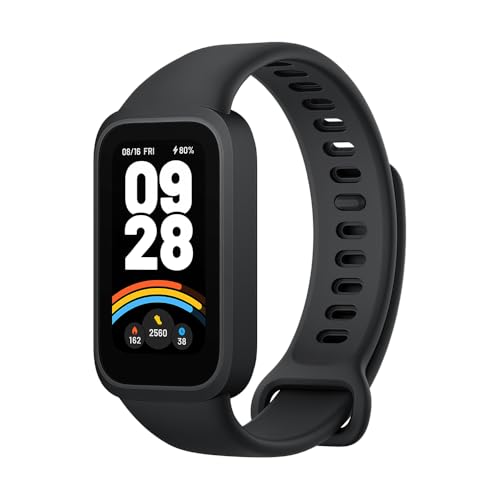
TL;DR: The Xiaomi Smart Band 9 Active offers a 1.47‑inch TFT display, up to 18 days of battery life and 5 ATM water resistance for just $29.99, making it a lightweight, budget‑friendly fitness tracker.
What really stands out is the battery. With a 300 mAh cell it delivers up to 18 days of use on a single charge, and it tops up in under 120 minutes. The band itself weighs only 0.0661386786 pounds (about 30 g) and sits just 9.99 mm thick, so it feels almost invisible on the wrist. The 1.47‑inch TFT LCD runs at 60 Hz, offers 247 PPI and can reach 450 nits of brightness.
At $29.99 it’s cheaper than the $44.99 Amazfit Band 7 and the $41.99 Aeac Smart Watch. Its 18‑day battery matches the typical 18‑day runtime of the Amazfit Band 7 and clearly outlasts the Aeac’s 10‑day claim. Weighing 0.0661 pounds, it’s a shade heavier than the Amazfit Band 7’s 0.06 pounds but lighter than many premium options. The 1.47‑inch screen is larger than the Aeac Smart Watch’s 1.32‑inch panel, though smaller than the Xiaomi Mi Smart Band 10’s 1.72‑inch display. Brightness at 450 nits is modest compared with the Mi Band 10’s 1500 nits and the Amazfit Bip 6’s up‑to‑2000 nits.
Reviewers consistently praise the ultra‑light feel and the long‑lasting battery, noting that the band stays comfortable through work, workouts and sleep. Users also like the smooth 60 Hz scrolling and the ability to control music directly from the wrist. The main complaints revolve around the TFT screen’s muted colours and the need to adjust brightness manually, since there’s no auto‑brightness feature. Professionals also point out the lack of GPS or ECG, which means the band is best suited for casual tracking rather than serious training.
Beyond the core specs, the Smart Band 9 Active offers 5 ATM water resistance, 50 fitness modes, SpO₂ monitoring, heart‑rate tracking via a PPG sensor, and over 100 watch faces that you can swap through the Mi Fitness app. The adjustable TPU strap (135–215 mm) comes in black, beige‑white or pink, letting you match it to any style.
Pros
Cons
Best for: Shoppers on a tight budget who want the most for their money
Avoid if: You need advanced features or professional‑grade performance
TL;DR: The Coros PACE 3 delivers a solid 15‑day daily battery life, dual‑frequency GPS, and a 1.2‑inch transflective LCD, but its $199 price and heavier build make it a premium choice.
The Coros PACE 3 packs a 15‑day daily battery life, dual‑frequency GPS, and a 1.2‑inch transflective LCD with a 260 × 260 pixel resolution, all housed in a 102 mm square case that’s 11.7 mm thick.
Compared with the Garmin Forerunner 165, which offers up to 11 days in smartwatch mode, the Pace 3’s battery lasts longer, though it’s noticeably heavier at about 0.33 lb versus the Forerunner’s roughly 0.09 lb. It also outlasts the Amazfit Active 2’s 4‑day always‑on display and the Helio Strap’s 10‑day runtime. Only the Xiaomi Mi Smart Band 10 (21 days) and Amazfit Band 7 (18 days) claim longer typical endurance, but both come in smaller, lighter packages.
Users repeatedly point to the watch’s endurance as a major win, noting that the 15‑day span lets them charge once a week without missing workouts. Reviewers echo this, calling the battery life “industry‑leading.” At the same time, some owners mention the 0.33‑lb weight feels bulkier than feather‑light alternatives, and some note the lack of a built‑in speaker or microphone as a missing convenience.
Coros builds the device with a high‑strength polymer bezel, 5 ATM water resistance, and a replaceable silicone strap, making it suitable for rain‑soaked runs. Sensors include optical heart‑rate monitoring, SpO₂, and an accelerometer, delivering the multi‑sport data that 1,851 reviewers have helped push the rating to 4.4 stars.
Pros
Cons
Best for: Buyers willing to invest in a proven, high-quality option
Avoid if: You're on a tight budget or only need basic functionality
“Battery lasts "360 hours" in mixed use; lightweight (30-49 g) and comfortable for runs/sleep; accurate multi-sport tracking (run/bike/swim/strength), easy Android pairing and music playback.”
“Take your running watch to the next level... premium tool to pace you through epic excursions.”
Breakdown
Aeac Smart Watch
Pros
Cons
Xiaomi Mi Smart Band 10
Pros
Amazfit Active 2
Pros
Amazfit Helio Strap
Pros
Based on scoring data and product specs
Personalized picks
Best Overall Pick
Aeac Smart Watch
Best OverallBest for: Budget-conscious buyers seeking a reliable entry-level option
Xiaomi Mi Smart Band 10
Best for: Most users looking for a well-reviewed, reliable mainstream option
$49.59+$9.75 vs winner
Skip Coros PACE 3 if…
You're on a tight budget or only need basic functionality
The Aeac Smart Watch takes the top spot thanks to its solid 10‑day battery life on a 350 mAh cell, a 4.4‑star rating from 1,581 reviewers, and a budget‑friendly $41.99 price tag (list price $49.99). Its IP68 water resistance and more than 110 sport modes give you confidence that the watch can keep up with daily workouts and outdoor activities.
Coming in second, Xiaomi Mi Smart Band 10 shines if you need a brighter, larger display and an expansive set of fitness features. Its 1.72‑inch AMOLED screen reaches 1 500 nits, and the band tracks over 150 sports modes while boasting a typical 21‑day battery life—all for $49.59 and a 4.5‑star rating from 6,923 users.
Pick the Aeac Smart Watch today for the longest battery life and best value in this category.
The Garmin Forerunner 165 includes built‑in dual‑frequency GNSS and can run up to 17 hours in all‑systems mode, so it works independently of a phone. The Aeac Smart Watch relies on phone‑tethered GPS, meaning you must have your phone nearby for location tracking.
No reviews yet — be the first to share your experience.
Please sign in to leave a review