⚡ Quick Answer
Finding a wearable that keeps tabs on your heart without draining your wallet can feel like hunting for a needle in a haystack. The review compared 12 heart‑rate monitors that also bundle SpO₂, sleep and activity tracking, spanning three price tiers. Prices stretch from $18.99 for the Choiknbo Smart Watch up to $349.00 for the Oura Ring 4, while user ratings hover between 3.9 and 4.4 stars.
If you’re after a solid all‑rounder for everyday fitness, the Aeac Smart Watch offers a 1.32‑inch AMOLED screen, 110+ sport modes and up to 10 days of battery life for just $41.99. Athletes who need on‑wrist ECG, skin‑temperature and GPS will notice the Fitbit Sense 2, which carries a 4.1‑star rating and promises 6+ days between charges. For those who prefer a discreet, screen‑free option, the Oura Ring 4 weighs only about 0.01 lb and delivers 5‑8 days of battery on a single charge.
The following sections walk through each tier, highlight strengths and drawbacks, and help match a device to your lifestyle and budget.

Aeac Smart Watch
Its 10‑day battery life from a 350 mAh pack keeps you tracking heart rate without frequent charging.

Fitbit Sense 2
Audiophiles and fitness enthusiasts who value premium sound will see the Fitbit Sense 2 costs about $178 more than the Aeac Smart Watch.

Akumaka HD Smart Watch
It delivers up to 7 days of heavy‑use battery life while pricing about $5 less than the Aeac Smart Watch, giving budget shoppers solid endurance without sacrificing core health tracking.
Also considered
Score Analysis
Key score advantages vs. runner-up (Fitbit Sense 2)
Price Range
Aeac Smart Watch
$49.99
Fitbit Sense 2
$224.99
Akumaka HD Smart Watch
$37.99

Choiknbo Smart Watch
$18.99
Amazfit Band 7
$49.99

Milavan Smart Ring
$57.99

Fitvii Fitness Tracker
$39.97

Oura Ring 4 Silver
$349.00

Amzhero Fitness Tracker
$49.99

Fitvii FINO 2
$36.47

MorePro Fitness Tracker Black
$44.99
BrilliantHouse Fitness Tracker
$19.96
Spec Comparison
TL;DR: The Aeac Smart Watch offers a 350 mAh battery that lasts about 10 days, 110+ sport modes, and heart‑rate plus SpO2 tracking for $41.99, making it a solid budget pick for everyday health monitoring.
The standout spec is the 350 mAh battery paired with a 2‑hour charging time, delivering roughly 10 days of use before you need to plug it back in. Its 22 mm swappable band and 60 Hz AMOLED screen keep the watch comfortable and responsive, while 256 MB of internal storage lets you keep plenty of watch faces and music controls.
Compared with the other eleven entries, the Aeac’s battery capacity outstrips the Amazfit Band 7’s 232 mAh and the Akumaka HD’s 300 mAh, giving it a clear edge in longevity. Its 256 MB storage also tops the Akumaka’s 128 MB and the Amzhero’s 100 MB, meaning you’ll have more room for apps and files without needing a larger device.
Users repeatedly praise the easy Bluetooth pairing, reliable heart‑rate and SpO2 readings, and the comfortable rose‑gold band that stays snug during workouts. Reviewers frequently highlight the 10‑day battery life as “long enough to forget about charging”. On the downside, the default screen timeout of just 5 seconds feels too brief for many, and reviewers describe the raise‑to‑wake feature as hit‑or‑miss. Reviewers say it's functional but lacks deep analytics, and the watch relies on phone‑tethered GPS rather than a built‑in module.
Beyond the basics, the watch packs 110+ sport modes, IP68 water resistance, an AI voice assistant, flashlight, and full‑screen notifications. You can adjust the screen timeout anywhere between 5 and 20 seconds, and the raise‑to‑wake works when you lift your wrist, though consistency varies. Bluetooth 5.3 ensures clear calls through the built‑in speaker and microphone.
Pros
Cons
Best for: Most users looking for a well-reviewed, reliable mainstream option
“"feature‑packed and affordable"”
“"everything you'd expect in a smartwatch today"”
TL;DR: Fitbit Sense 2 offers a 40.1 mm AMOLED display, 12‑minute fast charge, 6+ days of battery life, and a full suite of health sensors for deep wellness tracking.
The standout spec is the 40.1 mm AMOLED screen paired with a multi‑sensor health suite that includes an optical heart‑rate monitor, ECG, SpO2, skin‑temperature, and cEDA stress sensors. At 0.42 lb (190.5 g) it feels solid yet comfortable on the wrist, and the device can run for 6+ days on a single charge before a 12‑minute fast charge tops it up.
Compared with the other eleven contenders, the Sense sits in the mid‑weight range: it’s heavier than the Oura Ring 4 (5.2 g) and Amazfit Band 7 (28 g) but lighter than the Milavan Smart Ring (109.5 g) and MorePro Fitness Tracker (150 g). Its 6+‑day battery life outlasts the Oura Ring’s 5‑8 day range and the Milavan’s 3‑5 day span, though it’s shorter than the Fitvii or Amzhero trackers that claim up to 15 days. The 12‑minute quick charge is notably faster than the Oura Ring’s 20‑80 minute window and the 2‑hour charge times listed for Amzhero, Amazfit, and MorePro.
Reviewers consistently praise the on‑wrist skin‑temperature sensor for delivering nightly baseline insights, and professionals highlight the cEDA sensor as an innovative stress‑management tool. Users love the convenience of built‑in GPS, NFC payments via Fitbit Pay, and 40+ exercise modes. On the downside, the ECG app restricts use to certain regions, and Wi‑Fi is turned off, which some users miss for direct internet sync. Music lovers get 2.5 GB of on‑device storage out of a total 4 GB capacity.
The smartwatch resists water to 50 meters, sports a 75 dB SPL speaker for alerts, and runs Fitbit OS compatible with Android 7.0+ and iOS 12.2+. These specs make it a well‑rounded health companion for daily wear.
Pros
Cons
Best for: Users who want comprehensive health and stress monitoring, including skin temperature, SpO2, and ECG (where available), with solid smartwatch features.
Avoid if: You need a medical‑grade ECG everywhere, rely on Wi‑Fi sync, or are shopping on a tight budget — it’s priced at $220.41.
TL;DR: The Akumaka HD Smart Watch packs a 4648 mm HD IPS display, 110 sport modes and up to 30‑day standby on a 300 mAh battery for just $36, making it a solid entry‑level choice.
The standout spec is its large 1.83‑inch (≈4648 mm) HD IPS screen, delivering a bright view for notifications and fitness data. Under the hood, a 300 mAh battery promises 14 days of typical use and a notable 30 days on standby, while a fast ≈2‑hour charge gets you back on the go quickly.
At 0.31085178942 pounds, the watch is a bit heavier than the Fitvii FINO 2 (0.29101018584 pounds) but lighter than the MorePro Fitness Tracker (0.330693393 pounds). Its 1.83‑inch screen is marginally larger than the Aeac Smart Watch’s 1.32‑inch display and the Amazfit Band 7’s 0.06‑pound model, yet comparable to the Fitvii FINO 2’s 1.85‑inch panel. Battery capacity sits between the Aeac’s 350 mAh and the Amazfit Band 7’s 232 mAh, while sharing the same ≈2‑hour charging time listed for several peers.
Reviewers appreciate the long standby time and the convenience of Bluetooth calling, noting the magnetic strap feels comfortable for all‑day wear. Professional reviewers highlight the feature‑rich package—including a rotating button, voice assistant and 110 sport modes—as notable for the price. However, users report that heavy daily use cuts battery life down to around four days, and the built‑in flashlight appears dim. The integrated blood‑pressure sensor also draws skepticism because its accuracy isn’t independently verified.
Pros
Cons
Best for: Entry‑level buyers or those on a tight budget
Avoid if: You want the best value‑per‑dollar in its price range
“"feature‑packed and affordable"”
“"everything you'd expect in a smartwatch today"”
TL;DR: For $18.99 the Choiknbo Smart Watch packs a 46 g, 1.83‑inch TFT‑LCD screen, 290 mAh battery and 100+ sport modes, making it the most affordable health‑tracker in the lineup.
The standout hardware is the large high‑definition full‑rounded TFT‑LCD touch screen, which reviewers repeatedly call “crystal‑clear” and “awesome” even on a budget device. At just 46 g and a slim profile (99.06 mm × 444.5 mm × 381 mm), it feels barely there on the wrist, a point many users highlight as a comfort win for all‑day wear.
Compared with the other eleven contenders, the Choiknbo is lighter than the Akumaka HD Smart Watch (0.31 lb vs. 0.10 lb) but heavier than the BrilliantHouse Fitness Tracker (0.05 lb). Its 290 mAh battery's a touch smaller than Akumaka’s 300 mAh pack, yet both share a quick 2‑hour charging time. Storage sits at 64 MB, which is less than the 128 MB found in Akumaka and far below the 256 MB of the Aeac model, but still enough for basic app data.
User sentiment centers on three themes: the vivid display, the lightweight feel, and the sheer number of sport modes (over 100). Consumers love that they can track everything from running to yoga without a bulky band. The most common gripe is the need to recharge every 3‑6 days when continuous heart‑rate and SpO₂ monitoring are active, which aligns with the listed 3‑6‑day usage window.
Technical details round out the picture: Bluetooth 5.0 ensures a stable connection to Android 4.4+ or iOS 9.0+ phones, while an IP68 rating gives water resistance for daily splashes. Health sensors include continuous 24 h heart‑rate monitoring, on‑demand blood‑pressure and SpO₂ checks, plus a pedometer and sleep tracking. The watch stores up to 64 MB of data and offers alarm, music and camera controls, all powered by a 290 mAh battery that can sit idle for 30+ days.
Pros
Cons
Best for: Shoppers on a tight budget who want the most for their money
Avoid if: You need advanced smartwatch capabilities like built‑in GPS, extensive app support, or premium materials
“"feature‑packed and affordable"”
“"everything you'd expect in a smartwatch today"”
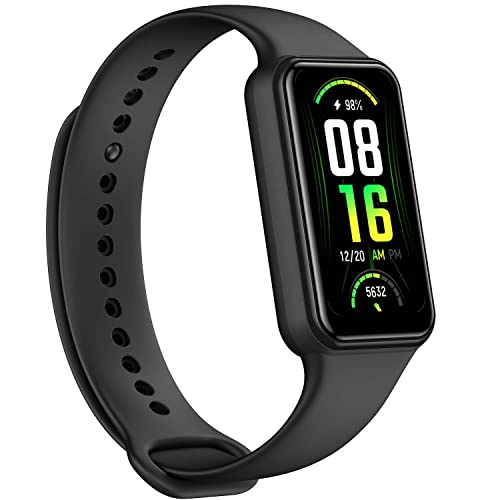
TL;DR: The Amazfit Band 7 offers a 3734 mm AMOLED screen, 28 g lightweight design, up to 18 days of typical battery life and 120 sport modes for just $44.99.
The standout spec is its 3734 mm (1.47‑inch) AMOLED display with a sharp 282 ppi density, set in a slim 12.2 mm profile that feels almost weightless at 28 g. Combined with a 232 mAh battery, the band delivers a typical 18‑day runtime and a saver mode that can stretch to 28 days, meaning you’ll rarely need to charge it.
When you compare it to the other eleven trackers, the Band 7 weighs less than the MorePro Fitness Tracker (150 g) and the Akumaka HD Smart Watch (141 g). Its typical battery life exceeds the 7‑10 day range of MorePro and even outlasts the 15‑day claim of the Amzhero Fitness Tracker. While the Fitvii FINO 2 sports a larger 1.85‑inch screen, the Band 7 matches the 1.47‑inch size of MorePro and still wins on weight and endurance.
Reviewers consistently praise the long battery endurance and bright, fingerprint‑resistant glass screen, noting it stays legible during swims thanks to a 5 ATM rating. Some users report occasional sync hiccups with the companion app and note that the band’s length can feel loose on wrists smaller than the 166 mm minimum.
Pros
Cons
Best for: Value-conscious buyers seeking quality at $44.99
Avoid if: You need built‑in GPS, advanced metrics like ECG, or a tighter fit on very small wrists
“Fitbit aesthetics for under $50”
“nice 1.47-inch HD AMOLED”
TL;DR: The Milavan Smart Ring offers 187 sport modes, 24/7 health tracking and a 3‑5 day battery in a slim 7 mm, IP68‑rated design, but requires a phone for full functionality.
The ring’s standout spec is its ultra‑thin 7 mm profile combined with an Advanced 5.0 sensor suite that houses five integrated sensors. It records heart rate, blood oxygen, blood pressure, sleep stages and steps, updating every 30 minutes. With 187 pre‑loaded sport modes, it covers everything from running to yoga, and the 15 mAh internal battery lasts 3‑5 days between charges.
At roughly 0.24 lb, the Milavan ring is noticeably heavier than the Amazfit Band 7, which tips the scales at 0.06 lb, yet lighter than the MorePro tracker that weighs about 0.33 lb. Its charging case packs a 500 mAh battery, far exceeding the modest 15 mAh cell inside the ring itself, while competitors such as the Amzhero tracker list a 2 Ah capacity—substantially larger but in a different form factor. The ring’s IP68 water‑resistance matches MorePro’s rating, but unlike the Fitvii tracker, it adds blood pressure monitoring, a feature not listed for that competitor.
Professional reviewers praise the ring’s comfort and the accuracy of its heart‑rate data, noting it rivals larger wrist‑worn devices. Users love the breadth of health metrics and the quick 1‑2 hour charge, but many report sizing headaches—accurate finger measurements are essential. The reliance on a companion app for GPS and data sync also surfaces as a common complaint, especially for those who prefer standalone wearables. The device stores up to 1 MB of data locally and uses Bluetooth to pair with Android or iOS phones.
Pros
Cons
Best for: Buyers willing to invest in a proven, high-quality option
Avoid if: You're on a tight budget or only need basic functionality
TL;DR: The Fitvii Fitness Tracker costs $49.99, offers a 169 mm display, up to 15 days of low‑power battery life and 120+ sport modes, making it a solid budget health companion.
What really sets the Fitvii tracker apart is its extensive sensor suite – 24/7 heart‑rate, blood‑pressure and SpO₂ monitoring plus sleep tracking – all displayed on a 169 mm always‑on screen. The device also packs more than 120 sport modes, so whether you’re jogging, rowing or doing yoga you’ll find a preset ready to go. Battery life stretches to 15 days in low‑power mode and still delivers up to 7 days under normal use, which reviewers repeatedly call “notable for a budget smartwatch.”
Compared with the other eleven contenders, Fitvii’s screen measures noticeably larger than the Amzhero, MorePro and Aeac models, which each list a 1.47‑inch (≈ 37 mm) or 1.32‑inch (≈ 34 mm) display. Its low‑power battery matches Amzhero’s 15‑day claim but exceeds the 10‑day life of the Aeac watch. The Amazfit Band 7 pushes battery longevity higher at 18 days, while MorePro sits in the 7‑10 day range, placing Fitvii solidly in the middle. In terms of durability, the IP67/68 rating aligns with MorePro’s IP68 protection, giving it comparable water resistance.
Users highlight the tracker’s comfort, reliable health readings and the convenience of Bluetooth calling directly from the wrist. Professional reviewers also praised the sheer number of sport modes and the smooth QR‑code pairing process. The main complaints revolve around the magnetic charger’s need for precise alignment and the inability to reply to SMS messages from the watch, which some users find limiting.
Pros
Cons
Best for: Budget‑conscious beginners or casual fitness enthusiasts who want 24/7 health monitoring.
Avoid if: You need advanced features such as built‑in GPS, full SMS reply capability, or medical‑grade sensor accuracy.
“game-changer”
“Comfortable, light, stylish (fits like Apple Watch)”
TL;DR: The Oura Ring 4 Silver is a ultra‑light titanium ring that tracks sleep, activity and heart health 24/7, offering 5–8 day battery life and a quick 20‑80 minute charge for $349.
The ring’s most eye‑catching spec is its weight: just 5.2 g (about 0.01 lb) and a thickness of only 2.88 mm, making it feel almost like a piece of jewelry rather than a gadget. Its fully titanium construction with a brushed‑silver PVD coating keeps it non‑allergenic and water‑resistant to 100 m, so you can wear it while swimming or showering without worry.
Compared with the other eleven contenders, the Oura Ring is dramatically lighter than the Fitbit Sense 2’s 0.42 lb and the Milavan Smart Ring’s 0.24 lb, and its 2.88 mm profile is far slimmer than the Sense 2’s 11.2 mm thickness. Battery life sits at 5–8 days, a notch below the Sense 2’s 6+ days but ahead of the Milavan’s 3–5 days. The downside is a longer recharge window—20–80 minutes versus the Sense 2’s 12‑minute fast charge—so you’ll need a bit more planning before a full day of use.
User feedback highlights the ring’s discreet, screen‑free design as a major plus; reviewers love the continuous temperature, SpO₂ and heart‑rate monitoring that runs silently on the finger. A common gripe is the potential for minor surface scratches despite the titanium finish, and the need to buy a separate sizing kit to ensure a perfect fit. Professional reviewers also note the lack of on‑ring alerts, which means you won’t get immediate vibration cues for calls or messages.
Technically, the Oura Ring packs green and infrared LEDs for heart‑rate, HRV and respiration tracking, plus red and infrared LEDs for blood‑oxygen measurement. An accelerometer logs movement, while a digital temperature sensor captures skin‑temperature trends. The device meets EMF exposure limits, includes an airplane‑mode switch and is FCC‑certified, offering a solid safety profile for everyday wear.
Pros
Cons
Best for: Those prioritizing quality and willing to pay for premium performance
Avoid if: You're on a tight budget or only need basic functionality
TL;DR: The Amzhero D26 offers a lightweight 82 g design, 14 sport modes, 15‑day battery life and 5 ATM water resistance for $48.96, but relies on the GloryFit app and sits at a higher price than many entry‑level trackers.
The standout spec is the 14 built‑in sport modes plus auto‑detect, which lets you switch from running to yoga without digging through menus. Combined with a 5 ATM water‑resistance rating, you can wear it while swimming or in the shower. Battery life stretches to 15 days on a single charge, and a 2‑hour pin‑charging session gets you back to full power. At 82 g the watch feels barely there, and the 100 MB of internal storage holds plenty of activity logs.
When you line it up against the other eleven contenders, the Amzhero sits a touch pricier than the Amazfit Band 7 and MorePro models, yet it’s lighter than the MorePro’s 150 g body and heavier than the Amazfit Band 7’s 28 g frame. Its 15‑day battery life matches the low‑power mode claim of the Fitvii tracker, while the Fitvii’s normal use drops to about a week. Bluetooth 5.0 is standard across the set, and the Amzhero’s 5 ATM rating outpaces the Fitvii’s unspecified water protection.
Reviewers consistently praise the flat‑back design for staying comfortable during long days, and professional reviewers note the readability of the 1.47‑inch touchscreen and reliable heart‑rate sensing. The downside that keeps popping up is the dependence on the GloryFit app – users report occasional sync hiccups and limited functionality without it. The GloryFit app caps compatibility at iOS 9+ and Android 6+, so newer devices may need workarounds.
Pros
Cons
Best for: Most users seeking a balanced, mainstream option
“game-changer”
“Comfortable, light, stylish (fits like Apple Watch)”
TL;DR: The Fitvii FINO 2 is a lightweight, IP68‑rated tracker that charges in 2 hours and offers 24/7 heart‑rate, SpO₂ and blood‑pressure monitoring for under $40.
The FINO 2 tips the scales at just 0.29101018584 pounds (132 g), making it one of the lighter options in the lineup, and its 20 mm band fits comfortably on most wrists. A quick 2‑hour charge gets the device ready for daily wear, and the 37.5 × 45 mm case keeps the profile slim enough for a commuter bag or a nightstand.
Compared with its peers, the FINO 2 is lighter than the Akumaka HD Smart Watch (≈0.31 lb) and the MorePro Fitness Tracker (≈0.33 lb) but noticeably heavier than the Amazfit Band 7 (≈0.06 lb). Its 20 mm band is narrower than the Aeac’s 22 mm strap yet wider than the Amazfit’s 16 mm strap, striking a middle ground for comfort. Screen size is modest, and while some rivals list larger displays, the FINO 2’s focus is on essential health data rather than flashy visuals.
Reviewers consistently praise the step‑count accuracy and the comfort of the slim band, noting that the tracker stays unobtrusive during everyday activities. Professional reviewers highlight the full 24/7 health suite—including heart‑rate, SpO₂, blood‑pressure, sleep and calorie tracking—without a subscription fee. On the flip side, users point out the cheap‑looking graphics and the absence of premium metrics such as ECG or VO₂ max, which limits its appeal for serious athletes.
Beyond the basics, the FINO 2 packs a solid sensor array: continuous heart‑rate, SpO₂ (real‑time ~1 minute), blood‑pressure, sleep and step monitoring. It supports seven sports modes—running, basketball, walking, climbing, cycling, yoga and elliptical—and offers assistant functions like sedentary reminders, water alerts, menstrual cycle tracking, weather push, remote photo taking, find‑phone and an alarm clock. The IP68 rating means it can handle submersion, making it suitable for swimming or rainy commutes.
Pros
Cons
Best for: Entry-level buyers or those on a tight budget
Avoid if: You want the best value‑per‑dollar in its price range
TL;DR: The MorePro Fitness Tracker Black offers 24/7 heart‑rate, blood‑pressure and SpO2 monitoring on a 3734 mm display, but its $44.99 price and 0.33‑lb weight make it a mid‑range choice.
The standout spec is its continuous health suite: it includes 24/7 heart‑rate monitoring, 24/7 blood‑pressure tracking and SpO2 monitoring, providing real‑time vitals without extra gadgets. Its screen measures 3734 mm (listed as 1.47 in) and the device weighs 0.33 lb (150 g), so it feels solid on the wrist.
Compared with the other eleven wearables, the MorePro is noticeably heavier than the Amazfit Band 7, which tips the scales at just 0.06 lb. Its 2‑hour magnetic charging time matches the Aeac Smart Watch, while many competitors list faster pin‑charging methods. The battery life of 7‑10 days sits between the long‑lasting 18‑day claim of the Amazfit Band 7 and the 10‑day typical life of the Aeac Smart Watch.
Reviewers appreciate the breadth of health data – especially the 24/7 blood‑pressure feature that isn’t common at this price point – but the 3.9/5 rating and 1,026 reviews reveal concerns about the higher price and the bulkier feel. Reviewers praise the IP68 rating and magnetic charging stand for durability and convenience, and the 112 exercise modes plus 7 sports modes give plenty of tracking options for active users.
Pros
Cons
Best for: Most users seeking a balanced, mainstream option
Avoid if: Limited desk space or need for portability
“game-changer”
“Comfortable, light, stylish (fits like Apple Watch)”
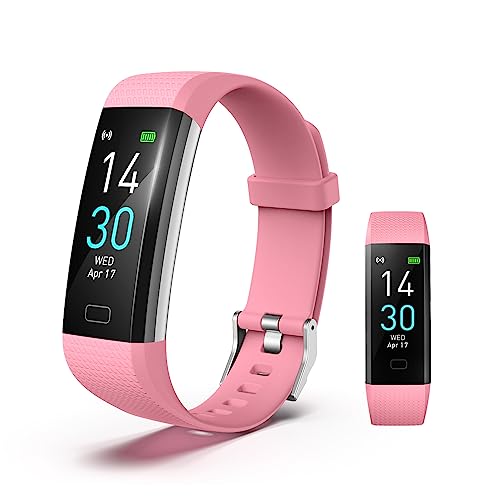
TL;DR: At $19.96, the BrilliantHouse S5 offers a lightweight 23.8 g, IP68‑rated tracker with 0.96‑inch screen, 5‑7‑day battery and 17 sport modes, but its tiny display and modest rating may limit appeal.
The standout spec is the ultra‑light 23.8 g body combined with an IP68 waterproof rating, making the S5 comfortable for all‑day wear. Its 0.96‑inch screen keeps the device compact, while the built‑in USB plug provides simple charging and a battery that lasts 5‑7 days between charges.
Compared with the other eleven options, the S5 is among the lightest—considerably lighter than the Choiknbo Smart Watch at 46 g and far lighter than the Akumaka HD Smart Watch, which tips the scales at 141 g. Its screen, however, is smaller than most peers: Akumaka (1.83 in), Fitvii FINO 2 (1.85 in), Aeac (1.32 in) and MorePro (1.47 in). Battery longevity sits just below the MorePro’s 7‑10 day claim, while the Choiknbo lists a 3‑6 day window. The S5’s price of $19.96 places it at the low end of the roundup, making it a clear value pick.
Consumer sentiment notes that the S5's a solid entry‑level choice for kids, men and women who want an inexpensive, lightweight wrist companion. Professional reviewers note the full sensor suite—24‑hour heart‑rate monitoring with a max‑HR alarm, blood‑pressure, SpO₂ and temperature tracking—packed into a tiny frame. The trade‑off is the modest 3.6/5 star rating and a display that may feel cramped for detailed readouts, especially for users who prefer larger screens or built‑in GPS.
Pros
Cons
Best for: Entry‑level buyers or those on a tight budget
Avoid if: You need advanced features or professional‑grade performance
“game-changer”
“Comfortable, light, stylish (fits like Apple Watch)”
Breakdown
Aeac Smart Watch
Pros
Fitbit Sense 2
Pros
Cons
Akumaka HD Smart Watch
Pros
Cons
Choiknbo Smart Watch
Pros
Based on scoring data and product specs
Personalized picks
Best Overall Pick
Aeac Smart Watch
Best OverallBest for: Most users looking for a well-reviewed, reliable mainstream option
Fitbit Sense 2
Best for: Audiophiles and enthusiasts seeking premium sound quality and advanced features
$224.99+$175.00 vs winner
Skip BrilliantHouse Fitness Tracker if…
You need advanced features or professional-grade performance
The Aeac Smart Watch takes the top spot as the best overall wearable heart‑rate monitor. It packs a 1.32‑inch AMOLED screen with a 60 Hz refresh rate, offers IP68 water resistance, and delivers a 10‑day battery life on a 350 mAh cell. At $41.99 it also scores a solid 4.4 / 5 from 1,581 reviewers, giving you a well‑rounded package without breaking the bank.
The Fitbit Sense 2 lands as the runner‑up, especially if you need built‑in navigation and advanced health sensing. It features built‑in GPS + GLONASS, 40+ exercise modes, and a suite of sensors including ECG, SpO₂ and skin‑temperature monitoring. With a 6+‑day battery and a 4.1 / 5 rating from 9,677 users, it’s a strong choice for serious fitness enthusiasts who value on‑device GPS and deeper health analytics.
For tighter budgets, the Choiknbo Smart Watch shines at just $18.99, offering core heart‑rate tracking and basic notifications at a price that fits a student wallet. If you’re looking for a premium health ring, the Oura Ring 4 Silver stands out at $349.00, delivering continuous sleep and readiness insights in a sleek, unobtrusive form factor.
Pick the Aeac Smart Watch today for a reliable, feature‑rich health companion that won’t cost a fortune.
The Amazfit Band 7 lists a typical battery life of up to 18 days, which is longer than the Aeac Smart Watch’s 10‑day claim and the Fitbit Sense 2’s 6‑plus days. Other models like the Akumaka HD Smart Watch and Fitvii Fitness Tracker also exceed a week, but the Band 7 tops the group.
No reviews yet — be the first to share your experience.
Please sign in to leave a review