⚡ Quick Answer

🏆 Best Overall
Wellue O2Ring
$152.97
Choosing a wearable pulse oximeter can feel like navigating a maze of features and price points. In this roundup we compare 5 options that span the full market spectrum, from the budget‑friendly Amazfit Band 7 at $44.99 to the premium Withings ScanWatch 2 priced at $369.95. The lineup splits into clear tiers: two budget picks (Amazfit Band 7 and Xiaomi Smart Band 9 Pro), a mid‑range contender (Wellue O2Ring), and two premium smartwatches (Fitbit Sense 2 and Withings ScanWatch 2).
What sets these devices apart? The Wellue O2Ring captures SpO₂ data every 1 second, giving you ultra‑fine detail for overnight monitoring. Xiaomi leads the pack with a 4.5/5 rating from 2,427 reviews, while the Withings ScanWatch 2 offers a 30‑day battery life, letting you skip charging for a month. Meanwhile, Fitbit Sense 2 promises a fast 12‑minute charge and six‑plus days of use, and the Amazfit Band 7 stretches typical battery life to 18 days, even reaching 28 days in saver mode.
Below we break down each model’s strengths, specifications, and who they’re best suited for, so you can pinpoint the pulse oximeter that matches your lifestyle.
Wellue O2Ring
Its 3.7 V battery voltage delivers reliable power in a compact 38 mm design, earning strong brand confidence and popularity among mainstream users.
Fitbit Sense 2
Ideal for fitness enthusiasts who want premium features, even at roughly $77 more than the Wellue O2Ring.
Amazfit Band 7
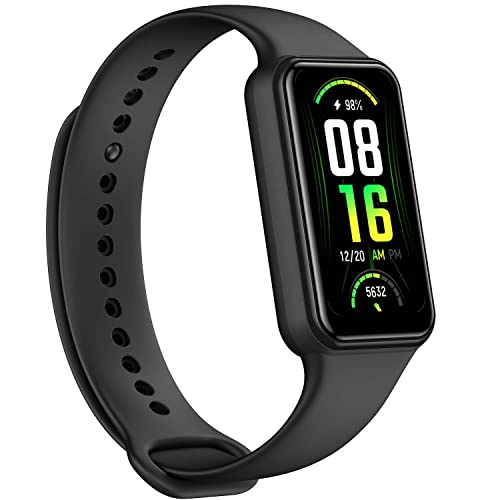
Offers an 18‑day typical battery life at a $44.99 price, delivering far more runtime for budget‑focused users than the higher‑priced mid‑range picks.
Also considered
Score Analysis
Key score advantages vs. runner-up (Fitbit Sense 2)
Price Range
Wellue O2Ring
$152.97
Fitbit Sense 2
$199.00
Amazfit Band 7
$49.99
Withings ScanWatch 2
$369.95

Xiaomi Smart Band 9 Pro
$86.99
Spec Comparison
TL;DR: The Wellue O2Ring offers 1‑second SpO2 and heart‑rate monitoring in a soft silicone ring, with up to 16 hours of use, but its 15 g weight and 12‑16 hour battery may require nightly charging.
The O2Ring records oxygen saturation and pulse every 1 second, giving clinicians and sleep‑trackers a high‑resolution data stream. It fits fingers with a 50–82 mm perimeter and sits on a 38 mm × 38 mm × 30 mm silicone body, while the built‑in battery runs at 3.7 V and delivers 12–16 hours of continuous monitoring.
Compared with the wrist‑wearables in this roundup, the O2Ring is markedly lighter – at 15 g it’s well under the Xiaomi Smart Band 9 Pro (40 g), Fitbit Sense 2 (37.6 g) and Amazfit Band 7 (28 g). However, its 12–16 hour runtime is shorter than the multi‑day battery lives listed for those bands, so you’ll likely need to recharge it each night.
Professional reviewers praise the ring’s 1‑second interval and the ability to export PDF or CSV reports for doctors, while users highlight the soft silicone comfort and the discreet vibration alerts that don’t disturb sleep. The device’s SpO2 accuracy of ±2 % in the 80–99 % range and pulse‑rate accuracy of ±2 bpm are considered reliable for overnight apnea monitoring.
Pros
Cons
Best for: Sleep apnea monitoring, chronic respiratory condition tracking, medical professionals and sleep clinics
Avoid if: You prioritize ultra‑lightweight wearables or need day‑long monitoring without nightly charging
TL;DR: The Fitbit Sense 2 packs an on‑wrist ECG, SpO2 sensor and built‑in GPS into a 0.44 lb smartwatch that lasts over 144 hours and recharges in just 12 minutes, but it comes at a premium $229.99 price.
The standout spec is the fast magnetic charging—full power in 12 minutes—paired with a battery that lasts 6+ days (over 144 hours). At 11.2 mm thick and weighing 0.44 lb (37.6 g), it stays sleek on the wrist while offering a 40.1 mm AMOLED screen with a 336 × 336‑pixel resolution.
Compared with the other four wearables, the Sense 2 is heavier than the 15 g Wellue O2Ring but lighter than the Withings ScanWatch 2’s 52.6 g (without band). Its battery life far exceeds the O2Ring’s 12–16 hours, yet it falls short of the Withings ScanWatch 2’s 30‑day, Xiaomi Smart Band 9 Pro’s up‑to‑21‑day, and Amazfit Band 7’s typical 18‑day endurance.
User sentiment praises the on‑wrist ECG and cEDA stress management as “advanced health tools,” while reviewers note the built‑in GPS delivers precise run mapping without a phone. A recurring complaint notes that the ECG, SpO2 and skin‑temperature sensors lack universal medical approval, and Wi‑Fi stays deactivated, limiting some cloud features. The device stores 4 GB of data, enough for a week of detailed activity logs.
Pros
Cons
Best for: Those prioritizing quality and willing to pay for premium performance
Avoid if: You're shopping on a tight budget — it's priced at $229.99
“Reliable swimming/lap tracking”
TL;DR: The Amazfit Band 7 offers a 1.47‑inch AMOLED screen, 232 mAh battery delivering up to 432 hours of use, and a suite of health sensors for under $45, making it a solid budget wearable.
The Band 7’s 1.47‑inch AMOLED display packs 282 ppi, while the 232 mAh battery provides a typical runtime of 432 hours (18 days) and can stretch to 672 hours (28 days) in saver mode. A magnetic charger restores power in up to 120 minutes, and the whole unit weighs just 28 g (0.06 pounds), so it's comfortable for all‑day wear.
Compared with the four other wearables in this roundup, the Band 7 is lighter than the Xiaomi Smart Band 9 Pro (40 g) and the Fitbit Sense 2 (37.6 g), but heavier than the Wellue O2Ring (15 g). Its battery capacity of 232 mAh falls short of Xiaomi’s 350 mAh, which translates to a shorter typical life than Xiaomi’s 504 hours (21 days) and the Withings ScanWatch 2’s 720 hours (30 days). However, it outlasts the O2Ring’s 12–16 hours and the Fitbit’s 6+ days. Charging takes longer than Xiaomi’s 75‑minute charge and much longer than Fitbit’s 12‑minute fast charge, but matches the O2Ring’s 2‑3‑hour window.
Professional reviewers highlight the “surprising” 18‑day battery endurance for the price tier, and users repeatedly praise the bright, fingerprint‑resistant screen and the comfortable fit during swims thanks to its 5 ATM water resistance. Common complaints focus on the lack of built‑in GPS, occasional app‑sync hiccups, and the band feels a bit loose on smaller wrists (minimum wrist size 166 mm).
Pros
Cons
Best for: Shoppers on a tight budget who want the most for their money
Avoid if: You need built‑in GPS, advanced health metrics like ECG, or the highest reliability in app syncing
“Fitbit aesthetics for under $50”
“nice 1.47-inch HD AMOLED”
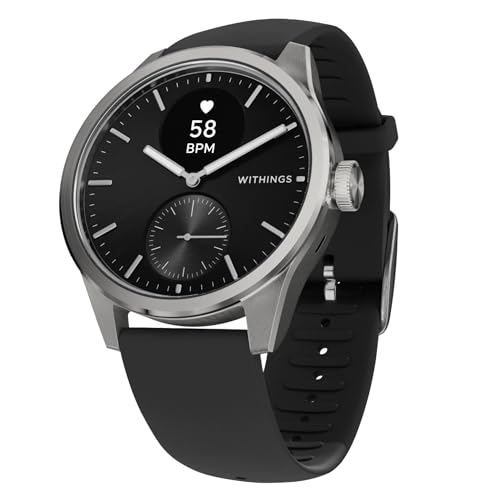
TL;DR: The Withings ScanWatch 2 offers a premium stainless‑steel hybrid design, clinical‑grade health sensors and a 30‑day battery life, but its 83 g weight and tiny 16 mm OLED screen may feel bulky for some.
The standout spec is the 30‑day battery life, which lets you wear the watch for a full month without reaching for a charger. Coupled with a 42 mm stainless‑steel case and sapphire (or Gorilla) glass, the watch feels more like a traditional timepiece than a typical smartwatch.
Compared with the four other wearables in this roundup, it’s heavier—its listed weight of 0.4629707502 lb (83 g with band) exceeds the Fitbit Sense 2 (0.4409 lb), the Xiaomi Smart Band 9 Pro (0.0882 lb), the Amazfit Band 7 (0.06 lb) and the Wellue O2Ring (0.0331 lb). Its battery, however, outlasts them all: 30 days versus the Fitbit’s 6+ days, the Wellue’s 12–16 hours, the Xiaomi’s up to 21 days and the Amazfit’s typical 18 days.
Reviewers consistently praise the clinical‑grade sensor suite—ECG, SpO₂, continuous temperature, HRV and a 3‑axis accelerometer—calling it “medical‑grade” and ideal for health‑focused professionals. Users love the month‑long battery, noting it removes the hassle of frequent charging, but several mention the 16 mm OLED screen feels cramped for quick glances, and the 83 g weight with band can feel bulkier than expected for a hybrid watch.
Pros
Cons
Best for: Health‑focused professionals and athletes who value medical‑grade tracking and a long‑lasting battery.
Avoid if: You need a lightweight, ultra‑compact display or are looking for a budget‑friendly wearable.
“Gadgetoid highlights the 52.6 g (42 mm without band) as "svelte" compared to the original ScanWatch's 83 g.”
TL;DR: The Xiaomi Smart Band 9 Pro offers a 1.74‑inch AMOLED screen at 1200 nits, independent GPS, a 350 mAh battery lasting up to 504 hours, and a comfortable 0.09‑lb build.
The standout feature is its 1.74‑inch AMOLED display that can reach 1200 nits of brightness, making outdoor readability easy even in bright sunlight. Coupled with a narrow 2.2 mm bezel, the screen feels spacious without looking bulky.
Compared with the other four bands in this roundup, the 350 mAh battery and 75‑minute magnetic charge outpace the Amazfit Band 7’s 232 mAh cell and two‑hour charge time. At 0.09 lb, the Smart Band 9 Pro is heavier than the Amazfit Band 7 (0.06 lb) and the Wellue O2Ring (0.03 lb) but noticeably lighter than the Fitbit Sense 2 (0.44 lb) and Withings ScanWatch 2 (0.46 lb). Its battery life of up to 21 days (≈504 hours) sits between the Amazfit’s typical 18 days and its 28‑day saver mode.
User reviews repeatedly praise the vivid screen and the independent GNSS that pulls data from five satellite systems, a clear win for hikers and runners. Professional reviewers also note the linear‑motor haptic feedback feels crisp. The only recurring complaint is that the automatic brightness adjustment can be a few seconds slow when moving from indoor lighting to bright outdoors.
Additional technical points include an IP 5ATM water rating, a suite of sensors (accelerometer, gyroscope, compass, optical heart rate, pulse oximeter, ambient light), and Bluetooth 5.4 for stable connectivity. The aluminum‑alloy frame with high‑strength fiber polymer adds durability while keeping the band at 40 g.
Pros
Cons
Best for: Outdoor fitness enthusiasts who want a bright, GPS‑enabled band with long battery life.
Avoid if: You need an ultra‑light or ultra‑thin tracker, or you rely on built‑in music controls and NFC payments.
Breakdown
Wellue O2Ring
Pros
Fitbit Sense 2
Pros
Cons
Amazfit Band 7
Pros
Cons
Withings ScanWatch 2
Pros
Cons
Based on scoring data and product specs
Personalized picks
Best Overall Pick
Wellue O2Ring
Best Mid-Range PickBest for: Most users seeking a balanced, mainstream option
Fitbit Sense 2
Best for: Those prioritizing quality and willing to pay for premium performance
$199.00+$46.03 vs winner
Skip Xiaomi Smart Band 9 Pro if…
You need advanced features or professional-grade performance
We’re naming the Wellue O2Ring the clear winner in this roundup. It holds a solid 4.1‑star rating from 1,284 reviewers, runs 12–16 hours of continuous monitoring on a single charge, and tips the scales at just about 0.03 lb (15 g), making it comfortable for all‑day wear. Its SpO₂ accuracy of ±2 % in the 80‑99 % range and a 1‑second measurement interval give you reliable data without the bulk.
The Fitbit Sense 2 takes the runner‑up spot, especially if you need a smartwatch that doubles as a health hub. It offers built‑in GPS, an on‑wrist ECG app, and Alexa voice assistance, and a battery that lasts 6+ days powers them. The AMOLED display (336 × 336 px) and 37.6 g weight keep it sleek while delivering SpO₂ monitoring and skin‑temperature tracking.
For those on a tighter budget, the Amazfit Band 7 shines at $44.99, delivering essential pulse‑ox tracking at the lowest price point. If premium features are your priority, the Withings ScanWatch 2 stands out at $369.95, pairing advanced health sensors with a classic watch design.
Pick the Wellue O2Ring today for the most balanced mix of accuracy, comfort, and value.
The Wellue O2Ring is designed for up to 16 hours of continuous monitoring, making it ideal for overnight use. Its soft silicone ring stays comfortable on the finger, and the companion app can export data in PDF or CSV for easy review.
No reviews yet — be the first to share your experience.
Please sign in to leave a review