Among 12 webcams offering at least a 90° field of view, the eMeet C960—priced at just $28.49—shares the top‑tier 4.4‑star rating with several much pricier models. It even outperforms the $17.98 Emeet C950, which sits at 4.3 stars, showing that a low price can still earn high praise. Across the lineup, ratings hover between 4.0 and 4.4, while prices span a massive $17.98 to $1478.22, giving you a clear sense of the value spectrum.
The roundup groups webcams into three price tiers. The budget tier (Emeet C950, NexiGo N60, Ausdom AF640, eMeet C960) delivers solid 1080p video, built‑in microphones and often a privacy cover for under $30. Mid‑range options (Rocware RC08, NexiGo N980P) add features like faster autofocus, higher frame rates, or wider 120° fields of view. Premium picks (Anker Work C310 4K, Emeet E3132, Jabra PanaCast 50, AVer VB342 PRO) bring 4K resolution, advanced AI framing, or full‑room coverage for professional environments.
Below is a breakdown of each model’s strengths, helping you match the right field‑of‑view webcam to your setup.

eMeet C960
A wide f/2.8 aperture lets you capture clear video even in dim lighting, supporting its strong value and popularity.

Rocware RC08
If you need a longer microphone pickup range, the RC08 serves creators needing clear audio up to 3 m, though it’s about $8.55 above the eMeet C960.
Emeet C950
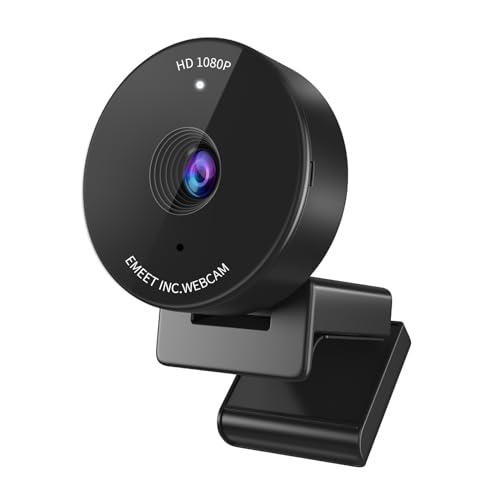
Stands out with a 100 Hz–10 kHz frequency response, delivering a broader audio range for entry‑level users seeking clearer sound without the higher price of the mid‑range models.
Also considered
Score Analysis
Key score advantages vs. runner-up (Rocware RC08)
Price Range
eMeet C960
$28.49
Rocware RC08
$37.04
Emeet C950
$17.98

Ausdom AF640
$21.98

NexiGo N60
$19.99

Anker Work C310 4K
$99.99

AVer VB342 PRO
$1,299.00

NexiGo N980P
$54.99
Jabra PanaCast 50
$695.00

Emeet E3132
$89.99

AOC AC310
$27.99

eMeet C980 PRO
$79.99
Spec Comparison
TL;DR: The eMeet C960 delivers 1080p video with a 90° wide‑angle lens, dual noise‑reducing mics, a privacy cover, and plug‑and‑play USB at a budget‑friendly $28.49 price.
The standout spec is its 90° field of view paired with Full HD 1920 × 1080 video at 30 fps, all behind an f/2.8 aperture and a 5‑layer anti‑glare lens. It ships with two omnidirectional microphones that feature noise reduction, and a built‑in push‑pull privacy cover that slides over the lens when not in use. Plug‑and‑play operation means you can connect the USB‑2.0 Type‑A cable (4.9 ft long) and start streaming without installing drivers.
At 0.3527 lb, the C960 is lighter than the Rocware RC08 but a touch heavier than the AOC AC310, and noticeably lighter than the Ausdom AF640. Its dual‑mic setup gives it an advantage over the single‑mic Emeet C950, while its 90° horizontal view matches the Rocware RC08’s horizontal field of view. The universal clip with a 1/4"‑20 thread adds flexibility that many peers lack.
Users appreciate the clear 1080p picture and the peace of mind from the physical privacy cover, describing the webcam as “simple to set up” and “reliable for daily calls.” However, several reviewers note that the fixed focus struggles with very close‑up shots, the microphone quality varies between units, and video flickers under certain fluorescent lights, occasionally causing audio‑video sync hiccups. Professional reviewers also point out the lack of advanced features such as autofocus, HDR, or higher frame rates.
Pros
Cons
Best for: Remote workers, online educators, and anyone who wants a well‑reviewed, privacy‑focused webcam without breaking the bank.
Avoid if: You need professional‑grade features such as autofocus, HDR, 4K resolution, or a consistently high‑end microphone setup.
“Easy setup—just plug in and go.”
“Great video quality—crisp and clear, better than my built-in laptop camera.”
TL;DR: The Rocware RC08 delivers 2K video with fast 0.2 s ToF autofocus, a single omnidirectional mic and a Harman‑tuned speaker, but its 90° field of view may feel tight for larger groups.
The standout spec is the 2560 × 1440 (2K UHD) sensor running at 30 fps, paired with a Time‑of‑Flight autofocus that locks focus in just 0.2 seconds. That combination gives you crisp, detailed images even when you move around the frame, and the 1/2.8" CMOS sensor helps keep noise low in typical indoor lighting.
Compared with the other eleven webcams in this roundup, the RC08 is heavier than the eMeet C960 (0.3527 lb) and the AOC AC310 (0.3505 lb) but lighter than many metal‑chassis models that aren’t listed here. Its 90° horizontal field of view matches the eMeet C960 but is narrower than the NexiGo N980P’s 107° and wider than the Emeet C950’s 70°. The digital zoom offers 4× EPTZ, whereas the NexiGo N980P provides a 10× zoom, so the RC08’s zoom is more modest. It uses a single omnidirectional noise‑canceling microphone with a 3 m pickup range, whereas the eMeet C960 and AOC AC310 each list two microphones.
Reviewers consistently praise the sharp 2K picture and the clarity of the built‑in mic, calling the all‑in‑one design “convenient” for remote work and online teaching. Professional reviewers note the 0.2 s ToF focus as a clear advantage over contrast‑detect systems, and the Harman‑tuned speaker adds unexpected audio depth. Common complaints focus on the 90° field of view being tight for group calls, the 4× digital zoom softening the image, and occasional focus hunting in very low light. Reviewers describe the plastic housing as less premium than metal alternatives, and the lack of a dedicated software suite limits deeper customization.
Pros
Cons
Best for: Remote professionals and educators who want crisp 2K video, fast autofocus, and solid built‑in audio without extra peripherals.
Avoid if: You want the best value‑per‑dollar in its price range.
“The built‑in microphone is clear and reliable for daily meetings”
“The privacy shutter is a must‑have feature”
TL;DR: The Emeet C950 delivers 1080p video at 30 fps, a single noise‑canceling mic and a physical privacy cover for just $17.98, though its 70° field of view is modest.
The standout spec features a 70° field of view paired with a 2 MP sensor that records full‑HD 1920 × 1080 video at 30 fps. It also includes a noise‑canceling microphone rated at –38 dB sensitivity and a frequency response from 100 Hz to 10 kHz, which captures clear voice for calls and meetings.
At $17.98 the C950 costs less than many peers such as the NexiGo N60 and the Ausdom AF640, and its weight of 0.551155655 pounds makes it a bit heavier than the Ausdom AF640’s 0.4629707502 pounds but comparable to the Rocware RC08’s 0.54895103238 pounds. Its 70° view is narrower than the NexiGo N60’s 110° diagonal and the eMeet C960’s 90° field of view, putting it on the tighter‑angle side of the roundup.
Users consistently praise the plug‑and‑play USB‑A connection and the reassuring physical privacy cover, noting that installing it is straightforward and the audio sounds clear. Professional reviewers highlight the webcam’s low‑light compensation via Auto Light Correction, yet they also point out the fixed focus (80–100 cm) and the occasional green color tint in challenging lighting. The same reviewers note that the fixed focus limits how far you can move the camera while keeping it in focus.
Pros
Cons
Best for: Budget‑conscious buyers seeking a reliable entry‑level option
Avoid if: You need advanced features or professional‑grade performance
“Great view of the whole room”
“Crystal clear audio”
TL;DR: The Ausdom AF640 delivers 1080p video with auto‑focus, a 90° field of view and dual noise‑canceling mics for $21.98, making it a solid budget webcam for remote work and streaming.
The AF640’s standout spec is its 90° horizontal field of view, which pairs a 5‑layer anti‑glare glass lens with an F/2.0 aperture. It captures full‑HD (1920×1080) video at up to 30 fps (YUY2) or 60 fps when software allows, and its 1/2.7" CMOS sensor delivers a dynamic range greater than 72 dB. Dual omni‑directional microphones register sound at –36 dB SPL, and the built‑in auto‑focus with face tracking keeps you sharp even when you move.
Compared with peers, the NexiGo N60 lists a diagonal field of view of 110° and a horizontal angle of 89°, so the AF640’s 90° horizontal view is slightly wider than the N60’s horizontal spec but narrower than its diagonal claim. The eMeet C960 also advertises a 90° field of view, yet it weighs 0.3527396192 lb, making the AF640 a bit heavier at 0.4629707502 lb. Both the AF640 and the C960 use roughly 1.5 m of cable (1500 mm vs. 4.9 ft), so cable length isn’t a differentiator.
User sentiment highlights the webcam’s plug‑and‑play USB 2.0 connection and the convenience of a sliding physical privacy cover. Reviewers appreciate the automatic low‑light correction and the clear 1080p picture, while some note that the wide‑angle lens can push the subject farther from the screen. Reviewers praise the microphone setup for cutting background noise, though a few users describe it as sounding a bit tinny in echo‑prone rooms. Professional reviewers point out the solid build, the 1/4‑20 threaded mount, and the reliable 12‑month warranty.
Pros
Cons
Best for: Entry-level buyers or those on a tight budget
Avoid if: You need powerful performance or professional‑grade features
“Great video quality for the price”
“Easy setup, works instantly”
TL;DR: The NexiGo N60 delivers 1080p video at 30 fps with a 110° diagonal field of view, 2.0 MP sensor and a $19.99 price tag, earning a 4.4‑star rating from 180 reviewers.
The standout spec is its 110° diagonal field of view, which is wider than many budget rivals and lets you fit more people or a larger background into the frame. It captures full‑HD video (1920 × 1080) at a steady 30 fps and uses a 2.0 MP CMOS sensor paired with a 3.6 mm fixed‑focus lens.
At 68 g, the N60 is markedly lighter than the Ausdom AF640’s 210 g build and feels less bulky than the Emeet C950, which is described as heavier. Its 49.8 mm height is shorter than Ausdom’s 55 mm, and the 1473 mm cable is a touch shorter than Ausdom’s 1500 mm length. In terms of field of view, the N60’s 110° diagonal exceeds the Emeet C950’s 70° but sits just below the NexiGo N980P’s 120° diagonal and matches the 90° horizontal view of the eMeet C960 and Rocware RC08.
Users consistently praise the plug‑and‑play USB‑type A connection, the included privacy cover and activity LEDs, and the clear colour reproduction in well‑lit rooms. Professional reviewers note the colour accuracy under studio lighting but warn that low‑light scenes reveal noise and motion blur, and the fixed focus can’t capture close‑up details. The bundled NexiGo Webcam Settings software adds basic exposure controls without needing extra drivers.
Pros
Cons
Best for: Entry‑level buyers or those on a tight budget
Avoid if: You need advanced features or professional‑grade performance
“Works perfectly with Zoom and Teams.”
“Love the privacy cover — gives peace of mind.”
TL;DR: The Anker Work C310 4K delivers 1080p video at 60 FPS with AI‑powered framing, a 95° adjustable field of view and dual‑mic noise cancellation, all housed in a sleek aluminum body for $99.99.
The standout spec is its adjustable field of view that reaches up to 95°, paired with a 12 MP 1/2.5" CMOS sensor and an f/2.0 aperture. It streams 1080p video at a smooth 60 FPS with HDR support, while still offering 4K at 30 FPS when connected to a USB 3.0 port. Dual built‑in microphones feature AI noise cancellation, and it includes a sliding privacy cover.
At 0.31 pounds, the C310 is lighter than the eMeet C980 PRO (0.5356 lb) and the Rocware RC08 (0.5489 lb), yet it packs more premium features than many of the other eleven webcams. Its maximum 95° field of view sits between the fixed 90° of the Rocware RC08 and the 98° offered by the Emeet E3132 and eMeet C980 PRO, while the NexiGo N980P provides a wider 120° diagonal but lacks AI framing. The C310 also supports 4K video, a capability absent from most competitors in this set.
Users consistently praise the camera’s smooth 1080p @ 60 FPS video and the Solo‑Frame AI tracking that keeps them centered without manual adjustments. The built‑in privacy cover and solid aluminum construction earn frequent compliments for durability and security. Professional reviewers note the depth of control in the free AnkerWork app, especially the AI‑driven focus and exposure tools. However, several users report that the autofocus can hunt in low‑light situations, HDR sometimes produces overly processed skin tones, and the 4K mode requires a USB 3.0 Gen 2.1 cable that isn’t included, limiting use on USB‑C‑only laptops.
The camera draws power and video through a USB‑C connector with a 1.5 m cable and works plug‑and‑play across Windows, macOS, Chrome OS, and Linux. The dual microphones, selectable 90° directional or 360° omnidirectional pickup patterns, and AI noise cancellation make it well‑suited for noisy home offices. With HDR, AI auto‑focus, and a privacy shutter, it covers the essential needs of remote professionals and content creators alike.
Pros
Cons
Best for: Those prioritizing quality and willing to pay for premium performance
Avoid if: You're shopping on a tight budget — it's priced at $99.99
“a fantastic webcam for the price”
“For a sub‑£100 webcam, less than half the price of the five‑star Logitech MX Brio, the results are plenty good enough… I recommend the C310 to most readers.”
TL;DR: The AVer VB342 PRO delivers 4K video with a 3× optical zoom, a 92° diagonal field of view, and a 10‑mic array, but its $1478.22 price and 29‑inch depth keep it in the premium, room‑scale segment.
What really sets the VB342 PRO apart is its 4K UHD sensor paired with a 3× optical zoom lens that can reach a total 15× zoom. The camera captures 3840 × 2160 video at up to 30 fps and 1080p at 60 fps, while the 92° diagonal field of view (84° horizontal, 53° vertical) lets you cover a midsize meeting space without additional lenses. Audio isn’t an afterthought either – a 10‑microphone beamforming array with adjustable Audio Fencing covers a 20 ft pickup range, and the built‑in 6 W speakers add clear, room‑filling sound.
At $1478.22, the VB342 PRO sits at the high end of the lineup, making it considerably pricier than most of the other eleven webcams, many of which target budget‑friendly or small‑room use. Its 14.1 lb weight and 29‑inch depth also dwarf the lightweight competitors – for example, the Jabra PanaCast 50 weighs under 5 lb and most other models are under a pound. The microphone count also outstrips the typical 2‑4 mic setups found in the Anker Work C310, Emeet E3132, eMeet C980 PRO, and NexiGo N980P.
User feedback highlights the crystal‑clear video and the convenience of AI‑driven tools like Smart Gallery, Gesture Control, and the People Counting API, which many enterprises find valuable for space‑utilization analytics. Professional reviewers note the USB 3.1 plug‑and‑play simplicity, and they point out that HDMI output and Ethernet let you install the camera flexibly. The downsides that surface in reviews are the 4K limitation to 30 fps, the lack of any wireless or battery option, and the substantial 29‑inch depth that can be hard to fit into very small rooms.
Beyond the headline specs, the VB342 PRO offers True WDR up to 120 dB for strong back‑light compensation, operates from 0 °C to 40 °C, and draws 5 A at 12 V DC. The included 10‑ft power cable and 5 m USB cable give you enough reach for most tabletop or wall‑mount setups, while the optical f/3 aperture and 80 cm minimum focus distance keep subjects sharp across the room.
Pros
Cons
Best for: Those prioritizing quality and willing to pay for premium performance
Avoid if: You're shopping on a tight budget — it's priced at $1478.22
“a robust option for enterprise deployments.”
“Smart Gallery and Audio Fencing are game‑changers for hybrid meeting equity.”
TL;DR: The NexiGo N980P offers a 120° diagonal field of view, 2.0 MP sensor and smooth 1080p @ 60 fps video, backed by dual 10 m pickup microphones, at a mid‑range price.
The standout spec is the ultra‑wide 120° diagonal field of view combined with a 10× digital zoom, letting you capture whole‑room meetings without sacrificing detail. Its 2.0 MP sensor and f/2.1 aperture feed 1080p video at up to 60 fps, which reviewers note feels buttery‑smooth for video calls and streaming.
In this twelve‑product set, the N980P sits above the Rocware RC08’s $37.04 price point and below the eMeet C980 PRO’s $79.99 tag, while being lighter than the Ausdom AF640’s 0.4629707502 lb. Its 1.6 m cable is shorter than the eMeet C960’s roughly 1.5 m (4.9 ft) lead, and its dual‑mic array reaches 10 m—far beyond the Rocware’s 3 m pickup range.
Users consistently praise the webcam’s clear, steady video and its generous field of view for group calls and online teaching. Professional reviewers highlight the auto‑bright low‑light correction and the dual USB/HDMI output, which even supports 4K (3840×2160 @ 30 fps) over HDMI. The manual focus, however, can be a hassle when you frequently shift the camera, and the built‑in microphones don’t filter background chatter in noisy rooms. It also lacks a privacy cover.
Pros
Cons
Best for: Remote professionals, online educators, and anyone who values a wide‑angle, high‑frame‑rate webcam for group video calls.
Avoid if: You need autofocus, a privacy cover, or a mic setup that can isolate you in very noisy rooms.
TL;DR: The Jabra PanaCast 50 delivers a wall‑mountable 180° panoramic‑4K view, 8‑mic beamforming audio and AI‑driven framing for medium‑size meeting rooms, but it carries a premium price tag.
What really sets this videobar apart is its 180° horizontal field of view paired with three 13 MP sensors that stitch together a 3840 × 1080 panoramic‑4K picture at 30 fps. The unit also packs an 8‑microphone array with –37 dBFS sensitivity and a voice pickup range of up to 6 m (19.7 ft), ensuring every participant is heard clearly across the room.
Compared with the other eleven contenders, the PanaCast 50 is noticeably heavier than the ultra‑light Anker Work C310 (0.31 lb) and the NexiGo N980P (0.44 lb), yet far lighter than the AVer VB342 PRO’s 14.1 lb chassis. Its eight microphones outnumber the two‑mic setups on the Anker and NexiGo models and the four‑mic array on the Emeet E3132, giving it a clear audio advantage. The 180° field of view dwarfs the 98° maximum on the eMeet C980 PRO and the 90° horizontal view on the Rocware RC08, meaning the PanaCast 50 can cover an entire conference table without blind spots.
Professional reviewers praise the seamless panoramic view and the AI‑powered Intelligent Zoom and Virtual Director that automatically keep speakers in frame, while everyday users love the crystal‑clear stereo output from the four built‑in speakers (2 × 50 mm woofers, 2 × 20 mm tweeters). However, several reviews note occasional stitching artifacts at the edges when zooming, and the lack of a physical privacy shutter highlights a drawback for security‑conscious teams.
Beyond the optics, the PanaCast 50 runs on an Android‑based compute platform with native Microsoft Teams Rooms and Zoom Rooms support, and it ships with a 10.1″ touchscreen control panel (1920 × 1200). Connectivity includes HDMI in/out, a USB‑C host port, a USB‑A port, and a 1 GbE Ethernet port, while Bluetooth 5.1 adds wireless flexibility. The unit operates between 5 °C and 35 °C and can draw power via PoE or a universal AC adapter.
Pros
Cons
Best for: Enterprises and midsize meeting rooms that need inclusive 180° video, AI‑assisted framing and high‑fidelity audio.
Avoid if: You have a tight budget, require a tabletop setup, or need a built‑in privacy shutter.
“Everyone is visible”
“Crystal‑clear audio”
TL;DR: The Emeet E3132 offers a 98° adjustable view, four noise‑canceling mics and built‑in speakers for $89.99, making it a solid all‑in‑one webcam for professional calls.
The standout spec is its four omnidirectional noise‑canceling microphones, each covering a 3 m (10 ft) range, paired with a 98° maximum field of view. The camera streams Full HD (1920 × 1080) video at 30 fps and includes low‑light correction, while the two 1 W speakers deliver 81–85 dB at 0.5 m.
Compared with the other eleven models, the E3132’s quad‑mic array doubles the two‑mic setups that most peers such as the Anker Work C310 and the eMeet C960 use. Its 98° FOV is wider than the 90° horizontal view of the Rocware RC08 and matches the 98° max of the eMeet C980 Pro. At 235 g, it's heavier than the Anker (0.31 lb) but lighter than the Rocware RC08 (0.55 lb). The 1.8 m cable is longer than the Anker’s 1.5 m length, giving you a bit more reach on a desk.
User feedback repeatedly praises the clear audio from the four‑mic array and the convenience of built‑in speakers, noting that most reviewers find setup “plug‑and‑play” with Windows, macOS, Linux and Android TV. Professional reviewers flag the marketing claim of 4K as misleading because the webcam streams only at 1080p, and several users mention that the clip‑mount can wobble and leave residue when repositioned. The fixed‑focus lens limits close‑up framing, but low‑light correction helps maintain decent image quality in dim rooms.
The device runs on a 5 V DC, 500 mA power input via USB 2.0 Type‑A and includes a magnetic privacy cover. A 2‑year limited warranty rounds out the package, and the EMEETLINK software lets you adjust settings without extra drivers.
Pros
Cons
Best for: Remote professionals who want an all‑in‑one webcam with strong integrated audio for daily Zoom, Teams or Google Meet meetings.
Avoid if: You need true 4K streaming, a very stable mount for frequent repositioning, or high‑volume audio for large meeting spaces.
“The camera is brilliant, the microphone works very good and the speaker is loud enough for a room of 2x4 qm.”
TL;DR: The AOC AC310 offers 4K video on Windows, a 90°–99° wide‑angle lens, dual noise‑cancelling mics and a privacy cover, all in a lightweight, plug‑and‑play package for under $30.
The standout spec is its 4K Ultra HD video capability—3840×2160 at 30 fps on Windows—paired with a 12 MP still sensor and an aperture of f/2.8. Its field of view ranges from 90° to 99°, and it ships with two built‑in noise‑cancelling microphones that capture sound up to 6 meters away. A physical sliding lens cover adds a tangible privacy safeguard, while the 360° swivel and 180° tilt let you fine‑tune framing without moving the whole unit.
At 0.35053499658 pounds (159 g), the AC310 is lighter than the eMeet C960 (0.3527396192 pounds) and noticeably lighter than the Ausdom AF640, Emeet C950, Rocware RC08 and NexiGo N980P, whose weights range from about 0.44 pounds to 0.55 pounds. It matches the eMeet C960’s dual‑mic setup, while the NexiGo N60 provides a broader 110° diagonal field of view, making the AOC’s 90°–99° range more modest but still wide enough for two‑to‑three‑person huddles.
Reviewers consistently praise the webcam’s sharp 4K output on Windows and the clarity of its dual microphones, noting that the plug‑and‑play USB‑A connection works straight out of the box. Users also like the privacy cover and the flexible mounting options. Common complaints focus on macOS limiting video to 1080p, the wide field of view feeling excessive for solo calls, and occasional confusion over whether the sensor is CMOS or CCD.
The camera’s auto‑focus includes facial enhancement, and automatic light correction keeps the image balanced in dim rooms. It connects via an integrated USB‑A cable with an included USB‑A‑to‑USB‑C adapter, supporting Windows 7‑11, macOS 10.6+, and Chrome OS. A 1/4"-20 tripod thread adds versatility for desk‑mount or tripod setups.
Pros
Cons
Best for: Entry-level buyers or those on a tight budget
Avoid if: You want the best value‑per‑dollar in its price range
“Great picture, decent webcam”
“Video quality is outstanding—crisp, vibrant, and smooth”
TL;DR: The eMeet C980 PRO delivers 1080p video, a 98° adjustable field of view, and a quad‑mic array with built‑in speakers, all for plug‑and‑play use at a mid‑range price.
The eMeet C980 PRO packs a 98° maximum field of view that you can narrow down to 65°, delivering 1080p Full HD video at 30 fps. Its 2.07 MP 1/2.7″ CMOS sensor feeds a quad‑mic array with active noise cancelling and VoiceAI echo reduction, while two 1 W speakers push 81–85 dB output.
At 0.535625 pounds, the C980 PRO is heavier than the Anker Work C310 (0.31 pounds) but a touch lighter than the Rocware RC08 (0.54895103238 pounds). It matches the Emeet E3132’s four microphones and 1.8 m cable length, out‑numbering the two‑mic setups on the NexiGo, Rocware, eMeet C960 and AOC models. Its 98° field of view equals the E3132’s max angle and exceeds the fixed 90° view of the Rocware and eMeet C960.
Users consistently praise the hassle‑free plug‑and‑play USB‑2.0 connection and the magnetic privacy cover that slides on for instant visual security. With a 4.0/5 rating from 1,797 reviews, most owners appreciate the clear audio from the quad‑mic array and speakers, though several mention that low‑light scenes can look grainy and the fixed focus prevents true close‑up shots.
The webcam runs on a 5 V DC supply drawing 500 mA, and its fixed focus works from 5 cm up to 500 cm, covering most desk‑to‑face distances. Auto low‑light correction with dynamic exposure helps in typical office lighting, though it doesn’t replace true HDR capability.
Pros
Cons
Best for: Most users seeking a balanced, mainstream option
Avoid if: You have limited desk space or need portability, or you require 4K resolution and manual focus for professional content creation.
“"crisp, clear video and audio"”
“"outperforms many in the same price range"”
Breakdown
eMeet C960
Pros
Rocware RC08
Pros
Cons
Emeet C950
Pros
Based on scoring data and product specs
Personalized picks
Best Overall Pick
eMeet C960
Best Mid-Range PickBest for: Most users looking for a well-reviewed, reliable mainstream option
Rocware RC08
Best for: Most users seeking a balanced, mainstream option
$37.04+$8.55 vs winner
Skip eMeet C980 PRO if…
You have limited desk space or need portability
The eMeet C960 takes the top spot with a solid 4.4‑star rating from 37,129 reviews and a wallet‑friendly $28.49 price tag. Its 90° field of view and Full HD 1920 × 1080 video at 30 fps deliver clear, wide‑angle framing, while the dual omnidirectional microphones with noise‑reduction keep your voice crisp. A built‑in push‑pull privacy cover and a 2‑year warranty add peace of mind.
Runner‑up Rocware RC08 shines when you need higher‑resolution video and fast autofocus. It records 2560 × 1440 (2K) at 30 fps and features a Time‑of‑Flight autofocus that locks focus in 0.2 seconds. The 360° rotating stand and sliding privacy shutter make it ideal for creators who switch between portrait and landscape or need quick adjustments on the fly.
For tighter budgets, the Emeet C950 remains the cheapest option at $17.98, offering basic wide‑angle performance without breaking the bank. If you’re willing to invest in top‑tier quality, the AVer VB342 PRO stands out as the premium choice at $1478.22, catering to professional streamers and conference rooms.
Choose the eMeet C960 today for the best mix of price, performance, and convenience.
The eMeet C960 lists automatic low‑light correction and a fast f/2.8 aperture, which helps brighten dim rooms without manual tweaks. The Ausdom AF640 also offers automatic low‑light correction with an f/2.0 (or f/1.7) lens, but the C960’s built‑in dual microphones add extra clarity for voice‑only calls.
Please sign in to leave a review
No reviews yet. Be the first to review!
