Choosing a white‑only smart bulb can feel overwhelming, so we narrowed the field to seven options that span the full price spectrum. Our lineup includes three budget‑friendly picks, a single mid‑range model, and three premium contenders, letting you match features to the amount you’re willing to spend.
All of the bulbs deliver the same 800‑lumens output, but they differ in control methods and color temperature range. The Kasa Smart Light Bulb KL110 starts at $9.99, earns a 4.4‑star rating from over 17,000 reviewers, and offers a warm 2700 K glow without a hub. If you crave tunable white, the Linkind E26 Smart Edison Bulb – priced at $31.99 and rated 4.6 stars – spans 2700 K to 6500 K and supports Matter, enabling smooth integration. At the top of the premium tier, the Philips Hue ST19 White Ambiance costs $41.12, carries a 4.7‑star rating, and provides a vintage filament look with Bluetooth control.
Below we break down each bulb’s strengths, so you’ll pinpoint the best fit for your home.
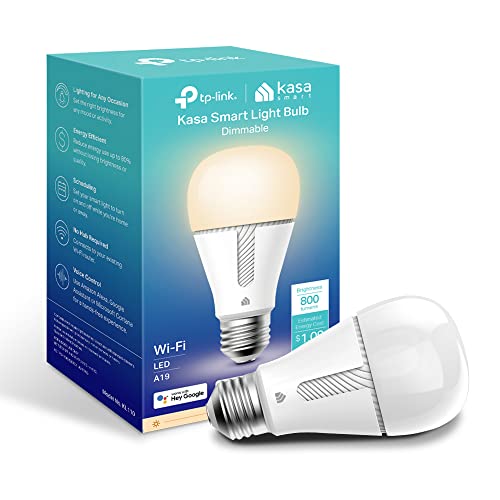
Kasa Smart Light Bulb KL110
Its 2.4 GHz frequency band ensures reliable connectivity while the bulb weighs only 0.295 lb, simplifying installation.

Linkind E26 Smart Edison Bulb
Ideal for homeowners wanting brighter, 800‑lumen light; at $31.99 it’s about $22 more than the $9.99 budget pick.

Philips Hue ST19 White Ambiance
Because of its compact 2.4‑inch length and 56 g weight, it fits fixtures where the bulkier KL110 and Linkind bulbs won’t.
Score Analysis
Key score advantages vs. runner-up (Linkind E26 Smart)
Price Range
Kasa Smart Light Bulb KL110
$11.99
Linkind E26 Smart Edison Bulb
$30.99
Philips Hue ST19 White Ambiance
$41.14
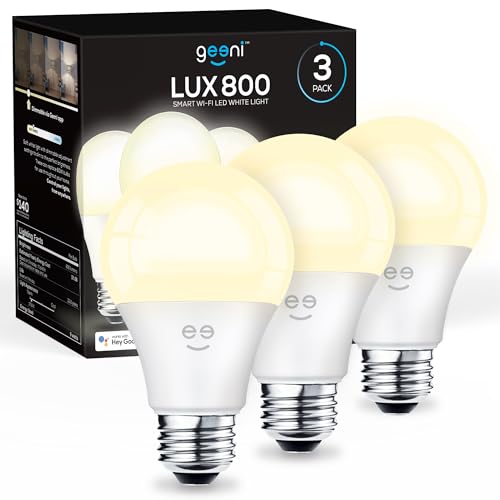
Geeni Smart LED Light Bulb
Out of Stock

Philips Hue White A19
$25.99
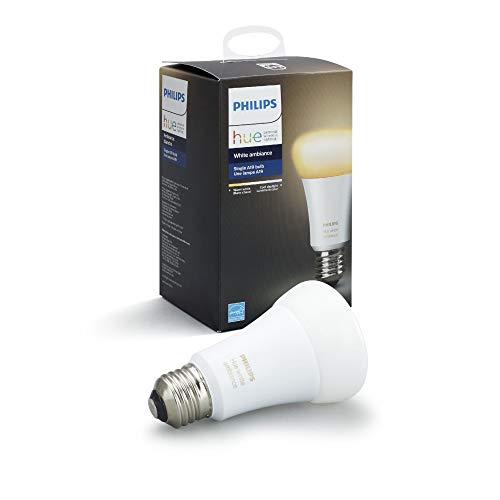
Philips Hue White Ambiance A19
$16.99

GE CYNC A19 Smart LED Light Bulb
$33.46
Spec Comparison
TL;DR: The Kasa KL110 offers 800‑lumens warm white light, direct Wi‑Fi control and Alexa/Google voice integration for just $9.99, making it a solid budget pick for ambient lighting with a 25,000‑hour lifespan and easy app scheduling.
The KL110’s standout feature is its hub‑free Wi‑Fi connectivity on the 2.4 GHz band, letting you control the bulb straight from the Kasa app without extra hardware. It delivers 800 lumens at a cozy 2700 K color temperature, and its CRI of 90 ensures colors look natural. The bulb also supports dimming from 1 % to 100 % and consumes just 9‑10 W while drawing less than 0.2 W in standby.
Compared with the six other white‑only smart bulbs in this roundup, the KL110 is a bit heavier than the Philips Hue White Ambiance (0.1 lb) and the GE CYNC A19 (0.29 lb), but still lighter than the Geeni Smart LED bulb (0.19 lb). Unlike the Hue models, which require a separate hub, the KL110 works straight out of the box, putting it ahead of those hub‑dependent options. Brightness‑wise, it matches the Geeni and Linkind offerings at 800 lumens, though the Philips Hue White Ambiance doesn’t list lumens in its specs.
Users consistently praise the straightforward setup and reliable Wi‑Fi link, noting that the Kasa app makes scheduling a breeze. Professional reviewers highlight the pleasant warm‑white hue and the energy‑saving design that cuts power use by up to 80 %. On the downside, several owners mention that the metal base can get noticeably hot, and the 800‑lumens output may feel dim for task‑heavy spaces like kitchens or home offices.
Pros
Cons
Best for: Budget‑conscious buyers seeking a reliable entry‑level option
Avoid if: Reliability and user satisfaction are your top concerns
“The metal area below the bulb gets very hot, requiring caution with placement and handling”
TL;DR: The Linkind E26 Smart Edison Bulb delivers 800 lumens at 8 W, offers 2700‑6500 K tunable white, saves 85% energy, and supports Matter‑enabled voice control in a vintage filament design.
The bulb delivers 800 lm while drawing only 8 W, saving roughly 85% electricity versus a 60 W incandescent. You can tune the light from a warm 2700 K to a cool 6500 K, and the manufacturer quotes a lifespan of about 25,000 hours. Because it’s Matter‑enabled and works with Alexa, Google Home, SmartThings and Apple Home, you can add it to most smart‑home ecosystems without a separate hub.
Among the seven products, the Linkind bulb matches the 800‑lm brightness of the Geeni and Kasa models and hits the same 60 W incandescent equivalence as the GE CYNC and Philips Hue options. Its Matter compatibility gives it an edge over bulbs that still rely on proprietary hubs, and it ships with a remote for instant control. The price point is higher than the budget‑friendly Kasa bulb, but the pack‑of‑four format and premium features justify the cost for many users. Compared with the GE CYNC bulb, which weighs about 0.29 lb, the Linkind’s weight isn’t listed, though reviewers note the glass construction feels solid.
Customer feedback highlights how quickly the bulb pairs via a QR code in the AiDot app, and users appreciate the flicker‑free operation that eases eye strain during long work sessions. Users report reliable voice commands through Alexa or Google Home. The most common criticism is that the lowest dimming level—1%—still feels too bright for night‑time reading or a true night‑light, and the lack of RGB color means it can’t create colored ambience like some competing smart bulbs.
The technical side includes 2.4 GHz Wi‑Fi connectivity, no hub requirement, and an indoor‑only glass design. A remote control is included, and you can set time schedules directly in the app. With a 120 V rating and a four‑bulb pack, it’s ready for most standard fixtures.
Pros
Cons
Best for: Buyers willing to invest in a proven, high-quality option
TL;DR: The Philips Hue ST19 White Ambiance offers vintage Edison‑style looks, 7 W power draw, 530‑550 lm output and full Bluetooth/Matter control for $41.12, but its HomeKit fade‑off can feel a bit off.
This filament bulb stands out with a 1 mm spiral coil visible through clear glass and an efficacy of 75.71 lm/W. It delivers 530‑550 lumens while drawing just 7 W, matching the light of a traditional 40 W bulb. The lamp is compact at 2.4 inches long and 2.4 inches wide, weighing 56 g, and it offers a tunable white range from 2200 K to 4500 K.
Compared with the six other bulbs in the roundup, the Hue ST19 is pricier than most, but it also consumes less power than the Linkind E26 (8 W) and provides fewer lumens than the GE CYNC A19, Linkind and Geeni models, which each push 800 lm. It’s lighter than the GE bulb (0.29 lb) and packs a smaller form factor than the Philips Hue White A19, which is longer and wider. The optional Hue Bridge and built‑in Matter support give it broader ecosystem compatibility than the Kasa KL110, which relies on Wi‑Fi only.
Reviewers love the classic Edison aesthetic and the instant 100 % start‑up brightness. Professional reviewers note that HomeKit integration can cause a 0.5‑1 second fade‑to‑off stutter, and the Home app only shows a generic yellow slider for the warm‑to‑cool tuning, limiting precise adjustments. On the plus side, the bulb is software‑upgradable, dimmable, works with Alexa, Google Assistant and Siri, and the manufacturer backs it with a 2‑year warranty.
Pros
Cons
Best for: Aesthetic‑focused consumers who want a premium‑quality Edison‑style smart bulb with wide ecosystem support.
Avoid if: You're shopping on a tight budget — it's priced at $41.12 and its HomeKit quirks may frustrate heavy automation users.
TL;DR: The Geeni Smart LED Light Bulb delivers 800 lumens from a 9‑watt source, offers a full 2700K–6500K white range, and connects via 2.4 GHz Wi‑Fi in a convenient three‑bulb pack.
What really stands out is the 800‑lumen output while drawing only 9 W of power, giving you the same light as a traditional 60 W incandescent bulb but at a fraction of the energy cost. The bulb also spans a 2700K–6500K color temperature range and is dimmable, so you can shift from warm evening ambience to crisp daylight without swapping fixtures.
Compared with the other six entries, the Geoni bulb weighs more than the Philips Hue White A19 (about 0.04 pounds) and is shorter than that same Hue model’s 98 mm height. Its brightness matches the 800‑lumens output of both the Linkind E26 Smart Edison Bulb and the Kasa Smart Light Bulb, while its three‑bulb pack size gives you a bit more coverage than single‑unit options. In price terms it sits above the budget‑focused Kasa bulb but below premium offerings like the Philips Hue ST19.
User feedback repeatedly praises the low 9 W consumption and the long 25,000‑hour lifespan, noting noticeable savings on electricity bills. Reviewers also like the “millions of RGB color” capability for mood lighting, though many flag the strict 2.4 GHz Wi‑Fi requirement as a hassle if their home network is 5 GHz‑only or relies on mobile hotspots. The bulb doesn't need an external hub and works with the Geeni app on iOS 9+ or Android 5.0+, which most users find straightforward.
Technical details round out the picture: the bulb runs on a 120 V supply, follows the IEEE 802.11N standard, and fits standard E26 bases. Its dimensions—76.2 mm tall, 177.8 mm long, and 101.6 mm wide—make it suitable for most fixtures, and the three‑bulb pack simplifies setting up a whole room.
Pros
Cons
Best for: Budget-conscious buyers seeking a reliable entry-level option
Avoid if: You want the best value-per-dollar in its price range
“The metal area below the bulb gets very hot, requiring caution with placement and handling”
TL;DR: The Philips Hue White A19 offers reliable app and Alexa control, a compact 98 mm profile, and a solid 4.5‑star rating for $25.99, but it needs a Hue Hub to work.
This bulb’s most distinctive spec is its size: at 98 mm tall it fits comfortably in standard fixtures while weighing just 0.03747858454 pounds (17 g). The Hue app lets you create custom schedules, and Amazon Alexa can dim the light by voice. The unit includes a two‑year parts‑and‑labor warranty.
Compared with the six other bulbs in the roundup, the Hue White A19 is taller than the Geeni Smart LED (76.2 mm) but shorter than the GE CYNC A19 (139.7 mm). It’s also lighter than Geeni (0.19 lb), Kasa Smart (0.14770971554 lb), and the Philips Hue White Ambiance (0.1 lb). Unlike the Kasa or Geeni models, this Hue bulb requires a separate Hue Hub for full functionality, which adds an extra cost for users who don’t already own one.
Reviewers consistently highlight the bulb’s dependable connection and ease of use through the Hue ecosystem. Some users note the hub requirement as a hassle, especially if they’re looking for a plug‑and‑play solution. The white‑only light output keeps the setup simple for everyday tasks, and the 2‑year warranty reassures buyers about long‑term reliability.
The unit ships alone, so you’ll need to buy additional bulbs for larger rooms. Its white‑only color temperature means you won’t get the warm‑to‑cool range that color‑tunable competitors provide, but the straightforward design offers a reliable option for anyone who wants a proven smart lighting platform.
Pros
Cons
Best for: Most users looking for a well‑reviewed, reliable mainstream option
Avoid if: You have limited desk space or need portability
TL;DR: The Philips Hue White Ambiance A19 offers adjustable white light, Wi‑Fi connectivity and voice control for $16.99, but you’ll need a separate Hue Bridge to unlock its full smart‑home features.
This bulb measures 165 mm tall, 75 mm long and 88 mm wide, and it weighs 0.1 pounds (45 g). Adjustable brightness and LED technology let you fine‑tune illumination for reading, work or relaxing, while the built‑in Wi‑Fi lets you control it from the Hue app.
Compared with the six other bulbs in this roundup, the Hue is taller than the Philips Hue White A19 (98 mm) and the GE CYNC (139.7 mm). It’s lighter than the Kasa Smart Light Bulb (0.295 lb) and the GE CYNC (0.29 lb) but heavier than the Philips Hue White A19 (0.0375 lb). Unlike Kasa and Geeni, which work straight to Wi‑Fi, the Hue requires a separate Hue Bridge for full app functionality, putting it in a slightly higher price tier.
Users consistently praise the bright, adjustable white output and the seamless voice‑assistant integration with Alexa and Google Home. Reviewers also note the easy initial setup via the Hue app. The most common complaints focus on the extra cost of buying a Hue Bridge and the fact that the bulb only offers white light, not full RGB color.
Philips backs the bulb with a 2‑year warranty and its well‑known brand reputation, which helps justify the $16.99 price point for people already invested in the Hue ecosystem.
Pros
Cons
Best for: Hue ecosystem owners and home‑automation enthusiasts who want reliable, adjustable white lighting.
Avoid if: You’re on a tight budget, need a plug‑and‑play bulb, or want full color‑mixing capabilities.
TL;DR: The GE Cync A19 delivers 800 lumens of soft‑white light at just 9.5 W, offers hub‑free Bluetooth and 2.4 GHz Wi‑Fi control, but stays fixed at 2700 K and carries a premium price.
This bulb puts out 800 lumens while drawing only 9.5 W, giving a bright yet energy‑savvy replacement for a 60 W incandescent. Its Color Rendering Index of 90 means colors appear natural, and the built‑in dimming works through the Cync app.
Compared with the other six entries, the Cync bulb shares the hub‑free convenience of the Geeni and Kasa models, but adds Bluetooth alongside 2.4 GHz Wi‑Fi, a feature the Kasa bulb lacks. It matches the 800‑lm output of the Kasa and Geeni bulbs while offering a higher CRI, yet it sits at a higher price tier than those budget options. The Linkind and Philips Hue offerings list tunable white ranges, so Cync’s fixed 2700 K is more limited.
Users consistently praise the straightforward installation and reliable voice‑assistant response with Alexa or Google Home. Professional reviewers note the low estimated yearly energy cost of $1.14 and the solid 3‑year warranty. Some owners report occasional hiccups on crowded 2.4 GHz networks, and the inability to shift color temperature is a frequent request.
Technical details include a compact A19 shape (38.1 mm diameter, 139.7 mm height, 156 mm length, 62 mm width) and a lightweight design at 0.29 lb (132 g). The bulb rates for indoor damp locations, has a power factor of 0.70, and a maximum load of 0.095 kW. Its lifespan lists as 13.7 years, and it comes in a two‑bulb package.
Pros
Cons
Best for: Buyers willing to invest in a proven, high‑quality option
Avoid if: You need advanced features or professional‑grade performance
“The metal area below the bulb gets very hot, requiring caution with placement and handling”
Breakdown
Kasa Smart Light Bulb KL110
Pros
Cons
Linkind E26 Smart Edison Bulb
Pros
Philips Hue ST19 White Ambiance
Pros
Cons
Geeni Smart LED Light Bulb
Pros
Cons
Based on scoring data and product specs
Personalized picks
Best Overall Pick
Kasa Smart Light Bulb KL110
Best Budget PickBest for: Budget-conscious buyers seeking a reliable entry-level option
Linkind E26 Smart Edison Bulb
Best for: Buyers willing to invest in a proven, high-quality option
$30.99+$19.00 vs winner
Skip GE CYNC A19 Smart LED Light Bulb if…
You need advanced features or professional-grade performance
After weighing price, performance and ease of setup, the Kasa Smart Light Bulb KL110 takes the top spot. At $9.99 it’s the cheapest option, yet it delivers 800 lumens of 2700 K warm white light and a high CRI of 90 for accurate color rendering. The bulb connects directly to your 2.4 GHz Wi‑Fi network—no hub needed—and works with Alexa, Google Assistant and Microsoft Cortana, includes a 2‑year warranty and a 4.4‑star rating from 17,515 reviewers.
The runner‑up, the Linkind E26 Smart Edison Bulb, shines when you want tunable white across a full 2700 K–6500 K range and a handy remote in the box. It puts out the same 800 lumens, is Matter‑compatible, and ships in a 4‑pack for $31.99, making it a solid choice for a living‑room setup that benefits from precise temperature control and voice commands via Alexa or Google Home.
For those looking beyond the budget pick, the Philips Hue White A19 at $25.99 offers reliable brand integration for a mid‑range upgrade, while the Philips Hue ST19 White Ambiance at $41.12 provides the most feature‑rich, highest‑rated experience for premium smart‑lighting enthusiasts.
Pick the Kasa KL110 today and start automating your lighting without breaking the bank.
The Kasa Smart Light Bulb KL110 is priced at $9.99, making it far cheaper than any other option in the list. It still offers Wi‑Fi control, voice assistant compatibility, and an 800‑lumens output, so you get full smart‑bulb features without the higher cost.
No reviews yet — be the first to share your experience.
Please sign in to leave a review
Also considered
$30.99