⚡ Quick Answer
When you’re hunting for a whole‑house water filter, the market spans everything from the $29.53 Culligan HF‑360A up to the $1,123.00 Aquasana Rhino EQ‑1000. In this roundup we’ve lined up 12 systems, sorting them into budget, mid‑range and premium tiers so you can see where each model lands on the price‑performance curve. The iSpring WGB32B‑PFKDS sits in the premium tier at $765.83 and carries a strong 4.7/5 rating from 3,692 reviewers, while the budget‑friendly options like the Whirlpool WHKF‑DWHV and Culligan HF‑360A deliver solid sediment removal at a fraction of the cost.
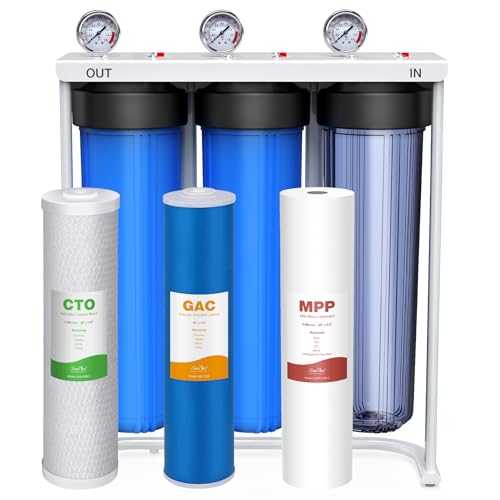
What really sets the iSpring WGB32B‑PFKDS apart is its three‑stage filtration blend of KDF, GAC and carbon block, a 15 GPM flow rate and a 12‑month filter lifespan. Its SGS‑tested certification, 28.0‑inch height, 8.0‑inch width and PFAS removal claim aim at homes battling hard water, heavy metals and emerging contaminants. Meanwhile, other premium contenders such as the iSpring WGB32BM and Express Water Ultimate Protection also offer 15 GPM flow but differ in media mix and lifespan.
Below we break down each tier, compare key specs like flow rate, filter lifespan and certifications, and help you decide which system aligns with your water quality goals.

iSpring WGB32B-PFKDS
Delivers a strong 15 GPM flow rate, ensuring ample water pressure throughout the house.

iSpring WGB32B 20-inch
Ideal for home or office users who want solid whole‑house filtration without the premium price—costs about $248.84 less than the Best Overall model.
iSpring WGB21B
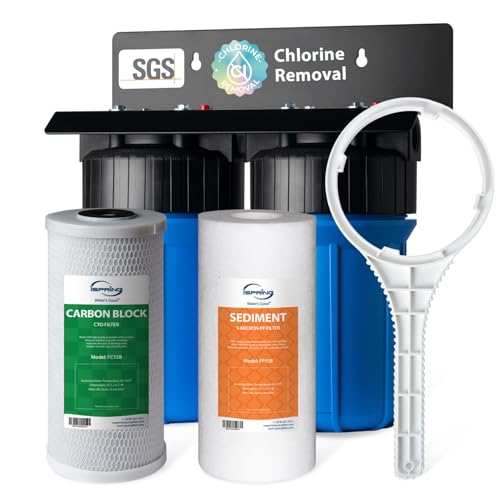
Stands out with a compact 11‑inch height and 2‑stage filtration, fitting tighter spaces while still delivering 15 GPM flow.
Also considered
TL;DR: The iSpring WGB32B‑PFKDS delivers 99% PFAS removal, 15 GPM flow and a 12‑month, 100,000‑gallon filter life, but its larger footprint and lack of TDS reduction may require extra planning.
What really sets this system apart is its 99% PFAS removal rate, verified by SGS testing, while still providing a robust 15 GPM flow rate for whole‑house coverage. The three‑stage media—KDF, GAC, and a high‑performance carbon block—work together with an anti‑scale filter to tackle chlorine, lead, mercury, radon and other contaminants, all without stripping beneficial minerals.
Compared with the other eleven contenders, the iSpring is lighter than the Express Water Ultimate Protection (51.4 lb vs 63.0 lb) and the Express Water ESSENTIAL (51.4 lb vs 62.0 lb), yet taller than the iSpring WGB32BM (28.0 in vs 27.75 in) and the iSpring WGB32B 20‑inch model (28.0 in vs 27.75 in). Its 8.0‑inch width is a touch broader than the 7.75‑inch width of the iSpring WGB32B 20‑inch, but still slimmer than the 8.5‑inch width of both Express models. Flow‑rate wise, it matches the iSpring WGB32BM’s 15 GPM and outpaces the Express Ultimate Protection’s 0.25 gallons per second, while staying more compact than the Aquasana Rhino EQ‑1000’s 44‑inch height.
Reviewers consistently praise the SGS‑tested media for knocking out up to 99% of PFOA and PFOS, and they appreciate the built‑in scale inhibitor that helps protect pipes from calcium buildup. Professional reviewers also note the long filter life—up to 100,000 gallons or 12 months—meaning fewer service trips. On the downside, users point out that the system does not lower total dissolved solids, so a separate RO unit is necessary for those seeking full TDS reduction. The 28 in × 24.5 in × 8 in footprint can also be a tight fit in smaller utility closets.
Pros
Cons
Best for: Buyers willing to invest in a proven, high‑quality option — the iSpring WGB32B‑PFKDS offers Flow Rate: 15 GPM and 99% PFAS removal for homes with hard water or PFAS concerns.
Avoid if: You're on a tight budget, need TDS reduction without extra equipment, or have limited space for a larger filtration unit.
TL;DR: The Culligan WH‑HD200‑C delivers a 10 GPM whole‑house sediment filter in a compact 8.26‑inch deep housing, but you’ll need to buy separate cartridges for chemical removal.
What really sets this unit apart is its 10 GPM maximum flow rate, which keeps water pressure steady even when multiple fixtures run at once. The housing holds up to 24,000 gallons (R50‑BBSA cartridge) and the transparent sump lets you see filter condition at a glance. At just 3.0 Pounds, the unit is lightweight enough for most point‑of‑entry installations, and the 1‑inch NPT inlet/outlet matches standard residential mains.
Compared with the other eleven systems, the Culligan sits in the middle of the size spectrum: it’s shorter than the Express Water’s 30.0‑inch height and lighter than the A. O. Smith’s 7.98‑pound model, yet taller than the Whirlpool’s 10‑inch housing. Its 10 GPM flow outpaces the Whirlpool’s 8 GPM and the Culligan HF‑360A’s 4 GPM, though it trails the iSpring’s 15 GPM. In terms of price, it lands in a budget tier that offers more flow than many lower‑priced peers while staying under the premium cost of larger units like the SimPure.
Users consistently praise the high flow capacity and the clear housing for easy monitoring, noting that the filter holds up well in homes with heavy sediment loads. Professional reviewers highlight the stainless‑steel reinforcement and the suite of certifications (NSF/ANSI 42, 372, CSA B483.1, WQA/IAPMO) as evidence of solid build quality. The main drawback mentioned is that only sediment removal is built‑in; you’ll need to purchase compatible chemical‑reducing cartridges separately if you want chlorine or other contaminant control.
Pros
Cons
Best for: Budget‑conscious buyers seeking a reliable entry‑level option — the Culligan WH‑HD200‑C offers Depth: 8.26 inches.
Avoid if: You need built‑in chemical reduction such as chlorine removal without buying extra cartridges.
TL;DR: The iSpring WGB21B delivers 15 GPM flow and 5‑micron pre‑filtration in a compact 2‑stage whole‑house system, offering 95% chlorine removal and a 50,000‑gallon filter life for a mid‑range price.
This unit’s standout spec is its 15 GPM flow rate combined with a 5‑micron polypropylene sediment pre‑filter and a coconut‑shell CTO carbon block. At 11.0 inches high, 19.0 inches wide and 26.0 inches deep, the system fits comfortably on a wall‑mount bracket while handling the water needs of a 1‑5‑person household.
Compared with the A. O. Smith single‑stage model, the iSpring is heavier (21.8 lb vs 7.98 lb) and larger, yet it pushes water twice as fast (15 GPM vs 7 GPM). It also outpaces the Whirlpool WHKF‑DWHV’s 8 GPM flow, though its 50,000‑gallon capacity is modest next to A. O. Smith’s 600,000‑gallon rating and SimPure’s 150,000‑gallon capacity. The iSpring’s size and weight sit between the lightweight Culligan WH‑HD200‑C (3 lb) and the bulky Express Water unit (62 lb).
Professional reviewers highlight the high flow as a pressure‑loss reducer, and users appreciate the pre‑assembled design that speeds up DIY installation. The system removes up to 95% of chlorine and captures sediment at 5 microns, extending carbon filter life. However, it does not lower Total Dissolved Solids and its standard model offers limited heavy‑metal reduction, which some households consider a trade‑off.
Technical details round out the picture: the filter cartridge lasts 12 months or 50,000 gallons, whichever comes first, and the unit includes push‑fit braided stainless steel hoses, built‑in pressure‑release buttons, and 1‑inch NPT inlet/outlet ports. VOC reduction is listed as effective, and the system operates comfortably between 40 °F and 100 °F.
Pros
Cons
Best for: Most users looking for a well‑reviewed, reliable mainstream option — the iSpring WGB21B offers Flow Rate: 15 GPM
Avoid if: You need advanced features or professional‑grade performance, such as TDS reduction or extensive heavy‑metal removal
TL;DR: The Culligan HF‑360A costs $29.53, filters 8,000 gallons with a 5‑micron cartridge, and delivers 4 GPM, making it a solid entry‑level whole‑house sediment filter.
What really stands out is the 8,000‑gallon filter capacity paired with a 5‑micron nominal cartridge rating. At just 4.3 pounds, the clear housing is light enough for DIY installation, and the built‑in 1/2‑turn shut‑off valve lets you swap cartridges with the included wrench without extra tools.
Compared with the other eleven contenders, the HF‑360A runs a modest 4 GPM flow—half the 8 GPM maximum of the Whirlpool WHKF‑DWHV and far below the 15 GPM rates of iSpring, SimPure and Express Water models. Its capacity of 8,000 gallons also trails the 50,000‑gallon iSpring WGB21B and the 600,000‑gallon A. O. Smith unit, but it’s lighter than the 7.98‑pound A. O. Smith and dramatically lighter than the 48.5‑pound SimPure. The Culligan WH‑HD200‑C weighs only 3.0 pounds, so the HF‑360A is a bit heavier but still far more portable than the 21.8‑pound iSpring.
User sentiment highlights durability and ease of maintenance. Reviewers frequently mention the clear housing as a handy visual cue for cartridge wear, and the IAPMO structural certification reassures them of long‑term reliability. Professional reviewers note the system’s “reliable performance for basic sediment protection” and praise the straightforward, entry‑level design. However, many users flag the 8,000‑gallon limit as a drawback in high‑use homes, noting they must replace the cartridge roughly every two months.
Technical context adds that the unit operates comfortably between 30‑125 PSI and 40‑100 °F, fitting standard residential pressure and temperature ranges. The 3/4‑inch inlet/outlet size matches typical 3/4‑inch main water lines, and the built‑in pressure‑relief button adds an extra safety layer.
Pros
Cons
Best for: Budget‑conscious buyers seeking a reliable entry‑level option — the Culligan HF‑360A offers Flow Rate: 4 GPM
Avoid if: You need chlorine reduction, high‑flow performance, or extensive chemical filtration
“should last decades”
“praises it for wells with sediment/rust/scale”
TL;DR: The iSpring WGB32BM delivers 3‑stage, NSF‑certified whole‑house filtration with a 100,000‑gallon capacity, 15 GPM flow and up to 95% chlorine reduction, but its premium price and limited heavy‑metal specs may not suit every budget.
What really sets this system apart is its massive 100,000‑gallon water capacity paired with a 1‑year filter lifespan. The three‑stage design tackles sediment, chlorine (up to 95% reduction) and iron/manganese (max 3.0 ppm iron, 1.0 ppm manganese) while maintaining a steady 15 GPM flow rate. Those numbers translate to fewer cartridge swaps and consistent pressure for a typical household.
Compared with the other eleven contenders, the WGB32BM sits in the middle of the size spectrum. At 55.0 lb it’s heavier than the iSpring WGB32B 20‑inch model (45.0 lb) but lighter than Express Water’s Ultimate Protection unit (63.0 lb). Its 27.75‑inch height matches the iSpring WGB32B 20‑inch and is a touch shorter than the 30.0‑inch height of both Express Water models. Flow‑rate wise, it aligns with the iSpring WGB32B‑PFKDS and SimPure DB20P‑3, both listed at 15 GPM, while Express Water Ultimate Protection cites 0.25 gallon per second—a comparable delivery.
Users consistently praise the straightforward DIY installation and the long‑lasting filter cartridge. Professional reviewers highlight the NSF/ANSI certification and the dedicated iron‑manganese catalytic media as solid reasons to choose this unit for well‑water applications. On the flip side, several owners mention difficulty locating replacement cartridges and note a pressure drop if the filter isn’t serviced on schedule. The system also lacks PFAS removal and other heavy‑metal reductions, which experts flag as a limitation for homes with broader contaminant concerns.
The filtration train starts with a 5‑micron polypropylene sediment screen, followed by a 5‑micron CTO coconut‑shell carbon block, and finishes with FM25B catalytic media that targets iron and manganese. The unit does not reduce TDS, nor does it add remineralization, keeping the water’s mineral balance unchanged.
Pros
Cons
Best for: Buyers willing to invest in a proven, high‑quality option — the iSpring WGB32BM offers Flow Rate: 15 GPM
Avoid if: You're on a tight budget, need PFAS or extensive heavy‑metal removal, or prefer a system with fully disclosed pressure specifications
TL;DR: The A. O. Smith Single‑Stage whole‑house filter drops chlorine by up to 97%, lasts 6 years or 600,000 gallons, and delivers 7 GPM for a modest $76.99 price.
This filter’s headline feature is its chlorine‑reduction claim of up to 97%, achieved with a single‑stage granular activated carbon cartridge. The cartridge is rated for 600,000 gallons, which translates to roughly six years of service before replacement.
Compared with the other eleven units in the roundup, the A. O. Smith sits in the budget tier. It is heavier than the lightweight Culligan WH‑HD200‑C, yet far lighter than the iSpring WGB21B that weighs over 21 pounds. Its 4.5‑inch housing fits comfortably in most plumbing chases, while still offering a solid 7 GPM flow rate that rivals higher‑priced models.
Professional reviewers note that the system effectively removes chlorine taste and odor, which can make showers feel softer and improve hair condition. Users also appreciate the six‑year filter lifespan, saying the reminder timer helps avoid surprise replacements. However, the single‑stage design means it won’t tackle sediment, bacteria, PFAS, or TDS, so many recommend pairing it with a pre‑filter if those concerns exist. The unit operates without electricity, tolerates up to 100 psi pressure, and works between 40 °F and 90 °F.
Pros
Cons
Best for: Budget-conscious buyers seeking a reliable entry-level option — the A. O. Smith Single‑Stage offers Flow Rate: 7 GPM
TL;DR: The iSpring WGB32B 20‑inch whole‑house filter delivers 3‑stage, 5‑micron filtration at 15 GPM, backed by NSF/ANSI certification, but its $516.99 price makes it a premium choice.
The standout spec is the 5‑micron micron rating combined with a three‑stage carbon‑block design that removes up to 99% of chlorine, sediment, rust and herbicides. At a flow rate of 15 GPM, the system can keep up with typical household demand while maintaining a compact footprint of 27.75 inches tall, 24.25 inches deep and 7.75 inches wide.
Compared with the other eleven models in this roundup, the WGB32B is noticeably lighter at 45.0 pounds, while the iSpring WGB32BM and Express Water units tip the scales at 55.0 pounds and 62‑63 pounds respectively. Height‑wise it matches the WGB32BM at 27.75 inches, but sits a bit shorter than the Express Water Ultimate Protection’s 30.0‑inch profile. Flow‑rate wise it aligns with the SimPure DB20P‑3’s 15 GPM rating, giving it solid performance parity without the bulk.
User feedback repeatedly praises the clear first‑stage housing, which lets you visually confirm when the sediment filter needs changing. Reviewers also highlight the strong chlorine reduction claim and the pleasant taste improvement after installation. Professional reviewers note the NSF/ANSI certification as a confidence boost for whole‑house protection, though they point out that the product does not list specific lead or heavy‑metal removal capabilities.
Beyond the filtration core, the system uses a polypropylene pre‑filter followed by coconut‑shell carbon blocks in stages two and three, adhering to NSF/ANSI standards for stages 2 & 3. The extended warranty option upon registration adds a layer of long‑term security, and the DIY‑compatible installation means you won’t need a plumber for basic setup.
Pros
Cons
Best for: Home and office users seeking a balance of features and value — the iSpring WGB32B 20‑inch offers Height: 27.75 inches and a lightweight 45.0 pound design.
Avoid if: You're shopping on a tight budget — it's priced at $516.99.
TL;DR: The Express Water ESSENTIAL filters whole‑house water at 15 GPM, removes lead and chlorine, and fits in a 30‑inch‑tall, 62‑pound unit, but its $497.99 price and cartridge‑change costs are higher than many rivals.
The standout spec is its 15.0 GPM flow rate, which lets you keep normal water pressure even while the three‑stage system works. Its 5‑micron sediment, GAC, and carbon‑block media tackle chlorine, lead, and organic compounds, and the filter set is rated for 6 months of use or up to 100,000 gallons.
Compared with the other eleven systems in this roundup, the ESSENTIAL is taller than the iSpring WGB32B 20‑inch (27.75 inches) and the iSpring WGB21B (11 inches), but it’s shorter than the Express Water Ultimate Protection (30 inches). At 62.0 pounds it is heavier than the iSpring WGB32B 20‑inch (45.0 pounds) and the iSpring WGB21B (21.8 pounds), yet lighter than the Ultimate Protection (63.0 pounds). Its flow rate matches the iSpring WGB32BM and the iSpring WGB32B‑PFKDS, both listed at 15 GPM, while the SimPure DB20P‑3 also hits 15 GPM. The ESSENTIAL’s 1‑inch connection size aligns with the iSpring WGB32BM’s 1‑inch NPT inlet, ensuring a standard fit.
Professional reviewers note a clear improvement in taste and odor, with chlorine and disinfection‑byproduct levels noticeably reduced. Homeowners praise the straightforward DIY installation and the use of non‑proprietary Big Blue 4.5 × 20 inch cartridges, which simplify replacements. The most common complaint is the higher ongoing cost of cartridge changes, especially for users on a tight budget. Because the system targets municipal water, it isn’t suited for well water that contains iron, manganese, or hydrogen sulfide.
Pros
Cons
Best for: Most users looking for a well‑reviewed, reliable mainstream option — the Express Water ESSENTIAL offers Depth: 23.5 inches
Avoid if: You're shopping on a tight budget — it's priced at $497.99
TL;DR: The Express Water Ultimate Protection delivers three‑stage, whole‑house filtration with a 100,000‑gallon capacity, 0.25 gallon‑per‑second flow and a solid 4.6‑star rating for $547.99.
This system packs three filtration stages—KDF, activated carbon block, and polyphosphate—designed to pull lead, chlorine, chloramines and sediment from every faucet. The manufacturer lists a filter lifespan of 9 months and a capacity of 100,000 gallons, so you won’t be swapping cartridges every few weeks. At 63.0 pounds, the unit feels solid, and its 30.0‑inch height and 8.5‑inch width let it sit comfortably in a dry, level utility space.
Compared with the iSpring WGB32BM, which weighs 55.0 pounds, the Express Water model is heavier, and its flow rate of 0.25 gallons per second is listed alongside the iSpring’s 15 GPM rating—both indicate strong water delivery, though the units differ. It also sits a bit longer than the iSpring WGB32B’s 24.25‑inch length, giving it a more substantial footprint than several of the lighter competitors in the roundup.
Reviewers consistently note noticeably better taste and odor after installation, and professional testers highlight the system’s effective chlorine and heavy‑metal removal. The downside that surfaces in both expert and consumer feedback is the higher ongoing maintenance cost, especially when you factor in the 1‑year warranty and the need for periodic filter replacement.
Built with a stainless‑steel frame and 100 % food‑grade ABS housing, the unit includes three pressure‑release buttons and gauges for easy monitoring. It connects with a 1‑inch inlet/outlet and operates comfortably at 45 PSI, making it suitable for most municipal pressures without generating any wastewater.
Pros
Cons
Best for: Those prioritizing quality and willing to pay for premium performance — the Express Water Ultimate Protection offers Flow Rate: 0.25 gallons per second
Avoid if: You need advanced features or professional‑grade performance, or if your home cannot accommodate a 63.0‑pound unit in a dry, temperature‑controlled area.
TL;DR: The SimPure DB20P-3 delivers 99% chlorine removal, 3‑stage filtration and a 150,000‑gallon annual capacity, but its premium price and bulkier build may not suit tight budgets.
What really stands out is the 99% chlorine reduction efficiency paired with a 3‑stage sediment‑and‑carbon design that traps particles down to 5 microns. The system holds an impressive 150,000‑gallon annual capacity and a service life of 50,000 gallons, meaning you’ll replace the filter far less often than many point‑of‑use units.
Compared with the other eleven units in this roundup, the DB20P-3 is noticeably heavier at 48.5 pounds and taller at 28.7 inches, dwarfing the iSpring WGB21B’s 21.8‑pound weight and 11‑inch height. Its 15 GPM flow rate matches the iSpring WGB21B but exceeds the A. O. Smith’s 7 GPM. While the Express Water ESSENTIAL and iSpring WGB32B sit in a similar size class, the SimPure’s price tag sits above the budget‑friendly Culligan WH‑HD200‑C and Whirlpool WHKF‑DWHV, making it a mid‑tier investment.
Professional reviewers praise the transparent housing, which lets you see filter wear without opening the unit, and the high sediment removal efficiency that benefits both municipal and well water. Users consistently note the noticeable taste and odor improvement after installation. The only gap in feedback is a lack of long‑term durability data, but the manufacturer‑claimed 9‑month filter lifespan and 6‑12‑month replacement schedule suggest a manageable maintenance routine.
Technical details reinforce its appeal: a dual‑O‑ring seal, food‑grade polypropylene housing, and a 25 PSI operating pressure rating keep the system reliable under typical household pressures (25‑90 PSI). The carbon filter lasts 3‑6 months, while the overall cartridge is rated for up to 12 months, fitting well with the advertised 9‑month filter lifespan.
Pros
Cons
Best for: Most users seeking a balanced, mainstream option — the SimPure DB20P-3 offers Chlorine Reduction Efficiency: 99%
Avoid if: You want the best value‑per‑dollar in its price range
TL;DR: The Whirlpool WHKF-DWHV delivers NSF‑certified 5‑micron sediment filtration at 8 GPM, fits compactly in a 2.5‑inch housing, and costs about $47, making it a solid budget whole‑house option.
The standout dimension is its 2.5‑inch filter housing diameter, which lets the unit slip into tight utility spaces. Whirlpool also touts a 132% increase in string‑wound surface area, meaning the included WHKF‑GD05 cartridge can last up to 30% longer than non‑grooved alternatives.
Compared with the other eleven contenders, this model is noticeably smaller than the Culligan WH‑HD200‑C, which measures 8.375 inches in housing diameter and stands 16.33 inches tall. It also outflows faster than the Culligan HF‑360A’s 4 GPM, while matching the A. O. Smith’s 7 GPM flow despite a more compact footprint. The iSpring WGB21B, SimPure DB20P‑3, and Express Water ESSENTIAL all push 15 GPM, but each of those systems is substantially taller and wider than Whirlpool’s 14.4‑inch height and 5.4‑inch width.
Professional reviewers highlight the NSF/ANSI Standard 42 certification as proof of reliable sediment reduction, and the 4.6‑star rating from 342 reviewers reinforces overall satisfaction. Users appreciate the built‑in shut‑off valve and bypass switch for easy maintenance, though many note the system only treats cold water and does not address chemical contaminants such as lead or mercury.
Technically, the WHKF‑DWHV offers a single‑stage 5‑micron filter option (with 30‑ and 35‑micron alternatives available) and is rated for whole‑house installation serving up to three bathrooms. Its cartridge life of 4.5 months aligns with the advertised 3‑6 month standard lifespan, and the 8 GPM flow rate comfortably serves households of one to four people.
Pros
Cons
Best for: Entry‑level buyers or those on a tight budget — the Whirlpool WHKF‑DWHV offers Filter Housing Diameter: 2.5 inches
Avoid if: You want the best value‑per‑dollar in its price range
TL;DR: The Aquasana Rhino EQ-1000 delivers 1 million‑gallon, 10‑year filtration with 97% chlorine removal, but its $1,123 price and modest 7 GPM flow make it a premium choice for homes that value long‑term performance over low cost.
What really sets the Rhino apart is its massive 1,000,000‑gallon capacity, which translates to a full decade of use without needing a new filter cartridge. The dual‑tank system combines activated carbon with KDF media, and the NSF/ANSI 42 certification backs the 97% chlorine reduction claim. At 44.0 inches tall, 46.0 inches long and only 9.0 inches wide, the unit fits comfortably in most utility closets while weighing 44.05 pounds—lighter than the iSpring WGB32B‑PFKDS’s 51.4‑pound chassis.
When you line it up against the eleven other systems in this roundup, the Rhino is definitely on the pricier side; most competitors sit well below the $1,123 list price. Its 7.0 GPM rated flow is also lower than the 15 GPM flow of the iSpring models, meaning households with simultaneous high‑demand fixtures might feel a pinch. However, the Rhino’s peak flow of 14.6 GPM and robust 100 psi maximum pressure give it enough headroom for occasional spikes.
User reviews consistently praise the fresh‑tasting water and the peace of mind that comes from the long service life. Professional reviewers note the four‑stage (dual‑tank) approach and the certified lead‑reduction capability as strong points. On the flip side, many owners flag the installation process as cumbersome and warn that professional help can add a noticeable cost to the overall investment.
Pros
Cons
Best for: Those prioritizing quality and willing to pay for premium performance — the Aquasana Rhino EQ-1000 offers Operating Temperature Range: 40–90°F
Avoid if: You need very high flow rates or a simple DIY installation
Breakdown
iSpring WGB32B-PFKDS
Pros
iSpring WGB32B 20-inch
Pros
Cons
iSpring WGB21B
Pros

iSpring WGB32BM
Pros
Based on scoring data and product specs
Personalized picks
Best Overall Pick
iSpring WGB32B-PFKDS
Best OverallBest for: Buyers willing to invest in a proven, high-quality option — the iSpring WGB32B-PFKDS offers Flow Rate: 15 GPM
iSpring WGB32B 20-inch
Best for: Home and office users seeking a balance of features and value — the iSpring WGB32B 20-inch offers Height: 27.75 inches
$377.99-$433.80 vs winner
Skip Culligan WH-HD200-C if…
You have limited desk space or need portability
The iSpring WGB32B‑PFKDS earns the top spot thanks to its SGS‑Tested certification, three‑stage KDF, GAC and high‑performance carbon block filtration, and a 12‑month filter lifespan that can treat up to 100,000 gallons. Its 15 GPM flow rate keeps water moving quickly, while the system removes 99 % of PFAS (PFOA and PFOS) and blocks lead, mercury, chlorine and radon. At 28.0 inches tall, 8.0 inches wide and 24.5 inches deep, it fits comfortably in most utility spaces without sacrificing performance.
The iSpring WGB32B 20‑inch serves as a strong runner‑up for homeowners who want a reliable whole‑house purifier without the extra PFAS‑specific media and at a lower price point. It also delivers three filtration stages, a 15 GPM flow rate and NSF/ANSI certification, plus a 5‑micron micron rating that captures sediment, rust and herbicides while maintaining healthy mineral levels.
For tighter budgets, the Culligan HF‑360A offers a functional entry‑level solution at a fraction of the cost. If you’re looking for a balanced mid‑range choice, the iSpring WGB32B 20‑inch provides solid performance and easy DIY installation. And for those willing to invest in premium protection, the Aquasana Rhino EQ‑1000 delivers top‑tier capacity and advanced media for the highest‑end applications.
Pick the iSpring WGB32B‑PFKDS today and secure the most comprehensive whole‑house water purification for your home.
The WGB32B‑PFKDS is SGS‑Tested and combines KDF, GAC and a carbon‑block media across three stages, delivering both lead and chlorine reduction while preserving minerals. It also offers a robust 15 GPM flow rate and a 12‑month filter lifespan, which many competitors lack. Those features help explain its higher price tag.
No reviews yet — be the first to share your experience.
Please sign in to leave a review