⚡ Quick Answer
We compared 11 Sony E‑mount wide‑angle lenses, spanning a price range from $176.00 for the Viltrox 20 mm up to $1,798.00 for the Sony SEL2470GM. Ratings cluster around the top end of the scale, with the Sigma 17‑40mm F1.8 and Sigma 18‑50mm F2.8 both holding a 4.7 / 5 score. The lineup balances ultra‑compact primes, versatile zooms, and professional‑grade options, giving you a clear view of what’s available across the market.
Our tier map breaks the field into three price buckets. Budget choices include the Viltrox 20 mm ($176.00, 157 g) and Viltrox 14 mm ($199.00, 180 g). Mid‑range lenses feature the Zeiss Touit 12 mm (rated 4.2 / 5, 0.57 lb) and the Sigma 18‑50mm F2.8 ($579.95, 0.64 lb, 12.1 cm minimum focus). Premium options such as the Sigma 17‑40mm F1.8 ($919.00, 525 g, constant f/1.8 aperture) and the Sony SEL2470GM ($1,798.00, 884 g) deliver weather‑sealed construction and high‑resolution optics, while the Tamron 17‑70mm adds up to ~5 stops of VC in a 525 g package.
Below you’ll find a deeper dive into each model’s strengths, trade‑offs, and ideal shooting scenarios.
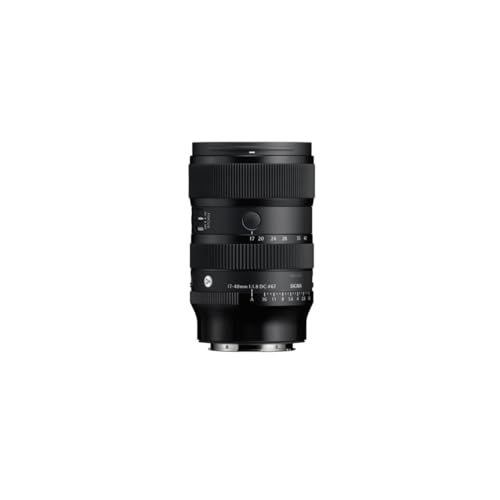
Sigma 17-40mm F1.8
Its close 28 cm minimum focusing distance lets you capture detail up close.

Sigma 18-50mm F2.8
Ideal for budget‑conscious enthusiasts who want solid performance; at $579.95 it’s about $339 cheaper than the Best Overall option.

Tamron 17-70mm
Stands out with a 67 mm filter thread, giving you more flexibility for accessories while covering a versatile 17‑70 mm range.
Also considered
Score Analysis
Key score advantages vs. runner-up (Sigma 18-50mm F2.8)
Price Range
Sigma 17-40mm F1.8
$919.00
Sigma 18-50mm F2.8
$579.95
Tamron 17-70mm
$599.00

Sony SEL2470GM
$1,598.00

Viltrox 20mm
$176.00

Zeiss Touit 12mm f.8
$521.90
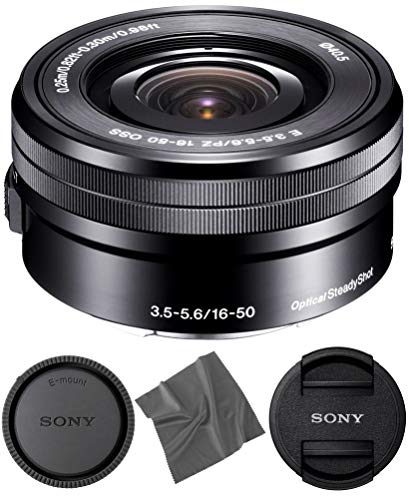
Sony SELP1650 16-50mm OSS
$199.96
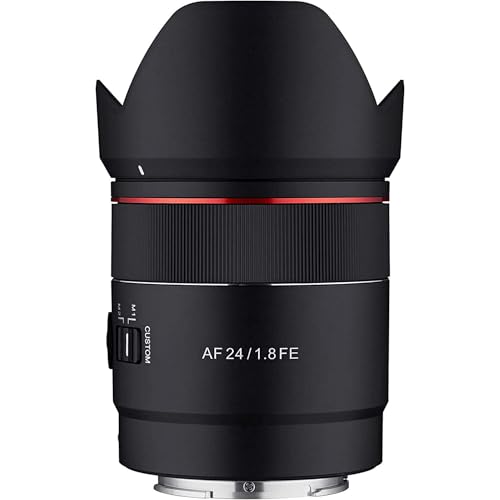
Samyang 24mm F1.8
$334.97
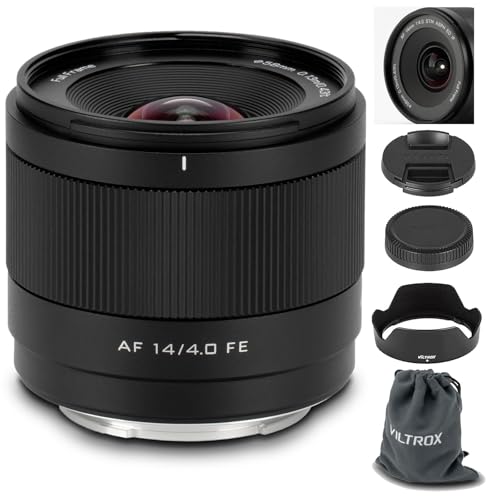
Viltrox 14mm
$199.00

Rokinon 24-70mm Zoom Lens
$699.00

Laowa Zero-D 9mm
$399.00
Spec Comparison
TL;DR: Sigma’s 17‑40mm f/1.8 delivers constant, fast aperture and 11‑blade bokeh in a weather‑sealed, internally zooming package, but its $919 price and 525 g heft make it a premium‑tier choice.
The standout spec is the constant f/1.8 maximum aperture across the entire 17‑40mm range, paired with an 11‑blade diaphragm that produces smooth out‑of‑focus highlights. At 525 g, the lens is light for a fast APS‑C zoom, and the dust‑ and splash‑sealed construction adds confidence for outdoor shoots. Its minimum focusing distance of 28 cm lets you get relatively close without sacrificing that wide‑angle perspective.
Compared with the other ten lenses in this roundup, the Sigma sits at the higher end of the price spectrum and matches the Tamron 17‑70mm in weight (both 525 g) while offering a faster aperture (f/1.8 vs. f/2.8). It’s heavier than the ultra‑light Zeiss Touit 12mm (0.57 lb) and Laowa Zero‑D 9mm (0.47 lb), but lighter than the Rokinon 24‑70mm (over 1 lb). The 72.9 mm diameter and 67 mm filter thread are comparable to many peers, yet the internal zoom and two AFL buttons give it a more professional feel than the simpler kit‑style controls on the Samyang 24mm.
Professional reviewers note corner‑to‑corner sharpness at f/1.8 that rivals prime lenses, and users praise the shallow depth of field for portrait‑style wide‑angle shots. Video creators appreciate the minimal focus breathing, while some complain about the missing aperture ring on the Sony E‑mount version. In practice, the HLA (High‑response Linear Actuator) delivers quick, silent autofocus, which pairs well with the lens’s internal zoom design for smooth zoom pulls.
Pros
Cons
Best for: Hybrid APS‑C photographers and videographers who need a fast, weather‑sealed zoom for low‑light and shallow‑depth‑of‑field work.
Avoid if: You’re on a tight budget or prioritize ultra‑light gear above all, as the lens is priced at $919.00 and weighs 525 g.
TL;DR: The Sigma 18‑50mm F2.8 delivers a constant f/2.8 aperture in a pocket‑sized, 0.64 lb (290 g) package, with close‑focus capability and solid build quality, making it a versatile APS‑C workhorse.
The lens’s most eye‑catching spec is its constant f/2.8 maximum aperture across the entire 18‑50mm zoom range, paired with a compact 65.4 mm × 74.5 mm barrel that weighs just 0.64 lb (290 g). A minimum focus distance of 12.1 cm and a 0.36× magnification at the wide end give it a macro‑style edge that many users love for close‑up detail.
At 0.64 lb, the Sigma sits heavier than the Zeiss Touit 12mm (≈0.57 lb) but considerably lighter than the Tamron 17‑70mm (≈1.2 lb). Its 55 mm filter thread is smaller than the 67 mm threads on both the Zeiss and Tamron, meaning filters tend to be cheaper. Unlike the Tamron, which offers VC image stabilization, the Sigma provides no built‑in stabilization—it's a trade‑off for its lighter build.
Reviewers repeatedly praise the lens’s pocketable size and the bright f/2.8 aperture for low‑light shooting and shallow depth of field. Professional feedback highlights its consistently sharp optics and the 12.1 cm close‑focus distance as strong points. The main criticisms focus on the lack of optical stabilization, noticeable corner softness at 18 mm on high‑resolution sensors, and the fact that the wide‑end starts at 18 mm rather than a slightly wider 16 mm found on some rivals.
Pros
Cons
Best for: APS‑C mirrorless users who want a fast, portable standard zoom with close‑focus flexibility.
Avoid if: You need built‑in stabilization for video or an ultra‑wide 16 mm start for wide‑angle photography.
“ultimate workhorse”
“excellent image quality”
TL;DR: The Tamron 17‑70mm f/2.8 VC RXD delivers a constant bright aperture, 4.1× zoom range and five‑stop stabilization in a compact 525 g body, making it a versatile travel‑ready option for APS‑C shooters.
The lens’s standout spec is its constant f/2.8 maximum aperture across the entire 17‑70mm (25.5‑105mm full‑frame equivalent) range and it pairs with Tamron’s VC system, which offers roughly five stops of shake reduction. At just 525 g, 119.3 mm long and 74.6 mm in diameter, it balances speed with portability, while the 9‑blade diaphragm delivers smooth bokeh.
Compared with the other ten lenses in this roundup, the Tamron sits in the middle of the weight spectrum: it’s lighter than the Rokinon 24‑70mm (over 1 kg) but heavier than the ultra‑compact primes like the Zeiss Touit 12mm and Laowa Zero‑D, which weigh under 300 g. Its 67 mm filter thread matches the Sigma 17‑40mm and Zeiss Touit, while the Sigma 18‑50mm and Samyang 24mm use smaller threads. In terms of zoom coverage, the Tamron’s 4.1× ratio outstretches the fixed‑focus primes and rivals the Sigma 18‑50mm’s 2.8× range.
Users consistently praise the lens for its handheld low‑light capability, thanks to the f/2.8 aperture and VC stabilization. Reviewers note the ergonomics feel solid in the hand despite the compact size. The most common criticisms involve noticeable vignetting at the widest aperture—often exceeding 2 EV—and a slight softening of corners when stopped down at 70 mm. Some photographers also find the by‑wire manual focus toggle less intuitive, as it can unintentionally re‑engage autofocus.
Additional technical context includes a moisture‑resistant construction, a fluorine‑coated front element that resists smudges, and a BBAR coating to curb flare. The RXD stepping motor provides quiet and fast autofocus, while the minimum focus distance of 19 cm (wide) and 39 cm (tele) enables modest close‑up work with a maximum magnification of 0.21x.
Pros
Cons
Best for: APS‑C mirrorless shooters who want a single, lightweight f/2.8 zoom with built‑in stabilization.
Avoid if: You need an ultra‑wide angle or prefer a fully manual focus experience without by‑wire control.
TL;DR: The Sony SEL2470GM delivers a constant f/2.8 aperture, 9‑blade circular diaphragm and weather‑sealed construction, but its 1.95 lb weight and $1798 price put it in the premium tier.
This lens’s most distinctive feature is its constant f/2.8 maximum aperture across the entire 24‑70 mm range, paired with a 9‑blade rounded diaphragm that produces smooth bokeh even at the widest setting. The optical design packs 18 elements in 13 groups, including XA and Super ED glass, which contributes to the high resolution praised by professionals.
At $1798, the SEL2470GM is pricier than the Sigma 17‑40mm ($919) and the Tamron 17‑70mm ($699). It also weighs more than those lenses—884 g versus 525 g for both Sigma and Tamron—making it the heaviest in the group. Its 87.6 mm diameter is larger than the 72.9 mm of the Sigma 17‑40mm and the 74.6 mm of the Tamron, while its 134.6 mm length is shorter than the Sigma’s 142.24 mm but longer than the Tamron’s 119.3 mm. Compared with the ultra‑compact Sigma 18‑50mm (290 g, 55 mm filter), the Sony feels substantially bulkier, and it also outweighs the Zeiss Touit 12mm (≈260 g) and Laowa Zero‑D 9mm (≈215 g).
Reviewers consistently highlight the lens’s sharpness and the quiet, precise Direct‑Drive Super Sonic Wave Motor (SSM) that enables fast AF and full‑time manual focus. Reviewers often mention the dust‑ and moisture‑resistant build, Nano AR coating, and focus‑hold button as professional‑grade conveniences. On the downside, users note the 1.95 lb weight and the noticeable extension when zoomed to 70 mm, which can cause fatigue during long handheld sessions. Reviewers also cite the lack of built‑in image stabilization and the absence of a focus limiter as trade‑offs for a lens of this class.
Pros
Cons
Best for: Buyers willing to invest in a proven, high-quality option
Avoid if: You're shopping on a tight budget — it's priced at $1798.00
TL;DR: The Viltrox 20mm f/2.8 offers a pocket‑sized, 157 g full‑frame wide‑angle prime with fast STM autofocus and eye‑AF support at a $176 price, though it shows noticeable vignetting wide open.
What really sets this lens apart is its ultra‑compact footprint – 65 mm diameter by 59.5 mm length – and a featherlight 157 g (about 0.35 lb) construction. The 20 mm focal length delivers a 91.6° diagonal field of view, while the minimum focus distance of 19 cm (0.17x maximum magnification) lets you get close to subjects without sacrificing the wide perspective.
Compared with the other ten lenses in the roundup, the Viltrox 20mm is among the lightest: it weighs less than the Viltrox 14mm (≈0.40 lb), the Laowa Zero‑D 9mm (≈0.47 lb), the Zeiss Touit 12mm (≈0.57 lb) and the Sigma 18‑50mm (≈0.64 lb), and only the Sony 16‑50mm (116 g) is lighter. Its barrel is a bit longer than the 56 mm Viltrox 14mm, but still shorter than many zooms. The 52 mm filter thread sits between the 58 mm threads of the Viltrox 14mm and Samyang 24mm, and is larger than the Sony’s 40.5 mm thread yet smaller than the Zeiss’s 67 mm thread.
Users consistently praise how the lens slips into a pocket or small bag, making it a favorite for travel and vlog setups. Professional reviewers note the reliable STM stepping‑motor focus, eye‑AF integration, and low focus breathing, which help keep video footage steady. The downsides that keep popping up are strong vignetting at f/2.8 and a wavy distortion pattern that often needs correction in post‑processing, plus softer edge sharpness when shooting wide open.
An STM motor plus lead screw drives internal focus, providing smooth, silent operation, and the lens supports electronic aperture control via the camera body. A USB‑C port lets you update firmware without removing the lens.
Pros
Cons
Best for: Beginners, hikers, vloggers and travel photographers who need a pocket‑size full‑frame wide‑angle prime.
Avoid if: You need professional‑grade edge sharpness, minimal distortion, or a premium‑build lens for demanding work.
“remarkable budget wide-angle”
“super‑cheap”
TL;DR: The Zeiss Touit 12 mm f/2.8 delivers ultra‑wide 99° coverage on Sony APS‑C bodies, packs premium optics into a 0.57‑lb shell, but its $521.90 price tag may give budget‑focused shooters pause.
At the heart of the lens is a 12 mm focal length that translates to an 18 mm full‑frame equivalent, giving you a 99° diagonal field of view that’s ideal for sweeping landscapes. Its maximum aperture of f/2.8 lets you capture bright images even in low light, while the 67 mm filter thread accommodates standard screw‑in filters. Weighing just 0.573125 pounds (260 g) and built from metal with rubberized control rings, the Touit feels solid yet portable enough for travel.
Compared with the other ten lenses in this roundup, the Touit sits in the middle of the weight spectrum: it’s lighter than the Sigma 18‑50mm (0.64 lb) but a touch heavier than the Laowa Zero‑D (0.47 lb). Its 67 mm filter thread matches the Tamron 17‑70mm, while the Laowa and Sigma lenses use smaller 49 mm and 55 mm threads respectively. In terms of aperture speed, the Touit shares f/2.8 with the Sigma, Tamron and Rokinon options, but it’s not as fast as the Samyang 24 mm f/1.8, which offers a brighter maximum aperture.
Everyday users frequently praise the lens’s “compact and lightweight construction” and note the “edge‑to‑edge sharpness” that professional reviewers also highlight. Reviewers repeatedly mention the 9‑blade rounded diaphragm for delivering smooth bokeh, and they credit the Carl Zeiss T* coating with high contrast and reduced flare. The most common drawback reviewers cite is the 18 cm minimum focus distance, which limits close‑up work, and a few note a “minor softness at the very edges” when stopped down.
Optically, the Touit employs an 11‑element, 8‑group Distagon design with two aspherical and three partial‑dispersion elements, plus floating elements that help maintain performance across the focus range. The nine rounded aperture blades and T* anti‑reflective coating further enhance image quality, while the autofocus system ensures quick, silent focusing on compatible Sony bodies.
Pros
Cons
Best for: Landscape, architectural and environmental photography on Sony APS‑C mirrorless cameras where ultra‑wide perspective and high contrast are priorities.
Avoid if: You need macro capability, very tight budgets, or a faster than f/2.8 maximum aperture for extreme low‑light portrait work.
TL;DR: The Sony SELP1650 16‑50mm OSS folds to a pocket‑size 29.9 mm length, weighs just 116 g, and offers a motorised zoom with image‑stabilisation—ideal for travel‑oriented shooters on a budget.
The lens’s most eye‑catching feature is its retractable design: when the camera is powered off the barrel collapses to a length of 29.9 mm while the diameter stays at 64.7 mm. At only 116 g, it’s one of the lightest options in this lineup, and the 40.5 mm filter thread lets you use small, inexpensive filters.
Compared with the other ten lenses, the SELP1650 is lighter than the Viltrox 14 mm (180 g) and the Viltrox 20 mm (157 g), and considerably lighter than the Sigma 18‑50 mm (290 g). Its filter thread is also smaller than the 58 mm thread on the Viltrox 14 mm, meaning you’ll need different filters than those lenses. While it doesn’t match the ultra‑fast apertures of premium primes, its price point sits below the Zeiss Touit 12 mm and the Laowa Zero‑D 9 mm, making it a more affordable travel companion.
User feedback repeatedly praises the lens’s portability and the smooth, silent micromotor‑driven power zoom; professional reviewers highlight it as a boon for video work. The built‑in Optical SteadyShot helps mitigate camera shake, especially when shooting at the longer end of the 16‑50 mm range. On the downside, the variable maximum aperture of f/3.5‑5.6 reduces light‑gathering ability at 50 mm, and the 0.215× maximum magnification (minimum focus distance about 25 cm) limits close‑up capability.
Technically, the lens contains nine elements in eight groups, including one ED element and four aspherical elements that work together to keep distortion low and contrast high. It features a seven‑blade aperture, internal focus, and a minimum focus distance of roughly 25‑30 cm, giving a modest 0.215× magnification for near subjects.
Pros
Cons
Best for: Entry-level buyers or those on a tight budget
Avoid if: You need powerful performance or professional‑grade features
TL;DR: The Samyang 24mm f/1.8 delivers a fast aperture and weather‑sealed metal build at about 1 lb, making it a solid budget wide‑angle for Sony E‑mount shooters who value low‑light capability.
This lens’s standout spec is its f/1.8 maximum aperture paired with a nine‑blade diaphragm, giving you strong light‑gathering power and pleasing out‑of‑focus highlights. The metal, weather‑sealed construction adds durability, while the lens measures 160.02 mm in length, 65 mm in diameter and weighs roughly 1.00 lb (454 g).
Compared with the other ten lenses in this roundup, the Samyang is heavier and longer than the Viltrox 14 mm (≈0.40 lb, 56 mm length) and the Viltrox 20 mm (≈0.35 lb, 59.5 mm length), and it also outweighs the Laowa Zero‑D 9 mm (≈0.47 lb). However, its f/1.8 aperture is faster than every competitor’s maximum aperture, which tops out at f/2.8 on the Laowa, Viltrox and Sigma options, and its nine‑blade design exceeds the seven‑blade diaphragms that several peers use.
Users consistently highlight the lens’s sharp wide‑angle rendering and its suitability for astrophotography, noting the built‑in astrophotography mode and silent linear STM motor. Professional reviewers echo the sharpness praise but point out that the by‑wire focus ring can feel stepped and that the bokeh isn’t perfectly circular, a minor trade‑off for the low‑cost package.
Additional technical notes include an ultra‑multi‑coating for reduced flare, a 58 mm filter thread for common filters, a minimum focus distance of 190 mm (19 cm) and a maximum magnification of 0.21×, making close‑up wide‑angle shots possible without sacrificing depth‑of‑field control.
Pros
Cons
Best for: Budget‑conscious Sony E‑mount shooters who need a fast, weather‑sealed wide‑angle for landscapes, astrophotography, or environmental portraits.
Avoid if: You prioritize ultra‑smooth, perfectly circular bokeh or a fully mechanical focus ring.
TL;DR: The Viltrox 14mm f/4 delivers an ultra‑wide 112° view in a feather‑light 180 g plastic body, with silent STM autofocus and video‑friendly focus breathing.
The standout spec is the 14 mm focal length that provides a 112° diagonal angle of view while weighing just 180 g (about 0.40 lb). Its 58 mm filter thread lets you add protection or creative filters, and the STM stepping motor promises fast, silent focus for both stills and video.
Compared with the other lenses in this roundup, the Viltrox is heavier than the Sony 16‑50mm kit zoom (which weighs 116 g) but lighter than the Laowa Zero‑D 9 mm (215 g). Its 58 mm filter size is larger than Sony’s 40.5 mm thread and the Viltrox 20 mm’s 52 mm thread, yet matches the Samyang 24 mm’s 58 mm. The lens is shorter than Laowa’s 200 mm length, making it far more pocket‑friendly than that ultra‑wide option.
Users consistently praise the lens for its pocket‑sized weight and the sharpness it delivers from f/4 onward, even on high‑resolution Sony bodies. Professional reviewers note the sharpness across the frame and the minimal focus breathing that benefits video work, while also calling out strong corner vignetting at the widest aperture and moderate lateral chromatic aberration.
Additional technical details include a 7‑blade slightly rounded aperture, multi‑layer coating to curb flare, and a minimum focus distance of 0.13 m (13 cm) that yields a 0.23× maximum magnification—useful for close‑up architectural details. The built‑in USB port allows firmware updates, and eye/face detection autofocus adds convenience for portrait or vlog shooting.
Pros
Cons
Best for: Entry-level buyers or those on a tight budget
Avoid if: You want the best value‑per‑dollar in its price range
“absolutely amazing for its size/performance”
TL;DR: The Rokinon 24‑70mm f/2.8 delivers a constant bright aperture, weather‑sealed build and 82 mm filter thread, but at $699 it weighs 1027 g, making it a premium‑tier choice.
The lens’s most distinctive spec is its constant f/2.8 maximum aperture throughout the 24‑70 mm zoom range, letting you shoot in low light and control depth‑of‑field without hunting for a slower stop. It also packs a 9‑blade diaphragm, which helps render smooth out‑of‑focus highlights.
At 1027 g, the Rokinon weighs more than the Sigma 18‑50mm, which weighs 290 g, yet less than the Tamron 17‑70mm listed at 1.2 lb. Its 82 mm filter thread is larger than the Tamron’s 67 mm and the Sigma’s 55 mm, giving you more flexibility for screw‑in filters. The 9‑blade diaphragm matches the Tamron’s, so the bokeh quality compares.
Reviewers consistently praise the bright f/2.8 aperture and the rugged, dust‑ and moisture‑resistant construction. Professional observers note the linear STM/LSM autofocus as quick and silent, which is handy for video. The most common complaints focus on the lens’s over‑1 kg weight and the absence of optical image stabilization, meaning you’ll likely need a tripod for steady low‑light video.
Additional technical context includes Ultra Multi Coating (UMC) for reduced flare, a removable petal‑shaped hood, and a dedicated AF/MF switch. The lens offers a minimum focus distance of 35 cm and a maximum magnification that reaches 0.27x at the telephoto end, useful for modest close‑up work.
Pros
Cons
Best for: Those prioritizing quality and willing to pay for premium performance
Avoid if: Reliability and user satisfaction are your top concerns
TL;DR: The Laowa Zero‑D 9mm f/2.8 delivers an ultra‑wide 113° view, near‑zero distortion, and a 120 mm close‑focus distance in a lightweight 215 g manual‑focus package.
This lens’s standout spec is its 9 mm focal length (13.5 mm equivalent on APS‑C) paired with a 113° angle of view, giving you the widest perspective in this Sony E‑mount lineup. It also offers a minimum focus distance of just 120 mm, allowing a 0.13× maximum magnification for surprisingly detailed close‑ups on an ultra‑wide field.
Compared with the other ten lenses, the Laowa is lighter than most of the primes (the Samyang 24 mm weighs about 1 lb and the Zeiss Touit 12 mm about 0.57 lb) but heavier than the Sony 16‑50mm OSS (116 g). Its 120 mm close‑focus distance is the shortest among the group—shorter than the Samyang’s 190 mm and the Viltrox 20 mm’s 190 mm—while its 0.13× magnification is lower than the Samyang’s 0.21×, the Sigma 18‑50mm’s 0.36× (wide) and the Sony 16‑50mm’s 0.215×.
Professional reviewers highlight the lens’s “Zero‑D” optical design, noting distortion‑free images across the full frame and strong corner sharpness from f/5.8 to f/11. The design earns praise from users, who describe the sharpness as “high” and the build as “solid” despite the manual‑focus‑only operation. Three extra‑low‑dispersion elements keep chromatic aberration to a minimum, contributing to clean, color‑accurate renders.
The lens features seven aperture blades, a 49 mm filter thread, and a water‑repellent coating for added durability. While it’s missing autofocus, the manual focus can be an advantage for creative control, especially in landscape or architectural work where precise framing matters.
Pros
Cons
Best for: Landscape and architectural photographers who need ultra‑wide coverage with minimal distortion.
Avoid if: You rely on fast autofocus for sports or need a higher magnification for close‑up work.
“"beats expectations" with "gorgeous smooth bokeh in the background"”
Breakdown
Sigma 17-40mm F1.8
Pros
Cons
Sigma 18-50mm F2.8
Pros
Tamron 17-70mm
Pros
Sony SEL2470GM
Pros
Cons
Based on scoring data and product specs
Personalized picks
Best Overall Pick
Sigma 17-40mm F1.8
Best OverallBest for: Audiophiles and enthusiasts seeking premium sound quality and advanced features
Sigma 18-50mm F2.8
Best for: Most users looking for a well-reviewed, reliable mainstream option
$579.95-$339.05 vs winner
Skip Laowa Zero-D 9mm if…
You have limited desk space or need portability
The Sigma 17‑40mm F1.8 takes the crown as the best wide‑angle Sony E‑mount lens. It delivers a fast constant F1.8 aperture across the 17‑40mm range, giving you shallow depth‑of‑field and strong low‑light performance. Its 11‑blade diaphragm helps produce smooth bokeh, while the dust‑ and splash‑sealed construction adds confidence for outdoor shooting. The lens also carries a solid 4‑year warranty and earned a 4.7‑star rating from 27 reviewers, underscoring its reliability.
The runner‑up, the Sigma 18‑50mm F2.8, shines when you need a lightweight, versatile APS‑C travel zoom. Weighing about 0.64 lb, it’s easy to carry on a day‑trip, and its 76.5°‑31.7° angle of view covers both wide scenes and modest telephoto reach. It’s dust‑ and splash‑proof, and its 7‑blade rounded diaphragm delivers decent bokeh for its class. With a 4.7‑star rating from 1,566 users, it’s become popular among travelers.
Pick the Sigma 17‑40mm F1.8 for the most capable wide‑angle experience on your Sony E‑mount camera.
The Sigma 17‑40mm F1.8 provides the widest maximum aperture at f/1.8, which lets in more light than any other lens in the roundup. Its 11‑blade diaphragm also helps produce smoother bokeh in dim conditions.
No reviews yet — be the first to share your experience.
Please sign in to leave a review