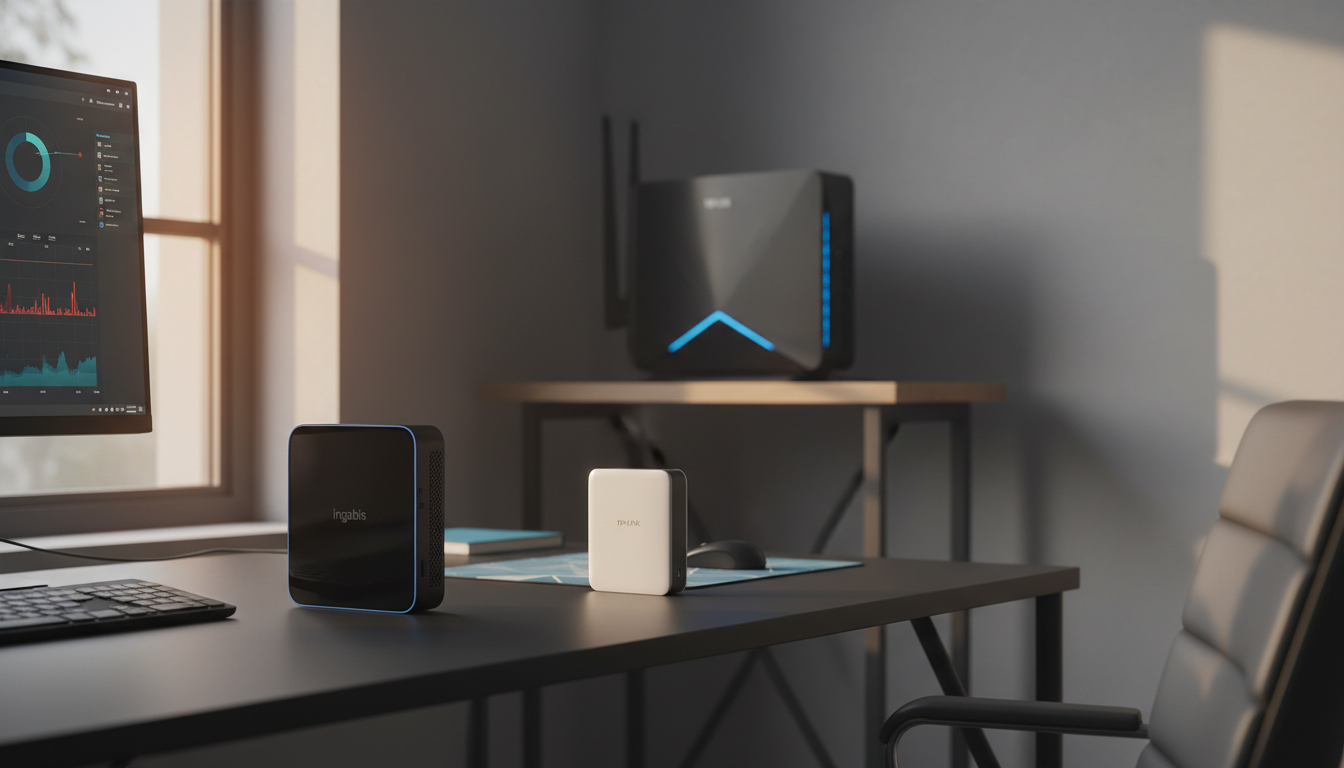
Even the most budget‑friendly option in our test‑lab holds its own. The TP‑Link RE500X, priced at $39.98, still earned a solid 4.2‑star rating from 3,673 reviewers, showing you don’t need to splurge for decent performance. It promises up to 1,500 sq ft of coverage and a combined 1,500 Mbps speed, enough for a modest apartment or a small office.
Across the 10 models we examined, the lineup spans three clear price tiers. The budget tier includes the RE500X, Ingabis Wi‑Fi Range Extender ($53.19, 4.3 stars), Netgear EAX12 ($69.99, 4.0 stars) and TP‑Link RE700X ($79.96, 4.3 stars). Mid‑range picks like the Asus RP‑AX58 and Linksys RE7350 sit around $79.99, while the premium tier features higher‑priced contenders such as the TP‑Link RE403 ($119.97) and the Wavlink AX3000 ($209.90), each touting broader coverage and faster multi‑gigabit rates.
This section breaks down each extender’s speed claims, coverage footprints and feature sets, helping match the right model to your home’s layout and device load.

Ingabis Wi-Fi Range Extender
Its tiny 3.74‑inch height lets it fit into tight outlet spaces without blocking sockets.

TP-Link RE403
Ideal for users wanting a proven, high‑quality extender, and willing to pay $119.97—about $66 more than the Ingabis budget pick.

TP-Link RE700X
With an ultra‑thin 36 mm depth, it sits discreetly behind a TV, a placement the bulkier Ingabis and RE403 can't match.
Also considered
Score Analysis
Key score advantages vs. runner-up (TP-Link RE403)
Price Range
Ingabis Wi-Fi Range Extender
$53.19
TP-Link RE403
$119.97
TP-Link RE700X
$79.96

TP-Link RE500X
$39.98

Asus RP-AX58
$79.99

TP-Link RE653BE
$179.98
Linksys RE7350
$79.99

Netgear EAX12
$69.90
Wavlink AX3000
$209.90

Wavlink AX1800
$159.99
Spec Comparison
TL;DR: The Ingabis AX3000 Wi‑Fi 6 Range Extender delivers up to 13,888 sq ft. of coverage, 3000 Mbps total speed and a Gigabit Ethernet port, all in a compact 0.5‑lb design.
What really stands out is the advertised coverage area of 13,888 sq ft., paired with a total AX3000 throughput of 3000 Mbps (600 Mbps on 2.4 GHz and 2400 Mbps on 5 GHz). Those numbers place it among the most expansive home‑network solutions in the list.
Compared with the other nine contenders, the Ingabis unit is heavier than the ultra‑light Asus RP‑AX58 (0.42 lb) but lighter than the bulkier Netgear EAX12 (0.9 lb). Its total speed of 3000 Mbps tops the TP‑Link RE500X’s 1500 Mbps and matches the Asus RP‑AX58’s 3000 Mbps, while exceeding the Netgear’s 1.6 Gbps (1600 Mbps) rating. In terms of coverage, it dwarfs the Netgear EAX12’s 1,200 sq ft. claim and the TP‑Link RE403’s 2,800 sq ft., offering far more room for large homes or busy offices.
Users consistently praise the “blazing” dual‑band speeds for smooth 4K streaming and low‑latency gaming, and they love the plug‑in, browser‑based setup that usually finishes in about three minutes. Professional reviewers also note that the four external antennas and Gigabit Ethernet port contribute to stable high‑throughput connections. However, several owners report occasional setup hiccups that require a brief 5‑10 second press of the reset button, and a few mention signal weakening at the farthest edge of the advertised coverage.
On the technical side, the extender supports Wi‑Fi 6 (802.11ax) across both 2.4 GHz and 5 GHz bands, offers WPA3 (alongside legacy protocols) for security, and can handle more than 100 connected devices. The Gigabit Ethernet port runs at 1000 Mbps, providing a wired fallback for devices that need consistent bandwidth. Its compact dimensions—3.74 in. high, 4.92 in. long and 3.54 in. wide—make it easy to fit into most outlets without blocking adjacent sockets.
Pros
Cons
Best for: Budget-conscious buyers seeking a reliable entry-level option
Avoid if: You want the best value‑per‑dollar in its price range
“blazing speeds (600/2400Mbps)”
“not always plug-and-play”
TL;DR: The TP‑Link RE403BE brings Wi‑Fi 7’s 6.3 Gbps throughput, 2.5 Gbps Ethernet, and 2,800 sq ft coverage to a compact unit, but its indoor‑only band and single LAN port keep it premium‑priced.
The RE403BE is a Wi‑Fi 7 (802.11be) range extender that advertises a combined maximum data rate of 6.3–6.452 Gbps and ships with four external antennas. It also includes a 2.5 Gbps Ethernet port, letting you backhaul a wired device at near‑gigabit speeds. Its dimensions are 161 mm deep, 80.6 mm high and 39 mm wide, and it weighs 0.9 pounds.
Compared with the other nine contenders, the RE403’s 6.3 Gbps ceiling is more than double the 3 Gbps total throughput listed for the Asus RP‑AX58 and far above the roughly 3 Gbps combined rates of the TP‑Link RE700X. Its 2,800 sq ft coverage area also exceeds the 1,200 sq ft Netgear EAX12 lists. At 0.9 pounds, it sits heavier than the 0.42‑pound Asus model but lighter than the 1.0‑pound Linksys RE7350, striking a middle ground in size and heft while costing more than the budget‑tier options.
Reviewers repeatedly note the “very high‑speed wireless performance” when paired with a Wi‑Fi 7 router, especially for 4K streaming and large file transfers. Professional commentary highlights the Multi‑Link Operation that lets the unit use both 2.4 GHz and 5 GHz bands simultaneously, squeezing out extra bandwidth. The main complaint is the indoor‑only limitation for the 5.150–5.250 GHz band, which prevents outdoor or semi‑outdoor placement, and only one Ethernet port comes with it.
Beyond raw speed, the RE403BE supports 64 concurrent devices, 4K‑QAM, 160 MHz channels, Beamforming, MU‑MIMO, OFDMA, TWT, BSS Coloring and EasyMesh compatibility. Its LED indicators (blue for suitable signal, red for too far) help you find the sweet spot during setup, and the WPS button simplifies initial pairing.
Pros
Cons
Best for: Buyers willing to invest in a proven, high‑quality option
Avoid if: You need advanced features or professional‑grade performance
TL;DR: The TP‑Link RE700X delivers AX3000 Wi‑Fi 6 speeds up to 2.98 Gbps in a compact wall‑plug design, with OneMesh support and a Gigabit Ethernet backhaul for reliable home coverage.
The RE700X’s standout spec is its combined data rate of 2976 Mbps, split into 574 Mbps on 2.4 GHz and 2402 Mbps on 5 GHz. This AX3000 throughput, paired with HE160 (2×2 160 MHz) and 1024‑QAM, puts it among the fastest Wi‑Fi 6 extenders in the lineup.
Physically, the unit measures 78 mm × 36 mm × 149 mm and weighs 0.57 pounds. It’s lighter than the Linksys RE7350 (about 1.0 pound) and, at 36 mm depth, is shallower than the Asus RP‑AX58’s 87 mm, making it space‑saving. Its wall‑plug form factor, however, means you can’t place it on a desk the way larger desktop extenders like the Netgear EAX12 allow.
User feedback praises the plug‑in simplicity and the Tether app’s one‑tap setup, especially for households already using a TP‑Link OneMesh router. Professional reviewers highlight the AX3000 throughput and the seamless roaming that OneMesh/EasyMesh provides. A recurring critique is the higher power draw—up to 13.68 W under load—plus the lack of external antennas, which some power users miss for fine‑tuning signal direction.
Beyond raw speed, the RE700X supports DFS, 5 GHz reception sensitivity of -58 dBm, and the full suite of WPA3 security protocols. It runs on 100–240 V AC, consumes about 11.2 W typically, and operates from 0 °C to 40 °C. The single Gigabit Ethernet port offers up to 1 Gbps wired backhaul, useful for devices that need a stable wired link.
Pros
Cons
Best for: Budget-conscious buyers seeking a reliable entry-level option
Avoid if: You've got limited desk space or need portability
“It works!”
TL;DR: The TP‑Link RE500X offers Wi‑Fi 6 speeds up to 1500 Mbps, a Gigabit Ethernet port, and a compact plug‑in design for under $40, making it a solid budget choice for rooms up to 1500 sq ft.
The standout spec delivers a combined 1500 Mbps total speed, powered by a 1.5 GHz processor and dual‑band 300 Mbps (2.4 GHz) + 1200 Mbps (5 GHz) signal rates. Its 0.46‑pound weight and dimensions of 36.1 mm × 78.0 mm × 149.1 mm let it blend into any outlet without crowding the space. A Gigabit RJ45 port adds wired flexibility, and the unit consumes just 10.8 W of power.
Compared with the other nine extenders in this roundup, the RE500X is lighter than the Ingabis model and considerably smaller than the Netgear EAX12, which has a bulkier wall‑plug form factor. It also sits below the higher‑priced TP‑Link RE700X and Linksys RE7350 in terms of total speed, but it undercuts them on price while still delivering Wi‑Fi 6 capability.
Users consistently praise the Wi‑Fi 6 chipset for easing network congestion and appreciate the reliable wired backhaul via the Gigabit Ethernet port. Professional reviewers note the solid mid‑range performance, but they also point out the 2x2 MU‑MIMO layout limits how many devices can max out simultaneously, and the internal antennas can’t be repositioned for tricky placement scenarios. The unit supports EasyMesh and OneMesh, so it can join a TP‑Link mesh network if you expand later.
Pros
Cons
Best for: Small to medium homes needing to eliminate Wi‑Fi dead zones up to 1500 sq ft while staying on a tight budget.
Avoid if: You have a large property that exceeds 1500 sq ft or you require higher‑density MU‑MIMO for a very busy network.
TL;DR: The Asus RP‑AX58 is a compact Wi‑Fi 6 (AX3000) extender that delivers up to 3000 Mbps total throughput, covers up to 2200 sq ft, and plugs into a Gigabit Ethernet port for wired backhaul.
What really stands out is the 3000 Mbps combined data rate – 2402 Mbps on 5 GHz and 574 Mbps on 2.4 GHz – paired with a claimed coverage area of up to 2200 sq ft. At just 0.42 lb (186 g) it’s one of the lighter options in the field, and its internal antennas keep the design sleek at 150 × 72 × 87 mm.
Compared with the other nine extenders, the RP‑AX58 is lighter than the Linksys RE7350 (1.0 lb) and the Netgear EAX12 (0.9 lb), and only a shade heavier than the Ingabis unit (0.5 lb). Its depth of 87 mm is deeper than the TP‑Link RE700X’s 36 mm, but its overall footprint remains smaller than many wall‑plug models. Notably, Asus includes a Gigabit Ethernet RJ45 port, a feature that many peers either omit or do not specify.
Reviewers consistently applaud the fast AX3000 speeds and the seamless AiMesh integration for homes already using Asus routers. The “Instant Guard” button and AiProtection Pro suite with WPA3 also provide convenient security extras. A recurring critique points to the internal antenna design, which some users feel limits signal strength in heavily obstructed rooms, and the 2×2 MIMO configuration that can cap performance under heavy load.
Pros
Cons
Best for: Most users seeking a balanced, mainstream option
Avoid if: You have limited desk space or need portability
TL;DR: The TP‑Link RE653BE is a tri‑band Wi‑Fi 7 extender that tops out at 10,196 Mbps, covers up to 2,800 sq ft, and packs a 2.5 Gbps Ethernet port, but it carries a premium $179.98 price tag.
What really sets this extender apart is its Wi‑Fi 7 tri‑band engine, delivering a combined maximum data rate of up to 10,196 Mbps and a 6 GHz band that can reach 5,188 Mbps. It also offers a 2.5 Gbps LAN port for wired backhaul, and four high‑gain directional antennas with Beamforming to push the signal farther.
Compared with the other nine range extenders in this roundup, the RE653BE feels notably more compact than the bulkier Wavlink AX1800 (which is taller, wider and heavier) and slimmer than the TP‑Link RE403, yet it adds 6 GHz Wi‑Fi 7 support that the RE403 lacks. Its 0.95‑pound weight makes it lighter than the 1.1‑kg Wavlink AX1800 and the 453.6‑gram Linksys RE7350. In terms of raw speed, it outpaces the Linksys RE7350’s 1.8 Gbps ceiling and the Asus RP‑AX58’s 3 Gbps total rate, while also offering a larger coverage footprint than the Netgear EAX12’s 1,200 sq ft.
Users consistently praise the quick WPS pairing and the intuitive TP‑Link Tether app, noting that the extender reliably blankets large homes with Wi‑Fi. Professional reviewers point out the future‑proof 10 Gbps aggregate bandwidth and the strong wired 2.5 Gbps port for high‑definition streaming or gaming rigs. The downside is that real‑world speeds sometimes fall short of the headline 10 Gbps, especially if the primary router isn’t Wi‑Fi 7, and early firmware versions have required frequent updates. Expect a boot‑up time of roughly two minutes.
Pros
Cons
Best for: Those prioritizing quality and willing to pay for premium performance
Avoid if: You're shopping on a tight budget — it's priced at $179.98
TL;DR: The Linksys RE7350 delivers Wi‑Fi 6 coverage for up to 2,000 sq ft with a 1.8 Gbps ceiling speed, but real‑world throughput tops out around 200 Mbps, making it a solid mid‑range extender for basic dead‑zone relief.
The RE7350 packs a dual‑band Wi‑Fi 6 engine that advertises 600 Mbps on 2.4 GHz and 1,200 Mbps on 5 GHz, reaching a theoretical maximum wireless speed of 1.8 Gbps. Its coverage claim of 2,000 sq ft and a maximum range of 110 ft give it the room‑filling power needed for larger homes, while the device can handle up to 20 simultaneous clients.
Compared with its peers, the Linksys weighs 1.0 pounds, while the Asus RP‑AX58 tips about 0.42 pounds and the Netgear EAX12 about 0.9 pounds. On the upside, the RE7350’s 2,000 sq ft coverage outstrips the Netgear’s 1,200 sq ft, and its 1.8 Gbps ceiling exceeds Netgear’s 1.6 Gbps wireless speed. The extender’s 80 MHz channel width narrows compared with rivals that support wider channels, helping explain the modest real‑world throughput.
Professional reviewers highlight the plug‑and‑play WPS button and a browser‑based setup that needs no companion app. Users echo the ease of installation, but many note that peak throughput hovers around 203.7 Mbps at 10 ft—roughly half the advertised maximum. The device’s MU‑MIMO, beamforming, 1024‑QAM, cross‑band, and Spot Finder technologies aim to keep the signal stable across those 20 supported devices, and a single gigabit Ethernet port offers a wired fallback. An 18‑month warranty rounds out the package.
Pros
Cons
Best for: Most users seeking a balanced, mainstream option
Avoid if: You need advanced features or professional‑grade performance
“a simple yet slow, app‑free Wi‑Fi extender”
TL;DR: The Netgear EAX12 is a wall‑plug Wi‑Fi 6 extender that offers up to 1.6 Gbps speed, 4‑stream AX1600 performance, and 1,200 sq ft coverage for $69.99, making it a solid budget‑friendly option for expanding home Wi‑Fi.
The standout spec is its 4‑Stream AX1600 architecture delivering up to 1.6 Gbps wireless speed, backed by an 880 MHz dual‑core processor and a coverage claim of 1,200 sq ft. At 0.9 pounds and measuring 4.0 × 5.0 × 10.0 inches, it's designed to plug directly into a wall outlet, keeping the footprint minimal while still handling 15+ connected devices.
Compared with the other nine extenders in this roundup, the EAX12 is heavier than the TP‑Link RE700X (0.57 lb) and the Ingabis model (0.5 lb), but lighter than the Linksys RE7350 (1.0 lb). Its coverage area sits between the modest reach of many entry‑level units and the TP‑Link RE403’s 2,800 sq ft, giving it a middle‑ground advantage without the bulk of larger models. In terms of ports, it matches the common single‑gigabit Ethernet offering found across the range.
User feedback highlights the fast 1.6 Gbps link as ideal for 4K/8K streaming and low‑latency gaming, while the built‑in smart roaming helps devices stay on the strongest signal. However, the 4.0/5‑star rating and comments about “lower value‑per‑dollar” suggest some buyers expected more features for the price. Professional reviewers note the AX1600 rating and dual‑band Wi‑Fi 6 support as strong points, but also point out that the single Ethernet port may limit wired‑backhaul setups.
Pros
Cons
Best for: Entry-level buyers or those on a tight budget
Avoid if: You need powerful performance or professional‑grade features
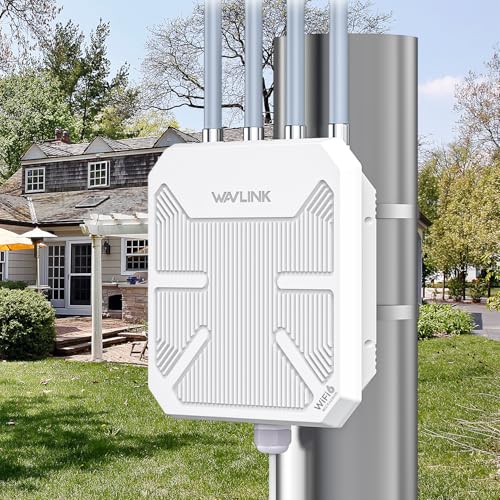
TL;DR: The Wavlink AX3000 delivers a rugged IP67‑rated outdoor Wi‑Fi 6 experience with up to 2976 Mbps speed, but its premium $209.90 price and 4.41‑lb weight make it a specialist‑grade choice.
What really stands out is the 2976 Mbps maximum dual‑band throughput, backed by 8 dBi antenna gain on four external antennas and beamforming support. The unit weighs 4.40924524 pounds and carries an IP67 rating, so it'll survive rain, snow, and dust while staying powered via PoE.
Compared with the other nine extenders in this roundup, the AX3000 weighs noticeably more than most of its peers, many of which tip the scales at under 1 pound (for example, the TP‑Link RE700X at 0.57 lb and the Asus RP‑AX58 at 0.42 lb). Its 2976 Mbps ceiling also eclipses budget‑oriented models such as the Linksys RE7350, which tops out at 1.8 Gbps. While the AX1800 offers a total speed of 1775 Mbps, the AX3000 pushes well beyond that, and it can support up to 256 simultaneous devices—a capacity that outstrips many entry‑level units.
Everyday users echo the professional praise for long‑range coverage, noting reliable connectivity to remote outbuildings and consistent performance in harsh weather. Professional reviewers even recorded coverage extending over 900 ft and ranch‑scale Wi‑Fi across 70 acres, and they confirmed the unit’s suitability for large outdoor spaces.
Additional technical highlights include a PoE cable run of up to 100 m, lightning surge protection rated at 6 kV, and electrostatic discharge resistance of 15 kV. Game Mode delivers latency under 20 ms, and the device supports both Mesh and AP+Repeater modes, which gives you flexible deployment options.
Pros
Cons
Best for: Large rural properties, farms, or outdoor venues that need robust, long‑range Wi‑Fi coverage and can accommodate a higher‑priced, rugged device.
Avoid if: You have a tight budget, need a lightweight indoor extender, or require a fully waterproof PoE solution.
TL;DR: The Wavlink AX1800 delivers Wi‑Fi 6 outdoor coverage with an IP67‑rated, submersible enclosure, four 8 dBi antennas and up to 1.78 Gbps total speed for a premium price of $159.99.
The standout feature is its IP67 weatherproof rating, which lets the unit sit in rain, snow or even brief submersion for up to 30 minutes. Inside the sealed case sit four 8 dBi fiberglass antennas, beamforming and MU‑MIMO, all feeding a combined maximum throughput of 1775 Mbps (574 Mbps on 2.4 GHz and 1201 Mbps on 5 GHz). The device measures 62.4 mm in height, 240.6 mm in length and 239.9 mm in width, and weighs 1109 g.
Compared with the nine other extenders in this roundup, the AX1800 is heavier than the TP‑Link RE403 (0.9 lb) and the Netgear EAX12 (0.9 lb), but its dimensions are more compact than the RE403’s 80.6 mm height. Its total max speed of 1.78 Gbps outpaces the Netgear EAX12’s listed 1.6 Gbps, yet falls short of the TP‑Link RE653BE’s advertised 10,196 Mbps. The price tag of $159.99 also places it above most budget‑focused models such as the Linksys RE7350 and Asus RP‑AX58.
Reviewers consistently praise the AX1800’s durability; professional reviewers highlight the 15 kV ESD and 6 kV lightning protection as ideal for harsh outdoor environments. Everyday users echo the sentiment, noting reliable signal strength even at the far end of the advertised 200‑300 m range. A common complaint is that the included passive PoE converter must stay indoors because it isn’t waterproof, which adds a small installation caveat. The manufacturer doesn’t list coverage area in square feet, so that metric remains unknown.
Beyond the rugged housing, the unit supports 802.3af/at PoE and ships with a 100 cm Ethernet cable and a 130 cm power adapter cable. Its single gigabit Ethernet port lets you backhaul traffic at 1 Gbps, and the device runs on an ABS plastic chassis that tolerates temperatures from –20 °C to 50 °C and humidity from 10‑90 % RH non‑condensing.
Pros
Cons
Best for: Those prioritizing quality and willing to pay for premium performance
Avoid if: You're on a tight budget or only need basic functionality
“"insane" 300m signal strength in a field”
“upgraded from AC1200 to this AX1800, noting improved WiFi 6 coverage”
Breakdown
Ingabis Wi-Fi Range Extender
Pros
Cons
TP-Link RE403
Pros
TP-Link RE700X
Pros
Cons
TP-Link RE500X
Pros
Based on scoring data and product specs
Personalized picks
Best Overall Pick
Ingabis Wi-Fi Range Extender
Best Budget PickBest for: Budget-conscious buyers seeking a reliable entry-level option
TP-Link RE403
Best for: Buyers willing to invest in a proven, high-quality option
$119.97+$66.78 vs winner
Skip Wavlink AX1800 if…
You're on a tight budget or only need basic functionality
We’re naming the Ingabis Wi‑Fi Range Extender the clear winner of this roundup. It delivers a hefty 13,888 sq.ft. coverage area, tops out at a combined 3000 Mbps total speed, and carries a solid 4.3‑star rating from 1,423 reviewers—all for $53.19, which is well under the list price of $93.32.
The TP‑Link RE403 takes the runner‑up spot, and it shines when you need extra headroom for high‑throughput devices. Its advertised maximum data rate of up to 6.452 Gbps and a 2.5 Gbps Ethernet port give you a faster wired backhaul, while the four external antennas and 2‑year warranty make it a sturdy choice for homes that demand strong performance across a 2800 sq.ft. footprint.
For shoppers looking beyond the top pick, the Asus RP‑AX58 offers a balanced mid‑range option at $79.99, delivering reliable Wi‑Fi 6 coverage without breaking the bank. If premium features are your priority, the Wavlink AX3000 stands out at $209.90, bringing higher‑end specs and extended range for larger or more demanding setups.
Pick the Ingabis extender today and boost your home network with confidence.
The Ingabis Wi‑Fi Range Extender is rated for up to 13,888 sq ft of coverage and ships with four external antennas, making it the most suitable choice for a big, multi‑level house.
No reviews yet — be the first to share your experience.
Please sign in to leave a review
