⚡ Quick Answer
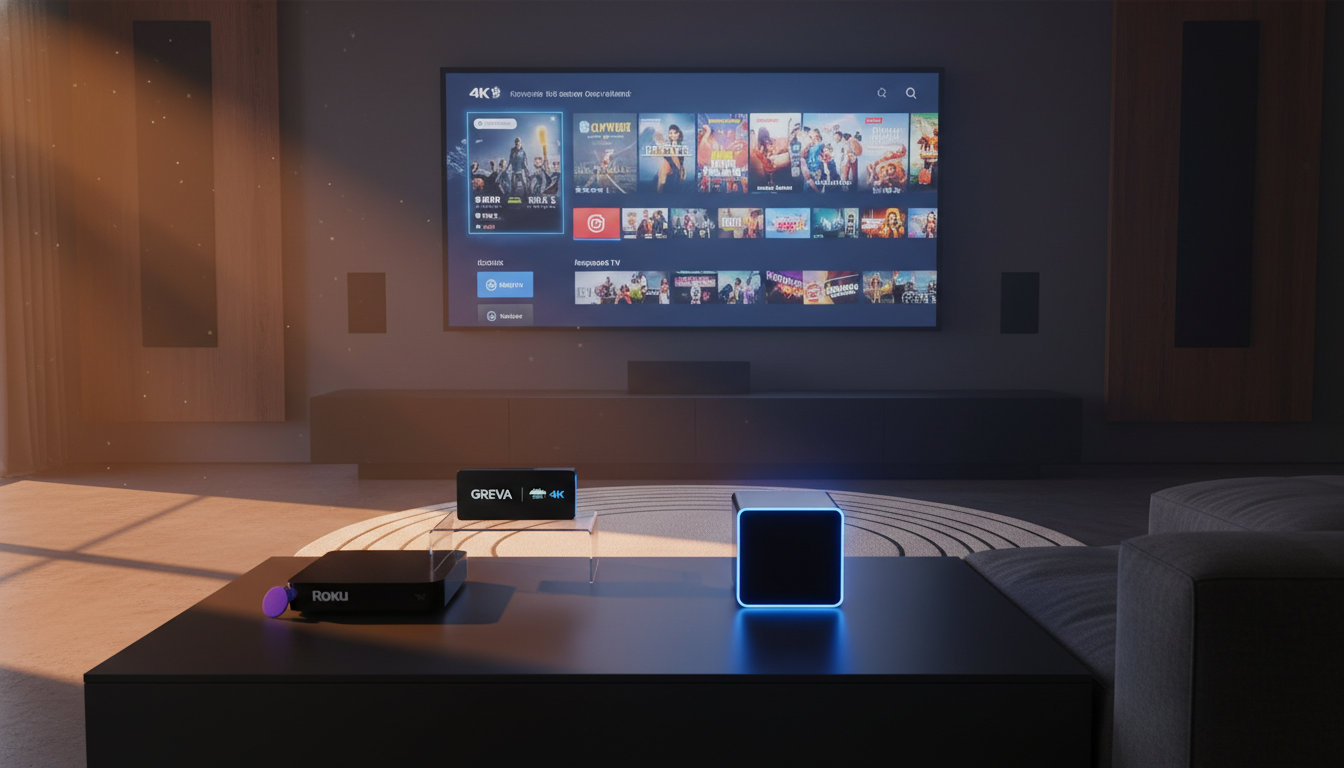
If you’re hunting for a Wi‑Fi 6 streaming media player that can keep up with 4K HDR content, you’ll find six options that span the price spectrum from $31.99 to $159.99. The Roku Ultra leads the mid‑range tier at $79.00 and carries a 4.5‑star rating from 7,366 reviewers, while the Amazon Fire TV Cube sits in the premium tier at $99.99 with a 4.4‑star rating from 15,796 reviews. On the budget end, the X88 Screencast TV Box ($31.99) and Greva Android TV Stick 4K ($32.99) give you Wi‑Fi 6 connectivity without breaking the bank.
Mid‑range choices also include the Xiaomi TV Stick 4K 2nd Gen at $69.99, which offers 2 GB RAM and 8 GB eMMC storage, and the Roku Ultra’s gigabit Ethernet and HDMI 2.1 support for smoother streams. Premium contenders—Amazon’s Cube with 11 W built‑in speaker power and RockTek’s G2 Chromecast with gigabit Ethernet and up‑to‑450 Mbps Wi‑Fi speed—target users who want the most robust audio and networking features. The following breakdown shows each model’s specs and reviews, helping you match a player to your living‑room setup.

Roku Ultra
Its 127 mm depth gives a sturdy, full‑size feel while still fitting most TV setups, supporting the strong value and feature set that earned high ratings.

Amazon Fire TV Cube
Ideal for power‑users who want voice‑controlled streaming and a built‑in 11 W speaker; at $99.99 it’s about $21 more than the Roku Ultra but adds premium audio.
Greva Android TV Stick 4K
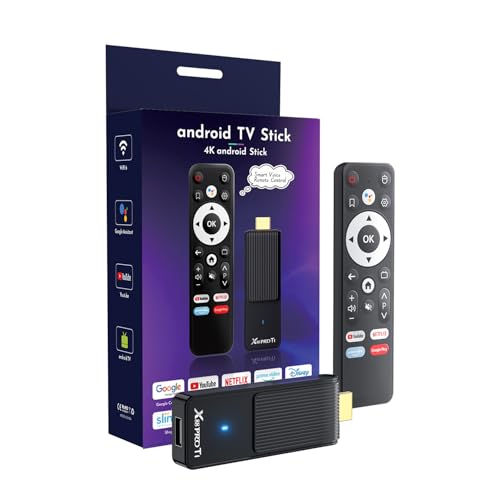
Stands out with a 100 Mbps Ethernet port, letting budget‑conscious cord‑cutters secure wired streaming at $32.99—something the larger Roku and Fire models don’t list.
Also considered
Score Analysis
Key score advantages vs. runner-up (Amazon Fire TV)
Price Range
Roku Ultra
$79.00
Amazon Fire TV Cube
$109.99
Greva Android TV Stick 4K
Out of Stock

RockTek G2 Chromecast
Out of Stock
Xiaomi TV Stick 4K 2nd Gen Black
$69.99

X88 Screencast TV Box
Out of Stock
Spec Comparison
TL;DR: The Roku Ultra 2024 offers 30% faster performance, 4K HDR with Dolby Vision and Atmos, Wi‑Fi 6, and a premium voice remote for $79, making it a top‑rated mid‑range streaming player.
The standout spec, the “Performance Boost,” lists a 30% speed increase over prior Roku models, backed by 2 GB of system RAM and 4 GB of internal storage. It streams 3840 × 2160 px 4K video at 60 fps and supports Dolby Vision, HDR10+, and Dolby Atmos, giving you cinema‑grade picture and sound without a separate decoder.
Compared with the five other players in this roundup, the Ultra is the lightest at 0.03968320716 lb, beating the Amazon Fire TV Cube (1.13 lb), Greva Android TV Stick (0.28125 lb), X88 Screencast TV Box (0.65 lb) and even the Xiaomi TV Stick (0.06172943336 lb). It also carries a Gigabit Ethernet port, whereas the Amazon Cube and X88 list only 10/100 Mbps or 100 Mbps speeds. Storage is modest at 4 GB versus 8 GB on the Xiaomi stick and 16 GB on both Amazon and Greva, but the Ultra’s Wi‑Fi 6 (802.11ax) matches the Greva stick’s Wi‑Fi 6 capability and outpaces the others where Wi‑Fi specs aren’t listed.
Reviewers consistently praise the ultra‑fast app launches and the smooth 4K streaming experience over Wi‑Fi 6, noting the remote’s backlit buttons, finder feature, and headphone jack as real conveniences. Professional reviewers highlight the “lightning‑fast performance” and the smooth HDR playback. The most common complaints mention the barrel‑style power connector, occasional Wi‑Fi range limits when the player is far from the router, and the lack of Apple AirPlay 2/HomeKit support for users locked into the Apple ecosystem.
Pros
Cons
Best for: Most users looking for a well‑reviewed, reliable mainstream option
Avoid if: You have limited desk space or need portability
TL;DR: The Amazon Fire TV Cube offers hands‑free Alexa, Wi‑Fi 6E, 4K 60 fps HDR streaming and a built‑in 11 W speaker, but its bulkier chassis and lack of VRR may deter gamers.
The Cube packs a Wi‑Fi 6E (802.11ax) radio, an octa‑core 2.0 GHz processor and 2 GB RAM, letting it launch apps quickly and stream 3840×2160 px video at up to 60 fps. It also includes a 16 GB internal drive, a built‑in 11 W speaker and a four‑mic far‑field array for hands‑free Alexa control. At 1.13 pounds and a compact 86 mm × 77 mm × 86 mm footprint, it’s larger than a stick but still fits most entertainment centers.
Compared with the five other players, the Cube is noticeably heavier than the Roku Ultra (≈0.04 lb) and the Xiaomi TV Stick (≈0.06 lb), and even the Greva stick (≈0.28 lb). Its depth of 86 mm is shallower than Roku’s 127 mm but deeper than the ultra‑slim sticks. Storage-wise, 16 GB matches Greva’s offering and dwarfs Roku’s 4 GB and Xiaomi’s 8 GB. The Ethernet port is 10/100 Mbps, slower than Roku’s Gigabit Ethernet and RockTek’s 1000 Mbps link, but on par with Greva and X88’s 100 Mbps ports. Wi‑Fi 6E also outpaces Greva’s Wi‑Fi 6.
Users rave about the convenience of voice‑only navigation and the rapid app starts, echoing professional reviewers who call the octa‑core performance “fantastic” for 4K visuals. However, several reviewers point out that SDR upscaling lacks punch on non‑HDR content, and the absence of native VRR or ALLM means gamers won’t get the low‑latency experience they expect. The bulkier chassis also draws complaints about placement flexibility, and some say the on‑screen ads are intrusive.
Pros
Cons
Best for: Buyers willing to invest in a proven, high‑quality option
Avoid if: You need advanced features or professional‑grade performance
TL;DR: The Greva Android TV Stick 4K delivers Wi‑Fi 6, 4K/8K HDR10 video and a full‑size HDMI plug for just $32.99, but its modest 3.5‑star rating suggests mixed user satisfaction.
What really stands out is the stick’s Wi‑Fi 6 radio paired with a 100 Mbps Ethernet port, giving you both wireless and wired options for streaming 4K or even 8K content. The device packs a Rockchip RK3518 quad‑core Cortex‑A53 CPU, a Mali‑450 GPU, 2 GB of RAM and 16 GB of internal storage, which is enough for the Android 14 OS and a handful of apps.
In the six‑product lineup, Greva is lighter than the X88 Screencast TV Box (0.65 lb) and far lighter than the Amazon Fire TV Cube (1.13 lb), yet it’s heavier than the ultra‑light Roku Ultra (about 0.04 lb). Its Ethernet speed matches the X88’s 100 Mbps but falls short of the RockTek G2’s gigabit‑class Ethernet. Price‑wise it sits in the budget tier, undercutting higher‑priced peers while offering comparable Wi‑Fi 6 connectivity.
Reviewers note the inclusion of HDR10, 3D and 8K support, which surprises many for a device at this price point, and many appreciate the voice‑assistant remote for hands‑free navigation. However, the 3.5‑star average across 26 reviews points to occasional hiccups with stability and occasional app crashes, which some users flag as a reliability concern.
Pros
Cons
Best for: Buyers in the budget price range seeking the best quality at that price point
Avoid if: Reliability and user satisfaction are your top concerns
TL;DR: The RockTek G2 delivers 4K UHD streaming with HDR10+, Dolby Vision and AV1 support, backed by Wi‑Fi 6 and Gigabit Ethernet, but its premium $159.99 price and un‑certified Android 14 may limit some apps.
The G2 packs a 3840×2160 px 4K UHD engine running at 60 Hz, with native HDR10+, HDR10+ and Dolby Vision decoding plus AV1, HEVC and VP9 support. Under the hood sits an Amlogic S905X4‑K quad‑core Cortex‑A55 at 2.0 GHz, an ARM Mali‑G31 MP2 GPU, 4 GB LPDDR4 RAM and 32 GB eMMC 5.1 storage. Wired networking tops out at up to 1000 Mbps Ethernet, while Wi‑Fi 6 dual‑band MIMO 2T2R delivers up to 450 Mbps wireless speed.
Compared with the five other players, the G2 offers double the RAM of the Amazon Fire TV Cube, Roku Ultra, Xiaomi Stick and Greva Stick, all of which list 2 GB. Its 32 GB internal storage also exceeds the 16 GB or less found in those rivals. The Gigabit Ethernet rating of up to 1000 Mbps outpaces the 10/100 Mbps link of the Fire TV Cube and the 100 Mbps Ethernet of Greva and X88, while the Wi‑Fi 6 speed claim gives it a clear edge over the sticks that only note Wi‑Fi 6 without a speed figure. Physically, the box’s 1.0 × 4.5 × 4.5‑inch footprint sits between the bulkier Fire TV Cube and the ultra‑compact stick‑shaped devices.
Professional reviewers praise the G2’s smooth 4K HDR playback and the low‑latency cloud‑gaming experience enabled by NVIDIA GeForce Now. Users love the built‑in Chromecast and the voice‑search remote, noting that the 7.1‑channel Dolby Atmos and DTS‑HD pass‑through creates an immersive soundstage. However, the modified Android 14 isn’t Google‑certified, leading to missing Widevine L1 and occasional Netflix 4K hiccups. Thermal throttling at 65 °C after roughly 18 minutes of HDR content can cause minor frame‑rate drops, and the advertised HDMI 2.1 limits the hardware to HDMI 2.0b with no VRR or ALLM support.
Pros
Cons
Best for: 4K streaming enthusiasts who want premium HDR, high‑speed networking and immersive audio, plus cloud‑gaming fans who value low‑latency connections.
Avoid if: You need guaranteed Netflix 4K, VRR gaming support, or a fully Google‑certified Android TV experience.
“Excellent 4K@60fps playback with Dolby Vision/HDR10+/AV1 support and auto frame rate/color space matching”
“Modified Android 14 lacks Google certification, leading to inconsistent Play Store/Widevine L1/Netflix 4K support.”
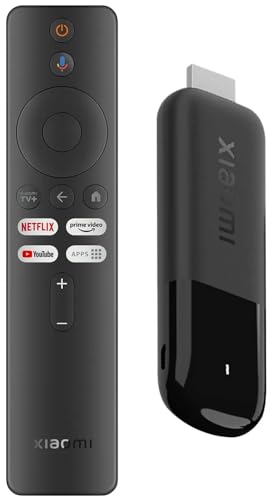
TL;DR: The Xiaomi TV Stick 4K (2nd Gen) offers 4K Google TV streaming with Wi‑Fi 6, an 850 MHz GPU and 2 GB RAM in a compact 28 g dongle for $69.99.
The stick’s standout hardware includes a quad‑core Cortex‑A55 CPU running at 2.5 GHz and an ARM G310 V2 GPU clocked to 850 MHz. Combined with 2 GB of RAM and 8 GB of eMMC storage, it can handle 4K (3840 × 2160) video at 60 Hz, supporting AV1, H.265 and VP9 10‑bit codecs. Its Wi‑Fi 6 (802.11ax) dual‑band radio promises low‑latency streaming, while the Bluetooth 5.2 voice remote adds hands‑free control.
At 0.06 lb (28 g), the stick is heavier than the Roku Ultra’s 0.04 lb frame but far lighter than the Amazon Fire TV Cube’s 1.13 lb body. Its 165 mm length also exceeds the Roku Ultra’s listed depth of 127 mm, giving it a slightly larger physical profile while still fitting behind most TVs. Like the Roku Ultra, it ships with 2 GB of RAM, but it doubles the internal storage of Roku’s 4 GB, though it offers less than the Cube’s 16 GB.
Users consistently praise the device for lag‑free 4K playback and the convenience of a portable form factor that slides onto any HDMI port. Professional reviewers note the “absolutely crazy smooth” UI, attributing it to the 80 % CPU boost and 150 % GPU rendering increase over the first‑gen stick. Most users complain about the missing AI super‑resolution feature and the lack of an Ethernet port, saying it limits network reliability.
Beyond raw performance, the stick supports Dolby Vision and HDR10+ HDR formats, plus Dolby Atmos, DTS:X and DTS HD audio decoding. The built‑in Google TV platform provides a familiar app ecosystem, and the Bluetooth 5.2 remote includes Google Assistant for voice commands. Together, these features make the device a solid mid‑range option for anyone who wants high‑resolution streaming without a bulky box.
Pros
Cons
Best for: Most users seeking a balanced, mainstream option
Avoid if: You need AI upscaling, wired Ethernet, or extensive USB peripheral support
TL;DR: The X88 Screencast TV Box delivers 4K HDR video and Wi‑Fi 6 at a budget‑friendly $31.99, but its modest performance and limited app certification may frustrate power users.
The standout spec is its Wi‑Fi 6 (2.4 GHz/5 GHz) radio paired with a 100 Mbps Ethernet port, giving you both wireless and wired options for stable 4K streaming. Video output reaches 3840×2160 px 4K @ 60 fps with HDR10 support, and the box packs a quad‑core ARM Cortex‑A53 CPU clocked up to 2.0 GHz, scoring 446 in Geekbench’s multi‑core test.
The X88 weighs 0.65 lb, making it heavier than the Greva Stick (0.28 lb), the Xiaomi Stick (0.06 lb) and the Roku Ultra (0.04 lb), yet lighter than the Amazon Fire TV Cube (1.13 lb). Its Ethernet speed matches the Greva’s 100 Mbps but falls short of Roku Ultra’s gigabit Ethernet and RockTek G2’s 1000 Mbps. Like Greva and Xiaomi, it offers Wi‑Fi 6, a feature the Fire TV Cube lacks.
User feedback highlights the clear picture and easy setup, especially for YouTube and local media files. Professional reviewers note smooth 4K playback when the Wi‑Fi 6 link stays strong, while many users complain that Netflix and Prime Video cap at 480p‑720p because the Android OS lacks certification. The 2 GB RAM version can feel sluggish when several apps run simultaneously, which aligns with the 3.4/5 star rating from twelve reviewers.
Pros
Cons
Best for: Entry-level buyers or those on a tight budget
Avoid if: Reliability and user satisfaction are your top concerns
“Crystal clear on large TVs, easy WiFi/Ethernet setup, smooth for YouTube/Netflix basics.”
“Slows with too many apps (especially 2GB/16GB models).”
Breakdown
Roku Ultra
Pros
Amazon Fire TV Cube
Pros
Greva Android TV Stick 4K
Pros
Cons
RockTek G2 Chromecast
Pros
Cons
Based on scoring data and product specs
Personalized picks
Best Overall Pick
Roku Ultra
Best Mid-Range PickBest for: Most users looking for a well-reviewed, reliable mainstream option
Amazon Fire TV Cube
Best for: Buyers willing to invest in a proven, high-quality option
$109.99+$30.99 vs winner
Skip X88 Screencast TV Box if…
Reliability and user satisfaction are your top concerns
Roku Ultra takes the top spot as the best Wi‑Fi 6 streaming media player. It ships with Wi‑Fi 6 (802.11ax) and supports Dolby Atmos audio, so you’ll get a fast, immersive experience on a 4K TV. The unit also has a 4.5‑star rating from 7,366 reviews and a manufacturer‑claimed 30% performance boost over prior Roku models, backed by 2 GB of RAM and 4 GB of internal storage—all for $79.00.
The Amazon Fire TV Cube lands as the runner‑up, ideal if you need a hands‑free Alexa assistant and built‑in speaker power. It runs on Wi‑Fi 6E, offers 16 GB of internal storage, and supports Dolby Vision HDR, delivering a solid 4.4‑star rating from 15,796 reviewers for $99.99.
For tighter budgets, the X88 Screencast TV Box is the cheapest option at $31.99, providing basic 4K streaming without the premium frills. If you prefer a high‑end experience, the RockTek G2 Chromecast stands out as the premium pick at $159.99, delivering top‑tier features for enthusiasts.
Pick the Roku Ultra now and enjoy a fast, feature‑rich streaming setup right out of the box.
The Roku Ultra comes with a rechargeable Voice Remote Pro that includes hands‑free voice control, backlit buttons and a built‑in headphone jack, making it a strong fit for a living‑room environment. Its remote charges via USB‑C, so you won’t need to replace batteries.
No reviews yet — be the first to share your experience.
Please sign in to leave a review