⚡ Quick Answer
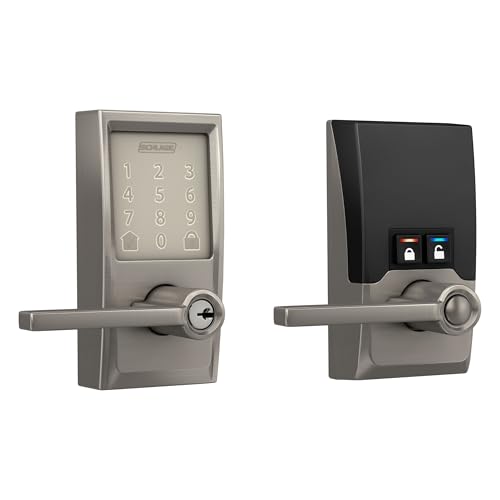
Smart lever locks are finally catching up with deadbolts, and this roundup of 12 models shows just how varied the options have become. At the premium end, the Schlage Encode Accent Lever commands a $273.90 price tag, carries a 4.3‑star rating from 589 reviewers, and packs Grade 1 security, auto‑lock, app control and Alexa/Google Assistant voice support—all without needing a separate hub. Its 100‑code capacity and reversible handing make it a flexible choice for garage or side doors where a deadbolt isn’t practical.
Below the premium tier, you’ll find mid‑range contenders like the Yale Assure Lever Oil Rubbed Bronze and Yale Assure Lock Black, while the budget segment is represented by the Veise VE029, Ultraloq Latch 5, Philips Wi‑Fi Smart Lever Lock and Yale Assure Lever Black, with prices starting at $84.99. Across the board, most locks offer auto‑lock, touchscreen or capacitive keypads, and battery‑type details ranging from AA cells to rechargeable packs.
We’ll break down how each model stacks up on connectivity, durability, code capacity and everyday convenience, so you can pinpoint the lock that fits your door and your digital ecosystem.

Schlage Encode Accent Lever
Stores up to 100 access codes, giving you plenty of user slots without extra hardware.

Schlage Encode
Ideal for quality‑focused homeowners who don’t mind paying $25.10 more than the mid‑range pick.
Veise VE029
Provides an IP65 weather rating, so it’s ready for exterior doors where the others lack protection.
Also considered
TL;DR: The Schlage Encode Century Lever offers hub‑free WiFi access, 100 programmable codes, and a sturdy 4.25‑lb satin‑nickel build, backed by a AAA security rating and a lifetime mechanical warranty.
The standout feature is its built‑in WiFi, so you can lock or unlock from the Schlage Home app without any external bridge or hub. The lock fits a cross bore of 2.13 inches and sits at a height of 5.875 inches, while the lever grip measures 3.94 inches for easy operation. At 4.25 pounds, it feels solid yet manageable on a standard interior door.
Compared with the other eleven entries, this model is heavier than the Lockstate RemoteLock OE‑550L (3.5 lb) but matches the weight of the Schlage Encode Accent Lever, which also lists 4.25 lb. It sits a touch pricier than the Yale Assure Lock Black, yet its built‑in WiFi gives it an edge over models that need a bridge or rely on Bluetooth. The adjustable backset of 2.38‑2.75 inches aligns with the flexibility seen in several peers.
Users consistently praise the reliable WiFi connection and the convenience of voice commands through Alexa, Google Assistant, or Apple HomeKit. Reviewers note the ease of managing up to 100 access codes via the app, while the built‑in alarm adds a deterrent against forced entry. The main complaints revolve around the four AAA batteries, which some owners find require more frequent swaps in high‑traffic settings, and the lack of a listed IP weather rating for outdoor exposure.
Technical details reinforce its security pedigree: an ANSI/BHMA AAA rating, a 5‑pin C keyway for physical key override, auto‑lock and auto‑relock functions, and customizable push notifications. The touchscreen keypad is fingerprint‑resistant, and the reversible handing lets you install it on either side of the door.
Pros
Cons
Best for: Most users looking for a well‑reviewed, reliable mainstream option — the Schlage Encode Century Lever offers Cross Bore Diameter: 2.13 inches
TL;DR: The Schlage Encode Accent Lever blends a reversible lever, 100 user codes and built‑in 2.4 GHz Wi‑Fi for keyless entry, but it relies on a 2.4 GHz network and AA batteries.
The standout spec is its built‑in Wi‑Fi (2.4 GHz) that lets you control the lock directly from the Schlage Home app—no hub required. It also stores up to 100 access codes, meets Commercial Grade 1 (ANSI/BHMA) security standards, and weighs 4.25 pounds. The backset is adjustable between 60 mm and 70 mm, fitting most residential doors, while the capacitive touchscreen resists fingerprints.
Compared with the other eleven locks in this roundup, the Accent Lever shares the 100‑code capacity of the Schlage Encode Century Lever and the standard Schlage Encode model, and it matches their 4.25‑pound weight. It is heavier than the Lockstate RemoteLock OE‑550L, which lists a weight of 3.5 lbs, but comparable to the Schlage Encode Century Lever that also weighs 4.25 pounds. Like the Lockstate RemoteLock, it offers Wi‑Fi connectivity without a hub, and unlike the Yale Assure models it does not require a separate bridge or Z‑Wave hub. Its reversible lever design gives it an edge over deadbolt‑only options, and its voice‑assistant support (Alexa and Google Assistant) aligns with the smart‑home features of several peers.
Reviewers appreciate the lever’s practicality—especially on garage or side doors where a deadbolt isn’t installed—and the illuminated capacitive touchpad for quick code entry. Professional reviewers note the commercial‑grade security and the durable finish as top marks. Users do mention two trade‑offs: the lock needs a 2.4 GHz Wi‑Fi network, which some homes lack, and it runs on four AA alkaline batteries, so periodic replacements are inevitable.
Pros
Cons
Best for: Home and office users seeking a balance of features and value — the Schlage Encode Accent Lever offers Backset: 60 mm or 70 mm
Avoid if: You need a traditional deadbolt or your Wi‑Fi network does not support 2.4 GHz
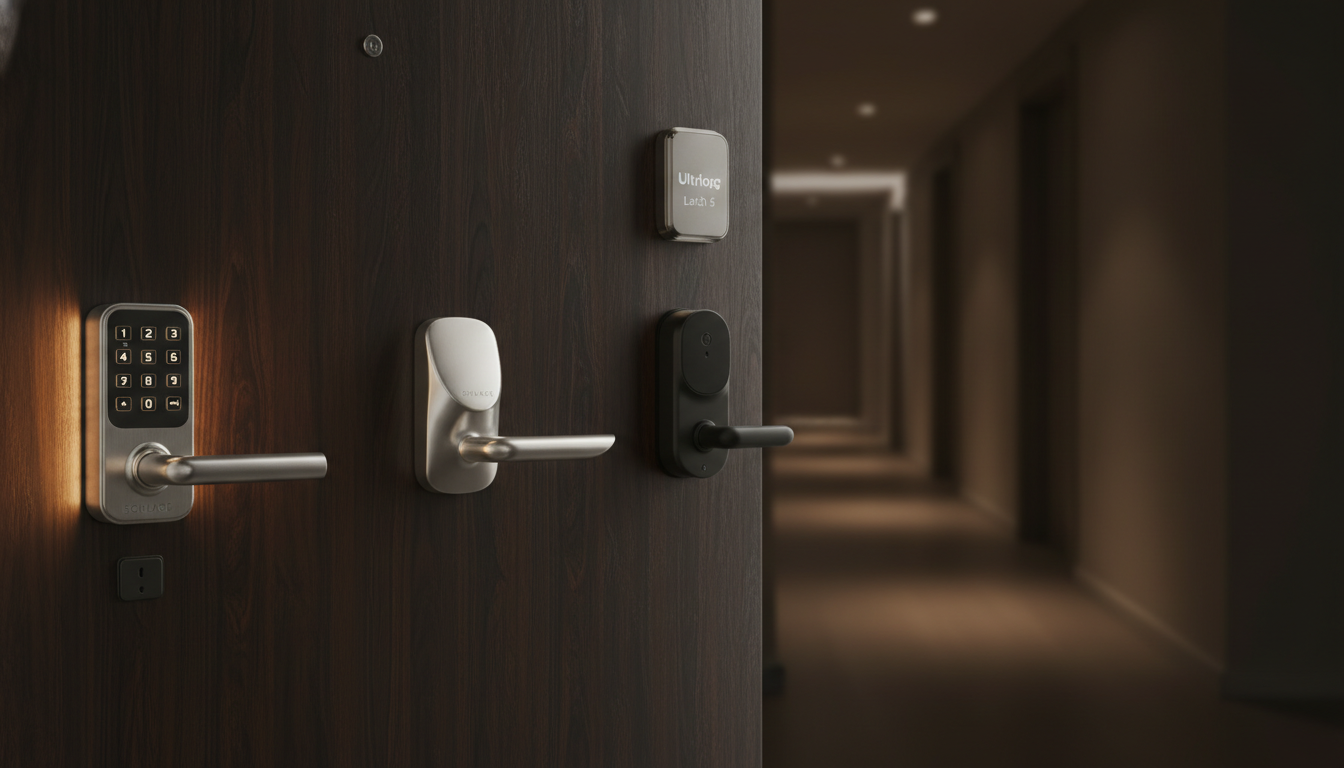
TL;DR: The Ultraloq Latch 5 offers built‑in Wi‑Fi 6, ANSI Grade 1 security and a 5‑in‑1 entry system, but its 5.5‑pounds weight and occasional fingerprint hiccups keep it from being flawless.
What really sets the Latch 5 apart is its native Wi‑Fi 6 module, so you can lock or unlock from anywhere without a separate bridge. The lock also packs a 99.8 % fingerprint accuracy rating and an unlock time of 0.3 seconds, all backed by 128‑bit AES encryption and a 35× strength multiplier over standard deadbolts. At 5.5 pounds, it feels solid on the door, and the IP65 rating means rain or dust won’t easily compromise it.
Compared with the other eleven locks in this roundup, the Ultraloq is the only one that combines Wi‑Fi 6 with a built‑in hub‑free design. For instance, the Yale Assure Lever Black needs a Z‑Wave hub for full automation, while the Veise VE029 relies on a separate bridge for remote access. In terms of heft, the Latch 5 is heavier than the Schlage Encode Century Lever, which weighs 4.25 pounds, but it still fits standard US interior and exterior doors.
Users consistently praise the quick fingerprint response once the Edge AI sensor has learned their print, and they appreciate the intuitive app for scheduling guest e‑keys. However, several reviewers note that the sensor can struggle when fingers are wet or dirty, leading to a few extra taps. The battery type is listed as rechargeable, but the manufacturer doesn’t provide a specific capacity, leaving the long‑term power schedule a bit vague.
Pros
Cons
Best for: Entry-level buyers or those on a tight budget — the Ultraloq Latch 5 offers WiFi Frequency: 2.4GHz
Avoid if: You need a traditional deadbolt form factor or require professional‑grade performance for heavy‑duty exterior doors
TL;DR: The Schlage Encode lever lock blends built‑in Wi‑Fi, 100 unique access codes and a 50 dB alarm into a AAA‑rated, satin‑nickel finish that feels solid for secondary doors.
The standout spec is the built‑in Wi‑Fi that lets you lock or unlock from the Schlage Home app without a separate hub, while still offering a light‑up touchscreen keypad. You also get up to 100 unique access codes, an adjustable alarm set to 50 dB, and auto‑lock/relock functionality—all backed by an AAA BHMA security rating.
Compared with the other eleven locks in this roundup, the Encode is heavier than the Lockstate RemoteLock OE‑550L’s 3.5 lb body, but lighter than the Yale Assure Lock 2 Wi‑Fi Black at 6.0 lb. It provides fewer user codes than the RemoteLock OE‑550L’s 250‑code capacity, yet its 100‑code limit still tops many competitors that list only 25‑50 codes. Like the Lockstate RemoteLock, it needs no extra hub, and its backset adjustment of 2.375 in (60 mm or 70 mm) matches the adjustable range found on the Yale Assure models.
User sentiment consistently praises the mechanical key backup and the seamless voice‑assistant integration with Alexa and Google Assistant. Reviewers note the app’s intuitive navigation and the reliable intrusion alarm. The most common complaint is the lack of a battery‑status indicator; the lock runs on four AA batteries for about 12 months before they run flat, and you won’t know until they’re dead. Some users also mention that the lever style feels better suited to garages or side doors rather than primary front entries.
Pros
Cons
Best for: Those prioritizing quality and willing to pay for premium performance — the Schlage Encode offers Access Code Capacity: 100 unique codes
Avoid if: You're on a tight budget, need a deadbolt‑only solution for a primary entry, or are a renter unable to modify the door.
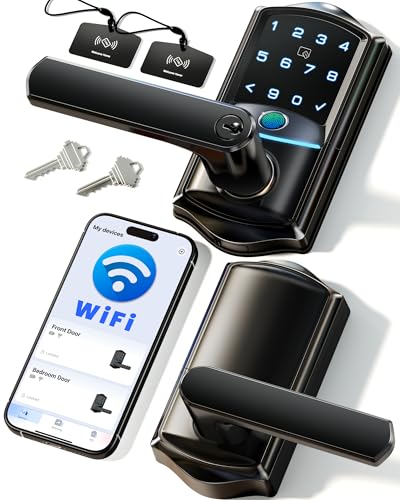
TL;DR: The Veise VE029 delivers hub‑free 2.4 GHz Wi‑Fi, 99.99 % fingerprint accuracy and an IP65 rating for under $85, making it a solid budget smart lever lock.
The standout spec is its built‑in 2.4 GHz Wi‑Fi with a 20 m range, letting you lock or unlock from anywhere without a separate hub. Its fingerprint sensor reads at 0.2 s with 99.99 % accuracy, and the lock carries an IP65 rating, so rain or dust won’t stop it from working.
Compared with the other eleven entries, the VE029 is lighter than the Ultraloq Latch 5’s 5.5 pounds and slimmer than the Yale Assure Lever Black’s adjustable backset of 2‑3/8 in to 2‑3/4 in (60‑70 mm). Its fingerprint accuracy tops Ultraloq’s 99.8 % and matches the premium Philips lock’s 360° angle, while its Wi‑Fi works directly—something the Schlage Encode Century Lever achieves only with an extra bridge.
Professional reviewers praise the hub‑free connectivity and the versatile unlocking roster—fingerprint, PIN, app, IC card, mechanical key and voice control via Alexa or Google Assistant. Users, however, note that the lock only pairs with 2.4 GHz networks, leading to occasional setup hiccups when only 5 GHz is available, and the app’s permission steps can feel finicky for less‑tech‑savvy owners.
Beyond connectivity, the VE029 supports auto‑lock, stores over 100 PIN codes, and runs on standard AA batteries. With a 2‑year warranty and lifetime online phone support, it aims to balance affordability with a robust feature set.
Pros
Cons
Best for: Shoppers on a tight budget who want the most for their money — the Veise VE029 offers Backset: 60 mm or 70 mm
Avoid if: You rely solely on 5 GHz Wi‑Fi or have door thickness outside the 35 mm–50 mm range
TL;DR: Yale Assure Lever Black is a $199.99 smart lever with adjustable 2‑3/8‑2‑3/4 in backset, 6.06 in height, touchscreen keypad, Bluetooth 4.0, and 80 dB tamper alarm, earning 4.0‑star ratings from 234 reviewers.
The lock’s most noticeable spec is its adjustable backset of 2‑3/8 in to 2‑3/4 in (60‑70 mm), letting you fit a wide range of door preparations. At 6.0625 in tall and 2.5625 in wide, it sits a bit taller than the Philips Wi‑Fi Smart Lever (5.86 in height) while offering a larger footprint for the touchscreen keypad. The device supports Bluetooth 4.0, auto‑unlock via proximity, and voice‑assistant integration with Alexa, Google, and Apple HomeKit, plus an 80 dB tamper alarm that audibly warns of forced entry.
In this 12‑product roundup, the Yale lever is priced similarly to the Philips model but lacks fingerprint recognition, which the Philips lock lists as a feature. Compared with the Yale Assure Lever Oil Rubbed Bronze, the Black version shares the same adjustable backset but is slightly slimmer (2.5625 in vs. 2.75 in width) and has a deeper mounting depth (2.3125 in vs. 1.375 in). The Schlage Encode Accent Lever offers the same backset range and door‑thickness compatibility, yet it weighs more and presents a larger exterior profile. Overall, Yale’s offering lands in the middle of the pack: it provides solid smart features without the extra biometric hardware some competitors tout.
User feedback highlights the lock’s quick DIY installation—most reviewers note that a screwdriver and the standard single‑hole prep are all that’s needed. The proximity auto‑unlock and reliable voice‑control are repeatedly praised for everyday convenience. However, several owners mention that monitoring the AA battery pack (12 months life) is a recurring chore, and a few find the initial app setup a bit daunting if they’re not tech‑savvy. Professional reviewers commend the two‑layer encryption, ANSI Grade 2 certification, and the lifetime‑limited finish warranty as signs of Yale’s long‑standing security pedigree.
Pros
Cons
Best for: Entry-level buyers or those on a tight budget — the Yale Assure Lever Black offers Backset: Adjustable 2‑3/8 in or 2‑3/4 in (60‑70 mm).
Avoid if: You want the best value‑per‑dollar in its price range.
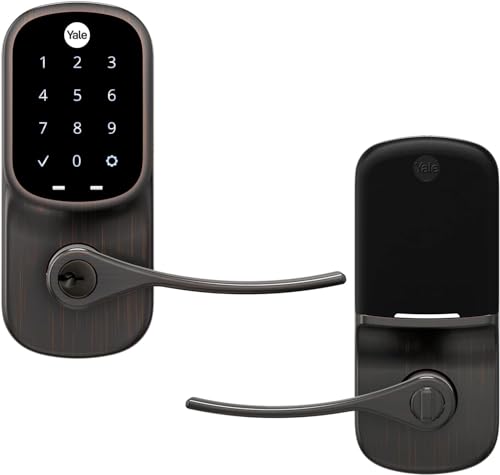
TL;DR: The Yale Assure Lever Oil Rubbed Bronze costs $249.00, offers Wi‑Fi and Bluetooth 4.0 control, a 1.375‑inch depth, and a year of AA‑battery life, but its price sits above many comparable smart levers.
At 1.375 inches deep, 6.06 inches tall and 2.75 inches wide, this lock fits neatly on most side‑door lever setups while still packing Wi‑Fi, Bluetooth 4.0, and a backlit touchscreen keypad. The built‑in Wi‑Fi works without a hub for basic functions, and the Bluetooth link lets your phone unlock the door automatically when you approach. With AA batteries rated for about one year, you won’t need to worry about daily charging.
At $249.00, it is pricier than the Yale Assure Lever Black that lists $199.99, yet it lands in the same price band as the Schlage Encode Accent Lever, which also carries a premium tag. Compared with the Lockstate RemoteLock, the Yale model lists fewer integrated features such as text/email notifications, so it feels a bit lighter on the feature side. Still, its voice‑assistant support for Alexa, Google Assistant and Siri puts it on par with many higher‑priced rivals.
Users repeatedly praise the flexibility of installing a smart lever on doors that lack a deadbolt, noting the convenience of sharing permanent, scheduled or temporary PIN codes via the Yale Access app. Professional reviewers call the device “one of the most versatile smart lock options” because it blends keypad, proximity, and traditional key entry. The main complaints revolve around the need to monitor the battery annually and occasional hiccups with the Wi‑Fi module, especially on doors that already have a deadbolt.
Technical details that matter: the backset adjusts to 2.375 inches, the lock accepts doors up to 1.75 inches thick, and it operates from –25 °C to 60 °C. The warranty covers the finish and mechanical parts for life and electronics for one year, giving you a safety net if anything goes wrong.
Pros
Cons
Best for: Most users seeking a balanced, mainstream option — the Yale Assure Lever Oil Rubbed Bronze offers Depth: 1.375 inches
Avoid if: You need advanced features or professional‑grade performance, or you plan to install on a standard exterior door that already has a deadbolt.
TL;DR: The Yale Assure Lock Black retails for $249.99, delivers Grade 2 ANSI security, a 6‑month AA‑battery life and a 15,000 mAh rechargeable option, making it a solid mid‑range smart deadbolt.
What really stands out is the built‑in Wi‑Fi bridge that lets you lock or unlock from anywhere without a separate hub, plus a backlit touchscreen keypad that supports unlimited user codes. The lock also auto‑locks, auto‑relocks and sends low‑battery alerts, while two‑factor authentication and two‑layer encryption keep your home secure.
Compared with the other eleven contenders, the Yale sits at a similar price point to the Yale Assure Lever Oil Rubbed Bronze, yet it offers a rechargeable 15,000 mAh battery option that the others don’t mention. It’s heavier than the Schlage Encode Accent Lever (which weighs about 4.25 lb) and the Schlage Encode models, but its self‑handing design and adjustable backset of 2.375 inches give it flexibility that many peers lack. While the Schlage units list a 100‑code capacity, Yale’s “unlimited codes” claim gives it an edge for households with many guests.
Reviewers consistently praise the lock’s straightforward installation—most say it takes just minutes with a screwdriver—and the reliability of the touchscreen. Voice‑assistant support for Alexa, Google and Siri is highlighted as a convenience, and the Airbnb integration earns kudos from hosts. On the downside, users note the need to replace four AA batteries roughly every six months, and a few report that setting up the optional Z‑Wave hub can be a bit fiddly.
Pros
Cons
Best for: Most users seeking a balanced, mainstream option — the Yale Assure Lock Black offers Package Weight: 3175 g
TL;DR: Yale Assure Lock 2 Wi‑Fi Black packs a touchscreen, fingerprint scanner and built‑in Wi‑Fi into a Grade 2 ANSI lock, offering 250 user codes, 12‑month battery life and a 15‑30 ft range for $306.27.
What really sets this lock apart is the combination of a 0.875‑inch‑deep touchscreen keypad, a 100‑fingerprint capacity and an integrated Wi‑Fi bridge that works on a 2.4 GHz network. The unit weighs 6.0 pounds and the lock itself is 7.5 lb, so it feels solid on the door. You also get an adjustable backset of 60‑70 mm, which helps it fit a wide range of door preparations, and the Wi‑Fi range is listed at 15‑30 feet.
Compared with the other eleven contenders, Yale’s lock is heavier than the Schlage Encode Accent Lever at 4.25 pounds and the Lockstate RemoteLock OE‑550L at 3.5 lbs, but it also supports far more user codes—250 versus Schlage’s 100. The Lockstate RemoteLock model also lists 250 codes, yet it lacks the fingerprint sensor and weighs considerably less. In short, Yale trades a bit of heft for a richer set of access methods and a higher code capacity.
Everyday owners rave about the fast fingerprint and PIN entry, noting that sharing codes with family members is a breeze through the Yale Access app. Reviewers also appreciate the auto‑lock, auto‑relock and the ability to receive unlock notifications and tamper alerts. Professional reviewers highlight the intuitive touchscreen and reliable fingerprint recognition, as well as the motorized thumbturn that simplifies indoor locking. The most common complaints revolve around the 15‑30 ft Wi‑Fi range, which can cause occasional remote‑control hiccups, and the need to replace four AA batteries roughly once a year because the lock doesn’t support rechargeable cells.
From a technical standpoint, the lock carries an ANSI/BHMA Grade 2 security rating, offers auto‑unlock (optional) and auto‑lock, and integrates with Apple HomeKit, Google Home and Alexa. Low‑battery alerts keep you informed before the lock powers down, and the DoorSense sensor adds a layer of monitoring, though some users report alignment quirks that trigger occasional app glitches.
Pros
Cons
Best for: Those prioritizing quality and willing to pay for premium performance — the Yale Assure Lock 2 Wi‑Fi Black offers Backset: Adjustable 60-70 mm
Avoid if: You need advanced features or professional‑grade performance, especially long‑range Wi‑Fi connectivity beyond 30 feet.
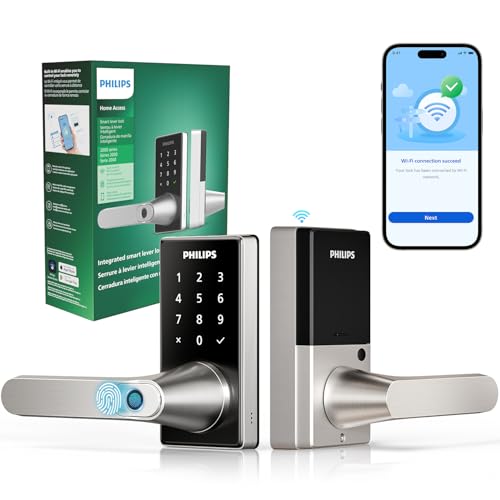
TL;DR: The Philips Wi‑Fi Smart Lever Lock blends a 0.3‑second 360° fingerprint sensor, 100 PIN slots and built‑in Wi‑Fi for remote control at a $199.99 price point, though its C‑grade cylinder offers modest security.
What really stands out is the ultra‑fast fingerprint sensor – it reads a print in just 0.3 seconds and works from any angle thanks to a 360° semiconductor scanner. You can store up to 50 fingerprints and 100 user PIN codes, all behind an anti‑peep touchscreen keypad. The lever‑style handle lets you lock or unlock with a single grip, eliminating the need to hunt for a separate keypad.
In this 12‑product roundup the Philips lock sits at a similar price to the Yale Assure Lever Black but offers a broader set of unlock methods (fingerprint, PIN, mechanical key, app, voice) and a higher PIN capacity (100 versus Yale’s unspecified limit). While the Yale models list a backset and depth, Philips provides a compact footprint of 5.86 in H × 6.17 in L × 2.09 in W, fitting standard doors without a hub.
Professional reviewers highlight the seamless four‑way entry and the convenience of remote PIN sharing via the Philips Home Access app. Homeowners appreciate the quick 0.3‑second fingerprint and the ability to lock the door with a voice command to Alexa or Google Assistant. The main complaint is the reliance on the app and Wi‑Fi for full remote features – users note that Bluetooth‑only variants need an extra bridge, and the lock only has two customer reviews, both rating it 5.0 / 5.
Technically, the lock carries an IPX5 water‑resistance rating, an auto‑lock timer adjustable from 5 to 180 seconds, and an enhanced encryption engine stored locally. Its C‑grade cylinder offers pick resistance rated at over 270 minutes, and the unit comes with batteries included and a two‑year warranty. Installation is DIY with a screwdriver, and low‑battery alerts keep you informed through the app.
Pros
Cons
Best for: Entry-level buyers or those on a tight budget — the Philips Wi‑Fi Smart Lever Lock offers Pick Resistance: >270 minutes
Avoid if: You want the best value‑per‑dollar in its price range
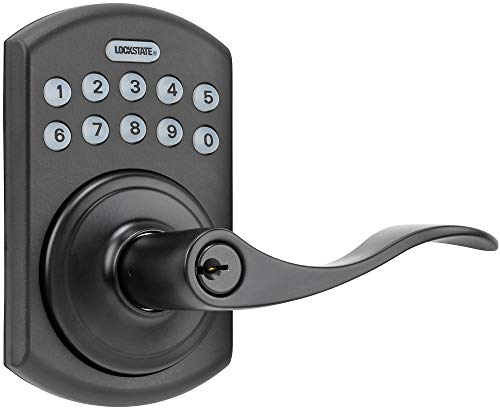
TL;DR: The Lockstate RemoteLock lever delivers Wi‑Fi‑enabled remote access, a 5‑star rating, and a 1.75‑inch door‑thickness limit, but its premium $279 price and higher battery drain make it a niche choice for rental‑focused homeowners.
What really stands out is the built‑in Wi‑Fi that hooks into the RemoteLock cloud platform, letting you lock, unlock, and generate temporary PIN codes from anywhere. The lock also supports BLE for quick on‑boarding, and it works on residential timber doors up to 1.75 inches thick. A full‑color satin‑nickel lever finishes the look, while the keypad entry method keeps things simple.
Compared with the other eleven contenders, this model is pricier than most and carries a heavier battery drain because of its Wi‑Fi module. Many peers, such as the Schlage Encode Accent Lever, rely on Bluetooth or Z‑Wave and don’t require a constant internet connection. The RemoteLock also offers a cloud‑based dashboard that most competitors lack, though some, like the Yale Assure series, need an extra bridge to get Wi‑Fi functionality.
Professional reviewers praise the lock’s reliable Wi‑Fi integration for property‑manager use, noting that the RemoteLock cloud makes code rotation for short‑term rentals effortless. Users echo this sentiment, highlighting the convenience of remote code generation and real‑time notifications via text or email. The downside that both experts and owners mention is the faster battery consumption—its AA cells run out sooner than the lower‑drain Bluetooth‑only options. Additionally, the manufacturer doesn’t list any weather‑proofing rating, so the lock may not hold up in extreme climates.
The lock meets ANSI/BHMA Grade 2 standards, which is appropriate for typical residential doors. App control works through both web and mobile interfaces, and the keypad type is a standard numeric entry. Power comes from AA batteries, and the higher drain is a trade‑off for the always‑on Wi‑Fi connection. Temporary code support and user management via the RemoteLock dashboard round out the feature set, making it a solid fit for rental‑property owners who need remote access.
Pros
Cons
Best for: Those prioritizing quality and willing to pay for premium performance — the Lockstate RemoteLock is available at $279.00
Avoid if: You're on a tight budget or only need basic functionality, or you need a lock that works offline in areas with unreliable internet.
TL;DR: The Lockstate RemoteLock OE-550L offers Wi‑Fi‑direct access, 250 user codes and voice control for $299, but its mandatory subscription and low 2‑star rating may deter budget‑focused buyers.
The standout spec is its direct Wi‑Fi connection—no hub or bridge is required, and the lock runs on a 2.4 GHz 802.11 b/g/n network. Weighing just 3.5 lb and featuring a 4.7‑inch lever, it feels lighter than many competing lever locks. Its capacity for 250 unique user codes and the inclusion of 2 override keys make it well‑suited for multi‑user households or vacation rentals.
Compared with the other eleven entries, the RemoteLock is lighter than the Schlage Encode Accent Lever (4.25 lb) and offers more than double the code capacity of that model’s 100‑code limit. Its price matches the Schlage’s $299 level, yet the RemoteLock adds a mandatory subscription starting at $3 per month to unlock core Wi‑Fi features—something the Schlage does not require.
Vacation‑rental owners praise the lock’s real‑time app access and easy code sharing, while everyday users often gripe about the recurring subscription fee and occasional Wi‑Fi hiccups in weak‑signal zones. Professional reviewers highlight the reliable connectivity, robust forced‑entry alarm, and tamper detection, but they also note that the lock’s discontinuation limits long‑term support.
The lock meets ANSI Grade 2 standards and carries an IPX4 rating, meaning it tolerates splashes and light rain. It operates from 14 °F to 140 °F and includes an adjustable auto‑relock timer ranging from 5 to 900 seconds. Voice assistants Alexa and Google Home can lock or unlock the door, and the battery pack of four AA alkalines promises up to 12 months of use.
Pros
Cons
Best for: Those prioritizing quality and willing to pay for premium performance — the Lockstate RemoteLock OE-550L offers Override Keys Included: 2
Avoid if: Reliability and user satisfaction are your top concerns
“Super reliable for Airbnb—guests love the keypad, and I check logs from anywhere”
“Why pay monthly for basic WiFi?”
Breakdown
Schlage Encode Accent Lever
Pros
Schlage Encode
Pros
Veise VE029
Pros
Philips Wi-Fi Smart Lever Lock
Pros
Cons
Based on scoring data and product specs
Personalized picks
Best Overall Pick
Schlage Encode Accent Lever
Best Mid-Range PickBest for: Home and office users seeking a balance of features and value — the Schlage Encode Accent Lever offers Backset: 60 mm or 70 mm
Schlage Encode
Best for: Those prioritizing quality and willing to pay for premium performance — the Schlage Encode offers Access Code Capacity: 100 unique codes
$299.00+$25.10 vs winner
Skip Lockstate RemoteLock OE-550L if…
Reliability and user satisfaction are your top concerns
We’re naming the Schlage Encode Accent Lever the clear winner of our smart lever lock roundup. It earns a Grade 1 ANSI security rating, supports 100 access codes, and offers auto‑lock with adjustable delay. The lock connects directly to 2.4 GHz Wi‑Fi—no hub required—and works with Apple Home Key, Amazon Alexa and Google Assistant. At $273.90 it also carries a limited lifetime mechanical warranty plus three years of electronics coverage.
The Schlage Encode takes the runner‑up spot, ideal if you want built‑in Wi‑Fi and a sleek satin‑nickel finish for a modern entryway. It delivers the same 100‑code capacity, auto‑lock, and reversible lever, while adding a light‑up touchscreen keypad and push‑notification logging. With a 4.5‑star rating from 357 reviewers and a three‑year electronics warranty, it’s a solid choice for tech‑savvy homeowners.
For tighter budgets, the Veise VE029 at $84.99 gives you basic smart‑lock functionality without breaking the bank. If premium features are your priority, the Yale Assure Lock 2 Wi‑Fi Black at $306.27 provides top‑tier security and advanced integrations for high‑end installations.
Pick the Schlage Encode Accent Lever today for a secure, stylish, and fully connected entry solution.
It combines built‑in 2.4 GHz Wi‑Fi with no hub required, a premium Aged Bronze finish, and a low‑battery alert, giving you seamless connectivity and peace of mind. The lock also meets ANSI Grade 1 security and supports Alexa and Google Assistant, making it both secure and convenient.
No reviews yet — be the first to share your experience.
Please sign in to leave a review