⚡ Quick Answer
Smart lock sensors have become a staple for modern door security, but the sheer variety can make picking one a headache. We compared 11 models, covering everything from entry‑level units at $49.98 to premium deadbolts topping out at $319.00. The selection spans budget picks like the Veise and Ultraloq, mid‑range options such as the August Smart Lock Pro, and high‑end contenders including eufy and Schlage.
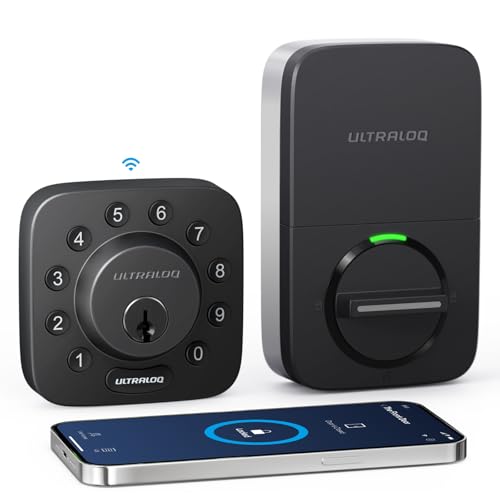
At $149.99 and a 4.3‑star rating, the Ultraloq Bolt packs a surprising amount of flexibility. It talks Wi‑Fi, Thread and Matter, carries an IP65 seal and a Grade 1 security rating, and supports fingerprint, keypad, app, voice and mechanical key entry. Auto‑lock, backup power and full app control round out a feature set that feels more at home in the premium tier than its price suggests.
Next we’ll break down each lock’s connectivity, power options and installation quirks so you can match the right sensor to your door, budget and smart‑home ecosystem.

Ultraloq Bolt
Offers a 70 ft router range, ensuring reliable connectivity throughout most homes.

eufy Video Smart Lock E330 3-in-1
Ideal for homeowners who want video verification and premium features, even though it costs about $50 more than the Ultraloq Bolt.

Veise VE012W
Includes two backup keys and a shallow 3.0‑inch depth, giving a cheap, mechanical fallback that the pricier models lack.
Also considered
TL;DR: The Ultraloq Bolt blends Matter‑over‑Thread connectivity, IP65 durability and a compact 75.3 mm depth with a 4.3‑star rating, making it a solid mid‑range smart lock for most homes.
The lock’s standout spec is its 70 ft recommended router distance, letting the built‑in Wi‑Fi/Thread module stay linked even from the far end of a typical house. Its physical footprint is modest too—75.3 mm deep and high, which translates to about 2.95 in, so it won’t stick out dramatically on a standard door.
At $149.99 the Bolt lands in the mid‑range tier: it’s pricier than the Ultraloq U‑Bolt but cheaper than the August Smart Lock Pro + Connect Hub. Weighing 1.0 pound, it’s lighter than the eufy Video Smart Lock (over 3 pounds) yet a bit heftier than the August model (under 1 pound). Those size and weight cues help you gauge how it will feel compared with the other ten contenders.
Users love the flexibility of five unlock methods—fingerprint, keypad, app, voice and a mechanical key backup of two keys—plus the ability to store up to 50 access codes. Reviewers repeatedly praise the seamless Matter‑over‑Thread integration with Siri, Alexa and Google Assistant, calling it “future‑proof.” However, several owners note that battery life can swing noticeably depending on how often the lock talks to the network, and a minority report occasional hiccups with the fingerprint reader.
On the security side, the Bolt carries an ANSI/BHMA A156.36 Grade 1 certification and commercial AAA standards, backed by 128‑bit AES encryption. Auto‑lock and backup power are built in, and the lock logs every entry, giving you a clear activity trail straight from the U‑Home app.
Pros
Cons
Best for: Most users looking for a well‑reviewed, reliable mainstream option — the Ultraloq Bolt offers Recommended Router Distance: 70 ft
Avoid if: You need native Apple Watch unlocking without workarounds or have a weak home network that can’t reach 70 ft
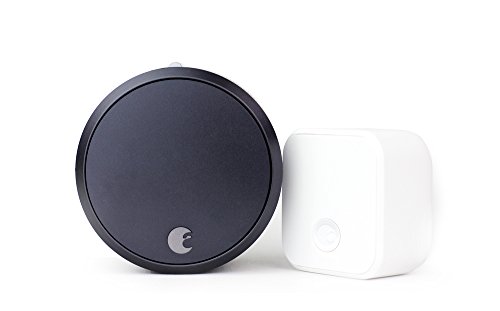
TL;DR: The August Smart Lock Pro + Connect Hub retails for $193.99, weighs 0.87 lb, and offers 30 ft Bluetooth range plus Z‑Wave and Wi‑Fi integration for a retrofit smart‑lock solution.
The lock’s standout spec is its 30 ft Bluetooth range, which lets your phone lock or unlock the door from across a typical living‑room. Combined with Z‑Wave and Wi‑Fi connectivity, the system can talk to most major smart‑home hubs without needing a separate bridge for local control.
Compared with the other ten locks in this roundup, the August sits in the middle of the weight spectrum: it’s lighter than the eufy Video Smart Lock’s 3.62 lb body but a touch heavier than the Ultraloq Bolt’s 1.0 lb design. Unlike several peers, it explicitly lists Z‑Wave support, giving it an edge for users who already own a SmartThings or Wink hub.
User feedback highlights the ease of retrofit installation – the lock fits over an existing single‑cylinder deadbolt and lets you keep your original keys. Reviewers also praise the seamless app control and the ability to share timed eKey access with guests. Professional reviewers note the reliable activity‑log feature and the broad voice‑assistant compatibility (Alexa, Google Assistant, Siri). Common complaints focus on the need for a separate Connect Wi‑Fi bridge for remote access and the 30‑ft Bluetooth limit, which some users find restrictive in larger homes.
Pros
Cons
Best for: Most users seeking a balanced, mainstream option — the August Smart Lock Pro + Connect Hub offers Bluetooth Range: 30 ft
TL;DR: The Schlage Encode Plus blends built‑in 2.4 GHz Wi‑Fi, Apple Home Keys NFC, and 100 user codes into a premium deadbolt that weighs 3.4 lb and costs $319.
What really sets the Encode Plus apart is its native Wi‑Fi connection—no hub required—and Apple Home Keys support that unlocks the door with a tap of an iPhone or Apple Watch. The lock stores up to 100 access codes, each 4‑8 digits, and secures data with 128‑bit AES dual‑data encryption. Its fingerprint‑resistant touchscreen and selectable alarm sensitivity add layers of convenience and security without extra accessories.
In this eleven‑product roundup the Encode Plus is heavier than the Ultraloq Bolt (1.0 lb) but lighter than the Lockin Veno Plus (3.66 lb) and far bulkier than the August Smart Lock Pro (+ Connect Hub) at 0.87 lb. While many competitors rely on Bluetooth or require a separate bridge, Schlage’s built‑in 2.4 GHz Wi‑Fi lets you control the lock directly from the Schlage Home app. The only downside is that it lacks an IP rating, a spec some outdoor‑rated peers list.
Professional reviewers highlight the “near‑instant” NFC unlock experience for Apple users and praise the straightforward installation guided by the app for single‑bore doors. Consumers echo this sentiment, noting the simple setup and reliable Apple Home Keys integration. The most common complaints focus on the premium price tag and the need to replace four AA alkaline batteries roughly every six months, which some users find inconvenient.
Beyond connectivity, the Encode Plus carries the ANSI/BHMA A156.36 Commercial Grade 3 (AAA) certification and a 5‑pin C‑keyway tumbler, giving it a commercial‑grade security pedigree. Its universal backset (60 mm or 70 mm) fits most residential doors, and the lock operates from –35 °C to 66 °C, covering a wide temperature range. A built‑in alarm with selectable sensitivity adds an extra deterrent against forced entry.
Pros
Cons
Best for: Those prioritizing quality and willing to pay for premium performance — the Schlage Encode Plus offers Access Codes Capacity: 100
Avoid if: You're shopping on a tight budget — it's priced at $319.00
TL;DR: The eufy Video Smart Lock E330 3‑in‑1 blends a 2K camera, 5‑method keyless entry and a doorbell into a single IP65‑rated deadbolt, but its battery may need more frequent recharges than advertised.
The standout spec is the built‑in 2K (2560 × 1440) camera with an f/1.6 aperture, delivering clear daytime and color night‑vision footage straight from the lock. Power comes from a 10000 mAh rechargeable Li‑ion battery that the manufacturer says can last 3–12 months, while the lock itself endures up to 100,000 durability cycles and 2000 N of pressure resistance.
Compared with the other ten entries, the eufy lock is noticeably heavier than the August Smart Lock Pro (0.87 lb) and the Ultraloq Bolt (1.0 lb), yet its 3.62 lb mass is close to the Lockin Veno Plus (3.66 lb). Its depth of 221 mm (8.7 in) and width of 180 mm (7.1 in) make it larger than Yale’s exterior package (6.75 in H × 2.56 in W × 2.44 in D), while the door‑thickness range of 35‑55 mm fits a broader set of doors than the Yale model’s 1.75‑2.25 in compatibility.
User feedback praises the fast 0.3‑second fingerprint response and the convenience of having a lock, camera and doorbell in one unit. Professional reviewers highlight the sharp 2K video and the privacy‑first 8 GB internal storage plus optional microSD up to 128 GB, all without a subscription. However, many owners report that real‑world battery life often falls short of the 3‑12 month claim, leading to more frequent recharging despite the large capacity. The touch‑sensitive keypad and doorbell button are also described as dim in low light, which can confuse visitors after dark. Finally, the lock lacks HomeKit and Matter support, limiting integration with some smart‑home ecosystems.
Beyond the camera, the lock features dual motion sensors with a 5.2 m detection range, an ambient‑light sensor, AES128 + ECC encryption and BHMA certification. It resists humidity for 144 hours and salt spray for 72 hours, and the IP65 rating ensures it can handle rain or dust. Installation takes about 15 minutes and requires no drilling, and the package includes two physical keys for backup.
Pros
Cons
Best for: Those prioritizing quality and willing to pay for premium performance — the eufy Video Smart Lock E330 3‑in‑1 offers Fingerprint Capacity: 50
Avoid if: You need advanced features or professional‑grade performance, such as HomeKit/Matter support or exceptionally long battery life.
“battery killer”
“remarkably sleek and compact”
TL;DR: At $55.99, the Tapo DL100 delivers a 1.51‑lb, IP54‑rated deadbolt with keypad, app, Bluetooth and voice control, auto‑lock and 200 access codes, making it a solid budget smart lock.
The standout spec is the capacity for up to 200 custom access codes, far exceeding the 100‑code limits of many entry‑level rivals. Weighing just 1.51 lb, it’s light enough for a quick install without drilling, and its AA‑battery pack can last up to 10 months in Bluetooth mode (7 months on Wi‑Fi), so you won’t be swapping cells every week.
Price‑wise, the DL100 sits a few dollars above the Veise VE012W at $49.98 but is dramatically cheaper than the Ultraloq Bolt’s $149.99 tag. It’s also lighter than the Veise (1.68 lb) and far lighter than the Ultraloq U‑Bolt, which tips the scales at 3.3–3.5 lb. Compared with the August Smart Lock Pro’s feather‑light 0.87 lb, the Tapo is a bit heftier, yet still well under the Philips model’s 2.77 lb. In short, it balances cost and weight better than most mid‑range options.
Reviewers consistently praise the straightforward interface and the freedom to choose between keypad, app, Bluetooth or voice entry. Users love the backlit keypad for night use and the activity log that timestamps every unlock attempt. The main criticism is the absence of fingerprint recognition, a feature found on pricier models in the same lineup. Professional reviewers also note the BHMA Grade 3 rating, which signals durability for everyday traffic.
Beyond the code capacity, the lock packs an IP54 exterior rating, meaning it can handle light rain and dust without trouble. Two physical backup keys come included, and the built‑in USB‑C emergency port lets you power the lock if the batteries run low. Auto‑lock activates automatically after a failed attempt, and the unit works with Alexa, Google Home and SmartThings for hands‑free control.
Pros
Cons
Best for: Entry-level buyers or those on a tight budget — the Tapo DL100 offers Backup Keys: 2 included
TL;DR: The Ultraloq U‑Bolt delivers 8‑in‑1 keyless entry, built‑in 2.4 GHz Wi‑Fi, IP65 durability and up to 50 fingerprint slots—all for $79.99, making it a solid value for budget‑conscious smart‑home owners.
The standout feature is its 8‑in‑1 entry system—fingerprint, keypad, app, auto‑unlock, mechanical key, eKey, voice and web portal—all protected by 128‑bit AES encryption. The lock also offers a configurable auto‑lock window from 10 seconds to 5 minutes, giving you fine‑grained control over how quickly the door secures itself after closing.
At $79.99, the U‑Bolt sits below premium models like the Ultraloq Bolt and August Smart Lock Pro, yet above budget options such as the Tapo DL100 and Veise VE012W. Weighing 3.3–3.5 lb, it is heavier than the Philips Smart Lock (around 2.8 lb) and the August unit (0.87 lb), but its compact 2.95‑in height and length keep the profile modest compared with the taller Veise (5.1 in height) and YHV Smart Lock (6.85 in height). Its fingerprint capacity of up to 50 users also outstrips the Philips model’s 20 slots, positioning it as one of the more feature‑rich choices in the lineup.
Users consistently praise the simple app navigation and the reliability of remote locking via the built‑in Wi‑Fi, noting that the included door sensor provides handy status alerts. Professional reviewers highlight the lock’s improved geofencing performance over earlier versions and its precise auto‑lock timing. However, several owners report that the geofencing can be hit‑or‑miss and that constant Wi‑Fi use shortens battery life, a concern echoed in the community.
Technical details reinforce its robustness: an IP65 rating safeguards the unit against dust and water, while the operating temperature range of –4°F to 149°F (external) and 14°F to 131°F (internal) ensures functionality in most climates. The lock runs on eight AA alkaline batteries and includes a micro‑USB backup charging port, giving you multiple power options. Compatibility with SmartThings, IFTTT, Alexa and Google Assistant rounds out its smart‑home integration.
Pros
Cons
Best for: Entry-level buyers or those on a tight budget — the Ultraloq U‑Bolt offers Fingerprint Capacity: Up to 50
“Engineering excellence”
TL;DR: The Lockin Veno Plus blends ultra‑fast 0.17‑second palm‑vein entry, a 2K 180° camera and six access methods for $259.69, but its premium price and IP54 rating may deter budget‑focused buyers.
What really sets the Veno Plus apart is its Venokey palm‑vein scanner, which unlocks the door in just 0.17 seconds with a reported 99.9% accuracy. Coupled with a 2K fisheye camera that captures a full 180° × 180° view, the lock delivers both biometric speed and comprehensive visual monitoring in a single deadbolt.
Compared with the other ten locks in this roundup, the Veno Plus is a bit heavier at 3.66 pounds, edging out the Schlage Encode Plus (3.4 pounds) and the eufy Video Smart Lock (≈3.62 pounds). It also offers more built‑in access methods—six versus the Ultraloq Bolt’s single code system and the August Pro’s lack of fingerprint support. While the Schlage model provides a larger 100‑code capacity, the Veno Plus balances code slots (50) with biometric options like palm vein, fingerprint and voice.
Users consistently praise the lightning‑quick palm‑vein unlock and the convenience of auto‑lock, noting that the lock’s 1‑minute lockout delay can feel restrictive after a failed attempt. Professional reviewers highlight the dual radar‑plus‑PIR motion sensors and the 8 GB local storage that eliminates any subscription fee, but they also point out the fisheye lens distortion that makes facial identification trickier. The IP54 rating, while adequate for sheltered doors, falls short of the IP65 protection some competitors claim, so extreme weather exposure may be a concern.
Pros
Cons
Best for: Those prioritizing quality and willing to pay for premium performance — the Lockin Veno Plus offers Fingerprint Capacity: 50 entries
Avoid if: You need advanced features or professional‑grade performance
TL;DR: The Philips Smart Lock packs built‑in Wi‑Fi, a 0.3‑second fingerprint scan and a sturdy 2.77 lb body for $74.99, making it a solid entry‑level choice with solid security features.
The lock’s standout spec is its built‑in Wi‑Fi, so you can control it from the Philips Home Access app without a separate hub. Inside, a fingerprint sensor reads a print in just 0.3 seconds, and the lock can store 20 fingerprints plus 100 user PINs. Its dimensions—9.02 in depth, 4.29 in height and 6.69 in width—fit doors 35‑50 mm thick, and the unit weighs 2.77 lb, giving it a solid feel on the door.
Compared with the other ten locks, the Philips model is heavier than the Ultraloq Bolt (1.0 lb) and the Tapo DL100 (1.51 lb), but its weight is similar to many budget options. Its fingerprint capacity of 20 is lower than the Ultraloq Bolt’s up‑to‑50 and the YHV Smart Lock’s 50, yet matches the Veise VE012W’s 20. Like the Ultraloq Bolt and Veise, it needs no external hub, which puts it ahead of the August Smart Lock Pro that requires a bridge.
Professional reviewers highlight the lock’s quick fingerprint response and the convenience of direct Wi‑Fi remote access. Users appreciate the AES‑128 encryption and the trio of alarms for low battery, wrong entries and jamming. The downside noted by reviewers is the reliance on eight AA batteries with no emergency power backup, and the limited 20‑fingerprint slots for households with many members.
Additional technical details include an auto‑lock timer that can be set anywhere between 10 and 180 seconds, operation modes for manual, auto and away security, and a low‑battery alert that triggers below 10 %. The lock works from –35 °C up to 66 °C and tolerates 0‑95 % humidity, ensuring reliable performance in most climates.
Pros
Cons
Best for: Entry-level buyers or those on a tight budget — the Philips Smart Lock offers Fingerprint Capacity: 20
Avoid if: You want the best value‑per‑dollar in its price range
TL;DR: At $49.98, the Veise VE012W delivers Wi‑Fi‑enabled deadbolt control, 0.2‑second fingerprint access, and a full suite of entry options, making it the most feature‑rich budget lock in the lineup.
The lock’s standout spec is its built‑in 2.4 GHz Wi‑Fi, which lets you lock or unlock from the app without a separate hub. Its fingerprint sensor reads a print in just 0.2 seconds, and the unit weighs 1.68 lbs with a compact 3.0‑inch depth, 5.1‑inch height and 1.3‑inch width – dimensions that fit most standard deadbolt holes.
Compared with the other ten contenders, the Veise is a bit heavier than the Tapo DL100 (which tips the scales at 1.51 lbs) and noticeably bulkier than the Ultraloq Bolt, which is listed at around 1.0 lb. It shares the same 2 backup keys as Tapo, but its fingerprint capacity of 20 matches the Philips Smart Lock while falling short of YHV’s 50‑fingerprint limit. Like the Ultraloq Bolt, it needs no hub, giving it a clear advantage over models that rely on external bridges.
Users consistently praise the quick fingerprint scanner for making daily entry effortless, and professional reviewers highlight the convenience of remote app control via Wi‑Fi. The main complaints focus on the requirement for eight AA batteries – which aren’t included – and the lack of detailed documentation about the maximum number of stored fingerprints or PINs.
Beyond convenience, the lock carries an IP55 rating for water resistance and a BHMA/ANSI Grade 3 certification, indicating solid security for a residential front door. It operates from –4 °F to 131 °F (‑20 °C to 55 °C) and works with Alexa and Google Assistant, so voice commands are a natural extension of its feature set.
Pros
Cons
Best for: Shoppers on a tight budget who want the most for their money — the Veise VE012W offers Fingerprint Capacity: 20
Avoid if: You need a lock for a knob or handleset rather than a deadbolt
“does it all”
TL;DR: The Yale Assure Lock 2 packs built‑in Wi‑Fi, a 250‑code keypad and auto‑unlock within about 15 feet, but its heavier build and modest rating may give budget‑focused buyers pause.
The lock’s standout spec is its massive keypad capacity – it can store up to 250 unique user codes, far exceeding the 50‑code limits listed for rivals like the Ultraloq Bolt. It also brings Wi‑Fi (2.4GHz 802.11 b/g/n) straight to the deadbolt, so you won’t need a separate bridge to reach your phone from outside.
At 7.5 pounds, the Yale sits noticeably heavier than the Ultraloq Bolt (about 1.0 pound) and the August Smart Lock Pro (0.87 pound), and even outweights the eufy Video Smart Lock (≈3.62 pounds). Its auto‑unlock range of roughly 15 feet is shorter than the August’s advertised 30‑foot Bluetooth range, but the lock still offers the convenience of built‑in Wi‑Fi, unlike the August which relies on an external hub. Compared with the Ultraloq’s “no hub required” design, Yale’s Wi‑Fi integration puts it in the same convenience tier while delivering a sturdier, metal‑finished look.
Reviewers consistently praise the lock’s straightforward installation – the adjustable backset (2‑3/8 or 2‑3/4 inches) and standard 1‑inch edge bore fit most doors. Users also like the tactile keypad and the peace of mind from advanced encryption and a tamper alarm. On the flip side, some owners report occasional app glitches during setup and note that the Wi‑Fi signal can struggle beyond the 15‑foot auto‑unlock radius, especially if the router sits far from the entryway.
From a security standpoint, the lock carries a Grade 2 ANSI/BHMA rating and includes auto‑lock with DoorSense, adding an extra layer of protection. Battery life is listed as about one year on four AA cells, and a low‑battery indicator warns you before power runs out, which aligns with the “surprising longevity” comments from professional reviewers.
Pros
Cons
Best for: Those prioritizing quality and willing to pay for premium performance — the Yale Assure Lock 2 offers Keypad Code Capacity: 250
Avoid if: Reliability and user satisfaction are your top concerns
TL;DR: The YHV Smart Lock blends a fingerprint‑ready deadbolt, a built‑in doorbell camera and two‑way audio for $164.70, but its limited AA‑battery life and higher price keep it in the mid‑range.
What really sets the YHV Smart Lock apart is the combination of five unlock methods—fingerprint, password, app, key and temporary code—packed into a stainless‑steel deadbolt that also houses an integrated doorbell camera. The lock stores up to 50 fingerprints and 50 six‑digit passwords, and its fingerprint sensor reads a print in just 0.3 seconds with a claimed >99% success rate. An IP54 rating and an operating temperature range from –31°F to 158°F mean it can handle dust, splashes and extreme weather.
In the eleven‑product lineup, YHV lands near the top of the price spectrum, making it pricier than the budget‑friendly Ultraloq U‑Bolt but comparable to the mid‑tier Ultraloq Bolt, which also lists a 50‑code capacity. YHV’s depth of 3.0 inches exceeds Ultraloq Bolt’s 75.3 mm, while its height of 6.85 inches is taller than the 2.95‑inch profile of the Ultraloq U‑Bolt. Unlike the August Smart Lock Pro, YHV does not include a separate bridge or Z‑Wave radio, relying solely on the TUYA app over 2.4 GHz Wi‑Fi. Its fingerprint capacity matches eufy’s 50‑fingerprint limit, yet YHV adds a built‑in camera that eufy only offers as a separate module.
Users consistently praise the lock’s convenience: the ability to grant temporary codes to guests, the anti‑peep password that masks entry digits, and the two‑way audio that lets you speak to visitors from the app. Reviewers also note the “stranger alarm” that alerts you to forced entry attempts. The most common complaint revolves around the battery life—about 200 unlocks per set of four AA cells, which are not supplied—forcing frequent replacements. Some owners find the TUYA app setup a bit fiddly, and the lock lacks native HomeKit or Google Home integration, which can be a deal‑breaker for ecosystem‑focused households.
Pros
Cons
Best for: Most users seeking a balanced, mainstream option — the YHV Smart Lock offers Fingerprint Capacity: 50
Breakdown
Ultraloq Bolt
Pros
eufy Video Smart Lock E330 3-in-1
Pros
Veise VE012W
Pros

Lockin Veno Plus
Pros
Cons
Based on scoring data and product specs
Personalized picks
Best Overall Pick
Ultraloq Bolt
Best Mid-Range PickBest for: Most users looking for a well-reviewed, reliable mainstream option — the Ultraloq Bolt offers Recommended Router Distance: 70 ft
eufy Video Smart Lock E330 3-in-1
Best for: Those prioritizing quality and willing to pay for premium performance — the eufy Video Smart Lock E330 3-in-1 offers Fingerprint Capacity: 50
$249.99+$100.00 vs winner
Skip Yale Assure Lock 2 if…
Reliability and user satisfaction are your top concerns
Ultraloq Bolt takes the top spot with a blend of rugged durability and smart‑home flexibility. It’s rated 4.3 out of 5 by 2,426 reviewers, comes with a lifetime mechanical warranty plus 18 months electronic coverage, and carries an IP65 rating that guards against dust and water. The lock talks Wi‑Fi, Thread and Matter, so it slots into Apple Home, Alexa, Google Home and SmartThings without a hub.
The runner‑up, eufy Video Smart Lock E330 3‑in‑1, shines when you want a lock and a door‑bell in one package. Its built‑in 2K camera, color night‑vision and motion sensors let you see who’s at the door from your phone, while auto‑lock via the door sensor keeps the entry secure. A rechargeable 10,000 mAh battery delivers 3‑12 months of power.
For tighter budgets, the Veise VE012W offers essential smart‑lock features at just $49.98, making it the best value choice. If premium performance is your priority, the Schlage Encode Plus stands out at $319.00 with its high‑grade security and robust build quality.
Pick the Ultraloq Bolt now and future‑proof your front door with confidence.
It fits a standard deadbolt opening and doesn’t require a hub, thanks to its built‑in Wi‑Fi, Thread and Matter support. The manufacturer lists a ten‑minute installation time, so you can swap it into most doors without drilling.
No reviews yet — be the first to share your experience.
Please sign in to leave a review