⚡ Quick Answer
Finding a wired gaming headset that balances crystal‑clear chat, immersive sound, and comfort can feel like hunting for a rare drop. The article lists twelve models, ranging from wallet‑friendly picks to high‑end rigs, and sorts them into budget, mid‑range, and premium tiers so you can spot the right fit for your play style.
On the budget side, the ArkarTech Gaming Headset starts at $21.36 and the PDP LVL40 Airlite sits at $24.33, both offering flip‑to‑mute microphones and lightweight builds for casual sessions. Mid‑range contenders like the Turtle Beach Recon Spark ($34.99) and Fifine Wired Gaming Headset ($37.99) bring 40 mm‑50 mm drivers and virtual 7.1 surround sound. Premium choices include the HyperX Cloud II at $49.99 with 53 mm drivers and a 4.5‑star rating from 68,489 reviewers, while the Razer Kraken pushes the ceiling at $109.95 with THX Spatial Audio and up to 70 hours of battery life.
Next, the guide breaks down each tier, highlighting comfort, mic quality, and platform compatibility, so you can match a headset to your gaming setup without guessing.

HyperX Cloud II
The 53 mm drivers provide roomy audio, a key factor behind its high rating and strong brand confidence.
Razer Kraken
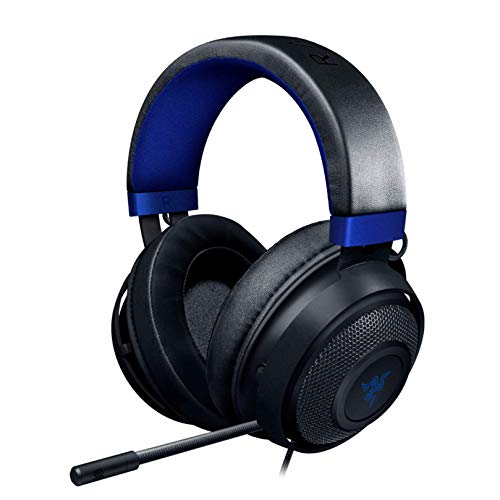
Ideal for gamers willing to spend extra for proven performance, it costs $109.95—about $60 more than the HyperX Cloud II.
Redragon H510 Zeus White
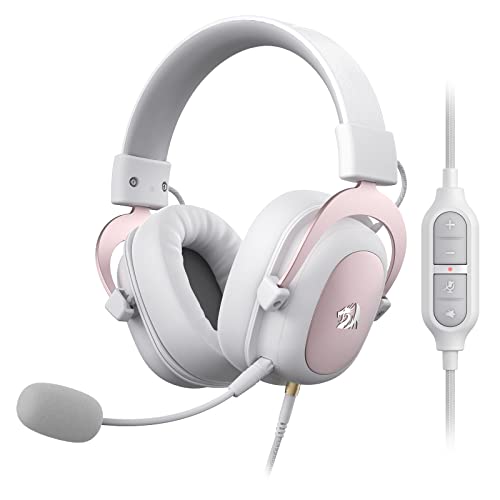
Stands out with a 700 g build, offering a solid feel that the lighter HyperX and Razer models lack.
Also considered
Score Analysis
Key score advantages vs. runner-up (Razer Kraken)
Price Range
HyperX Cloud II
$59.99
Razer Kraken
$109.95
Redragon H510 Zeus White
$61.99

PDP LVL40 Airlite
$21.00

Sades SA902
$28.99

EKSA E1000
$31.98

Turtle Beach Recon Spark
$47.99

ArkarTech Gaming Headset
Out of Stock
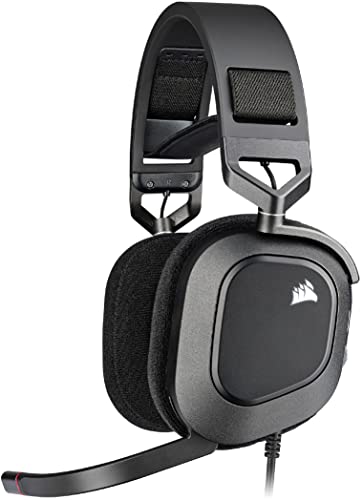
Corsair HS80 RGB
$79.99

Fifine Wired Gaming Headset
$37.99

HOUSAI Xbox Gaming Headset
$28.49

Cooler Master MH650
$99.99
Spec Comparison
TL;DR: The HyperX Cloud II delivers 53 mm drivers, a detachable noise‑cancelling mic, and comfortable memory‑foam cushions at $49.99, earning a 4.5‑star rating from over 68 k reviewers.
The headset’s standout spec is its 53 mm dynamic drivers paired with a 60 Ω impedance, which many gamers appreciate for clear positional audio. Its microphone registers a sensitivity of -42 dBV and includes an LED mute indicator, while the overall sensitivity sits at 98 dB SPL/mW.
Compared with the other eleven entries, the Cloud II is lighter than the Redragon H510 Zeus but heavier than the Turtle Beach Recon Spark. It also feels a bit bulkier than the EKSA E1000, which has a lighter frame.
Users repeatedly praise the memory‑foam ear cushions and the premium leatherette finish for long‑session comfort. Professional reviewers highlight the headset’s negligible latency and neutral EQ, but they also point out that the passive noise isolation can let ambient sounds leak and that the bulkier build hampers portability. Some gamers mention sharpness on certain tracks and uneven bass response, especially when wearing glasses.
Technical extras include a USB 2.0 advanced audio control box, virtual 7.1 surround on PC/Mac, and a 3.28 ft cable that combines a 1 m USB lead with a 2 m 3.5 mm extension. The detachable, uni‑directional microphone helps cut background chatter, and the aluminum frame provides a sturdy yet adjustable fit.
Pros
Cons
Best for: Home and office users seeking a balance of features and value
Avoid if: You're shopping on a tight budget — it's priced at $49.99
“negligible latency”
“good audio reproduction”
TL;DR: The Razer Kraken V4 Wireless delivers up to 70 hours of battery life, THX Spatial Audio and a retractable HyperClear mic in a 0.71‑lb, 40 mm driver headset, but its premium price and bold RGB may not suit everyone.
What really sets the Kraken apart is its wireless endurance – the manufacturer lists up to 70 hours of playtime with the lighting off and up to 35 hours with RGB on. Coupled with 40 mm TriForce Titanium drivers and THX Spatial Audio, the headset promises immersive sound without the need to stay tethered.
In a roundup where most competitors are wired, the Kraken’s 2.4 GHz HyperSpeed link and Bluetooth 5.3 give it a clear connectivity edge. At 0.71 lb (321 g) it’s lighter than the Corsair HS80 RGB and the Redragon H510 Zeus, yet a bit heavier than the HyperX Cloud II (0.61 lb) and Turtle Beach Recon Spark (0.53 lb). Its 40 mm drivers are smaller than the 50‑mm or 53‑mm units most peers use, matching only the Turtle Beach in size.
Users consistently praise the breathable fabric cushions and the aluminum frame for staying comfortable during marathon sessions, and the retractable HyperClear Super Wideband mic earns high marks for clear voice capture. Professional reviewers note the same comfort benefits and the detailed sound from the 20 Hz – 28 kHz range, while also pointing out that the headset’s weight feels moderate compared with ultralight alternatives. The 9‑zone Chroma RGB lighting, customizable via Razer’s software, appears conspicuous in more formal environments.
Beyond the core specs, the Kraken includes Razer Sensa HD Haptics for real‑time directional cues, THX Game Profiles for quick audio presets, and eight hard stops on the headband for precise fit. In‑line audio controls, a chat‑mix knob and a mic‑mute switch round out a feature set that targets gamers who want both wireless freedom and fine‑tuned control.
Pros
Cons
Best for: Buyers willing to invest in a proven, high-quality option
Avoid if: You're on a tight budget or only need basic functionality
TL;DR: The Redragon H510 Zeus White packs 53 mm drivers and 7.1 virtual surround into a steel‑framed, memory‑foam headset for $52.98, offering solid comfort but a plasticky feel.
What really stands out is the 53 mm neodymium driver paired with a USB‑based 7.1 virtual‑surround sound card, giving a wide soundstage that many users describe as “immersive” for games and movies. The headset also includes a detachable noise‑cancelling microphone and a detachable 3.5 mm braided cable, so you'll switch between PC, consoles and mobile devices without hassle.
At roughly 1.54 lb (700 g), the H510 Zeus is heavier than the HyperX Cloud II (about 0.61 lb) and the Turtle Beach Recon Spark (about 0.53 lb), and it also outweighs the EKSA E1000 and Sades SA902, which sit under 0.45 lb. Its driver size matches the HyperX Cloud II’s 53 mm unit but outstrips the 50 mm drivers of the Fifine headset and the 40 mm drivers of the Turtle Beach model, positioning it toward the premium end of the lineup.
Reviewers consistently praise the headset’s immersive surround and comfortable leatherette ear pads, noting that long sessions feel “pleasant” thanks to the memory‑foam cushioning. Professional reviewers highlight the clear audio from the large drivers, while everyday users love the detachable mic for easy cleaning. On the flip side, several users mention that the plastic housing feels less durable than higher‑priced rivals, and the microphone can pick up background chatter, which some find distracting. Users often complain about cable tangling, especially with the braided design.
Beyond the core specs, the H510 Zeus uses Redragon’s Audio Center software for EQ presets and surround‑sound configuration, and the steel headband provides a solid, free‑adjustable fit. The detachable omnidirectional mic carries a 2.2 kΩ impedance, offering basic noise cancellation but not the level expected for professional streaming.
Pros
Cons
Best for: Budget‑conscious gamers who want 7.1 virtual surround and comfortable long‑play sessions.
Avoid if: You need ultra‑precise audio positioning for competitive esports or require studio‑grade fidelity for content creation.
“right for the price”
“precisely clear audio”
TL;DR: The PDP LVL40 Airlite offers a 40 mm driver, 0.22‑lb lightweight build and a flip‑to‑mute mic at $24.33, making it a comfortable, budget‑friendly wired headset for Switch and PC.
At the heart of the LVL40 is a 40 mm driver that delivers stereo sound with a noticeable bass presence. The headset weighs just 0.22 lb (100 g), which the manufacturer lists as a lightweight build, and its on‑ear design includes breathable ultra‑plush foam cushions for extended comfort.
When you line it up against the other eleven entries, the Airlite is lighter than the ArkarTech (0.55 lb), Sades SA902 (0.44 lb), HOUSAI (0.66 lb), EKSA (0.44 lb), Turtle Beach (0.53 lb) and Fifine (0.73 lb) models. It also lands at the lower end of the price spectrum, so you’re paying less for a headset that still ticks the essential boxes—wired 3.5 mm connectivity, flip‑to‑mute bi‑directional mic and noise‑isolating ear cups—while many rivals bundle extra features like detachable cables or active noise cancellation.
Reviewers consistently praise the headset’s feather‑light feel and the clarity of its microphone for in‑game chat, noting that the flip‑to‑mute mic works well for quick muting. Professional reviewers point out that the 40 mm drivers “get the job done” for casual gaming, but they also flag the audio as basic, with limited fidelity compared to higher‑priced models. The on‑ear style can become tiring after marathon sessions, and the mic, while clear, may sound a bit distant for competitive play.
Pros
Cons
Best for: Budget-conscious buyers seeking a reliable entry-level option
Avoid if: You need advanced features or professional‑grade performance
“comfort from over/on‑ear cushions and mic clarity for competitive play, but sound is basic—not comparable to $100+ headsets—and mic feels distant”
TL;DR: The Sades SA902 delivers 7.1 virtual surround, a noise‑canceling boom mic and comfortable over‑ear padding for $28.99, but its volume ceiling can be limiting for louder gaming sessions.
What really stands out is the headset’s virtual 7.1 surround implementation paired with a 40 mm / 50 mm driver, giving positional audio that feels wider than many entry‑level USB headsets. The USB Type‑A connection plugs in, so you'll jump straight into a game without installing drivers. With an impedance of 32 Ω, a max input power of 30 mW and a sensitivity of 112 dB, the SA902 provides clear mids and highs while keeping power draw modest.
Compared with the other eleven contenders, the SA902 sits in the middle of the weight range at about 0.44 lb (200 g). It’s lighter than the HOUSAI Xbox Gaming Headset (≈0.66 lb) and the Turtle Beach Recon Spark (≈0.53 lb), yet heavier than the ultra‑light PDP LVL40 Airlite (≈0.22 lb). Its 2.2 m cable matches the EKSA E1000’s length, giving you plenty of reach without the excess bulk of longer cords. Driver size matches the EKSA E1000’s 50 mm unit and the Turtle Beach’s 40 mm drivers, so you aren't sacrificing diaphragm area for price.
Everyday users praise the headset’s comfort: protein‑leather foam cushions and an adjustable headband let you game for hours without ear fatigue. Professional reviewers note the convenient inline remote for volume and mic mute, calling it a strong advantage over rivals that rely on on‑ear controls. However, both reviewers and consumers flag the volume ceiling – once you push past roughly 20‑50 % of the dial, the output gets harsh and distortion shows up. The microphone’s –38 dB sensitivity captures your voice well but also picks up background chatter when you set it too high.
Pros
Cons
Best for: Budget‑conscious buyers seeking a reliable entry‑level option
Avoid if: You want the best value‑per‑dollar in its price range
“best value in gaming headsets.”
“hovering between the 20 and 40% volume range, with anything above 50% being uncomfortable and a little bit painful”
TL;DR: The EKSA E1000 delivers 7.1 virtual surround and a flip‑up noise‑cancelling mic at a modest $31.98, offering plug‑and‑play USB audio in a lightweight 0.44‑lb package.
At the heart of the headset sits a 50 mm moving‑coil driver that feeds a 7.1 virtual surround sound experience, while the 2.2 m USB‑A cable gives you plenty of reach for a typical desk setup. The audio side delivers 118 dB sensitivity and 32 Ω impedance, and the built‑in omnidirectional mic registers at –42 dB with a 120° flip‑up design, promising clear voice transmission.
Weighing about 0.44 lb, the EKSA E1000 is lighter than the HOUSAI Xbox Gaming Headset (≈0.66 lb) and a touch lighter than the Turtle Beach Recon Spark (≈0.53 lb), yet it matches the Sades SA902’s weight (≈0.44 lb). Its $31.98 price point lands it in the same budget tier as many of the other eleven contenders, making it a competitive choice without stretching your wallet.
Reviewers consistently praise the headset’s immersive surround effect and the convenience of a plug‑and‑play USB connection that needs no extra software. The RGB lighting adds a fun visual cue for gamers who like a bit of flair. On the downside, users note a plasticky feel and occasional USB or mute‑button hiccups, and pro testers point out that the sound, while functional, lacks the depth of higher‑end models.
Technical details round out the package: the unit draws a maximum of 180 mA at a 5 V supply, and it’s housed in a 199 g (≈0.44 lb) chassis that contains the 50 mm drivers. The headset also supports 7.1 virtual surround, an omnidirectional mic with noise‑cancelling, and RGB lighting for a bit of style.
Pros
Cons
Best for: Budget‑conscious PC and PlayStation gamers who want entry‑level 7.1 surround without wireless.
Avoid if: You need premium build quality, advanced audio fidelity, or rock‑solid USB stability for competitive play.
“Extraordinary gaming experience”
TL;DR: The Turtle Beach Recon Spark offers a 40 mm driver, universal 3.5 mm plug and a glasses‑relief system at a modest $34.99, earning a solid 4.4‑star rating from nearly 10 K reviewers.
The headset’s most distinctive spec is its 40 mm driver paired with a custom‑tuned audio design, delivering balanced sound for both gaming and chat. It also supports Windows Sonic and Dolby Atmos spatial audio, and the on‑ear volume wheel lets you tweak levels without pausing the game. Weighing just 0.53 lb (240 g), the metal‑reinforced headband feels sturdy yet light enough for long sessions.
In the context of the twelve‑product roundup, the Recon Spark lands in the middle of the weight spectrum: it’s lighter than the Fifine Wired Gaming Headset (0.73 lb) and HOUSAI Xbox Gaming Headset (0.66 lb) but a touch heavier than the EKSA E1000 (0.44 lb) and PDP LVL40 Airlite (0.22 lb). Its 40 mm drivers match the PDP LVL40 but are smaller than the 50 mm drivers found on the Fifine and EKSA models, giving it a balanced but not class‑leading driver footprint.
User sentiment highlights the headset’s universal 3.5 mm compatibility, which lets you plug into Xbox, PlayStation, Switch, PC or mobile devices without adapters. Reviewers praise the ProSpecs glasses‑relief system for reducing pressure during extended play, and many note the microphone’s clear, omni‑directional pickup with a handy flip‑to‑mute switch. However, the lack of wireless connectivity and the absence of active noise cancellation are common criticisms, and the comfort rating of 7.8 /10 suggests it’s adequate but not as plush as premium‑tier options.
Pros
Cons
Best for: Most users looking for a well‑reviewed, reliable mainstream option
Avoid if: You need advanced features or professional‑grade performance
“true all‑around device that works across all platforms without requiring separate editions”
TL;DR: At $21.36, the ArkarTech Gaming Headset delivers a lightweight 0.55‑lb build, a 120° adjustable noise‑canceling mic, and 7‑color breathing LED, making it a solid budget pick for casual gamers.
The headset tips the scales at just 0.55 pounds (249.5 g) and measures 210.1 mm in height and width 104.9 mm, giving it a compact, over‑ear profile that stays comfortable during long play sessions. Its high‑precision magnetic neodymium driver and stereo surround sound aim to provide clear audio, while the 120° adjustable, foldable mic promises to cut background chatter. A breathing‑effect LED strip cycles through seven colors, adding a splash of style without draining the battery.
Compared with the other eleven entries, the ArkarTech is lighter than the HOUSAI Xbox Gaming Headset (≈0.66 lb) but heavier than the ultra‑light PDP LVL40 Airlite (≈0.22 lb). It also weighs less than the Sades SA902 (≈0.44 lb) and EKSA E1000 (≈0.44 lb) while being comparable to the Turtle Beach Recon Spark (≈0.53 lb). In terms of price, it sits at the lower end of the range, making it more affordable than most of the competition. Its braided 3.5 mm cable and multi‑platform compatibility (PS4, PS5, Xbox One, PC, Switch, mobile) give it a versatility that several peers lack.
Users consistently highlight the headset’s comfort, noting the skin‑friendly over‑ear pads and the light weight as key reasons they can game for hours without fatigue. Reviewers praise the clear bass response and the convenience of the foldable mic. However, the cable—fairly long but still short for larger setups—receives repeated criticism, and the USB port only powers the LEDs, meaning you’ll need an extra power source for the lighting. Professional reviewers also note that the noise‑cancellation claim isn’t always reliable in noisy rooms.
Pros
Cons
Best for: Budget‑conscious buyers seeking a reliable entry‑level option
Avoid if: You need advanced features or professional‑grade performance
TL;DR: The Corsair HS80 RGB offers 50 mm drivers, 24‑bit/96 kHz USB audio and 7.1 Dolby surround in a comfortable, RGB‑lit package, but its wired design and $99.99 price place it in the premium tier.
The headset’s standout spec is its custom‑tuned 50 mm neodymium drivers paired with 24‑bit/96 kHz USB audio and 7.1 Dolby surround, delivering a frequency response of 20 Hz‑40 kHz and a sensitivity of 116 dB. It weighs 0.82 lbs (373 g) and comes with a 1.8 m USB cable, while the microphone's an omni‑directional unit with –40 dB sensitivity.
At 0.82 lbs, the HS80 RGB is heavier than the HyperX Cloud II (≈0.61 lbs) but lighter than the Redragon H510 Zeus (≈1.54 lbs). Its 50 mm drivers match the Cooler Master MH650 and outsize the 40 mm drivers found in the Razer Kraken. The 1.8 m cable is shorter than the Cooler Master’s 2.2 m cable, giving a slightly tighter range of motion compared with some longer‑cable rivals.
Reviewers consistently praise the headset’s audio clarity and the floating, adjustable headband that eases pressure during long sessions. Professional reviewers note the reliable USB connection eliminates battery concerns, while users flag the fixed, non‑detachable microphone and the PC/Mac‑only compatibility as drawbacks for multi‑platform gamers.
Technical note: The headset’s impedance is listed as 32 kΩ @ 1 kHz, and its mic's frequency response spans 100 Hz‑10 kHz, supporting clear voice transmission for Discord or in‑game chat.
Pros
Cons
Best for: Stationary PC or Mac gamers who want high‑quality wired audio, Discord‑certified voice chat, and customizable RGB lighting.
Avoid if: You're shopping on a tight budget — it's priced at $99.99.
TL;DR: The Fifine Wired Gaming Headset offers 50 mm drivers, virtual 7.1 surround, RGB lighting, and a 10‑ft cable for $37.99, but its 0.73 lb weight may feel bulky during marathon sessions.
At the heart of this headset is a 50 mm driver paired with virtual 7.1 surround sound, which aims to give you precise positional audio. The unit also features RGB lighting on the ear cups and a detachable microphone, while the 10 ft (3048 mm) cable gives you plenty of freedom to move around your desk.
Compared with other options in the roundup, the Fifine is heavier than the Turtle Beach Recon Spark (0.53 lb) and the EKSA E1000 (0.44 lb), and it also outweighs the HyperX Cloud II (0.61 lb). Its driver size matches the EKSA but exceeds the Turtle Beach’s 40 mm drivers, though it’s a bit smaller than HyperX’s 53 mm drivers. The 10‑ft cable is longer than the 2.2 m cables listed for EKSA, Sades, and PDP models, giving it a clear advantage for users who need extra reach.
Users appreciate the clear footstep cues from the virtual surround and the convenience of the in‑line EQ switch, which lets you toggle between game, music, and movie presets. Professional reviewers note the metal‑reinforced headband adds durability, but many mention the 0.73 lb build can become tiring on smaller heads, and the USB‑only connection limits console compatibility without an adapter. The condenser mic’s –42 dB sensitivity is adequate for voice chat, though some users report it picks up ambient keyboard noise.
The headset presents a 32 Ω impedance, a 95 dB overall sensitivity, and draws 200 mA at 5 V via its USB Type‑A plug. Three selectable EQ modes and passive noise cancellation round out the feature set, while the detachable mic provides a quick mute option.
Pros
Cons
Best for: Most users looking for a well‑reviewed, reliable mainstream option
Avoid if: You have limited desk space or need portability
TL;DR: At $29.99, the HOUSAI Xbox Gaming Headset offers a 3.5 mm wired connection, noise‑cancelling mic, and solid 4.3‑star rating, though its 0.66‑lb weight makes it heavier than many budget rivals.
The headset weighs about 0.66 lb (300 g) and plugs into any device with a 3.5 mm audio jack, giving you universal compatibility across Xbox Series X|S, Xbox One, PS4|5, PC, Mac, Switch, laptops and smartphones. Its price of $29.99 and a 4.3‑star rating from 6,794 reviewers place it squarely in the entry‑level budget tier.
Compared with other wired options in this roundup, the HOUSAI is heavier than the Sades SA902 (200 g) and EKSA E1000 (199 g), as well as the Turtle Beach Recon Spark (240 g) and ArkarTech Gaming Headset (249.5 g). It’s lighter than the Fifine Wired Gaming Headset (330 g) but still noticeably bulkier than the ultra‑light PDP LVL40 Airlite (100 g). While many peers list driver sizes—50 mm for Sades and EKSA, 40 mm for Turtle Beach and PDP—this model does not provide a driver size in the available specs.
Reviewers appreciate the “plug‑and‑play” simplicity of the 3.5 mm jack and the noise‑cancelling microphone that helps keep chat clear during intense sessions. The protein‑leather earcups and improved headband add comfort for longer play, though several users mention the headset feels a bit heavy for marathon gaming. Many who prefer freedom of movement complain about the lack of wireless or Bluetooth options.
Pros
Cons
Best for: Budget‑conscious buyers seeking a reliable entry‑level option
Avoid if: You have limited desk space or need portability
TL;DR: The Cooler Master MH‑650 costs $99.99, scores 4.1/5 from 2,081 reviews, and offers 50 mm drivers, virtual 7.1 surround, and a lightweight 0.62 lb design for comfortable wired gaming.
The headset’s standout spec is its 50 mm drivers paired with a 32 Ω impedance, delivering detailed sound while the built‑in virtual 7.1 surround can be toggled on for immersive gameplay. Weighing just 0.62 lb (322.5 g with cable) and featuring a detachable 2.2 m USB cable, it stays comfortable during long sessions.
At 0.62 lb, the MH‑650 is lighter than the Corsair HS80 RGB’s 0.82 lb frame but a bit heavier than the Turtle Beach Recon Spark at 0.53 lb. Its 50 mm drivers match the Corsair’s size, exceed the Razer Kraken’s 40 mm drivers, and sit just below the 53 mm drivers found in the Redragon H510 Zeus, HyperX Cloud II, and Fifine wired headset. The 2.2 m cable is longer than the Corsair’s 1.8 m lead yet shorter than the Fifine’s 10‑ft cable.
Professional reviewers praise the headset’s crisp audio and the immersive feel of its virtual 7.1 surround, while users frequently note the lightweight mesh‑fabric cushions as a comfort win. However, reviewers repeatedly call out the omnidirectional mic (‑40 dB sensitivity) for lacking clarity, and some hear white‑noise hiss at low volumes and notice sound leakage from the closed‑back design.
Beyond audio, the MH‑650 includes a single RGB LED zone, an 80 mW maximum input power rating, a power‑mode on/off switch, and a two‑year warranty. The detachable cable and folding hinges add durability and storage convenience, and the Cooler Master MasterPlus software lets you toggle virtual 7.1 and adjust lighting.
Pros
Cons
Best for: Casual PC and console gamers who want virtual 7.1 surround and a comfortable wired headset.
Avoid if: You need a high‑fidelity microphone for streaming or are sensitive to sound leakage.
Breakdown
HyperX Cloud II
Pros
Cons
Razer Kraken
Pros
Cons
Redragon H510 Zeus White
Pros
PDP LVL40 Airlite
Pros
Based on scoring data and product specs
Personalized picks
Best Overall Pick
HyperX Cloud II
Best Mid-Range PickBest for: Home and office users seeking a balance of features and value
Razer Kraken
Best for: Buyers willing to invest in a proven, high-quality option
$109.95+$49.96 vs winner
Skip Cooler Master MH650 if…
You need advanced features or professional-grade performance
The HyperX Cloud II takes the top spot thanks to its solid 4.5‑star rating from 68,489 reviewers, a generous 53 mm driver that covers a 10 Hz – 23 kHz frequency range, and built‑in virtual 7.1 surround for immersive gaming sound. At just 0.61 lb (275 g) it’s light enough for long sessions, and the detachable, noise‑cancelling mic adds clear voice chat without extra bulk.
The Razer Kraken lands as the runner‑up, great if you want wireless freedom and premium audio. Its THX Spatial Audio delivers a wide soundstage, while a 70‑hour battery life (lights off) keeps you in the game for days without recharging.
For tighter budgets, the ArkarTech Gaming Headset at $21.36 offers the cheapest entry point without sacrificing basic functionality. If you’re willing to stretch for high‑end features, the Razer Kraken continues as the premium choice, pairing wireless convenience with THX‑grade immersion.
Pick the HyperX Cloud II for the best all‑round wired gaming experience and enjoy crystal‑clear sound and chat right out of the box.
The HyperX Cloud II at $49.99 provides solid 7.1 virtual surround, a detachable noise‑cancelling mic, and comfortable memory‑foam leatherette cushions, making it a better value than the pricier Razer Kraken. Its lower price and strong feature set give it the edge for budget‑focused gamers.
No reviews yet — be the first to share your experience.
Please sign in to leave a review