⚡ Quick Answer
Choosing the right wired mouse can feel like navigating a maze of specs, prices, and ergonomics. We compared 12 models, from the ultra‑budget Lenovo 300 at $6.69 to the feature‑rich Amazon Basics Wired Mouse at $125.97, and every option lands somewhere between a solid 4.5‑star and a 4.6‑star rating from thousands of reviewers. Whether you need a lightweight workhorse for spreadsheets or a precision tool for competitive gaming, the list covers a wide price spectrum and a variety of form factors.
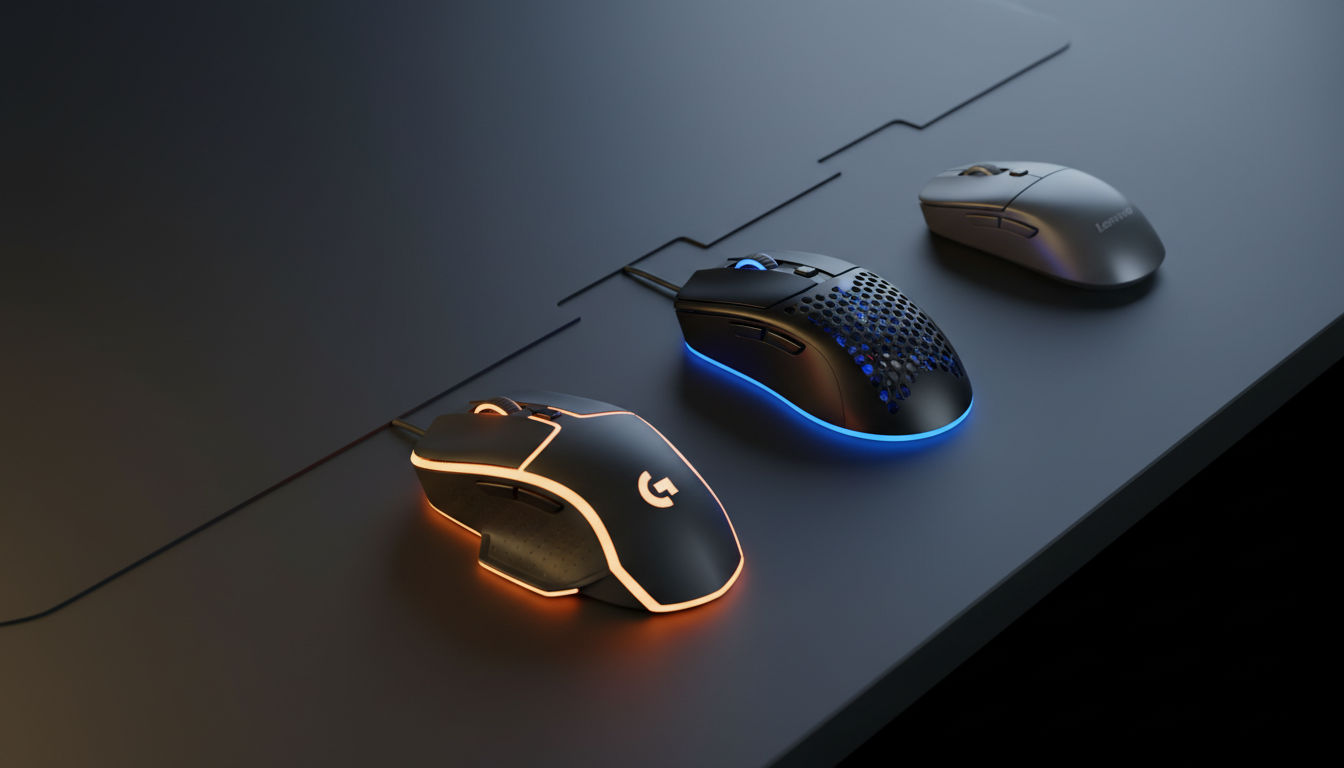
We split the roundup into three tiers. Budget picks include the Lenovo 300, Logitech B100, HP Mouse 100 and Coolerplus FC112, all priced under $17 and weighing between 0.05 lb and 0.24 lb. Mid‑range choices like the Redragon M602 ($16.99) and Redragon M612 Predator (≈0.28 lb) add extra buttons and customizable DPI without breaking the bank. Premium contenders such as the Logitech G502 HERO ($35.99, 2.26 ms latency) and Razer Basilisk V3 (1.38 ms latency, 0.22 lb) bring high‑end sensors and extensive programmability. In the sections that follow, we’ll break down each mouse’s strengths, so you can match the right device to your workflow or gaming style.

Logitech G502 HERO
Its 2100 mm cable length provides ample reach, letting you move freely across larger desks without sacrificing precision.

Redragon M602
Ideal for mainstream gamers who want solid performance at a lower cost—it's $19.00 cheaper than the Best Overall at $16.99.

Lenovo 300
Stands out with a 1.8 m cable and a 111.51 mm depth, delivering reliable control for budget‑focused users at just $6.69.
Also considered
Score Analysis
Key score advantages vs. runner-up (Redragon M602)
Price Range
Logitech G502 HERO
$33.49
Redragon M602
$19.99
Lenovo 300
$6.39
Coolerplus FC112
$15.99
Logitech B100
$7.99
Razer Basilisk V3
$36.95

Redragon M612 Predator
$16.99

Amazon Basics Wired Mouse
$125.97

Redragon M908 Impact
$24.35

HP Mouse 100
$10.95

Tecknet USB Wired Mouse
$9.99
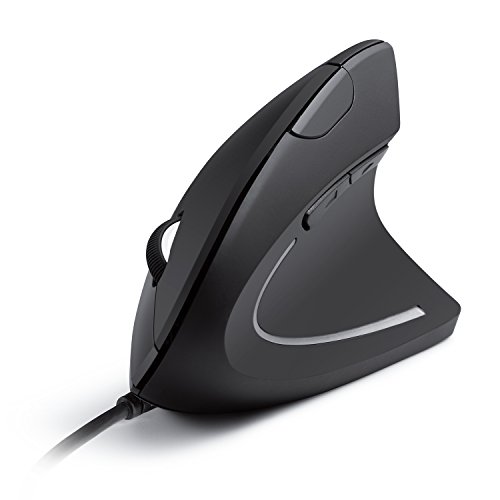
Anker Wired Vertical Mouse
$25.99
Spec Comparison
TL;DR: The Logitech G502 HERO packs a HERO 25K sensor with up to 25,600 DPI, 1,000 Hz reporting and 11 programmable buttons, but its 0.27‑lb base weight and right‑handed only design may feel hefty for some gamers.
The standout spec is the HERO 25K optical sensor, offering a DPI range of 100–25,600 and a reporting rate of 1,000 Hz, which translates to an average wired latency of 2.26 ms. Coupled with Omron mechanical switches and PTFE footpads rated for more than 250 km of travel, the mouse delivers precise, low‑latency tracking for fast‑paced titles.
Compared with its peers, the G502 HERO is heavier than the Anker Wired Vertical’s 0.21 lb shell but lighter than the Redragon M908 Impact’s 0.386 lb build. Its 2,100 mm cable outstretches the 1.83 m cable of the Redragon M908 and the 1.5 m lead on the Anker Vertical, giving you extra reach at a desk. While the Razer Basilisk V3 offers a lower latency of 1.38 ms and a slightly higher max DPI of 26,000, the G502 still offers a 25,600 DPI ceiling and more programmable inputs.
In practice, users rave about the deep customization: eleven programmable buttons, five side buttons, and an optional weight system that lets you add up to 18 g in 3.6 g increments. Reviewers praise the sensor’s sub‑micron precision and the lack of smoothing or acceleration tweaks. The common complaints focus on the 122 g (0.27 lb) base weight feeling heavier than ultralight alternatives and the fact that the chassis is right‑handed only, which can be a deal‑breaker for left‑handed players.
Additional technical touches include LIGHTSYNC RGB with roughly 16.8 million colors, a lift‑off distance under 1 mm, and a depth of 40 mm, grip width of 60 mm and height of 132 mm that suit a palm‑grip style. The mouse ships with five tuning weights and a storage case, so you’ll fine‑tune the feel without extra purchases.
Pros
Cons
Best for: Competitive FPS, MOBA, and strategy gamers who need rapid DPI shifts, extensive button mapping and customizable weight.
Avoid if: You’re left‑handed, prefer an ultralight or portable mouse, or require a detachable cable for on‑the‑go use.
TL;DR: The Redragon M602 packs 9 programmable buttons, 7 RGB modes and up to 7200 DPI into a 0.29 lb ergonomic mouse that’s well‑reviewed but a bit heavy for fast‑paced shooters.
The standout spec is the DPI range – the M602 can be cranked up to 7200 DPI, giving you plenty of sensitivity headroom for both precise sniping and rapid sweeps. It also offers nine programmable buttons, letting you bind macros or shortcuts without needing extra hardware. Redragon’s Windows/Mac software fully customizes the mouse’s 7‑mode RGB lighting, adding a splash of color to any setup.
Compared with the other wired contenders, the M602 is heavier than the Anker Vertical (0.21 lb) and the Coolerplus FC112 (0.24 lb), while its 9‑button layout outnumbers the Anker’s five, the Coolerplus’s three and the HP Mouse 100’s three. Its DPI ceiling also tops the Coolerplus (1000 DPI) and HP (1600 DPI) models, giving it a performance edge where sensor resolution matters. The Redragon M612 Predator sits at a similar weight (about 0.28 lb) but adds two extra buttons, so the M602 balances button count and price nicely.
Professional reviewers highlight the ergonomic shape with a thumb rest as comfortable for long sessions, and users love the vibrant RGB and the ability to set up macros. The downside that recurs in many comments is the mouse’s overall heft – at 0.29 lb it feels “heavy” to players who favor ultra‑light gear, and the wired version’s cable feels stiff and prone to kinking. Some reviewers also note higher click latency compared with lighter, lower‑profile mice.
Beyond the core specs, the M602 runs on Redragon’s cross‑platform software, supporting both Windows and macOS, and it’s compatible with PCs, laptops and Macs. The manufacturer doesn’t list warranty details or cable length, so you’ll need to check the box for that information.
Pros
Cons
Best for: Most users looking for a well‑reviewed, reliable mainstream option
Avoid if: You have limited desk space or need portability
“Too heavy (feels 'twice as heavy' as 80-100g mice)”
TL;DR: The Lenovo 300 offers a lightweight 0.05 Pounds ambidextrous full‑size mouse with a 1600 DPI sensor, 1.8 m wired USB‑A cable, and solid 20 million‑click durability at a $6.69 price point.
The standout spec is its 1600 DPI optical sensor, which is double the 800 DPI found in the Logitech B100 and matches the HP Mouse 100. Coupled with a 1.8 m (6 ft) USB‑A cable, the mouse stays connected without pulling on the desk. At just 0.05 Pounds (22.68 g), it feels feather‑light compared with the Logitech B100’s 0.24 Pounds and the HP Mouse 100’s 0.24 Pounds.
Compared with the other eleven entries, the Lenovo 300 is lighter than every listed competitor and offers the longest cable among the budget‑tier models, beating the Tecknet mouse’s 1524 mm length. It provides the same three‑button layout as the Logitech B100 and HP Mouse 100, but fewer buttons than the six‑button Tecknet, nine‑button Redragon M602, or five‑button Anker Vertical mouse.
User feedback highlights the mouse’s balanced weight and plug‑and‑play simplicity, with many reviewers praising the comfortable grip and precise scrolling. Professional reviewers note the high‑resolution sensor and the ambidextrous shape as solid everyday strengths, while some users find the rear‑hump contour unusual. Gamers and power users who need programmable buttons or ultra‑high DPI settings won’t find it suitable.
Pros
Cons
Best for: Budget-conscious buyers seeking a reliable entry-level option
Avoid if: You need many programmable buttons, high‑DPI gaming performance, or a dedicated left‑handed ergonomic shape
“perfect mouse for Lenovo laptops and desktops”
“good basic mouse”
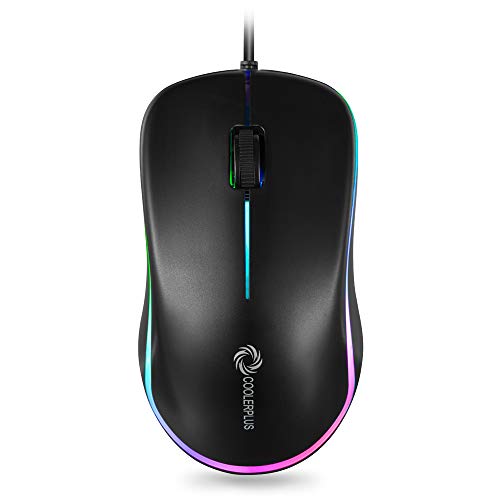
TL;DR: The Coolerplus FC112 is a lightweight, full‑size wired mouse with a 1.6 m cable, 1000 DPI optical sensor and a rainbow‑lit design, ideal for budget‑friendly office and study use.
What really stands out is the 1.6 m (1600 mm) USB cable, giving you plenty of reach without tugging, and the 1000 DPI optical sensor that delivers smooth cursor movement for everyday tasks. Weighing just 0.24 pounds (108.9 g), the mouse feels almost weightless, and its slim 2.54 mm profile lets it slide easily across tight desk spaces. Three easy‑click buttons keep the layout simple, while a built‑in rainbow lighting adds a splash of personality.
Compared with the other eleven mice in this roundup, the FC112 is lighter than the Redragon M602 (0.29 pounds) but a touch heavier than the Anker Vertical mouse (0.21 pounds). Its 1.6 m cable is longer than the Anker’s 1.5 m lead and shorter than the Redragon M612’s 1.8 m cord. At 1000 DPI it lands between the Logitech B100’s 800 DPI and the HP Mouse 100’s 1600 DPI, while offering fewer buttons than the nine‑button Redragon M602 or the eleven‑button Redragon M612. The full‑size form factor matches the Logitech B100’s dimensions, yet the FC112’s height of 2.54 mm is notably thinner than most peers.
Reviewers consistently praise the mouse for its plug‑and‑play simplicity and the reliable, lag‑free response of its wired connection. Professional editors note its “slim, portable full‑size design” as perfect for cramped workstations or e‑learning setups. Users also appreciate the three‑million‑click durability rating, which suggests a long lifespan for a budget mouse. However, the fixed 1000 DPI setting can feel limiting for graphic‑design work or high‑sensitivity gaming, and the requirement for a AA battery—even though it’s powered via USB—adds an extra step that some find unnecessary.
Beyond the basics, the FC112 sports a rainbow lighting effect that brightens a plain desk, an optical sensor that delivers consistent tracking, and a rubber‑type scroll wheel that feels smooth under the finger. The “Easy Click” button design has been highlighted in user feedback as comfortable for extended typing sessions, and the three‑million‑click durability claim gives confidence for daily use.
Pros
Cons
Best for: Most users looking for a well‑reviewed, reliable mainstream option
Avoid if: You need high DPI, programmable buttons, or a fully wireless solution
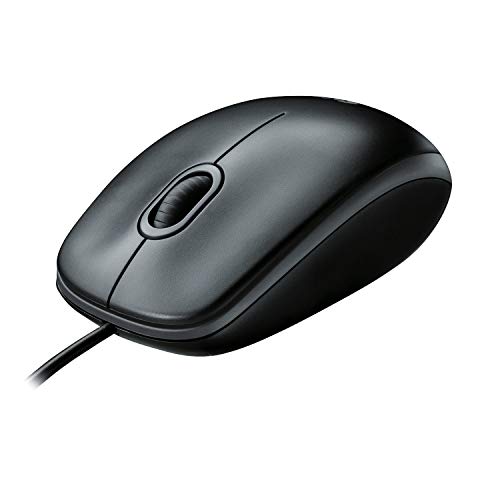
TL;DR: The Logitech B100 delivers plug‑and‑play reliability with an 800 DPI optical sensor, a 180 cm wired connection and ambidextrous comfort for just $7.99.
The standout spec is the 180 cm USB cable, giving you plenty of reach for desktop or classroom setups without needing a dongle. Its optical sensor tracks at 800 DPI, which reviewers note is steady enough for everyday tasks like web browsing and document editing. The mouse also carries a 2,700‑cycle wipe‑rating, a durability claim that schools and kiosks appreciate.
Compared with the other eleven contenders, the B100 weighs more than the ultra‑light Lenovo 300 (0.05 Pounds) and offers half the DPI of that model’s 1,600 DPI sensor. It matches the HP Mouse 100 at 109 g and has a similar weight to the Coolerplus FC112 (0.24 pounds). However, it provides fewer programmable buttons than the Tecknet USB Wired Mouse’s six‑button layout and lacks the ergonomic shaping of the Anker Vertical Mouse.
User sentiment repeatedly praises the “just works” nature of the B100: no drivers, instant USB recognition and a comfortable ambidextrous shape with textured grips. Professional reviewers highlight its reliable optical tracking and Chromebook certification, while a handful of users mention occasional scroll‑wheel lag and the limitation of a wired connection for mobile desks.
Pros
Cons
Best for: Budget‑conscious buyers seeking a reliable entry‑level option
Avoid if: You have limited desk space or need portability
“quality cheap mouse”
“just works”
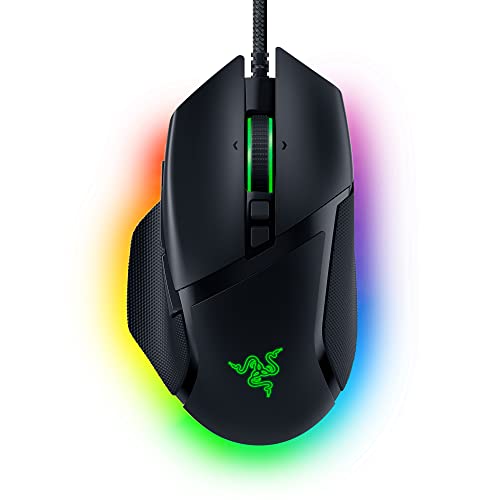
TL;DR: The Razer Basilisk V3 offers a 26,000 DPI Focus+ sensor, 8000 Hz polling, and 11 programmable buttons in a well‑lit ergonomic shell, but its 101 g weight may feel bulky for ultra‑light FPS fans.
At the heart of the Basilisk V3 is Razer’s Focus+ optical sensor capable of up to 26,000 DPI and a blazing 8000 Hz polling rate, paired with a wired latency of just 1.38 ms. Those numbers sit at the top end of the wired‑mouse spectrum and give the mouse ultra‑smooth tracking for both fast‑paced shooters and precise MMO actions. The mouse also packs 11 programmable buttons, a 4‑way HyperScroll tilt wheel, and 11‑zone Chroma RGB lighting for extensive customization.
In the broader lineup, the Basilisk V3’s 0.2225‑pound weight places it heavier than the Anker Wired Vertical (0.21 lb) and Coolerplus FC112 (0.24 lb), but lighter than the Redragon M908 Impact (0.386 lb). Its dimensions—62 mm grip width, 42.5 mm height, 130 mm length, and 75 mm width—are larger than the compact Coolerplus FC112 (63 mm width) and the Anker Vertical (64 mm width), yet comparable to the Logitech G502 HERO’s 75 mm width. Compared with the Logitech G502’s 60 mm grip width, the Basilisk V3 offers a slightly wider grip, which many right‑handed users with medium‑to‑large hands find comfortable.
Reviewers consistently praise the ergonomic thumb rest and the dual‑mode scroll wheel for comfort and productivity. Professional outlets note the sub‑1 mm lift‑off distance and the rapid 0.2 ms switch actuation as ideal for precision play. On the flip side, users flag the 101 g body (excluding cable) as relatively heavy, and users repeatedly express disappointment over the lack of a wireless option. The mouse’s matte‑coated plastic chassis, 100 % PTFE feet, and a 2‑year warranty round out a solid build.
Pros
Cons
Best for: Right‑handed gamers with medium‑to‑large hands who want a wired, feature‑rich mouse with high DPI and extensive button mapping.
Avoid if: You need a lightweight or wireless mouse, have a small hand, or are looking for the cheapest basic option.
TL;DR: The Redragon M612 Predator offers 11 programmable buttons, 500–8000 DPI, and vibrant RGB lighting in a comfortable right‑handed design, though its default polling rate may feel sluggish for high‑speed esports.
What really stands out is the eleven programmable buttons paired with a 5‑mode RGB system, letting you assign macros and switch lighting on the fly. The optical Pixart P3104 sensor reaches up to 8,000 DPI, and the 1.8 m wired USB cable gives you plenty of reach without clutter.
At about 0.28 lb (126 g), the M612's lighter than the Redragon M908 Impact but a touch heavier than the Anker vertical mouse, and its 127 mm length is nearly the same as the Redragon M602’s 125 mm. Its overall footprint sits between the compact Coolerplus FC112 and the bulkier M908, making it a middle‑ground choice in the lineup.
Reviewers note the frosted skin‑friendly coating and rubberized thumb grip reduce fatigue during marathon sessions, while the on‑board memory lets you keep profiles without re‑installing software. Some users, however, point out the default polling rate can feel slower than the 1,000 Hz offered by higher‑end rivals, and a few have run into occasional software hiccups.
Under the hood, the mouse delivers 15 G acceleration and a maximum speed of 45 IPS, with a polling range of 125–1,000 Hz and a rapid‑fire button for shooters. The built‑in memory stores profiles for plug‑and‑play convenience, and the Windows‑compatible software lets you fine‑tune DPI, macros, and lighting.
Pros
Cons
Best for: Most users looking for a well‑reviewed, reliable mainstream option
Avoid if: You need advanced features or professional‑grade performance
TL;DR: The Amazon Basics wired mouse offers a low‑profile, ambidextrous 3‑button design at just 0.17 lb, 1000 dpi and a 4.6‑star rating, but its premium $125.97 price and small size limit it to light‑office use.
This mouse’s most distinctive trait is its ultra‑light, low‑profile shape: it measures 34.3 mm in height, 109.2 mm in length and 61.0 mm in width, and weighs only 76.5 g (0.17 lb). The optical sensor runs at a fixed 1000 dpi, and the three‑button layout plus scroll wheel are ambidextrously symmetrical, making it a straightforward plug‑and‑play solution.
Compared with the other eleven contenders, the Amazon Basics model is the lightest (0.17 lb versus 0.21 lb for the Anker Vertical and 0.22 lb for the Razer Basilisk V3). It also has the fewest programmable buttons—just three—while rivals such as the Redragon M908 and M602 offer 18 and 9 buttons respectively. Its DPI of 1,000 sits far below the 26,000 dpi of the Razer Basilisk V3 and the 12,400 dpi of the Redragon M908, and its fixed low polling rate suits fast‑paced gaming less. Although it carries a premium $125.97 price tag, most peers sit in lower price brackets.
Professional reviewers highlight the symmetrical low‑profile design as ideal for small‑handed, ambidextrous users, and everyday owners praise its plug‑and‑play reliability and feather‑light feel. However, reviewers frequently call the stiff USB‑A cable “restrictive,” and the high click latency combined with a non‑adjustable polling rate makes the mouse unsuitable for competitive gaming. Users with larger hands also report discomfort because the dimensions are compact.
Pros
Cons
Best for: Small‑handed, ambidextrous office workers who value a lightweight, plug‑and‑play mouse for basic productivity.
Avoid if: You have larger hands, need high‑precision gaming performance, or are looking for a budget‑friendly option.
TL;DR: The Redragon M908 Impact packs 18 programmable buttons, a 12,400 DPI sensor and a 6‑ft braided cable into a solid‑feel mouse that’s a bit heavier than most wired rivals.
What really stands out is the sensor’s 12,400 DPI maximum and the ability to switch among five DPI presets (500 – 6,200 DPI). Coupled with a 1000 Hz polling rate, the mouse can keep up with fast‑paced gaming or precise design work. The 6 ft (1.83 m) braided cable gives you plenty of slack for a clutter‑free desk, and the 18 programmable buttons let you map complex macros without extra software.
Compared with the other wired mice in this roundup, the M908’s cable is longer than the 1.8 m lead on the Redragon M612 Predator and far exceeds the 1.5 m cable of the Anker Vertical Mouse. Its DPI ceiling dwarfs the 1,000 DPI of the Coolerplus FC112, and the 18 side‑button count tops the 11‑button M612 and the 9‑button M602. At roughly 0.39 lb (175 g), it's heavier than the M612 (0.28 lb), the M602 (0.29 lb), the Anker (0.21 lb) and the Logitech G502 HERO (0.27 lb), which many users note gives a more anchored feel but can feel bulky for smaller hands.
User feedback frequently praises the 16.8 million‑color RGB lighting and the smooth feel of the gold‑plated USB connector. Reviewers also highlight the eight 2.4 g weight‑tuning pieces as a handy way to fine‑tune balance. On the downside, several comments mention the mouse’s weight as a trade‑off for its durability, and the 4.4‑star rating suggests a few users have experienced issues with button consistency.
Pros
Cons
Best for: Buyers willing to invest in a proven, high‑quality option
Avoid if: You're on a tight budget or only need basic functionality
TL;DR: The HP Mouse 100 delivers a crisp 1600 DPI sensor and ambidextrous contoured shape for $12.95, offering solid reliability with a 4.6‑star rating, though it sits above the cheapest entry‑level mice.
The 1600 DPI optical sensor stands out, matching higher‑end budget mice and doubling the 800 DPI found in some older models. At 0.24 pounds (109 g) it feels light enough for long‑term desk work without sacrificing stability, and the contoured, ambidextrous design lets both left‑ and right‑handed users stay comfortable.
Compared with the other eleven contenders, the HP Mouse 100 is heavier than the ultra‑light Lenovo 300 (0.05 pounds) but lighter than the Redragon M602 (0.29 pounds). Its three‑button layout matches the Logitech B100, Lenovo 300 and Coolerplus FC112, yet it offers fewer programmable inputs than the Tecknet USB Wired Mouse (six buttons) or the Redragon M602 (nine buttons). DPI‑wise it ties with the Lenovo 300 at 1600 DPI and outpaces the Logitech B100’s 800 DPI, giving it a clear edge for precise cursor control.
Users consistently give the mouse a 4.6‑star average across more than 4 000 reviews, indicating broad satisfaction with its plug‑and‑play USB‑A connection and smooth scroll wheel. Reviewers often mention the reliable click feel and the comfort of the contoured shape during extended use, while the high rating suggests few major complaints.
Pros
Cons
Best for: Budget‑conscious buyers seeking a reliable entry‑level option
Avoid if: You need advanced features or professional‑grade performance
TL;DR: The Tecknet USB Wired Mouse offers six buttons, four DPI settings up to 6400 and a 1524 mm cable for $9.98, making it a solid, budget‑friendly choice for everyday computing.
The mouse’s most eye‑catching spec is its four DPI levels—1000, 1600, 3200 and 6400—giving you plenty of cursor speed options without any software. Its ergonomic shape with soft rubber grips and an ultra‑low 2.54 mm height **keeps** your hand comfortable during long sessions, while the 6‑button layout adds extra functionality compared with many entry‑level rivals.
Compared with the other eleven contenders, the Tecknet sits in a sweet spot. Its 1524 mm cable is a touch longer than the Anker Wired Vertical’s 1.5 m lead, yet shorter than Logitech’s 180 cm and Lenovo’s 1.8 m cords. The six‑button count outnumbers the three‑button Logitech B100, HP Mouse 100 and Lenovo 300, and even exceeds the five buttons on the Anker vertical model. DPI-wise, it tops the Logitech B100’s 800 DPI and the HP and Lenovo’s 1600 DPI limits, matching only the higher‑end Redragon range that isn’t listed here.
User feedback highlights the plug‑and‑play simplicity and the rubberized grip as real wins. Reviewers also note that the side buttons don’t function on macOS, which aligns with the manufacturer’s compatibility note. A handful of users mention the long cable can feel bulky on cramped desks, but most appreciate the reliable optical tracking described as “Tru‑Wave Technology” in the spec sheet.
Pros
Cons
Best for: Budget-conscious buyers seeking a reliable entry-level option
Avoid if: You have limited desk space or need portability
TL;DR: The Anker Wired Vertical Mouse offers a comfortable handshake grip, 1000‑1600 DPI optical sensor and side media buttons for $16.99, though its five‑button layout is modest compared with many rivals.
The standout feature is the vertical handshake grip that encourages a more natural arm position, paired with an optical sensor that switches between 1000 and 1600 DPI. At 0.21 pounds (95 g) it feels light in the hand, and the 1.5 m wired USB cable gives you plenty of reach without clutter.
Compared with other mice in this roundup, the Anker is lighter than the Redragon M602 (0.29 pounds) but a touch heavier than the Coolerplus FC112 (0.24 pounds). Its 75 mm height is taller than Redragon M602’s 40 mm, while the 122 mm length matches the Redragon M602’s 125 mm fairly closely. With five buttons, it falls short of the nine‑button Redragon M602, the eleven‑button Redragon M612, and the eighteen‑button Redragon M908, though it offers more than the three‑button HP Mouse 100 and Coolerplus FC112.
Reviewers frequently mention that the vertical shape eases wrist strain during long sessions, and they praise the side next/previous buttons for quick media control. Some users note the 75 mm height feels a bit tall for smaller hands, and the 4.4‑star rating suggests a few durability concerns compared with higher‑rated peers.
Pros
Cons
Best for: Most users looking for a well‑reviewed, reliable mainstream option
Avoid if: You've limited desk space or need portability
Breakdown
Logitech G502 HERO
Pros
Redragon M602
Pros
Lenovo 300
Pros
Coolerplus FC112
Pros
Based on scoring data and product specs
Personalized picks
Best Overall Pick
Logitech G502 HERO
Best OverallBest for: Audiophiles and enthusiasts seeking premium sound quality and advanced features
Redragon M602
Best for: Most users looking for a well-reviewed, reliable mainstream option
$19.99-$13.50 vs winner
Skip Anker Wired Vertical Mouse if…
You have limited desk space or need portability
The Logitech G502 HERO takes the top spot thanks to its 4.6‑star rating from 57,572 reviewers, a DPI range that stretches from 100 to 25,600, and a lightning‑fast 2.26 ms average latency. Its 11‑button layout and on‑board memory for five profiles give you deep customization, and you don't need extra software, while the adjustable 122 g weight keeps the feel balanced for long gaming sessions.
The Redragon M602 lands as the runner‑up, perfect if you need an ergonomic everyday mouse that won’t dent your wallet. It sports a comfortable shape that fits roughly 98 % of hand sizes, 9 programmable buttons for shortcuts, and up to 7,200 DPI for precise cursor control, all backed by a solid 4.6‑star rating from 33,618 users.
Pick the Logitech G502 HERO now and you'll get the most capable wired mouse for gaming and productivity.
The Logitech G502 HERO provides 11 macro‑programmable buttons, while the Redragon M602 offers 9. With two extra buttons and dedicated DPI controls, the G502 leads in button customization.
No reviews yet — be the first to share your experience.
Please sign in to leave a review