⚡ Quick Answer
Choosing a wireless gaming headset can feel like a maze, especially when you’ve got 10 options on the table. Prices stretch from $17.49 for the PHOINIKAS model up to $109.00 for Turtle Beach’s Stealth 600, and the lineup splits neatly into budget, mid‑range and premium tiers. If you’re after a cheap starter or a feature‑rich premium set, you’ll find a spot for every wallet.
Comfort and weight matter for marathon sessions – the HyperX Cloud Jet tips the scales at 298 g and reaches 15 meters of wireless range, while the Turtle Beach Stealth 600 boasts an impressive 80‑hour battery life. Audio fidelity varies, with Nanddi and Ozeino models both packing 50 mm drivers and 7.1 virtual surround, and the Gtheos offering ultra‑low latency of ≤20 ms. User sentiment is solid across the board, with ratings hovering between 4.2 and 4.4 out of 5.
In the sections that follow we’ll break down each tier, weigh the specs against real‑world needs, and help you pinpoint the headset that matches your play style and budget.

HyperX Cloud Jet
Its 40 mm drivers provide immersive audio, supporting the value and feature set that earned it top marks.

Nanddi Gaming Headset
Ideal for budget‑focused gamers, the Nanddi delivers solid performance at $18.04—about $42 cheaper than the HyperX Cloud Jet.

Ozeino Wireless Gaming Headset
With its 32 Ω impedance, the headset pairs smoothly with consoles and PCs, a distinction the HyperX and Nanddi don’t highlight.
Also considered
Score Analysis
Key score advantages vs. runner-up (Nanddi Gaming Headset)
Price Range
HyperX Cloud Jet
$59.99
Nanddi Gaming Headset
$18.04
Ozeino Wireless Gaming Headset
$29.99

Turtle Beach Stealth 600
$89.00
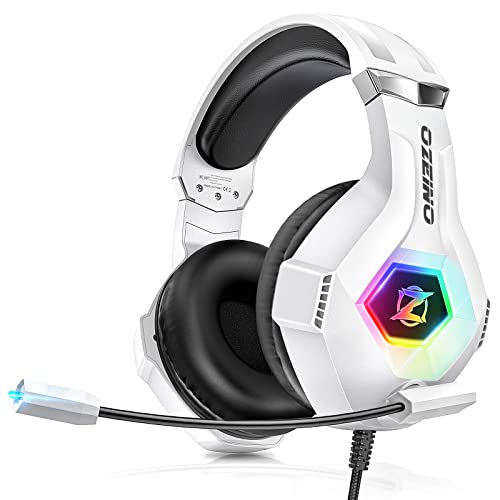
Ozeino Gaming Headset White
$19.99
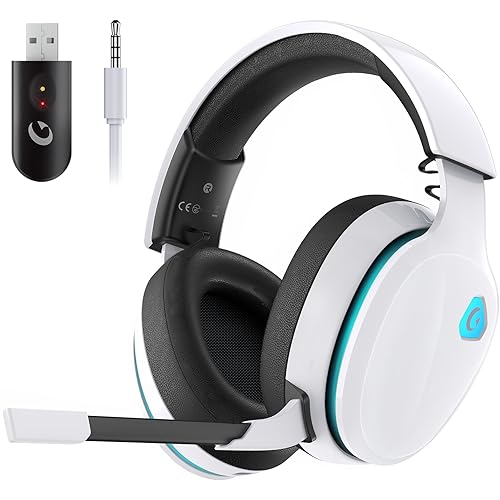
Gtheos Wireless Gaming Headset
$25.49

Turtle Beach Stealth 500
$89.86
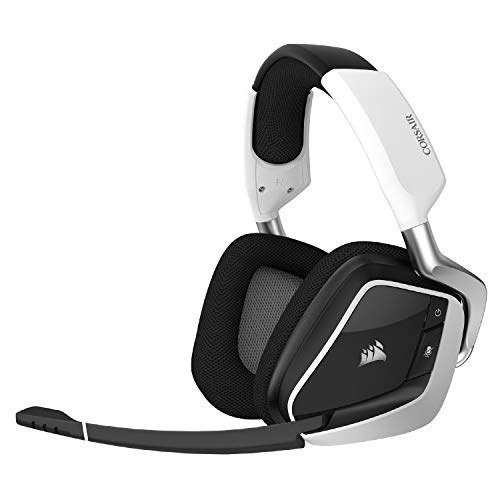
Corsair Void RGB Elite
$99.99
Logitech G435 Black
$79.99

PHOINIKAS Gaming Headset
$17.49
Spec Comparison
TL;DR: The HyperX Cloud Jet offers sub‑300 g comfort, dual 2.4 GHz + Bluetooth 5.3 wireless, 40 mm drivers and up to 25 hours of playtime for $59.99.
What really sets the Cloud Jet apart is its dual‑wireless system: a low‑latency 2.4 GHz USB dongle and Bluetooth 5.3, letting you hop between PC and mobile devices without re‑pairing. It houses 40 mm dynamic drivers and runs on a lithium battery that lasts between 20 and 25 hours, recharging in 4.5 hours. At just 0.66 lb (298 g) the headset feels feather‑light, and the included 1.5 m charging cable gives you enough reach for most desks.
Compared with the other nine contenders, the Cloud Jet is lighter than the Turtle Beach Stealth 500’s 0.51 lb frame, but a touch heavier than the Logitech G435’s 0.36 lb design. Its 15‑meter wireless range outstretches the G435’s 10 m, yet falls short of the Stealth 500’s 2.4 GHz range (specs not listed for distance). Battery life lasts 20‑25 hours, though the Stealth 500 advertises up to 40 hours, making the Cloud Jet’s endurance modest in that comparison. Driver size matches the 40 mm units found in both the Stealth 500 and G435, keeping audio fidelity on a level playing field.
Reviewers consistently praise the headset’s lightness and the breathable mesh ear cushions, noting that you can game for hours without ear fatigue. Professionals also highlight the seamless switch between the dongle and Bluetooth, calling it “easy and reliable.” On the downside, the plastic‑heavy frame draws criticism for feeling less premium than metal‑framed rivals, and some users report that the ear‑cushion material varies between production runs. Battery life, while adequate, is shorter than the top‑end models that push 40 hours.
Beyond comfort, the Cloud Jet delivers 16‑bit audio with DTS Headphone:X spatial processing, a unidirectional electret condenser mic (‑16 ± 4 dB FS sensitivity) and an always‑on sidetone. The dongle itself weighs just 0.01 lb (4 g), keeping your USB ports uncluttered. A swivel‑to‑mute boom mic and on‑headset volume controls round out the feature set for a headset positioned at the entry‑level of the wireless gaming market.
Pros
Cons
Best for: Buyers willing to invest in a proven, high-quality option
Avoid if: You need advanced features or professional‑grade performance
“feels light enough to wear for hours without fatigue”
“a welcome choice”
TL;DR: The Nanddi K8 delivers 7.1 virtual surround, a 50 mm driver and RGB lighting for $18.04, offering solid sound and comfort in a budget‑friendly, lightweight package.
The headset’s standout spec is its 50 mm dynamic driver paired with 7.1 virtual surround, which the manufacturer markets as providing “clear, full sound with strong bass.” It also runs on Bluetooth 5.4 and a 2.4 GHz USB‑C dongle that promises latency under 30 ms, making it suitable for fast‑paced games without noticeable lag.
At 0.75 pounds, the Nanddi weighs more than the ultra‑light Logitech G435 (0.36 pounds) and the PHOINIKAS model (≈0.57 pounds), but weighs less than the Ozeino Wireless unit (≈1.08 pounds). Its 50 mm drivers match the driver size of the Ozeino White, Gtheos, and Corsair Void headsets, and are larger than the 40 mm drivers found in the PHOINIKAS, Logitech G435, HyperX Cloud Jet, Turtle Beach Stealth 500, and many budget options. This gives it a clear advantage in potential bass response while staying in the same price tier as the $19‑$20 competitors.
Users consistently praise the immersive 7.1 audio and the comfort of the larger, softer earmuffs, noting that the adjustable retractable headband stays snug during long sessions. Professional reviewers highlighted the “nice full sound” and the clear, noise‑reducing microphone, while also pointing out that the lack of detailed specs makes deeper performance analysis difficult. A common complaint is the need for extra adapters to connect to Xbox or Switch consoles, and Bluetooth mode doesn't work on PS4/PS5, which can be a hassle for console‑only gamers.
Pros
Cons
Best for: Budget-conscious buyers seeking a reliable entry-level option
Avoid if: You have limited desk space or need portability
TL;DR: The Ozeino OW810 offers 50 mm drivers, up to 40 hours of wireless play and a sub‑30 ms latency in an over‑ear design, but it’s noticeably heavier than most budget rivals.
The headset’s standout spec is its 50 mm driver paired with a full 20 Hz‑20 kHz frequency range and a 32 Ω impedance, delivering lossless audio that many users describe as clear and immersive. A 40‑hour battery life and a quick 3‑hour charge keep you gaming for days without hunting for an outlet, while the advertised latency stays under 30 ms.
At 1.08 lb (490 g) the OW810 is heavier than every other model in this ten‑item roundup – the next heaviest, Gtheos, weighs 0.8 lb and the lightest, Logitech G435, is just 0.36 lb. Battery endurance matches the best‑rated Turtle Beach and Ozeino White models, but its latency exceeds Gtheos’s ≤20 ms. It features larger 50 mm drivers than those on PHOINIKAS, Logitech, HyperX and Turtle Beach, which all use 40 mm units, putting Ozeino on par with Gtheos, Nanddi and Corsair.
Reviewers repeatedly praise the comfortable over‑ear cushions and the long‑lasting battery, noting that the headset stays secure during marathon sessions. The built‑in noise‑cancelling microphone and multiple connection options (2.4 GHz dongle, Bluetooth, USB‑C and a 3.5 mm jack) highlight convenience for PC, consoles and mobile use. A common criticism points to the higher price‑to‑value ratio compared with lighter, similarly priced alternatives.
Pros
Cons
Best for: Budget‑conscious buyers seeking a reliable entry‑level option
Avoid if: You want the best value‑per‑dollar in its price range
TL;DR: The Turtle Beach Stealth 600 delivers a massive 80‑hour battery, 50 mm drivers and a comfortable glasses‑friendly design, but its $109 price puts it in the premium tier.
The standout spec is the 80‑hour battery life, which dwarfs the 16‑hour to 40‑hour ranges most rivals list. Coupled with 50 mm drivers, the headset aims to provide immersive audio while staying at a manageable 0.71 lb (320 g) weight.
Compared with the nine other headsets in this roundup, the Stealth 600 is pricier than budget‑focused models like the Logitech G435 and the Ozeino options, yet lighter than the Corsair Void RGB Elite (0.88 lb). Its battery endurance far exceeds most competitors, which top out around 40 hours, and its driver size matches the larger 50 mm units that premium models use while beating the 40 mm drivers elsewhere.
Reviewers note the ultra‑long battery as a major convenience, especially for marathon sessions. The flip‑to‑mute mic with AI noise reduction earns praise for clear chat, and the memory‑foam cushions with glasses‑friendly weave keep comfort high. Users also appreciate the QuickSwitch button that toggles between wireless and Bluetooth with a single press, and the Swarm II app’s EQ presets and Superhuman Hearing mode for a competitive edge.
Pros
Cons
Best for: Buyers willing to invest in a proven, high-quality option
Avoid if: You're shopping on a tight budget — it's priced at $109.00
TL;DR: The Ozeino OW810 offers 50 mm drivers, 40 hours of battery life and dual 2.4 GHz/Bluetooth connectivity for $19.99, making it a solid budget pick despite a slightly heavier feel.
The headset’s most distinctive spec is its 50 mm driver paired with 7.1 surround sound, delivering a broad soundstage that many entry‑level headsets lack. Coupled with a microphone sensitivity of –42 dB and a flip‑design mic with 360° noise cancellation, it aims to keep your voice clear while you game.
Compared with the other nine models, Ozeino sits in the lighter half of the group: at 0.66 lb it’s lighter than the Nanddi headset (0.75 lb) but heavier than the PHOINIKAS model (≈0.57 lb). Its 40‑hour battery matches the long‑lasting claims of the Turtle Beach and Ozeino Wireless versions, outlasting the Logitech G435 (18 h) and Corsair Void (16 h). The dual wireless approach—2.4 GHz dongle with sub‑30 ms latency plus Bluetooth—offers more flexibility than the single‑mode setups of several peers.
Users consistently praise the reliable low‑latency link and the thick, breathable ear‑cup padding that lets you game for hours without noticeable fatigue. Professional reviewers note that the large drivers provide solid stereo separation and that a wired 3.5 mm fallback adds convenience. However, many comment that the headset feels a bit chunkier than advertised, and the fixed ear‑cup design limits fine‑tuning for different head shapes.
Pros
Cons
Best for: Budget-conscious buyers seeking a reliable entry‑level option
Avoid if: You have limited desk space or need portability
TL;DR: The Gtheos Captain 300 delivers ultra‑low ≤20 ms latency, 50 mm drivers and a 49‑ft wireless range at $36.99, but its mic won’t work on Switch and it’s a bit heavier than some rivals.
The headset’s standout spec is its ultra‑low latency of ≤20 ms, which is especially useful for competitive play. It pairs it with 50 mm drivers and a wireless range of 49 ft, giving you room to move without lag. Battery life stretches to 35‑40 hours with RGB off, and the detachable omni‑directional noise‑canceling mic adds flexibility.
At $36.99 the Captain 300 sits in the mid‑price tier—cheaper than the Logitech G435 but pricier than the Ozeino Wireless Gaming Headset. It weighs 0.8 Pounds, making it heavier than the Logitech G435 (0.3625 pounds) and lighter than the Corsair Void RGB Elite (0.8796 pounds). Its 50 mm drivers match those of Ozeino, Ozeino White and Nanddi, and are larger than Logitech’s 40 mm units. The 49 ft range outstretches Logitech’s 10 m range while being comparable to HyperX Cloud Jet’s 15 m reach.
Reviewers praise the three connectivity options—2.4 GHz dongle, Bluetooth 5.2 and 3.5 mm wired—as well as the long battery life when RGB lighting is off. However, users consistently note that the microphone is non‑functional on Nintendo Switch and that Xbox Series consoles only support wired audio, limiting voice chat for those platforms.
Additional technical notes: the headset features a memory‑protein, soft breathable earmuff material, a mirror‑finish design, and RGB lighting that, while eye‑catching, reduces battery life to 15‑20 hours when active. Charging takes 3 hours, and the headset ships with a 12‑month warranty plus a 45‑day return guarantee.
Pros
Cons
Best for: Value‑conscious buyers seeking quality at $36.99
Avoid if: You need a functional mic on Switch, wireless audio on Xbox Series, or prioritize the highest possible user ratings.
TL;DR: The Turtle Beach Stealth 500 offers a 40 mm driver, up to 40 hours of battery life, and dual 2.4 GHz/Bluetooth 5.2 connectivity in a feather‑light 0.51 lb design, making it a solid Xbox‑focused wireless headset.
The headset’s standout specs include a 40 mm driver and a battery that lasts up to 40 hours, with quick‑charge support to get you back in the game fast. At just 0.51 lb (≈230 g), the ultra‑lightweight frame feels almost weightless on the head, and the plush leatherette ear cushions add extra comfort for marathon sessions.
Compared with the other nine contenders, the Stealth 500 is lighter than the HyperX Cloud Jet (0.65697754076 lb) but a touch heavier than the Logitech G435 (0.3625 lb). Its 40 mm drivers match the HyperX Cloud Jet and Logitech G435, yet they are smaller than the 50 mm drivers found in the Corsair Void Elite, Turtle Beach Stealth 600, and several other models. Battery life of up to 40 hours equals the Ozeino Wireless Gaming Headset and outlasts the Logitech G435’s 18‑hour claim and the Corsair Void Elite’s 16‑hour claim.
User feedback repeatedly highlights the headset’s comfort, long‑lasting battery, and clear, flip‑to‑mute microphone. Professional reviewers note the low‑latency 2.4 GHz link as essential for competitive play, and they commend the ability to toggle between wireless modes with a single QuickSwitch button. The Swarm II app adds a 10‑band EQ and four preset audio modes—including Superhuman Hearing—while variable mic monitoring lets you hear your own voice level.
Pros
Cons
Best for: Buyers willing to invest in a proven, high-quality option
Avoid if: You're on a tight budget or only need basic functionality
TL;DR: The Corsair Void RGB Elite offers 50 mm drivers, 7.1 virtual surround and a 12 m wireless range, but its 16‑hour battery and $101.54 price make it a premium‑priced, solid‑performance headset.
At the heart of the Void RGB Elite are 50 mm neodymium drivers that cover a 20 Hz‑30 kHz frequency response and deliver a 116 dB sensitivity, providing a wide soundstage and punchy bass. The headset also features 7.1 virtual surround sound for PC, a low‑latency 2.4 GHz wireless link, and up to 12 m of range, which professional reviewers note keeps audio crisp even at the far edge of a typical gaming room.
Compared with the other nine round‑up options, the Void RGB Elite is on the heavier side at about 0.88 lb, versus the 0.36 lb Logitech G435 and the 0.51 lb Turtle Beach Stealth 500. Its driver size matches the 50 mm units used in the Turtle Beach Stealth 600 and the Gtheos headset, but it outpaces the 40 mm drivers of the Logitech G435 and HyperX Cloud Jet. Battery life sits at 16 hours, which is shorter than the 40‑hour life of the Turtle Beach Stealth 500 and far below the 80‑hour claim of the Stealth 600, though it still exceeds the 10‑hour range of the Logitech G435. Wireless reach of 12 m places it between the 10 m of the G435 and the 15 m range of the HyperX Cloud Jet.
User feedback repeatedly highlights the headset’s comfort thanks to breathable microfiber mesh ear cushions with memory foam, and many gamers appreciate the immersive 7.1 virtual surround for better in‑game awareness. Professional reviewers also praise the deep iCUE integration, which lets you fine‑tune EQ settings and customize RGB lighting. However, several users report that enabling the RGB lighting can cut battery life below the advertised 16 hours, and the omnidirectional, non‑detachable mic sometimes captures background chatter.
Pros
Cons
Best for: Those prioritizing high‑quality audio, immersive virtual surround and deep software customization, and who don’t mind a premium price.
Avoid if: You need active noise cancellation, a detachable mic, or the longest possible battery life.
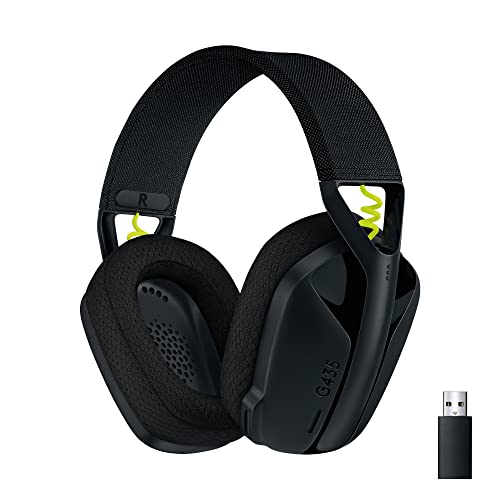
TL;DR: The Logitech G435 is a feather‑light 165 g wireless headset with low‑latency LIGHTSPEED and Bluetooth, offering 40 mm drivers, 18 h battery life, but its bass‑heavy sound and lack of wired mode limit audiophile appeal.
The standout spec is the ultra‑light 165 g (0.36 lb) weight, making the G435 feel almost weightless on the head. It pairs a 40 mm driver with Logitech’s LIGHTSPEED low‑latency 2.4 GHz link and a Bluetooth option, so you can jump between PC, console and mobile without noticeable lag. The headset also packs an 18‑hour battery and a 10 m wireless range.
Compared with the nine other headsets in this roundup, the G435 is the lightest of the lot – all peers listed weigh at least 0.51 lb. Its driver size matches the HyperX Cloud Jet, Turtle Beach Stealth 500 and PHOINIKAS models, but it’s smaller than the 50 mm drivers found in Gtheos, Ozeino and Corsair options. Battery life sits in the middle: longer than the Corsair Void’s 16 h, yet shorter than the 40 h runs of Turtle Beach, Ozeino and Ozeino White. The 10 m range is modest against HyperX’s 15 m and Gtheos’s roughly 15 m (49 ft) reach.
Professional reviewers note the headset’s “ultra‑light design” and “instant low‑latency connectivity,” and users praise its comfort during marathon sessions and seamless device switching. However, both experts and everyday users flag a bass‑heavy signature and weaker treble above 9 kHz, plus a microphone that can pick up background chatter. The G435 also omits a wired mode and G Hub software, which some power users miss.
Pros
Cons
Best for: Casual gamers and anyone who values feather‑light comfort and easy multi‑device switching.
Avoid if: You need detailed high‑frequency audio or a wired connection for zero‑latency performance.
TL;DR: The PHOINIKAS Gaming Headset packs 40 mm drivers, a detachable noise‑canceling mic and a lightweight 259 g build for just $17.49, making it a solid entry‑level choice for wired gaming.
At the core of this headset is a 40 mm driver paired with a 100 Hz – 8 kHz frequency response, delivering the bass‑heavy, clear‑treble sound that budget gamers appreciate. The detachable omnidirectional noise‑canceling microphone adds flexibility for Discord chats, while the over‑ear design sits on a 0.57‑pound (259 g) frame that’s easy on the head during a typical session.
Compared with other options in the roundup, the PHOINIKAS sits in the middle of the weight range: it’s heavier than the Logitech G435’s 0.36 lb frame but lighter than the Nanddi’s 0.75 lb and the Ozeino White’s 0.66 lb models. Its $17.49 price tag also lands it well below many of the competing headsets, offering a clear value proposition for anyone who doesn’t need the extra features found on pricier units.
Users consistently praise the memory‑foam ear pads for comfort, yet several note that the ear cups can trap heat during longer play periods. Professional reviewers note the solid ABS headband and the strong bass response for the price, while also mentioning that the spring‑type strap may loosen after several hours and that the mic’s audio quality is only average.
Pros
Cons
Best for: Budget-conscious buyers seeking a reliable entry-level option
Avoid if: You need professional‑grade low‑latency wireless gaming or marathon‑length comfort
Breakdown
HyperX Cloud Jet
Pros
Nanddi Gaming Headset
Pros
Ozeino Wireless Gaming Headset
Pros
Cons
Turtle Beach Stealth 600
Pros
Cons
Based on scoring data and product specs
Personalized picks
Best Overall Pick
HyperX Cloud Jet
Best OverallBest for: Buyers willing to invest in a proven, high-quality option
Nanddi Gaming Headset
Best for: Budget-conscious buyers seeking a reliable entry-level option
$18.04-$41.95 vs winner
Skip PHOINIKAS Gaming Headset if…
You have limited desk space or need portability
The HyperX Cloud Jet earns the top spot with a blend of endurance, versatility and solid user feedback. It delivers 20‑25 hours of playtime on a single charge, supports both a 2.4 GHz dongle and Bluetooth 5.3, and packs a 40 mm dynamic driver with DTS Headphone:X spatial audio. At $59.99 it’s got a 4.3‑star rating from 6,368 reviews while weighing just about 0.66 lb.
The Nanddi Gaming Headset is the runner‑up, perfect if you need an ultra‑affordable, cross‑platform headset. Priced at $18.04, it features a larger 50 mm driver, 7.1‑channel surround sound and sub‑30 ms latency, plus Bluetooth 5.4 and a detachable mic that works on PS4/PS5, PC, Xbox, Switch and mobile devices.
For tighter budgets, the PHOINIKAS Gaming Headset offers the best value at $17.49, covering the basics without breaking the bank. If you can stretch a bit, the Gtheos Wireless Gaming Headset at $36.99 provides a solid mid‑range experience with reliable wireless performance. For a premium feel, the Turtle Beach Stealth 600 stands out as the highest‑rated option at $109.00, delivering advanced features and premium build quality.
Pick the HyperX Cloud Jet now and you’ll enjoy wireless gaming without compromise.
The Turtle Beach Stealth 600 lists up to 80 hours of battery life, far exceeding the HyperX Cloud Jet’s 20‑25 hours and Ozeino’s 40 hours. If marathon sessions are a priority, the Stealth 600 is the clear choice.
No reviews yet — be the first to share your experience.
Please sign in to leave a review