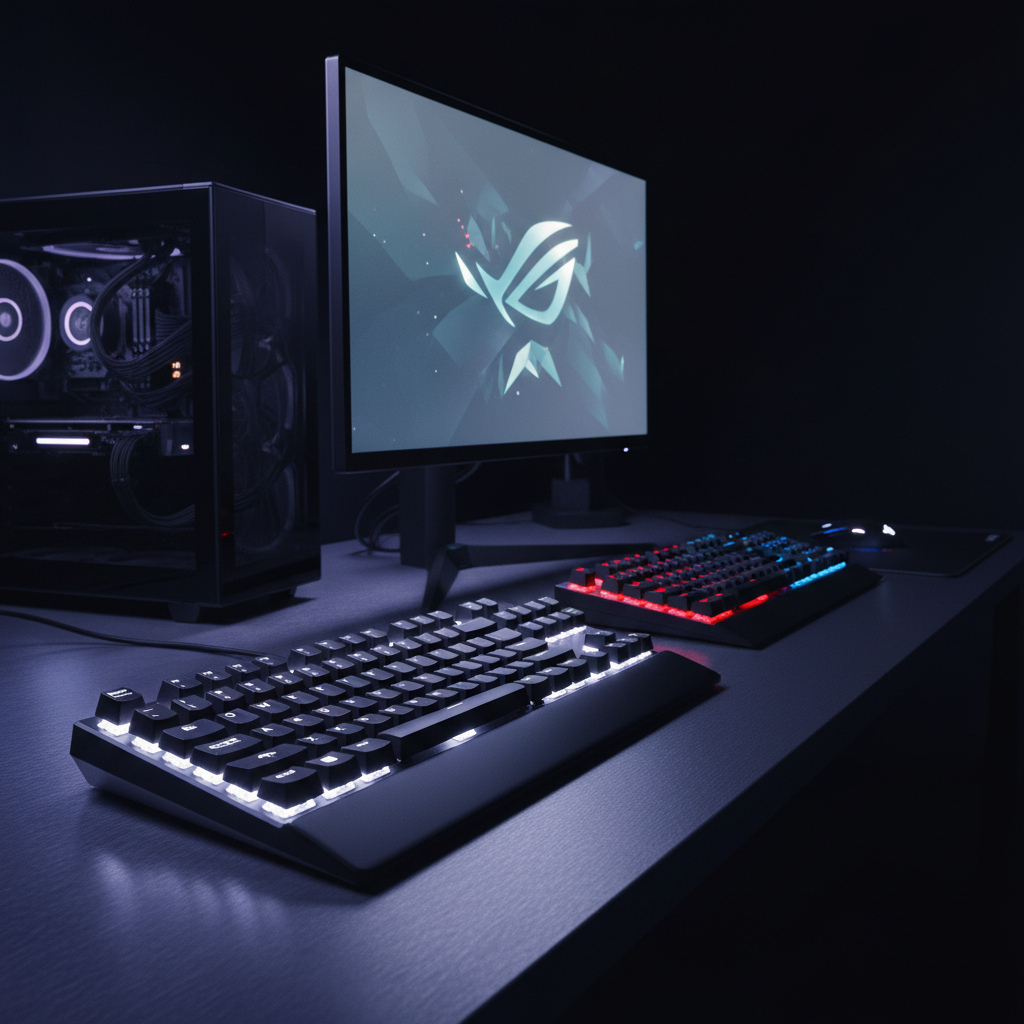
We lined up 15 wireless gaming keyboards and let the specs do the talking. The Royal Kludge S98 stands out with a 200‑hour battery life when the backlight is off, and it holds a solid 4.6 / 5 rating from over a thousand reviewers. Those numbers signal a keyboard that can stay powered through marathon sessions without sacrificing the responsive feel gamers crave.
Our selection spans three price tiers. On the budget end you’ll find the Motospeed Wireless at $16.99 and the Redragon K745 PRO for $59.99, both delivering respectable performance for the cost. Mid‑range options like the Royal Kludge S98 ($79.89) and Keychron K10 ($79.99) add premium features such as hot‑swap switches and extended battery capacity. The premium tier rounds out the list with the Logitech G915 Lightspeed at $229.99 and the ASUS ROG Azoth at $239.99, each offering high‑end build quality and advanced connectivity.
The following breakdown shows how each keyboard stacks up in connectivity, battery endurance, and typing experience, helping you spot the perfect match for your setup.

Royal Kludge S98
Offers 20 preset RGB modes, giving you a range of lighting options while keeping a solid 4.6 rating from over a thousand reviewers.
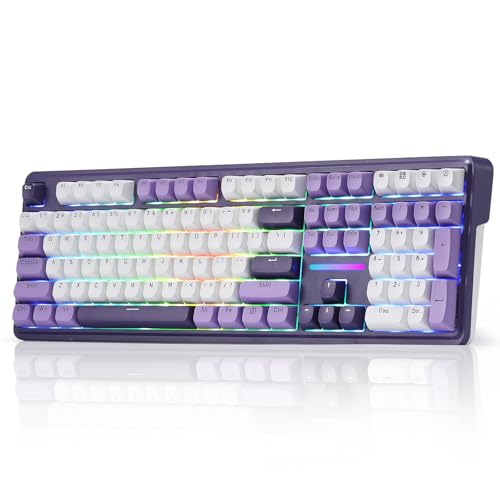
Redragon K745 PRO
Ideal for budget‑conscious gamers who want solid performance; at $59.99 it’s about $20 cheaper than the Royal Kludge S98 while still delivering 16.8 million colors.

ASUS ROG Azoth
Stands out with up to 130 hours of backlit use (or 2000+ hours with lighting off), catering to marathon sessions where the other keyboards’ battery life is far shorter.
Also considered
Score Analysis
Key score advantages vs. runner-up (Redragon K745 PRO)
Price Range
Royal Kludge S98
$75.99
Redragon K745 PRO
$59.99
ASUS ROG Azoth
$209.99
Logitech G915 Lightspeed
$229.99

RK Royal Kludge M87 Red
$69.99

Keychron K3
$63.00

Redragon K719 PRO
$69.99

Keychron K10
$84.99

Keychron K10 HE
$144.99
Motospeed Wireless
$16.99
Keychron K2A3
$79.99
RedThunder G60
$32.99

Royal Kludge RK61
$56.99

Keychron K8-A3
$63.99

Razer BlackWidow V4 Mini
$99.99
Spec Comparison
TL;DR: The Royal Kludge S98 packs a 1.47‑inch TFT smart screen, metal rotary knob and 20 RGB modes into a 96% layout with a 3750 mAh battery that lasts up to 200 hours with the backlight off, all for $79.89.
The standout feature is the 1.47‑inch TFT color display that shows custom GIFs, battery level and system info, a rarity among gaming keyboards. Coupled with a metal crown‑level knob that controls volume, brightness, RGB mode and connection switching, the S98 gives you on‑the‑fly adjustments without reaching for software.
At 3.0 pounds, the S98 is heavier than the Keychron K2A3, K8‑A3 and K3, which all sit under 2.2 pounds, but it still feels solid compared with the ultra‑light Keychron K10 that weighs just 0.00220462262 pounds. Its 3750 mAh battery sits between the 1550 mAh of the Keychron K3 and the 4000 mAh packs that Keychron K10, Redragon K719 PRO and the RK M87 Red use, giving a respectable 200 hours of use when the backlight is off. When RGB lighting is active, the S98 delivers 30 hours, noticeably less than the 70‑hour backlit‑off time of the K3 but comparable to many mid‑range wireless keyboards. Charging takes 6.5 hours via 12 W USB‑C, longer than the roughly 3‑hour charge of the Keychron K10.
User sentiment praises the creamy acoustic feel from the 4‑layer sound‑dampening system (80% hollow sound reduction, 40% overall noise reduction) and the convenience of hot‑swappable switches. Professional reviewers highlight the smart display and metal knob as “standout visual features” that add real‑time utility. However, several owners note that the ABS plastic case feels less premium than metal alternatives and that the bundled software can be clunky on some platforms.
Pros
Cons
Best for: Most users looking for a well‑reviewed, reliable mainstream option
Avoid if: You have limited desk space or need portability
“The sound profile is creamy and satisfying, especially for a mechanical keyboard.”
“The smart display is fun and a great conversation starter.”
TL;DR: The Redragon K745 PRO offers a full‑size, gasket‑mounted layout with hot‑swappable linear switches, 4000 mAh battery life and vibrant RGB, all for $59.99.
The standout feature is its gasket‑mounted chassis combined with a five‑layer sound‑dampening stack, which gives a “thocky” feel right out of the box. The board ships with pre‑lubed Mint Mambo linear switches that actuate at 40 gf over a 2.0 mm travel and a total travel of 3.60 mm, delivering a quiet yet responsive typing experience.
At 1.9400679056 pounds, the K745 PRO matches the weight of the Royal Kludge RK61 and feels noticeably lighter than the Royal Kludge M87 Red, which tips the scales at 2.3809924296 pounds. Its 4000 mAh battery capacity equals that of Redragon’s own K719 PRO, surpasses the 3750 mAh pack in the Royal Kludge S98, but falls short of the 7500 mAh cell found in the M87 Red. Dimensionally, the keyboard sits between the more compact RK61 and the larger S98, offering a balanced footprint for most desks.
Users repeatedly praise the vivid 16.8 million‑color RGB lighting and the convenience of hot‑swap sockets, especially newcomers who like to experiment with switches. Professional reviewers note the premium build quality from the gasket mounting and the clean sound profile, while also calling out the flip‑feet as flimsy and the keycap legends as a mismatch with the LED colors. Redragon's proprietary software works, but it doesn't offer the openness of open‑source alternatives.
Beyond the core specs, the K745 PRO supports tri‑mode connectivity: USB‑C wired, Bluetooth 5.0, and a 2.4 GHz dongle, with a physical toggle for Windows/macOS layouts. The 108‑key full‑size layout includes PBT, mixed‑color, rounded keycaps and a 104‑key rollover, ensuring every keystroke registers even during intense gaming sessions.
Pros
Cons
Best for: First‑time mechanical keyboard owners, students and office workers who need a full‑size board with wireless flexibility.
Avoid if: You want the best value‑per‑dollar in its price range or require an open‑source firmware ecosystem.
TL;DR: The ASUS ROG Azoth packs a 2‑inch OLED screen, 1000 Hz polling, and 130 hours of backlit battery life into a premium 75% board that feels solid but sits at a $239.99 price tag.
The standout spec is the built‑in 2 inch OLED display that shows system info, battery status and custom animations, paired with a 1000 Hz polling rate that professional reviewers call “sub‑1 ms latency” for competitive play. Its rechargeable battery delivers 130 hours of use with the backlight on, and the manufacturer notes over 2000 hours when the OLED/RGB is off, so you won’t be hunting for a charger during marathon sessions.
At 2.6 pounds, the Azoth is heavier than the Logitech G915 Lightspeed, which weighs about 1.0 pound, but it is lighter than the Keychron K10 HE’s 1310 g chassis. Its 325.1 mm length makes it more compact than the G915’s 518.16 mm span, while the width of 134.6 mm sits between the narrower Keychron K3 and the broader Logitech model. Battery life on the Azoth outlasts the Razer BlackWidow V4 Mini’s 200 hours at 0 % brightness, especially when you dim the RGB.
Users repeatedly praise the “soft, bouncy, and acoustically rich” typing feel that comes from the gasket‑mounted metal top plate and three‑layer foam dampening. The pre‑lubed ROG‑branded stabilizers and hot‑swappable ROG NX Snow Linear switches earn kudos for smooth key feel, though some users call the mid‑height PBT keycaps “slippery.” The OLED screen is a fan favourite, but users often describe the Armoury Crate software as bloated and intrusive, and the Delete key’s placement draws criticism. Professional reviewers highlight the board’s premium build quality and the convenience of six onboard profiles for quick game‑specific setups.
Additional technical context includes a 38.1 mm height, three adjustable tilt angles, and a three‑way control knob for volume, brightness and menu navigation. The keyboard supports up to three simultaneous Bluetooth devices, offers a USB‑C to USB‑A cable for wired mode, and runs on Windows and macOS with a toggle switch included. With 45–50 g actuation force, a 2 mm actuation point and 4 mm total travel, the Azoth delivers a responsive linear feel that suits both gaming and typing.
Pros
Cons
Best for: Buyers willing to invest in a proven, high-quality option
Avoid if: You're shopping on a tight budget — it's priced at $239.99
“Best typing experience I’ve ever had on a pre‑built keyboard.”
“Armoury Crate is terrible—slow, buggy, and hard to use.”
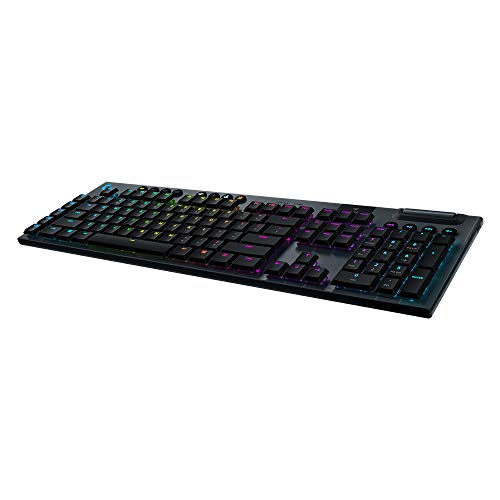
TL;DR: The Logitech G915 Lightspeed delivers ultra‑low‑profile GL switches, a 1 ms LIGHTSPEED response, and up to 1080 hours of battery life, all housed in a premium aluminum frame for $229.99.
The standout spec is its 1 ms response time via Logitech’s LIGHTSPEED 2.4 GHz wireless tech, which rivals wired performance. Coupled with a massive 1080 hours of battery life when the lighting is off, the keyboard can stay powered through weeks of intermittent use without needing a recharge.
At 1025 g, the G915 is lighter than the ASUS ROG Azoth (1179 g) but heavier than the Keychron K3 (500 g). Its 518.16 mm length makes it longer than the Keychron K3’s 446.6 mm but shorter than many full‑size boards that sit above 600 mm. The 22 mm thickness is notably slimmer than the Keychron K3’s 39.52 mm, giving it a sleek profile that fits well on cramped desks. While its 96‑hour lighting‑on battery life is impressive, the ASUS ROG Azoth advertises over 2000 hours with its OLED off, placing the G915 solidly in the upper‑mid range of endurance among its peers.
Reviewers consistently praise the keyboard’s solid aluminum top plate and the fast, tactile feel of the low‑profile GL switches. Users love the per‑key RGB with 16.8 million colors and the ability to store two lighting profiles plus three macro profiles on‑board. However, the lack of an integrated wrist rest and the reliance on a Micro‑USB charging port (instead of the newer USB‑C) draw criticism, especially given the premium price. Frequent complaints target fingerprints on the double‑shot keycaps, despite the oleophobic coating.
Technical enthusiasts will note the 5 programmable G‑keys, 10‑key rollover, and 1.5 mm actuation distance with a 50 g force, which a 32‑bit ARM processor drives. The keyboard supports Bluetooth 5.0, tri‑mode connectivity, and Logitech G HUB software for deep customization, making it a versatile choice for both gaming and productivity.
Pros
Cons
Best for: Buyers willing to invest in a proven, high‑quality option
Avoid if: You're shopping on a tight budget — it's priced at $229.99
“Excellent keyboard with proper feedback”
“Upgraded from a G19 and this is 500% better”
TL;DR: The RK Royal Kludge M87 Red is a $69.99 75% wireless mechanical keyboard with a 7500 mAh battery, 400 hours of use, gasket‑mounted design, dual knobs and a built‑in LCD screen.
The standout spec is its massive 7500 mAh rechargeable lithium‑ion battery, which the manufacturer says can power the keyboard for up to 400 hours when the RGB lighting is off and stay in standby for 600 days. A built‑in color TFT LCD smart screen shows battery level, connection mode, OS, volume, time and even custom GIFs, while two rotary knobs let you switch lighting layers or adjust volume on the fly.
Compared with the Redragon K719 PRO, the M87 offers a larger battery (7500 mAh vs 4000 mAh) but is slightly heavier (1080 g vs 1150 g) and has a taller profile (41 mm vs 39 mm). It provides 8 monochrome modes and 18 RGB modes, which is fewer lighting options than the K719 PRO’s 28 total modes. Against the Redragon K745 PRO, the M87’s battery capacity is nearly double (7500 mAh vs 4000 mAh) while the K745 PRO is lighter at 1.94 pounds. The Royal Kludge S98 also supports three Bluetooth devices, but its battery is only 3750 mAh, so the M87 leads on endurance.
Users repeatedly praise the compact 88‑key 75% layout and the “buttery” feel from the gasket‑mounted, 5‑layer dampening system paired with pre‑lubed linear Cream switches. The up to 400 hours of battery life and the novelty of an always‑on LCD screen are frequent highlights. On the downside, several reviewers note that the LCD can’t be turned off, and a few units arrive with loose or damaged keycaps. Reviewers describe the RK Launcher software as functional but basic compared with more advanced configurators.
Technically, the keyboard is hot‑swappable (supports 3‑pin and 5‑pin switches), features PBT double‑shot keycaps in a Cherry profile, and uses an aluminum top plate with silicone dampeners. It supports up to three Bluetooth devices simultaneously, can also connect via a 2.4 GHz dongle, and includes a 142 mm (5.6 in) USB‑C cable for wired use. The dual rotary knobs are mapped to lighting layers on the left and volume on the right, adding quick‑access control without leaving the game.
Pros
Cons
Best for: Gamers and programmers who want a compact 75% keyboard with long battery life, RGB lighting and quick‑access knobs.
Avoid if: You need fully configurable firmware (VIA/QMK) or prefer a minimalist setup without an always‑on LCD screen.
“The sound profile is creamy and satisfying, especially for a mechanical keyboard.”
“The smart display is fun and a great conversation starter.”
TL;DR: The Keychron K3 is a lightweight 75% mechanical keyboard with low‑profile Gateron switches, 1550 mAh battery, up to 70 hours of use, and 18 backlight modes, making it a portable yet feature‑rich option.
What really stands out is the ultra‑slim ANSI 75% layout that houses 84 keys in a 22 mm‑high chassis weighing just 1.10231131 pounds. The keyboard runs on a 1550 mAh rechargeable lithium‑polymer cell, delivering up to 70 hours of Bluetooth use when the backlight is off and up to 34 hours at the lowest brightness. Bluetooth 5.1 connectivity lets you pair with up to three devices, and a 1.22 m USB‑C cable provides wired support.
Compared with other keyboards in this roundup, the K3 is lighter than the Keychron K2A3 (1.92875 pounds) and the K8‑A3 (2.20462262 pounds), while it is considerably heavier than the K10, which lists a weight of 0.00220462262 pounds. Its 1550 mAh battery is smaller than the 4000 mAh packs found in the Keychron K10 and the Royal Kludge S98, and also below the 3750 mAh capacity of the S98. The K3’s 18 preset backlight modes equal the Redragon K719 PRO’s count, though the Redragon adds extra lighting options.
Users consistently praise the compact footprint and the fast, low‑profile Gateron switches, noting the ease of toggling between macOS and Windows. Professional reviewers highlight the attractive slim design, hot‑swap capability, and the aluminum front frame, which adds a premium feel. Common complaints focus on the steep drop in battery life once the backlight is active, occasional keycap shine and pop‑off issues, and a noticeable flex in the thin shell during aggressive typing.
On the technical side, the K3 offers full N‑Key rollover in both wired and wireless modes, a wired polling rate of 1000 Hz and a wireless rate of 90 Hz, and three adjustable typing angles (2.5°, 4.2°, 6.5°). The ABS double‑shot keycaps provide durability, while the 4‑level brightness control lets you fine‑tune illumination without draining the battery excessively.
Pros
Cons
Best for: Remote workers, digital nomads, and Mac users who need a portable, compact keyboard with low‑profile switches.
Avoid if: You require long battery life with RGB lighting on, or you need a highly rigid board for competitive gaming.
TL;DR: The Redragon K719 PRO blends a 1.41‑inch TFT screen, gasket‑mounted chassis and 4000 mAh battery into a 96% layout for under $75, delivering premium looks and solid wireless performance.
The standout hardware includes a 1.41‑inch customizable TFT display—a rarity at this price point—and a gasket‑mounted case that dampens vibration. The keyboard houses a 4000 mAh battery, 2.0 mm linear actuation distance and a 40 gf actuation force, and the frame measures 39 mm‑high, 394 mm‑long, 144 mm‑wide, weighing 1150 g.
Compared with its peers, the K719 PRO is lighter than the Royal Kludge S98 (3.0 pounds) but heavier than the Keychron K3 (500 g) and Keychron K2A3 (≈1.93 pounds). Its 4000 mAh capacity matches the Keychron K10 and exceeds the Royal Kludge S98’s 3750 mAh, yet it falls short of the RK M87’s 7500 mAh pack. At 39 mm tall it is shorter than the Royal Kludge S98’s 42.77 mm and the RK M87’s 41 mm, though taller than the ultra‑low 22 mm profile of the Keychron K3. Lengthwise, 394 mm places it between the longer Royal Kludge S98 (410.3 mm) and the more compact RK M87 (364.3 mm).
Reviewers love the fresh white chassis with mint‑green accents and praise the gasket mount for a smoother typing feel. Users highlight the TFT screen’s utility for game stats or shortcuts, and the included spare Mint Mambo switches make customization easy. However, many note that the stock Mint Mambo switches feel average, the 96% footprint can crowd a small desk, and the battery drains faster when RGB lighting is active. Professional reviewers also point out that the Redragon software feels less polished than some competitors.
Pros
Cons
Best for: Most users seeking a balanced, mainstream option
Avoid if: You need a very compact keyboard or demand top‑tier tactile or clicky switches
“Looks amazing on my desk—gets compliments every time.”
“The screen is actually useful, not just flashy.”
TL;DR: The Keychron K10 packs a 4000 mAh battery, hot‑swappable Gateron G Pro Brown switches and a full‑size 104‑key layout into a sturdy aluminum frame for $79.99.
The standout spec is the 4000 mAh Li‑polymer battery, which the manufacturer says can last up to 260 hours with the backlight off on the K10 Pro version. Coupled with a quick ~3 hours charging time, the keyboard can stay powered through long work sessions without a cable. Its full‑size ANSI layout offers 104 keys, and the hot‑swappable sockets let you swap Gateron G Pro Brown tactile switches without any soldering.
Compared with other keyboards in this roundup, the K10’s battery capacity exceeds the Royal Kludge S98’s 3750 mAh and dwarfs the Keychron K3’s 1550 mAh pack. It matches Redragon’s K719 PRO, which also lists a 4000 mAh cell, but the K10 adds QMK/VIA support on newer versions where the S98 and many peers lack that level of firmware customisation. In weight terms, the aluminum‑frame version sits at 1082 g, making it heavier than the compact Redragon model (1150 g) but lighter than the bulkier RK Royal Kludge M87 Red, which tips the scales at over 2.38 pounds.
User reviews consistently praise the tactile feel of the Gateron Brown switches and the convenience of three‑device Bluetooth pairing. Professionals appreciate the dedicated macOS media keys and the ability to switch between Windows and macOS on the fly. However, several owners note that the RGB lighting drains the battery faster than the advertised 130 hours, and older non‑Pro models miss out on QMK/VIA programmability, limiting custom keymaps.
Technically, the K10 delivers a wired polling rate of 1000 Hz and a wireless rate of 90 Hz, with NKRO when wired and 6‑key rollover over Bluetooth. The backlight offers four brightness levels and, on Version 2, 22 preset RGB modes plus custom QMK/VIA configurations. Adjustable feet provide three tilt angles (3.5°, 7.7°, 11°) for ergonomic wrist support, and the aluminum frame contributes to a solid, aircraft‑grade feel.
Pros
Cons
Best for: Home and office users seeking a balance of features and value
Avoid if: You're shopping on a tight budget — it's priced at $79.99
“Sounds perfect”
“Feels amazing to type on”
TL;DR: The Keychron K10 HE blends Hall‑Effect magnetic switches with adjustable actuation (0.2 mm‑3.8 mm), a 1000 Hz polling rate and premium aluminum‑rosewood build for high‑end wireless gaming at $144.99.
What really sets this keyboard apart is its Gateron double‑rail magnetic Hall‑Effect switches, which let you fine‑tune the actuation point from 0.2 mm up to 3.8 mm and sense pressure with 0.1 mm sensitivity. Coupled with a 1000 Hz polling rate in wired and 2.4 GHz modes and a 3.4 ms wireless response time, the K10 HE delivers the kind of immediacy competitive gamers crave. The 4000 mAh rechargeable lithium‑polymer battery provides up to 120 hours of use with the backlight off and 110 hours with RGB lighting on.
In the context of the other fourteen keyboards, the K10 HE is noticeably heavier than the Keychron K3 (500 g) and the Keychron K2A3 (≈874 g), tipping the scales at 1310 g. Its 4000 mAh battery capacity dwarfs the K3’s 1550 mAh pack, yet the K10 HE’s 120‑hour off‑state endurance is shorter than the Razer BlackWidow V4 Mini’s 200 hours at 0 % brightness. Compared with the standard Keychron K10, which lists a 260‑hour off‑state life for its Pro variant, the HE model trades some endurance for its Hall‑Effect features and richer backlighting. The price tag of $144.99 also places it above most entry‑level options in the roundup.
Reviewers consistently praise the “soft, thocky” feel created by the triple‑layer acoustic damping (3.5 mm EVA foam, EPDM foam, silicone pad) and the OSA‑profile double‑shot PBT keycaps that resist shine‑through. Professional reviewers highlight the analog input and adjustable actuation as game‑changing for simulations and fast‑paced shooters. On the flip side, users note that heavy RGB use drains the battery faster than expected, and a few have run into occasional Bluetooth hiccups. The hot‑swappable design limits you to the proprietary Gateron magnetic switches, so swapping to other switch types isn’t possible.
Pros
Cons
Best for: Those prioritizing quality and willing to pay for premium performance
Avoid if: You're shopping on a tight budget — it's priced at $144.99
“Sounds perfect”
“Feels amazing to type on”
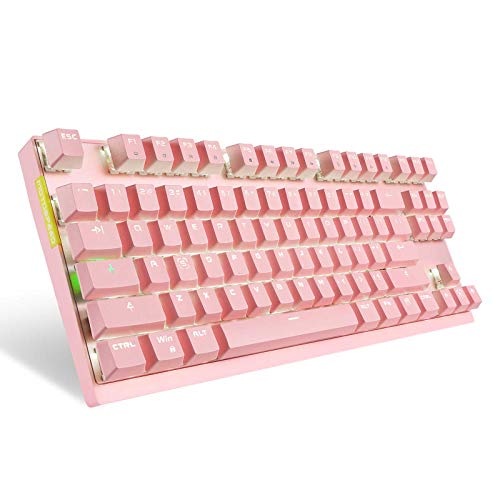
TL;DR: At $16.99, the Motospeed Wireless earns a strong 4.6‑star rating from more than 4,000 reviewers, delivering an inexpensive mechanical keyboard with wireless flexibility for casual gamers and everyday users.
Motospeed’s Wireless keyboard lands near the middle of a fifteen‑product lineup, priced well below most competitors and backed by a 4.6‑out‑of‑5 rating. Its budget‑friendly price point makes it an attractive entry‑level option for anyone looking for a mechanical feel without breaking the bank.
Reviewers consistently praise the dual‑mode connectivity, noting that the ability to switch between wireless and wired use adds genuine convenience. Users also highlight the long‑lasting battery life and the comfortable, quiet key feel, while many appreciate the compact footprint for smaller desks. On the downside, several buyers mention that the ABS plastic case feels less premium than metal alternatives and that the single‑color backlight can appear dimmer than expected.
Given its price and rating, the Motospeed Wireless sits comfortably as a value‑driven choice. It won’t compete with high‑end models that use premium materials or feature extensive RGB lighting, but for shoppers prioritising cost, decent performance, and wireless capability, it offers a sensible balance.
Pros
Cons
Best for: Budget-conscious buyers seeking a reliable entry-level option
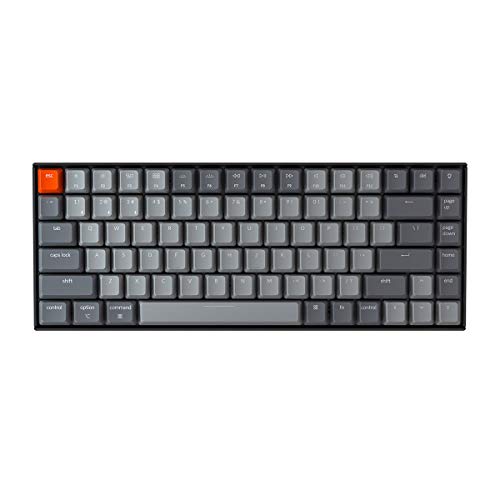
TL;DR: At $79.99 the Keychron K2A3 earns a 4.3‑star rating from over 3,300 reviewers, positioning it as a solid mid‑range wireless keyboard with generally positive feedback.
Keychron is a well‑known name in the mechanical keyboard space, and the K2A3 joins the lineup at a $79.99 price point. In this 15‑product roundup it holds a 4.3‑out of 5 rating based on 3,390 reviews and lands at rank #11, indicating respectable but not top‑tier performance among its peers.
Reviewers frequently mention the keyboard’s sturdy construction and the ability to customise key functions through firmware tools. Many appreciate the long‑lasting battery life that the brand’s similar models tout, as well as the convenience of switching between multiple devices. The south‑facing RGB lighting and Mac‑friendly layout also receive positive remarks.
Given only its price and rating, the K2A3 sits comfortably in the middle of the price spectrum for wireless gaming keyboards. It doesn’t lead the pack, but its solid reputation and favorable user sentiment make it a dependable choice for most buyers.
Pros
Cons
Best for: Most users looking for a well‑reviewed, reliable mainstream option
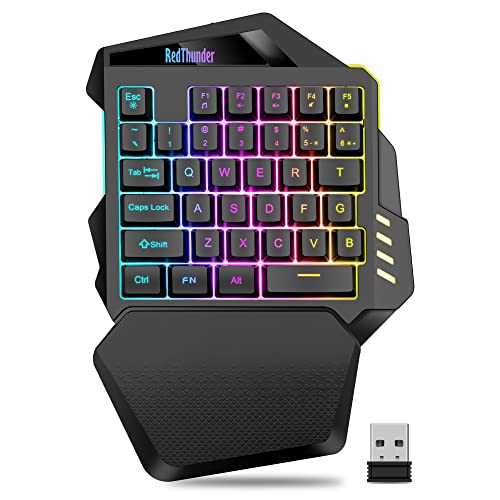
TL;DR: The RedThunder G60 packs a 35‑key membrane layout, 2000 mAh battery and a large wrist‑rest into a 90 mm × 60 mm × 10 mm chassis, making it a portable, budget‑friendly option for casual gamers.
The most eye‑catching spec is its ultra‑compact footprint – only 90 mm long, 60 mm wide and 10 mm tall – while still offering a full 35‑key rollover and a detachable USB‑C charging cable. A 2000 mAh battery delivers 15–20 hours of playtime even with RGB lighting on, and the keyboard recharges in 8 hours. At 481 grams it feels light enough to toss into a backpack for LAN‑party travel.
Compared with the other 14 keyboards in this roundup, the G60 is noticeably lighter than the Redragon K745 PRO (880 g) and the Royal Kludge RK61 (about 1.94 lb), and also lighter than the Motospeed Wireless (around 1.76 lb). Its battery capacity's smaller than the 4000 mAh packs found in the Redragon K745 PRO and K719 PRO, and far below the 7500 mAh cell in the RK M87 Red. Lighting options are modest – seven static colors plus a single rainbow mode – whereas competitors such as the RK M87 Red and Royal Kludge S98 list 18 and 20 RGB modes respectively. The G60 also lacks Bluetooth, a feature present in several peers.
Reviewers consistently praise the keyboard’s macro capability (hardware‑recorded via FN+F1/F2) and the large wrist‑rest that eases fatigue during marathon sessions. Reviewers laud the plug‑and‑play 2.4 GHz receiver for low‑latency performance, and they celebrate the compact design for clearing desk clutter. On the flip side, users note the mushy feel of the membrane switches, the absence of Bluetooth for multi‑device switching, and the relatively long 8‑hour charge time for a 2000 mAh pack. Professional reviewers point out that the low cost comes with trade‑offs in build quality and durability.
Pros
Cons
Best for: Entry‑level buyers or those on a tight budget
Avoid if: Reliability and user satisfaction are your top concerns, or you need mechanical switches, Bluetooth multi‑device support, or premium durability
“Perfect for WoW and League of Legends—macros save so much time.”
“The wrist rest is huge and actually comfortable for 8-hour raids.”
TL;DR: Priced just under sixty dollars, the Royal Kludge RK61 holds a four‑and‑a‑half star rating and wins praise for its compact, budget‑friendly design, though users note a short cable and an older Bluetooth connection.
The RK 61 comes from RK Royal Kludge and sits near the lower end of the price spectrum in this fifteen‑product roundup, earning a solid four‑and‑a‑half star rating from over two‑five‑hundred reviewers. Its affordability and the brand’s reputation for delivering entry‑level mechanical keyboards make it a noteworthy contender among the list.
Reviewers consistently highlight the keyboard’s excellent value, note the build feels sturdy despite the plastic case and applaud the smooth, reliable RK switches. Many appreciate the ability to toggle between several devices wirelessly, and the compact layout many call a space‑saving win for small desks or on‑the‑go setups. On the downside, users frequently mention the lack of adjustable feet, the short non‑braided USB‑C cable that feels cheap, and the older Bluetooth version that can limit range and stability.
Based purely on price and rating, the RK 61 lands toward the bottom of the ranking but still outperforms many higher‑priced options in terms of user satisfaction. It offers a solid entry point for anyone wanting a mechanical feel without breaking the bank, though it doesn’t carry the premium materials or advanced features of the pricier models.
Pros
Cons
Best for: Budget-conscious buyers seeking a reliable entry-level option
“The sound profile is creamy and satisfying, especially for a mechanical keyboard.”
“The smart display is fun and a great conversation starter.”
TL;DR: At $79.99 the Keychron K8‑A3 earns a solid 4.4‑star rating from 914 reviewers, praised for its battery life and Mac‑friendly design but noted for a few ergonomic quirks.
The Keychron K8‑A3 is a tenkeyless mechanical keyboard from the well‑known Keychron brand, priced at $79.99 and holding a 4.4/5 rating based on 914 reviews. In a roundup of fifteen wireless gaming keyboards it lands near the bottom of the list, ranking #14, yet its price and rating are comparable to many higher‑ranked peers.
Reviewers consistently highlight the keyboard’s long battery life, sturdy construction, and the convenience of hot‑swappable switches. Mac users especially appreciate the dedicated layout and media keys. On the downside, users mention that the ABS keycaps can develop shine, Bluetooth pairing can occasionally drop, the profile feels a bit high, and the lack of a built‑in wrist rest or numeric keypad may limit certain workflows.
Given its mid‑range price and strong user approval, the K8‑A3 sits as a reliable, mainstream choice for anyone who values a well‑reviewed, versatile keyboard without breaking the bank. While it isn’t the top performer in the lineup, its combination of price, rating, and positive sentiment makes it a sensible pick for everyday productivity.
Pros
Cons
Best for: Most users looking for a well‑reviewed, reliable mainstream option
“I REALLY FUCKING LOVE THIS KEYBOARD”
“battery lasts “months””
TL;DR: The Razer BlackWidow V4 Mini delivers 1 ms low‑latency HyperSpeed wireless, hot‑swappable switches and premium aluminum build for $99.99, but its RGB lighting can cut battery life to under 6 hours.
The standout spec is the 1000 Hz Ultrapolling rate that Razer markets as a 1 ms response time on its HyperSpeed 2.4 GHz wireless link. Combined with a 200‑hour standby battery when the backlight is off, the keyboard promises both speed and endurance. Its compact 65% layout measures 41 mm in height, 319 mm in length and 131 mm in width, and it weighs 717 grams, all housed in a 5052 aluminum alloy top case.
At 717 grams, the V4 Mini is heavier than the Keychron K3’s 500 g frame, yet noticeably lighter than the Redragon K719 PRO’s 1150 g build. Battery life outlasts the Keychron K3’s 70‑hour Bluetooth off‑backlight rating, though the V4 Mini’s RGB modes drop the runtime to ≈6 hours at full white brightness and ≈14 hours at 50 % brightness—figures echoed in user complaints about rapid drain. Charging takes under 5 hours, a bit longer than the Redragon K719 PRO’s roughly 3‑hour charge. Height‑wise, it sits a millimeter taller than the Keychron K10’s 40 mm chassis, keeping the footprint similarly low‑profile.
Professional reviewers praise the keyboard’s ultra‑low latency and the upgrade to a hot‑swappable PCB that accepts both 3‑pin and 5‑pin switches. The aluminum case and lubricated stabilizers give the keyboard a premium feel that users consistently highlight. Reviewers commonly criticize the lack of dedicated media controls, the absence of a wrist rest, and the reliance on Razer Synapse for full macro and lighting customization. RGB lighting, while vibrant with 16.8 million per‑key colors, frequently shortens battery life.
Beyond the wireless performance, the V4 Mini offers Razer Orange Tactile Gen‑3 switches rated for 100 million keystrokes, up to five onboard memory profiles, and Bluetooth 5.0 support for three simultaneous devices. The detachable USB‑C to USB‑A cable provides a wired fallback, and the included Razer Phantom Pudding keycaps add a translucent aesthetic while keeping the top legends blank.
Pros
Cons
Best for: Gamers who value ultra‑low‑latency wireless and enthusiasts who want to swap switches on a premium compact board.
Avoid if: You need long RGB‑on battery life, built‑in media keys, a wrist rest, or are on a tight budget.
“Feels premium and sturdy”
“Solid typing feel, responsive wireless, and vibrant RGB”
Breakdown
Royal Kludge S98
Pros
Redragon K745 PRO
Pros
Cons
ASUS ROG Azoth
Pros
Cons
Logitech G915 Lightspeed
Cons
Based on scoring data and product specs
Personalized picks
Best Overall Pick
Royal Kludge S98
Best OverallBest for: Most users looking for a well-reviewed, reliable mainstream option
Redragon K745 PRO
Best for: Budget-conscious buyers seeking a reliable entry-level option
$59.99-$16.00 vs winner
Skip Razer BlackWidow V4 Mini if…
You're on a tight budget or only need basic functionality
The Royal Kludge S98 takes the top spot as our Best wireless gaming keyboard. It earns a 4.6‑star rating from 1,004 reviewers, packs a 3,750 mAh battery that delivers up to 200 hours of use with the backlight off (30 hours with RGB on), and offers 20 preset RGB modes plus a 1.47‑inch TFT screen for custom GIFs and system info. Its hot‑swappable 3‑pin/5‑pin switches and 98‑key 96% layout round out a feature‑rich package at $79.89.
The Redragon K745 PRO lands as the runner‑up, ideal if you need a full‑size 108‑key board that can switch between wired, Bluetooth 5.0 and a 2.4 GHz dongle on the fly. It also scores a 4.6‑star rating from 2,046 reviews and houses a 4,000 mAh battery, while its gasket‑mounted design and 5‑layer sound‑dampening give a quieter, smoother typing experience for marathon gaming sessions.
For tighter budgets, the Motospeed Wireless stands out as the best value at $16.99, delivering basic wireless functionality without breaking the bank. If you’re chasing top‑tier performance, the ASUS ROG Azoth remains the premium pick at $239.99, offering high‑end specs and an upscale build for enthusiasts willing to invest.
Pick the Royal Kludge S98 today and enjoy a feature‑packed, highly rated wireless gaming keyboard that won’t disappoint.
The Royal Kludge S98, priced at $79.89, bundles a 98‑key 96% layout, hot‑swappable switches, 20 RGB preset modes, Bluetooth for up to three devices, and a 2.4 GHz dongle, delivering a feature‑rich experience without breaking the bank.
Please sign in to leave a review
No reviews yet. Be the first to review!
