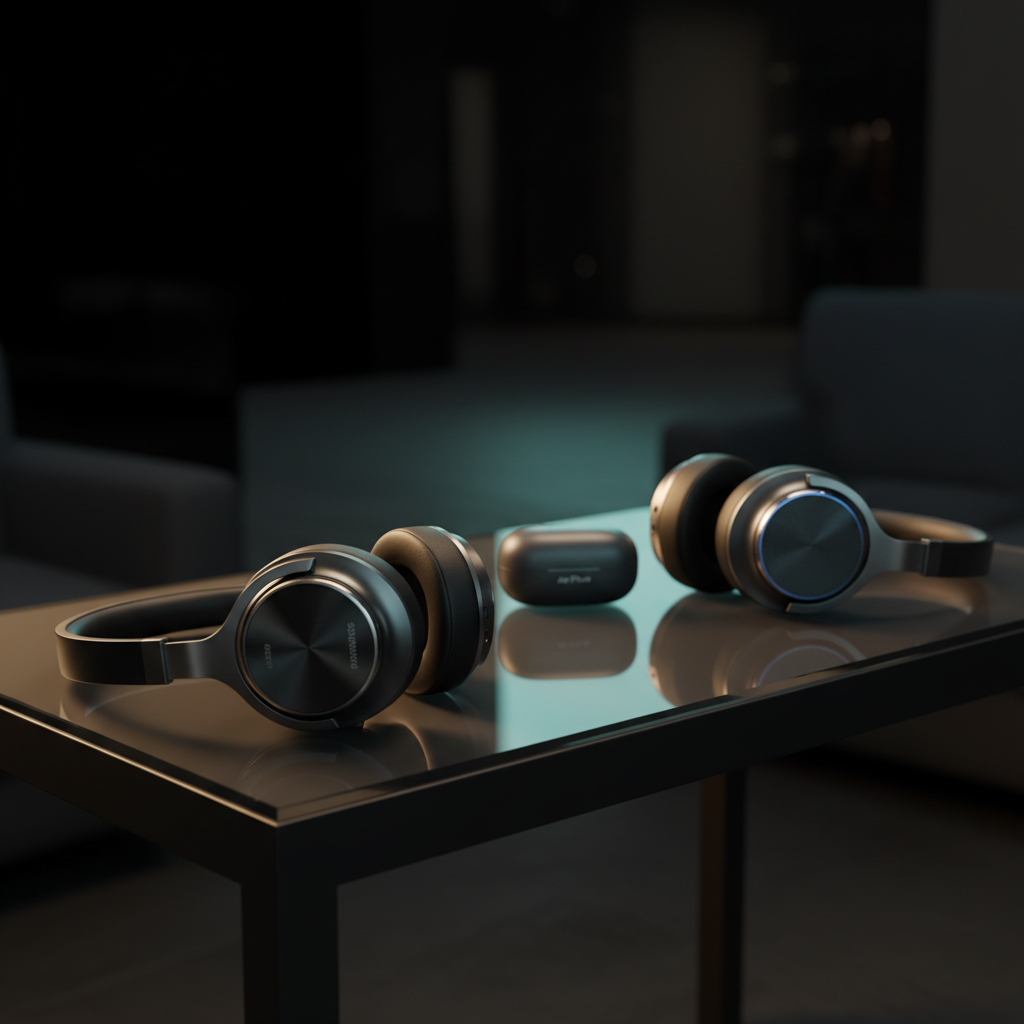
Finding wireless headphones that pair high‑resolution audio with real‑world convenience can feel like hunting for a needle in a haystack. This review compares 14 models, spanning the budget, mid‑range and premium tiers. The price map is simple: Creative’s Sound Blaster JAM V2 sits at $47.49 for the entry level, Soundcore Space One lands at $69.99 in the mid‑range, and the Bowers & Wilkins Px8 S2 tops out at $899.00 for the premium crowd.
For commuters who need long‑lasting quiet, the Soundcore Space One shines with up to 40 hours of ANC‑on playback and a 4.4/5 rating from more than 13,000 reviewers. Audiophiles chasing the ultimate wireless fidelity will gravitate toward the Px8 S2, which carries a 4.6/5 score and a 30‑hour ANC battery life. If you’re watching the bottom line, the Creative Sound Blaster JAM V2 still delivers a respectable 4.2/5 rating and 22 hours of playtime at just $47.49.
The guide breaks down each tier in detail, helping you match the right headphones to your listening habits.
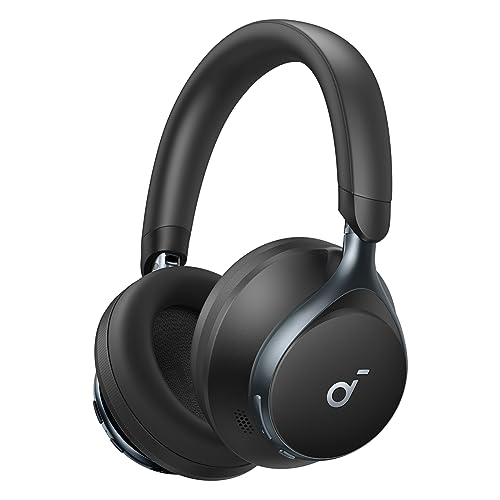
Soundcore Space One
Its 40 mm drivers provide balanced sound, delivering strong value at $69.99.

OneOdio Studio Max 1
Audiophiles seeking premium sound benefit from its 50 mm drivers, and at $169.99 it’s roughly $100 pricier than the Soundcore Space One.
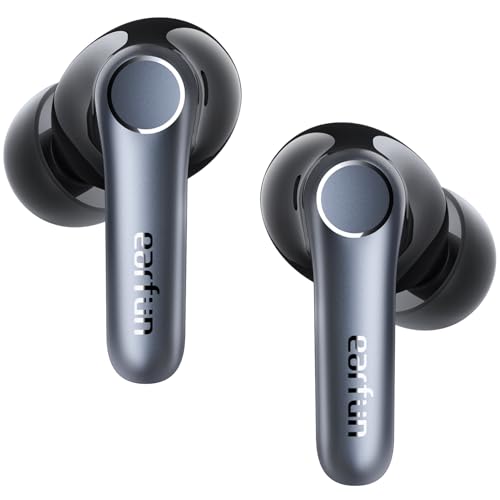
EarFun Air Pro 4
The 50 dB ANC and compact 10 mm drivers give a distinct noise‑cancelling edge, a trade‑off the larger‑driver models don’t offer.
Also considered
Score Analysis
Key score advantages vs. runner-up (OneOdio Studio Max)
Price Range
Soundcore Space One
$69.99
OneOdio Studio Max 1
$169.99
EarFun Air Pro 4
$62.99

Bowers & Wilkins Px8 S2
$899.00

EarFun Wave Pro
$59.99

Edifier W820NB Plus Ivory
$79.99

Edifier W830NB Ivory
$79.99

1MORE HQ51
$87.99

1MORE HC905
$74.99

Creative Sound Blaster JAM V2
$39.99

EarFun OpenJump
$56.99

EarFun Air 2
$42.99

Edifier W820NB Plus Navy
$71.99

Bowers & Wilkins Pi8 Bluetooth Wireless Earbuds (Anthracite
$362.65
Spec Comparison
TL;DR: The Soundcore Space One packs a 40 mm driver, up to 98% noise reduction and 55 hours of battery life into a lightweight 0.57‑pound over‑ear design for just $69.99.
What really sets the Space One apart is its adaptive ANC, which the manufacturer claims cuts up to 98% of ambient sound and offers 2× stronger voice reduction. Coupled with a 40 mm dynamic driver and a sensitivity of 93 dB, the headphones deliver crisp, balanced audio that meets the high‑resolution LDAC codec.
At $69.99 the Space One is slightly cheaper than the Edifier W820NB Plus ($71.99) and the 1MORE HC905 ($74.99), yet it outlasts the Edifier’s 49‑hour ANC‑off playtime with its own 55‑hour battery life. It shares the same 40 mm driver size as the Edifier but uses a lower 16 Ohm impedance, which can make it easier to drive from a phone. Bluetooth range sits at 10 meters, matching the 1MORE’s range.
Reviewers consistently praise the marathon battery life, lightweight comfort and the clear, detailed soundstage. Professional reviewers note the “crisp, detailed, immersive sound quality” and the “strong ANC effectiveness in mid‑to‑high frequencies.” Users love the Easy Chat mode that lowers music and amplifies voices, though some find the touch controls a bit finicky and wish the plastic build were sturdier.
The Space One also brings a suite of smart features: multipoint Bluetooth, wearing detection that auto‑pauses, an 8° rotating ear‑cup design for a better seal, and fast charging—just 5 minutes of charge gives roughly 4 hours of playback. It supports SBC, AAC and LDAC codecs, and includes a retractable AUX cable and a carrying pouch for travel.
Pros
Cons
Best for: Frequent travelers needing strong ANC and marathon battery life, as well as remote workers who value clear voice calls.
Avoid if: You plan to use them for gym or outdoor exercise, or if you need a compact, foldable headset for tight spaces.
“For the price, it punches way above its weight and compares favorably with more expensive headphones.”
TL;DR: The OneOdio Studio Max 1 delivers 120 hours of Bluetooth playback, ultra‑low ~20 ms latency and LDAC‑enabled Hi‑Res audio, but its bass‑heavy tuning and lack of ANC keep it in a premium‑niche.
The standout spec is the ultra‑low latency of roughly 19–20 ms when you pair it with the included M1 dongle, a figure that professional reviewers cite as “one of the fastest wireless DJ solutions.” Coupled with a 1000 mAh battery that powers up to 120 hours of Bluetooth playback, the headphones can outlast most marathon sessions without a recharge.
At 0.7275 pounds, the Studio Max 1 is heavier than the Edifier W820NB Plus Ivory (≈0.485 pounds) but lighter than the 1MORE HQ51 (≈1.159 pounds). Its 50 mm dynamic driver also tops the 40 mm drivers used by those peers, and the 120‑hour battery life exceeds the 100‑hour ANC‑off runtime of the 1MORE HQ51, the 94‑hour runtime of the Edifier W830NB, and the 70‑hour figure for the 1MORE HC905. While many competitors list only SBC or AAC, the Studio Max 1 adds LDAC and LC3 to its codec roster, reinforcing its Hi‑Res certification.
User sentiment praises the marathon battery life, the comfort of the protein‑leather earcups, and the near‑instant response for live mixing. However, reviewers consistently note a bass‑heavy sound signature, a loose‑feeling 180° ear‑cup swivel, and a microphone that disables in low‑latency mode. The lack of active noise cancellation also limits its appeal in noisy environments.
Technically, the headphones feature a PET diaphragm, an impedance of 32 Ω, and a sensitivity of 105 dB ± 3 dB @ 1 kHz (manufacturer) – 110 dB according to the Amazon listing. Frequency response spans 20 Hz – 40 kHz, and the M1 transmitter supports up to 192 kHz/24‑bit sampling. Bluetooth 5.3 offers a 10‑meter range, and a full charge takes 2 hours, with a 5‑minute quick‑charge delivering about 5 hours of playback.
Pros
Cons
Best for: DJs, live performers, streamers, and anyone who needs ultra‑low latency monitoring with marathon battery life.
Avoid if: You need active noise cancellation, audiophile‑grade sound, or are shopping on a tight budget — it's priced at $169.99.
“one of the fastest wireless DJ solutions”
“trade‑off between functionality and audio fidelity”
TL;DR: The EarFun Air Pro 4 packs a 10 mm hybrid driver, 50 dB adaptive ANC and high‑res codec support into a feather‑light 0.12‑lb package, delivering long playtime at a budget‑friendly price.
The standout spec is the 50 dB adaptive hybrid ANC, powered by EarFun’s QuietSmart 3.0 algorithm, which promises strong background‑noise reduction while keeping the earbuds compact. At just 0.1212321978738 pounds each, they're noticeably lighter than many rivals, and the 10 mm drivers are tuned for a balanced 20 Hz–20 kHz response with a sensitivity of 100 dB.
Compared with the other 13 contenders, the Air Pro 4’s driver size is smaller than the 14.2 mm drivers of the EarFun OpenJump and far tinier than the 40 mm drivers found in the EarFun Wave Pro and Soundcore Space One. Its 50 dB ANC depth also tops the Wave Pro’s 45 dB claim, though it doesn’t reach the ultra‑high reduction percentages listed for the Soundcore model. In terms of weight, the Air Pro 4 is considerably lighter than the Wave Pro, which tips the scales at roughly 0.59 pounds. Battery endurance provides 660 minutes of playback when ANC is off and 450 minutes with ANC on, plus a quick‑charge boost that adds 120 minutes after just 10 minutes on the charger.
Reviewers praise the earbuds for their punchy bass, clear mids and the inclusion of high‑resolution codecs such as LDAC, aptX Adaptive, and aptX Lossless, all selectable via the EarFun Audio app. The AI‑enhanced call system with six microphones also earns marks for clear voice transmission. On the downside, users note that the <50 ms low‑latency mode still feels laggy for fast‑paced shooters, and the lack of physical volume buttons forces reliance on a phone or the app for level adjustments.
Pros
Cons
Best for: Budget‑conscious buyers seeking a reliable entry‑level option
Avoid if: You have limited desk space or need portability
“Battery life is incredible — I only charge the case once a week.”
“The bass is punchy and doesn’t muddy the mids — great for hip‑hop and rock.”
TL;DR: The Bowers & Wilkins Px8 S2 delivers 40 mm drivers, 30 hours of ANC‑on battery life and aptX Lossless sound for $899.00, earning a 4.6‑star rating from 293 reviewers.
The standout specification is the 40 mm driver paired with an integrated DSP, dedicated amp and DAC that supports 24‑bit/96 kHz audio via aptX Lossless, aptX Adaptive, aptX HD, AAC and SBC. With ANC engaged, the headphones run for 30 hours on a single charge, and a 5‑minute fast‑charge session can add up to 5 hours of playback. Bluetooth 5.3, multipoint pairing and a USB‑C digital audio input round out a feature set aimed at high‑resolution wireless audiophiles.
In the context of this 14‑product roundup, the Px8 S2 sits at the premium end of the price spectrum at $899.00. It's lighter than the OneOdio Studio Max 1 and the 1MORE HQ51, yet heavier than the ultra‑light Edifier W820NB Plus, Edifier W830NB and the Bowers & Wilkins Pi8 earbuds. Its ANC duration far exceeds the Pi8 earbuds’ 6.5 hours, and its codec lineup is more extensive than the basic SBC‑only offerings of some competitors.
User feedback repeatedly praises the headphone’s “high‑quality sound” and “best‑in‑class ANC,” noting the luxurious carbon‑fiber headband, Alcantara® and leather earcups, and brushed‑aluminum housings. Professional reviewers echo these points, highlighting the transparent soundstage and adaptive noise cancellation. Common criticisms focus on the 0.6834330122‑pound weight for long‑haul wear, the absence of an auto‑pause sensor, and an app that some find less intuitive.
Beyond the core audio specs, the Px8 S2 includes eight microphones for voice‑assistant support, a 5‑band EQ plus TrueSound mode accessible via the Bowers & Wilkins app, and a premium carrying case with a USB‑C charging cable and 3.5 mm audio cable. The unit ships with a 2‑year warranty, underscoring the brand’s confidence in its build quality.
Pros
Cons
Best for: Those prioritizing quality and willing to pay for premium performance
Avoid if: You're shopping on a tight budget — it's priced at $899.00
“The sound is incredibly detailed—like hearing layers in music I’ve never noticed before.”
“ANC blocks out airplane noise completely; better than my Sony WH‑1000XM4.”
TL;DR: The EarFun Wave Pro delivers 40 mm drivers, hybrid ANC up to 45 dB, and an industry‑leading 80 hours of battery life for $59.99, making it a solid budget pick for travelers.
The headline feature is its marathon‑length battery: up to 80 hours of playback with ANC off and 55 hours with ANC on, plus a 2‑hour full charge and a 10‑minute quick‑charge boost that adds 10 hours of listening. Those numbers dwarf the EarFun Air Pro 4’s 660‑minute (about 11 hours) ANC‑off runtime and the OpenJump’s roughly 11 hours on AAC, making the Wave Pro the longest‑lasting option in this 14‑product set.
In terms of drivers, the Wave Pro’s 40 mm dynamic units match the 40 mm drivers found in the Soundcore Space One, Edifier W820NB Plus, and 1MORE HC905, giving it a familiar size class while its LDAC codec support (SBC, AAC, LDAC, LC3) is rare at this price point. Its Bluetooth 5.3 link's newer than the Edifier’s 5.2, and the <55 ms latency in Game Mode beats the Edifier’s 0.08‑second (≈80 ms) gaming latency, which matters for casual gamers.
Professional reviewers praise the Wave Pro’s comfort and its “industry‑leading” battery life, noting that the plush ear pads stay pleasant during long flights. Users echo the battery love but commonly point out that the hybrid ANC, while effective against low‑frequency hum, struggles with voices and higher‑frequency chatter, leading to a “tinny” or “bright” sound signature. The lack of any water‑resistance rating also shows up in complaints from commuters who face rain or sweat.
Pros
Cons
Best for: Budget‑conscious travelers and commuters who value long battery life, LDAC support, and comfortable over‑ear design.
Avoid if: You need strong ANC for voices or high‑frequency noise, crave a rich bass‑heavy sound, or require water‑resistance for active use.
“Best battery life I’ve ever had on wireless headphones.”
“So comfortable for long flights and workdays.”
TL;DR: The Edifier W820NB Plus Ivory delivers high‑resolution LDAC sound, hybrid ANC at –43 dB, and up to 49 hours of playback for $79.99, though its all‑plastic build can get warm.
What really stands out is the LDAC codec support, letting you stream high‑resolution audio wirelessly at 990 kbps. Coupled with a 40 mm titanium‑coated composite diaphragm, reviewers note a balanced soundstage with deep, controlled bass. The headphones also pack a hybrid ANC system that reaches –43 dB and offers seven ambient‑sound levels, so you can dial in just enough outside awareness.
In the 14‑product roundup, the W820NB Plus sits at a mid‑range price point but offers a solid feature set. Its 49‑hour battery life with ANC off is shorter than the 94‑hour ANC‑off runtime of the Edifier W830NB Ivory, yet still far exceeds many competitors. The Bluetooth 5.2 connection is a generation behind the W830NB’s Bluetooth 5.4, but it matches the latency of the Navy‑colored sibling, delivering 80 ms in gaming mode. At 0.485 pounds, it is lighter than the W830NB’s 0.584 pounds, making it a comfortable choice for long listening sessions.
Users consistently praise the sound quality and the long battery endurance, especially for travel or study sessions. Reviewers highlight the faux‑leather memory‑foam ear pads as comfortable, even for glasses wearers. Professional reviewers echo the strong ANC performance for the price, but they also flag heat buildup during extended use and the lack of AAC or aptX codecs, which can limit compatibility with some smartphones. The all‑plastic construction feels less premium than metal‑framed rivals, a trade‑off many buyers accept for the lower price.
Pros
Cons
Best for: Budget‑conscious audiophiles who want high‑resolution wireless sound and solid ANC without breaking the bank.
Avoid if: You need a metal‑frame design, extensive codec compatibility for iPhone, or a cooler‑running headset for very long sessions.
TL;DR: The Edifier W830NB Ivory delivers a massive 94‑hour ANC‑off battery, LDAC‑enabled Hi‑Res sound and customizable EQ at $79.99, though its plastic build feels cheap and it ships without a travel case.
The standout spec is the 94‑hour battery life when ANC is off, plus 54 hours with ANC on, and a 15‑minute fast‑charge that gives you 10 hours of playback. Those numbers eclipse the 49‑hour ANC‑off runtime of the Edifier W820NB Plus Ivory and the 70‑hour figure of the 1MORE HC905, making the W830NB the clear marathon‑runner in this group.
In a lineup that includes the lighter Edifier W820NB Plus Ivory (0.485 lb versus 0.584 lb) and the Soundcore Space One (0.57 lb), the W830NB is a bit heavier but compensates with deeper ANC at –45 dB, compared with the –43 dB depth of the W820NB models. Its 40 mm drivers, 20 Hz‑40 kHz frequency response and LDAC support (up to 990 kbps) are on par with many premium competitors, while the Bluetooth 5.4 connection and dual‑device multipoint pairing add modern convenience.
Reviewers consistently praise the marathon battery and the LDAC‑enabled Hi‑Res audio, noting that the built‑in 4‑band parametric EQ via the Edifier ConneX app lets you fine‑tune the sound. However, professional outlets point out the plastic chassis scratches easily, feels “creaky,” and the lack of an included travel case is a frequent complaint. Users also mention that the ANC, while respectable, can leak sound if the seal isn’t perfect, and the transparency mode can be a bit noisy in windy environments.
Pros
Cons
Best for: Budget‑conscious commuters, remote workers, and audiophiles who want LDAC‑enabled Hi‑Res wireless sound without breaking the bank.
Avoid if: You need water or sweat resistance, a premium metal build, or top‑tier ANC performance for noisy environments.
TL;DR: The 1MORE HQ51 delivers Hi‑Res sound with 40 mm DLC drivers, up to 100 hours of battery life and solid -45 dB ANC, though its LDAC support can be finicky and the app may be unstable.
At the heart of the HQ51 are 40 mm Diamond‑Like Carbon dynamic drivers that cover a frequency range from 20 Hz to 40,000 Hz, earning Hi‑Res Audio certification. The headphones pack a 720 mAh battery that can run for 100 hours with ANC off and 65 hours with ANC on, while a 5‑minute quick charge adds 10 hours of playback. Weighing 526 g (about 1.16 lb), they're solid yet remain foldable for travel.
Compared with other models in this roundup, the HQ51 is heavier than the Edifier W820NB Plus Ivory and the Edifier W830NB, but its 100‑hour ANC‑off battery life tops the 49‑hour figure of the former and the 94‑hour figure of the latter. It also outlasts the 1MORE HC905’s 70‑hour ANC‑off runtime. Bluetooth 5.4 provides a 10‑meter wireless range, and the latency measures 90 ms, which is comparable to the 80‑ms gaming latency listed for the Edifier W820NB Plus.
Reviewers consistently highlight the 100‑hour battery and the snug memory‑foam earcups, noting that the hard‑shell case adds a premium touch. Professional outlets praised the build quality and the effective -45 dB noise reduction, but they also warned that LDAC may not activate on many phones and that the 1MORE app can be unstable, sometimes dropping the dual‑device pairing feature. Users also mention that the ANC mode limits you to two presets, which can feel restrictive.
Pros
Cons
Best for: Those prioritizing quality and willing to pay for premium performance
Avoid if: You need advanced features or professional‑grade performance
TL;DR: The 1MORE HC905 packs a 40 mm driver, LDAC Hi‑Res support and up to 70 hours of battery life into a lightweight, sub‑$100 over‑ear design with solid ANC.
The standout spec is the 40 mm dynamic driver paired with a Diamond‑Like Carbon (DLC) diaphragm, which together earn Hi‑Res Audio certification for both wired and wireless use. Coupled with LDAC, AAC and SBC codecs, the headphones promise high‑resolution playback well above the average budget model.
When you line it up against the other contenders, the HC905’s driver size matches the 40 mm units found in the Edifier W820NB Plus Navy and the Soundcore Space One, but its 70‑hour ANC‑off battery life outlasts the Edifier’s 49 hours and the Soundcore’s 55 hours. Its ANC can reach up to -45 dB (Pro variant), which is deeper than the -43 dB quoted for the Edifier models. At roughly 0.55 lb, it’s a shade lighter than the Soundcore Space One’s 0.57 lb, yet still heavier than the ultra‑light EarFun Air Pro 4.
User sentiment repeatedly praises the clear, detailed sound and the marathon battery life—many note the quick‑charge feature that gives five hours of playback after just five minutes of charging. On the downside, reviewers flag the 1More Music app as buggy and the on‑ear button layout as prone to mis‑presses. Professional reviewers also point out the lack of aptX support and the absence of adaptive ANC, which keeps the headphones solid but not audiophile‑grade.
Pros
Cons
Best for: Budget‑conscious listeners who want high‑resolution wireless audio, long battery life, and effective ANC.
Avoid if: You need adaptive ANC, aptX support, or a polished companion‑app experience.
“Sounds amazing for the price—LDAC is perfect!”
“Battery lasts forever. I’ve used it for days without charging.”
TL;DR: The Creative Sound Blaster JAM V2 delivers 32 mm drivers, 22 hours of playback and aptX HD support at $47.49, making it a solid, budget‑friendly on‑ear headset for everyday use.
The JAM V2 stands out with a 32 mm dynamic driver and a listed 22‑hour continuous playback time, plus a quick 1–2 hour USB‑C charge. It also supports aptX HD, aptX Low Latency and AAC, and its Bluetooth 5.0 chipset lets you pair two devices at once via multipoint connectivity.
Compared with the other 13 entries, the JAM V2 weighs more than the EarFun Air 2 (0.0992080179 lb) and the EarFun Air Pro 4 (0.1212321978738 lb) but still stays lighter than many over‑ear models not listed here. Its 32 mm driver is larger than the EarFun Air 2’s 10 mm unit and smaller than the EarFun Wave Pro’s 40 mm driver. Battery endurance of 22 hours also exceeds the EarFun Air 2’s 5.5‑9 hour range, though its 49.2 ft (15 m) wireless range falls short of the Wave Pro’s 65 ft (19.8 m) reach.
Reviewers consistently praise the headset’s balanced sound signature with strong mids and bass, and they note the clear call quality thanks to dual‑mic Qualcomm cVc 8.0 noise cancellation. Professional reviewers highlight the reliable multipoint switching and aptX HD’s high‑resolution audio delivery. On the downside, users mention the absence of a battery‑level indicator, loud button‑press tones, and an on‑ear design that can slip during vigorous activity. The plastic construction feels cheap to some, and there's no active noise cancellation.
Technically, the JAM V2 runs on a 200 mAh Li‑Po battery, measures 6.5 in × 5.9 in × 2.5 in, and weighs 84 g (2.9 oz). It ships with Creative’s SmartComms software for Windows 10/11, offering VoiceDetect, NoiseClean and a customizable graphic EQ. The headset carries a 1‑year warranty from Creative Labs.
Pros
Cons
Best for: Remote workers, students and casual listeners who want clear calls, long battery life and high‑resolution audio without breaking the bank.
Avoid if: You need a secure fit for gym workouts or running, or you require active noise cancellation for noisy environments.
“Great for Zoom meetings — people say I sound clear.”
“Best. Product. Ever!”
TL;DR: The EarFun OpenJump delivers LDAC hi‑res sound, up to 11 hours of playtime and a feather‑light 8 g open‑ear fit, making it a solid budget pick for active listeners.
What really stands out is the 14.2 mm wool‑composite driver paired with LDAC hi‑resolution audio support, a rare find at this price point. The open‑ear, hook‑style design keeps the earbuds at just 8 g each, so they're comfortable during long runs or bike rides.
Compared with its peers, the OpenJump’s driver sits between the 10 mm unit in the EarFun Air Pro 4 and the 40 mm drivers used by the Wave Pro, Soundcore Space One and several Edifier models. Its Bluetooth 5.3 connection's a step up from the 5.2 found in the Edifier W820NB Plus, and the case’s 550 mAh capacity gives you up to 42 hours of playback, outlasting many budget options that hover around 30 hours total.
Reviewers consistently praise the secure, lightweight fit and the long‑lasting battery — users note the earbuds stay in place even in heavy sweat, and the 1 hour 45 minute case charge restores full power quickly. Professional reviewers highlight the strong bass response for an open‑ear design, though they also point out that the default EQ leans heavily toward bass and can sound recessed in the mids. The Theater Mode’s spatial surround adds immersion but introduces noticeable latency, which some users find reduces vocal clarity during movies.
On the technical side, the OpenJump includes four AI‑enhanced beamforming microphones with ENC, IPX7 water resistance for up to 30 minutes at 1 m depth, and a gaming latency of 80–100 ms. You can customize touch controls through the companion app, and the case supports Qi wireless charging as well as USB‑C fast charge.
Pros
Cons
Best for: Athletes, runners, cyclists, and outdoor commuters who need a secure, sweat‑proof earbud with situational awareness.
Avoid if: You want the best value‑per‑dollar in its price range.
TL;DR: The EarFun Air 2 offers 10 mm drivers with LDAC high‑resolution audio, IPX7 water resistance, and up to 40 hours of total playback for just $39.99, making it a strong budget audiophile choice.
What really sets the Air 2 apart is its LDAC codec support paired with a 10 mm dynamic driver, delivering high‑resolution sound that many earbuds under $50 don’t offer. In standard mode the earbuds run for 9 hours, and the wireless case adds another 31 hours, reaching a total of 40 hours of playback before you need to recharge.
Compared with the other 13 models, the Air 2 is lighter than the EarFun Air Pro 4 (0.0992080179 lb vs 0.1212321978738 lb) and slimmer than the Creative Sound Blaster JAM V2, whose driver is 32 mm versus Air 2’s 10 mm. On the endurance front, Air 2’s 40‑hour total outlasts Creative’s 22‑hour claim, though it falls short of the EarFun Wave Pro’s 80‑hour battery life. The Bluetooth version is 5.3, which is newer than the 5.2 found in the Edifier W820NB Plus.
Reviewers consistently highlight the clear, detailed sound, especially when LDAC is enabled, and they love the IPX7 rating for sweaty workouts or rainy commutes. Some users note that LDAC can introduce occasional audio stuttering and that the touch controls feel overly sensitive, leading to accidental pauses. Professional reviewers also point out the lack of active‑noise‑cancellation, which many competing models provide.
Beyond the headline specs, the Air 2 includes a 10‑band customizable EQ via the EarFun Audio app, four microphones per earbud for call clarity, and multipoint connectivity that lets you switch between two devices seamlessly. The case supports both USB‑C and wireless charging, and the earbuds feature in‑ear detection that pauses playback when you remove them.
Pros
Cons
Best for: Android audiophiles who want high‑resolution streaming and solid battery life without breaking the bank.
Avoid if: You rely on iOS devices for LDAC, need active‑noise‑cancellation, or prefer physical buttons over touch controls.
“Battery life is incredible — I only charge the case once a week.”
“The bass is punchy and doesn’t muddy the mids — great for hip‑hop and rock.”
TL;DR: The Edifier W820NB Plus Navy offers Hi‑Res‑certified sound, hybrid ANC at -43 dB, and up to 49 hours of playback for $71.99, making it a solid mid‑range choice for budget‑savvy listeners.
What really sets this model apart is its hybrid active‑noise‑cancelling system that reaches a depth of -43 dB, paired with LDAC support for high‑resolution streaming. The 40 mm titanium‑coated composite drivers deliver a balanced soundstage, while the 0.08‑second latency in gaming mode keeps action crisp. A 400 mAh battery powers the headphones for 49 hours with ANC off and 33 hours with ANC on, and a quick‑charge burst of 10 minutes adds roughly 7 hours of playback.
Compared with the other 13 contenders, the W820NB Plus sits in the middle of the pack on several fronts. Its weight of 258 g (with cable) is comparable to the Soundcore Space One’s 0.57 pounds, and the driver size matches the 40 mm units found in the 1MORE HC905 and the Edifier W820NB Plus Ivory. Battery life, however, trails the Soundcore’s 55 hours (ANC off) and the 1MORE’s 70 hours, while the Edifier W830NB Ivory stretches to 94 hours. The ANC depth of -43 dB is respectable but falls short of the Air Pro 4’s 50 dB claim. Bluetooth 5.2 keeps the connection stable, though the W830NB Ivory upgrades to Bluetooth 5.4. The W820NB Plus offers a well‑rounded spec set without the premium price of the top‑tier models.
User sentiment highlights a “balanced sound quality” that many reviewers praise, noting the clarity and detail across the 20 Hz – 40 kHz frequency range. The low‑latency gaming mode and reliable multipoint Bluetooth earn frequent compliments. On the downside, several owners report heat buildup during marathon listening sessions, and the all‑plastic construction feels cheap to the touch. The lack of AAC codec support also limits audio quality for iPhone users, which professional reviewers note.
Technical details reinforce its value: a 32 Ω impedance and 91 dB ± 3 dB SPL sensitivity suit most devices, while five built‑in microphones with DNN noise cancellation improve call clarity. Spatial sound and volume guard add extra flexibility for everyday use, and the included 120 cm USB‑C cable provides a convenient wired option. Edifier backs the headphones with a 1‑year warranty.
Pros
Cons
Best for: Budget‑conscious audiophiles, commuters and travelers needing long battery life and solid ANC.
Avoid if: You prefer products with extensive real‑world feedback and proven track records.
TL;DR: The Bowers & Wilkins Pi8 earbuds deliver high‑resolution aptX Lossless sound, hybrid ANC and a 12 mm driver, but their $347.71 price and 6.5‑hour ANC runtime may be steep for budget‑focused buyers.
The Pi8’s standout spec is its 12 mm dynamic driver paired with 24‑bit aptX Lossless (24‑bit/96kHz) support, giving you high‑resolution audio in a truly wireless package. Hybrid active noise cancellation runs for 6.5 hours on a single charge, and a 15‑minute quick‑charge boost adds 2 hours of playback. Each earbud weighs just 7 g, and the case adds only 46 g, keeping the total package under 0.6 pound.
Compared with the other 13 models in this roundup, the Pi8 sits at the premium end of the price spectrum and is lighter than the OneOdio Studio Max 1, which weighs about 0.73 pound. Its driver is smaller than the 40‑50 mm units found in many competitors such as the Edifier W820NB Plus and OneOdio, which can translate to a different sound signature. Battery‑life wise, its 6.5‑hour ANC runtime is far shorter than the 33.5‑hour ANC endurance listed for the Edifier W820NB Plus, making it less suitable for marathon listening sessions.
Professional reviewers praise the Pi8 for its high‑quality sound and its ability to stream high‑resolution content via aptX Lossless. Everyday users echo the strong bass and comfortable fit, especially noting the convenience of the case’s auxiliary audio cable for travel. However, several listeners point out a weak treble response and the lack of multiple EQ presets, while the touch‑sensor controls can feel overly sensitive. The high price tag also shows up repeatedly in user comments.
On the connectivity side, the earbuds run Bluetooth 5.4, support multipoint pairing with up to two devices, and carry an IP54 rating for dust and splash resistance. They also offer Qi wireless charging, reverse wireless charging from compatible phones, and three microphones per earbud for voice pickup. The case charges in 2 hours, and the full system delivers up to 20 hours of playback when the case is included.
Pros
Cons
Best for: Those prioritizing quality and willing to pay for premium performance
Avoid if: Reliability and user satisfaction are your top concerns
“"flagship" that "hits the spot"”
“"incredible sound"”
Breakdown
Soundcore Space One
Pros
OneOdio Studio Max 1
Pros
Cons
EarFun Air Pro 4
Pros
Bowers & Wilkins Px8 S2
Pros
Cons
Based on scoring data and product specs
Personalized picks
Best Overall Pick
Soundcore Space One
Best Mid-Range PickBest for: Most users looking for a well-reviewed, reliable mainstream option
OneOdio Studio Max 1
Best for: Audiophiles and enthusiasts seeking premium sound quality and advanced features
$169.99+$100.00 vs winner
Skip Bowers & Wilkins Pi8 Bluetooth Wireless Earbuds (Anthracite if…
Reliability and user satisfaction are your top concerns
We’re naming the Soundcore Space One the clear winner of the high‑resolution wireless headphones roundup. It delivers a solid 4.4‑star rating from 13,659 reviewers, and its 55‑hour battery life with ANC off (40 hours with ANC on) means you won’t be hunting for a charger anytime soon. The fast‑charge feature—just five minutes of charge gives four hours of playback—plus LDAC support for true high‑res audio, offers strong value at $69.99.
The OneOdio Studio Max 1 earns the runner‑up spot, especially if you need marathon listening sessions and low‑latency performance for gaming or video work. Its Bluetooth battery can stretch to 120 hours, and when paired with the included dongle it offers a sub‑20 ms latency (≈19–20 ms). The 50 mm drivers cover a 20 Hz‑40 kHz frequency range and support LDAC, and include a two‑year warranty for $169.99.
For those on a tighter budget, the EarFun Air 2 provides decent sound and essential features at $39.99, making it the best budget pick. If premium performance is your priority, the Bowers & Wilkins Px8 S2 stands out as the top‑rated high‑end option, albeit at $899.00.
Pick the Soundcore Space One today for the best blend of audio quality, battery life, and price.
The Soundcore Space One offers up to 55 hours of playback with ANC off and 40 hours with ANC on, giving plenty of time for even the longest flights. The OneOdio Studio Max 1 pushes battery life even further with up to 120 hours in Bluetooth mode, but its ANC‑on time is around 50–60 hours, still more than enough for most journeys.
Please sign in to leave a review
No reviews yet. Be the first to review!
