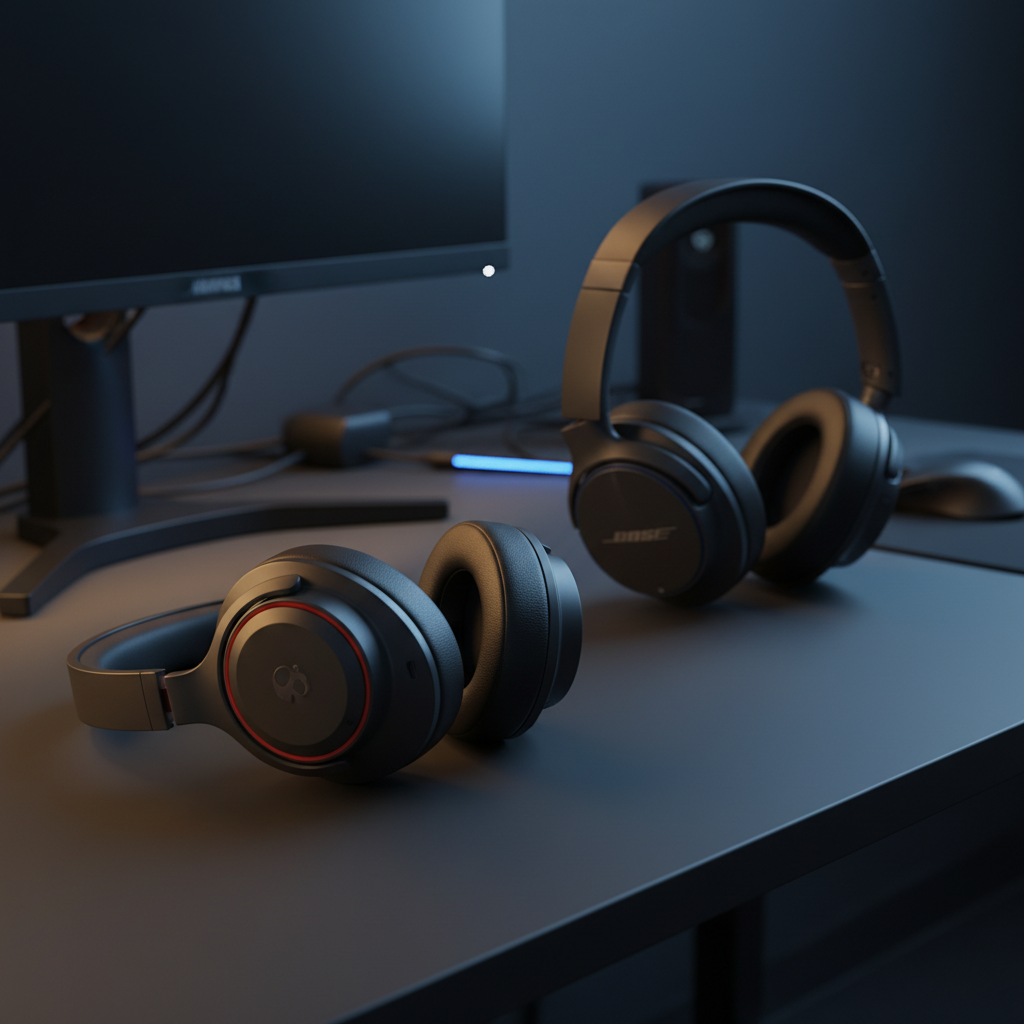
If you think the cheapest headset can’t hold its own, the Skullcandy Riff Wireless 2 proves otherwise. At $48.71 it’s the lowest‑priced model in our 12‑product lineup, yet it carries a 4.4/5 rating from 10,606 reviewers—tying for the highest score across the set. It also offers 2040 minutes of battery life and a rapid‑charge boost after just 10 minutes, features you usually see in pricier gear.
From there the field spreads across three price tiers. The budget bucket holds four options, including the HyperX Cloud Jet and two Turtle Beach Stealth models, all positioned at the lower end of the price spectrum. Mid‑range contenders like the Sony WH‑CH720N and Corsair Void RGB Elite Carbon offer solid ANC and long playtime without breaking the bank. The premium tier—SteelSeries Arctis Nova 5X, Corsair Virtuoso, Turtle Beach Stealth 700 Gen 3, and the Bose QuietComfort Ultra—reaches $429 and adds high‑end spatial audio, extensive battery life, and advanced noise cancellation.
Below we break down each headset’s strengths, so you can match the right wireless companion to your daily routine.
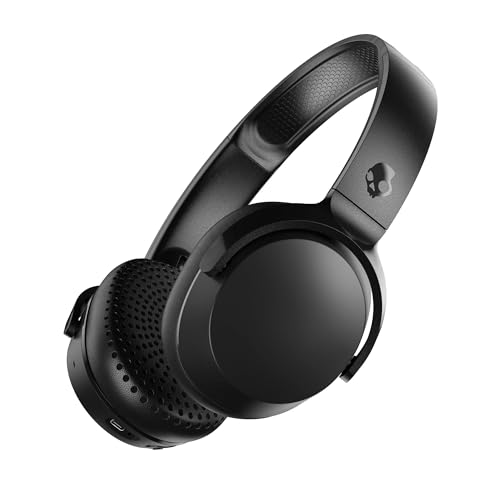
Skullcandy Riff Wireless 2
40 mm drivers provide full‑range sound while its $48.71 price makes it a solid value pick for budget‑focused listeners.

Bose QuietComfort Ultra
Perfect for audiophiles who want proven high‑quality noise‑canceling and are okay spending roughly $380 more than the budget Skullcandy option.

SteelSeries Arctis Nova 5X
Stands out with a 50‑hour battery life in 2.4 GHz mode, delivering marathon gaming sessions that the others don’t match.
Also considered
Score Analysis
Key score advantages vs. runner-up (Bose QuietComfort Ultra)
Price Range
Skullcandy Riff Wireless 2
$48.12
Bose QuietComfort Ultra
$429.00
SteelSeries Arctis Nova 5X
$149.99
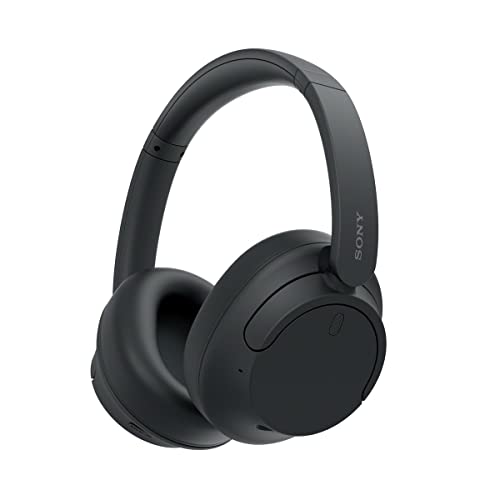
Sony WH-CH720N Black
$91.95

Turtle Beach Stealth 700 Gen 3
$199.00

Turtle Beach Stealth 600 Xbox
$109.00

HyperX Cloud Jet
$59.99
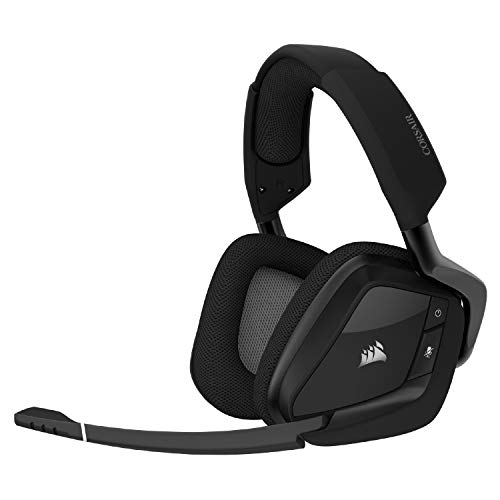
Corsair Void RGB Elite Carbon
$109.99
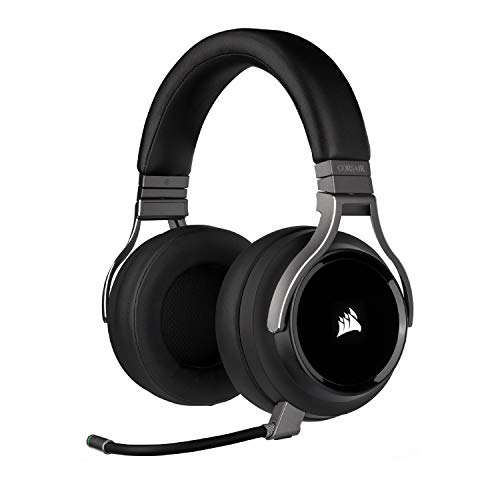
Corsair Virtuoso RGB Wireless Gaming Headset
$189.00

Turtle Beach Stealth 500
$89.86
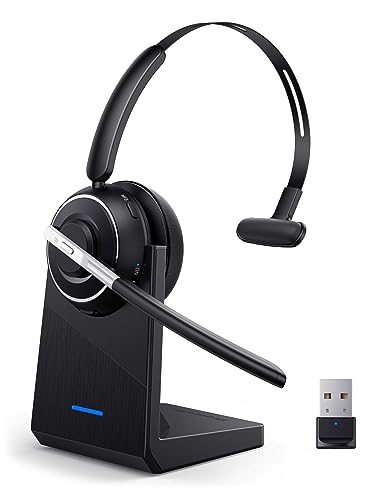
PrancyBt KH122M
$59.99

EKSA E900 Pro Wireless
$59.99
Spec Comparison
TL;DR: Skullcandy Riff Wireless 2 delivers up to 34 hours of playtime, rapid 10‑minute charging, and Tile‑enabled locating in a lightweight, on‑ear design for under $48.71.
The standout spec is its marathon‑length battery: the sheet lists 2040 minutes of playback, which works out to roughly 34 hours on a single charge. Even better, a 10‑minute quick‑charge adds about 240 minutes (four hours) of listening, and the 40 mm driver promises a bass‑forward sound signature.
At 0.33730726086 lb, the Riff 2 is noticeably lighter than the HyperX Cloud Jet (0.65697754076 lb) and the Turtle Beach Stealth 500 (0.5070632026 lb). Its 34‑hour runtime outpaces HyperX’s 25‑hour claim, though it falls short of the EKSA E900 Pro Wireless’s 50+ hour battery. The Bluetooth range measures 10 m, a bit less than HyperX’s 15 m, but still on par with most budget models, and Tile‑finding tech isn’t a common feature among the other contenders.
Reviewers love the 34‑hour battery life and the convenience of a 10‑minute quick charge, saying it keeps them powered through long commutes. The built‑in Tile chip earns frequent praise for rescuing misplaced headphones. On the flip side, users note the plastic housing feels flimsy, the touch controls can be overly sensitive, and the bass‑forward tuning may overwhelm mids. The on‑ear cups can become uncomfortable after several hours of use.
Technically, the headphones house a 40 mm driver delivering up to 94 dB SPL with an impedance of 32 Ω and a frequency response of 20 Hz–20 kHz. Total Harmonic Distortion stays below 3 % at 1 kHz. They fold flat, support multipoint Bluetooth 5.2 pairing, and include a removable 3.5 mm aux cable for wired listening. The Skullcandy app lets you customize the EQ, and a low‑latency gaming mode helps keep audio sync tight for casual gamers.
Pros
Cons
Best for: Budget‑conscious buyers seeking a reliable entry‑level option
Avoid if: You need water/sweat resistance, a neutral sound profile for critical listening, or a fully over‑ear design for long‑term comfort
TL;DR: The Bose QuietComfort Ultra delivers top‑tier ANC, CustomTune personalization and up to 30 hours of playtime, but its premium $429 price and lack of water resistance keep it in the high‑end niche.
What really sets the Ultra apart is Bose’s CustomTune technology, which scans your ear shape and tailors the sound profile, plus Immersive Audio that spatializes the mix. The headphones can run for up to 30 hours in Quiet or Aware mode and still manage 23 hours when Immersive Audio is active. Bluetooth 5.4 provides a stable link within a 30‑foot (9.1 meter) range, and the unit weighs 1.0582188576 pounds.
Compared with the other eleven models in this roundup, the Ultra weighs more than any other—the lightest competitor tips the scales at 0.21875 pounds. Its price tag of $429.00 also places it at the top of the cost spectrum. Battery life reaches 30 hours, which is lower than several rivals that list 50 hours or more; using Immersive Audio trims roughly seven hours off that runtime. On the upside, its Bluetooth version (5.4) is newer than the 5.2 found in many peers, and the included 51 cm audio cable and 97.5 cm USB‑C cable give solid wired options.
Users consistently praise the plush ear cushions and the high‑performance ANC that silences low‑frequency hums, especially on flights or in busy cafés. Professional reviewers highlight the noticeable improvement CustomTune brings and note that Cinema Mode makes movie watching feel “theater‑like.” On the downside, many mention that the touch‑strip can be overly sensitive and that the lack of any IP rating makes the headphones unsuitable for sweaty workouts or rainy commutes. Wind‑related call quality issues also surface in a handful of comments.
Beyond the headline features, the Ultra packs a lossless USB‑C audio path, a built‑in AI‑driven microphone array for clear calls, and automatic on‑head/off‑head detection that pauses playback when you set the headphones down. Quick Charge adds 2.5 hours of Quiet/Aware playback after just 15 minutes on the charger, and a full charge takes roughly three hours.
Pros
Cons
Best for: Buyers willing to invest in a proven, high‑quality option
Avoid if: You're shopping on a tight budget — it's priced at $429.00
TL;DR: The SteelSeries Arctis Nova 5X offers 40 mm neodymium drivers, up to 60 hours of Bluetooth battery life, fast‑charging in 15 minutes, and cross‑platform wireless connectivity at $149.99, making it a solid premium gaming headset.
The headset’s 40 mm neodymium drivers cover a 20 Hz–22 kHz frequency range, while the battery lasts 50 hours in 2.4 GHz mode and 60 hours over Bluetooth. A quick 15‑minute charge restores six hours of playback, and reviewers say the 0.6172943336‑pound (280 g) unit stays comfortable during marathon sessions.
Compared with other round‑up contenders, the Nova 5X sits in the middle of the driver‑size spectrum—larger than Sony’s 30 mm drivers but smaller than the 50 mm units in the Corsair Void RGB Elite Carbon and the Turtle Beach Stealth 600. It’s lighter than the Corsair Void’s 0.88125pounds but heavier than Sony’s 0.21875Pounds. Its Bluetooth 5.3 connection is newer than the 5.2 that Turtle Beach uses in the Stealth 600 and Stealth 700, and its 60‑hour Bluetooth runtime matches Sony’s 50‑hour playback claim when ANC is off.
Users repeatedly praise the headset’s lightweight build and the ease of flipping between Xbox, PlayStation, PC, and mobile via the USB‑C dongle or Bluetooth. Professional reviewers highlight the comfort of the memory‑foam ear cups and the positional accuracy of the soundstage. The most common criticisms focus on a thin bass response, a headband that can feel tight on larger heads, and occasional Bluetooth pairing hiccups.
Pros
Cons
Best for: Multi‑platform gamers who switch between Xbox, PlayStation, PC, and mobile and value long battery life.
Avoid if: You need deep, powerful bass or have a very large head size, or you’re on a very tight budget.
TL;DR: Sony's WH‑CH720N offers ultra‑light 0.21875‑lb comfort, 30 mm drivers, and up to 35 hours of ANC‑on playback, delivering solid noise cancellation at a $119.98 price point.
Weighing just 0.21875 pounds (99.2 g) and packing 30 mm dynamic drivers, the WH‑CH720N balances a feather‑light feel with decent bass response. The battery lasts up to 35 hours with active noise cancellation enabled, and a 3‑minute quick‑charge gives you an hour of listening, which is handy for short commutes.
Compared with the other eleven headsets in this roundup, the Sony is the lightest—significantly lighter than the Corsair Void RGB Elite Carbon at 0.88125 pounds and the Turtle Beach Stealth 600 at about 0.705 pounds. Its driver is smaller than the 40‑mm and 50‑mm units found in the SteelSeries Arctis Nova 5X, Turtle Beach Stealth 500, and EKSA E900 Pro. Battery life sits between the 40‑hour runtime of the Stealth 500 and the 80‑hour run of the Stealth 600, giving it a solid mid‑range endurance.
Reviewers consistently praise the comfort of the lightweight frame and the long‑lasting battery, noting that the ANC works well enough for office or travel environments. Professional reviewers also point out the solid ANC performance for the price, while many users mention the plastic‑heavy build and ear‑cup warmth during marathon sessions. The headphones lack an auto‑pause sensor and don’t fold, and Sony doesn’t include a carrying case, which some travelers find inconvenient.
Beyond the basics, the WH‑CH720N adds Sony’s Integrated Processor V1, Adaptive Sound Control, and a 20‑level Adjustable Ambient Sound mode, letting you dial in how much surrounding noise you hear. Multipoint Bluetooth 5.2 lets you switch between two devices, and the included 200 mm USB‑C cable and 1200 mm detachable audio cable round out the connectivity options.
Pros
Cons
Best for: Most users looking for a well‑reviewed, reliable mainstream option
Avoid if: You need advanced features or professional‑grade performance
“Extremely comfortable for all‑day wear, even with glasses.”
“Battery lasts forever—charged once a week with daily 3–4 hour use.”
TL;DR: The Turtle Beach Stealth 700 Gen 3 delivers 60 mm drivers, up to 80 hours of battery life and dual‑wireless connectivity, but its 0.9‑lb weight can feel hefty during marathon sessions.
This headset’s standout spec is its 60 mm Eclipse dynamic drivers, the largest driver size among the twelve contenders. With a manufacturer‑claimed 80‑hour battery life and a 15‑minute quick‑charge that adds three more hours, it targets gamers who run long sessions without hunting for an outlet.
In the lineup, the Stealth 700 Gen 3 is heavier than the Corsair Virtuoso (0.79 lb), SteelSeries Arctis Nova 5X (0.62 lb), Sony WH‑CH720N (0.22 lb), Corsair Void Elite (0.88 lb), Turtle Beach Stealth 600 (0.71 lb) and Turtle Beach Stealth 500 (0.51 lb). It also sports the biggest driver and matches the longest battery life, tying only with the Stealth 600’s 80‑hour claim.
Users rave about the marathon‑level battery, immersive soundstage and the flexibility of simultaneous 2.4 GHz and Bluetooth connections. Professional reviewers highlight the powerful bass and wide soundstage, while many note the steel‑reinforced headband feels solid but the clamp can be tight. Users frequently describe the Swarm II app as cumbersome, and some say the AI‑filtered mic sounds thin.
Beyond the big drivers, the headset offers a 10‑band EQ for both audio and mic, hybrid leatherette‑fabric ear cushions over memory foam, and a glasses‑friendly design. The unidirectional flip‑to‑mute boom mic includes AI‑based noise reduction and mic monitoring, rounding out a feature set aimed at serious gamers.
Pros
Cons
Best for: Buyers willing to invest in a proven, high‑quality option
Avoid if: You're on a tight budget or only need basic functionality
TL;DR: The Turtle Beach Stealth 600 Xbox delivers 80 hours of battery life, 50 mm Nanoclear™ drivers and a glasses‑friendly fit for $109, making it a solid, well‑reviewed choice for multiplatform gamers.
The headline feature is its marathon‑length battery: the headset can run up to 80 hours on a single charge, and a full recharge needs 15 hours via the included 2 m USB‑C cable. Coupled with 50 mm Nanoclear™ neodymium drivers, you’ll get a broad 20 Hz‑20 kHz frequency response and high‑resolution audio support, all while weighing just 0.7055 lb (320 g).
Compared with the other eleven entries, the Stealth 600 sits in the middle of the weight range—lighter than the Corsair Void RGB Elite Carbon (0.881 lb) but heavier than the Sony WH‑CH720N (0.219 lb) and the Stealth 500 (0.507 lb). Its 80‑hour battery outlasts the Corsair (16 hours), Sony (50 hours with ANC off), Stealth 500 (40 hours) and HyperX Cloud Jet (20‑25 hours), making it the longest‑lasting headset in this group. The 50 mm drivers match the larger drivers found in the Corsair and EKSA E900 Pro, and are larger than the 30 mm drivers on the Sony model and the 40 mm units on most competitors.
Users consistently praise the comfort of the over‑ear, memory‑foam cups, especially the glasses‑friendly ProSpecs™ design. The AI‑driven flip‑to‑mute boom mic and adjustable sidetone get frequent mentions for clear voice chat. Professional reviewers also highlight the extensive Swarm II app, which offers a 10‑band EQ, custom presets and firmware updates. The main complaints revolve around the lack of active noise cancellation, the 15‑hour charge time, and a noticeable drop in audio quality when using Bluetooth (which runs at 5.2 but compresses the signal compared to the low‑latency 2.4 GHz mode).
Beyond the basics, the headset supports dual connectivity (you can switch between 2.4 GHz and Bluetooth on the fly), a 60‑ft maximum wireless range (≈18.3 m) for gaming, and a 30‑ft Bluetooth range (≈9 m) for mobile listening. The built‑in Superhuman Hearing mode adds tactical audio cues, and the mic’s AI background‑noise suppression helps keep your voice clear in noisy rooms.
Pros
Cons
Best for: Most users looking for a well‑reviewed, reliable mainstream option
Avoid if: You need advanced features or professional‑grade performance
TL;DR: HyperX Cloud Jet offers dual‑wireless 2.4 GHz and Bluetooth 5.3 connectivity, 40 mm drivers, up to 25 h battery life, and a lightweight 0.65697754076 Pounds design for $59.99, earning 4.3/5 from 6,368 reviewers.
The headset’s standout feature is its dual‑wireless setup: a low‑latency 2.4 GHz dongle plus Bluetooth 5.3, letting you hop between PC, PS5, and mobile devices without re‑pairing. It packs 40 mm dynamic drivers and a sensitivity of 103 dB, while the built‑in 25 h Bluetooth battery (20 h on 2.4 GHz) keeps you gaming or chatting for days.
At 298 g, the Cloud Jet is lighter than the EKSA E900 Pro Wireless (500 g) and PrancyBt KH122M (431 g), but heavier than the Skullcandy Riff Wireless 2 (0.33730726086 Pounds) and Turtle Beach Stealth 500 (230 g). Its driver size matches the Skullcandy and Turtle Beach Stealth 500 models but is smaller than the 50 mm drivers that the EKSA and Corsair Void RGB Elite Carbon use. Bluetooth 5.3 is a step newer than the 5.2 that the Skullcandy and Turtle Beach Stealth 600 use, while its 15 m range sits comfortably within typical room distances. Battery longevity trails the EKSA’s 50+ hours and PrancyBt’s 45 hours, yet exceeds the Corsair’s 960‑minute (16 h) spec.
Professional reviewers praise the convenience of swapping between 2.4 GHz and Bluetooth, the breathable mesh ear cushions, and the solid 4.5 h charging time that still delivers up to 25 h of play. Everyday users echo the comfort and long battery life, but many note the plastic chassis feels cheap and can creak under pressure, the passive seal doesn’t block ambient noise, and the microphone can sound muffled. The headset lacks active noise cancellation, which some gamers miss for immersive sessions.
Pros
Cons
Best for: Budget-conscious buyers seeking a reliable entry-level option
Avoid if: You want the best value‑per‑dollar in its price range
“It’s not the best, but it’s not trying to be. It just works.”
TL;DR: The Corsair Void RGB Elite Carbon costs $113.17, offers 50 mm drivers, 7.1‑channel PC surround, 16 hours of battery life and iCUE‑controlled RGB, but its loose fit and required software may turn some users away.
The headset’s standout spec is its custom 50 mm neodymium drivers paired with a 20 Hz – 30 kHz frequency response and 116 dB ± 3 dB sensitivity, delivering immersive 7.1 surround sound on PC. It runs on a 2.4 GHz RF dongle, reaches roughly 12.2 meters wireless range, and holds a charge for 960 minutes (about 16 hours) with a 960‑minute (16‑hour) charge time.
At 0.88125 pounds, the Void RGB Elite is heavier than many rivals—Sony’s WH‑CH720N weighs just 0.21875 pounds and the Turtle Beach Stealth 500 tips in at 0.507 pounds. Its driver size matches the Turtle Beach Stealth 600 (both 50 mm) and exceeds the 40 mm units found in the SteelSeries Arctis Nova 5X, Turtle Beach Stealth 500, HyperX Cloud Jet, and the 30 mm drivers of the Sony model. Battery life falls short of most peers: Turtle Beach Stealth 600 reaches 80 hours, SteelSeries Arctis Nova 5X 50 hours, and EKSA E900 Pro Wireless over 50 hours, while the HyperX Cloud Jet offers 20 hours. The Void’s wireless range sits between the 9 m Bluetooth range of the Stealth 600 and the 15 m Bluetooth range of the HyperX Cloud Jet.
Reviewers consistently praise the Discord‑certified omnidirectional microphone and the breathable aluminum‑yoke construction with memory‑foam ear pads. However, many note that the headset feels “extremely loose” on average‑sized heads, leading to occasional slipping. You need iCUE software to enable the 7.1 surround, monitor battery levels, and customize RGB lighting, which some users find intrusive. The dynamic RGB lighting, while eye‑catching, shaves a bit off the already modest 16‑hour battery life.
Pros
Cons
Best for: PC gamers who want wireless 7.1 surround sound, a high‑quality mic and don’t mind using iCUE for customization.
Avoid if: You have a smaller head, prefer plug‑and‑play headsets, or need a tighter budget—the $113.17 price tag and required software may be drawbacks.
“Most comfortable I’ve ever worn”
“Great sound and mic”
TL;DR: The Corsair Virtuoso RGB Wireless delivers Hi‑Res sound with a 50 mm driver and 20‑hour battery, but its 0.79‑lb weight and comfort quirks may limit marathon sessions.
The headset’s standout spec is its custom 50 mm neodymium drivers, paired with Hi‑Res Audio certification and a frequency response of 20 Hz – 40,000 Hz. A 20‑hour battery life and 60‑foot (18.3 m) Slipstream 2.4 GHz range give you solid wireless freedom for long gaming marathons.
Compared with the other eleven entries, the Virtuoso is heavier than the SteelSeries Arctis Nova 5X (about 0.62 lb) and the Sony WH‑CH720N (about 0.22 lb), yet lighter than the Turtle Beach Stealth 700 Gen 3 (0.9 lb). Its 50 mm driver matches the Corsair Void RGB Elite but exceeds the 40 mm drivers in the SteelSeries and Turtle Beach Stealth 500, and is larger than Sony’s 30 mm unit. Battery life at 20 hours falls short of the 80‑hour runtime of the Stealth 700 and the 50‑hour (2.4 GHz) and 60‑hour (Bluetooth) figures of the Arctis Nova 5X, putting it in the mid‑range for endurance.
Reviewers consistently praise the headset’s sound clarity and the detachable omnidirectional microphone, noting that professionals appreciate the detail and mic quality for streaming. However, many users report pressure from the aluminum frame and shallow earcups, which leads to fatigue after one to two hours. Users describe the bass response as less impactful than audiophile expectations, and the iCUE software occasionally introduces audio latency or device‑recognition hiccups.
Pros
Cons
Best for: Audiophiles and serious gamers who prioritize sound accuracy, microphone quality, and premium build.
Avoid if: You need a lightweight, ultra‑comfortable headset for long sessions or you demand strong bass response.
“79% of Best Buy reviewers say they would recommend it.”
“Sound quality is the most mentioned positive, cited in over 1,000 reviews.”
TL;DR: The Turtle Beach Stealth 500 delivers 40 hours of wireless play, 40 mm drivers and a feather‑light 230 g build for a $74.86 price that feels solid across consoles and PC.
The headset’s standout spec offers 40‑hour battery life, which translates to almost two full days of continuous gaming without a recharge. Coupled with 40 mm drivers and a plush leatherette ear‑cup design, the unit weighs just 0.5070632026 pounds (230 g), making it comfortable for marathon sessions. The included 0.7 m USB‑A‑to‑USB‑C charging cable keeps the dongle tidy on a desk.
Compared with the other eleven entries, the Stealth 500 is lighter than the HyperX Cloud Jet (0.65697754076 lb) and far lighter than the EKSA E900 Pro (500 g) or PrancyBt KH122M (0.95019234922 lb). Its driver size matches the HyperX and Skullcandy Riff (both 40 mm) but is smaller than the 50 mm units found in the EKSA, Turtle Beach Stealth 600 Xbox and Corsair Void. Battery endurance also leads the pack: the HyperX Cloud Jet lists 20 h (2.4 GHz) and 25 h (Bluetooth), while the Corsair Void tops out at 960 minutes, both well below the Stealth 500’s 40 hours. The charging cable is shorter than the 2 m cable supplied with the Stealth 600 Xbox, but the Stealth 500’s Bluetooth 5.2 matches the Skullcandy Riff’s version. Thus, it occupies the lighter‑than‑average, longer‑battery‑than‑average corner of the lineup.
Professional reviewers praise the headset’s “excellent sound” and “supreme comfort,” noting the spatial‑audio tuning that benefits both games and movies. Everyday owners echo the comfort and battery praise, often highlighting the flip‑to‑mute mic for quick call swaps. The downside shows up in user chatter about ear‑cup heat after long play and occasional static or Bluetooth drop‑outs, which GamesRadar+ flagged as a weakness. In practice, the lack of active noise cancellation means the headset relies on passive isolation, which may fall short in noisy rooms.
Pros
Cons
Best for: Casual to mid‑core gamers who want a well‑reviewed, lightweight headset with long battery life across consoles, PC and mobile.
Avoid if: You need active noise cancellation, a studio‑grade microphone, or plan to game in very noisy environments.
TL;DR: The PrancyBt KH122M offers 45 hours of battery life, AI‑powered noise cancellation, and a plug‑and‑play USB dongle for reliable PC calls at a $59.99 price point.
The standout spec is its 45‑hour battery life, backed by a quick 2‑hour USB‑C charge, which far exceeds the 25‑hour Bluetooth runtime of the HyperX Cloud Jet and sits just below the 50+ hour claim of the EKSA E900 Pro. Its Bluetooth 5.2 connection reaches up to 10 m, a bit shorter than HyperX’s 15 m range but still sufficient for typical desk setups. Comfort scores of 4.9 and noise‑cancellation ratings of 4.8 show a plush on‑ear design with AI‑driven ambient reduction.
Compared with the other eleven headsets, the KH122M is heavier than the Turtle Beach Stealth 500 (0.507 lb) and lighter than the EKSA E900 Pro (500 g). It also carries a higher weight than the HyperX Cloud Jet (0.657 lb) but offers a longer run time, making it a solid middle ground for users who prioritize endurance over ultra‑light builds.
Reviewers consistently praise the long battery life and the convenience of the magnetic charging base that also stores the dongle. Professional reviewers note the stable USB dongle connection as a clear advantage for lag‑free desktop calls. However, many users flag that the mute button works only on mobile phones and that you must manually set the microphone as the default input on PCs.
Pros
Cons
Best for: Remote workers, freelancers, and students who need long battery life and reliable PC connectivity.
Avoid if: You rely on a hardware mute button for PC use or need the lightest possible headset for extended wear.
TL;DR: The EKSA E900 Pro Wireless delivers 50 mm drivers, 7.1 virtual surround on PC, and over 50 hours of playtime for $59.99, making it a solid budget‑friendly wired‑plus‑wireless headset.
The standout hardware is the 50 mm dynamic driver, noticeably larger than the 40 mm units found in most of the other contenders such as the HyperX Cloud Jet and Skullcandy Riff Wireless 2. Paired with a sensitivity of 118 dB and a 32 Ω impedance, the headset promises clear, detailed sound that many reviewers praise for its immersive quality.
When you line it up against the other eleven models, the E900 Pro sits in the middle of the pack on weight – at 500 g it’s heavier than the ultra‑light Skullcandy Riff Wireless 2 but lighter than the HyperX Cloud Jet, which tips the scales at roughly 0.66 lb. Battery life is a strong point: the headset’s “50+ hours” outpaces HyperX’s 20‑25 h range and matches the longer‑lasting PrancyBt KH122M’s 45 h claim. Its Bluetooth 5.0 connectivity falls short of HyperX’s Bluetooth 5.3 and Turtle Beach’s 5.2, but the dual‑cable system (separate USB and 3.5 mm leads) gives you wired flexibility that most rivals lack.
Users consistently note the comfort of the memory‑protein leather ear pads and the convenience of the one‑touch mute switch on the earcup. Professional reviewers highlight the plug‑and‑play setup and the detachable, noise‑canceling microphone as practical perks for multi‑device gamers. However, the community also flags the stiff, sometimes tangled cable and the absence of a native USB‑C port, especially for those with newer laptops. The 7.1 virtual surround works only on PC via USB, so console players only get stereo sound through the 3.5 mm jack.
Pros
Cons
Best for: Entry‑level buyers or those on a tight budget who want a versatile headset with solid sound and long battery life.
Avoid if: You need high‑fidelity audiophile performance, rely exclusively on USB‑C devices, or require surround sound on consoles.
“Perfect for long gaming sessions — no ear fatigue after 4+ hours.”
“Mic is clear, and teammates can hear me perfectly even with AC running.”
Breakdown
Skullcandy Riff Wireless 2
Pros
Bose QuietComfort Ultra
Pros
Cons
SteelSeries Arctis Nova 5X
Pros
Sony WH-CH720N Black
Pros
Cons
Based on scoring data and product specs
Personalized picks
Best Overall Pick
Skullcandy Riff Wireless 2
Best Budget PickBest for: Budget-conscious buyers seeking a reliable entry-level option
Bose QuietComfort Ultra
Best for: Buyers willing to invest in a proven, high-quality option
$429.00+$380.88 vs winner
Skip EKSA E900 Pro Wireless if…
Reliability and user satisfaction are your top concerns
Skullcandy’s Riff Wireless 2 ranks first thanks to its affordability and solid specs. It sells for $48.71 and holds a 4.4‑star rating from more than 10,600 reviewers. The 40 mm drivers deliver a bass‑forward sound, while the 2,040‑minute battery life (and a 10‑minute quick‑charge that adds 240 minutes of playback) keeps you listening all day. Bluetooth 5.2 with a 10‑meter range and multipoint pairing make it easy to hop between phone and laptop.
The runner‑up, Bose QuietComfort Ultra, excels when you need premium active‑noise‑cancelling for travel or work‑from‑home focus. Its hybrid ANC offers adjustable modes, and the headphones can last up to 30 hours on a single charge. Bluetooth 5.4 and a 480 g over‑ear design provide a comfortable, high‑fidelity experience for long sessions.
Choose the Skullcandy Riff Wireless 2 today and enjoy a budget‑friendly headset that doesn’t compromise on key features.
The Bose QuietComfort Ultra brings hybrid active‑noise cancellation, spatial audio and up to 30 hours of playback with ANC off, which the Skullcandy lacks. Those premium features justify the higher price for users who need top‑tier noise control and immersive sound, but for pure value the Skullcandy’s sub‑$50 price and solid 34‑hour battery make it the more economical choice.
Please sign in to leave a review
No reviews yet. Be the first to review!
