⚡ Quick Answer
Choosing a wireless headset can feel overwhelming, so we narrowed it down to 11 models that cover the market. From commuting to gaming on a couch, or juggling multiple devices, a Bluetooth or 2.4 GHz option fits. Our roundup groups the picks into three price tiers – budget (PrancyBt Bluetooth Headset at $59.94, HyperX Cloud Jet at $59.99, Razer Barracuda X at $79.99, Turtle Beach Stealth 500 at $89.99), mid‑range (Sony WH‑CH720N at $97.98 and Turtle Beach Stealth 600 at $109.00), and premium (Corsair Void v2 at $112.76, HyperX Cloud III S at $129.99, SteelSeries Arctis Nova 5 at $129.99, Cooler Master MH670 at $132.86).
For travelers who prize feather‑light comfort, the Sony WH‑CH720N weighs just 0.21875 pounds and features a 3000‑minute battery life with ANC off. Gamers who need low‑latency performance will notice the HyperX Cloud Jet’s 40 mm drivers and a 4.5‑hour charge time, while the HyperX Cloud III S pushes endurance to 120 hours on its 2.4 GHz link. The Turtle Beach Stealth 600 offers an 80‑hour battery, and the Corsair Void v2 reaches up to 130 hours on Bluetooth. All models hold solid user sentiment, hovering between 4.1 and 4.4 stars out of 5.
Below we’ll break down each tier, highlight the strengths that match different scenarios, and help you decide which wireless headset will suit your lifestyle best.
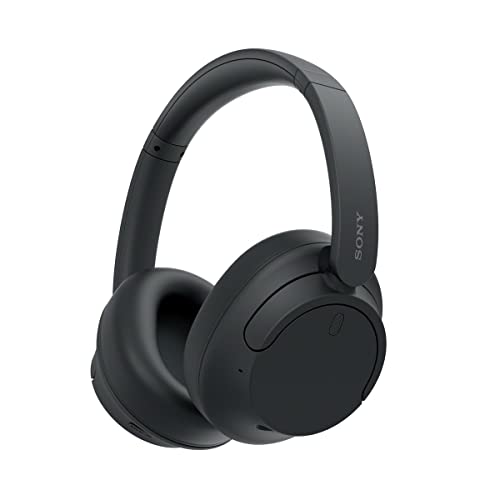
Sony WH-CH720N
Its 30 mm driver unit provides balanced audio, supporting the strong value and rating that make it a reliable mainstream choice.

HyperX Cloud Jet
Budget-conscious buyers get a reliable entry‑level headset for $59.99, about $38 cheaper than the Best Overall Sony model.

HyperX Cloud III S
With its 53 mm driver and 64 Ω impedance, it delivers a richer, high‑fidelity experience that the smaller‑driver Sony and HyperX models don’t match.
Also considered
Score Analysis
Key score advantages vs. runner-up (HyperX Cloud Jet)
Price Range
Sony WH-CH720N
$92.95
HyperX Cloud Jet
$59.99
HyperX Cloud III S
$149.99

Turtle Beach Stealth 600
$109.00

Corsair Void v2
$109.99

SteelSeries Arctis Nova 5
$129.99

Turtle Beach Stealth 500
$89.86

Cooler Master MH670
$173.97

Razer Barracuda X White
$79.99
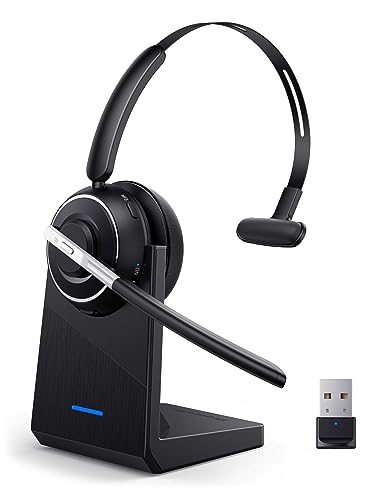
PrancyBt Bluetooth Headset
$43.97
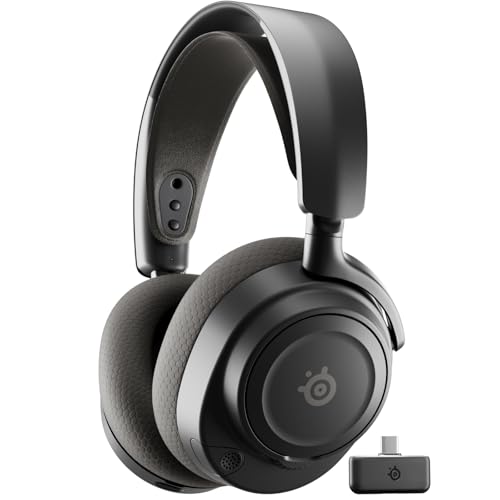
SteelSeries Arctis Nova 7
$199.99
Spec Comparison
TL;DR: Sony WH-CH720N delivers ultra‑light comfort, 30 mm drivers and up to 50 hours of playback, making it a solid, well‑reviewed choice for commuters and travelers.
The standout feature is Sony’s Integrated Processor V1, which powers active noise cancellation, 360 Reality Audio and the long‑lasting battery. The headphones hold 3000 minutes of playtime with ANC off – that’s about 50 hours – and still manage roughly 35 hours with ANC on. A 30 mm driver handles the full 20 Hz‑20 kHz Bluetooth frequency range, while the dual‑beamforming microphones and wind‑noise reduction structure keep calls clear.
At 0.22 pounds (192 g), the WH‑CH720N is noticeably lighter than the Turtle Beach Stealth 500 (0.51 lb) and the Stealth 600 (0.71 lb), and also lighter than the Corsair Void v2 (0.67 lb) and SteelSeries Arctis Nova 5 (0.62 lb). Its 30 mm driver is smaller than the 40‑50 mm drivers found in those rivals, but professional reviewers note the sound remains well‑balanced and realistic. The 10‑meter effective Bluetooth range matches the typical 2.4 GHz wireless range of the other models.
Consumers repeatedly praise the feather‑light feel and the “long battery life” that lets them travel for days without hunting for a charger. Dual‑mic call quality and the adaptive ambient‑sound mode also earn frequent mentions. On the downside, people describe the over‑ear design as “bulky for intensive sports,” and the lack of any water‑resistance rating means rain or heavy sweat could be problematic.
Beyond the core specs, the headphones support quick charging: a 10‑minute boost yields about 4.5 hours of playback, while a 3‑minute charge adds roughly an hour. Multipoint connectivity lets you link two devices at once, and voice assistants like Siri or Google Assistant are accessible via the built‑in controls. All of this runs on a recycled‑plastic frame, which aligns with Sony’s sustainability push.
Pros
Cons
Best for: Commuters and travelers needing ultra‑light, long‑lasting headphones with solid ANC and call quality.
Avoid if: You plan to use them for intensive sports or in wet environments where water resistance is required.
“amazing headphones”
TL;DR: The HyperX Cloud Jet offers a sub‑300 g, dual‑wireless headset with 40 mm drivers, up to 25 hours of playtime, and DTS spatial audio—all for $59.99.
The standout feature is its dual‑wireless system: a low‑latency 2.4 GHz USB dongle paired with Bluetooth 5.3, letting you hop between PC gaming and mobile listening without swapping hardware. Weighing just 0.66 lb (298 g) and housing 40 mm dynamic drivers, it stays light on your head while delivering the full 20 Hz–20 kHz frequency range.
Compared with the other ten headsets, the Cloud Jet is lighter than the PrancyBt (0.95 lb) but a bit heavier than the Turtle Beach Stealth 500 (0.51 lb). Its 40 mm drivers match the Razer Barracuda X and are smaller than the Corsair Void v2’s 50 mm units. Battery life tops out at about 25 hours, which trails Razer’s 50‑hour claim and Turtle’s 40‑hour spec, while the 15‑meter wireless range falls short of PrancyBt’s 120‑meter range.
User feedback praises the headset’s feather‑light feel for marathon gaming sessions and the seamless switch between 2.4 GHz and Bluetooth modes. Professional reviewers also note the breathable mesh ear cushions as a comfort win, though they criticize the plastic‑heavy frame for lacking a premium feel. The always‑on sidetone and DTS Headphone:X spatial audio round out the experience for immersive gaming.
Technical highlights include 16‑bit audio depth, a unidirectional electret condenser mic with swivel‑to‑mute, and a quick 4.5‑hour charge that gets you back to play. The included 1.5 m charging cable and 4 g dongle (0.01 lb) keep the setup tidy.
Pros
Cons
Best for: Budget-conscious buyers seeking a reliable entry-level option
Avoid if: You need advanced features or professional‑grade performance
“feels light enough to wear for hours without fatigue”
“a welcome choice”
TL;DR: The HyperX Cloud III S packs a 53 mm driver and up to 200 hours of Bluetooth battery life into a sturdy, over‑ear design, but its bulk and lack of ANC keep it from being travel‑friendly.
The headset’s standout spec is its 53 mm dynamic driver, the largest among the eleven models in this roundup. Coupled with a 64 Ω impedance and 111.94 dB SPL sensitivity, it promises spacious soundstage and clear highs, a point professional reviewers repeatedly praise.
When you line it up against the other contenders, the Cloud III S is noticeably heavier at about 0.78 lb, outpacing the SteelSeries Arctis Nova 5, Cooler Master MH670, Corsair Void v2, Turtle Beach Stealth 600 and the ultra‑light Sony WH‑CH720N. Its battery endurance also dwarfs most rivals: 200 hours on Bluetooth and 120 hours on the 2.4 GHz dongle far exceed the 60‑80 hour ranges seen in the SteelSeries, Turtle Beach, and Corsair models.
Everyday users love how the memory‑foam leatherette cushions stay comfortable during marathon sessions, and the detachable boom mic with noise‑cancelling tech scores high for clear team chat. Professional reviewers note the solid steel‑aluminum frame and low‑latency USB dongle make it ideal for competitive play. However, the same reviewers point out that the bulkier build hampers portability, and the absence of active noise cancellation leaves low‑frequency ambient sounds slipping through.
Pros
Cons
Best for: Buyers willing to invest in a proven, high‑quality option
Avoid if: You need advanced features or professional‑grade performance
“feels light enough to wear for hours without fatigue”
“a welcome choice”
TL;DR: The Turtle Beach Stealth 600 offers a 50 mm driver, 80‑hour battery life and memory‑foam cushions in a solid‑weight 0.71 lb package, making it a reliable choice for long gaming sessions.
The headset’s standout spec is its 80‑hour battery life, letting you game for days without hunting for a charger. It pairs a 50 mm driver with a weight of 0.71 lb (320 g), which feels substantial but still manageable for most users. The QuickSwitch button lets you toggle between wireless and Bluetooth with a single press, and the built‑in microphone features a flip‑to‑mute design with AI noise reduction.
Compared with the other ten entries, the Stealth 600 is heavier than the Sony WH‑CH720N (0.22 lb) but lighter than the HyperX Cloud III S (0.78 lb). Its driver size matches the Corsair Void v2’s 50 mm unit, while its battery outlasts the Turtle Beach Stealth 500’s 40‑hour claim. At 95 mm tall, it’s shorter than the HyperX model (198 mm) and more compact than the SteelSeries Arctis Nova 5 (89.4 mm height). The headset also weighs more than the SteelSeries Arctis Nova 5 (0.62 lb) but less than the Cooler Master MH670 (0.76 lb).
User feedback highlights the headset’s comfort: the memory‑foam cushions with glasses‑friendly fabric keep pressure low during marathon sessions. Reviewers also appreciate the low‑latency wireless connection and the Swarm II app, which offers a 10‑band EQ, up to five custom presets, Superhuman Hearing® and a noise gate. The mappable wheel button lets you fine‑tune game‑chat mix or Bluetooth volume on the fly.
Pros
Cons
Best for: Most users looking for a well‑reviewed, reliable mainstream option
Avoid if: You have limited desk space or need portability
TL;DR: The Corsair Void v2 offers 50 mm drivers, up to 130 hours of Bluetooth playtime and Dolby Atmos support, but its fixed mic and higher price may turn some gamers away.
At the heart of the Void v2 are custom‑tuned 50 mm drivers paired with a frequency response of 20 Hz‑20 kHz, delivering the spacious sound most gamers crave. The headset also offers up to 130 hours of Bluetooth battery life and a wireless (2.4 GHz) runtime of up to 70 hours, so you can game for days without hunting for a charger.
Compared with the other ten contenders, the Void v2 sits in the middle of the weight range at roughly 0.67 lb—lighter than HyperX’s 0.78 lb model but heavier than Sony’s feather‑light 0.22 lb offering. Its driver size matches Turtle Beach’s Stealth 600 (both 50 mm) and exceeds Sony’s 30 mm units, though it’s a bit smaller than HyperX’s 53 mm drivers. Battery‑life wise, it outlasts Turtle Beach’s 80‑hour claim and the SteelSeries 60‑hour limit, yet falls short of HyperX’s 200‑hour Bluetooth endurance.
Reviewers consistently highlight the headset’s immersive Dolby Atmos Spatial Audio on PC and PS5, as well as the NVIDIA Broadcast microphone technology that tames background noise. The breathable memory‑foam ear cushions and floating headband earn praise for all‑day comfort, while the 15‑minute quick‑charge boost—providing roughly six hours of playback—gets a nod for convenience. However, users note the mic is fixed and non‑detachable, and the lack of active noise cancellation can be a drawback in noisy environments.
Pros
Cons
Best for: Most users seeking a balanced, mainstream option
Avoid if: You have limited desk space or need portability, or you require a detachable mic, active noise cancellation, or an ultra‑light headset for marathon wear.
TL;DR: The SteelSeries Arctis Nova 5 offers dual‑mode 2.4 GHz/Bluetooth wireless, a 60‑hour battery, and a lightweight 0.62‑lb design, but its bulky over‑ear build isn’t ideal for workouts or travel.
The Nova 5’s standout spec is its 60‑hour battery life paired with a USB‑C fast‑charge that reaches six hours after just 15 minutes on the charger. Weighing only 0.62 lb (280 g), the headset feels light on the head despite its over‑ear form factor, and it supports both 2.4 GHz dongle and Bluetooth 5.3 connections, making it easy to switch between PC, consoles and mobile devices.
Compared with the other ten headsets in this roundup, the Nova 5 is lighter than the HyperX Cloud III S (≈0.78 lb) and the Cooler Master MH670 (≈0.76 lb). Its battery life sits between the HyperX’s massive 120‑hour (2.4 GHz) / 200‑hour (Bluetooth) endurance and the Turtle Beach Stealth 500’s 40‑hour run‑time, giving it a solid middle ground. While it doesn’t match the ultra‑light Sony WH‑CH720N (≈0.22 lb), it remains more portable than the bulkier Turtle Beach Stealth 600 (≈0.71 lb).
Reviewers consistently praise the headset’s 100+ esports‑tuned audio presets, which let competitive players highlight crucial in‑game cues. The ClearCast Gen2.X microphone, with a 32 kHz / 16‑bit bandwidth, highlights clear voice transmission. However, users note that the closed‑back, over‑ear design feels bulky for sports or intense movement, and the size makes packing for travel less convenient.
Beyond the battery and weight, the Nova 5 packs custom Neodymium Magnetic drivers and a retractable ClearCast mic. Its Quick Switch wireless feature lets you hop between wireless modes without missing a beat, and a USB‑C port ensures modern charging convenience.
Pros
Cons
Best for: Competitive gamers and multi‑platform users who value long battery life, esports audio presets, and a clear mic.
Avoid if: You need a compact headset for workouts, travel, or are on a tight budget.
“poorly suited for sports and fitness”
“comfortable with long battery life and good controls”
TL;DR: The Turtle Beach Stealth 500 delivers 40 hours of wireless playtime in an ultra‑light 0.5070632026‑lb frame, but its battery life trails many rivals at a similar price point.
The headset’s standout spec is a 40 mm driver paired with a 40‑hour battery, letting you game for days without hunting for a charger. Its floating headband and memory‑foam ear cushions keep the 0.5070632026‑lb unit comfortable even during marathon sessions.
When you line it up against the other ten entries, the Stealth 500 is heavier than the Sony WH‑CH720N (0.21875 lb) but lighter than the Razer Barracuda X (0.6 lb), the Turtle Beach Stealth 600 (0.7054792384 lb), the Corsair Void v2 (0.66800065386 lb), the HyperX Cloud Jet (0.65697754076 lb) and the PrancyBt Bluetooth Headset (0.95019234922 lb). Its driver size matches the Razer and HyperX models at 40 mm, yet falls short of the 50 mm drivers in the Stealth 600 and Corsair. Battery life of 40 hours is solid but lower than the Razer’s 50 hours, the Stealth 600’s 80 hours, and the Corsair’s up to 130 hours on Bluetooth.
Reviewers consistently applaud the 40‑hour battery and the headset’s feather‑light feel, calling the comfort “almost unnoticeable” during extended play. However, many note that the price feels steep compared with competitors that offer longer runtimes or lighter builds, making the value proposition a frequent discussion point.
Beyond endurance, the Stealth 500 packs Bluetooth 5.2 and a 2.4 GHz wireless link, four EQ modes, a flip‑to‑mute microphone and a quick‑switch button that toggles between Bluetooth and the wireless dongle, giving you flexibility across consoles, PC and mobile devices.
Pros
Cons
Best for: Budget-conscious buyers seeking a reliable entry-level option
Avoid if: You have limited desk space or need portability
TL;DR: The Cooler Master MH670 offers 50 mm neodymium drivers, virtual 7.1 surround and zero‑latency 2.4 GHz wireless in a sturdy aluminum frame, but its 4.1‑star rating suggests mixed user satisfaction.
At the heart of the MH670 are 50 mm neodymium drivers paired with a virtual 7.1 surround engine, giving you a wide soundstage for games and movies. The headset connects via a 2.4 GHz link that the specs label as “zero latency,” so audio stays in sync with on‑screen action. A detachable, fold‑able design and leatherette ear cushions add comfort for longer sessions, while the 3.5 mm wired input lets you go wired when you prefer.
Compared with the other ten headsets in this roundup, the MH670 sits in the middle of the weight range: at roughly 0.76 lb (346.5 g) it’s heavier than the SteelSeries Arctis Nova 5 (about 0.62 lb) but lighter than the HyperX Cloud III S (about 0.78 lb). Its 50 mm drivers match the Corsair Void v2 but are a few millimeters smaller than HyperX’s 53 mm units, so it doesn’t claim the largest drivers in the group. The aluminum frame and swivel ear cups give it a more premium feel than the lighter‑weight Turtle Beach Stealth 500, which weighs about 0.51 lb.
Customer feedback averages 4.1 stars from 2,080 reviews, indicating that many users appreciate the sound quality and sturdy build, while a notable minority cite issues that keep the rating below the 4.3‑plus scores seen on several rivals. Reviewers frequently mention the clear audio and comfortable fit, but some point out that the lack of published battery life makes planning long gaming sessions tricky.
Pros
Cons
Best for: Those prioritizing quality and willing to pay for premium performance
Avoid if: Reliability and user satisfaction are your top concerns
TL;DR: The Razer Barracuda X White is a 250 g wireless headset with 40 mm drivers, 50 hours of battery, dual‑wireless (2.4 GHz + Bluetooth) and THX Spatial Audio, offering solid value for budget‑conscious gamers.
The standout spec is its 50‑hour battery life, which lets you game or stream for days without hunting for a charger. Weighing just 250 g (0.6 lb) and featuring 40 mm TriForce drivers, it stays comfortable for marathon sessions. THX Spatial Audio and a detachable HyperClear cardioid mic with beamforming add immersive sound and clear voice chat, while SmartSwitch lets you toggle between 2.4 GHz HyperSpeed and Bluetooth instantly.
Compared with other round‑up contenders, the Barracuda X is heavier than the Sony WH‑CH720N’s 0.22 lb frame but lighter than HyperX Cloud Jet’s 0.66 lb build. Its driver size matches HyperX’s 40 mm units, yet it outlasts Turtle Beach Stealth 500’s 40‑hour battery. In weight terms, it sits just above Turtle’s 0.51 lb model, offering a solid middle ground among the lineup.
Users repeatedly praise the headset’s feather‑light feel and the long‑lasting battery, calling it ideal for travel and multi‑device use. Professional reviewers note the THX Spatial Audio processing and the convenience of on‑ear controls, while also pointing out the lack of active noise cancellation. Some owners have mentioned Bluetooth latency on Android and occasional background noise captured by the mic, but sentiment remains positive for its price tier.
Pros
Cons
Best for: Entry-level buyers or those on a tight budget
Avoid if: You need powerful performance or professional-grade features
“lightweight, foam-padded design and long-lasting battery”
TL;DR: The PrancyBt Bluetooth Headset delivers a 55‑hour talk time, AI‑powered noise cancellation, and a 270° rotatable mic, but its 0.95‑lb weight makes it the bulkiest option in the budget tier.
This headset’s standout spec is its 55‑hour talk time, far exceeding the typical 40–50‑hour range you see in other entry‑level wireless headsets. Coupled with a Bluetooth 5.2 link and a wireless range of up to 120 m, it stays connected even when you step away from your desk. The AI noise cancellation and 270° swiveling boom mic aim to keep your voice clear, whether you’re on a conference call or a long haul drive.
Compared with the ten other models in the roundup, the PrancyBt is the heaviest at roughly 0.95 lb (431 g), out‑weighing the HyperX Cloud Jet, Razer Barracuda X, Turtle Beach Stealth 500, Sony WH‑CH720N, Turtle Beach Stealth 600, and Corsair Void v2, all of which sit under 0.71 lb. Its 120 m range also dwarfs the HyperX’s 15‑meter range, and most peers don’t list a range at all. Talk‑time‑wise, it sits between the Razer Barracuda X’s 50‑hour claim and the Turtle Beach Stealth 600’s 80‑hour battery, while beating the Stealth 500’s 40‑hour spec.
Professional reviewers have praised the headset’s cushioned over‑ear cups for all‑day comfort and noted that the integrated charging cradle with magnetic dongle storage is a practical space‑saver. Users echo this sentiment, repeatedly highlighting the clear call quality and the convenience of the long battery life. A recurring complaint is that muting on a PC requires a software tweak rather than a dedicated hardware button, and the existence of multiple model numbers (KH120M, EM120M, KH122M) can cause confusion.
Pros
Cons
Best for: Entry‑level buyers or those on a tight budget
Avoid if: You need powerful performance or professional‑grade features
“A real nice Bluetooth mono headset... super cush pad over the ear... convenient you can pick up the headphone [from cradle]”
“Solid headset... audio is clear and my co-workers can also hear me very clearly during meetings. I highly recommend it”
TL;DR: The SteelSeries Arctis Nova 7 offers dual‑mode 2.4 GHz/Bluetooth connectivity, 50+ hour battery life, and a lightweight 0.72Pounds design, but its $199.99 price places it at the premium end of the wireless headset market.
What really stands out is the dual wireless capability – you can run it on 2.4 GHz for low‑latency gaming or switch to Bluetooth for mobile listening, all while enjoying 200+ game‑audio presets and 360° spatial sound. The battery provides more than 50 hours on a single charge, and the USB‑C fast‑charge port gets you back in action quickly.
Compared with the other ten headsets, the Nova 7 is lighter than the HyperX Cloud III S (0.78 lb) and the Cooler Master MH670 (0.76 lb), but a bit heavier than the Arctis Nova 5 (0.62 lb). Its 193 mm height matches the Corsair Void v2, yet its 87 mm length is markedly shorter than most peers, which range from 155 mm to 192 mm. The width of 168 mm is narrower than the Arctis Nova 5’s 174.5 mm, giving a sleeker profile.
Users have given the headset an average of 4.2 / 5 stars across 1,041 reviews, frequently praising the long battery life and solid wireless stability. A common theme is appreciation for the immersive 360° audio, while several reviewers note that the $199.99 price tag feels steep compared with more budget‑friendly options.
Pros
Cons
Best for: Those prioritizing quality and willing to pay for premium performance
Avoid if: You're on a tight budget or only need basic functionality
“poorly suited for sports and fitness”
“comfortable with long battery life and good controls”
Breakdown
Sony WH-CH720N
Pros
HyperX Cloud Jet
Pros
HyperX Cloud III S
Pros
Turtle Beach Stealth 600
Pros
Based on scoring data and product specs
Personalized picks
Best Overall Pick
Sony WH-CH720N
Best OverallBest for: Most users looking for a well-reviewed, reliable mainstream option
HyperX Cloud Jet
Best for: Budget-conscious buyers seeking a reliable entry-level option
$59.99-$32.96 vs winner
Skip SteelSeries Arctis Nova 7 if…
You're on a tight budget or only need basic functionality
The Sony WH‑CH720N wins the wireless‑headset showdown. Its 4.4‑star rating from 14,763 reviewers shows strong approval, while the built‑in lithium‑ion battery delivers up to 3000 minutes of playback with ANC off and 2100 minutes with ANC on. The headset also packs Bluetooth 5.2, dual‑microphone active noise cancellation and a lightweight 0.22 lb design, making it comfortable for long sessions.
The HyperX Cloud Jet lands as the runner‑up, especially if you need versatile wireless connectivity for gaming and music. It supports both a 2.4 GHz dongle and Bluetooth 5.3, giving you up to 15 meters of range, and its 40 mm drivers pair with DTS Headphone:X spatial audio for immersive sound. A battery life of 20‑25 hours and a sturdy 0.66 lb build keep you in the game without frequent recharges.
For tighter budgets, the PrancyBt Bluetooth Headset offers solid performance at $59.94, making it the best value pick. For premium features, the SteelSeries Arctis Nova 7 lists at $199.99 and delivers top‑tier audio and build quality for enthusiasts willing to spend more.
Pick the Sony WH‑CH720N today and enjoy premium wireless sound without compromise.
The Sony WH‑CH720N stands out for noisy settings because it offers active noise cancellation with a dual‑microphone system, while most other models in the roundup rely on passive isolation only. Its adjustable ambient sound mode also lets you hear surroundings when needed, making it a solid choice for commuters.
No reviews yet — be the first to share your experience.
Please sign in to leave a review