⚡ Quick Answer
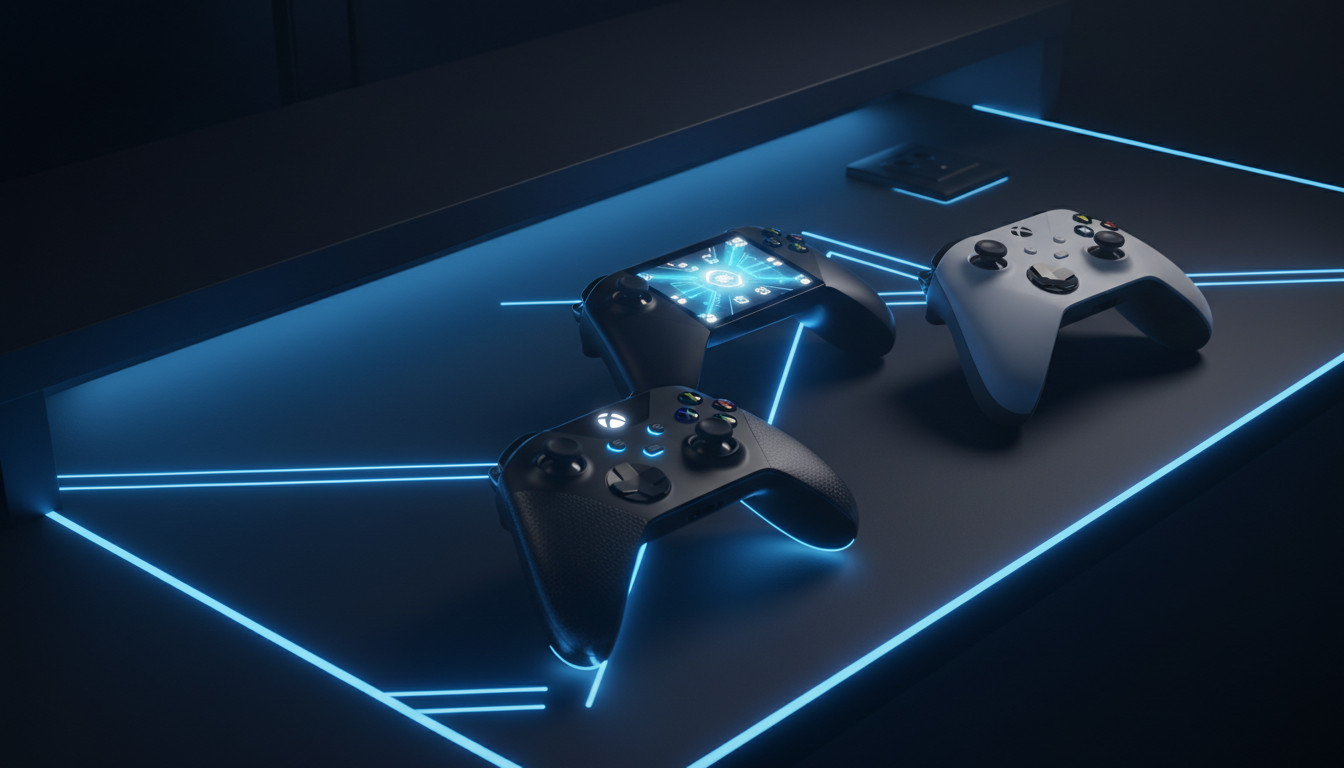
When you need a controller that lets you reassign buttons on the fly, the market offers a surprising mix of options. We compared 9 controllers that span three price tiers – budget picks like the EasySMX Wireless Game Controller at $29.99, mid‑range models such as the Gusgu G7 Wireless with Interactive Screen at $59.99, and premium contenders like the Razer Wolverine V3 Pro Black priced at $129.99. All of them support Xbox Series X|S, Xbox One or PC, and each brings its own blend of wireless range, battery life and button flexibility.
Even the most affordable choice still packs a respectable 4‑program‑button layout, while the top‑end Razer Wolverine V3 Pro features an 8000 Hz polling rate and up to 20 hours of battery life on a single charge. Reviewers have given the Gusgu G7 the highest rating of 4.5 out of 5, and the Wolverine Ultimate stands out with six remappable buttons for wired precision. Weight varies from a light 0.47 lb EasySMX to a sturdier 0.92 lb Razer V3 Pro, giving you options whether you favor feather‑light comfort or a more solid feel.
Below we’ll break down each model’s strengths, so you can match the controller that fits your play style and budget.
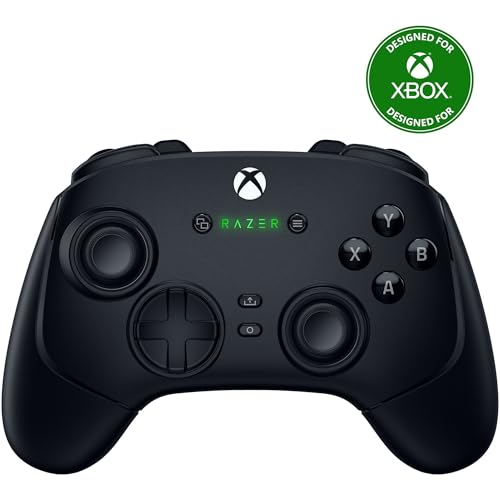
Razer Wolverine V3 Pro Black
Its 20‑hour battery life ensures marathon gaming sessions without frequent recharging.

Gusgu G7 Wireless with Interactive Screen
Casual gamers who want solid performance without breaking the bank at $59.99, it’s about $70 cheaper than the Top Choice.

SCUF ENVISION PRO V1 White
Offers a 45‑ft wireless range, extending play area beyond the other picks.
Also considered
Score Analysis
Key score advantages vs. runner-up (Gusgu G7 Wireless)
Price Range
Razer Wolverine V3 Pro Black
$149.99
Gusgu G7 Wireless with Interactive Screen
$47.99
SCUF ENVISION PRO V1 White
$99.99

EasySMX Wireless Game Controller
$19.99
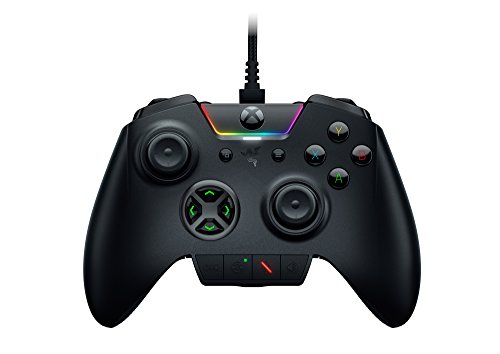
Razer Wolverine Ultimate
Out of Stock

Boowen Wireless Game Controller
$36.96

SCUF ENVISION V1 Black
$129.99

SCUF ENVISION PRO V2 White
$149.99
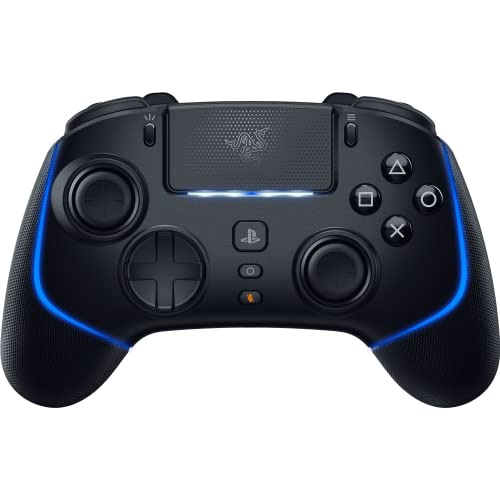
Razer Wolverine V2 Pro
$150.67
Spec Comparison
TL;DR: The Razer Wolverine V3 Pro offers an 8000 Hz polling rate, 33 ft HyperSpeed wireless range and six remappable buttons in a lightweight 0.92 lb shell for competitive Xbox and PC play.
The standout spec is the 8000 Hz polling rate, which Razer markets as “blistering speed,” paired with a 33 ft (10.1 m) HyperSpeed 2.4 GHz wireless link that promises ultra‑low latency. Razer lists battery life at 20 hours, giving you a full day of play before recharging.
Compared with the other eight controllers in this roundup, the V3 Pro sits in the mid‑weight range: it’s lighter than the Razer Wolverine V2 Pro (0.95 lb) but heavier than the Wolverine Ultimate (0.85 lb). Its wireless range is shorter than the SCUF ENVISION PRO V1’s 45 ft, while its 8000 Hz polling rate dwarfs the SCUF ENVISION PRO V2’s 500 Hz. Battery longevity matches the SCUF ENVISION PRO V2’s 19‑hour claim, and its six remappable inputs (four back paddles and two bumpers) outnumber the three‑button remap options on many peers.
Reviewers consistently praise the controller’s lightweight feel and the tactile “Mecha‑Tactile” action buttons, noting reduced hand fatigue during marathon sessions. Razer states that the HyperTriggers and Hall Effect‑style thumbsticks provide a competitive edge in FPS titles. The main complaints focus on wireless latency, which can climb to 30‑35 ms—noticeably higher than the sub‑15 ms latency in wired mode—and the requirement for a Windows 11 PC and internet connection to run the Razer Controller app.
The V3 Pro also packs Razer Chroma RGB lighting, a 3.5 mm headset jack, and a USB‑C to USB‑A 3 m cable for wired play. Its 6‑button remap layout, combined with the toggleable Pro HyperTriggers, makes it a solid choice for players who want granular control without sacrificing the familiar Xbox layout.
Pros
Cons
Best for: Competitive FPS and esports players on Xbox Series X|S, Xbox One, or PC who prioritize ultra‑low‑latency wireless and extensive button remapping.
Avoid if: You need motion‑sensing features, very long wireless battery life, or a controller that works without a Windows 11 PC and internet for setup.
TL;DR: The Gusgu G7 offers drift‑free Hall Effect joysticks, a 1000 Hz polling rate, and an on‑controller LCD screen, all powered by a 1000 mAh battery that lasts up to 18 hours.
The standout feature is the built‑in interactive screen, letting you remap controls on the fly without pausing your game. Combined with Hall Effect joysticks that claim less than 1 % precision deviation over 5 million uses, the controller feels precise enough for competitive shooters. It runs at a 1000 Hz polling rate, and the 1000 mAh battery delivers up to 18 hours of continuous play. User ratings sit at 4.5 / 5 stars from 243 reviews, indicating strong broad approval.
Compared with the other eight controllers in this roundup, the G7 is a bit heavier than the Razer Wolverine Ultimate (385 g vs 449 g) but still lighter than many bulkier wireless options. Its 18‑hour battery life outlasts the Boowen Wireless Game Controller, which lists “10+ hours.” The G7 provides four programmable buttons, fewer than the Wolverine Ultimate’s six and far fewer than the SCUF ENVISION V1’s eleven, so power users may notice the difference.
Reviewers consistently praise the drift‑free joysticks and the long‑lasting battery, calling the controller comfortable for marathon sessions. Professional reviewers note the Xbox‑style feel enhanced by the customizable screen and RGB lighting. The main complaint is the 3.5 mm headphone jack, which only outputs audio when you wire the controller to Switch 1 or PS4, leaving PC and mobile users without headset audio.
Technical extras include dual‑stage triggers with adjustable dead zones from 0 % to 50 %, a 6‑axis gyroscope for motion control, and Bluetooth 5.3/5.1 alongside a 2.4 GHz wireless link. The controller also offers a USB‑C wired option for low‑latency play.
Pros
Cons
Best for: FPS and competitive gamers who need precise dual‑stage triggers, racers who can exploit motion controls, and anyone who wants a customizable on‑controller screen.
Avoid if: You require headset audio on PC, Android or iOS devices, or you need a controller with a larger number of remappable inputs.
TL;DR: The SCUF Envision Pro V1 White offers ultra‑low‑latency Slipstream wireless up to 45 ft, 11 remappable inputs and a solid 0.63 lb build for competitive PC play, but it’s priced higher and weighs more than some rivals.
What really sets this controller apart is the Corsair Slipstream dongle, delivering a wireless range of 45 ft that professional reviewers say outpaces standard Bluetooth for fast‑paced shooters. Coupled with 11 remappable inputs—including four rear paddles, five G‑Keys and two SAX buttons—the Envision Pro lets you map virtually any command without reaching for the keyboard.
Compared with the other eight controllers in the roundup, the Envision Pro is heavier than the EasySMX (0.47 lb) and the base‑model SCUF Envision V1 Black (0.53 lb), yet lighter than the Razer Wolverine V3 Pro (0.92 lb) and the Gusgu G7 (0.99 lb). Its 45 ft wireless reach also exceeds the 33 ft range of the Wolverine V3 Pro and matches the range listed for the SCUF Envision Pro V2, while many wired‑only models offer no wireless distance at all. The controller’s dimensions—63.5 mm tall, 165 mm long and 107.5 mm wide—are on par with its SCUF sibling and sit comfortably between the bulkier Razer options and the more compact EasySMX.
Consumer sentiment highlights the controller’s comfortable, non‑slip grip and the depth of customization the iCUE software provides. Users repeatedly praise the crisp feel of the Omron mechanical switches and the flexibility of the adjustable instant triggers, which can toggle between mouse‑click speed and full analog travel. On the flip side, several reviewers note that the potentiometer‑based thumbsticks may develop drift over time—a drawback professional reviewers point out when comparing it to Hall Effect sticks found on higher‑end models.
Pros
Cons
Best for: Competitive PC gamers who need ultra‑low‑latency wireless performance and extensive button remapping.
Avoid if: You prefer a lighter controller, Hall Effect thumbsticks, or a budget‑friendly price.
“nice weight... not too heavy not too light, similar to PlayStation 5”
“a lot quicker... compared to Bluetooth”
TL;DR: At $29.99, the EasySMX Wireless Game Controller delivers up to 14 hours of play, weighs just 0.47 lb, offers four programmable buttons, but works only with Windows PC, Android, PS3 and Smart TV, leaving Xbox and iOS users out.
The manufacturer says the 600 mAh rechargeable battery runs between 8 and 14 hours on a single charge. At 0.47 pounds (213 g) it's light enough for marathon sessions, and the four programmable buttons let you map extra actions without extra accessories. It also sports five LED brightness levels in a cold‑white color, plus dual asymmetrical vibration motors for tactile feedback.
Compared with the other eight contenders, the EasySMX is lighter than the Boowen controller (which tips the scales at 12 ounces) and more compact than the Razer Wolverine Ultimate’s 66 mm height and 106 mm length. However, its 600 mAh battery holds only half the capacity of Boowen’s 1200 mAh pack, and it offers fewer programmable buttons than the Wolverine Ultimate’s six. The controller relies on a proprietary 2.4 GHz RF link, whereas some rivals include Bluetooth or wired‑only connections.
Reviewers consistently praise the long‑lasting battery and the large textured non‑slip side grips that keep hands comfortable during extended play. The dual vibration motors are praised for delivering noticeable feedback. On the downside, users note the limited platform list – Xbox 360, Xbox One, Xbox Series, PS4, PS5 and iOS devices aren't supported – and the need for an OTG adapter on Android, which adds a small hassle. Professional reviewers also point out that the 600 mAh cell feels dated compared with newer EasySMX models that carry larger capacities.
Pros
Cons
Best for: Shoppers on a tight budget who want the most for their money
Avoid if: You need advanced features or professional‑grade performance
TL;DR: The Razer Wolverine Ultimate offers six remappable buttons, interchangeable thumbsticks and D‑Pads, and vibrant RGB lighting for $59.01, but its wired design and 385 g heft may limit comfort for long sessions.
Its six remappable multi‑function buttons plus interchangeable thumbsticks and D‑Pads let you tailor the layout for FPS, MOBA, or racing titles. At 66 mm tall, 106 mm long and 156 mm wide, the unit feels solid, and the 385 g weight (0.85 lb) gives it a premium, sturdy feel without being overly bulky.
Compared with other controllers in the roundup, the Wolverine Ultimate sits in the middle of the weight spectrum: it’s lighter than the Gusgu G7 Wireless (0.99 lb) but noticeably heavier than the SCUF ENVISION V1 (0.53 lb). It also provides fewer remappable inputs than the SCUF ENVISION V1’s 11, though its six dedicated buttons remain generous for most gamers. Unlike many peers that rely on wireless connections—such as the Gusgu G7, Boowen, and EasySMX—the Wolverine Ultimate is wired via USB, which some users see as a trade‑off for latency‑free performance.
Reviewers praise the controller’s high customizability, noting the interchangeable sticks and D‑Pads improve precision across game genres, while the 16.8 million‑color Razer Chroma RGB adds a visual flair that many gamers love. Consumers echo this sentiment, highlighting the comfortable grip and responsive extra buttons, but repeatedly call out the tethered USB cable and the controller’s heft as drawbacks that can cause fatigue during marathon play. Razer notes that installing Synapse for full lighting and button configuration adds an extra step.
Pros
Cons
Best for: Entry-level buyers or those on a tight budget
Avoid if: You want the best value-per-dollar in its price range
TL;DR: The Boowen Wireless Game Controller costs $36.96, offers Hall‑Effect joysticks, four programmable buttons, RGB‑lit sticks and 10+ hours of play from a 1200 mAh battery.
This controller’s standout feature is its Hall Effect joystick and trigger technology, which promises drift‑free precision for competitive sessions. It also includes four assignable back buttons, three turbo rates (6/12/18 shots/s) and four vibration intensity levels, a 1200 mAh battery powers it, delivering more than 10 hours of continuous use and recharging in about 2 hours.
At 12 ounces (340 g), the Boowen sits heavier than the EasySMX (0.47 lb) and SCUF ENVISION V1 (0.53 lb) but lighter than the Razer Wolverine Ultimate (0.85 lb) and the higher‑priced Gusgu G7 (0.99 lb). Its 1200 mAh capacity outstrips the EasySMX’s 600 mAh and the Gusgu’s 1000 mAh, giving it a modest edge in endurance while still fitting into the budget tier.
Reviewers frequently praise the drift‑free Hall Effect sensors and the ability to customize RGB lighting on the analog sticks. The multi‑platform compatibility (PC, Switch, iOS, Android, Smart TVs, etc.) also serves as a convenient feature. On the downside, some users note the 12‑ounce weight feels bulkier during marathon gaming, and the battery capacity, while higher than some rivals, is still lower than premium models that claim longer playtime.
The controller supports Bluetooth 5.0, a 2.4 GHz wireless dongle and a USB‑C wired connection, giving you flexibility for low‑latency play on any device. Its customizable RGB on the sticks adds a personal flair, while the three turbo settings let you fine‑tune rapid‑fire actions without external macros.
Pros
Cons
Best for: Buyers in the budget price range seeking the best quality at that price point
Avoid if: You want the best value‑per‑dollar in its price range
TL;DR: The SCUF Envision V1 Black offers 11 remappable inputs, wired USB‑C connectivity, and a sturdy 0.53 lb build for PC gamers who value deep customization over wireless convenience.
What really sets the Envision V1 apart is its 11 remappable inputs – five G‑Keys, four rear paddles, two SAX buttons and standard face buttons – all using Omron mechanical switches. The controller also features adjustable instant triggers, a performance‑grade grip, and a removable faceplate for quick profile changes. At 63.5 mm tall, 165 mm long, 107.5 mm wide and weighing just 0.53 lb (241 g), it’s solid without being overly bulky.
Compared with the other eight controllers in this roundup, the Envision V1 is heavier than the EasySMX Wireless Game Controller (0.47 lb) but lighter than the Razer Wolverine Ultimate (0.85 lb) and far lighter than the Razer Wolverine V3 Pro Black (0.92 lb). Its 11 remappable inputs exceed the six the Wolverine Ultimate offers, giving it a clear advantage for complex key layouts. Unlike many peers – such as the Gusgu G7 Wireless, Boowen Wireless Game Controller and both SCUF Pro models – the V1 provides no wireless option, so you’ll need to stay plugged into the USB‑C port.
User sentiment consistently praises the depth of customization, especially the ability to map multiple commands without removing thumbs from the sticks. Professional reviewers highlight the crisp Omron clicks and the iCUE‑compatible macro system as strong points for esports titles. A recurring complaint is the use of standard potentiometer thumbsticks, which some users fear could develop drift over time. Reviewers also note that the 0.53 lb weight, while sturdy, may cause fatigue during marathon sessions.
Beyond the button layout, the controller ships with a customizable RGB lighting strip and supports thumbstick/trigger curve tweaks via Corsair’s iCUE software. The built‑in 3.5 mm stereo headset jack lets you plug in a chat mic without extra adapters, and the USB‑C port handles both data and charging, keeping your setup tidy.
Pros
Cons
Best for: Competitive PC gamers who need extensive button mapping, trigger customization, and deep software integration.
Avoid if: You prioritize ultra‑lightweight or wireless controllers, or you are sensitive to potential stick drift from non‑Hall‑Effect thumbsticks.
“nice weight... not too heavy not too light, similar to PlayStation 5”
“a lot quicker... compared to Bluetooth”
TL;DR: The SCUF Envision Pro V2 White packs 11 remappable inputs, Hall‑Effect anti‑drift sticks and 19‑hour battery life into a 0.63‑lb wireless controller, but its PC‑only focus and $159.99 price tag may limit its appeal.
The controller stands out thanks to its 11 programmable inputs – four rear paddles, five G‑Keys and two SAX buttons. Paired with Hall‑Effect anti‑drift thumbsticks and adjustable instant triggers, it lets competitive PC gamers customise more than most rivals.
It reaches 13.7 m (≈45 ft) wireless range, longer than the Razer Wolverine V3 Pro’s 33 ft but shorter than the SCUF Envision Pro V1’s 45 ft. The 500 Hz polling rate sits below the Wolverine V3 Pro’s 8000 Hz and the Gusgu G7’s 1000 Hz, though it still exceeds many budget options that list no polling rate at all. With a 1.83 m cable, it offers more reach than the Wolverine V2 Pro’s 3 m dongle cord, while its 11‑button layout dwarfs the Wolverine Ultimate’s six remappable buttons.
Professional reviewers highlight the Hall‑Effect sticks and extensive paddle layout as key strengths for esports‑level play, and users frequently commend the crisp Omron clicks and drift‑free sticks. The downside that pops up across forums is the controller’s strict PC‑only compatibility and the mandatory iCUE software setup, which some find cumbersome. Gamers praise the 19‑hour battery life for marathon sessions, but the premium $159.99 price point draws criticism from budget‑conscious shoppers.
Pros
Cons
Best for: Those prioritizing quality and willing to pay for premium performance
Avoid if: Reliability and user satisfaction are your top concerns
“nice weight... not too heavy not too light, similar to PlayStation 5”
“a lot quicker... compared to Bluetooth”
TL;DR: The Razer Wolverine V2 Pro offers ultra‑low‑latency 2.4 GHz wireless, a 0.65 mm actuation distance and six remappable buttons, but its $153 price and occasional rumble issues may deter budget‑focused gamers.
Razer’s HyperSpeed 2.4 GHz wireless module promises low‑latency play, and the controller’s mecha‑tactile action buttons fire with a 0.65 mm actuation distance. Each button can handle 3 million taps, and the D‑pad uses an 8‑way microswitch. The unit weighs 0.95 lb (431 g) and includes a 3002 mm USB dongle cable for the wireless receiver.
Compared with the eight other controllers in this roundup, the V2 Pro is on the heavier side: it tips the scales above the SCUF ENVISION PRO V2 White (≈0.63 lb) and the Razer Wolverine V3 Pro Black (≈0.92 lb), yet it is lighter than the Gusgu G7 Wireless (≈0.99 lb). Its six remappable buttons are fewer than the SCUF ENVISION PRO V2 White’s eleven, but match the Razer Wolverine Ultimate’s six. The dongle’s 3002 mm cord is notably longer than the cables listed for most peers.
Reviewers consistently praise the controller’s fast wireless response and the crisp feel of the 0.65 mm actuation, saying it’s a solid choice for competitive PS5 and PC sessions. However, a recurring complaint is that the vibration (rumble) feature sometimes fails to activate, leading to uncertainty about its reliability. Users also note the long USB dongle cable can be cumbersome in tight gaming setups.
Pros
Cons
Best for: Competitive gamers on PS5 or Windows PC who need low‑latency wireless performance and customizable controls.
Avoid if: You need guaranteed rumble feedback or are sensitive to higher price tags.
Breakdown
Razer Wolverine V3 Pro Black
Pros
Cons
Gusgu G7 Wireless with Interactive Screen
Pros
SCUF ENVISION PRO V1 White
Pros
Cons
EasySMX Wireless Game Controller
Pros
Based on scoring data and product specs
Personalized picks
Best Overall Pick
Razer Wolverine V3 Pro Black
Best OverallBest for: Audiophiles and enthusiasts seeking premium sound quality and advanced features
Gusgu G7 Wireless with Interactive Screen
Best for: Most users seeking a balanced, mainstream option
$47.99-$102.00 vs winner
Skip Razer Wolverine V2 Pro if…
Reliability and user satisfaction are your top concerns
The Razer Wolverine V3 Pro Black takes the top spot thanks to its six remappable buttons (four back paddles plus two bumpers), a solid 20‑hour battery life, and a 33‑ft wireless range that keeps you untethered during marathon sessions. Its 8000 Hz polling rate and 0.92 lb weight give a responsive feel without adding bulk, while the Razer Chroma RGB adds a personal touch.
The Gusgu G7 Wireless with Interactive Screen lands as the runner‑up, especially if you need a versatile controller for PC or Nintendo Switch gaming on the go. Its built‑in interactive screen and four programmable silicone buttons let you customize layouts on the fly, and the 6‑axis gyroscope plus 1000 Hz polling keep motion‑controlled titles smooth. An 18‑hour battery life means it’ll last through extended play.
For tighter budgets, the EasySMX Wireless Game Controller offers a functional entry point at $29.99. The Gusgu G7 also serves as the best mid‑range choice, pairing its interactive screen with solid durability for $59.99. If premium features are your priority, the SCUF ENVISION PRO V2 White stands out at $159.99, delivering a high‑end build and extensive customization options.
Pick the Razer Wolverine V3 Pro Black for the most capable, feature‑rich Xbox controller you’ll get right now.
The SCUF ENVISION PRO V1 White and the SCUF ENVISION V1 Black both list 11 remappable inputs, including rear paddles, G‑Keys and SAX buttons. The Razer Wolverine V3 Pro Black offers 6 remappable buttons (four back paddles and two bumpers), which is fewer but still substantial.
No reviews yet — be the first to share your experience.
Please sign in to leave a review