⚡ Quick Answer
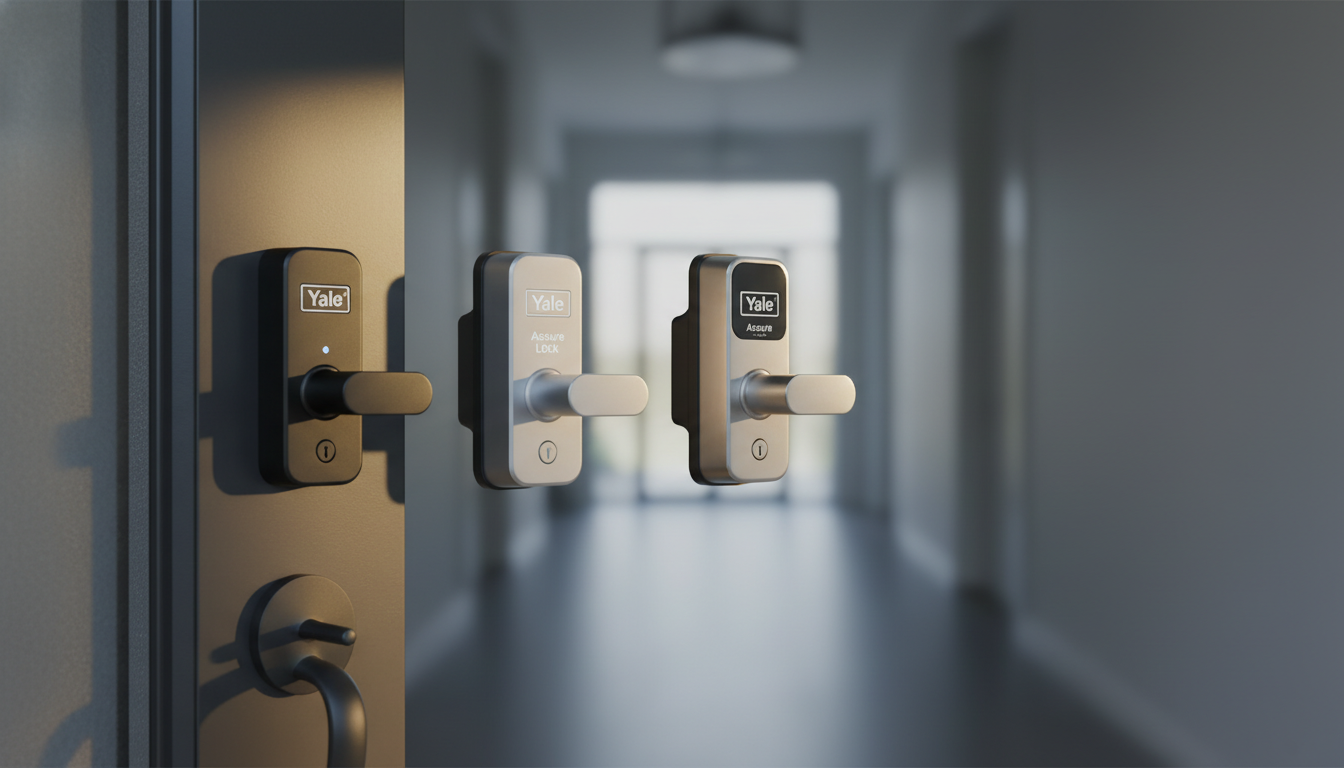
Keyless entry locks can turn a simple front door into a smart security hub, and we’ve lined up five Yale models to see how they stack up. From the budget‑friendly Black Code at $64.99 to the premium Assure Lock at $204.99, the lineup covers every price tier, letting you match features to your wallet.
The Black Code punches above its price class: it carries a 4.5‑star rating from 215 reviewers, offers auto‑lock, a touchscreen keypad for up to 20 codes, and an IP65‑rated zinc body—all without Wi‑Fi or a subscription. Those security‑grade specs are typically reserved for locks that cost twice as much, making it a compelling option for anyone who wants solid protection without breaking the bank.
On the other end, the YED210 provides a no‑frills deadbolt replacement, the August Silver adds fingerprint access and a 30‑foot Bluetooth range, while the Assure YRD256 and Assure Lock bring Z‑Wave, Zigbee and other smart‑home integrations. In the sections that follow we’ll break down each model’s strengths, so you can decide which lock fits your home and lifestyle.

Yale Black Code
Depth: 2.5 makes it compact enough for tight door frames while keeping costs low.

Yale Assure YRD256
Perfect for buyers who want a proven, high‑quality lock, and it costs about $110 more than the Black Code.

Yale August Silver
Bluetooth Range of 30 ft and built‑in fingerprint scanner set the August Silver apart from the other two.
Also considered
TL;DR: The Yale Assure YRD256 delivers a solid retrofit deadbolt with a backlit touchscreen, 6‑month battery life, and Grade 2 security, but you’ll need separate modules for Wi‑Fi or Zigbee connectivity.
The lock’s most eye‑catching spec is its 60‑70 mm backset, which fits the majority of standard doors without drilling. Coupled with a sturdy zinc body and a 3.5 Pounds weight, it feels robust on the door jamb. The backlit touchscreen keypad lets you enter codes in low light, and the auto‑lock feature engages automatically after each entry, a convenience highlighted by many users.
Compared with the other four entries in this roundup, the YRD256 is heavier than the Yale Assure Lock that weighs just 1.0 pound, and it’s bulkier than the low‑profile Yale Black Code. It’s also pricier than the August Silver model, which ships with a built‑in Bluetooth range of 30 ft, while the YRD256 requires a separate module for any wireless control. Nonetheless, it offers more comprehensive smart‑home integration—support for Yale Access, Z‑Wave, Zigbee, Alexa, Google and Siri—whereas the Black Code lacks app control entirely.
Reviewers consistently praise the lock’s straightforward retrofit installation; professionals note that the slim design and backlit keypad make it a “future‑proof” upgrade for busy households. Homeowners love the 24/7 activity trails and the ability to share unique access codes with family or guests. The main friction point is the need to purchase add‑on modules for Wi‑Fi or Zigbee, which some users find inconvenient. A few also mention occasional strike‑plate resistance that may need minor adjustment, and battery life can vary if auto‑unlock is used frequently.
Pros
Cons
Best for: Buyers willing to invest in a proven, high‑quality option — the Yale Assure YRD256 offers Backset: 60‑70 mm
Avoid if: You're on a tight budget or only need basic functionality
TL;DR: The Yale Assure Lock blends a touchscreen PIN keypad, Z‑Wave Plus encryption and an adjustable 60‑70 mm backset into a 1.0‑pound deadbolt that costs $204.99 but delivers premium smart‑home security.
The lock’s standout feature is its Z‑Wave Plus secure encryption paired with a backlit touchscreen keypad that accepts 4‑8 digit PIN codes. You can store up to 25 user codes and the auto‑lock function engages after each entry, while the deadbolt itself weighs just 1.0 pounds, making installation straightforward.
Compared with its Yale siblings, this model sits at the higher end of the price spectrum and is lighter than the Yale Assure YRD256, which tips the scales at 3.5 pounds. Unlike the August Silver, which lists a 30‑ft Bluetooth range, the Assure Lock relies solely on Z‑Wave Plus, so it won’t connect to non‑Z‑Wave hubs. Its backset range of 60‑70 mm matches the YRD256, but the overall spec list is richer than the Black Code, which provides fewer details.
Reviewers appreciate the keyless entry that eliminates the hassle of lost keys and praise the remote access via compatible hubs such as Samsung SmartThings or Alexa. The downside is the need for four AA alkaline batteries, which the manufacturer says last about 12 months, and the lock’s exclusive Z‑Wave compatibility, limiting use for households that prefer Wi‑Fi or Bluetooth ecosystems. The lock also tolerates up to 95 % humidity and operates from –13 °F to 140 °F, backed by a lifetime finish and mechanical warranty.
Pros
Cons
Best for: Those prioritizing quality and willing to pay for premium performance — the Yale Assure Lock offers Backset: Adjustable 60-70mm
Avoid if: You're on a tight budget or only need basic functionality
TL;DR: The Yale Black Code delivers a low‑profile, 2.5 in deep deadbolt with a backlit touchscreen, auto‑lock and solid IP65 protection for just $64.99, making premium security feel affordable.
What really stands out is the lock’s shallow 2.5 in depth combined with a 5.12 in height and 0.88 in width, giving it a sleek, low‑profile look that doesn’t protrude far from the door. The backlit touchscreen keypad holds up to 20 entry codes, and the adjustable auto‑lock feature lets you set the lock‑down time to suit your routine. Built from zinc with an IP65 rating, it can handle dust and splashes while the 80 dB tamper alarm warns off forced entry.
Compared with the other four Yale models in this roundup, the Black Code sits at the lower end of the price spectrum and trims away smart‑home extras. The Yale YED210 lists an exterior depth of 30–40 mm, so the Black Code’s 2.5 in depth is deeper, while both share the same 60–70 mm backset and 35–57 mm door‑thickness range. August Silver adds Bluetooth, fingerprint scanning and a larger 0.8 in depth, but those features come at a higher cost and with a bulkier footprint. The Assure YRD256 and Assure Lock both have larger external dimensions and, in the case of the Assure Lock, smart‑home compatibility—features the Black Code deliberately omits for simplicity.
Customers repeatedly praise the straightforward, screwdriver‑only installation and the reliable keypad that lets family members share access without keys. Reviewers note the premium feel of the Black Suede finish and the convenience of the adjustable auto‑lock. The most common complaints focus on the fact that four AA batteries aren’t included and that there’s no app or voice‑assistant integration, which can be a deal‑breaker for tech‑savvy households.
Technical details reinforce its value: the lock operates from –25 °C to 60 °C, tolerates up to 95 % humidity, and runs on 4 × AA alkaline cells. It carries an EN Standard security grade, a three‑year electromechanical warranty, and a physical key backup for emergencies.
Pros
Cons
Best for: Users who want a compact, 2.5 in deep deadbolt with keypad entry and solid durability without paying for smart‑home extras.
Avoid if: You need advanced smart‑home features, remote app control, or a higher entry‑code capacity.
TL;DR: For $79.90, the Yale YED210 delivers a solid Grade 2 deadbolt with a 20‑code keypad, 9‑month battery life, and a low‑profile satin‑nickel design, though it lacks smart‑home connectivity.
The YED210’s most eye‑catching spec is its 20‑code keypad capacity paired with a compact exterior depth of 30–40 mm, fitting neatly on most door faces. It runs on four AA Alkaline cells and the manufacturer lists a battery life of 9 months, so you won’t be swapping batteries every month.
Compared with the other four Yale locks in this roundup, the YED210 sits on the slimmer side—its depth is shallower than the Black Code’s 2.5 in depth. It also weighs far less than the Assure YRD256’s 3.5 pounds and the Assure Lock’s 1.0 pounds, making handling during installation easier. Where the August Silver model offers a Bluetooth range of 30 ft and an auto‑lock delay of up to 30 minutes, the YED210 provides none of those smart features, keeping it strictly a manual, standalone unit.
Professional reviewers praise the lock’s straightforward programming and the satin‑nickel finish that blends into modern interiors. Homeowners echo this sentiment, noting that the lock “just works” after a quick install and that the keypad backlight is handy in low light. The main complaint is the lack of remote unlock or notification capabilities, meaning you must turn the knob to re‑lock the door each time.
From a technical standpoint, the deadbolt meets ANSI/BHMA Grade 2 standards and delivers a full 25 mm (1 in) bolt throw. It tolerates up to 95% relative humidity and operates from –25 °C to 60 °C (‑13 °F to 140 °F), so it can handle most climate conditions without issue.
Pros
Cons
Best for: Entry-level buyers or those on a tight budget — the Yale YED210 offers Exterior Depth: 30–40 mm
Avoid if: You want the best value-per-dollar in its price range
“Installs in under 30 minutes and the instructions are clear and the fit is straightforward for standard doors.”
“It just works – no app issues, no Wi-Fi dropouts, no firmware updates.”
TL;DR: The Yale August Silver retails for $149.99, offers built‑in Wi‑Fi, Bluetooth range of 30 ft, 99% fingerprint accuracy and up to 250 access codes, making it a solid mid‑range retrofit smart lock.
The lock’s standout spec is its 30 ft Bluetooth range, which lets you unlock the door from across a typical living room without a hub. Combined with a 30‑minute auto‑lock delay, the lock can automatically re‑secure the door after you leave, a feature that many users cite as convenient for busy households.
Compared with the other four Yale models in this roundup, the August Silver sits in the middle of the price spectrum: it’s pricier than the Black Code and the YED210, yet less expensive than the Assure YRD256 and the Assure Lock. Dimensionally, its 0.8‑inch depth and 2.72‑inch height give it a slimmer interior profile than the Black Code’s 2.5‑inch depth, while the Assure models are bulkier with external depths of 5.5 inches and projections around 8‑9 inches. The August Silver also includes Wi‑Fi (802.11 b/g/n) out of the box, whereas the peer specs list no built‑in Wi‑Fi for the other units.
Consumer feedback highlights the lock’s ease of installation and the seamless integration with Alexa, Google Assistant and Siri. Reviewers love the 99% fingerprint accuracy and the ability to manage up to 250 user codes from the August or Yale Access apps. Professional reviewers note the IPX5‑rated keypad Touch adds water‑splash resistance and that the BLE/TLS encryption plus two‑factor authentication keep the smart lock secure. On the downside, several users mention that the keypad Touch is sold separately, increasing the total cost, and a few report occasional Bluetooth or Wi‑Fi hiccups that affect remote unlocking.
Pros
Cons
Best for: Most users seeking a balanced, mainstream option — the Yale August Silver offers Bluetooth Range: 30 ft
Avoid if: Reliability and user satisfaction are your top concerns
“Best Buy customers highly rate it for ease of use, installation, and keypad performance”
Breakdown
Yale Black Code
Pros
Yale Assure YRD256
Pros
Yale August Silver
Pros
Cons

Yale YED210
Pros
Cons
Based on scoring data and product specs
Personalized picks
Best Overall Pick
Yale Black Code
Best Budget PickBest for: Users with specific technical requirements or compatibility needs — the Yale Black Code offers Depth: 2.5
Yale Assure YRD256
Best for: Buyers willing to invest in a proven, high-quality option — the Yale Assure YRD256 offers Backset: 60-70 mm
$159.99+$93.09 vs winner
Skip Yale Assure Lock if…
You're on a tight budget or only need basic functionality
The Yale Black Code takes the crown as the best‑value keyless entry lock. At just $64.99 it undercuts every competitor, yet it still earns a solid 4.5‑star rating from 215 reviewers. It packs auto‑lock, a backlit touchscreen keypad, and a 20‑code capacity, all housed in a rugged zinc body with an IP65 rating and EN Standard security grade, plus a 3‑year warranty for peace of mind.
The runner‑up, Yale Assure YRD256, shines when you need full smart‑home connectivity. It integrates with Yale Access, Z‑Wave, Zigbee and voice assistants like Alexa, Google and Siri, and adds auto‑unlock via an app. It also offers auto‑lock, a backlit touchscreen, and a 6‑month battery life, backed by a 1‑year warranty.
If you’re willing to spend a bit more, the Yale August Silver is the top mid‑range pick, delivering a sleek silver finish and reliable deadbolt performance at $149.99. For those after premium features, the Yale Assure Lock stands out as the high‑end option, offering advanced security and premium build quality at $204.99.
Choose the Yale Black Code today and secure your home without breaking the bank.
The Black Code combines an EN Standard security grade with a zinc construction and a backlit touchscreen keypad, plus an adjustable auto‑lock and a physical key backup. Its IP65 rating protects against dust and water, and the three‑year electromechanical warranty adds confidence—all for $64.99.
No reviews yet — be the first to share your experience.
Please sign in to leave a review