
Kuhn Rikon
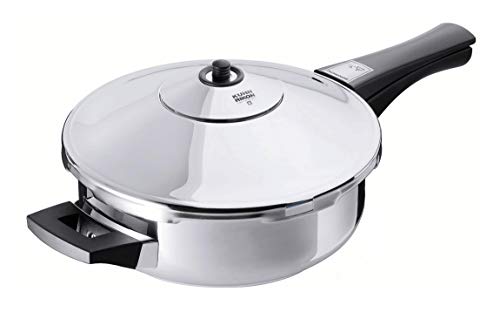
The Kuhn Rikon Duromatic Inox Super Fast Pressure Cooker is a Swiss‑made 8‑liter stainless‑steel cooker with dual pressure levels (0.4 bar and 0.8 bar) that cuts cooking time to about one‑third of conventional methods while preserving nutrients, and it works on all hob types including induction.
Pros
Current
$284.95
Average
$357.64
Lowest
$149.99
Highest
$887.00
Lower = better sales rank

AMERICASTES TKITCHEN

Mirro

Presto

Presto

Kuhn Rikon
Kuhn Rikon
KUHN RIKON

All American

All American

Presto

Kuhn Rikon
KUHN RIKON

Kuhn Rikon

Kuhn Rikon

Presto

Presto

All American

Kuhn Rikon

Presto

Kuhn Rikon
Please sign in to leave a review
No reviews yet. Be the first to review!
Get notified when the price drops. Track this product on BigBangPrice, our price tracking partner.
Cons
From Expert Reviews
Praised by Experts
Criticized by Experts
From User Reviews
Users Love
Users Complain About
Expert Opinion
Professional reviewers and editors commend the Duromatic Inox for its rapid cooking performance, robust Swiss construction, and comprehensive safety system, noting that the 10‑year warranty underscores its durability. They also point out that while the cooker excels in efficiency, users must remain vigilant about heat control to stay within safe pressure ranges.
What Users Say
Everyday users consistently praise the cooker’s speed, large capacity, and quiet, ergonomic design, especially the side grips that simplify handling. The main recurring theme is appreciation for nutrient‑preserving fast cooking, while occasional complaints focus on the need to monitor pressure levels and a modest learning curve for first‑time users.
Common Complaints
Need for attentive heat monitoring to avoid exceeding 1.2 bar pressure, and a learning curve around lid alignment and pressure indicator interpretation.
How It Compares
Compared with typical budget stainless‑steel or electric pressure cookers, the Duromatic Inox offers dual low‑pressure levels for gentler cooking, a premium 18/10 stainless steel build with a 10‑year warranty, and universal hob compatibility including induction. It delivers quieter operation without the loud hissing common in cheaper models and provides more precise pressure control than single‑pressure competitors, though it requires more active heat monitoring than fully automated electric units.
