
Belkin
Get notified when the price drops. Track this product on BigBangPrice, our price tracking partner.
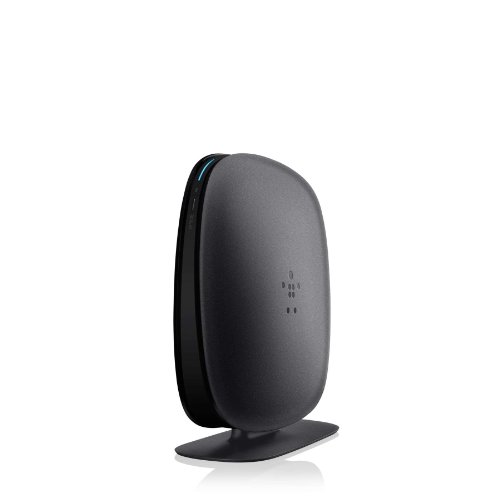
The Belkin N600 Wireless Dual‑Band N+ Router (F9K1102/F9K1102v2) offers combined 600 Mbps Wi‑Fi on 2.4 GHz and 5 GHz bands, featuring MultiBeam internal antennas, a USB sharing port, and support for up to 16 wireless devices, aimed at home streaming and gaming.
Pros
Current
$122.99
Average
$135.09
Lowest
$116.48
Highest
$143.95
Lower = better sales rank
Belkin

Belkin
Belkin

Tenda

D-Link

D-Link

Cradlepoint

NETGEAR
Vonets

Tenda
NETGEAR

NETGEAR

ASUS
Please sign in to leave a review
No reviews yet. Be the first to review!
Cons
From Expert Reviews
Praised by Experts
Criticized by Experts
From User Reviews
Users Love
Users Complain About
Expert Opinion
Professional reviewers, especially The Tolly Group, praise the Belkin N600 for its superior long‑range performance and effective dual‑band design that minimizes interference, positioning it as the top N600‑class router of its generation. However, they also highlight its reliance on outdated 802.11n hardware and the absence of Gigabit Ethernet, which limits its appeal for modern high‑speed wired networks.
What Users Say
Home users generally value the router’s easy setup, dual‑band capability, and ability to support many devices simultaneously. Common praise centers on stable Wi‑Fi for streaming and gaming, while recurring complaints focus on the lack of Gigabit Ethernet, limited IPv6 functionality, and the need for a compatible Ethernet‑only modem.
Common Complaints
Limited 10/100 Mbps Ethernet ports, IPv6 pass‑through only, reliance on older 802.11n standard, and incompatibility with non‑Ethernet broadband modems are the most frequently reported issues.
How It Compares
vs. Belkin N450 Dual‑Band Adapter
Advantages
Disadvantages
Choose the N450 adapter if you need a simple dual‑band client for a laptop; choose the N600 router for whole‑home Wi‑Fi coverage.
vs. Belkin N300 Single‑Band Router
Advantages
Disadvantages
Select the N300 only for very basic single‑band needs; the N600 is the better choice for mixed‑device households requiring higher throughput and reduced interference.
