National Allergy
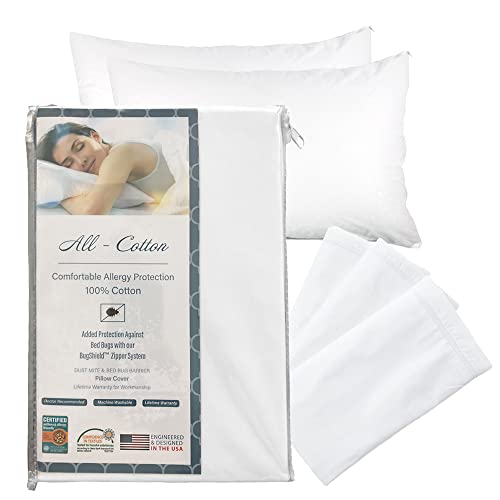
The National Allergy Premium 100% Cotton Zippered Pillow Protector is a doctor‑recommended, OEKO‑TEX® certified barrier that uses a 2.6 micron cotton weave and a 2‑part auto‑locking zipper to block dust‑mite allergens, pet dander, pollen, and bed bugs while providing a soft, breathable pillow feel.
Pros
Current
$31.99
Average
$37.69
Lowest
$29.99
Highest
$39.99
Lower = better sales rank
National Allergy

National Allergy

Beckham Hotel Collection

SureGuard Mattress Protectors

FAUNNA
Please sign in to leave a review
No reviews yet. Be the first to review!
Get notified when the price drops. Track this product on BigBangPrice, our price tracking partner.
Cons
From Expert Reviews
Praised by Experts
Criticized by Experts
From User Reviews
Users Love
Users Complain About
Expert Opinion
Professional reviewers highlight the pillow protector’s doctor‑recommended 2.6 micron cotton barrier, OEKO‑TEX® certification, and independently tested BugShield System as strong evidence of high allergen and bed‑bug protection. They also note the higher price and potential durability trade‑offs compared with reinforced polyester alternatives.
What Users Say
Everyday users praise the natural softness, quiet operation, and effective allergen shielding, especially for those with chemical sensitivities. Recurring concerns focus on the higher cost, less cooling than polyester microfiber covers, and occasional durability questions.
Common Complaints
Price being higher than economy options, cotton fabric retaining more heat than polyester microfiber, and occasional reports of reduced fabric durability over time.
How It Compares
vs. Elegance Polyester Microfiber (2.1 microns)
Advantages
Disadvantages
Choose Elegance when maximum cooling and the tiniest pore size outweigh the higher cost and synthetic feel.
vs. Organic Cotton (4.8 microns)
Advantages
Disadvantages
Select Organic Cotton if you prioritize organic certification and eco‑friendliness over the highest level of allergen filtration.
vs. Economy Non‑Woven (6 microns)
Advantages
Disadvantages
Opt for the Economy Non‑Woven when cost and portability are primary concerns and high‑level allergen protection is not essential.
