
Canon
Get notified when the price drops. Track this product on BigBangPrice, our price tracking partner.
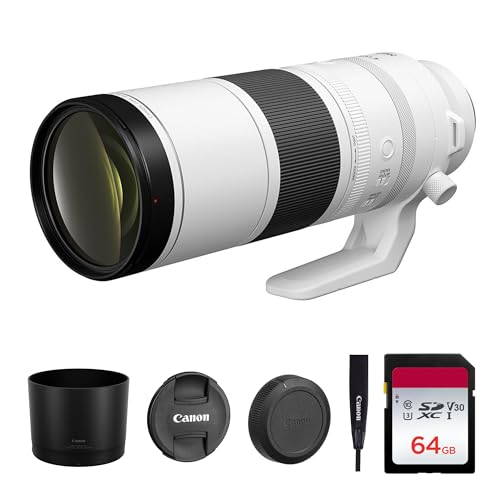
The Canon RF 100-400mm f/5.6-8 IS USM is a lightweight, compact full‑frame telephoto zoom lens designed for EOS R‑series cameras. It offers a versatile 100‑400mm range, 5.5‑stop optical image stabilization, and fast Nano USM autofocus, making it suitable for wildlife, sports, and travel photography.
Pros
Current
$699.00
Average
$656.40
Lowest
$599.00
Highest
$899.00
Lower = better sales rank

JJC

JJC
JJC

JINTU

JINTU

JINTU

Canon

Canon

Canon

Canon

HUIPUXIANG

HUIPUXIANG

Thypoch

K&F CONCEPT

ZEISS

Canon

Canon

Canon
Canon
Please sign in to leave a review
No reviews yet. Be the first to review!
Cons
From Expert Reviews
Praised by Experts
Criticized by Experts
From User Reviews
Users Love
Users Complain About
Expert Opinion
Professional reviewers commend the RF 100-400mm for its lightweight, travel‑ready build, impressive sharpness, and effective 5.5‑stop IS paired with a smooth Nano USM motor. However, they note that its variable f/5.6‑8 aperture and lack of weather sealing keep it from matching the robustness and speed of Canon's L‑series telephoto lenses, and they caution against using extenders due to quality loss.
What Users Say
Everyday users consistently highlight the lens's light weight, sharp image quality, and quiet fast AF as major positives, especially for wildlife and travel shooting. Common complaints revolve around the slow f/8 aperture at the long end, the absence of weather sealing, and the noticeable barrel extension when fully zoomed, which some find impacts handling.
Common Complaints
Users frequently mention the slow f/8 aperture at 400 mm, lack of weather sealing, the long barrel extension affecting balance, and degraded image quality when using RF extenders.
How It Compares
vs. Canon RF 100-500mm f/4.5-7.1L IS USM
Advantages
Disadvantages
Choose the 100‑400mm for lightweight travel and budget‑friendly telephoto; opt for the 100‑500mm L‑series when you need extra reach, faster aperture, and weather‑sealed durability.
vs. Canon EF 70-300mm f/4.5-5.6 IS II USM
Advantages
Disadvantages
The RF 100‑400mm is better for modern mirrorless users seeking superior optics, stabilization, and a compact form, while the EF 70‑300mm may appeal to DSLR owners on a tighter budget who need a modest telephoto range.
