Asustor
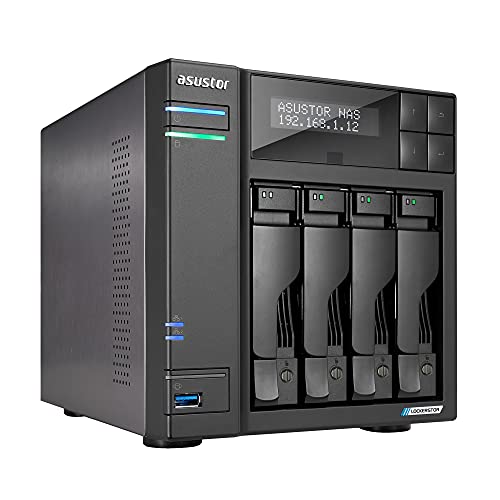
The ASUSTOR Lockerstor 4 Gen2 (AS6704T) is a 4‑bay NAS powered by a quad‑core Intel Celeron N5105 CPU, dual 2.5 GbE ports and four M.2 NVMe slots, aimed at home, small office and content‑creation workflows. It offers high‑speed networking, extensive storage expansion, and modern software features such as Docker and PHP 8.3 on the ADM OS.
Pros
Current
$648.99
Average
$610.53
Lowest
$559.00
Highest
$779.00
Lower = better sales rank

Asustor

Asustor

Asustor

UGREEN

Asustor

Asustor

UGREEN
Please sign in to leave a review
No reviews yet. Be the first to review!
Get notified when the price drops. Track this product on BigBangPrice, our price tracking partner.
Cons
From Expert Reviews
Praised by Experts
Criticized by Experts
From User Reviews
Users Love
Users Complain About
Expert Opinion
Professional reviewers commend the AS6704T for its powerful N5105 CPU, dual 2.5 GbE ports, and extensive PCIe and M.2 expansion options, calling it an efficient platform for content creation and future‑proof upgrades. They also praise the quiet cooling system and modern software stack, while noting that full performance hinges on user‑installed RAM and optional 10 GbE cards, and that missing power and weight data limit planning.
What Users Say
Everyday users praise the NAS for its easy, tool‑less installation, fast M.2 caching, and reliable 4K streaming over a robust 2.5 GbE connection. However, they express frustration over the need for DIY hardware upgrades to reach peak performance and the lack of clear power and weight specifications.
Common Complaints
Missing weight and power consumption data, requirement for user‑installed RAM and optional 10 GbE card to achieve maximum performance, and limited third‑party consumer reviews at launch.
How It Compares
vs. Synology DS425+
Advantages
Disadvantages
Choose the DS425+ for a straightforward, low‑maintenance NAS, but opt for the AS6704T when you need faster networking and extensive expansion.
vs. ASUSTOR AS6702T
Advantages
Disadvantages
Select the AS6702T for budget‑conscious users with modest storage needs; choose the AS6704T for larger capacity and future‑proof scalability.