
Terramaster
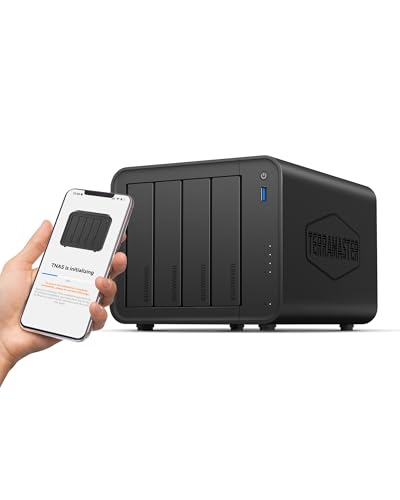
The TerraMaster F4-425 Plus is a hybrid 4‑bay NAS that blends up to 144 TB of raw HDD capacity with three NVMe M.2 slots for high‑speed caching, powered by an Intel N150 quad‑core CPU and 16 GB DDR5 RAM. It features dual 5 GbE ports, hardware 8K/4K transcoding, and a Linux‑based TOS6 OS, targeting home media, small offices, and lab enthusiasts.
Pros
Current
$649.99
Average
$613.65
Lowest
$599.99
Highest
$649.99
Lower = better sales rank
CyberPower

NavePoint

TERRAMASTER

TERRAMASTER

UGREEN

UGREEN

TERRAMASTER

Tecmojo

UGREEN

TERRAMASTER
TERRAMASTER

STATIONPC

MINISFORUM
Please sign in to leave a review
No reviews yet. Be the first to review!
Get notified when the price drops. Track this product on BigBangPrice, our price tracking partner.
Cons
From Expert Reviews
Praised by Experts
Criticized by Experts
From User Reviews
Users Love
Users Complain About
Expert Opinion
Professional reviewers consider the F4-425 Plus a well‑rounded, mid‑range NAS that delivers a notable performance uplift thanks to its Intel N150 processor, 16 GB DDR5 memory, and dual 5 GbE ports. The hybrid storage architecture and three M.2 slots are highlighted as differentiators, while the non‑ECC memory and limited M.2 bandwidth are cited as the main compromises.
What Users Say
Everyday users generally praise the device for its massive capacity, fast NVMe caching, and future‑proof 5 GbE networking, especially for home media and small‑office workflows. Recurring complaints focus on the limited SSD lane bandwidth, underused HDMI port, and the bulk of the external power brick.
Common Complaints
Limited PCIe x1 bandwidth on M.2 slots, non‑ECC DDR5 memory, HDMI port restricted to system logs, bulky external 90W power brick, and audible fan noise under load.
What People Are Saying
“can double as a home lab server with juice to spare”
“TerraMaster's Best NAS Yet”
How It Compares
The F4-425 Plus sits in the mid‑to‑prosumer NAS segment, offering more NVMe slots and dual 5 GbE ports than many competing 4‑bay units that typically provide only 2.5 GbE and one or two M.2 slots. Its Intel N150 processor and 16 GB DDR5 RAM place it above entry‑level models, while the lack of ECC memory and PCIe x1 M.2 lanes keep it from reaching true enterprise performance levels.
