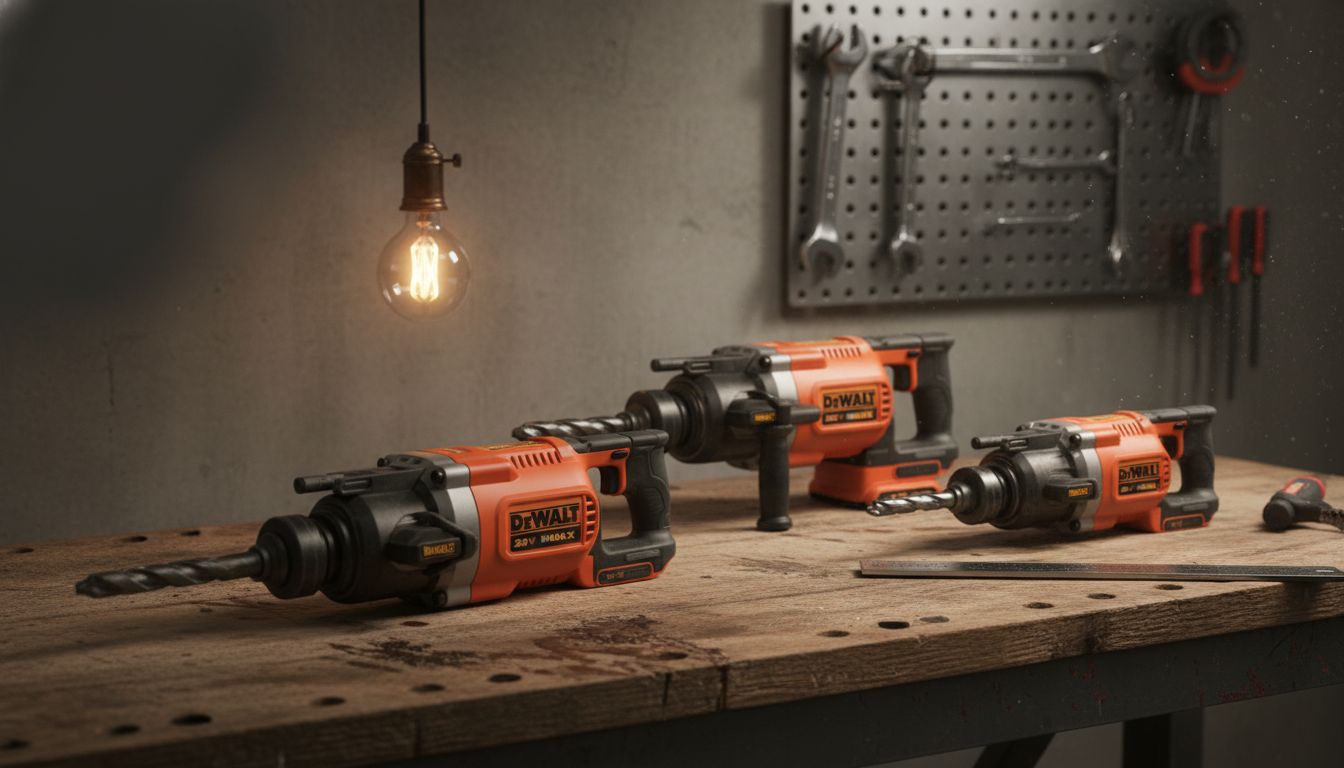
Dewalt
The DeWalt DCH133B is a 20V MAX brushless cordless SDS-Plus D-handle rotary hammer designed for concrete drilling with 2.6 Joules of impact energy. It features a lightweight, compact design with three operational modes (drill, hammer drill, chip) to facilitate work in tight spaces and overhead applications. The tool is positioned as a versatile solution for light-to-medium duty structural tasks without the need for cords.
Pros
Lower = better sales rank
Bosch

Bosch

Dexpan

Ingersoll Rand

Greenlee

Bosch
Bosch

Bosch

Bosch

DEWALT

Bosch
Bosch

DEWALT

DEWALT

DEWALT

DEWALT

DEWALT

DEWALT

DEWALT

XtremepowerUS
Please sign in to leave a review
No reviews yet. Be the first to review!
Cons
From Expert Reviews
Praised by Experts
Criticized by Experts
From User Reviews
Users Love
Users Complain About
Expert Opinion
Professional reviewers highlight the DCH133B's exceptional power-to-weight ratio, making it ideal for structural tasks such as rod hanging, beam anchorage, and clip installation. The 2.6J impact energy is noted for matching corded performance, while the lightweight design is praised for overhead work. However, experts note it lacks the advanced vibration control and safety features of higher-end models, positioning it best for light-to-medium duty applications rather than heavy industrial chipping.
What Users Say
Everyday users and professionals praise the tool for its compact access and reliability in drilling anchor holes in masonry. The cordless nature is frequently highlighted as a major benefit for mobility. Common complaints include noticeable vibration without SHOCKS technology and rapid battery drain during prolonged chipping. Users also note that the total weight, including the battery, can become tiring during extended use.
Common Complaints
Noticeable vibration due to lack of SHOCKS technology. Battery drains quickly during extended chipping operations. Weight becomes cumbersome when combined with the battery pack
What People Are Saying
“Compact access and anchor hole drilling in masonry”
“Reliable cordless freedom without cords”
How It Compares
vs. DCH273B
Advantages
Disadvantages
Choose DCH133B for higher power in a D-handle, or DCH273B for better vibration control in an L-shape.
vs. DCH172B Atomic
Advantages
Disadvantages
Choose DCH133B for heavier duty work, or DCH172B for ultra-compact light-duty portability.
vs. DCH293B
Advantages
Disadvantages
Choose DCH293B for large holes and heavy duty, or DCH133B for versatile light-to-medium tasks.