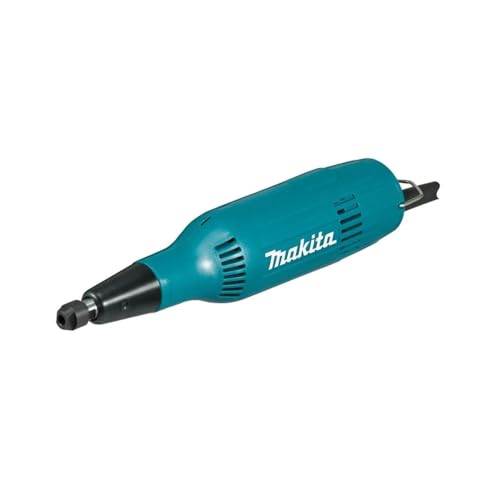
Makita
The Makita GD0603 is a 1/4-inch compact corded electric die grinder featuring a powerful 2.2 AMP motor that delivers 28,000 RPM in a lightweight 2.1 lb body. It is designed for precision grinding tasks in tight spaces, offering durability through powder-coated motor protection and ergonomic features like a contoured neck grip and directional air-flow vents.
Pros
Lower = better sales rank

DEWALT
WP WORKPAD

VOTOER

Putec Vibration Motor

SHALL

Sworker

AOBEN

Cerycose

ToolGoe

AOBEN
Please sign in to leave a review
No reviews yet. Be the first to review!
Cons
From Expert Reviews
Praised by Experts
From User Reviews
Users Love
Users Complain About
Expert Opinion
Professional reviewers praise the GD0603 for its powerful 2.2 AMP motor delivering 28,000 RPM in a compact 2.1 lb body, making it ideal for pipe fittings and small-scale grinding. Makita's official descriptions highlight its maneuverability in constrained spaces and longevity, while demos note its suitability for engine porting and cylinder head work due to consistent high speed.
What Users Say
Users describe the GD0603 as much heavier duty than air models, making it reliable for detailed work and aggressive bit applications like spoon carving. Common praise includes its reliability and power for detailed work, while recurring complaints involve its heavier build requiring air tools for specialized angles. Users compare it favorably to similar models like GD0601 for everyday fabrication.
Common Complaints
Heavier build compared to air-powered models. Lack of variable speed control. No lock-off switch on the rocker switch
What People Are Saying
“much heavier duty than air models”
“Reliable power for detailed work”
How It Compares
vs. Makita GD0601
Advantages
Disadvantages
Choose the GD0603 for improved ergonomics, otherwise the GD0601 is a similar alternative.
vs. Air Die Grinders
Advantages
Disadvantages
Choose the GD0603 for durability and corded consistency, but pick air grinders for lighter, angled work.
vs. Dremel Rotary Tools
Advantages
Disadvantages
Choose the GD0603 for heavy-duty grinding and deburring, but use Dremel for light detailing.
