$699.99
Rankings
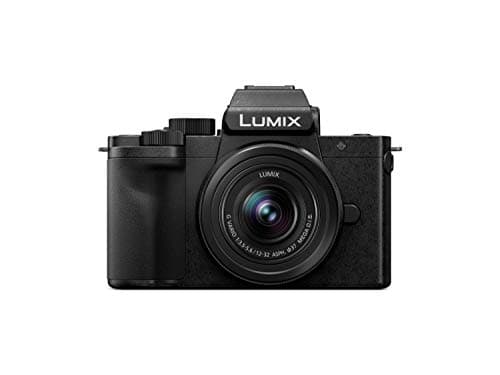
The Panasonic LUMIX G100 targets vloggers with its three-mic OZO audio, lightweight design, fully articulating screen and solid 4K video, though it falls short on stabilization and long-form 4K recording.
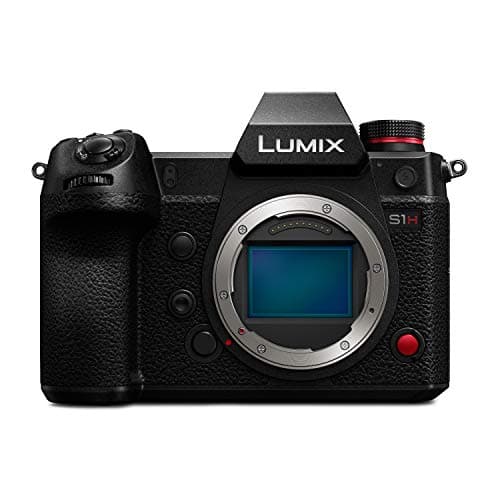
The Panasonic Lumix S1H is a full-frame mirrorless camera built for professional video production, offering cinema-grade 6K capture, dual native ISO, and robust codec options, while still providing solid still-image capabilities.
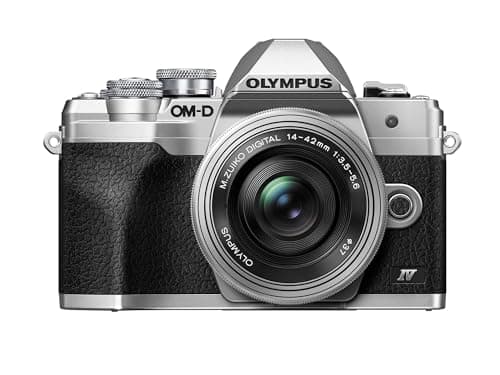
The OM-D E-M10 Mark IV is a compact, retro-styled entry-level mirrorless camera offering a 20.3 MP Micro Four Thirds sensor, 5-axis IBIS and 4K video, aimed at beginners and travel shooters.
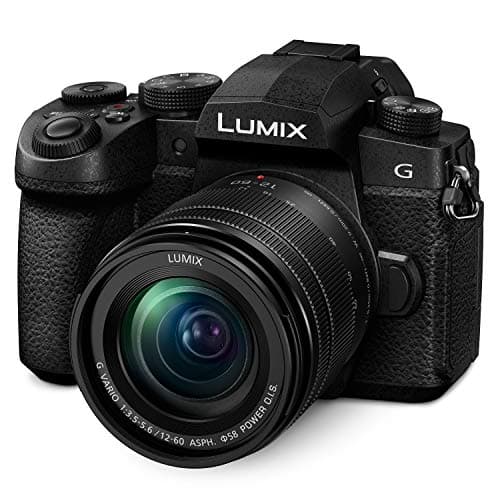
The Panasonic LUMIX G95 is a rugged, weather-sealed Micro Four Thirds camera that pairs a 20.3 MP sensor with advanced video tools like unlimited 4K 30p recording and V-Log L. It targets hybrid creators who need strong in-body stabilization and versatile connectivity, though its small sensor and modest battery life keep it from competing with larger-sensor systems.
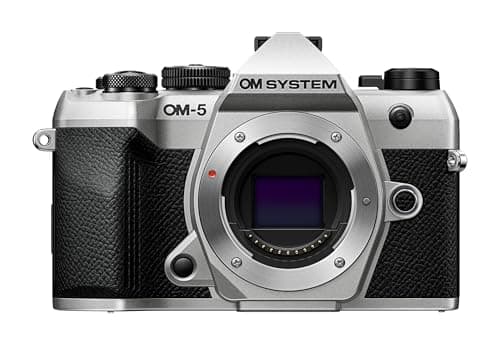
The OM-5 Mark II body is a flagship Micro-Four-Thirds camera that blends a 20.4 MP stacked BSI sensor with advanced computational tools, ultra-fast autofocus and up to 8.5-stop IBIS. It targets professionals and serious enthusiasts needing speed, weather sealing and unlimited 4K video, though its menu complexity and sensor size may deter some users.
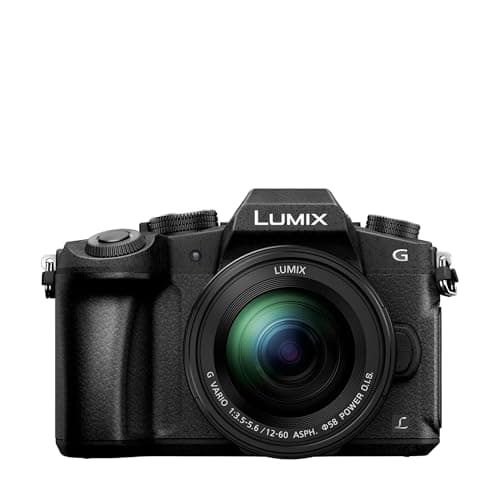
The Panasonic LUMIX G85 offers a solid blend of stills and video features, including 5-axis IBIS, uncropped 4K recording, and a weather-sealed build, making it a versatile hybrid for enthusiasts.
The Nikon Z50 is a compact APS-C mirrorless camera offering a 20.9 MP sensor, 209-point hybrid autofocus, and 4K video, with a tilting touchscreen and solid ergonomics. While it delivers strong image quality and fast shooting, it lacks IBIS, has a single card slot, and its 4K video is cropped.
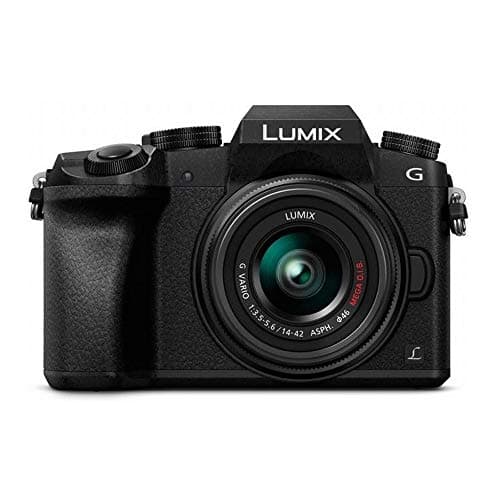
The Panasonic Lumix G7 offers a 16 MP Micro Four Thirds sensor, 4K video up to 30p, and versatile creative features like 4K Photo and Post Focus, packaged in a compact DSLR-style body. It's well suited for hobbyists and vloggers seeking affordable 4K, though its plastic build and limited burst speed keep it from professional sport use.
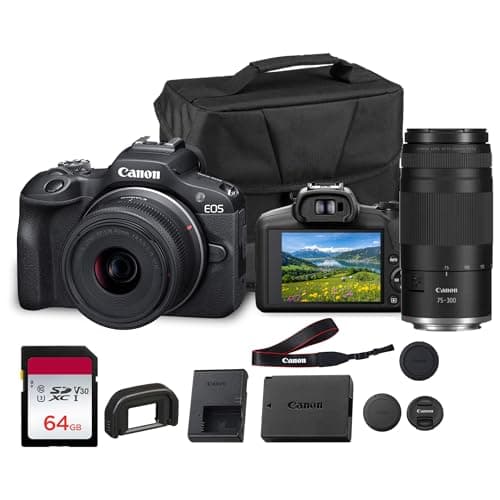
The Canon EOS R100 is an entry-level APS-C mirrorless camera that pairs a 24.1 MP sensor with Dual Pixel AF and 4K video, bundled with a versatile wide-to-telephoto lens duo. It offers a lightweight, beginner-friendly experience but lacks weather sealing and advanced video features.

The Panasonic LUMIX GH4 is a hybrid mirrorless camera that introduced internal 4K video to the Micro Four Thirds line. It combines solid still-image performance with robust video features and a weather-sealed body, but its contrast-detect AF and lack of IBIS limit fast action shooting.
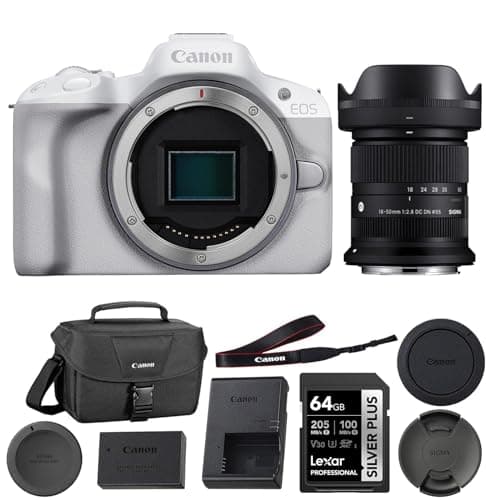
The Canon EOS R50 is an entry-level APS-C mirrorless camera offering solid 24 MP image quality, fast Dual Pixel autofocus and uncropped 4K video in a compact, lightweight package, aimed at creators transitioning from smartphones.
The Nikon Z30 is a compact APS-C mirrorless camera designed for vloggers, delivering 20.8 MP stills and uncropped 4K video in a lightweight body.
| Attribute | | | | | | | | Nikon Z50 Body | | | | Nikon Z30 |
|---|---|---|---|---|---|---|---|---|---|---|---|---|
16 MP | 16 MP | 20.3 MP | 24.1 MP | 20.3 MP | 20.4 MP | 16.05 MP | 20.9 MP | 24.2 MPbest | 20.3 MP | 24.2 MPbest | 20.8 MP | |
350 shots | 330 shots | 360 shots | 430 shots | 290 shots | 520 shotsbest | 500 shots | — | 460 shots | 260 shots | 400 shots | 330 shots | |
25,600 ISO | 25,600 ISO | 25,600 ISO | 12,800 ISO | 25,600 ISO | 102,400 ISO | 25,600 ISO | 51,200 ISO | 51,200 ISO | 25,600 ISO | 204,800 ISObest | 51,200 ISO | |
| ↓ lower better | 364 g | 453 g | 499 g | 1,889 g | 484 g | 408 g | 560 g | 400 g | 329 gbest | 590 g | 1,052 g | 350 g |
49 points | 49 points | 121 points | 3,975 pointsbest | 49 points | 1,053 points | 49 points | 209 points | 651 points | 49 points | 225 points | 209 points | |
30 fps | 30 fps | 30 fps | 23.98 fps | 30 fps | 60 fpsbest | 24 fps | 30 fps | 30 fps | 30 fps | 60 fpsbest | 30 fps | |
2,360,000 dots | 2,360,000 dots | 2,360,000 dots | 2,360,000 dots | 2,360,000 dots | 5,760,000 dotsbest | 2,359,000 dots | 2,360,000 dots | 2,360,000 dots | 3,680,000 dots | 5,760,000 dotsbest | — | |
3 inches | 3 inches | 3 inches | — | 3 inches | 3 inches | 3 inches | 3.2 inchesbest | 2.95 inches | 3 inches | 3.2 inchesbest | 3 inches |
Click an attribute name to sort · Green = best, red = worst (relative to this comparison)
| Attribute | | | | | | | | Nikon Z50 Body | | | | Nikon Z30 |
|---|---|---|---|---|---|---|---|---|---|---|---|---|
Sensor & Image(4) | ||||||||||||
Effective Megapixels (MP) | 16.0 MP | 16 MP | 20.3 MP | 24.1 MP | 20.3 MP | 20.4 MP | 16.05 MP | 20.9 MP | 24.2 MP | 20.3 MP | 24.2 MP | 20.8 MP |
Sensor Size | Micro Four Thirds (17.3x13.0 mm) | Micro Four Thirds | Four Thirds | APS-C | Four Thirds | Micro Four Thirds | Four Thirds | APS-C | APS-C | Micro Four Thirds | Full Frame | APS-C |
Image Processor | — | Venus Engine | TruePic VIII | DIGIC 8 | Venus Engine | TruePic X | Venus Engine IX | — | DIGIC X | Venus Engine | Venus Engine | EXPEED 6 |
Maximum ISO (ISO) | 25600 ISO | 25600 ISO | 25600 ISO | 12800 ISO | 25600 ISO | 102400 ISO | 25600 ISO | 51200 ISO | 51200 ISO | 25600 ISO | 204800 ISO | 51200 ISO |
Autofocus(2) | ||||||||||||
Autofocus Points (points) | 49 points | 49 points | 121 points | 3975 points | 49 points | 1053 points | 49 points | 209 points | 651 points | 49 points | 225 points | 209 points |
Autofocus System | Contrast-detection with DFD | Contrast Detection with DFD | Contrast-detection | Dual Pixel CMOS AF | Contrast Detection | Hybrid AF | Contrast Detection | Hybrid | Dual Pixel CMOS AF II | Contrast Detection with DFD | Contrast Detection with DFD | Hybrid |
Battery & Power(3) | ||||||||||||
Battery Life (CIPA) (shots) | 350 shots | 330 shots | 360 shots | 430 shots | 290 shots | 520 shots | 500 shots | — | 460 shots | 260 shots | 400 shots | 330 shots |
Weight (g) | 364 g | 453 g | 499 g | 1889 g | 484 g | 408 g | 560 g | 400 g | 329 g | 590 g | 1052 g | 350 g |
Weather Sealing | — | true | false | — | true | true | true | false | — | — | true | — |
Video(1) | ||||||||||||
4K Frame Rate (fps) | 30 fps | 30 fps | 30 fps | 23.98 fps | 30 fps | 60 fps | 24 fps | 30 fps | 30 fps | 30 fps | 60 fps | 30 fps |
Display(3) | ||||||||||||
LCD Size (inches) | 3.0 inches | 3.0 inches | 3.0 inches | — | 3.0 inches | 3.0 inches | 3.0 inches | 3.2 inches | 2.95 inches | 3.0 inches | 3.2 inches | 3.0 inches |
LCD Resolution (pixels) | 1040000 pixels | 1040000 pixels | 1037000 pixels | 1040000 pixels | 1040000 pixels | 1620000 pixels | 1036000 pixels | 1040000 pixels | 1620000 pixels | 1840000 pixels | 2330000 pixels | 1040000 pixels |
EVF Resolution (dots) | 2360000 dots | 2360000 dots | 2360000 dots | 2360000 dots | 2360000 dots | 5760000 dots | 2359000 dots | 2360000 dots | 2360000 dots | 3680000 dots | 5760000 dots | — |
Storage(1) | ||||||||||||
Memory Card Slot Type | SD/SDHC/SDXC (UHS-II) | SD/SDHC/SDXC | SD (UHS-II) | SD/SDHC/SDXC | — | Dual SD (UHS-II) | SD | SD | SD (UHS-I) | SD/SDHC/SDXC | Dual SD (UHS-II) | UHS‑I SD |
Products in the top-left offer the best value (high score, low price).
Professional reviewers commend the G7 for delivering cinema-grade 4K video, innovative still-from-video features, and a high-resolution EVF, all wrapped in a user-friendly, DSLR-like interface, but criticize its plastic construction, lack of headphone monitoring, and slower continuous-AF burst compared to dedicated sports cameras.
Everyday users appreciate the camera's affordable 4K capabilities, Wi-Fi convenience, and versatile touchscreen, often highlighting its value for vloggers and hobbyists, while recurring complaints focus on the cheap-feel body, missing headphone jack, and limited burst speed for fast subjects.
“Great 4K video for the price, and the articulating screen is a lifesaver”
“I wish it had a headphone jack, but otherwise it works fine for my YouTube channel”
“The plastic feel is a bit off, but the EVF is crystal clear”
Provides weather sealing and a more robust video feature set
Select the Z30 for vlog-centric features; pick the Z50 if you need an EVF and in-body stabilization.
Professional reviewers praise the G85 for its rugged weather sealing, 5-axis IBIS and uncropped 4K video, highlighting it as a compelling hybrid camera for enthusiasts.
Everyday users appreciate the solid stabilization, weather-proof body and articulating touchscreen, while noting modest battery endurance and occasional rolling-shutter distortion.
Professional reviewers praise the camera's attractive retro styling, solid 5-axis stabilization and 20.3 MP sensor, but note the slower contrast-detect AF and lack of external mic as drawbacks for serious videography.
Everyday users love its portability, image quality and intuitive interface, while common complaints focus on AF speed, battery life and the flip-down screen.
Professional reviewers praise the EOS R100 for its fast and accurate Dual Pixel AF, solid 24 MP sensor, and 4K video in a compact package, while highlighting the guided menus and versatile lens kit as strong points for newcomers.
Everyday users appreciate the camera's lightweight design, ease of use, reliable autofocus, and the flexibility of the two lenses, noting the convenient Wi-Fi/Bluetooth pairing for quick sharing.
Professional reviewers commend the G95 for its robust video toolkit, especially the effective 5-axis stabilization, V-Log L profile and clean 4:2:2 HDMI output, positioning it as a strong hybrid camera for indie filmmakers and vloggers. They also note its solid low-light autofocus and versatile ergonomics, though they point out the sensor size and lack of internal ND filter as trade-offs.
Everyday users appreciate the camera's stabilization, unlimited 4K recording, and weather-sealed build, often highlighting its suitability for travel and vlogging. Common criticisms focus on the modest battery life, the smaller Micro Four Thirds sensor, and the desire for a built-in ND filter.
Professional reviewers commend the OM-5 Mark II for its groundbreaking computational tools, superb autofocus and high-speed burst capabilities that set a new benchmark for Micro Four Thirds wildlife and sports shooting.
Everyday users repeatedly praise the camera's compact size, lightweight build and ease of handling, especially when paired with telephoto lenses. They appreciate the fast autofocus and stabilization for handheld shooting, while some express frustration with the learning curve and battery endurance.
Professional reviewers hail the GH4 as a game-changer for independent filmmakers and hybrid shooters, praising its groundbreaking internal 4K recording, high-bitrate video, clean 10-bit HDMI output, weather-sealed body, and dual audio jacks. They note drawbacks such as the contrast-detect only AF system, the 2× crop in 4K, lack of IBIS, and modest battery endurance.
Professional reviewers commend the Z50 for its solid build, excellent handling, and strong image quality that rivals larger full-frame models, but note the missing in-body stabilization, single card slot, and 1.5× crop in 4K video.
Everyday users love the Z50's portability, impressive image quality, and user-friendly ergonomics, often highlighting its suitability for travel, street photography, and vlogging. Common complaints focus on the lack of IBIS, the 4K crop, and limited recording time.
The EOS R50 is praised for its approachable handling, strong autofocus and 4K capability, though reviewers note the lack of in-body stabilization and modest battery life as trade-offs for its price.
Users appreciate the camera's compact size, reliable autofocus and affordable 4K video, while noting that battery endurance and the absence of weather sealing can be limiting.
Professional reviewers praise the G100's vlog-centric audio and ergonomics but criticize the absence of IBIS, the short 4K recording limit and the lack of log profiles.
Professional reviewers hail the S1H as a revolutionary video tool, praising its 6K internal capture, 14-stop dynamic range, dual native ISO and Netflix certification, while noting the contrast-detect AF and lack of built-in ND filters as drawbacks.
Professional reviewers praise the Z30 as Nikon's most vlogging-focused camera, highlighting its full-width 4K video, intuitive articulating screen and reliable autofocus. They note trade-offs such as the missing headphone jack, lack of IBIS and a limited 4K recording window due to heat, but consider it a solid step up from smartphones for creators seeking a dedicated mirrorless solution.
Everyday users love the camera's small size, lightweight feel, articulating screen and reliable autofocus, noting it's perfect for travel and on-the-go shooting. The most common drawbacks mentioned are the missing headphone jack and viewfinder.
