Rankings
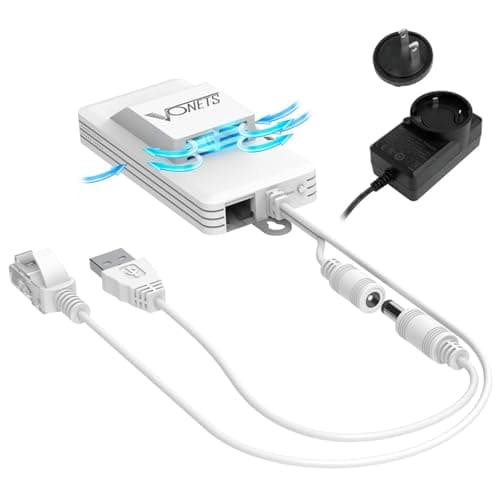
The VONETS VAP11AC delivers dual-band AC1200 performance with industrial-grade features such as TAFC and an auto-cooling fan. Despite its high wireless speeds, the lack of gigabit Ethernet and advanced QoS may bottleneck heavy traffic. Perfect for long-range, high-throughput links in industrial or outdoor surveillance deployments.
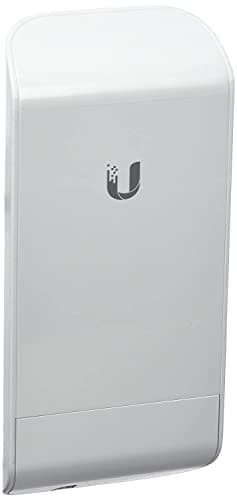
The Ubiquiti NanoStation locoM2 delivers up to 150 Mbps on the 2.4 GHz band with a compact 8-dBi antenna and remote reset capability. Its single-band design and limited Ethernet speed can be drawbacks in high-traffic scenarios. Ideal for small-to-medium WISPs or rural sites needing an affordable, low-power backhaul over a few kilometres.
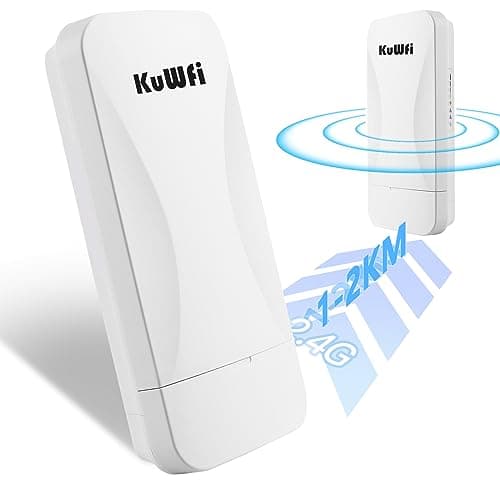
The KuWFi 2.4 GHz Point-to-Point Bridge offers a rugged IP65 enclosure, 1 km range, and 300 Mbps throughput for budget-friendly outdoor links. Its single-band design and 100 Mbps Ethernet ports limit high-bandwidth scenarios. Best suited for small farms or shops needing simple, low-cost point-to-point connectivity.
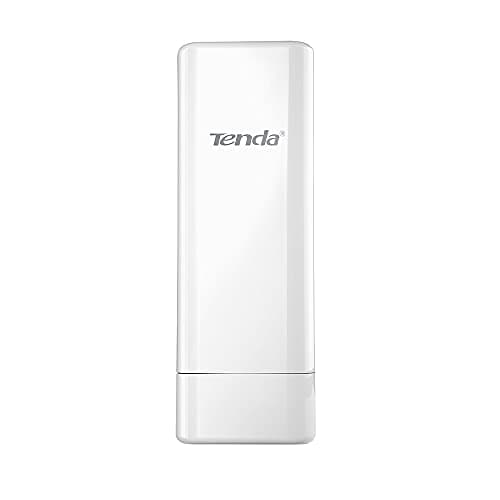
The Tenda O3 is a budget outdoor CPE that provides 12 dBi gain and up to 5 km+ range on the 2.4 GHz band, protected by an IP64 case and lightning suppression. Its drawbacks are the single-band operation and modest 150 Mbps throughput. It fits well for low-cost, long-range point-to-point links in rural or off-grid settings.
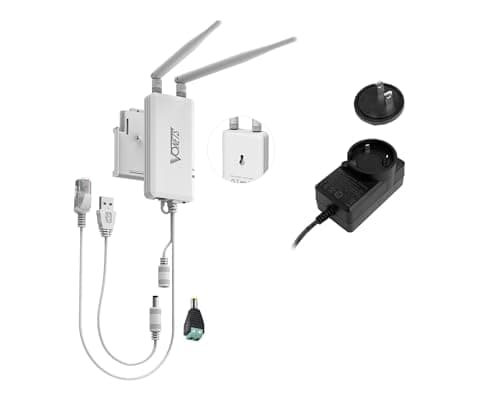
The VONETS VAP11S is a compact 2.4 GHz Wi-Fi bridge/repeater offering versatile modes and robust over-voltage protection. Its single-band design limits throughput and real-world range to around 60-80 m. Ideal for industrial panels and remote sensors where space and power are constrained.
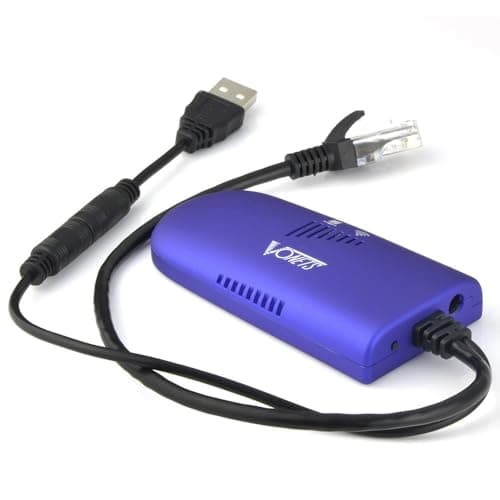
The Vonets VAP11G-300 is a tiny 2.4 GHz Wi-Fi bridge that converts wireless to Ethernet, offering up to 300 Mbps and support for many legacy devices. Its single-band operation, modest range and 10/100 Mbps Ethernet limit high-performance scenarios. Best suited for extending Wi-Fi to legacy IP cameras, printers or PLCs in indoor environments where space and power are constrained.
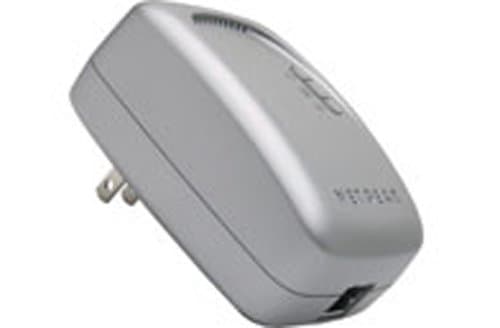
The NETGEAR XE102 is a wall-plugged Ethernet bridge that extends a network over powerlines with a simple plug-and-play design and broad coverage of up to 5,000 sq ft. Its major limitation is the very low 14 Mbps maximum data rate and a single 10 Mbps Ethernet port, making it unsuitable for modern high-speed needs. Best suited for basic low-bandwidth extensions in homes.
| Attribute | | | | | | | |
|---|---|---|---|---|---|---|---|
150 Mbps | 300 Mbps | 150 Mbps | 300 Mbps | 300 Mbps | 1,200 Mbpsbest | 14 Mbps | |
1 | 1 | — | 2best | 2best | 1 | 1 | |
| ↓ lower better | 180 g | 60 gbest | 403 g | 135 g | 921.8 g | 72 g | 224 g |
5,000 mbest | 90 m | 5,000 mbest | 300 m | 1,000 m | 300 m | — | |
| ↓ lower better | 6 W | 2 Wbest | 12 W | — | — | — | — |
8.5 dBi | — | 12 dBibest | 3 dBi | — | — | — | |
24 Vbest | — | 12 V | — | 24 Vbest | — | — |
Click an attribute name to sort · Green = best, red = worst (relative to this comparison)
| Attribute | | | | | | | |
|---|---|---|---|---|---|---|---|
Connectivity(2) | |||||||
Supported Wi‑Fi Standards | 802.11n | 802.11b/g/n | 802.11n | 802.11b/g/n | 802.11b/g/n | 802.11ac/a/n/g/b | — |
Frequency Bands (GHz) | 2.4 | 2.4 | 2.4 | 2.4 | 2.4 | 2.4,5 | — |
Ports(2) | |||||||
Number of Ethernet Ports | 1 | 1 | — | 2 | 2 | 1 | 1 |
Ethernet Port Speed | 100 | 10/100 | — | 10/100Mbps | 10/100Mbps | 10/100Mbps | 10 Mbps |
Performance(3) | |||||||
Maximum Data Rate (Mbps) | 150 Mbps | 300 Mbps | 150 Mbps | 300 Mbps | 300 Mbps | 1200 Mbps | 14 Mbps |
Effective Range (m) | 5000 m | 90 m | 5000 m | 300 m | 1000 m | 300 m | — |
Antenna Gain (dBi) | 8.5 dBi | — | 12 dBi | 3 dBi | 8-12 dBi | — | — |
Battery & Power(2) | |||||||
Power Consumption (W) | 6 W | 2 W | 12 W | <2 W | <30 W | — | — |
Input Voltage (V) | 24 V | 5-15 V | 12 V | 5-24 V | 24 V | 5-24 V | 85-135 V |
Build & Design(4) | |||||||
Weight (g) | 180 g | 60 g | 403 g | 135 g | 921.8 g | 72 g | 224 g |
Dimensions (L×W×H) (mm) | 30 x 80 x 180 mm | 92x47x21 mm | 298x213x75 mm | 150.1x449.7x940.1 mm | 168 x 88 x 57.6 mm mm | 94x45x15 mm | 73x99.4x46.6 mm |
Ingress Protection (IP) Rating | — | — | IP64 | — | IP65 | — | — |
Mounting Options | Pole | — | — | — | — | — | Wall plug |
General(3) | |||||||
Certifications | FCC, IC, CE, RoHS, NDAA Compliant | FCC, CE | — | — | — | — | U/L Certified; FCC Part 15 Class B |
Operating Temperature (°C) | -30 to 75 °C | — | — | -20-55 °C | — | — | 0-40 °C |
Operating Humidity (%) | 5-95 % | — | — | — | — | — | 10-90 % |
Products in the top-left offer the best value (high score, low price).
Professional reviewers emphasize the locoM2's low-latency AirMAX TDMA protocol, carrier-class scalability, and its integrated dual-polarized antenna that delivers solid gain and isolation. They also note the device's rugged outdoor enclosure and intelligent passive PoE with remote reset as strong points, while calling out the limitation to the 2.4 GHz band and the older processor/memory as potential drawbacks for future-proofing.
Everyday users generally praise the device's easy plug-and-play installation, lightweight form factor, and low power draw, especially for remote or solar-powered sites. Recurring concerns revolve around 2.4 GHz interference in crowded areas, the lack of Gigabit Ethernet, and occasional performance limits due to the older hardware.
Editors describe the VAP11G-300 as a professional‑grade mini bridge that delivers stable 300 Mbps extensions for IP devices such as cameras and DVRs. They highlight its industrial‑style design, secure signal optimization (instead of simple amplification), and versatility across bridge, repeater and router modes, while noting its niche focus on 2.4 GHz legacy deployments.
Implied consumer feedback points to appreciation for its simplicity, quick setup and usefulness for non-Wi-Fi legacy equipment, while recurring concerns focus on limited range in walls and lack of 5 GHz support.
Professional sources are limited, but manufacturer and retailer specifications emphasize the O3's suitability for budget‑friendly, long‑range outdoor links, highlighting its auto‑bridge capability, robust IP64 enclosure, and 6000 V lightning protection as key strengths for WISP and surveillance use cases.
Professional reviewers and technical notes praise the VAP11N-300 for its compact size, robust TAFC-based stability, and versatility across bridge, repeater, AP, and router modes, making it a solid choice for industrial panels and remote monitoring where space and power are limited.
No direct consumer reviews were found in the research data; however, manufacturer messaging suggests users appreciate the easy one-key mode switching and the device's ability to bridge Wi-Fi to Ethernet for cameras, DVRs, and PLCs, while potential concerns revolve around limited range and lack of 5 GHz support.
Professional reviewers and editors view the KuWFi bridge as a solid, low-cost solution for simple outdoor links. They appreciate its 11 dBi antenna, IP65 rating, LED-guided configuration and the inclusion of faster Ethernet and lightning protection, but criticize the single-band 2.4 GHz limitation, 100 Mbps Ethernet ports and the absence of cloud-based management features.
Everyday users generally praise the device for delivering the promised 1 km range, easy Ethernet hookup and rugged waterproof design. Common complaints revolve around the need for precise antenna alignment, interference on the crowded 2.4 GHz band, and the lack of support for wireless hub expansion.
The Vonets VAP11AC is a compact industrial-grade dual-band wireless bridge, repeater and router that supports simultaneous 2.4 GHz (300 Mbps) and 5 GHz (900 Mbps) operation. It features TAFC frequency-stabilization, wide-range DC power input with over-voltage and reverse-polarity protection, and an intelligent cooling fan for continuous use.
Professional reviewers and editors are not cited in the available sources; product listings simply note the device’s simplicity, HomePlug compatibility, and its age, emphasizing that it is an older solution with limited speed.
No direct consumer reviews were found, but the specifications suggest users may appreciate the easy plug-and-play setup and wide coverage, while repeatedly noting disappointment with the low 14 Mbps throughput for today's network demands.
