Rankings
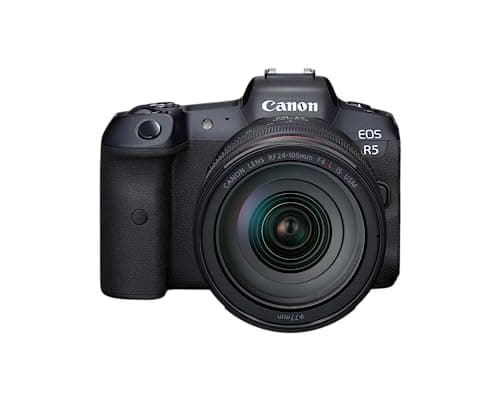
The Canon EOS R5 is a flagship full-frame mirrorless camera offering a 45 MP sensor, 8K video and advanced Dual Pixel AF II, housed in a weather-sealed, robust body with 5-axis IBIS. Its professional-grade performance comes with trade-offs in weight, battery endurance and storage demands.
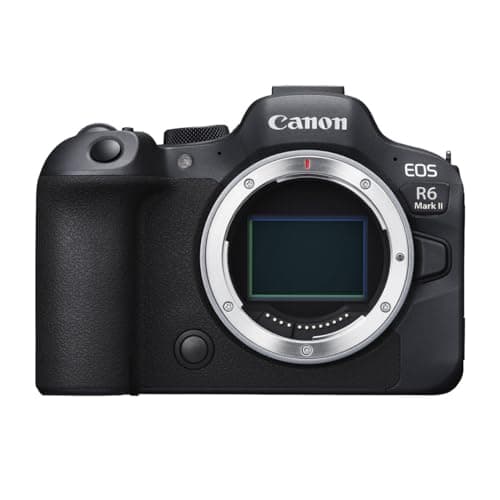
The EOS R6 Mark II is a full-frame hybrid camera that combines a 24.2 MP sensor with the DIGIC X processor to deliver ultra-fast 40 fps electronic burst, advanced Dual Pixel AF II and unlimited 4K 60p video. Its robust weather-sealed body, 8-stop IBIS and dual UHS-II slots make it a versatile tool for both high-speed stills and professional-grade video.
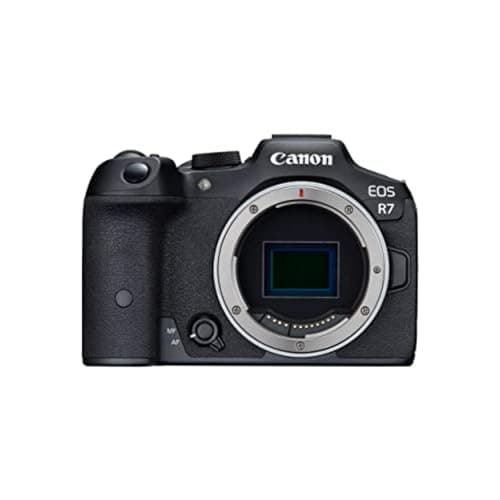
The EOS R7 is a high-performance APS-C mirrorless camera that pairs a 32.5 MP sensor with the DIGIC X processor, delivering fast burst rates, advanced Dual Pixel AF and robust 4K 60p video. Its weather-sealed body, 8-stop IBIS and dual UHS-II slots make it suitable for action and multimedia shooting, though the EVF and native lens selection are modest.
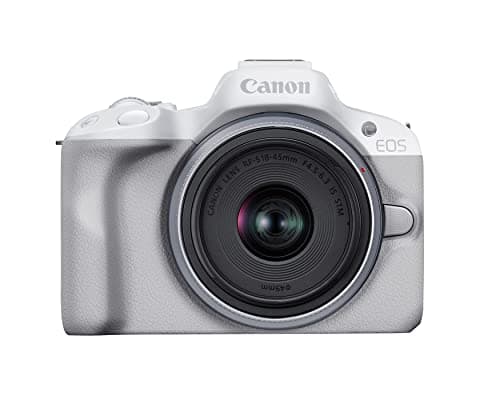
The Canon EOS R50 is an entry-level APS-C mirrorless aimed at beginners and content creators, offering a 24.2 MP sensor, DIGIC X processor, 6K-oversampled 4K video and advanced Dual Pixel AF II. It combines a compact, lightweight body with a vari-angle touchscreen, but lacks in-body stabilization and has modest battery endurance.
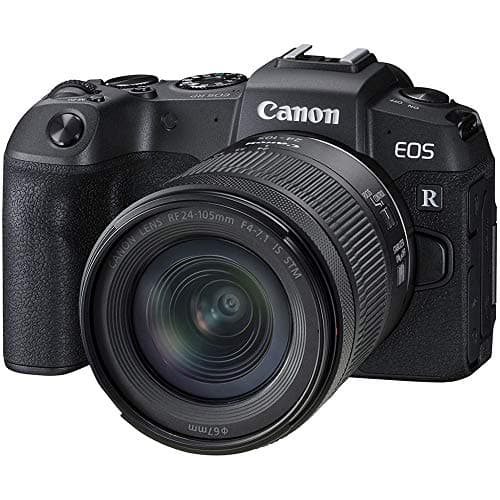
The Canon EOS RP delivers a lightweight full-frame experience with a 26.2 MP sensor, robust Dual Pixel AF and weather sealing, making it a strong choice for travel and portrait work. Video is limited by a cropped 4K mode and lack of in-body stabilization, but the camera's ergonomics and touchscreen are appealing for creators.
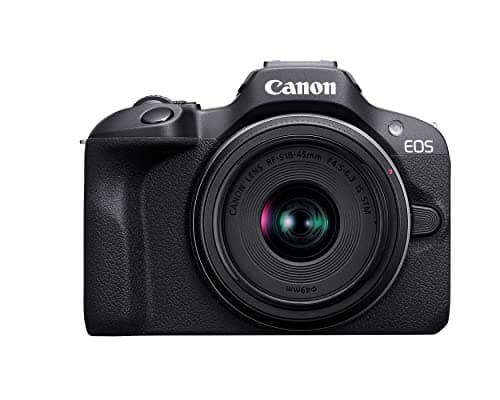
The Canon EOS R100 is a compact, entry-level APS-C mirrorless camera offering 24.1 MP stills, Dual Pixel AF and basic 4K video. Its tiny, lightweight body makes it ideal for beginners and travelers, though it lacks advanced features like IBIS or a touchscreen.
The EOS M3 delivers DSLR-level image quality in a compact body, featuring a 24.2 MP APS-C sensor, DIGIC 6 processor and a versatile tilting touchscreen. It offers solid autofocus and Wi-Fi/NFC connectivity but lacks 4K video and has modest burst performance and battery life.
| Attribute | | | | | | Canon EOS M3 | |
|---|---|---|---|---|---|---|---|
24.2 MP | 24.1 MP | 26.2 MP | 32.5 MP | 45 MPbest | 24.2 MP | 24.2 MP | |
580 shotsbest | — | 210 shots | — | — | 260 shots | 240 shots | |
204,800 ISObest | 25,600 ISO | 102,400 ISO | 51,200 ISO | 102,400 ISO | 25,600 ISO | 51,200 ISO | |
| ↓ lower better | 590 g | 2.5 gbest | 485 g | 530 g | 1,433 g | 367 g | 470 g |
4,897 pointsbest | 143 points | 4,779 points | 651 points | 1,053 points | 49 points | 651 points | |
60 fps | 29.97 fps | 24 fps | 60 fps | 120 fpsbest | — | 30 fps | |
3,690,000 dots | 2,360,000 dots | 2,360,000 dots | 2,360,000 dots | 5,760,000 dotsbest | — | 2,360,000 dots | |
3 inches | 3 inches | 3 inches | 2.95 inches | 3.2 inchesbest | 3 inches | 3 inches |
Click an attribute name to sort · Green = best, red = worst (relative to this comparison)
| Attribute | | | | | | Canon EOS M3 | |
|---|---|---|---|---|---|---|---|
Sensor & Image(4) | |||||||
Effective Megapixels (MP) | 24.2 MP | 24.1 MP | 26.2 MP | 32.5 MP | 45 MP | 24.2 MP | 24.2 MP |
Sensor Size | Full-frame | APS-C | Full-frame | APS-C | Full-frame | APS-C | APS-C |
Image Processor | DIGIC X | DIGIC 8 | DIGIC 8 | DIGIC X | DIGIC X | DIGIC 6 | DIGIC X |
Maximum ISO (ISO) | 204800 ISO | 25600 ISO | 102400 ISO | 51200 ISO | 102400 ISO | 25600 ISO | 51200 ISO |
Autofocus(2) | |||||||
Autofocus Points (points) | 4897 points | 143 points | 4779 points | 651 points | 1053 points | 49 points | 651 points |
Autofocus System | Dual Pixel CMOS AF II | Dual Pixel CMOS AF | Dual Pixel CMOS AF | Dual Pixel CMOS AF | Dual Pixel CMOS AF II | Hybrid CMOS AF III | Dual Pixel CMOS AF II |
Battery & Power(3) | |||||||
Battery Life (CIPA) (shots) | 580 shots | — | 210 shots | — | — | 260 shots | 240 shots |
Weight (g) | 590 g | 2.5 g | 485 g | 530 g | 1433 g | 367 g | 470 g |
Weather Sealing | true | — | true | true | true | — | false |
Video(2) | |||||||
4K Video Support | true | true | true | true | true | false | true |
4K Frame Rate (fps) | 60 fps | 29.97 fps | 24 fps | 60 fps | 120 fps | — | 30 fps |
Display(3) | |||||||
LCD Size (inches) | 3.0 inches | 3.0 inches | 3.0 inches | 2.95 inches | 3.2 inches | 3.0 inches | 3.0 inches |
LCD Resolution (pixels) | 1620000 pixels | 1040000 pixels | 1040000 pixels | 1620000 pixels | 2100000 pixels | 1040000 pixels | 1620000 pixels |
EVF Resolution (dots) | 3690000 dots | 2360000 dots | 2360000 dots | 2360000 dots | 5760000 dots | — | 2360000 dots |
Connectivity(2) | |||||||
Wi‑Fi | true | — | true | true | true | true | Wi‑Fi |
Bluetooth | true | — | true | true | true | — | Bluetooth |
Storage(1) | |||||||
Memory Card Slot Type | Dual SD (UHS-II) | SD (UHS-I) | SD (UHS-II) | Dual SD (UHS-II) | CFexpress Type B + SD UHS‑II | SD/SDHC/SDXC (UHS-I) | SD |
Products in the top-left offer the best value (high score, low price).
Professional reviewers hail the R6 Mark II as a near-perfect hybrid, highlighting its lightning-fast AF, 40 fps burst and high-quality 4K video, while noting occasional overheating and a steep learning curve.
Everyday users love the reliable autofocus and video capabilities, especially the vari-angle screen and unlimited recording, but some report overheating in long 4K sessions.
“autofocus 'locks on and doesn't let go'”
“the vari-angle touchscreen, clean HDMI output, and unlimited recording”
“small size and light weight”
R7 offers higher resolution APS-C sensor and faster mechanical burst, while R6 Mark II provides full-frame image quality and superior video features.
R100 targets entry-level creators with a simpler feature set; R6 Mark II is aimed at professionals needing speed and robust video.
R6 Mark II offers full-frame resolution and superior low-light performance, but the R7 provides higher resolution APS-C sensor at a lower price.
R100 targets beginners with a simpler feature set, whereas the R7 is aimed at advanced creators needing speed and ruggedness.
Compact, lightweight entry-level mirrorless camera ideal for beginners transitioning from smartphones.
Users appreciate the portability and image quality but note the lack of in-body stabilization and touch screen.
Professional reviewers praise the EOS RP for its compact, weather-sealed build and excellent still-image quality, while noting its limited video capabilities and cropped 4K recording.
Everyday users love the portability, natural color rendering and touchscreen, but repeatedly mention short battery life and the disappointing 4K crop.
Professional reviewers praise the R7 for its high-resolution sensor, rapid burst performance and sophisticated AF, but note the EVF resolution and the still-growing RF-S lens ecosystem as drawbacks.
Enthusiasts appreciate the speed and video quality, while some users mention the EVF feels low-resolution and wish for more native lenses.
Professional reviewers praise the EOS R5 for its groundbreaking sensor, 8K video and robust autofocus, highlighting its versatility for demanding creators.
Everyday users commend the R5's reliability and eye-detect AF, though they note overheating in warm environments and the heavy, power-hungry nature of the system.
Reviewers praise the EOS M3 for its image quality and ergonomic design, noting that the kit lens and Wi-Fi make it a strong choice for enthusiasts, while the absence of 4K video and limited burst speed keep it from professional use.
Users love the camera's portability and easy Wi-Fi sharing, but many complain about the short battery life and the lack of 4K video.
Professional reviewers praise the EOS R50 as a compelling entry-level mirrorless option, highlighting its 6K-oversampled 4K video, industry-leading Dual Pixel CMOS AF II, and compact form factor for vloggers.
Everyday users consistently commend the camera's fast autofocus, sharp video quality, and lightweight design, noting that the touchscreen and built-in webcam mode make it very user-friendly.
R100 offers a newer sensor and 4K video at a lower price, but lacks the tilting screen and weather sealing of the M3.
R7 provides far higher resolution, faster burst and 4K video, targeting advanced users, whereas the M3 remains an entry-level enthusiast model.
