Rankings
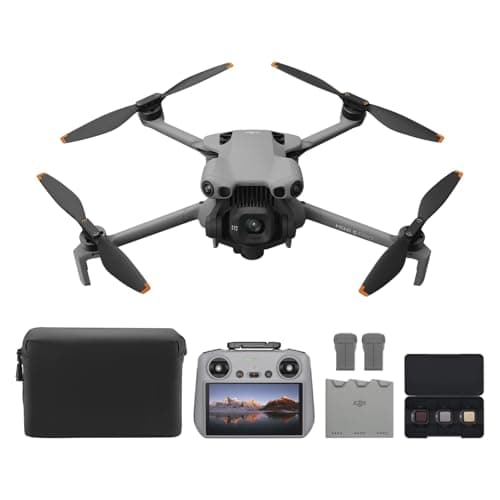
The DJI Mini 5 Pro Fly More Combo pairs a 1-inch 50 MP sensor, omnidirectional obstacle avoidance and 52-minute endurance with a built-in screen on the RC 2 controller, delivering professional-grade imaging in a sub-300 g package. It excels in range and video quality, though its weight pushes it out of the sub-250 g registration-exempt category.
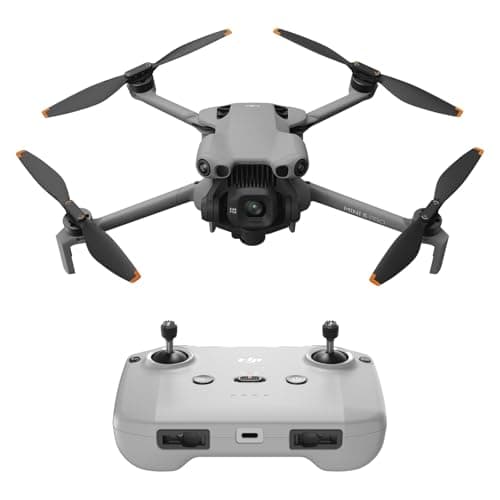
The DJI Mini 5 Pro delivers a flagship-level 1-inch 50 MP sensor, LiDAR obstacle avoidance, and up to 36 minutes of flight in a sub-250 g package, with internal storage and O4+ transmission for reliable long-range operation. It is aimed at creators who need high-quality imaging without sacrificing portability, though the near-250 g weight can trigger registration requirements.
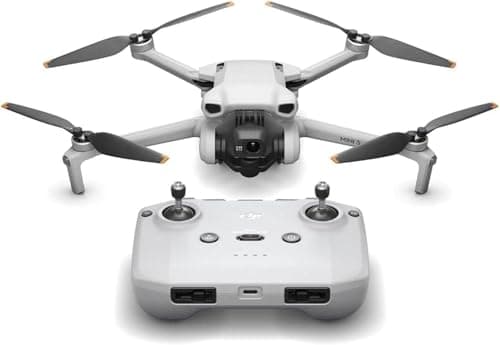
The DJI Mini 3 delivers high-quality 48 MP photos and 4K HDR video with an impressive 38-minute flight time and 10 km transmission range, targeting travel and social-media creators while remaining under the 249 g regulatory limit.
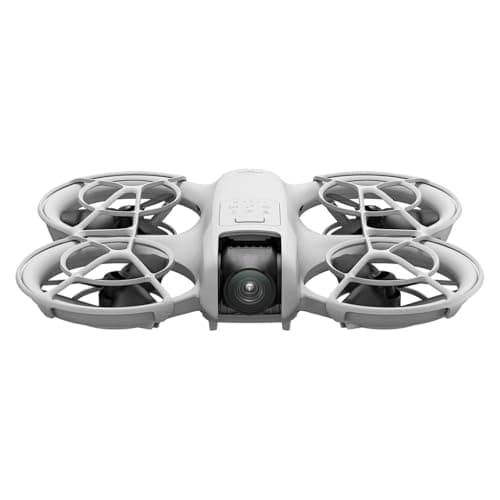
The DJI Neo is an ultra-light, palm-sized drone that captures 4K video, offers AI subject tracking and QuickShot modes, and supports multiple control methods, targeting casual creators and beginners.
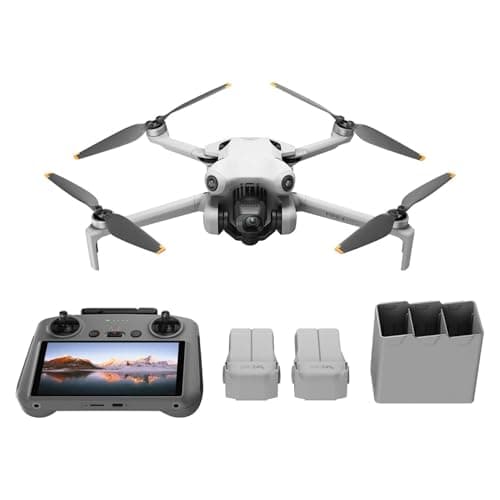
The DJI Mini 5 Pro Fly More Combo combines a 1-inch 50 MP sensor, LiDAR-based obstacle avoidance, and a bright built-in controller screen, delivering up to 52 minutes of flight with Plus batteries while staying under 250 g with the standard battery. It targets creators who need top-tier imaging in a portable package, though the Plus configuration pushes it over the registration threshold.
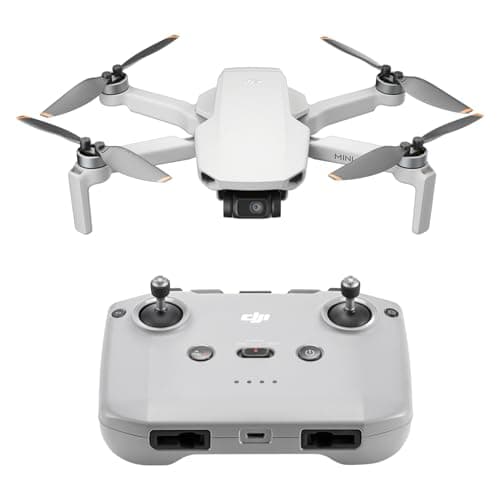
The DJI Mini 4K offers a lightweight sub-250 g platform with 4K video, a 3-axis gimbal and up to 31 minutes of flight, making it a solid entry-level choice for beginners and travel creators. While it provides good range and intelligent shooting modes, it lacks obstacle avoidance and vertical video capabilities.
The DJI Mavic Mini is an ultra-light, foldable drone with up to 30 minutes of flight time, a 12 MP 2.7K camera on a 3-axis gimbal, and a 4 km transmission range, aimed at beginners and casual flyers.
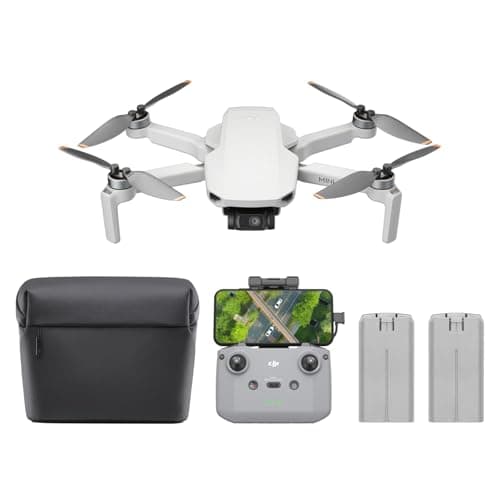
The DJI Mini 4K Combo delivers true 4K video, a 31-minute flight per battery and up to 62 minutes with two batteries, all in a sub-250 g frame with O2 transmission up to 10 km. It's a beginner-friendly package, though it lacks obstacle avoidance and higher-frame-rate video.
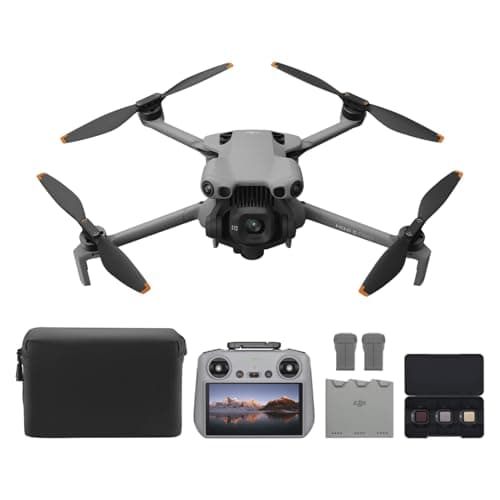
The DJI Mini 5 Pro Fly More Combo offers a high-resolution 48 MP sensor, 4K HDR video, and robust O4 transmission while staying under the 250 g limit with the standard battery. It adds advanced safety with omnidirectional obstacle avoidance and a bright built-in controller screen, though the Plus battery configuration exceeds the weight threshold.
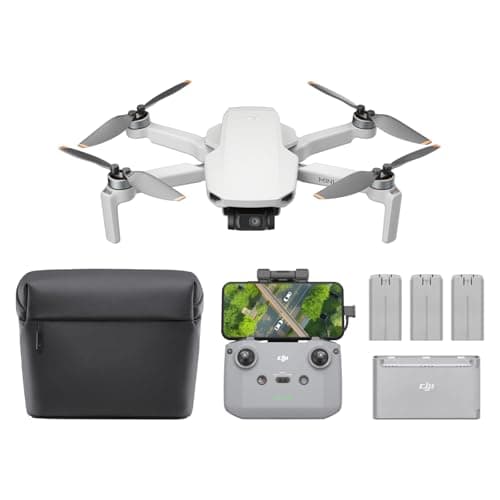
The DJI Mini 4K Fly More Combo is a lightweight, sub-250 g drone offering 4K video, a 3-axis gimbal, and up to 31 minutes of flight per battery. It targets beginners and travelers with easy-to-use controls and a long transmission range, but lacks obstacle avoidance and internal storage.
| Attribute | | | | | | | | | DJI Mavic Mini | |
|---|---|---|---|---|---|---|---|---|---|---|
36 minutes | 36 minutes | 38 minutes | 52 minutesbest | 31 minutes | 31 minutes | 34 minutes | 18 minutes | 30 minutes | 31 minutes | |
2,788 mAh | — | 2,453 mAh | 4,680 mAh | 5,200 mAhbest | 2,250 mAh | 2,590 mAh | 1,435 mAh | 2,400 mAh | 2,250 mAh | |
2,160 p | 2,160 p | 2,160 p | 2,160 p | 2,160 p | 2,160 p | 2,160 p | 3,840 pbest | 2,720 p | 2,160 p | |
| ↓ lower better | 249.9 g | 249 g | 248 g | 295 g | 246 g | 246 g | 249 g | 135 gbest | 249 g | 240 g |
50 MPbest | 50 MPbest | 48 MP | 50 MPbest | 12 MP | 12 MP | 48 MP | 12 MP | 12 MP | 12 MP | |
20,000 mbest | 20,000 mbest | 10,000 m | 20,000 mbest | 10,000 m | 10,000 m | 20,000 mbest | 10,000 m | 4,000 m | 10,000 m | |
| ↓ lower better | — | — | — | 115 minutes | 90 minutesbest | — | — | — | — | — |
6,000 mbest | — | 4,000 m | 6,000 mbest | 4,000 m | 4,000 m | — | 2,000 m | — | 4,000 m |
Click an attribute name to sort · Green = best, red = worst (relative to this comparison)
| Attribute | | | | | | | | | DJI Mavic Mini | |
|---|---|---|---|---|---|---|---|---|---|---|
Build & Design(1) | ||||||||||
Weight (g) | 249.9 g | 249 g | 248 g | 295 g | 246 g | 246 g | 249 g | 135 g | 249 g | 240 g |
Camera(2) | ||||||||||
Video Resolution (p) | 2160 p | 2160 p | 2160 p | 2160 p | 2160 p | 2160 p | 2160 p | 3840 p | 2720 p | 2160 p |
Photo Resolution (MP) | 50 MP | 50 MP | 48 MP | 50 MP | 12 MP | 12 MP | 48 MP | 12 MP | 12 MP | 12 MP |
Battery & Power(4) | ||||||||||
Flight Time (minutes) | 36 minutes | 36 minutes | 38 minutes | 52 minutes | 31 minutes | 31 minutes | 34 minutes | 18 minutes | 30 minutes | 31 minutes |
Battery Capacity (mAh) | 2788 mAh | — | 2453 mAh | 4680 mAh | 5200 mAh | 2250 mAh | 2590 mAh | 1435 mAh | 2400 mAh | 2250 mAh |
Battery Voltage (V) | — | — | 3.7 V | — | — | 7.7 V | 7.32 V | — | — | — |
Charging Time (minutes) | — | — | — | 115 minutes | 90 minutes | — | — | — | — | — |
Performance(1) | ||||||||||
Max Takeoff Altitude (m) | 6000 m | — | 4000 m | 6000 m | 4000 m | 4000 m | — | 2000 m | — | 4000 m |
Accessories(1) | ||||||||||
Included Accessories | — | 10 | 9 | 6 | — | 7 | 9 | 6 | 2 | 13 |
Connectivity(4) | ||||||||||
Control Range (m) | 20000 m | 20000 m | 10000 m | 20000 m | 10000 m | 10000 m | 20000 m | 10000 m | 4000 m | 10000 m |
Wi‑Fi | true | true | true | true | true | true | false | true | — | false |
Bluetooth | true | — | true | true | true | — | false | true | — | false |
Remote Control Frequency (MHz) | — | — | — | 2400 MHz | 2400 MHz | 2400 MHz | — | — | 2400-2483.5,5725-5850 MHz | — |
Products in the top-left offer the best value (high score, low price).
Professional reviewers hail the Mini 5 Pro as a game-changing ultralight, emphasizing its 1-inch sensor, LiDAR obstacle detection, and advanced video capabilities.
Everyday users appreciate the drone's portability, long flight time, and the convenience of internal storage, noting the impressive image quality for its size.
“Easy to fly and takes solid photos”
“Easy to use and reliable”
“Camera is really good, takes great images”
Choose the Mini 3 for better endurance and image quality; the Mini 4K is marginally lighter but offers no significant advantages.
The Mini 3 is the better choice for anyone needing longer endurance, higher image quality, and HDR video; the Neo suits ultra-light, casual flyers who prefer phone control.
Choose Mini 4K for higher video quality and longer range; choose Mini 3 if vertical video and newer AI features are needed.
Mini 5 Pro provides the latest sensor technology and integrated screen, whereas Mini 4 Pro is a more value-focused option.
Professional reviewers hail the Mini 5 Pro as a game-changing mini drone, highlighting its 1-inch sensor, LiDAR obstacle avoidance, and integrated screen, while cautioning about the weight increase with Plus batteries.
Everyday users praise the drone's ease of use, impressive photo quality, rapid Wi-Fi 6 data transfers, and the convenience of the built-in controller screen.
Professional reviewers commend the Mini 3 for its blend of high-end imaging, long endurance, and sub-249 g weight, highlighting vertical shooting and HDR video, but note the lack of obstacle avoidance and limited 4K frame rates.
Users praise the long battery life, vertical video mode, and ease of use, while common complaints involve crashes due to lack of obstacle sensors, occasional Wi-Fi drops, and absence of RAW photo support.
Professional reviewers praise the Mini 5 Pro for bringing a large-sensor, high-resolution camera and advanced obstacle-avoidance to an ultralight platform, noting the impressive 52-minute endurance and the convenience of the RC 2's built-in screen.
Early user feedback highlights the drone's excellent image quality and long flight time, with many owners appreciating the built-in screen that removes the need for a phone.
Professional reviewers praise the Mini 4K as a solid step up from the Mini SE, highlighting its RAW photo capability, crisp 4K video even in low light, and the smooth 3-axis gimbal. They also commend the long 10 km O2 transmission range and the beginner-friendly one-tap controls, while noting the absence of obstacle avoidance, vertical video, and advanced AI tracking as drawbacks.
Everyday users appreciate the drone's ease of use, reliable performance, and high-quality camera, especially for travel and casual content creation. Common praise centers on the QuickShots, portability, and impressive video quality, while recurring complaints involve a hypersensitive remote, missing accessories, and limited customer support.
Professional reviewers praise the Mini 4K for its leap to the DJI O2 transmission system, noting the jump to a 100 Mbps bitrate that markedly improves video detail and color fidelity. They highlight the drone's superb balance of portability, performance, and price, and commend the addition of RAW photo capture at this weight class.
Everyday users appreciate how beginner-friendly the Mini 4K is, often reporting that they could fly it successfully on the first day. The sharp 4K video, long 31-minute flight time, and intelligent shooting modes are repeatedly praised, while users consistently express frustration over the lack of obstacle avoidance and limited low-light capability.
Professional reviewers praise the Mini 5 Pro for its 4K 60 fps HDR video, 10-bit color depth, O4 transmission range, and advanced AI features like ActiveTrack 360°, while noting the weight increase with Plus batteries.
Everyday users consistently praise the camera performance, extended flight time, and the convenience of the RC 2's built-in display.
Professional reviewers commend the Neo for democratizing aerial content creation with its ultra-light weight, 4K video, and intuitive QuickShot modes, but caution that the absence of a mechanical gimbal and short battery life limit its suitability for demanding shoots.
Everyday users love the Neo's pocketability, palm launch and AI tracking, while noting shaky footage in wind, brief flight time and the lack of an included remote as drawbacks.
Professional reviewers praise the Mavic Mini for its feather-light weight, impressive battery life and ease of use, but criticize its spotty connectivity, lack of obstacle avoidance and modest camera capabilities.
Everyday users love the portability, long flight time and registration-free operation, while complaining about unstable video feed, fragile build and missing advanced features.
Professional reviewers praise the Mini 4K for delivering cinema-grade 4K footage in a sub-250 g package, noting its excellent flight time and transmission, while criticizing the lack of obstacle avoidance and optical zoom.
Everyday users appreciate the drone's portability, video quality, and the extra batteries, though many wish for a protective case and internal storage.
Choose the Neo for ultra-light, pocket-friendly use; choose Mini 4K if you need a gimbal and more robust stabilization.
