Rankings
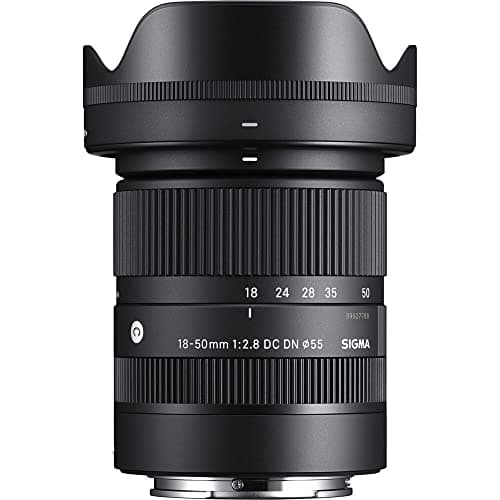
The Sigma 18-50mm F2.8 DC DN Contemporary is a compact, constant-aperture standard zoom for APS-C mirrorless cameras, offering sharp optics and close-focus capability. Its lack of image stabilization and reduced corner performance on very high-resolution sensors are notable trade-offs. Ideal for travel and street photographers who value portability.
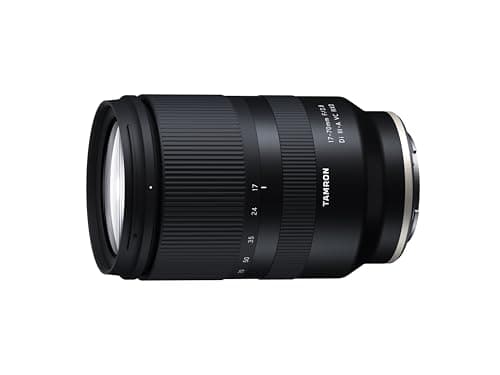
The Tamron 17-70mm f/2.8 Di III-A VC RXD is a versatile, constant-aperture zoom with built-in vibration compensation and weather-sealed construction, delivering sharp images across a useful focal range. Minor vignetting and by-wire focus quirks are its main trade-offs. It excels for APS-C mirrorless shooters needing a fast, all-round travel lens.
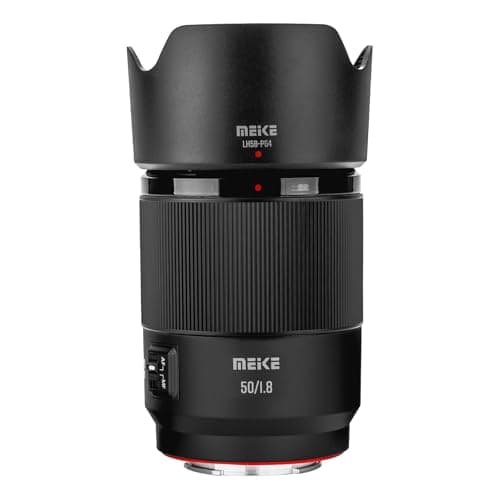
The Meike 50mm f/1.8 is an affordable full-frame prime lens offering a fast aperture and compact build. Its lack of weather sealing and image stabilization limit use in harsh conditions. Ideal for budget-conscious portrait and street shooters.
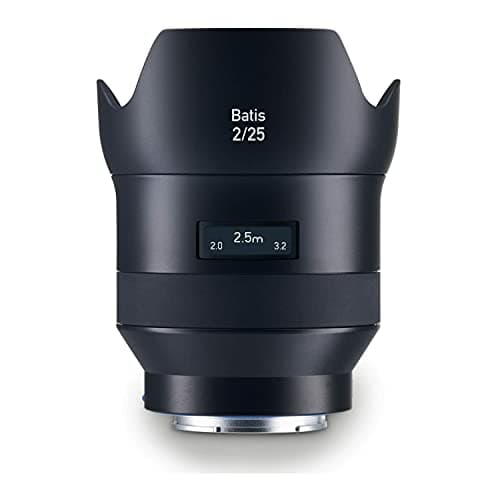
The Zeiss Batis 25mm f/2.0 for Sony E-mount combines fast f/2 optics, robust weather-sealed metal build, and an innovative OLED focus display for precise manual focus assistance. It lacks optical stabilization and its autofocus can be slower, with some corner softness wide open. It serves enthusiasts and professionals needing high-quality wide-angle performance on Sony full-frame mirrorless cameras.
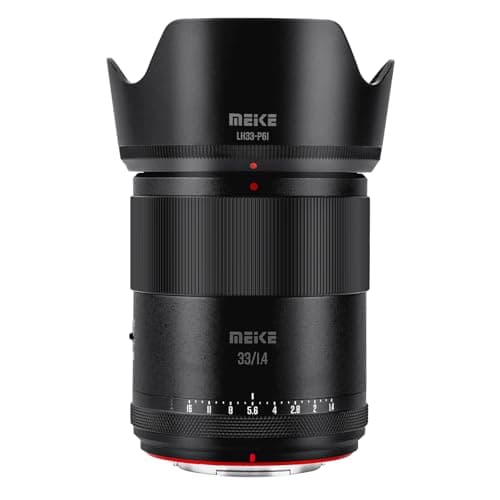
The Meike 33mm f/1.4 (E-mount) delivers sharp 50mm-equivalent performance with quiet STM autofocus and eye-tracking. Flare, vignetting and a stiff aperture ring are notable compromises. Great for APS-C users seeking a versatile, video-friendly prime.
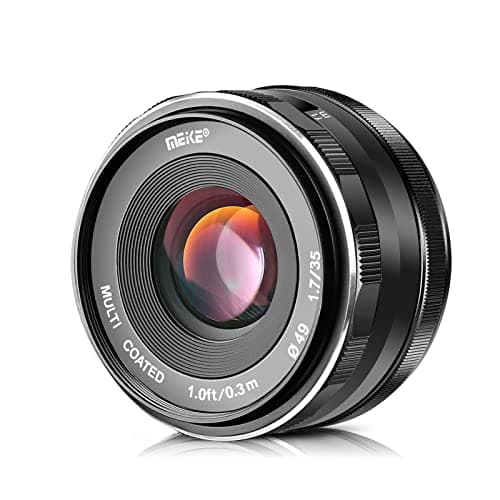
The Meike 35 mm f/1.7 is an all-metal manual-focus prime designed for APS-C mirrorless cameras, delivering a bright aperture and compact size. Soft corners and the absence of autofocus restrict its use for fast or edge-critical work. It's perfect for street and travel photographers who value manual control and low-light capability.
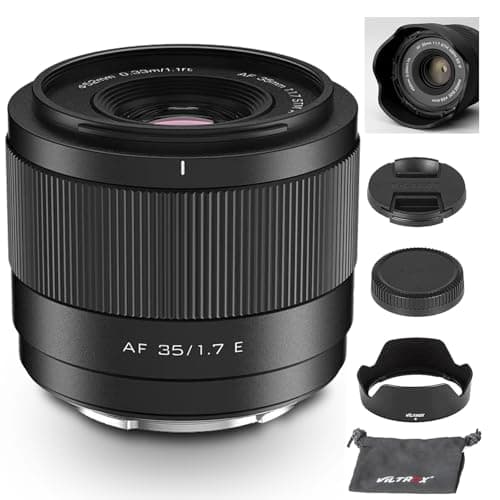
The Viltrox 35mm f/1.7 is an ultra-compact, fast-aperture prime ideal for street and portrait work on Sony APS-C bodies. Its trade-offs are the lack of weather sealing, no aperture ring, and a plastic-heavy build. Best suited for travelers and vloggers who prioritize size and speed over ruggedness.
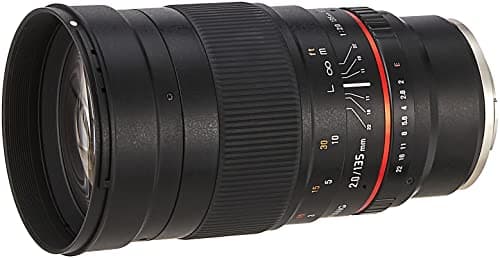
The Samyang 135mm f/2.0 ED UMC is a manual-focus telephoto prime delivering outstanding sharpness and creamy bokeh in a solid aluminum barrel. Its absence of autofocus, image stabilization, and weather sealing restrict fast-action use. Perfect for portrait and low-light telephoto work on Sony bodies.
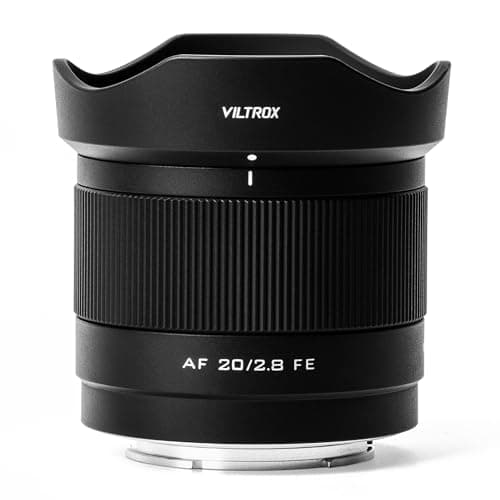
The Viltrox 20mm f/2.8 is a pocket-sized, budget-friendly full-frame wide-angle lens offering fast STM autofocus and close-focus capability. Its main drawbacks are noticeable vignetting, edge softness and a plastic-heavy construction. It is best for beginners, travelers and vloggers who value size and price over top-tier image quality.
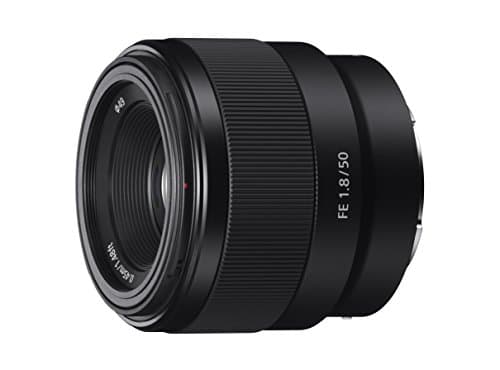
The Sony FE 50mm f/1.8 is a compact, lightweight prime delivering fast f/1.8 aperture and sharp central performance at an affordable price. It suffers from soft corners, vignetting, and lacks weather sealing or stabilization. Best suited for budget-conscious portrait and low-light shooters.
| Attribute | | | | | | | | | | |
|---|---|---|---|---|---|---|---|---|---|---|
35 mm | — | 50 mm | 135 mmbest | — | 25 mm | 33 mm | 20 mm | 50 mm | 35 mm | |
1.7 | 2.8best | 1.8 | 2 | 2.8best | 2 | 1.4 | 2.8best | 1.8 | 1.7 | |
| ↓ lower better | 0.33 m | 0.121 mbest | 0.45 m | 0.8 m | 0.19 m | 0.2 m | 0.4 m | 0.19 m | 0.63 m | 0.3 m |
| ↓ lower better | 170 g | 290 g | 186 g | 862 g | 525 g | 335 g | 341.5 g | 157 gbest | 382 g | 181 g |
— | 2.8 | 1 | — | 4.1best | — | — | — | — | — | |
9best | 7 | 7 | 9best | 9best | 9best | 9best | 7 | 9best | — | |
— | 0.4best | 0.1 | 0.3 | 0.2 | — | — | 0.2 | 0.1 | — | |
11 | 13 | 6 | 11 | 16best | 10 | 12 | 10 | 11 | 6 |
Click an attribute name to sort · Green = best, red = worst (relative to this comparison)
| Attribute | | | | | | | | | | |
|---|---|---|---|---|---|---|---|---|---|---|
Compatibility(2) | ||||||||||
Lens Mount | Sony E | Sony E | Sony E-mount | Sony E | Sony E | Sony E | Sony E | Sony E | Sony E | Sony E |
Mount Compatibility | Sony E-mount APS-C cameras | L-Mount, Sony E, Fujifilm X, Canon RF | Sony E-mount full-frame | Sony E, Sony FE, Canon EF, Nikon F, Sony A/Minolta, Pentax K, Four Thirds, Micro Four Thirds, Samsung NX, Fujifilm X, Canon EF-M | Sony E-mount (APS-C) | Sony E | FUJIFILM X, Nikon Z, Sony E (APS-C) | Sony E (full-frame), Nikon Z, Fuji X | Sony E, Nikon Z, L-mount/Leica-SL | Sony E (APS-C), Fujifilm X (APS-C), Nikon Z |
Features(3) | ||||||||||
Image Stabilization | false | false | false | false | true | — | — | false | — | — |
Autofocus Type | STM | Autofocus | Auto | manual | RXD | Linear motor | STM | STM | STM | Manual |
Focus Type | Internal autofocus | Autofocus | Auto | manual | Autofocus | Autofocus (full-time manual) | autofocus | Internal focus | Autofocus with AF/MF switch | Manual |
Optics(9) | ||||||||||
Focal Length (mm) | 35 mm | 18-50 mm | 50 mm | 135 mm | 17-70 mm | 25 mm | 33 mm | 20 mm | 50 mm | 35 mm |
Maximum Aperture (f‑stop) | 1.7 | 2.8 | 1.8 | 2.0 | 2.8 | 2 | 1.4 | 2.8 | 1.8 | 1.7 |
Minimum Focus Distance (m) | 0.33 m | 0.121 m | 0.45 m | 0.8 m | 0.19 m | 0.2 m | 0.4 m | 0.19 m | 0.63 m | 0.3 m |
Zoom Ratio | — | 2.78 | 1 | — | 4.1 | — | — | — | — | — |
Macro Ratio | — | 0.36 | 0.14 | 0.25 | 0.21 | — | — | 0.17 | 0.1 | — |
Number of Optical Elements | 11 | 13 | 6 | 11 | 16 | 10 | 12 | 10 | 11 | 6 |
Number of Optical Groups | 9 | 10 | 5 | 7 | 12 | 8 | 9 | 8 | 7 | 5 |
Diaphragm Blades | 9 | 7 | 7 | 9 | 9 | 9 | 9 | 7 | 9 | 8-10 |
Coating | Nano multi-layer | — | — | UMC | Fluorine, BBAR | ZEISS T* | Multilayer | HD nano multi-layer | Double-sided multilayer coating | Multi-layer nano coating |
Build & Design(6) | ||||||||||
Weather Sealing | false | true | false | false | true | true | — | false | — | — |
Filter Thread Size (mm) | 52 mm | 55 mm | 49 mm | 77 mm | 67 mm | 67 mm | 55 mm | 52 mm | 58 mm | 49 mm |
Weight (g) | 170 g | 290 g | 186 g | 862 g | 525 g | 335 g | 341.5 g | 157 g | 382 g | 181 g |
Length (mm) | 54.7 mm | 74.5 mm | 103.9 mm | 81 mm | 119.3 mm | 78.74 mm | 82 mm | 59.5 mm | 103.1 mm | 41 mm |
Maximum Diameter (mm) | 64 mm | 65.4 mm | 68.6 mm | 81 mm | 74.6 mm | 78 mm | 66.5 mm | 65 mm | 73 mm | — |
Construction Material | Metal | — | Plastic with metal mount | aluminum alloy | — | — | — | Mixed plastic/aluminum | — | All-metal |
Products in the top-left offer the best value (high score, low price).
Professional reviewers commend the Viltrox 35mm f/1.7 for its ultra-compact footprint, fast aperture and quiet STM AF with eye/face detection, noting it as a solid budget alternative to Fuji's 35mm f/2 lenses. However, they criticize the lack of an aperture ring, weather sealing and the slightly softer wide-open sharpness compared with Viltrox's own 56mm counterpart.
Everyday users consistently praise the lens's pocketable size, light weight, quiet autofocus and attractive bokeh, especially for travel, street and video work. Recurring complaints focus on the missing aperture ring for Fuji users, the plastic feel of the body, and occasional softness at the widest aperture.
“fits in pocket”
“compact and lightweight”
“ultimate workhorse”
Professional reviewers commend the Sigma 18-50mm F2.8 DC DN for its revolutionary compactness, sharp optics and bright constant aperture, calling it an "ultimate workhorse" that delivers excellent image quality in a tiny package. They also note its strong close-focus capability, but point out the lack of image stabilization, corner softness on very high-resolution sensors, and a slightly limited 18 mm wide-end compared with competing lenses.
Everyday users love the lens's pocketable size, sharpness for street and travel shooting, and the value it provides as a daily driver. Common praise centers on its lightweight feel, macro-style close-ups, and affordable price, while recurring themes of criticism include edge distortion, autofocus noise in video, and the missing stabilization feature.
Professional reviewers commend the Sony FE 50mm F1.8 for its excellent value, lightweight construction, sharp center performance and pleasing bokeh, while noting soft corners wide open, noticeable vignetting and the absence of weather sealing and OSS as trade-offs compared to higher-priced alternatives.
Everyday users love the lens's portability, low-light capability and sharpness when stopped down, but repeatedly mention soft corners at the widest aperture, occasional autofocus hiccups and the lack of weather resistance as the main pain points.
Professional reviewers commend the Samyang 135mm f/2 for its outstanding sharpness, low-flare UMC coating and pleasing bokeh, describing it as "ridiculously sharp" across the frame. They also note the solid aluminum construction and balanced handling, but criticize the lack of autofocus, weather sealing and the appearance of diffraction past f/8.
Everyday users praise the lens's sharpness, creamy bokeh and robust build, especially appreciating its performance on high-resolution APS-C and Micro-Four-Thirds bodies. Common complaints focus on the manual-focus only design, the relatively heavy weight for smaller cameras, and occasional concerns about the detachable hood's durability.
Professional reviewers commend the Tamron 17-70mm f/2.8 for its travel-friendly size, constant fast aperture, and the added benefit of VC, which together deliver high-resolution, homogenous images and quiet, responsive autofocus. The lens is praised as a well-balanced, versatile option that feels solid in hand, though critics point out its noticeable vignetting, slight edge softness at 70 mm, and the quirks of its by-wire focus system.
Everyday users love the lens's portability, sharpness and the ability to shoot handheld in low light thanks to the f/2.8 aperture and VC. They frequently cite its "do-it-all" range as a major value, while repeatedly noting the need to correct vignetting and occasional autofocus oddities as the main pain points.
Professional reviewers commend the Batis 25mm for its outstanding sharpness, solid weather-sealed metal build, and the innovative OLED focus display, noting its compactness for a fast wide-angle. However, they criticize its slower, noisier autofocus, lack of stabilization, and occasional corner softness or flare when used wide open without a hood.
Everyday users love the lens's sharpness, sturdy construction, and the OLED display that simplifies manual focusing, especially for low-light and astro work. Recurring complaints focus on slower autofocus, the absence of stabilization, noticeable weight on smaller bodies, and occasional flare without a hood.
Professional reviewers praise the Meike 33mm f/1.4 for delivering sharpness that rivals higher-priced lenses, a quiet STM motor with eye-tracking, and minimal focus breathing, making it a strong value proposition for APS-C shooters. They also note its good contrast and chromatic aberration control, while flagging flare, vignetting, distortion, and a stiff aperture ring as areas needing improvement.
Everyday users consistently highlight the lens's excellent sharpness and reliable autofocus, calling it "excellent" and "great" for its price. Common praise centers on its compactness, bokeh quality, and ease of use, while recurring complaints focus on the stiff aperture ring, flare/ghosting in bright light, and the need to correct vignetting and distortion in post.
Professional reviewers commend the Viltrox 20mm f/2.8 for its unbeatable price, pocketable size, fast STM autofocus with Eye-AF, and solid center sharpness, making it a practical choice for travel and video. However, they consistently point out optical compromises such as strong vignetting, wavy distortion, soft edges, and a plastic-heavy build that keep it from matching the performance of higher-priced rivals.
Everyday users echo the professional praise for portability and value, highlighting how the lens fits easily into daily kits and delivers decent images for the price. The most common criticisms mirror the pros/cons lists: noticeable vignetting, edge softness, and a less premium feel due to the plastic construction.
Professional reviewers praise the Meike 50mm f/1.8 for its tack-sharp resolution, excellent contrast, and beautiful bokeh, noting that its image quality rivals much pricier lenses such as Nikon's 50mm f/1.8G. They also commend its solid build and the value it offers, describing it as an absolute steal for budget-conscious shooters.
Everyday users echo the professional sentiment, highlighting consistent sharpness, pleasing creamy bokeh, solid build feel, and an outstanding price-to-performance ratio. The lens is repeatedly called a "steal" and praised for portrait and low-light capabilities.
Professional reviewers praise the Meike 35mm f/1.7 for its solid metal build, bright f/1.7 aperture and sharp central rendering, calling it an excellent value for beginners and street shooters. They also note its limitations-soft corners, vignetting and the absence of autofocus-making it less suitable for fast action or demanding landscape work.
Everyday users celebrate the lens's low price, lightweight feel and characterful bokeh, often highlighting the enjoyable manual rings and filter compatibility. Common complaints revolve around the learning curve of manual focus, edge softness, vignetting and occasional weight inconsistencies when caps are attached.
