Rankings
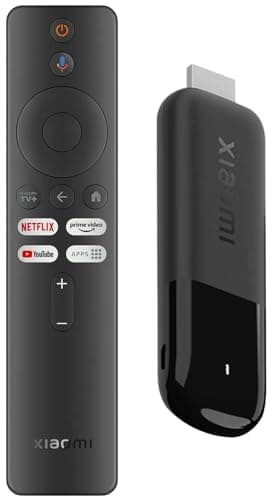
The Xiaomi TV Stick 4K (2nd Gen) Streaming Device delivers high-performance 4K playback with Dolby Vision, Dolby Atmos and Wi-Fi 6 in a pocket-sized form factor. Its lack of Ethernet and modest 8 GB storage keep it from power users who need wired reliability or extensive local media. Best for travelers and secondary-TV setups that prioritize smooth 4K streaming in a tiny package.
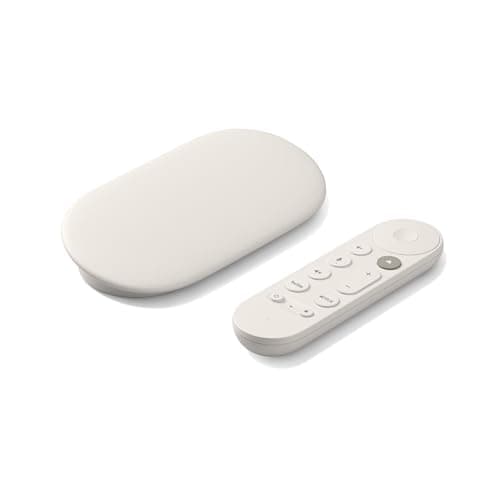
The Google TV Streamer 4K delivers fluid 4K HDR video with Dolby Vision, Dolby Atmos and Ethernet connectivity, backed by 4 GB RAM and 32 GB storage. Its main drawbacks are the absence of Wi-Fi 6 and non-expandable storage, which may limit power users. Ideal for casual streamers invested in the Google ecosystem and needing reliable wired networking.
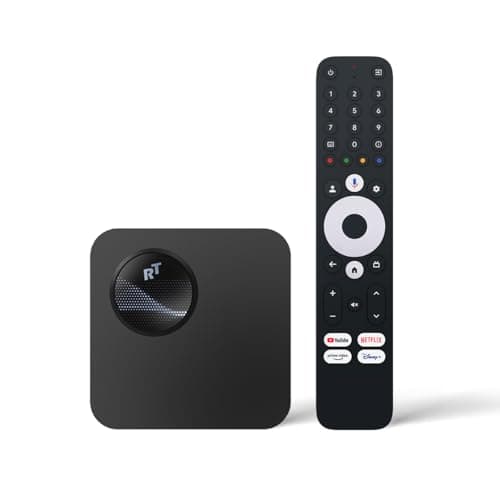
The RT RockTek GX1 is a compact Google TV 12 streamer featuring Wi-Fi 6, Dolby Vision, HDR10+ and a Realtek quad-core processor for smooth 4K playback. Its limitations include a 100 Mbps Ethernet port, lack of VC-1 support and potential heat buildup. It suits casual streamers and Google TV fans who value a small form factor and premium HDR performance.
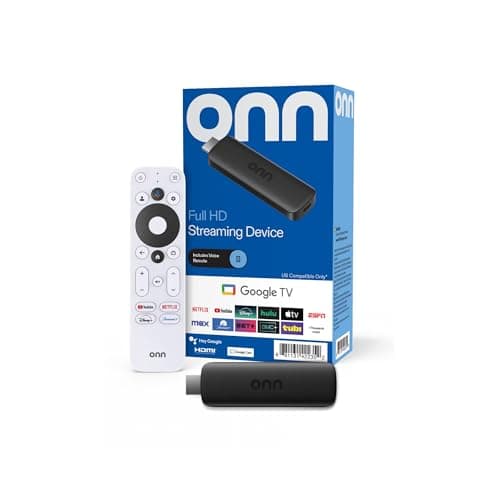
The It's Brazilian Full HD Streaming Device offers budget-friendly 4K streaming with Dolby Vision and HDR10+ alongside a voice-controlled Google Assistant remote. Its modest processor, limited storage, and lack of Ethernet keep it from handling intensive multitasking. Best for secondary-room TVs and casual viewers who want 4K on a budget.
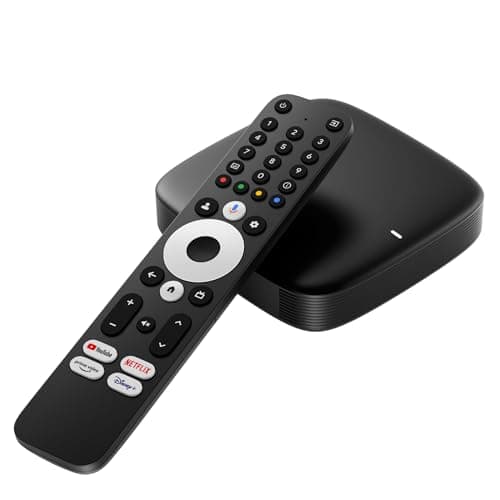
The MAG555 is a Google TV-based set-top box delivering native 4K @ 60 fps with HDR10+ and built-in Chromecast, complemented by a voice-enabled IR remote. Its modest 2 GB RAM and 16 GB storage may constrain power users, and it lacks expandable storage. Best suited for IPTV enthusiasts and households that value Google Assistant integration.
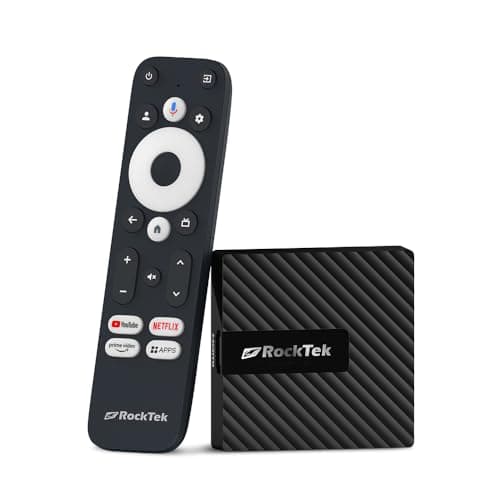
The RockTek GB1 is an ultra-compact Google-TV dongle delivering 4K HDR with Dolby Vision and Dolby Atmos, powered by a Realtek chipset that supports modern codecs like AV1. Its need for a USB-C hub, modest storage, and heating under load are notable trade-offs. Best suited for travelers or minimal-space setups who prioritize portability over expandability.
| Attribute | | | | | | |
|---|---|---|---|---|---|---|
4 GBbest | 4 GBbest | 2 GB | 2 GB | 2 GB | 2 GB | |
32 GBbest | 32 GBbest | 8 GB | 8 GB | 16 GB | 16 GB | |
60 Hzbest | 60 Hzbest | 60 Hzbest | 60 Hzbest | 60 Hzbest | 60 Hzbest | |
1 Gbpsbest | 0.1 Gbps | — | — | — | 0.1 Gbps | |
| ↓ lower better | 162 g | 115 g | 28 gbest | 227 g | 259 g | 363 g |
1 yearsbest | 1 yearsbest | 1 yearsbest | — | 1 yearsbest | — |
Click an attribute name to sort · Green = best, red = worst (relative to this comparison)
| Attribute | | | | | | |
|---|---|---|---|---|---|---|
Software(1) | ||||||
Operating System | Android TV OS | Google TV 12 | Google TV | Google TV (Android TV compatible) | Google TV | Google TV |
Audio(1) | ||||||
Supported Audio Formats | Dolby Digital, Dolby Digital Plus, Dolby Atmos | Dolby Atmos, Dolby Digital | MP3, AAC, RM, FLAC | Dolby Audio | Dolby Atmos, Dolby Digital Plus, Dolby Surround | Dolby Digital, Dolby Digital Plus |
Performance(4) | ||||||
Processor | — | Realtek RTD1325TPV (Quad-Core Cortex-A55, 20K DMIPS) | Quad-core Cortex-A55 | Quad-core Cortex-A55 | Cortex-A55 | Cortex-A35 |
GPU | — | Mali-G57 | ARM G310 V2 | — | Mali-G57 | Mali-G31 MP2 |
RAM (GB) | 4 GB | 4 GB | 2 GB | 2 GB | 2 GB | 2 GB |
Internal Storage (GB) | 32 GB | 32 GB | 8 GB | 8 GB | 16 GB | 16 GB |
Display(1) | ||||||
Maximum Video Resolution | 3840x2160 | 3840x2160 | 4K | 4K | 3840x2160 | 3840x2160 |
Connectivity(3) | ||||||
Bluetooth Version | 5.1 | 5.2 | 5.2 | — | — | 5.0 |
Wi‑Fi Standard | Wi‑Fi 5 | Wi‑Fi 6 | Wi‑Fi 6 | 802.11ac | — | — |
Ethernet Speed (Gbps) | 1 Gbps | 0.1 Gbps | — | — | — | 0.1 Gbps |
Controls(1) | ||||||
Remote Type | Voice remote | Voice Remote | Bluetooth voice remote | Voice remote with Google Assistant | Voice remote | Voice IR remote |
Build & Design(2) | ||||||
Device Weight (g) | 162 g | 115 g | 28 g | 227 g | 259 g | 363 g |
Device Dimensions (H×W×D) (mm) | 76.2×25.4×162.56 mm mm | 93.98×22.86×93.98 mm mm | 40x90x165 mm | 51×102×165 mm mm | 15x70x70 mm mm | 38.1x127x127 mm mm |
Products in the top-left offer the best value (high score, low price).
Professional reviewers commend the Google TV Streamer 4K for its fluid 4K video playback, rapid app switching, and extensive Dolby Vision, HDR10+ and Dolby Atmos support, while also highlighting the value of Gemini voice integration and Matter/Thread smart-home features. However, they criticize the lack of Wi-Fi 6, the fixed 32 GB storage without expansion, and the limited gaming performance, questioning whether the specs justify its 2024 price for power users.
Everyday users praise the device for seamless 4K streaming, quick app launches, reliable Ethernet connectivity, and the convenience of a voice remote, noting the noticeable speed boost over older Chromecasts. Recurring complaints focus on Wi-Fi 5 bandwidth constraints, the inability to expand storage, and insufficient power for gaming, with some feeling the hardware is under-powered for its cost.
“did not skip a beat”
“topline product with great RTD1325 performance.”
“"Ok" rating due to this.”
Professional reviewers commend the GX1 for its striking Dolby Vision and HDR10+ performance at 2160p60, smooth AV1 playback, and the polished Google TV 12 experience. However, they point out the 100 Mbps Ethernet as a bottleneck for high-bitrate local streaming and note the absence of VC-1 support and limited ventilation as drawbacks for power users.
Everyday users overwhelmingly praise the GX1's video and audio quality, compact size, and responsive interface, often calling it a top-line product that outshines competitors. The most common complaints revolve around screen-resize issues on certain LCD TVs and the lack of Gigabit Ethernet for heavy NAS-based media consumption.
Professional reviewers praise the Xiaomi TV Stick 4K (2nd Gen) for delivering performance on par with much larger TV boxes, highlighting its smooth interface and substantial CPU/GPU improvements, while noting the lack of AI upscaling as the main drawback.
Everyday users consistently commend the device for its lag-free 4K streaming, portable form factor, and responsive UI, with few complaints aside from the missing AI super-resolution capability.
Professional reviewers commend the device for delivering solid 4K performance, vibrant HDR visuals, and excellent value at a low price point, noting its smooth streaming and robust benchmark scores. However, they criticize its modest processor, limited storage, and missing Wi-Fi 6 or Ethernet, warning that power users may find it under-powered for intensive tasks.
Everyday consumers praise the device's quick app launches, easy voice control, and reliable 4K streaming of popular services, while repeatedly mentioning storage constraints and occasional lag as the main pain points. The consensus is that it works well for casual streaming on secondary TVs but feels limited for heavy usage.
Professional reviewers commend the GB1 as a high-performance Android TV mini box that delivers stunning 4K HDR with Dolby Vision and Dolby Atmos, thanks to its Realtek RTD1315C chipset and Mali-G57 GPU. They highlight its future-proof codec support (including AV1) and ultra-compact design, while noting the need for a USB-C hub and occasional heating during intensive gaming.
Everyday users praise the seamless Google Assistant voice control, pocketable size, and reliable 4K streaming on popular services, but commonly complain about the requirement for a USB-C hub, heating under load, limited internal storage, and the basic plastic build.
Professional reviewers consider the MAG555 a flagship device that elevates Infomir's lineup with Google TV, delivering efficient 4K performance thanks to its Amlogic S905Y4-B chipset. They commend the unified app ecosystem, voice control, and Chromecast integration, while noting the limited RAM and storage as potential constraints for power users.
Everyday users praise the device's native 4K @ 60 fps video with HDR support and the convenience of voice-controlled Google Assistant, but commonly mention the limited 2 GB RAM and 16 GB storage as drawbacks for heavy app use.
