Rankings
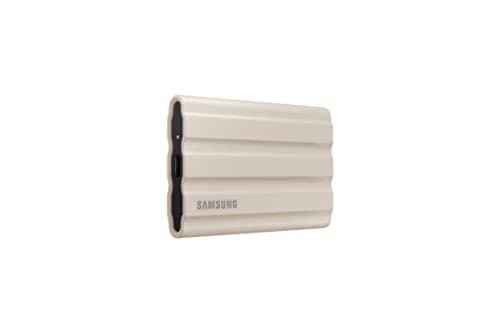
The Samsung T7 Shield 2TB is a rugged portable SSD offering IP65 protection, 3 m drop resistance, and fast 1050 MB/s read performance via USB 3.2 Gen 2. Its bulkier chassis and premium price make it less ideal for users prioritizing minimal size or lowest cost. Perfect for photographers and field professionals who need durability without sacrificing speed.
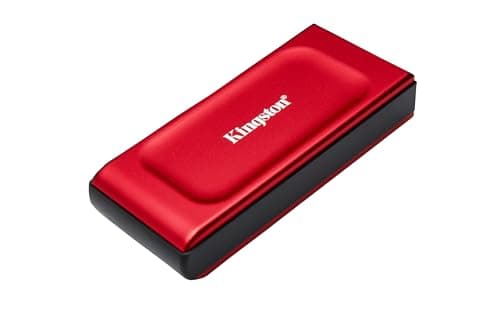
The Kingston XS1000R 2TB is a pocket-sized external SSD that delivers industry-leading 1,050 MB/s read speeds in a featherweight metal-plastic chassis. Its main trade-offs are the need for a USB 3.2 Gen 2 host to hit peak performance and the lack of an included protective case. Ideal for travelers and mobile professionals who need fast, high-capacity storage on the go.
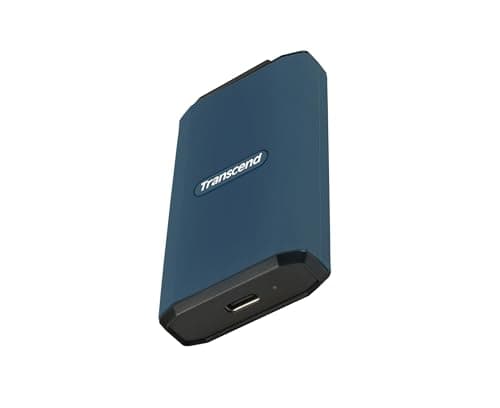
The Transcend ESD410 provides 2 TB of storage with 2,000 MB/s read/write performance, MIL-STD-810G shock resistance, IPX5 water resistance, and 256-bit AES encryption. Sustained write speeds fall after the 64 GB pSLC cache and full speed requires a compatible host. Perfect for field-working videographers needing rugged, high-speed storage.
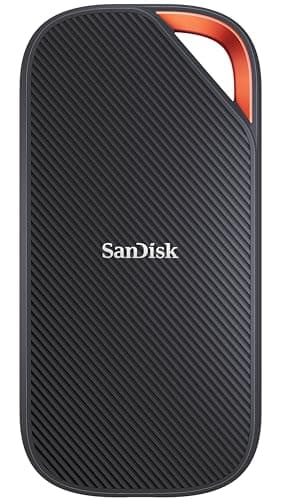
The SanDisk Extreme PRO Portable SSD 4TB delivers Thunderbolt-class performance with up to 3800 MB/s read and 3700 MB/s write speeds in a rugged, IP65-rated chassis. Its peak speeds are only reachable on USB4 or Thunderbolt 4 hosts, and it lacks built-in hardware encryption. Ideal for creators needing ultra-fast portable storage.
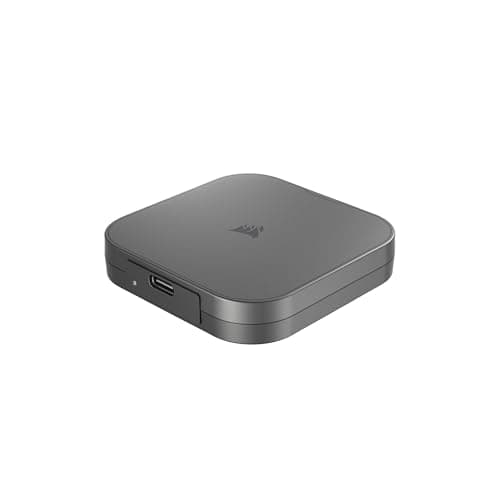
The Corsair EX400U 2TB delivers blazing USB4 performance up to 4,000 MB/s read and includes MagSafe compatibility in a tiny 64 mm square case. It lacks an IP rating and rugged drop protection, and carries a premium price. Perfect for professionals needing near-internal speeds on modern USB4 devices.
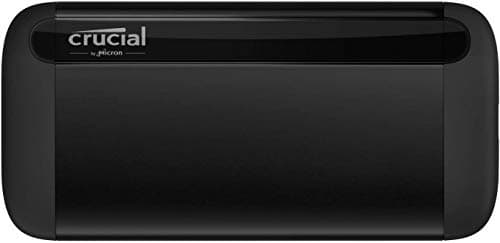
The Crucial X8 2TB portable SSD delivers up to 1050 MB/s sequential read and write speeds in a rugged aluminum unibody with IP67 protection. Its heavier weight and reliance on a USB 3.2 Gen 2x1 interface limit portability and maximum bandwidth. Ideal for creators and travelers needing durable high-speed storage.
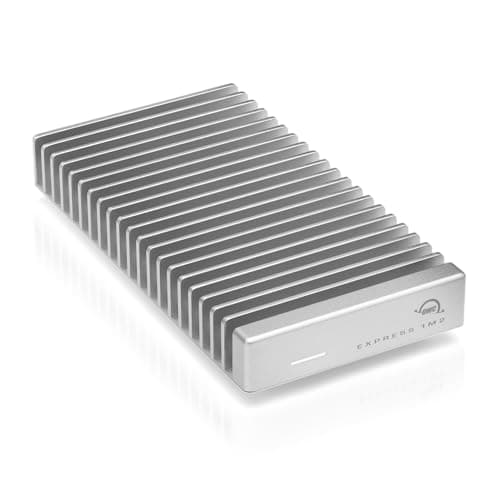
The OWC Express 1M2 offers up to 3836 MB/s USB4 performance in a rugged aluminum enclosure with a patented heatsink and upgradeable M.2 SSDs. Its larger size and potential heat under sustained loads are drawbacks. It targets pros who need fast, future-proof portable storage.
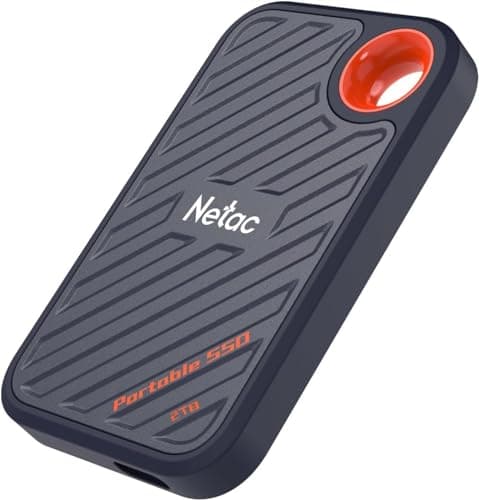
The Netac ZX20 2TB Extreme Portable NVMe SSD provides a feather-light, pocket-sized form factor with up to 2000 MB/s reads when paired with a USB 3.2 Gen 2x2 host. Its limitations include reliance on rare host ports for peak speeds, a plastic enclosure without IP protection, and a higher price point. It is best for mobile professionals who value ultra-light weight and high capacity over ruggedness.
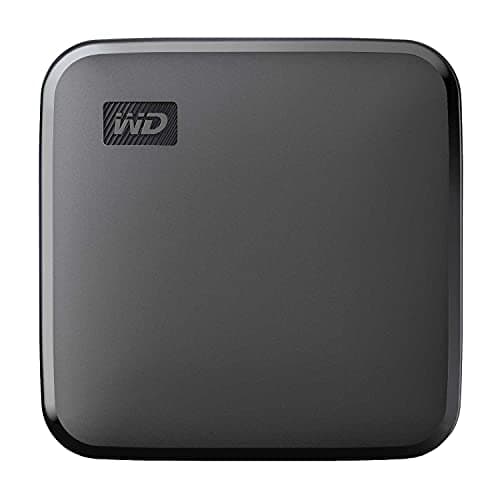
WD's Elements SE 2TB portable SSD offers a spacious 2 TB capacity with read speeds up to 400 MB/s in a compact, drop-resistant design. Its modest performance and lack of encryption limit it to users seeking affordable, everyday backup storage.
| Attribute | | | | | | | | | |
|---|---|---|---|---|---|---|---|---|---|
2,000 GB | 2,000 GB | 2,000 GB | 2,048 GBbest | 2,000 GB | 2,000 GB | 4 GB | 2 GB | 2,048 GBbest | |
1,050 MB/s | 1,050 MB/s | 3,836 MB/s | 2,000 MB/s | 1,050 MB/s | 4,000 MB/sbest | 3,800 MB/s | 400 MB/s | 2,000 MB/s | |
1,050 MB/s | 1,000 MB/s | — | 2,000 MB/s | 1,000 MB/s | 3,600 MB/s | 3,700 MB/sbest | — | 1,700 MB/s | |
| ↓ lower better | 100 g | 97 g | 253 g | 65 g | 28.7 g | 92 g | 172 g | 27 gbest | 91 g |
3 years | 3 years | 2 years | 5 yearsbest | 5 yearsbest | 3 years | 5 yearsbest | 3 years | 3 years | |
2.3 m | 3 mbest | — | 3 mbest | — | — | — | 2 m | — |
Click an attribute name to sort · Green = best, red = worst (relative to this comparison)
| Attribute | | | | | | | | | |
|---|---|---|---|---|---|---|---|---|---|
General(2) | |||||||||
Warranty (years) | 3 years | 3 years | 2 years | 5 years | 5 years | 3 years | 5 years | 3 years | 3 years |
Operating Temperature (°C) | — | 0-60 °C | 5-35 °C | 0-60 °C | 0-40 °C | 0-70 °C | — | — | — |
Connectivity(2) | |||||||||
Interface | USB 3.2 Gen 2x1 | USB 3.2 Gen 2 | USB4 | USB 3.2 Gen 2x2 (20 Gbps) | USB 3.2 Gen 2 | USB4 Type‑C | USB4 Gen 3x2 | USB 3.0 | USB 3.2 Gen 2x2 |
OS Compatibility | PC, Mac | Windows 7+, macOS 10.10+, Android Lollipop+ | macOS, Windows, iPadOS, iOS, ChromeOS, Linux, Android | iPhone17/15/16/iPad/Mac/Tablets/PS5/Windows/Android | Windows 11/10, macOS 11.15+, Linux 4.4+, Chrome OS, Android, iOS/iPadOS 13+ | Windows, macOS, iOS/iPadOS | — | Windows, macOS | Windows, macOS, Linux, Android |
Build & Design(4) | |||||||||
Weight (g) | 100 g | 97 g | 253 g | 65 g | 28.7 g | 92 g | 172 g | 27 g | 91 g |
Dimensions (L×W×H) (mm) | 110×53×11.5 mm mm | 86x57x12 mm | 5.1 x 2.7 x 0.9 inches mm | 42×79×14.5 mm mm | 69.6×32.5×13.5 mm mm | 64.3×64×12 mm mm | 101x53x10 mm mm | 64.5 x 8.6 x 64.5 mm mm | 71.5×43.5×8 mm mm |
Drop Resistance (m) | 2.3 m | 3 m | — | 3 m | — | — | — | 2 m | — |
Enclosure Material | Aluminum | — | Aluminum | — | Metal + plastic | Aluminum top, plastic sides and bottom | silicone shell, aluminum chassis | — | ABS Plastic |
Accessories(1) | |||||||||
Included Accessories | USB‑C to USB‑A adapter; USB‑C to USB‑C adapter | USB‑C to C and USB‑C to A cables | 12" USB4 cable, Screwdriver, User guide | USB‑C to‑C cable, USB‑A to‑C cable | 12" USB Type‑C to USB‑A cable; USB‑A to USB‑C adapter | 30 cm USB‑C to USB‑C cable (40 Gbps, 60 W PD), 7 cm USB‑C cable with 90° connector | — | USB cable | USB‑C to C cable, USB‑C to A cable, welcome guide |
Storage(2) | |||||||||
Capacity (GB) | 2000 GB | 2000 GB | 2000 GB | 2048 GB | 2000 GB | 2000 GB | 4 GB | 2 GB | 2048 GB |
NAND Type | — | — | NVMe | 3D NAND | 3D | — | — | — | — |
Performance(2) | |||||||||
Sequential Read Speed (MB/s) | 1050 MB/s | 1050 MB/s | 3836 MB/s | 2000 MB/s | 1050 MB/s | 4000 MB/s | 3800 MB/s | 400 MB/s | 2000 MB/s |
Sequential Write Speed (MB/s) | 1050 MB/s | 1000 MB/s | — | 2000 MB/s | 1000 MB/s | 3600 MB/s | 3700 MB/s | — | 1700 MB/s |
Features(2) | |||||||||
Hardware Encryption | — | true | — | true | — | — | — | false | — |
IP Rating | IP67 | IP65 | — | IPX5 | — | — | IP65 | — | — |
Products in the top-left offer the best value (high score, low price).
Professional reviewers consistently commend the X8 for its industry-leading 1050 MB/s sequential speeds, low latency benchmarks, and robust aluminum construction that passes 7.5-foot drop tests. The SSD-Tester.com score of 1083 underscores its strong performance, while reviewers also note the limitation imposed by the USB 3.2 Gen 2x1 interface and a slightly bulkier, heavier form factor compared with the X6.
Everyday users echo the professional praise, emphasizing the noticeable speed boost for games, media, and backups, as well as the ruggedness that survives travel and drops. The included adapters are frequently mentioned as a convenience, and no significant negative feedback has surfaced beyond minor concerns about weight and the need for compatible ports.
“higher quality SSD”
“Fast transfers (1,050/1,000 MB/s for large files/videos/games) and rugged IP65 build surviving drops/water make it perfect for field work.”
“Bulkier size and higher price compared to the standard T7, but worth it for durability.”
Select the X8 for tougher environments; select the T7 for ultra-light travel and lower cost.
Opt for the X8 when durability and endurance are paramount; opt for the SanDisk Extreme if weight and bundled cable are more important.
Choose the Kingston XS1000R for ultimate pocketability; choose the Samsung T7 Shield when rugged protection is a priority.
Select the Kingston XS1000R for the lightest, most portable 2 TB SSD; select the SanDisk Extreme Pro if maximum transfer speed outweighs size and price considerations.
Professional reviewers praise the T7 Shield for marrying high-speed USB 3.2 Gen 2 performance with rugged IP65 protection and a surprisingly lightweight chassis, making it a strong choice for creators and field professionals. The main criticisms focus on its bulkier profile and higher price relative to the standard T7, as well as a short USB-C cable length.
Everyday users consistently highlight the fast transfer rates and the peace of mind provided by the IP65-rated, drop-proof design, especially for outdoor and on-the-go workflows. Recurring complaints revolve around the device's larger size compared to the non-rugged T7 and its premium cost, though many consider the durability worth the extra expense.
Professional reviewers praise the Express 1M2 for its blistering USB4 speeds, robust aluminum heatsink that prevents throttling, and the flexibility of a user-replaceable SSD. They position it as a high-performance tool for DITs and video editors needing fast off-loads, while noting the trade-off of increased size and heat under sustained load.
Early consumer feedback is limited but generally positive, highlighting the fast transfer rates, lightweight empty chassis, and easy plug-and-play use. Common concerns revolve around heat generation, the need to reformat for Windows, and the lack of extensive user reviews due to its recent launch.
Professional reviewers such as SSD-Tester and Guru3D highlighted the drive's lightning-fast peak throughput-over 2 GB/s in synthetic benchmarks-and its rugged construction that meets MIL-STD-810G and IPX5 standards. They praised its suitability for high-resolution video workflows but cautioned that sustained write speeds dip after the 64 GB pSLC cache is used up and that full performance requires a USB 3.2 Gen 2x2 host.
Professional reviewers commend the XS1000R for its ultra-lightweight metal/plastic build, fast 1,050/1,000 MB/s performance and broad OS support, positioning it as a highly portable solution for professionals. Their main criticisms focus on the lack of an included protective case and the need for a USB 3.2 Gen 2 host to realize full speeds, with some noting inconsistent weight reporting.
Everyday users consistently praise the drive's tiny size, featherweight feel, fast transfers and plug-and-play simplicity, especially on smartphones and laptops. Recurring complaints revolve around the missing protective case, slower speeds on legacy ports, and occasional confusion over the listed weight.
Professional reviewers praise the EX400U for its tiny footprint, blazing USB4 performance, and hassle-free plug-and-play experience. The inclusion of a full-length 40 Gbps cable and the ability to operate without a separate power brick were highlighted as strong points, while the drive's speed is consistently described as comparable to internal SSDs.
Professional reviewers commend the Extreme PRO USB4 SSD for its Thunderbolt-class speeds, rugged construction, and real-world bandwidth that validates the advertised numbers. However, they caution that the full performance envelope is only reachable on USB4 or Thunderbolt 4 hosts, and that 4K random write performance has slipped compared to earlier USB 3.2 models, with endurance data still missing.
Everyday users largely echo the reviewers' praise for blazing transfer rates and the drive's durability, especially for on-the-go creators. The most common complaints revolve around slower speeds on legacy ports and the absence of clear endurance specifications, though no widespread reliability issues have been reported.
Professional reviewers consider the WD Elements SE a solid, affordable choice for everyday storage, praising its reliability, decent read speed, and ruggedness, but they consistently note its speed ceiling and heating under load as drawbacks compared to higher-end SSDs.
Everyday users appreciate the drive's fast, compact nature and reliable backup performance, especially for gaming and media servers, while repeatedly mentioning heat buildup during long transfers and wishing for faster speeds.
Professional reviewers commend the Netac ZX20 for its feather-light weight, compact size, and useful cable bundle, noting it delivers solid performance on compatible USB 3.2 Gen 2 ports. However, they caution that the advertised top speeds require a rare Gen 2x2 host, the plastic enclosure feels flimsy and lacks any IP protection, and the price is higher than comparable models with similar capacity.
Everyday users appreciate the drive's portability, lightweight feel, and the convenience of the included cables, but they frequently express disappointment when the real-world speeds fall short of the advertised 2000 MB/s and criticize the cheap-feeling plastic housing and the absence of an IP rating.
Choose the T7 if you need built-in encryption and don't mind the extra weight; choose the EX400U for lighter weight and integrated cable convenience.
