Rankings
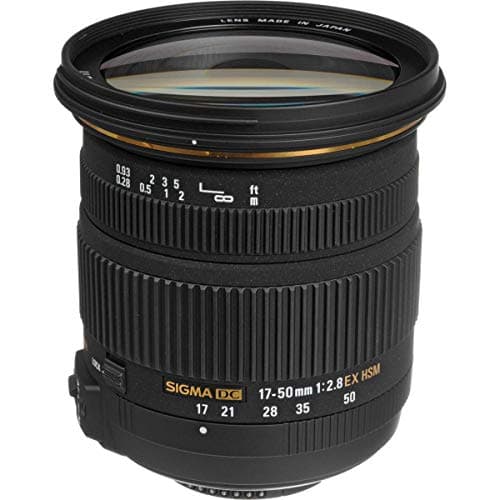
The Sigma 17-50mm f/2.8 EX DC OS HSM FLD provides a lightweight, constant-aperture zoom with optical stabilization and sharp image quality for APS-C DSLRs. Corner softness at the wide end and a plasticky build are its main compromises. Perfect for travel and street photographers seeking a portable fast zoom.
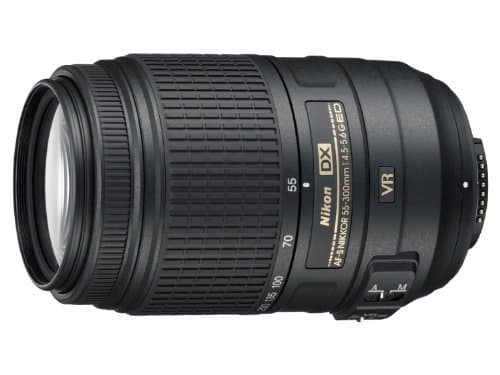
The Nikon 55-300mm f/4.5-5.6G ED VR provides a broad 5.5× zoom and solid VR II for DX-format cameras. Zoom creep and slower AF can hinder fast-action shooting, and edge softness remains at the long end. Best suited for entry-level DX users seeking affordable telephoto versatility.
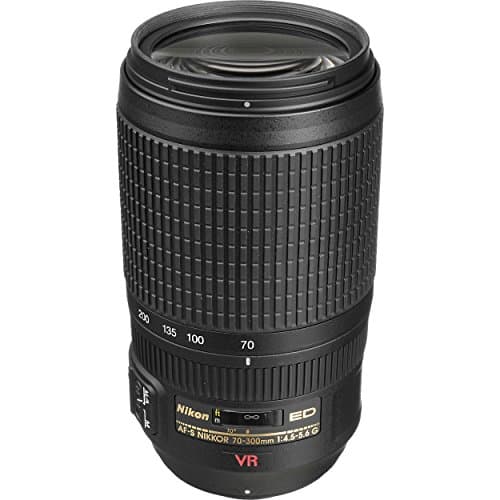
The Nikon 70-300mm f/4.5-5.6G VR is a lightweight telephoto zoom offering a versatile 70-300 mm range with effective VR II stabilization. Its variable aperture and lack of weather sealing limit low-light performance and durability. Ideal for beginner to intermediate Nikon shooters needing portable reach.
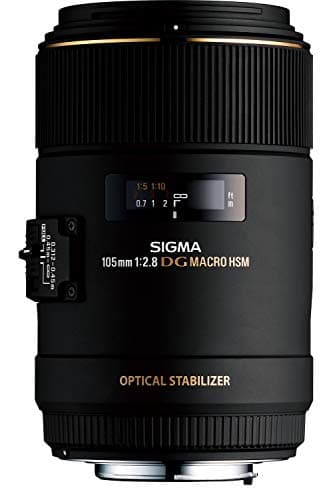
The Sigma 105mm f/2.8 EX DG OS HSM Macro is a full-frame medium-telephoto macro lens offering true 1:1 reproduction and optical stabilization. Its plasticky construction and diffraction at small apertures limit its premium appeal. Ideal for macro shooters seeking value and handheld capability.
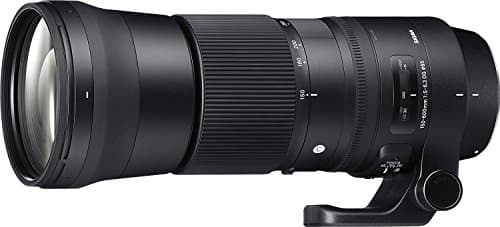
The Sigma 150-600mm f/5-6.3 DG OS HSM Contemporary delivers a lightweight super-telephoto zoom with strong stabilization and sharp optics for wildlife and sports. Its variable f/6.3 aperture at the long end and front-heavy balance can hinder low-light handheld work. Suited for enthusiasts needing long reach without a tripod.
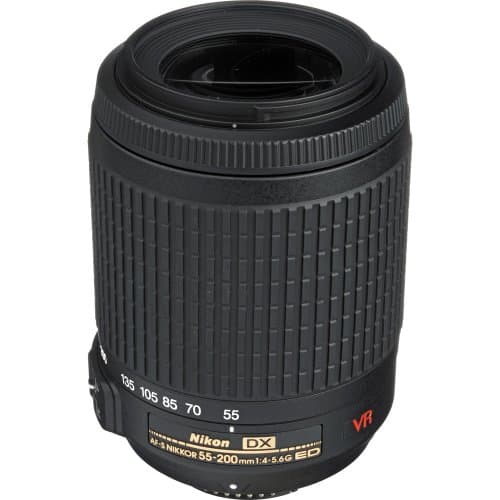
Nikon's 55-200 mm f/4-5.6G ED IF AF-S DX VR lens provides a versatile telephoto range with effective 4-stop vibration reduction in a compact, retractable design. Softness at the 200 mm end and a plastic build detract from its otherwise strong value. Ideal for budget-conscious DX users needing a lightweight zoom for travel and general photography.
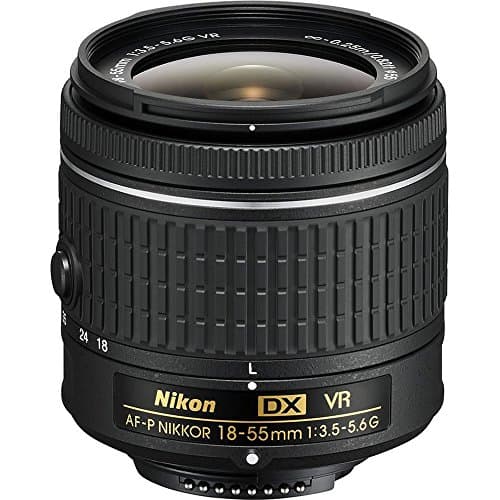
Nikon's AF-P DX 18-55 mm f/3.5-5.6G VR is a feather-light kit zoom offering silent AF-P stepping motor and up to 4-5 stops of VR for everyday shooting. The plastic construction and limited low-light capability are trade-offs for its portability and price. Suited for beginners and travelers needing a compact, versatile everyday lens.
| Attribute | | | | | | | |
|---|---|---|---|---|---|---|---|
— | — | — | — | 105 mmbest | — | — | |
— | — | — | — | 2.8best | 2.8best | — | |
| ↓ lower better | 2.8 m | 1.1 m | 1.4 m | 1.5 m | 0.312 m | 0.28 m | 0.25 mbest |
| ↓ lower better | 1,930 g | 335 g | 580 g | 745 g | 725 g | 565 g | 205 gbest |
4 | 3.6 | 5.5best | 4.3 | 1 | 2.9 | 3.1 | |
9best | — | 9best | 9best | 9best | 7 | 7 | |
0.2 | 0.3 | 0.3 | 0.3 | 1best | 0.2 | 0.4 | |
20best | — | 17 | 17 | 16 | 17 | 12 |
Click an attribute name to sort · Green = best, red = worst (relative to this comparison)
| Attribute | | | | | | | |
|---|---|---|---|---|---|---|---|
Compatibility(2) | |||||||
Lens Mount | Nikon | Nikon F | Nikon F-Bayonet | Nikon F-Bayonet | Nikon F | Multiple | Nikon F |
Mount Compatibility | Full Frame (FX), compatible with DX | — | DX | FX, DX | Nikon DSLR | Canon EF‑S, Nikon F (DX), Pentax KAF3, Sigma SA, Sony/Minolta Alpha DT | D7500, D5600, D5500, D5300, D3400, D3300, D500, D850, Df, D5, D810, D750, D7200, D7100, D4 Series, D3 Series, D2 Series, D1 Series, D800 Series, D700 |
Features(2) | |||||||
Autofocus Type | HSM | SWM | AF-S | AF-S | HSM | HSM | AF-P |
Focus Type | Autofocus | auto/manual | Auto | Internal | Auto | Autofocus | auto/manual |
Optics(9) | |||||||
Focal Length (mm) | 150-600 mm | 55-200 mm | 55-300 mm | 70-300 mm | 105 mm | 17-50 mm | 18-55 mm |
Maximum Aperture (f‑stop) | 5-6.3 | 4.0-5.6 | 4.5-5.6 | 4.5-5.6 | 2.8 | 2.8 | 3.5-5.6 |
Minimum Focus Distance (m) | 2.8 m | 1.1 m | 1.4 m | 1.5 m | 0.312 m | 0.28 m | 0.25 m |
Zoom Ratio | 4.0 | 3.64 | 5.5 | 4.3 | 1 | 2.94 | 3.06 |
Macro Ratio | 0.204 | 0.289 | 0.28 | 0.25 | 1 | 0.2 | 0.38 |
Number of Optical Elements | 20 | — | 17 | 17 | 16 | 17 | 12 |
Number of Optical Groups | 14 | — | 11 | 12 | 11 | 13 | 9 |
Diaphragm Blades | 9 | — | 9 | 9 | 9 | 7 | 7 |
Coating | Water/Oil Repellent | — | Super Integrated Coating | Super Integrated Coating | SLD | Super multi-layer | — |
Build & Design(6) | |||||||
Weather Sealing | true | — | false | false | true | — | — |
Filter Thread Size (mm) | 95 mm | — | 58 mm | 67 mm | 62 mm | 77 mm | 55 mm |
Weight (g) | 1930 g | 335 g | 580 g | 745 g | 725 g | 565 g | 205 g |
Length (mm) | 260 mm | 78.7 mm | 123 mm | 144 mm | 127 mm | 92 mm | 62.5 mm |
Maximum Diameter (mm) | 105 mm | 68.6 mm | 77 mm | 80 mm | 78.3 mm | 84 mm | 64.5 mm |
Construction Material | TSC | plastic | Polycarbonate | Polycarbonate | Metal mount, plastic | — | — |
Products in the top-left offer the best value (high score, low price).
Professional reviewers praise the Sigma Contemporary for its lightweight construction, strong optical stabilization, and sharpness that rivals more expensive lenses, making it a compelling handheld option for wildlife and sports. However, they note the variable f/6.3 aperture at the long end and occasional edge softness, and consider the plastic-heavy build less rugged than the Sports counterpart.
Everyday users consistently commend the lens's manageable weight, sharp images, fast AF, and effective stabilization, often saying it lets them shoot handheld without a tripod. Common complaints revolve around the slower f/6.3 aperture at 600 mm, some softness at the tele extreme, front-heavy balance when zoomed, and the overall bulk when accessories are added.
“"4-stop Vibration Reduction system enables handheld shooting at slow shutter speeds, improving low-light performance."”
“"Compact, retractable design reduces storage size and keeps lens weight at only 300 g for easy portability."”
“"Noticeable softness and loss of sharpness at the 200mm focal length, especially when shooting wide open."”
Professional reviewers consistently highlight the lens's exceptional value, compact build, and effective 4-stop VR, noting very good sharpness through most of the zoom range. However, they point out a clear weakness at 200mm where sharpness falls off, as well as chromatic aberration at the extremes, slower autofocus, and a plastic construction that feels cheap. The lack of advanced VR modes is also mentioned as a limitation for demanding shooting scenarios.
Everyday users echo the professional praise for value, lightweight design, and VR performance, often calling the lens a great addition to kit setups for travel and general photography. Common praise centers on sharp center performance and portability. Recurring complaints mirror the expert critiques, focusing on softness at 200mm, plastic build quality, and sluggish autofocus, with several users noting the limited VR mode options.
Professional reviewers commend the Nikon 55-300mm for its generous reach, quiet Silent Wave Motor, and effective VR II stabilization, noting that the ED and HRI elements keep chromatic aberration low. However, they criticize the soft corner performance at 300mm, slower autofocus compared to higher-end telephotos, and diffraction limits when stopping down beyond f/16.
Everyday users love the lens for its lightweight, travel-friendly design, solid VR performance, and ability to get close-up shots of insects, but they repeatedly mention zoom creep, slower AF for action, and noticeable softness in the telephoto corners as recurring pain points.
Professional reviewers consider the Nikon 70-300mm f/4.5-5.6G VR a solid, budget-friendly telephoto zoom. They commend its strong center sharpness, effective VR II stabilization, quiet AF-S motor, and useful 9-blade rounded diaphragm, while noting edge softness at 300 mm, variable aperture limitations, and the absence of weather sealing.
Everyday users love the lens for its lightweight portability, good sharpness on wildlife and sports subjects, and reliable autofocus, seeing it as great value for the price. Common frustrations revolve around edge softness and chromatic aberration at the long end, focus hunting in dim light, and concerns about the plastic build and lack of weather resistance.
Professional reviewers commend the Sigma 105mm f/2.8 macro for its excellent sharpness from wide open to f/11, effective optical stabilization, and true 1:1 reproduction, positioning it as a strong value proposition. However, they note its plasticky construction, diffraction-limited performance past f/8, and occasional low contrast or chromatic aberration when stopped down, which keep it a step behind premium Nikon and Canon counterparts in build quality and extreme stopped-down performance.
Everyday users overwhelmingly appreciate the lens's sharpness, reliable stabilization for handheld macro, quiet autofocus, and attractive bokeh, seeing it as a cost-effective macro solution. Common frustrations revolve around the plasticky feel, occasional focus hunting, and softness when stopping down beyond f/8, though most find these issues acceptable for the price.
Professional reviewers praise the Sigma 17-50mm f/2.8 for its edge-to-edge sharpness, four-stop OS, and compact, travel-ready design, noting that its FLD and aspherical elements give it a performance edge over rivals like the Canon 17-55mm. They also point out minor drawbacks such as corner softness at the wide end, some vignetting, and the absence of full-time manual focus override on certain mounts.
Everyday users consistently highlight the lens's sharpness, vibrant color rendition, lightweight feel, and reliable low-light AF/OS as major strengths. Recurring complaints focus on corner softness/vignetting at 17 mm, slight barrel distortion, zoom creep, and a plasticky build quality, while many note that it is not intended for full-frame bodies.
Professional reviewers commend the lens for its portability, silent AF-P motor, and effective VR, noting that it delivers sharp central images and is well-suited for beginners and video work. However, they point out edge softness, basic plastic construction, average overall sharpness, and limited compatibility with older bodies as notable drawbacks.
Everyday users appreciate the lens's feather-light feel, quiet autofocus, and VR that lets them shoot handheld at slower shutter speeds. Common complaints focus on soft corners, limited low-light capability, plastic build quality, occasional zoom creep, and incompatibility with older Nikon cameras.
