Rankings
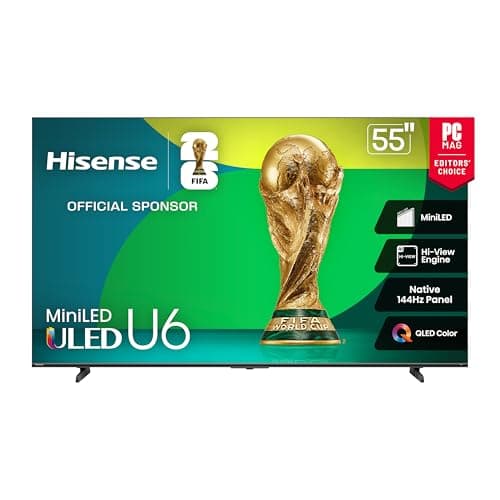
The Hisense 55" U6 Series is a Mini-LED QLED 4K TV delivering a native 144 Hz refresh rate and 1000 nits brightness, making it strong for gaming and bright-room HDR. Its built-in speakers are modest and uniformity can be inconsistent, which may require a soundbar or calibration. Best suited for budget-conscious gamers and families who value high refresh and vibrant colors.
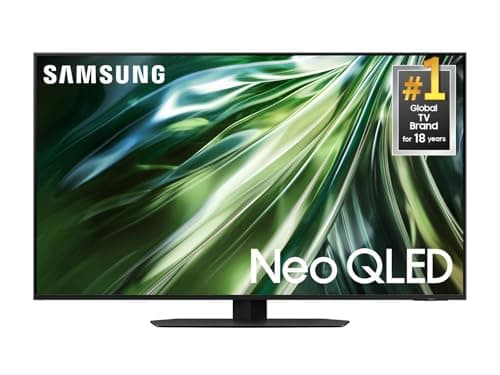
The Samsung QN43QN90D 43-inch Neo QLED TV offers vibrant HDR colors, Mini-LED brightness and premium gaming features like 144 Hz HDMI 2.1 support. Its SDR accuracy and lack of anti-glare coating can be drawbacks in bright rooms. Best suited for gamers and viewers who prioritize performance and color fidelity.
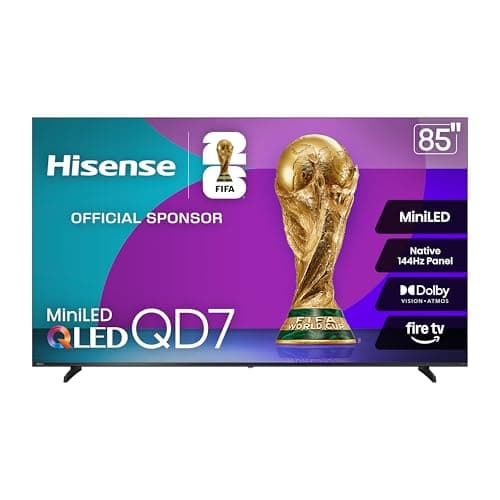
The Hisense 85-inch QD7N is a large Mini-LED QLED TV that offers cinematic picture quality, a native 144 Hz panel and robust gaming features. Its heavyweight build and modest two-channel audio are notable compromises. Ideal for gamers and home-theater enthusiasts who prioritize picture performance over built-in sound and ease of installation.
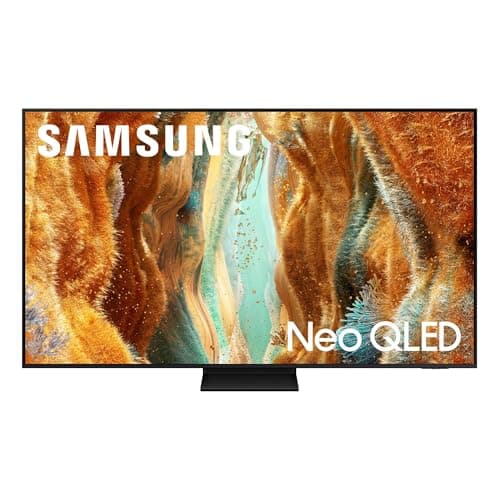
The Samsung 65-inch Neo QLED QN70F delivers premium 4K Mini-LED performance with vibrant colors, deep blacks and up to 144 Hz gaming support. Its high power draw, heavy weight and occasional UI quirks keep it from being a flawless choice, making it ideal for gamers and bright-room viewers who value top-tier picture quality and smart-home integration.
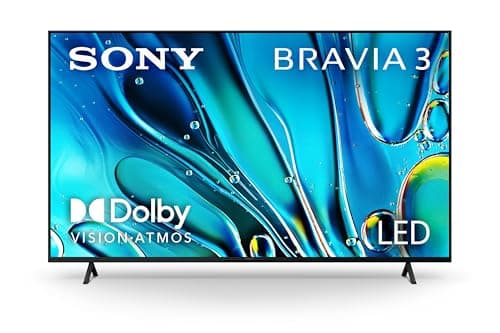
The Sony K65S30 is a 65-inch 4K TV with Full Array LED, 120 Hz refresh, Dolby Vision HDR, and Google TV integration, offering premium picture and smart functionality. Its high price and heavy build make it less value-oriented and more challenging to install. Targeted at enthusiasts seeking a large, high-performance TV with advanced features.
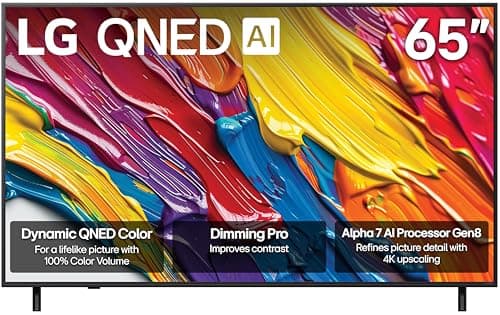
The LG 65QNED82A is a 65-inch 4K QNED TV delivering vibrant colors with AI-driven picture and sound enhancements. Its edge-lit panel and 60 Hz refresh limit contrast and high-frame-rate gaming. Suited for families and smart-home users who prioritize color accuracy over gaming performance.
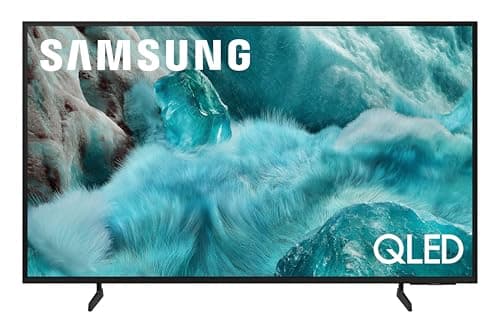
The Samsung 55-inch Q7F is a QLED TV that shines with vivid colors, Vision AI processing and ultra-low gaming latency. Its edge-lit backlight and moderate power draw limit contrast depth and energy efficiency. Ideal for gamers and streaming fans who value AI-enhanced picture and built-in voice assistants.
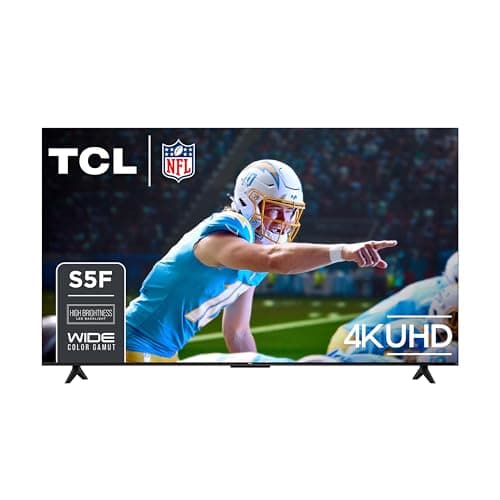
The TCL 65S551F is a 65-inch 4K LED TV featuring Google TV, Dolby Atmos and a 120 Hz Game Accelerator for smooth 1440p gaming. Its native 60 Hz panel and modest HDR brightness limit high-end performance, and it lacks a built-in voice assistant. Ideal for budget-focused viewers and casual gamers.
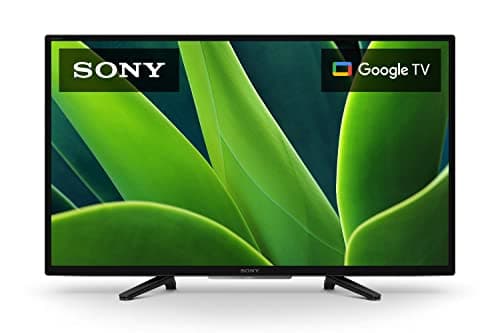
The Sony 32-inch KD-32W830K is a compact LED TV with Google TV, offering decent contrast thanks to Frame Dimming and useful upscaling via X-Reality PRO. Its limitations include a low 720p resolution and modest refresh rate, which reduce sharpness and motion handling. Ideal for budget-conscious users needing a secondary screen for streaming or casual gaming.
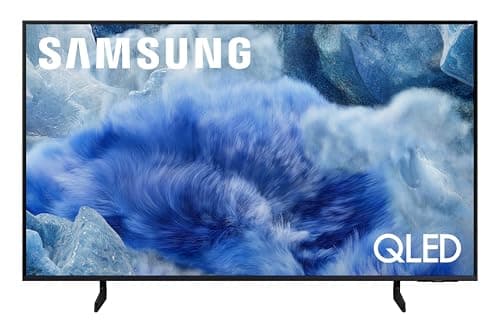
The Samsung 43-inch Q8F is an entry-level QLED TV that offers vivid colors, Dual-LED contrast and a glare-free screen, making it great for bright-room viewing and casual 1080p gaming. Its 60 Hz panel, limited HDMI ports and lack of HDMI 2.1 gaming features restrict high-performance use. Best suited for small rooms, secondary setups and users who value smart-home integration over top-tier gaming specs.
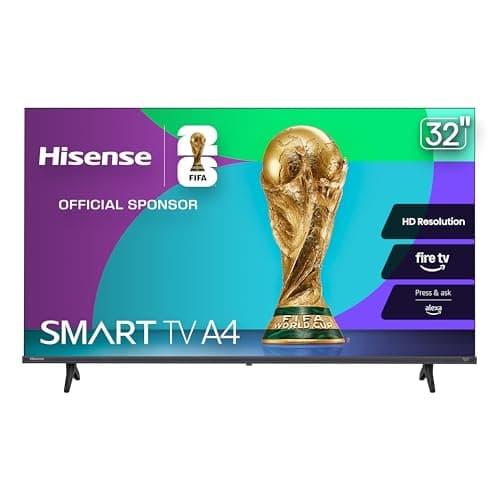
The Hisense 32" A4 Series is a compact Full HD Smart Fire TV offering AI Sports Mode and DTS Virtual:X audio, ideal for small-room streaming. Its low 200-nit brightness, lack of Bluetooth and modest refresh rate limit bright-room and gaming use. Best for budget-conscious users needing a secondary screen with built-in Fire TV.
| Attribute | | | | | | | | | | | |
|---|---|---|---|---|---|---|---|---|---|---|---|
42.5 inches | 55 inches | 32 inches | 65 inches | 85 inchesbest | 65.1 inches | 55 inches | 65 inches | 43 inches | 65 inches | 32 inches | |
60 Hz | 144 Hz | 60 Hz | 120 Hz | 144 Hz | 60 Hz | 200 Hzbest | 144 Hz | 120 Hz | 60 Hz | 60 Hz | |
3 | 4best | 2 | — | 4best | — | — | — | 4best | 3 | — | |
— | 20 Wbest | 12 W | — | 20 Wbest | — | — | — | — | — | — | |
| ↓ lower better | — | — | — | — | — | — | 6.8 msbest | — | — | 15 ms | — |
| ↓ lower better | 94 W | — | 50 Wbest | — | 330 W | 119 W | — | 141 W | — | — | — |
| ↓ lower better | 8.2 kg | 19.5 kg | 3.5 kgbest | 21.68 kg | 37.09 kg | 23.36 kg | 11.113 kg | 21.8 kg | 13.38 kg | 19.5 kg | 5.04 kg |
— | 2best | 1 | — | 1 | 1 | — | — | — | 1 | — |
Click an attribute name to sort · Green = best, red = worst (relative to this comparison)
| Attribute | | | | | | | | | | | |
|---|---|---|---|---|---|---|---|---|---|---|---|
Features(1) | |||||||||||
Smart Platform | Tizen OS | Fire TV / Google TV | Fire TV | Google TV | Google TV | webOS | Tizen OS | Tizen | Tizen | Google TV | Google TV |
Display(5) | |||||||||||
Resolution | 3840x2160 | 3840x2160 | 1920x1080 | 3840x2160 | 3840x2160 | 4K | 3840x2160 | 3840x2160 | 3840x2160 | 3840x2160 | 1366x768 |
Screen Size (inches) | 42.5 inches | 55 inches | 32 inches | 65 inches | 85 inches | 65.1 inches | 55 inches | 65 inches | 43 inches | 65 inches | 32 inches |
Refresh Rate (Hz) | 60 Hz | 144 Hz | 60 Hz | 120 Hz | 144 Hz | 60 Hz | 200 Hz | 144 Hz | 120 Hz | 60 Hz | 60 Hz |
Panel Type | QLED | VA Mini-LED QLED | LED, Direct Lit / Full Array | Full Array LED | Mini‑LED QLED | QNED | QLED | Neo QLED | Neo QLED Mini LED | VA Direct LED | LCD Direct LED |
Brightness (nits) | — | 1000 nits | 200 nits | — | — | — | — | — | — | 290 nits | — |
Performance(2) | |||||||||||
Processor | Q4 AI Processor | Hi-View AI Engine | — | X1 | MediaTek MT9618 (4‑core Cortex‑A73 1.4 GHz) | α7 AI Processor 4K Gen8 | Quad-core Q4 AI | NQ4 AI Gen2 Processor | NQ4 AI Gen2 | — | — |
Input Lag (ms) | — | — | — | — | — | — | 6.8 ms | — | — | 15 ms | — |
Audio(2) | |||||||||||
Speaker Power (W) | — | 20 W | 12 W | — | 20 W | — | — | — | — | — | — |
Audio Technology | — | Dolby Atmos | DTS Virtual:X, Dolby Audio | Dolby Atmos | Dolby Atmos/DTS | AI Sound Pro | — | — | Dolby Atmos | Dolby Atmos, DTS Virtual:X | — |
Connectivity(4) | |||||||||||
HDMI Ports | 3 | 4 | 2 | — | 4 | — | — | — | 4 | 3 | — |
USB Ports | — | 2 | 1 | — | 1 | 1 | — | — | — | 1 | — |
Wi‑Fi Standard | — | Wi‑Fi 6 | 802.11 b/g/n | — | 802.11ac | Wi‑Fi 5 | — | — | — | Wi‑Fi 5 (802.11ac) | — |
Bluetooth Version | — | — | — | — | 5.3 | — | — | — | — | Bluetooth | — |
Power & Design(4) | |||||||||||
Power Consumption (W) | 94 W | — | 50 W | — | 330 W | 119 W | — | 141 W | — | — | — |
Weight (kg) | 8.2 kg | 19.5 kg | 3.5 kg | 21.68 kg | 37.09 kg | 23.36 kg | 11.113 kg | 21.8 kg | 13.38 kg | 19.5 kg | 5.04 kg |
Width (with stand) (mm) | 965.2 mm | 1227 mm | 721 mm | 1453 mm | 1892.3 mm | 1456 mm | 1234 mm | 1451.7 mm | 960 mm | 1445.0 mm | 730 mm |
Height (with stand) (mm) | 614.7 mm | 714 mm | 429 mm | 911 mm | 1092.2 mm | 906 mm | 792 mm | 890.4 mm | 620 mm | 833.1 mm | 466 mm |
Products in the top-left offer the best value (high score, low price).
Professional reviewers praise the Q8F for its vivid QLED colors, Dual LED contrast, Glare-Free screen and AI-driven picture optimization, noting that it delivers premium visual performance in a compact form. However, they point out the 43-inch model's limitations: a 60 Hz panel, only three HDMI ports and the absence of HDMI 2.1 gaming features, which keep it from competing with higher-end Samsung QLEDs for serious gamers.
Everyday users consistently highlight the TV's razor-sharp, responsive image, vibrant colors and glare-free viewing, calling it perfect for movies, sports and 1080p gaming in small rooms. Setup is described as straightforward, and the compact, lightweight design is appreciated, with no notable complaints surfacing in the March 2026 reviews.
“Super sharp/responsive image like images coming out of the TV”
“Easy setup, vibrant colors for the size, reliable Fire TV streaming, and clear sports audio”
“colors are more vivid and accurate”
Prefer Q8F for brighter QLED performance and AI optimization; choose LG QNED if you favor its OS and specific color rendering.
Professional reviewers consider the Hisense U6 a standout value proposition for gamers, emphasizing its native 144Hz panel, Mini-LED contrast, low input lag, and strong HDR support. While the AI processing and upscaling are praised, critics note average contrast outside gaming modes and a modest speaker system, positioning the TV as a solid mid-range choice with room for improvement in audio and uniformity.
Everyday users love the buttery-smooth 144Hz gaming experience, vibrant QLED colors, and bright 1000-nit panel that handles bright rooms. Common praise centers on the easy Fire/Google TV setup and HDR immersion, while recurring complaints focus on weak built-in speakers, occasional interface lag, and blooming or uniformity issues in high-contrast scenes.
Professional reviewers commend the Hisense 32A4NF for its sharp Full HD display, AI Sports Mode, and immersive DTS Virtual:X audio, emphasizing its value as a secondary TV for streaming and sports. However, they criticize its modest 200-nit brightness, lack of Bluetooth, and limited refresh rate, noting it falls short for bright-room viewing and high-performance gaming.
Everyday users praise the TV for easy setup, vibrant colors, reliable Fire TV streaming, and convenient Alexa integration, especially in small spaces. Recurring complaints focus on occasional app glitches, low speaker volume, and some motion blur during fast action, though most consider it a solid budget option.
Professional commentary emphasizes the TV's strong contrast and brightness thanks to Full Array LED, while noting that the lack of XR Contrast Booster and detailed HDR specs may keep it from the premium tier. The Google TV platform and voice assistant integration are praised for usability, but the limited depth of professional analysis leaves some uncertainty about long-term reliability.
Everyday buyers generally praise the vivid picture quality, intuitive Google TV interface, and overall value, as reflected in high satisfaction scores. The most common concerns revolve around the TV's weight during installation and the absence of advanced audio or HDR features that some users expected.
Professional reviewers commend the QD7N for delivering premium picture performance at a relatively affordable price, especially its Mini-LED contrast, QLED color volume and gaming-centric features like 144 Hz VRR and FreeSync. The Google TV platform is also praised for its breadth of apps and voice integration. However, critics point out the modest 2-channel audio and the potential for local-dimming haloing, suggesting a soundbar for a complete home-theater experience.
Everyday buyers consistently highlight the TV's impressive visual quality, vibrant colors and smooth motion, making it a hit for movies, sports and gaming. Common complaints revolve around the limited built-in audio power and occasional dimming artifacts, while the heavy chassis is mentioned as a practical drawback during installation.
Professional commentary emphasizes the TV's strong color performance, thanks to Dynamic QNED Color and a certified 100% color volume, as well as the AI-driven picture enhancements from the α7 processor. Reviewers also note the convenience of the webOS platform and Home Hub integration, positioning the model as a solid, feature-rich option in LG's entry-level QNED lineup.
Customers consistently rate the TV highly, noting satisfaction with its picture quality, gaming performance, and ease of use, while no specific complaints were highlighted in the available data.
Professional editors commend the Q7F for its vivid Quantum Dot color reproduction, AI-driven picture optimization, and impressive low-latency gaming features, but they caution that the edge-lit backlight and lack of ENERGY STAR certification limit its contrast performance and energy efficiency compared to higher-end mini-LED rivals.
Everyday users praise the abundant free streaming content, integrated voice assistants, and sleek design, while recurring concerns focus on backlight uniformity, inconsistent weight information, and the TV's moderate power consumption.
Professional reviewers highlight the QN70F's precise Mini LED backlight, AI-driven Vision AI personalization, and powerful 4K upscaling as standout features, noting its high brightness, Pantone-validated colors and strong HDR performance. They also point out UI navigation shortcomings and mixed reports on the backlight architecture, but overall position it as a premium 2025 offering in Samsung's lineup.
Everyday users consistently praise the TV's vivid colors, deep blacks, high brightness and smooth gaming experience, as well as the convenience of the battery-free solar remote and the sleek, thin design.
Professional reviewers commend the QN90D for its vivid HDR colors, robust gaming features with full HDMI 2.1 support, and the AI-driven NQ4 Gen2 processor that lifts picture quality. However, they point out that the out-of-the-box SDR accuracy is merely passable, the Game Mode reduces brightness, and the lack of an anti-glare coating hampers performance in bright rooms, while the built-in audio is modest compared with larger sizes.
Professional reviewers commend the QN90D for its vivid HDR colors, robust gaming features with full HDMI 2.1 support, and the AI-driven NQ4 Gen2 processor that lifts picture quality. However, they point out that the out-of-the-box SDR accuracy is merely passable, the Game Mode reduces brightness, and the lack of an anti-glare coating hampers performance in bright rooms, while the built-in audio is modest compared with larger sizes.
Professional reviewers consider the TCL S5 a solid budget option, emphasizing its low input lag, Motion Rate 240, and Game Accelerator 120 as valuable for casual gamers. However, they criticize the limited HDMI 2.0 bandwidth, modest peak brightness, and average contrast in dark environments, which keep it from competing with higher-end models.
Everyday owners generally praise the TV's bright HDR performance in well-lit rooms, the intuitive Google TV experience, and the smooth gaming at 1440p @ 120 Hz. Recurring complaints focus on motion blur in fast sports, the inability to achieve true 4K @ 120 Hz, and average contrast in dark environments.
Everyday users rate the TV highly, praising its compact size, straightforward smart-TV experience, and value for money, while noting that the low resolution and modest HDR capabilities limit its appeal for demanding viewing environments.
